
The Secret Garden
eBook
• INR 51.00
• English
• 9788180320163
No ratings yet
| Publisher | General Press |
|---|---|
| ISBN13 | 9788180320163 |
| ASIN/SKU | B01LY75RXC |
| Book Format | eBook |
| Language | English |
| List Price | INR 51.00 |
| Subject Code | FIC004000, FIC000000 |
| Book Code | BD00068251 |
Buy this Book
Amazon Stores
Ebook Stores
Other Stores
Discover The Secret Garden by Frances Hodgson Burnett. This book is published by General Press in eBook format, ISBN 9788180320163, ASIN B01LY75RXC, under Literature and Fiction, Children's Classics, Classics.
Book Description
The Secret Garden' is a timeless classic that has left generations of readers with warm, lifelong memories of its magical charms. This is a must-read for children and adults, especially if you missed out on this while growing up.
There was a girl called Mary Lennox, she grew up in India, and was extremely fawned on by the servants, whose only job was to keep her quiet and out of the way of her parents. Suddenly, her parents die and she's sent to live with her uncle in England, a grumpy old man who happened to be mourning the loss of his wife. When orphaned Mary Lennox arrives at Misselthwaite Manor, her uncle's estate, everybody said she was the most disagreeable-looking child ever seen. Her uncle wants nothing to do with her. Lonely, spoiled Mary explores the manor and the garden, finding all sorts of hidden secrets as well as her own happiness.
There was a girl called Mary Lennox, she grew up in India, and was extremely fawned on by the servants, whose only job was to keep her quiet and out of the way of her parents. Suddenly, her parents die and she's sent to live with her uncle in England, a grumpy old man who happened to be mourning the loss of his wife. When orphaned Mary Lennox arrives at Misselthwaite Manor, her uncle's estate, everybody said she was the most disagreeable-looking child ever seen. Her uncle wants nothing to do with her. Lonely, spoiled Mary explores the manor and the garden, finding all sorts of hidden secrets as well as her own happiness.
Author Biography
Frances Eliza Hodgson Burnett was a British-American novelist and playwright. She is best known for the three children's novels Little Lord Fauntleroy (1886), A Little Princess (1905), and The Secret Garden (1911).
Frances Eliza Hodgson was born in Cheetham, Manchester, England. After her father died in 1853, when Frances was 4 years old, the family fell on straitened circumstances and in 1865 emigrated to the United States, settling in New Market, Tennessee. Frances began her writing career there at age 19 to help earn money for the family, publishing stories in magazines. In 1870, her mother died. In Knoxville, Tennessee, in 1873 she married Swan M. Burnett, who became a medical doctor. Their first son Lionel was born a year later. The Burnetts lived for two years in Paris, where their second son Vivian was born, before returning to the United States to live in Washington, D.C. Burnett then began to write novels, the first of which (That Lass o' Lowrie's), was published to good reviews. Little Lord Fauntleroy was published in 1886 and made her a popular writer of children's fiction, although her romantic adult novels written in the 1890s were also popular. She wrote and helped to produce stage versions of Little Lord Fauntleroy and A Little Princess.
Beginning in the 1880s, Burnett began to travel to England frequently and in the 1890s bought a home there, where she wrote The Secret Garden. Her elder son, Lionel, died of tuberculosis in 1890, which caused a relapse of the depression she had struggled with for much of her life. She divorced Swan Burnett in 1898, married Stephen Townesend in 1900, and divorced him in 1902. A few years later she settled in Nassau County, New York, where she died in 1924 and is buried in Roslyn Cemetery.
In 1936, a memorial sculpture by Bessie Potter Vonnoh was erected in her honor in Central Park's Conservatory Garden. The statue depicts her two famous Secret Garden characters, Mary and Dickon.
Frances Eliza Hodgson was born in Cheetham, Manchester, England. After her father died in 1853, when Frances was 4 years old, the family fell on straitened circumstances and in 1865 emigrated to the United States, settling in New Market, Tennessee. Frances began her writing career there at age 19 to help earn money for the family, publishing stories in magazines. In 1870, her mother died. In Knoxville, Tennessee, in 1873 she married Swan M. Burnett, who became a medical doctor. Their first son Lionel was born a year later. The Burnetts lived for two years in Paris, where their second son Vivian was born, before returning to the United States to live in Washington, D.C. Burnett then began to write novels, the first of which (That Lass o' Lowrie's), was published to good reviews. Little Lord Fauntleroy was published in 1886 and made her a popular writer of children's fiction, although her romantic adult novels written in the 1890s were also popular. She wrote and helped to produce stage versions of Little Lord Fauntleroy and A Little Princess.
Beginning in the 1880s, Burnett began to travel to England frequently and in the 1890s bought a home there, where she wrote The Secret Garden. Her elder son, Lionel, died of tuberculosis in 1890, which caused a relapse of the depression she had struggled with for much of her life. She divorced Swan Burnett in 1898, married Stephen Townesend in 1900, and divorced him in 1902. A few years later she settled in Nassau County, New York, where she died in 1924 and is buried in Roslyn Cemetery.
In 1936, a memorial sculpture by Bessie Potter Vonnoh was erected in her honor in Central Park's Conservatory Garden. The statue depicts her two famous Secret Garden characters, Mary and Dickon.
Editorial Reviews
Editorial Reviews will be added soon…
Book Summary
Frances Hodgson Burnett’s The Secret Garden is one of the most enduring classics of children’s literature, but its appeal reaches far beyond childhood. First published in 1911, the novel tells the story of Mary Lennox, a lonely and unpleasant orphan who is sent from India to live with her mysterious uncle at Misselthwaite Manor in Yorkshire. There she discovers a locked, neglected garden that has been abandoned for ten years. As Mary brings the garden back to life, she also begins to change herself. Along the way, she befriends Dickon Sowerby, a boy with an extraordinary connection to nature, and discovers Colin Craven, her sickly and deeply unhappy cousin who has been hidden away inside the manor. Together, the children transform the forgotten garden—and, in the process, transform themselves and the adults around them.
At the beginning of The Secret Garden, Mary Lennox is deliberately presented as an unlikeable child. She is spoiled, selfish, bad-tempered, lonely, and physically weak. Born to wealthy British parents living in colonial India, Mary has been largely ignored by her mother and father and raised by servants who give her whatever she wants. Because nobody has taught her how to care about other people, she has developed almost no capacity for affection or cooperation. Her personality is therefore partly the result of neglect. Burnett does not ask readers to admire Mary at the beginning; instead, she asks us to watch what happens when a neglected child finally receives opportunities for friendship, responsibility, fresh air, meaningful work, and love.
Mary’s life changes suddenly when a cholera epidemic kills her parents and most of the household. She is discovered alone and eventually sent to England to live with her mother’s brother, Archibald Craven, at the enormous and gloomy Misselthwaite Manor in Yorkshire. The manor is almost as emotionally barren as Mary herself. Mr. Craven has withdrawn from life after the death of his beloved wife, Lilias, ten years earlier. The house is full of locked rooms, unanswered questions, servants who are afraid of their master, and memories that nobody wants to discuss. Mary is therefore entering not merely a new home but a family shaped by grief.
The first major stage of Mary’s transformation begins with her discovery of the Yorkshire countryside. Initially, she dislikes almost everything about her new surroundings. Yet Martha Sowerby, the young maid assigned to look after her, speaks openly and naturally to Mary in a way that the adults in her previous life never did. Martha tells her about the moor, her family, her brother Dickon, and the beautiful garden that once belonged to Mrs. Craven. This garden was particularly important because Mrs. Craven loved it deeply. After her death, Mr. Craven locked its door and buried the key. Nobody has been allowed inside since.
The secret garden immediately becomes the central mystery of the novel. Mary’s curiosity, which had previously been expressed through selfish demands and bad behavior, now becomes constructive. She wants to find the hidden garden. Her search leads her to the grounds, where she becomes acquainted with Ben Weatherstaff, an elderly gardener, and a friendly robin. The robin is especially important because it becomes almost a guide for Mary. Eventually, Mary discovers a buried key and then finds the hidden door. When she enters the garden for the first time, she finds a place that is neglected and overgrown but not completely dead. Roses and other plants are beginning to show signs of life.
The garden becomes a symbol of everything that has been damaged but not destroyed. Like the garden, Mary has been neglected. Like the garden, she still possesses the possibility of growth. This is one of the most important themes in The Secret Garden: healing does not always mean creating something new; sometimes it means giving neglected life the conditions it needs to grow again. The novel repeatedly connects the children's physical and emotional development with the changing seasons and the revival of the garden.
Mary soon meets Dickon Sowerby, Martha’s brother. Dickon is one of the novel’s most important characters because he represents a natural relationship with the world that Mary and Colin have never experienced. He spends much of his time outdoors and seems able to communicate effortlessly with animals and plants. He is kind without being sentimental and knowledgeable without being arrogant. When Mary reveals the existence of the secret garden, Dickon agrees to help her restore it. Together they weed, prune, plant, and observe the garden as it slowly begins to recover.
This work changes Mary. Gardening gives her a purpose beyond herself. She has to care for something that cannot simply obey her. Plants require patience. Seeds require time. A garden cannot be transformed by tantrums or commands. Mary therefore begins learning qualities she never developed at home: patience, cooperation, responsibility, curiosity, and affection. Her body changes as well. She spends more time outdoors, becomes stronger, develops a healthy appetite, and gradually loses the sickly appearance she had when she arrived. The novel presents nature as a powerful environment for physical and emotional renewal.
But the greatest mystery of Misselthwaite Manor remains unsolved. Mary repeatedly hears strange crying somewhere inside the house. Eventually, she discovers the source: a boy named Colin Craven. Colin is her cousin and the son of Archibald Craven. He has spent most of his life confined to bed, surrounded by servants who obey his every demand because they are terrified of his temper. He has been told repeatedly that he is sick, weak, and likely to become deformed or die young. As a result, he has become deeply frightened of his own body and convinced that illness defines him.
Colin and Mary initially resemble each other. Both are spoiled, lonely children who have been emotionally neglected. Both demand attention. Both have developed selfish habits. Yet their friendship begins to break down the walls around them. Mary refuses to treat Colin as a helpless invalid. She argues with him, challenges his tantrums, and even tells him that she believes there is nothing fundamentally wrong with his back. Her bluntness is exactly what Colin needs because she does not approach him with the fearful pity that has surrounded him all his life.
The discovery of Colin gives the secret garden a new purpose. Mary eventually tells him about it, and Colin becomes determined to see it. Dickon joins them, and the children secretly take Colin outdoors in his wheelchair. For Colin, this is a profound change. He has been confined to the house and trapped inside a story about himself as a permanently sick child. The garden gives him another story: perhaps he can move, perhaps he can become strong, perhaps he can live.
One of the most memorable moments occurs when Ben Weatherstaff unexpectedly discovers Colin in the garden. Ben assumes that Colin is a helpless cripple, and Colin becomes furious at the description. In a moment of defiance, Colin stands. His legs are weak because they have been unused, but he is able to stand. This becomes the beginning of his physical recovery. The children begin encouraging him to exercise, walk, eat well, and spend more time outdoors. Their secret project becomes a combination of gardening, friendship, physical activity, imagination, and hope.
Colin calls the mysterious force behind his recovery “Magic.” This word is central to the novel. Burnett deliberately leaves the meaning of Magic somewhat open. For Colin, it is a spiritual and imaginative force. For Mary, it is connected to nature, sunlight, growth, and positive thinking. For a modern reader, the transformation can also be interpreted in terms of environment, exercise, confidence, social connection, and the psychological effects of being treated as capable rather than helpless. The novel itself does not require one narrow explanation. What matters is that Colin begins believing that change is possible.
Mary’s transformation is equally important. At the beginning, she has almost no emotional awareness. She does not understand why other people have feelings or why kindness matters. Through Martha, Dickon, Colin, Ben, and especially the garden, she gradually learns how to form relationships. She becomes capable of caring for Colin and the plants. She begins to notice other people's needs. Her curiosity becomes generosity. Her independence becomes responsibility. The child who once expected the world to serve her now spends hours doing difficult work simply because she wants something living to flourish.
The novel also explores the effect of children on adults. Archibald Craven has allowed grief to dominate his life since his wife's death. He has abandoned the garden because it reminds him of her, but in doing so he has also symbolically abandoned his son and himself. Colin has grown up without a loving father, while Archibald has lived without allowing himself to reconnect emotionally with his child. The healing of the garden therefore eventually becomes the healing of the family.
Near the end of the story, Archibald begins to experience a change even before he understands what has happened at home. He dreams of his late wife calling to him from the garden. He is then urged to return to Misselthwaite. When he comes home, he discovers the secret garden in full bloom and, most astonishingly, sees Colin walking and running. The boy who was supposedly destined for illness and weakness is now physically active and full of confidence. Colin and his father are finally reunited, and the emotional isolation that has haunted the family begins to disappear.
The garden itself is the novel’s greatest symbol. It represents rebirth, healing, childhood, memory, love, and the possibility of renewal. When Mrs. Craven dies, the garden is locked away, just as Archibald locks away his emotions. When Mary finds the garden, she discovers a physical representation of the family's hidden grief. When she and Dickon restore it, they also begin restoring the emotional life of the household. The garden's seasonal progression—from winter dormancy to spring growth and summer abundance—mirrors the children's own development.
Another important theme is the power of environment. Burnett repeatedly contrasts closed rooms with open spaces, darkness with sunlight, inactivity with movement, and isolation with friendship. Mary and Colin become healthier when they leave their enclosed rooms and enter the natural world. Their improvement is connected not only with flowers but with fresh air, exercise, companionship, purposeful activity, and the feeling that they belong somewhere. The novel's message is therefore broader than “nature is beautiful.” It suggests that human beings need contact with the living world and with one another.
At the same time, The Secret Garden is not simply a story about physical recovery. It is fundamentally a story about emotional recovery. Mary learns to love. Colin learns to hope. Archibald learns to reconnect with his son. Ben finds a way to honor Mrs. Craven's memory by helping the garden survive. Even the garden itself becomes a place where grief can be transformed rather than merely forgotten.
For readers looking for a summary of The Secret Garden by Frances Hodgson Burnett, the central lesson is beautifully straightforward: people can change when they are given the right conditions in which to grow. Mary begins the novel as an angry, neglected child and gradually becomes caring, energetic, and compassionate. Colin begins as a frightened, self-absorbed invalid and gradually discovers courage, independence, and hope. The garden begins as a locked and dying place and becomes a living symbol of renewal.
Ultimately, The Secret Garden is a story about what happens when life is allowed back into places that have been closed for too long. Burnett uses the mystery of a locked garden to tell a larger story about grief, childhood, friendship, nature, imagination, and healing. The book's enduring power comes from the fact that its secret garden is not only a physical place. It is also a metaphor for the hidden parts of ourselves that may appear forgotten or damaged but can still respond to attention, affection, sunlight, and care. Mary discovers the garden, but in another sense, the garden discovers Mary—and through it, she discovers herself.
At the beginning of The Secret Garden, Mary Lennox is deliberately presented as an unlikeable child. She is spoiled, selfish, bad-tempered, lonely, and physically weak. Born to wealthy British parents living in colonial India, Mary has been largely ignored by her mother and father and raised by servants who give her whatever she wants. Because nobody has taught her how to care about other people, she has developed almost no capacity for affection or cooperation. Her personality is therefore partly the result of neglect. Burnett does not ask readers to admire Mary at the beginning; instead, she asks us to watch what happens when a neglected child finally receives opportunities for friendship, responsibility, fresh air, meaningful work, and love.
Mary’s life changes suddenly when a cholera epidemic kills her parents and most of the household. She is discovered alone and eventually sent to England to live with her mother’s brother, Archibald Craven, at the enormous and gloomy Misselthwaite Manor in Yorkshire. The manor is almost as emotionally barren as Mary herself. Mr. Craven has withdrawn from life after the death of his beloved wife, Lilias, ten years earlier. The house is full of locked rooms, unanswered questions, servants who are afraid of their master, and memories that nobody wants to discuss. Mary is therefore entering not merely a new home but a family shaped by grief.
The first major stage of Mary’s transformation begins with her discovery of the Yorkshire countryside. Initially, she dislikes almost everything about her new surroundings. Yet Martha Sowerby, the young maid assigned to look after her, speaks openly and naturally to Mary in a way that the adults in her previous life never did. Martha tells her about the moor, her family, her brother Dickon, and the beautiful garden that once belonged to Mrs. Craven. This garden was particularly important because Mrs. Craven loved it deeply. After her death, Mr. Craven locked its door and buried the key. Nobody has been allowed inside since.
The secret garden immediately becomes the central mystery of the novel. Mary’s curiosity, which had previously been expressed through selfish demands and bad behavior, now becomes constructive. She wants to find the hidden garden. Her search leads her to the grounds, where she becomes acquainted with Ben Weatherstaff, an elderly gardener, and a friendly robin. The robin is especially important because it becomes almost a guide for Mary. Eventually, Mary discovers a buried key and then finds the hidden door. When she enters the garden for the first time, she finds a place that is neglected and overgrown but not completely dead. Roses and other plants are beginning to show signs of life.
The garden becomes a symbol of everything that has been damaged but not destroyed. Like the garden, Mary has been neglected. Like the garden, she still possesses the possibility of growth. This is one of the most important themes in The Secret Garden: healing does not always mean creating something new; sometimes it means giving neglected life the conditions it needs to grow again. The novel repeatedly connects the children's physical and emotional development with the changing seasons and the revival of the garden.
Mary soon meets Dickon Sowerby, Martha’s brother. Dickon is one of the novel’s most important characters because he represents a natural relationship with the world that Mary and Colin have never experienced. He spends much of his time outdoors and seems able to communicate effortlessly with animals and plants. He is kind without being sentimental and knowledgeable without being arrogant. When Mary reveals the existence of the secret garden, Dickon agrees to help her restore it. Together they weed, prune, plant, and observe the garden as it slowly begins to recover.
This work changes Mary. Gardening gives her a purpose beyond herself. She has to care for something that cannot simply obey her. Plants require patience. Seeds require time. A garden cannot be transformed by tantrums or commands. Mary therefore begins learning qualities she never developed at home: patience, cooperation, responsibility, curiosity, and affection. Her body changes as well. She spends more time outdoors, becomes stronger, develops a healthy appetite, and gradually loses the sickly appearance she had when she arrived. The novel presents nature as a powerful environment for physical and emotional renewal.
But the greatest mystery of Misselthwaite Manor remains unsolved. Mary repeatedly hears strange crying somewhere inside the house. Eventually, she discovers the source: a boy named Colin Craven. Colin is her cousin and the son of Archibald Craven. He has spent most of his life confined to bed, surrounded by servants who obey his every demand because they are terrified of his temper. He has been told repeatedly that he is sick, weak, and likely to become deformed or die young. As a result, he has become deeply frightened of his own body and convinced that illness defines him.
Colin and Mary initially resemble each other. Both are spoiled, lonely children who have been emotionally neglected. Both demand attention. Both have developed selfish habits. Yet their friendship begins to break down the walls around them. Mary refuses to treat Colin as a helpless invalid. She argues with him, challenges his tantrums, and even tells him that she believes there is nothing fundamentally wrong with his back. Her bluntness is exactly what Colin needs because she does not approach him with the fearful pity that has surrounded him all his life.
The discovery of Colin gives the secret garden a new purpose. Mary eventually tells him about it, and Colin becomes determined to see it. Dickon joins them, and the children secretly take Colin outdoors in his wheelchair. For Colin, this is a profound change. He has been confined to the house and trapped inside a story about himself as a permanently sick child. The garden gives him another story: perhaps he can move, perhaps he can become strong, perhaps he can live.
One of the most memorable moments occurs when Ben Weatherstaff unexpectedly discovers Colin in the garden. Ben assumes that Colin is a helpless cripple, and Colin becomes furious at the description. In a moment of defiance, Colin stands. His legs are weak because they have been unused, but he is able to stand. This becomes the beginning of his physical recovery. The children begin encouraging him to exercise, walk, eat well, and spend more time outdoors. Their secret project becomes a combination of gardening, friendship, physical activity, imagination, and hope.
Colin calls the mysterious force behind his recovery “Magic.” This word is central to the novel. Burnett deliberately leaves the meaning of Magic somewhat open. For Colin, it is a spiritual and imaginative force. For Mary, it is connected to nature, sunlight, growth, and positive thinking. For a modern reader, the transformation can also be interpreted in terms of environment, exercise, confidence, social connection, and the psychological effects of being treated as capable rather than helpless. The novel itself does not require one narrow explanation. What matters is that Colin begins believing that change is possible.
Mary’s transformation is equally important. At the beginning, she has almost no emotional awareness. She does not understand why other people have feelings or why kindness matters. Through Martha, Dickon, Colin, Ben, and especially the garden, she gradually learns how to form relationships. She becomes capable of caring for Colin and the plants. She begins to notice other people's needs. Her curiosity becomes generosity. Her independence becomes responsibility. The child who once expected the world to serve her now spends hours doing difficult work simply because she wants something living to flourish.
The novel also explores the effect of children on adults. Archibald Craven has allowed grief to dominate his life since his wife's death. He has abandoned the garden because it reminds him of her, but in doing so he has also symbolically abandoned his son and himself. Colin has grown up without a loving father, while Archibald has lived without allowing himself to reconnect emotionally with his child. The healing of the garden therefore eventually becomes the healing of the family.
Near the end of the story, Archibald begins to experience a change even before he understands what has happened at home. He dreams of his late wife calling to him from the garden. He is then urged to return to Misselthwaite. When he comes home, he discovers the secret garden in full bloom and, most astonishingly, sees Colin walking and running. The boy who was supposedly destined for illness and weakness is now physically active and full of confidence. Colin and his father are finally reunited, and the emotional isolation that has haunted the family begins to disappear.
The garden itself is the novel’s greatest symbol. It represents rebirth, healing, childhood, memory, love, and the possibility of renewal. When Mrs. Craven dies, the garden is locked away, just as Archibald locks away his emotions. When Mary finds the garden, she discovers a physical representation of the family's hidden grief. When she and Dickon restore it, they also begin restoring the emotional life of the household. The garden's seasonal progression—from winter dormancy to spring growth and summer abundance—mirrors the children's own development.
Another important theme is the power of environment. Burnett repeatedly contrasts closed rooms with open spaces, darkness with sunlight, inactivity with movement, and isolation with friendship. Mary and Colin become healthier when they leave their enclosed rooms and enter the natural world. Their improvement is connected not only with flowers but with fresh air, exercise, companionship, purposeful activity, and the feeling that they belong somewhere. The novel's message is therefore broader than “nature is beautiful.” It suggests that human beings need contact with the living world and with one another.
At the same time, The Secret Garden is not simply a story about physical recovery. It is fundamentally a story about emotional recovery. Mary learns to love. Colin learns to hope. Archibald learns to reconnect with his son. Ben finds a way to honor Mrs. Craven's memory by helping the garden survive. Even the garden itself becomes a place where grief can be transformed rather than merely forgotten.
For readers looking for a summary of The Secret Garden by Frances Hodgson Burnett, the central lesson is beautifully straightforward: people can change when they are given the right conditions in which to grow. Mary begins the novel as an angry, neglected child and gradually becomes caring, energetic, and compassionate. Colin begins as a frightened, self-absorbed invalid and gradually discovers courage, independence, and hope. The garden begins as a locked and dying place and becomes a living symbol of renewal.
Ultimately, The Secret Garden is a story about what happens when life is allowed back into places that have been closed for too long. Burnett uses the mystery of a locked garden to tell a larger story about grief, childhood, friendship, nature, imagination, and healing. The book's enduring power comes from the fact that its secret garden is not only a physical place. It is also a metaphor for the hidden parts of ourselves that may appear forgotten or damaged but can still respond to attention, affection, sunlight, and care. Mary discovers the garden, but in another sense, the garden discovers Mary—and through it, she discovers herself.
Sample Chapters
Sample Chapters will be added soon…
Reader Reviews
No reviews yet.
The Secret Garden
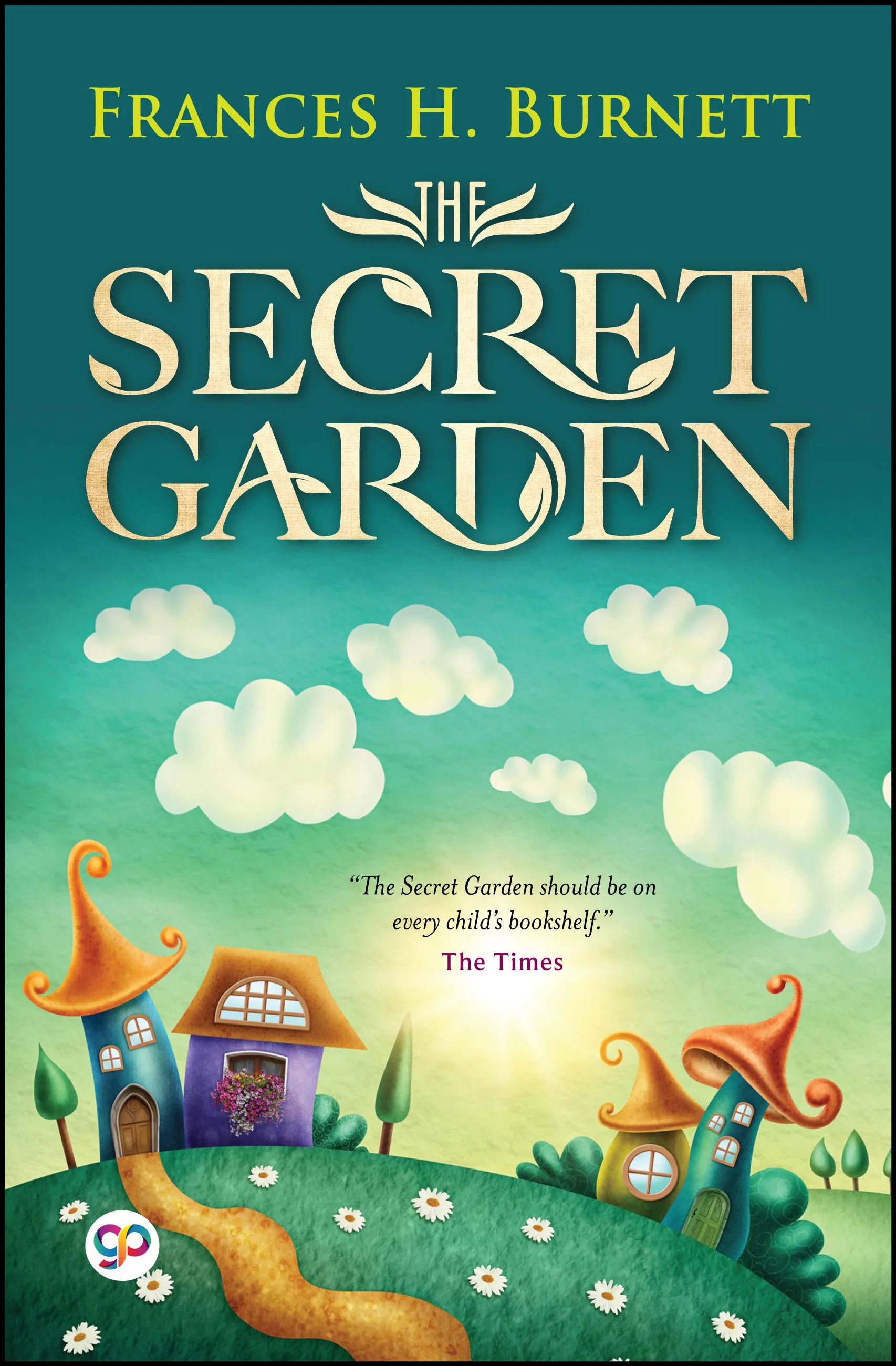
Download Cover Image
Do you want to download the full cover image for The Secret Garden?