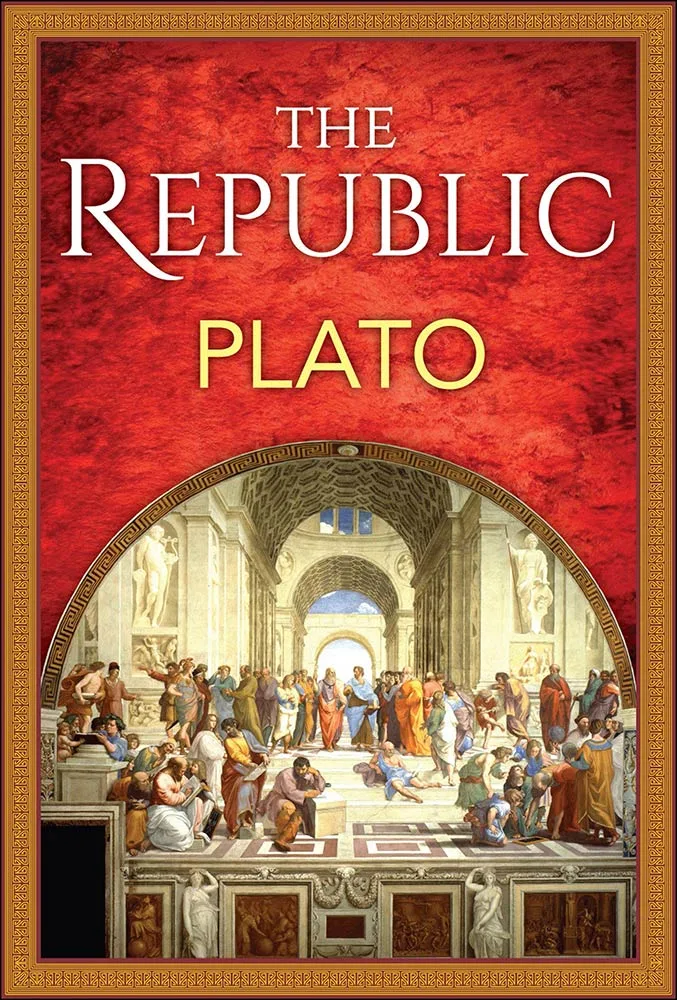
The Republic
eBook
• INR 51.00
• English
• 9788180320033
No ratings yet
| Publisher | General Press |
|---|---|
| ISBN13 | 9788180320033 |
| ASIN/SKU | B01LYKRKAK |
| Book Format | eBook |
| Language | English |
| List Price | INR 51.00 |
| Subject Code | POL000000, SOC000000 |
| Book Code | BD00068252 |
Buy this Book
Amazon Stores
Ebook Stores
Other Stores
Discover The Republic by Plato. This book is published by General Press in eBook format, ISBN 9788180320033, ASIN B01LYKRKAK, under Politics and Social Sciences, Social Science, Politics.
Book Description
Plato's 'Republic' is widely acknowledged as the cornerstone of Western philosophy, written around 380 BC. Presented in the form of a dialogue between Socrates and three different interlocutors, it is an enquiry into the notion of a perfect community and the ideal individual within it. During the conversation other questions are raised—what is goodness? What is reality? What is knowledge?
The dramatic date of the dialogue has been much debated and though it might have taken place sometime during the Peloponnesian War. It is Plato's best-known work and has proven to be one of the most intellectually and historically influential works of philosophy and political theory. In it, Socrates along with various Athenians and foreigners discuss the meaning of justice and examine whether or not the just man is happier than the unjust man by considering a series of different cities coming into existence 'in speech', culminating in a city called Kallipolis, which is ruled by philosopher-kings; and by examining the nature of existing regimes. The participants also discuss the theory of forms, the immortality of the soul, and the roles of the philosopher and of poetry in society.
This ebook has been professionally proofread to ensure accuracy and readability on all devices.
The dramatic date of the dialogue has been much debated and though it might have taken place sometime during the Peloponnesian War. It is Plato's best-known work and has proven to be one of the most intellectually and historically influential works of philosophy and political theory. In it, Socrates along with various Athenians and foreigners discuss the meaning of justice and examine whether or not the just man is happier than the unjust man by considering a series of different cities coming into existence 'in speech', culminating in a city called Kallipolis, which is ruled by philosopher-kings; and by examining the nature of existing regimes. The participants also discuss the theory of forms, the immortality of the soul, and the roles of the philosopher and of poetry in society.
This ebook has been professionally proofread to ensure accuracy and readability on all devices.
Author Biography
Plato (c. 428/427 BCE–348/347 BCE) was one of the greatest philosophers in the history of Western civilization. His ideas laid the foundation for philosophy, political theory, ethics, education, and metaphysics, influencing countless thinkers for more than two thousand years. Through his dialogues, Plato explored profound questions about justice, knowledge, truth, love, and the ideal society. His writings continue to be studied in universities around the world and remain central to philosophical thought.
Plato was born into an aristocratic family in Athens, Greece, during a period of political conflict and cultural achievement. As a young man, he was expected to pursue a career in public life. However, his meeting with the philosopher Socrates changed the direction of his life. Plato became one of Socrates' most devoted students, deeply influenced by his teacher's method of questioning and pursuit of truth. The execution of Socrates in 399 BCE left a lasting impression on Plato and strengthened his commitment to philosophy.
Following Socrates' death, Plato traveled widely, visiting regions such as Egypt and southern Italy, where he encountered different philosophical traditions. Around 387 BCE, he returned to Athens and founded the Academy, widely regarded as the first institution of higher learning in the Western world. The Academy became a center for philosophical inquiry and scientific study, attracting students from across Greece. Among its most famous pupils was Aristotle, who would later become one of history's greatest philosophers.
Plato wrote in the form of dialogues, with Socrates often serving as the principal speaker. His most celebrated works include The Republic, The Symposium, Phaedo, Meno, Timaeus, and Apology. In these writings, he examined subjects ranging from the nature of justice and the immortality of the soul to the theory of forms and the responsibilities of rulers. His vision of the "philosopher-king" and his belief that wisdom should guide political leadership remain widely discussed today.
Plato died in Athens around 348 or 347 BCE, leaving behind an intellectual legacy unmatched in the ancient world. His influence extends far beyond philosophy, shaping literature, theology, political science, psychology, and education. Today, Plato is remembered not only as a brilliant thinker but also as a teacher whose lifelong search for truth continues to inspire people to question, learn, and pursue wisdom with reason and integrity.
Plato was born into an aristocratic family in Athens, Greece, during a period of political conflict and cultural achievement. As a young man, he was expected to pursue a career in public life. However, his meeting with the philosopher Socrates changed the direction of his life. Plato became one of Socrates' most devoted students, deeply influenced by his teacher's method of questioning and pursuit of truth. The execution of Socrates in 399 BCE left a lasting impression on Plato and strengthened his commitment to philosophy.
Following Socrates' death, Plato traveled widely, visiting regions such as Egypt and southern Italy, where he encountered different philosophical traditions. Around 387 BCE, he returned to Athens and founded the Academy, widely regarded as the first institution of higher learning in the Western world. The Academy became a center for philosophical inquiry and scientific study, attracting students from across Greece. Among its most famous pupils was Aristotle, who would later become one of history's greatest philosophers.
Plato wrote in the form of dialogues, with Socrates often serving as the principal speaker. His most celebrated works include The Republic, The Symposium, Phaedo, Meno, Timaeus, and Apology. In these writings, he examined subjects ranging from the nature of justice and the immortality of the soul to the theory of forms and the responsibilities of rulers. His vision of the "philosopher-king" and his belief that wisdom should guide political leadership remain widely discussed today.
Plato died in Athens around 348 or 347 BCE, leaving behind an intellectual legacy unmatched in the ancient world. His influence extends far beyond philosophy, shaping literature, theology, political science, psychology, and education. Today, Plato is remembered not only as a brilliant thinker but also as a teacher whose lifelong search for truth continues to inspire people to question, learn, and pursue wisdom with reason and integrity.
Editorial Reviews
Editorial Reviews will be added soon…
Book Summary
Book Summary will be added soon…
Sample Chapters
Sample Chapters will be added soon…
Reader Reviews
No reviews yet.
The Republic