
Great Expectations
eBook
• INR 51.00
• English
• 9788180320019
No ratings yet
| Publisher | General Press |
|---|---|
| ISBN13 | 9788180320019 |
| ASIN/SKU | B06ZZBJ7RX |
| Book Format | eBook |
| Language | English |
| List Price | INR 51.00 |
| Subject Code | FIC004000, FIC014000 |
| Publishing Date | 24/05/2016 |
| Book Code | BD00068262 |
Buy this Book
Amazon Stores
Ebook Stores
Other Stores
Discover Great Expectations by Charles Dickens. This book is published by General Press in eBook format, ISBN 9788180320019, ASIN B06ZZBJ7RX, under Literature and Fiction, Russian Literature.
Book Description
Written in the last decade of Dickens' life, 'Great Expectations' was praised widely and universally admired. It was his last great novel, and many critics believe it to be his finest. Readers and critics alike praised it for its masterful plot, which rises above the melodrama of some of his earlier works, and for its three-dimensional, psychologically realistic characters—characters much deeper and more interesting than the one-note caricatures of earlier novels.
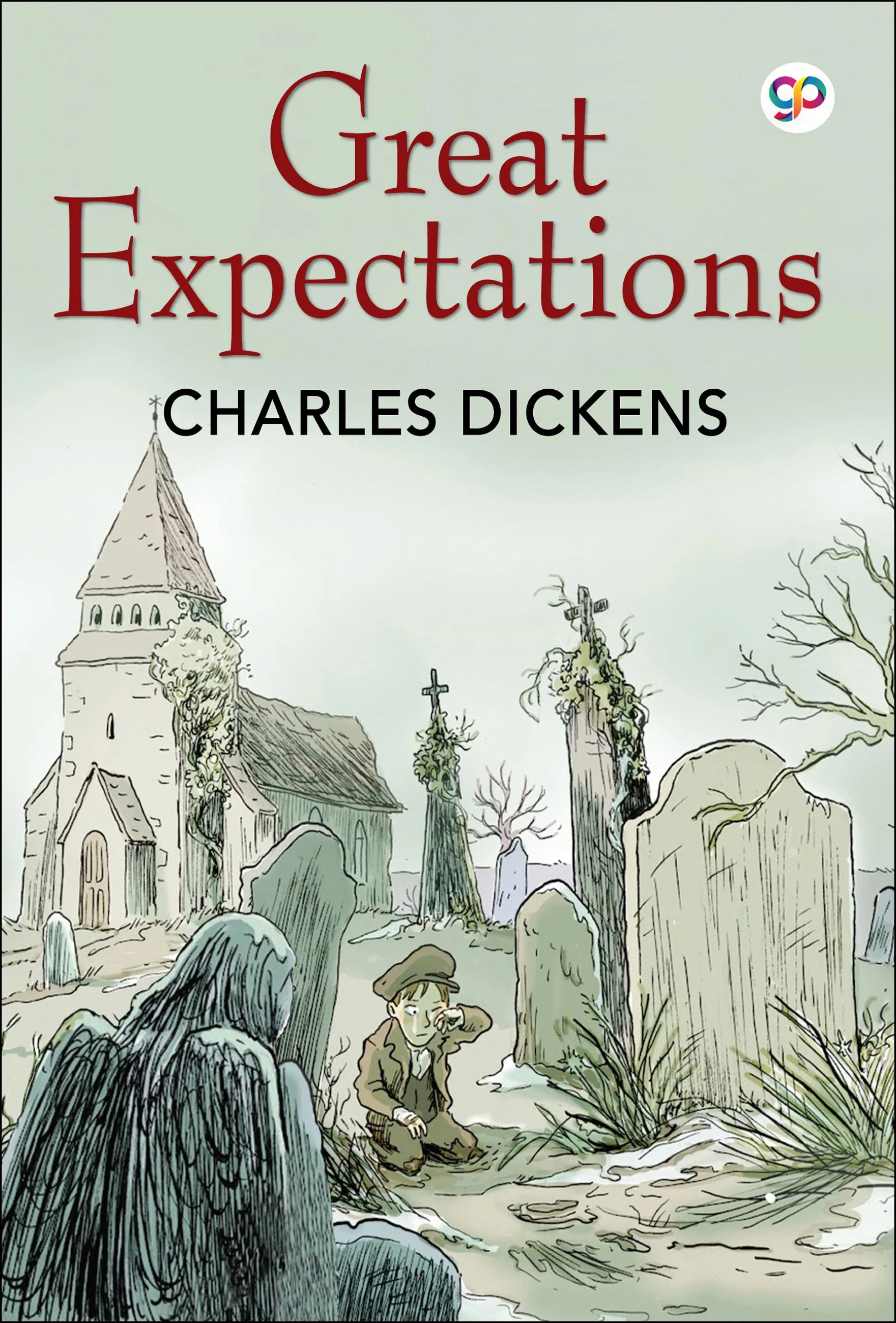
It depicts the growth and personal development of an orphan named Pip. The novel was first published in serial form in Dickens's weekly periodical 'All the Year Round', from 1 December 1860 to August 1861. It is set among the marshes of Kent and in London in the early to mid-1800s. The Great Expectations contains some of Dickens most memorable scenes, including its opening, in a graveyard, when the young orphan Pip is accosted by the escaped convict, Abel Magwitch. It is full of extreme imagery, poverty, prison ships, barriers and chains, and fights to the death. Upon its release, Thomas Carlyle spoke of "All that Pip's nonsense". Later, George Bernard Shaw praised the novel as "All of one piece and consistently truthfull". Dickens felt Great Expectations was his best work, calling it "a very fine idea".
Throughout the narrative, typical Dickensian themes emerge: wealth and poverty, love and rejection, and the eventual triumph of good over evil. This book has become very popular and is now taught as a classic in many English classes. It has been translated into many languages and adapted many times in film and other media.
It depicts the growth and personal development of an orphan named Pip. The novel was first published in serial form in Dickens's weekly periodical 'All the Year Round', from 1 December 1860 to August 1861. It is set among the marshes of Kent and in London in the early to mid-1800s. The Great Expectations contains some of Dickens most memorable scenes, including its opening, in a graveyard, when the young orphan Pip is accosted by the escaped convict, Abel Magwitch. It is full of extreme imagery, poverty, prison ships, barriers and chains, and fights to the death. Upon its release, Thomas Carlyle spoke of "All that Pip's nonsense". Later, George Bernard Shaw praised the novel as "All of one piece and consistently truthfull". Dickens felt Great Expectations was his best work, calling it "a very fine idea".
Throughout the narrative, typical Dickensian themes emerge: wealth and poverty, love and rejection, and the eventual triumph of good over evil. This book has become very popular and is now taught as a classic in many English classes. It has been translated into many languages and adapted many times in film and other media.
Author Biography
Charles Dickens (7 February 1812 – 9 June 1870) was an English writer and social critic. He created some of the world's best-known fictional characters and is regarded as the greatest novelist of the Victorian era. His works enjoyed unprecedented popularity during his lifetime, and by the twentieth century critics and scholars had recognised him as a literary genius. His novels and short stories enjoy lasting popularity.
The second of eight children, he grew up in a family frequently beset by financial insecurity. At age eleven, Dickens was taken out of school and sent to work in London backing warehouse, where his job was to paste labels on bottles for six shillings a week. His father John Dickens, was a warmhearted but improvident man. When he was condemned the Marshela Prison for unpaid debts, he unwisely agreed that Charles should stay in lodgings and continue working while the rest of the family joined him in jail. This three-month separation caused Charles much pain; his experiences as a child alone in a huge city—cold, isolated with barely enough to eat—haunted him for the rest of his life.
When the family fortunes improved, Charles went back to school, after which he became an office boy, a freelance reporter and finally an author. With Pickwick Papers (1836-7) he achieved immediate fame; in a few years he was easily the most popular and respected writer of his time. It has been estimated that one out of every ten persons in Victorian England was a Dickens reader. Oliver Twist (1837), Nicholas Nickleby (1838-9) and The Old Curiosity Shop (1840-41) were huge successes. Martin Chuzzlewit (1843-4) was less so, but Dickens followed it with his unforgettable, A Christmas Carol (1843), Bleak House (1852-3), Hard Times (1854) and Little Dorrit (1855-7) reveal his deepening concern for the injustices of British Society. A Tale of Two Cities (1859), Great Expectations (1860-1) and Our Mutual Friend (1864-5) complete his major works.
Dickens's marriage to Catherine Hoggarth produced ten children but ended in separation in 1858. In that year he began a series of exhausting public readings; his health gradually declined. After putting in a full day's work at his home at Gads Hill, Kent on June 8, 1870, Dickens suffered a stroke, and he died the following day.
He was a sympathiser with the poor, the suffering, and the oppressed; and by his death, one of England's greatest writers is lost to the world.
The second of eight children, he grew up in a family frequently beset by financial insecurity. At age eleven, Dickens was taken out of school and sent to work in London backing warehouse, where his job was to paste labels on bottles for six shillings a week. His father John Dickens, was a warmhearted but improvident man. When he was condemned the Marshela Prison for unpaid debts, he unwisely agreed that Charles should stay in lodgings and continue working while the rest of the family joined him in jail. This three-month separation caused Charles much pain; his experiences as a child alone in a huge city—cold, isolated with barely enough to eat—haunted him for the rest of his life.
When the family fortunes improved, Charles went back to school, after which he became an office boy, a freelance reporter and finally an author. With Pickwick Papers (1836-7) he achieved immediate fame; in a few years he was easily the most popular and respected writer of his time. It has been estimated that one out of every ten persons in Victorian England was a Dickens reader. Oliver Twist (1837), Nicholas Nickleby (1838-9) and The Old Curiosity Shop (1840-41) were huge successes. Martin Chuzzlewit (1843-4) was less so, but Dickens followed it with his unforgettable, A Christmas Carol (1843), Bleak House (1852-3), Hard Times (1854) and Little Dorrit (1855-7) reveal his deepening concern for the injustices of British Society. A Tale of Two Cities (1859), Great Expectations (1860-1) and Our Mutual Friend (1864-5) complete his major works.
Dickens's marriage to Catherine Hoggarth produced ten children but ended in separation in 1858. In that year he began a series of exhausting public readings; his health gradually declined. After putting in a full day's work at his home at Gads Hill, Kent on June 8, 1870, Dickens suffered a stroke, and he died the following day.
He was a sympathiser with the poor, the suffering, and the oppressed; and by his death, one of England's greatest writers is lost to the world.
Editorial Reviews
Editorial Reviews will be added soon…
Book Summary
Charles Dickens’s Great Expectations is a deeply moving novel about ambition, social class, guilt, love, identity, and the painful process of growing up. At its heart is the story of Philip Pirrip, known as Pip, an orphan who dreams of becoming a gentleman and escaping the humble world into which he was born. What begins as a story of mysterious fortune and social advancement gradually becomes something much more personal: a journey in which Pip learns that wealth, status, and appearances cannot give a person the happiness or moral worth he seeks.
The novel opens with Pip as a young orphan living in the Kent marshes with his older sister and her husband, Joe Gargery, a kind-hearted blacksmith. Pip is frightened and lonely, and his life changes dramatically when he encounters an escaped convict named Abel Magwitch in a churchyard. Magwitch threatens him into bringing food and a file to help him remove his chains. Although Pip is terrified, he secretly helps the convict. This encounter becomes one of the most important events in his life, though he does not understand its significance at the time.
Pip’s home life is difficult because his sister, Mrs. Joe, is harsh and frequently reminds him that she raised him “by hand.” Joe, however, treats Pip with affection and patience. Joe is one of the novel’s moral centers: he is poor and uneducated, but he possesses generosity, loyalty, humility, and genuine love.
Pip’s life changes again when he is invited to the strange house of Miss Havisham, a wealthy woman who lives in isolation at Satis House. Miss Havisham was abandoned by her fiancé on her wedding day and has remained emotionally trapped in that moment. She still wears her wedding dress, and the clocks in her house have been stopped. Her entire existence has become a monument to bitterness and revenge.
At Satis House, Pip meets Estella, Miss Havisham’s beautiful but proud adopted daughter. Estella looks down on Pip because of his rough manners, clothing, and social position. She calls him common and makes him painfully conscious of his humble background. Pip quickly falls in love with her, even though she treats him cruelly. His desire to become a gentleman becomes closely connected with his desire to win Estella’s love.
Pip begins to feel ashamed of Joe and his simple life. He wants to become educated, wealthy, sophisticated, and socially respectable. This is one of the novel’s most important conflicts. Pip does not initially understand that his desire for improvement is becoming mixed with contempt for the people and values that once gave his life meaning.
After several years, Pip receives extraordinary news. A mysterious benefactor has provided him with a large fortune and arranged for him to move to London and become a gentleman. Pip immediately assumes that Miss Havisham is the benefactor and that she intends to prepare him to marry Estella. His “great expectations” fill him with excitement. He leaves Joe and the forge behind and begins his new life in London.
In London, Pip becomes acquainted with Herbert Pocket, who becomes his closest friend. Herbert is cheerful and honest, and Pip gradually discovers that Herbert is also connected with Miss Havisham. Pip spends money freely, adopts fashionable habits, and becomes increasingly concerned with appearances. His new social position gives him pleasure, but it also separates him from Joe.
Pip’s expectations, however, do not make him truly happy. He becomes deeply conscious of his debts and feels increasingly uncomfortable about the artificial world of London society. Dickens uses Pip’s transformation to criticize a society that equates wealth with worth. Pip has money, but he lacks the peace and affection that he once possessed.
Meanwhile, Estella continues to occupy Pip’s thoughts. She is beautiful and sophisticated, but she has been raised to hurt people emotionally. Miss Havisham has deliberately trained her to break men’s hearts as revenge for the suffering she experienced. Pip nevertheless believes that Estella may eventually love him.
Pip’s understanding of his own past begins to change when Magwitch suddenly returns. The escaped convict whom Pip helped as a child has become a wealthy man in Australia. He reveals that he is Pip’s secret benefactor. Pip’s great expectations did not come from Miss Havisham at all. Magwitch earned his fortune and used it to transform the boy who had once shown him kindness.
This revelation devastates Pip. He had imagined that his fortune connected him to the refined world of Miss Havisham and Estella. Instead, the source of his wealth is the convict he had been taught to fear and despise. Pip is forced to confront the prejudice within himself.
Yet this moment also begins his moral transformation. Rather than abandoning Magwitch, Pip gradually develops genuine affection and respect for him. He realizes that Magwitch, despite his criminal past, has shown him extraordinary loyalty. Pip tries to help him escape England, because Magwitch is in danger of being arrested.
The escape fails. Magwitch is captured and badly injured. His wealth is confiscated, and he is sentenced to death. During his final days, Pip tells him that his daughter is alive, although Pip knows that the truth about Estella’s parentage has remained hidden. Magwitch dies with the comfort of believing that his daughter became a beautiful and refined woman.
The revelation about Estella is another major turning point. Pip discovers that Estella is Magwitch’s daughter and that her mother is Molly, a woman associated with Jaggers, the powerful lawyer who has managed Pip’s affairs. Miss Havisham had taken Estella and raised her according to her own bitter philosophy. Estella, therefore, is not simply the idealized woman Pip imagined. She is another wounded human being shaped by the choices of others.
Miss Havisham eventually recognizes the harm she has caused. Pip confronts her about Estella, and she realizes that she has deliberately encouraged Pip’s suffering. In a moment of remorse, she begs for forgiveness. Shortly afterward, she is badly injured when her dress catches fire. Pip tries to save her, but she later dies.
Pip’s relationship with Joe is also central to his emotional journey. When Pip becomes seriously ill and falls into debt, Joe quietly comes to London and takes care of him. Joe does not lecture him or punish him for his earlier arrogance. Instead, he simply helps him because he loves him.
This act of kindness finally allows Pip to understand what he had failed to value. Joe’s goodness has never depended on money, education, or social status. He is the gentleman in the moral sense, even though he is not a gentleman according to society’s definition. Pip realizes that his pursuit of wealth has made him overlook the person who loved him most faithfully.
Joe eventually returns to the forge, and Pip is left with a painful but valuable understanding of his past. His fortune is gone, his social ambitions have collapsed, and his romantic dreams have been complicated by reality. Yet he is morally richer because he has learned humility, gratitude, and compassion.
Estella herself changes through suffering. Her marriage to the cruel Bentley Drummle ends badly, and she eventually becomes more capable of understanding the pain she has caused others. In the novel’s ending, Pip and Estella meet again. Depending on the version of the ending, Dickens leaves their future together somewhat ambiguous, but the emotional meaning is clear: both have been changed by suffering.
Great Expectations is ultimately a novel about learning to see people beyond appearances. Pip begins by believing that wealth will make him worthy, that social refinement equals goodness, and that winning Estella will complete his life. He gradually discovers that these beliefs are false. The people he once considered insignificant—especially Joe—possess qualities far more valuable than money can purchase.
Dickens also explores the damaging effects of shame. Pip’s shame about his poverty is not simply a personal weakness; it reflects a society that teaches people to measure themselves and others according to wealth and status. His transformation therefore becomes a criticism of class prejudice as much as a personal coming-of-age story.
The title Great Expectations carries an ironic meaning. Pip’s expectations are “great” because he imagines that money, education, and social advancement will bring him everything he desires. But his real expectations turn out to be misguided. His greatest growth comes only after those dreams collapse.
In the end, Dickens offers a humane message: a person’s true worth is revealed not by possessions or social position but by loyalty, kindness, courage, and the ability to recognize one’s own mistakes. Pip’s journey is painful because he must lose the life he imagined before he can appreciate the life he once had. That is what makes Great Expectations such a lasting novel. It is not merely a story about a boy who becomes rich and then loses his fortune. It is the story of a human being learning, slowly and painfully, what is truly worth having.
The novel opens with Pip as a young orphan living in the Kent marshes with his older sister and her husband, Joe Gargery, a kind-hearted blacksmith. Pip is frightened and lonely, and his life changes dramatically when he encounters an escaped convict named Abel Magwitch in a churchyard. Magwitch threatens him into bringing food and a file to help him remove his chains. Although Pip is terrified, he secretly helps the convict. This encounter becomes one of the most important events in his life, though he does not understand its significance at the time.
Pip’s home life is difficult because his sister, Mrs. Joe, is harsh and frequently reminds him that she raised him “by hand.” Joe, however, treats Pip with affection and patience. Joe is one of the novel’s moral centers: he is poor and uneducated, but he possesses generosity, loyalty, humility, and genuine love.
Pip’s life changes again when he is invited to the strange house of Miss Havisham, a wealthy woman who lives in isolation at Satis House. Miss Havisham was abandoned by her fiancé on her wedding day and has remained emotionally trapped in that moment. She still wears her wedding dress, and the clocks in her house have been stopped. Her entire existence has become a monument to bitterness and revenge.
At Satis House, Pip meets Estella, Miss Havisham’s beautiful but proud adopted daughter. Estella looks down on Pip because of his rough manners, clothing, and social position. She calls him common and makes him painfully conscious of his humble background. Pip quickly falls in love with her, even though she treats him cruelly. His desire to become a gentleman becomes closely connected with his desire to win Estella’s love.
Pip begins to feel ashamed of Joe and his simple life. He wants to become educated, wealthy, sophisticated, and socially respectable. This is one of the novel’s most important conflicts. Pip does not initially understand that his desire for improvement is becoming mixed with contempt for the people and values that once gave his life meaning.
After several years, Pip receives extraordinary news. A mysterious benefactor has provided him with a large fortune and arranged for him to move to London and become a gentleman. Pip immediately assumes that Miss Havisham is the benefactor and that she intends to prepare him to marry Estella. His “great expectations” fill him with excitement. He leaves Joe and the forge behind and begins his new life in London.
In London, Pip becomes acquainted with Herbert Pocket, who becomes his closest friend. Herbert is cheerful and honest, and Pip gradually discovers that Herbert is also connected with Miss Havisham. Pip spends money freely, adopts fashionable habits, and becomes increasingly concerned with appearances. His new social position gives him pleasure, but it also separates him from Joe.
Pip’s expectations, however, do not make him truly happy. He becomes deeply conscious of his debts and feels increasingly uncomfortable about the artificial world of London society. Dickens uses Pip’s transformation to criticize a society that equates wealth with worth. Pip has money, but he lacks the peace and affection that he once possessed.
Meanwhile, Estella continues to occupy Pip’s thoughts. She is beautiful and sophisticated, but she has been raised to hurt people emotionally. Miss Havisham has deliberately trained her to break men’s hearts as revenge for the suffering she experienced. Pip nevertheless believes that Estella may eventually love him.
Pip’s understanding of his own past begins to change when Magwitch suddenly returns. The escaped convict whom Pip helped as a child has become a wealthy man in Australia. He reveals that he is Pip’s secret benefactor. Pip’s great expectations did not come from Miss Havisham at all. Magwitch earned his fortune and used it to transform the boy who had once shown him kindness.
This revelation devastates Pip. He had imagined that his fortune connected him to the refined world of Miss Havisham and Estella. Instead, the source of his wealth is the convict he had been taught to fear and despise. Pip is forced to confront the prejudice within himself.
Yet this moment also begins his moral transformation. Rather than abandoning Magwitch, Pip gradually develops genuine affection and respect for him. He realizes that Magwitch, despite his criminal past, has shown him extraordinary loyalty. Pip tries to help him escape England, because Magwitch is in danger of being arrested.
The escape fails. Magwitch is captured and badly injured. His wealth is confiscated, and he is sentenced to death. During his final days, Pip tells him that his daughter is alive, although Pip knows that the truth about Estella’s parentage has remained hidden. Magwitch dies with the comfort of believing that his daughter became a beautiful and refined woman.
The revelation about Estella is another major turning point. Pip discovers that Estella is Magwitch’s daughter and that her mother is Molly, a woman associated with Jaggers, the powerful lawyer who has managed Pip’s affairs. Miss Havisham had taken Estella and raised her according to her own bitter philosophy. Estella, therefore, is not simply the idealized woman Pip imagined. She is another wounded human being shaped by the choices of others.
Miss Havisham eventually recognizes the harm she has caused. Pip confronts her about Estella, and she realizes that she has deliberately encouraged Pip’s suffering. In a moment of remorse, she begs for forgiveness. Shortly afterward, she is badly injured when her dress catches fire. Pip tries to save her, but she later dies.
Pip’s relationship with Joe is also central to his emotional journey. When Pip becomes seriously ill and falls into debt, Joe quietly comes to London and takes care of him. Joe does not lecture him or punish him for his earlier arrogance. Instead, he simply helps him because he loves him.
This act of kindness finally allows Pip to understand what he had failed to value. Joe’s goodness has never depended on money, education, or social status. He is the gentleman in the moral sense, even though he is not a gentleman according to society’s definition. Pip realizes that his pursuit of wealth has made him overlook the person who loved him most faithfully.
Joe eventually returns to the forge, and Pip is left with a painful but valuable understanding of his past. His fortune is gone, his social ambitions have collapsed, and his romantic dreams have been complicated by reality. Yet he is morally richer because he has learned humility, gratitude, and compassion.
Estella herself changes through suffering. Her marriage to the cruel Bentley Drummle ends badly, and she eventually becomes more capable of understanding the pain she has caused others. In the novel’s ending, Pip and Estella meet again. Depending on the version of the ending, Dickens leaves their future together somewhat ambiguous, but the emotional meaning is clear: both have been changed by suffering.
Great Expectations is ultimately a novel about learning to see people beyond appearances. Pip begins by believing that wealth will make him worthy, that social refinement equals goodness, and that winning Estella will complete his life. He gradually discovers that these beliefs are false. The people he once considered insignificant—especially Joe—possess qualities far more valuable than money can purchase.
Dickens also explores the damaging effects of shame. Pip’s shame about his poverty is not simply a personal weakness; it reflects a society that teaches people to measure themselves and others according to wealth and status. His transformation therefore becomes a criticism of class prejudice as much as a personal coming-of-age story.
The title Great Expectations carries an ironic meaning. Pip’s expectations are “great” because he imagines that money, education, and social advancement will bring him everything he desires. But his real expectations turn out to be misguided. His greatest growth comes only after those dreams collapse.
In the end, Dickens offers a humane message: a person’s true worth is revealed not by possessions or social position but by loyalty, kindness, courage, and the ability to recognize one’s own mistakes. Pip’s journey is painful because he must lose the life he imagined before he can appreciate the life he once had. That is what makes Great Expectations such a lasting novel. It is not merely a story about a boy who becomes rich and then loses his fortune. It is the story of a human being learning, slowly and painfully, what is truly worth having.
Sample Chapters
Sample Chapters will be added soon…
Reader Reviews
No reviews yet.
Great Expectations
Download Cover Image
Do you want to download the full cover image for Great Expectations?