
The Autobiography of Mark Twain
eBook
• INR 70.00
• English
• 9788180320859
No ratings yet
| Publisher | General Press |
|---|---|
| ISBN13 | 9788180320859 |
| ASIN/SKU | B0727QMSVZ |
| Book Format | eBook |
| Language | English |
| List Price | INR 70.00 |
| Subject Code | BIO007000, HIS036000 |
| Book Code | BD00068268 |
Buy this Book
Amazon Stores
Ebook Stores
Other Stores
Discover The Autobiography of Mark Twain by Mark Twain. This book is published by General Press in eBook format, ISBN 9788180320859, ASIN B0727QMSVZ, under Biographies and Memoirs, Autobiographies, American Classics.
Book Description
In his autobiography Mark Twain tells his story in his own way, freely expressing his joys and sorrows, his affections and hatreds, his rages and reverence—ending, as always, tongue-in-cheek: "Now, then, that is the tale. Some of it is true."
More than the story of a literary career, this memoir is anchored in the writer’s relation to his family—what they meant to him as a husband, father, and artist. It also brims with many of Twain’s best comic anecdotes about his rambunctious boyhood in Hannibal, his misadventures in the Nevada territory, his notorious Whittier birthday speech, his travels abroad, and more.
Twain published twenty-five chapters from his autobiography in the 'North American Review' in 1906 and 1907. "I intend that this autobiography... shall be read and admired a good many centuries because of its form and method—form and method whereby the past and the present are constantly brought face to face, resulting in contrasts which newly fire up the interest all along, like contact of flint with steel."
More than the story of a literary career, this memoir is anchored in the writer’s relation to his family—what they meant to him as a husband, father, and artist. It also brims with many of Twain’s best comic anecdotes about his rambunctious boyhood in Hannibal, his misadventures in the Nevada territory, his notorious Whittier birthday speech, his travels abroad, and more.
Twain published twenty-five chapters from his autobiography in the 'North American Review' in 1906 and 1907. "I intend that this autobiography... shall be read and admired a good many centuries because of its form and method—form and method whereby the past and the present are constantly brought face to face, resulting in contrasts which newly fire up the interest all along, like contact of flint with steel."
Author Biography
Born Samuel Langhorne Clemens in 1835 in Florida, Missouri, Mark Twain was raised in the bustling river town of Hannibal. The mighty Mississippi River deeply shaped his youth and imagination. After his father's death, he left school at twelve to work as a printer's apprentice, igniting his lifelong connection to publishing. He later fulfilled a childhood dream by becoming a Mississippi steamboat pilot, a profession that provided his famous pen name—a river term indicating a safe depth of two fathoms.
The outbreak of the Civil War in 1861 halted commercial river traffic, prompting Twain to travel west to Nevada in search of silver. When mining proved unsuccessful, he pivoted to journalism. Working as a reporter in Virginia City and San Francisco, he honed his distinctive literary voice: a blend of biting satire, irreverent humor, and keen social observation. In 1865, his humorous short story "The Celebrated Jumping Frog of Calaveras County" became a massive success, catapulting him to national fame.
Settling in Hartford, Connecticut, Twain entered his most prolific creative period. Drawing heavily upon his idyllic boyhood memories, he published The Adventures of Tom Sawyer in 1876. He followed this with his undisputed masterpiece, Adventures of Huckleberry Finn, in 1884. Often celebrated as the Great American Novel, the book revolutionized the country's literature through its pioneering use of colloquial speech and its profound, uncompromising indictment of institutionalized slavery and Southern hypocrisy.
Despite achieving unprecedented international acclaim, Twain's final decades were marred by severe financial instability from failed entrepreneurial investments and profound personal grief, including the deaths of his wife and three of his four children. Consequently, his later writings adopted a noticeably darker, more cynical tone that reflected his growing disillusionment with human nature. He passed away in 1910 at the age of seventy-four, leaving behind an enduring legacy as America's premier humorist and a towering architect of modern American literature.
The outbreak of the Civil War in 1861 halted commercial river traffic, prompting Twain to travel west to Nevada in search of silver. When mining proved unsuccessful, he pivoted to journalism. Working as a reporter in Virginia City and San Francisco, he honed his distinctive literary voice: a blend of biting satire, irreverent humor, and keen social observation. In 1865, his humorous short story "The Celebrated Jumping Frog of Calaveras County" became a massive success, catapulting him to national fame.
Settling in Hartford, Connecticut, Twain entered his most prolific creative period. Drawing heavily upon his idyllic boyhood memories, he published The Adventures of Tom Sawyer in 1876. He followed this with his undisputed masterpiece, Adventures of Huckleberry Finn, in 1884. Often celebrated as the Great American Novel, the book revolutionized the country's literature through its pioneering use of colloquial speech and its profound, uncompromising indictment of institutionalized slavery and Southern hypocrisy.
Despite achieving unprecedented international acclaim, Twain's final decades were marred by severe financial instability from failed entrepreneurial investments and profound personal grief, including the deaths of his wife and three of his four children. Consequently, his later writings adopted a noticeably darker, more cynical tone that reflected his growing disillusionment with human nature. He passed away in 1910 at the age of seventy-four, leaving behind an enduring legacy as America's premier humorist and a towering architect of modern American literature.
Editorial Reviews
Editorial Reviews will be added soon…
Book Summary
The Autobiography of Mark Twain is a fascinating, humorous, unconventional, and deeply personal account of the life and mind of Samuel Langhorne Clemens, better known by his pen name Mark Twain. Unlike a conventional autobiography that moves neatly from childhood to old age, Twain’s memoir is deliberately loose, conversational, and digressive. He jumps between memories, people, stories, opinions, family experiences, and reflections on American society. The result is less a formal record of his life than a portrait of his personality. Twain wanted to tell his story freely, often without worrying about chronology or conventional literary rules. His autobiography therefore reveals not only what happened to him but also how he remembered, interpreted, mocked, questioned, and sometimes exaggerated the world around him.
Mark Twain’s autobiography is especially valuable because Twain was one of the great observers of American life. His career moved through several worlds: the Mississippi River, frontier journalism, mining communities, public lectures, international travel, literary fame, family life, and the rapidly changing industrial America of the nineteenth century. His writing career produced some of the most influential works in American literature, including The Adventures of Tom Sawyer, Adventures of Huckleberry Finn, The Prince and the Pauper, and A Connecticut Yankee in King Arthur’s Court. Yet the autobiography is less interested in presenting these books as monuments than in describing the experiences, friendships, accidents, ambitions, disappointments, and observations that shaped the man who wrote them.
Twain begins by looking backward at his childhood in Missouri. He was born in 1835 in the small town of Florida, Missouri, and grew up in Hannibal, a Mississippi River town that would become central to his imagination. His childhood was surrounded by the river, steamboats, small-town characters, slavery, local legends, games, adventures, and the freedoms and dangers of life in a frontier community. The young Twain was intensely curious and observant. The people he encountered in Hannibal later became recognizable in transformed form throughout his fiction. His memories of childhood therefore serve as a kind of foundation for understanding the imaginative world of his novels.
The Mississippi River is one of the most important subjects in Twain’s life story. As a boy, he was fascinated by steamboats and dreamed of becoming a river pilot. Eventually he achieved that ambition and trained as a pilot on the Mississippi. The experience was both practical and transformative. Learning the river required intense observation because its sandbars, channels, currents, islands, and landmarks could change. A pilot had to understand not only what the river looked like but how it behaved. Twain later treated this experience as an education in observation, language, human character, and the American landscape. His river years also gave him the pen name “Mark Twain,” a term connected with a measurement of navigable water depth.
The Civil War disrupted Twain’s career as a river pilot. When the war began, the river trade was interrupted, and Twain briefly joined a Confederate militia unit before leaving and heading west. His experiences during this period contributed to his later skepticism toward war and political romanticism. Twain’s relationship with the Civil War was complicated because the conflict was both a national catastrophe and a turning point in his personal life. His movement west eventually brought him into the world of mining, frontier journalism, and professional writing.
In Nevada and California, Twain discovered that his talent for storytelling could become a career. He worked as a journalist and began publishing humorous sketches. His writing style developed rapidly as he learned how to turn ordinary people and everyday situations into comic material. One of the most important early successes was “The Celebrated Jumping Frog of Calaveras County,” which brought him national attention. Twain’s humor was distinctive because it combined exaggeration with close observation. He could make a story ridiculous while still revealing something true about the people involved.
Twain’s rise to literary fame was closely connected with his ability to understand American speech. He did not write about Americans from a distant, formal perspective. He listened to how people actually talked and incorporated regional voices, slang, exaggerations, rhythms, and storytelling habits into his work. This became particularly important in Huckleberry Finn, where dialect and first-person narration create the impression of an authentic voice. His autobiography reveals how closely this literary style was connected to his experience of American life.
As Twain became more famous, he began traveling widely. His travels across the United States and abroad expanded his understanding of culture and human behavior. He became a successful lecturer as well as an author, and his public performances were an important part of his career. Twain possessed a natural ability to entertain an audience. He understood timing, exaggeration, irony, and the value of a carefully constructed story. His lectures also reinforced his reputation as one of America’s great humorists.
Marriage and family life form another important part of the autobiography. Twain married Olivia Langdon in 1870, and their relationship became central to his personal life. They had four children, although their family experienced profound tragedy, including the deaths of several of their children at relatively young ages. These losses affected Twain deeply. Behind the public humorist was a man who experienced grief, financial anxiety, illness, and personal disappointment. The autobiography reveals that his comic personality did not mean that he was untouched by sorrow.
Twain’s relationship with his wife was complex and affectionate. Olivia came from a wealthy and socially prominent family, and her influence affected Twain’s personal and literary life. Their household at Hartford became an important center for family, friends, writers, and intellectual activity. Twain’s domestic life gave him stability for many years, even as his professional ambitions expanded. His autobiography shows how much his public identity as Mark Twain depended upon the private relationships that surrounded him.
One of the most interesting aspects of Twain’s memoir is his attitude toward fame. He enjoyed attention but also understood its absurdity. Public figures, in his view, were often transformed into exaggerated versions of themselves. Twain himself became a celebrity whose white suit, mustache, humor, and public persona were widely recognized. Yet he remained aware of the difference between the man people thought they knew and the private individual behind the image. His autobiography repeatedly plays with this tension between public reputation and private reality.
Twain was also fascinated by technology and modern progress. He lived during a period of enormous industrial and scientific change, and he was enthusiastic about inventions. He invested in new technologies and became involved in several business ventures, some of which failed disastrously. His financial difficulties reveal another side of his personality. He was not simply the successful author of classic novels; he was also an ambitious businessman who sometimes trusted inventions and schemes that did not work. These failures eventually contributed to severe financial pressure and forced him to undertake extensive lecture tours to repay his debts.
His financial problems are important because they challenge the assumption that literary success automatically produces financial security. Twain earned large sums of money but also lost considerable amounts through unsuccessful investments. He eventually made a remarkable effort to repay his creditors. His worldwide lecture tours became both a financial necessity and a new phase of his public career. The experience strengthened his reputation as a performer and gave him an opportunity to observe different societies and cultures.
Twain’s humor in the autobiography is often directed at himself. He enjoys presenting his own mistakes, misunderstandings, failures, and contradictions. This self-mockery makes the memoir feel intimate. He does not want readers to see him as an infallible literary genius. Instead, he presents himself as someone who often stumbled into success, made foolish decisions, misunderstood situations, and learned through experience. The humor becomes a form of honesty because Twain knows that human beings are rarely as rational or dignified as they imagine themselves to be.
His views on politics, religion, society, and human nature are another major part of the book. Twain was increasingly critical of social hypocrisy and religious certainty as he grew older. He questioned institutions that claimed moral authority while tolerating cruelty and injustice. His skepticism toward organized religion became more pronounced, particularly after the deaths and hardships he experienced. These reflections can be sharp, angry, and deliberately provocative. They show the darker side of the humorist: Twain could be deeply skeptical about humanity’s claims to morality and progress.
Race and slavery are especially important subjects in understanding Twain’s life and work. He grew up in a slaveholding society and witnessed slavery as a child. His later writing increasingly criticized racism and the moral contradictions of a society that claimed liberty while denying freedom to millions of people. His treatment of race remains the subject of significant scholarly discussion because Twain’s language sometimes reflects the racist vocabulary of his historical period even as his narratives expose the cruelty of racism. The autobiography provides additional context for understanding how his attitudes developed over time.
Twain’s reflections on American democracy are similarly complex. He admired the ideals of freedom and individual independence but was often disgusted by political corruption, greed, hypocrisy, and the abuse of power. His humor became a tool for exposing the gap between what institutions claimed to represent and how they actually behaved. This critical spirit runs through much of his later writing and helps explain why his work continues to appeal to readers interested in American history and culture.
Literature itself is another recurring concern. Twain discusses writers, editors, publishers, critics, and the literary marketplace with a mixture of affection and irritation. He understood that literature was both an art and a business. Authors depended upon publishers, audiences, publicity, and sales, and Twain was unusually conscious of all these forces. His own success made him an important participant in the literary industry, but he never completely trusted its judgments. He often preferred the response of ordinary readers to the pronouncements of professional critics.
The autobiography also reveals Twain’s extraordinary storytelling instinct. He frequently interrupts one memory with another, follows an apparently insignificant detail into a long anecdote, or allows a story to develop simply because it amuses him. This structure is not a flaw; it is part of the experience Twain intended. He believed that memories do not naturally arrive in chronological order. One recollection triggers another, and an old story may suddenly become relevant to a current thought. His autobiography therefore resembles conversation more than a carefully organized historical record.
One of the most striking features of the work is Twain’s use of humor to approach death. As he grows older, memories of friends, family members, and fellow writers become increasingly important. Many of the people he once knew have died, and Twain reflects on the passage of time with both sadness and irony. His humor does not erase grief. Instead, it becomes a way of living alongside it. He can joke about mortality while recognizing that death has taken many people he loved.
The autobiography also presents Twain as a man deeply aware of contradiction. He could be generous and irritable, optimistic about technology and pessimistic about humanity, financially ambitious and financially reckless, intensely social and deeply private. He could celebrate American energy while criticizing American society. These contradictions make the memoir more convincing because Twain does not attempt to reduce himself to a single personality type.
Ultimately, The Autobiography of Mark Twain is not simply the chronological story of Samuel Clemens. It is an exploration of memory, identity, humor, fame, family, American history, and human nature. Twain’s life moves from a small Mississippi town to the international stage, from river pilot to journalist, from frontier storyteller to celebrated author, and from financial success to painful failure and eventual recovery. Throughout these changes, his greatest constant is his ability to observe people and turn their contradictions into stories.
For readers searching for The Autobiography of Mark Twain summary, analysis, themes, or an overview of Mark Twain’s life, the book is best understood as a portrait of a storyteller who refused to separate humor from seriousness. Twain uses jokes to examine grief, satire to challenge hypocrisy, and personal memories to explore larger questions about America. His life story is inseparable from the development of modern American literature because his experiences supplied the voices, landscapes, conflicts, and social observations that shaped his fiction.
The enduring appeal of The Autobiography of Mark Twain lies in its humanity. Twain does not present life as a neat success story. He remembers triumphs alongside failures, laughter alongside grief, ambition alongside regret, and public fame alongside private suffering. His autobiography shows how a person can be shaped by accidents, opportunities, friendships, family, travel, historical events, and personal mistakes. Above all, it demonstrates the extraordinary power of storytelling. Mark Twain transformed the world around him into literature, and in his autobiography he turns his own life into one final, unfinished story—full of humor, contradiction, memory, and the unmistakable voice of the man who helped define American literature.
Mark Twain’s autobiography is especially valuable because Twain was one of the great observers of American life. His career moved through several worlds: the Mississippi River, frontier journalism, mining communities, public lectures, international travel, literary fame, family life, and the rapidly changing industrial America of the nineteenth century. His writing career produced some of the most influential works in American literature, including The Adventures of Tom Sawyer, Adventures of Huckleberry Finn, The Prince and the Pauper, and A Connecticut Yankee in King Arthur’s Court. Yet the autobiography is less interested in presenting these books as monuments than in describing the experiences, friendships, accidents, ambitions, disappointments, and observations that shaped the man who wrote them.
Twain begins by looking backward at his childhood in Missouri. He was born in 1835 in the small town of Florida, Missouri, and grew up in Hannibal, a Mississippi River town that would become central to his imagination. His childhood was surrounded by the river, steamboats, small-town characters, slavery, local legends, games, adventures, and the freedoms and dangers of life in a frontier community. The young Twain was intensely curious and observant. The people he encountered in Hannibal later became recognizable in transformed form throughout his fiction. His memories of childhood therefore serve as a kind of foundation for understanding the imaginative world of his novels.
The Mississippi River is one of the most important subjects in Twain’s life story. As a boy, he was fascinated by steamboats and dreamed of becoming a river pilot. Eventually he achieved that ambition and trained as a pilot on the Mississippi. The experience was both practical and transformative. Learning the river required intense observation because its sandbars, channels, currents, islands, and landmarks could change. A pilot had to understand not only what the river looked like but how it behaved. Twain later treated this experience as an education in observation, language, human character, and the American landscape. His river years also gave him the pen name “Mark Twain,” a term connected with a measurement of navigable water depth.
The Civil War disrupted Twain’s career as a river pilot. When the war began, the river trade was interrupted, and Twain briefly joined a Confederate militia unit before leaving and heading west. His experiences during this period contributed to his later skepticism toward war and political romanticism. Twain’s relationship with the Civil War was complicated because the conflict was both a national catastrophe and a turning point in his personal life. His movement west eventually brought him into the world of mining, frontier journalism, and professional writing.
In Nevada and California, Twain discovered that his talent for storytelling could become a career. He worked as a journalist and began publishing humorous sketches. His writing style developed rapidly as he learned how to turn ordinary people and everyday situations into comic material. One of the most important early successes was “The Celebrated Jumping Frog of Calaveras County,” which brought him national attention. Twain’s humor was distinctive because it combined exaggeration with close observation. He could make a story ridiculous while still revealing something true about the people involved.
Twain’s rise to literary fame was closely connected with his ability to understand American speech. He did not write about Americans from a distant, formal perspective. He listened to how people actually talked and incorporated regional voices, slang, exaggerations, rhythms, and storytelling habits into his work. This became particularly important in Huckleberry Finn, where dialect and first-person narration create the impression of an authentic voice. His autobiography reveals how closely this literary style was connected to his experience of American life.
As Twain became more famous, he began traveling widely. His travels across the United States and abroad expanded his understanding of culture and human behavior. He became a successful lecturer as well as an author, and his public performances were an important part of his career. Twain possessed a natural ability to entertain an audience. He understood timing, exaggeration, irony, and the value of a carefully constructed story. His lectures also reinforced his reputation as one of America’s great humorists.
Marriage and family life form another important part of the autobiography. Twain married Olivia Langdon in 1870, and their relationship became central to his personal life. They had four children, although their family experienced profound tragedy, including the deaths of several of their children at relatively young ages. These losses affected Twain deeply. Behind the public humorist was a man who experienced grief, financial anxiety, illness, and personal disappointment. The autobiography reveals that his comic personality did not mean that he was untouched by sorrow.
Twain’s relationship with his wife was complex and affectionate. Olivia came from a wealthy and socially prominent family, and her influence affected Twain’s personal and literary life. Their household at Hartford became an important center for family, friends, writers, and intellectual activity. Twain’s domestic life gave him stability for many years, even as his professional ambitions expanded. His autobiography shows how much his public identity as Mark Twain depended upon the private relationships that surrounded him.
One of the most interesting aspects of Twain’s memoir is his attitude toward fame. He enjoyed attention but also understood its absurdity. Public figures, in his view, were often transformed into exaggerated versions of themselves. Twain himself became a celebrity whose white suit, mustache, humor, and public persona were widely recognized. Yet he remained aware of the difference between the man people thought they knew and the private individual behind the image. His autobiography repeatedly plays with this tension between public reputation and private reality.
Twain was also fascinated by technology and modern progress. He lived during a period of enormous industrial and scientific change, and he was enthusiastic about inventions. He invested in new technologies and became involved in several business ventures, some of which failed disastrously. His financial difficulties reveal another side of his personality. He was not simply the successful author of classic novels; he was also an ambitious businessman who sometimes trusted inventions and schemes that did not work. These failures eventually contributed to severe financial pressure and forced him to undertake extensive lecture tours to repay his debts.
His financial problems are important because they challenge the assumption that literary success automatically produces financial security. Twain earned large sums of money but also lost considerable amounts through unsuccessful investments. He eventually made a remarkable effort to repay his creditors. His worldwide lecture tours became both a financial necessity and a new phase of his public career. The experience strengthened his reputation as a performer and gave him an opportunity to observe different societies and cultures.
Twain’s humor in the autobiography is often directed at himself. He enjoys presenting his own mistakes, misunderstandings, failures, and contradictions. This self-mockery makes the memoir feel intimate. He does not want readers to see him as an infallible literary genius. Instead, he presents himself as someone who often stumbled into success, made foolish decisions, misunderstood situations, and learned through experience. The humor becomes a form of honesty because Twain knows that human beings are rarely as rational or dignified as they imagine themselves to be.
His views on politics, religion, society, and human nature are another major part of the book. Twain was increasingly critical of social hypocrisy and religious certainty as he grew older. He questioned institutions that claimed moral authority while tolerating cruelty and injustice. His skepticism toward organized religion became more pronounced, particularly after the deaths and hardships he experienced. These reflections can be sharp, angry, and deliberately provocative. They show the darker side of the humorist: Twain could be deeply skeptical about humanity’s claims to morality and progress.
Race and slavery are especially important subjects in understanding Twain’s life and work. He grew up in a slaveholding society and witnessed slavery as a child. His later writing increasingly criticized racism and the moral contradictions of a society that claimed liberty while denying freedom to millions of people. His treatment of race remains the subject of significant scholarly discussion because Twain’s language sometimes reflects the racist vocabulary of his historical period even as his narratives expose the cruelty of racism. The autobiography provides additional context for understanding how his attitudes developed over time.
Twain’s reflections on American democracy are similarly complex. He admired the ideals of freedom and individual independence but was often disgusted by political corruption, greed, hypocrisy, and the abuse of power. His humor became a tool for exposing the gap between what institutions claimed to represent and how they actually behaved. This critical spirit runs through much of his later writing and helps explain why his work continues to appeal to readers interested in American history and culture.
Literature itself is another recurring concern. Twain discusses writers, editors, publishers, critics, and the literary marketplace with a mixture of affection and irritation. He understood that literature was both an art and a business. Authors depended upon publishers, audiences, publicity, and sales, and Twain was unusually conscious of all these forces. His own success made him an important participant in the literary industry, but he never completely trusted its judgments. He often preferred the response of ordinary readers to the pronouncements of professional critics.
The autobiography also reveals Twain’s extraordinary storytelling instinct. He frequently interrupts one memory with another, follows an apparently insignificant detail into a long anecdote, or allows a story to develop simply because it amuses him. This structure is not a flaw; it is part of the experience Twain intended. He believed that memories do not naturally arrive in chronological order. One recollection triggers another, and an old story may suddenly become relevant to a current thought. His autobiography therefore resembles conversation more than a carefully organized historical record.
One of the most striking features of the work is Twain’s use of humor to approach death. As he grows older, memories of friends, family members, and fellow writers become increasingly important. Many of the people he once knew have died, and Twain reflects on the passage of time with both sadness and irony. His humor does not erase grief. Instead, it becomes a way of living alongside it. He can joke about mortality while recognizing that death has taken many people he loved.
The autobiography also presents Twain as a man deeply aware of contradiction. He could be generous and irritable, optimistic about technology and pessimistic about humanity, financially ambitious and financially reckless, intensely social and deeply private. He could celebrate American energy while criticizing American society. These contradictions make the memoir more convincing because Twain does not attempt to reduce himself to a single personality type.
Ultimately, The Autobiography of Mark Twain is not simply the chronological story of Samuel Clemens. It is an exploration of memory, identity, humor, fame, family, American history, and human nature. Twain’s life moves from a small Mississippi town to the international stage, from river pilot to journalist, from frontier storyteller to celebrated author, and from financial success to painful failure and eventual recovery. Throughout these changes, his greatest constant is his ability to observe people and turn their contradictions into stories.
For readers searching for The Autobiography of Mark Twain summary, analysis, themes, or an overview of Mark Twain’s life, the book is best understood as a portrait of a storyteller who refused to separate humor from seriousness. Twain uses jokes to examine grief, satire to challenge hypocrisy, and personal memories to explore larger questions about America. His life story is inseparable from the development of modern American literature because his experiences supplied the voices, landscapes, conflicts, and social observations that shaped his fiction.
The enduring appeal of The Autobiography of Mark Twain lies in its humanity. Twain does not present life as a neat success story. He remembers triumphs alongside failures, laughter alongside grief, ambition alongside regret, and public fame alongside private suffering. His autobiography shows how a person can be shaped by accidents, opportunities, friendships, family, travel, historical events, and personal mistakes. Above all, it demonstrates the extraordinary power of storytelling. Mark Twain transformed the world around him into literature, and in his autobiography he turns his own life into one final, unfinished story—full of humor, contradiction, memory, and the unmistakable voice of the man who helped define American literature.
Sample Chapters
Sample Chapters will be added soon…
Reader Reviews
No reviews yet.
The Autobiography of Mark Twain
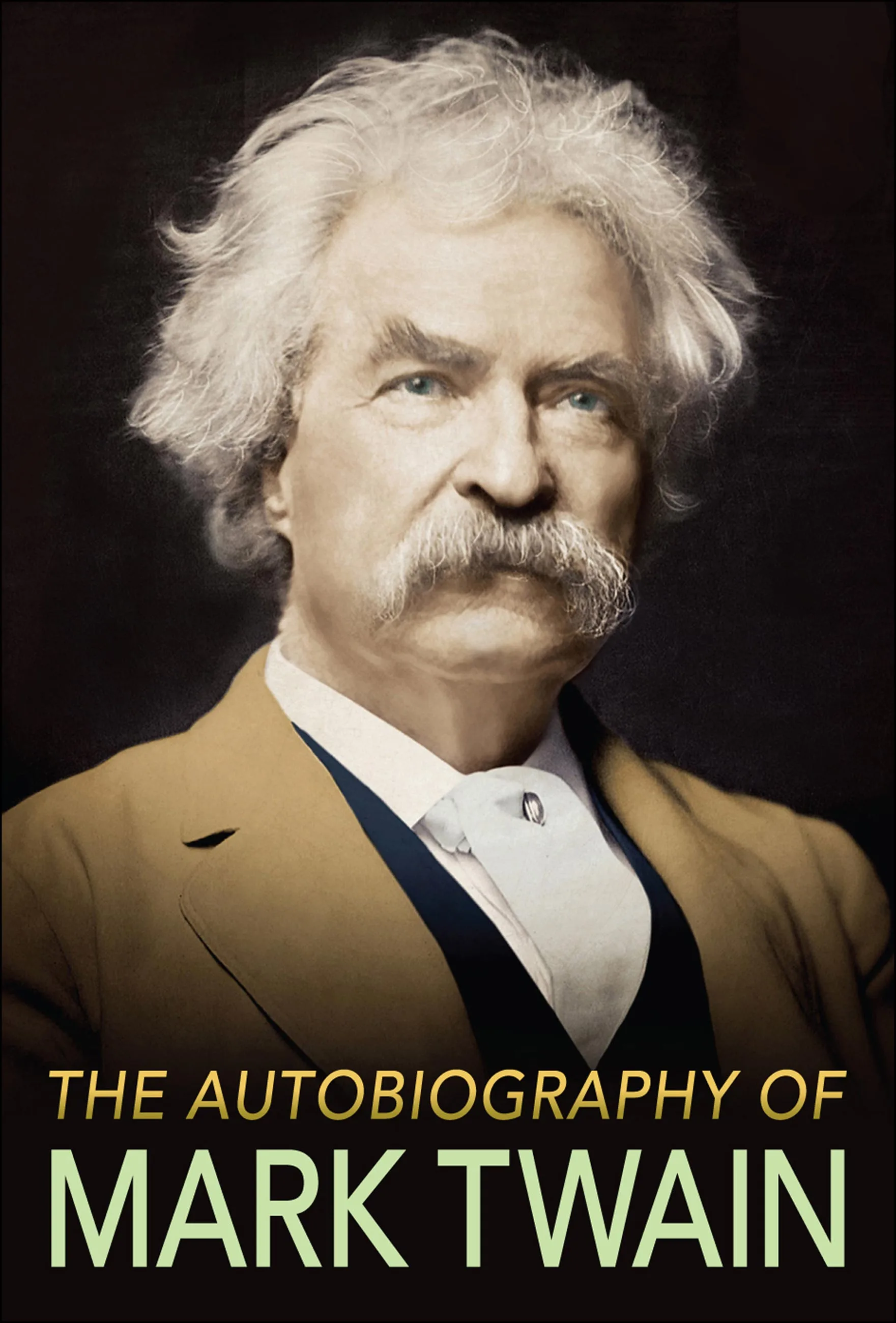
Download Cover Image
Do you want to download the full cover image for The Autobiography of Mark Twain?