
The Quick and Easy Way to Effective Speaking
eBook
• INR 51.00
• English
• 9789387669451
No ratings yet
| Publisher | General Press |
|---|---|
| ISBN13 | 9789387669451 |
| ASIN/SKU | B07C5BC7Z9 |
| Book Format | eBook |
| Language | English |
| List Price | INR 51.00 |
| Subject Code | REF015000, LAN009000, SEL021000 |
| Publishing Date | 10/04/2018 |
| Book Code | BD00068284 |
Buy this Book
Amazon Stores
Ebook Stores
Other Stores
Discover The Quick and Easy Way to Effective Speaking by Dale Carnegie. This book is published by General Press in eBook format, ISBN 9789387669451, ASIN B07C5BC7Z9, under Self-Help, Personal Transformation, Communication and Social Skills.
Book Description
Business, social and personal satisfaction depend heavily upon a person's ability to communicate clearly. Public speaking is an important skill which anyone can acquire and develop. It is also the very best method of overcoming self-consciousness and building confidence, courage and enthusiasm. This book that has literally put millions on the highway to greater accomplishment and success can show you how to have maximum impact as a speaker. It will help you to acquire basic public speaking skills, building confidence, earning the right to talk, sharing the talk with the audience.
Author Biography
Dale Carnegie (1888–1955) was a pioneering American writer, lecturer, and developer of world-renowned courses in self-improvement, salesmanship, corporate training, public speaking, and interpersonal skills. Born into poverty on a farm in Maryville, Missouri, Carnegie sought a way out of his early struggles through education. He attended State Teachers College in Warrensburg, where he discovered a profound natural talent for debate and public speaking. After graduating, he worked various rigorous sales jobs—including selling bacon, soap, and lard for Armour and Company—before moving to New York City to briefly pursue a career in acting.
In 1912, recognizing a widespread need among professionals for improved communication skills, Carnegie convinced a local YMCA manager to let him teach a public speaking class in exchange for a percentage of the proceeds. The class was a massive, immediate success, ultimately leading to the establishment of the Dale Carnegie Institute. His core teaching philosophy centered on the idea that success in business and life depends far more on one's ability to communicate effectively, build self-confidence, and interact positively with others than on purely technical knowledge.
Carnegie’s monumental breakthrough occurred in 1936 with the publication of How to Win Friends and Influence People. Originally intended merely as a supplemental textbook for his courses, the book became an unprecedented overnight sensation. It offered practical, highly accessible advice on handling people, winning them over to your way of thinking, and leading without arousing resentment. It has since sold tens of millions of copies worldwide, fundamentally shaping the modern self-help genre.
Carnegie later authored several other influential works, including How to Stop Worrying and Start Living (1948). His pragmatic wisdom, rooted in genuine appreciation and empathy for others, continues to transform lives, cementing his enduring legacy as a titan of personal development.
In 1912, recognizing a widespread need among professionals for improved communication skills, Carnegie convinced a local YMCA manager to let him teach a public speaking class in exchange for a percentage of the proceeds. The class was a massive, immediate success, ultimately leading to the establishment of the Dale Carnegie Institute. His core teaching philosophy centered on the idea that success in business and life depends far more on one's ability to communicate effectively, build self-confidence, and interact positively with others than on purely technical knowledge.
Carnegie’s monumental breakthrough occurred in 1936 with the publication of How to Win Friends and Influence People. Originally intended merely as a supplemental textbook for his courses, the book became an unprecedented overnight sensation. It offered practical, highly accessible advice on handling people, winning them over to your way of thinking, and leading without arousing resentment. It has since sold tens of millions of copies worldwide, fundamentally shaping the modern self-help genre.
Carnegie later authored several other influential works, including How to Stop Worrying and Start Living (1948). His pragmatic wisdom, rooted in genuine appreciation and empathy for others, continues to transform lives, cementing his enduring legacy as a titan of personal development.
Editorial Reviews
Editorial Reviews will be added soon…
Book Summary
Dale Carnegie’s The Quick and Easy Way to Effective Speaking is a practical guide to one of the most common human fears: speaking confidently in front of other people. First published in 1962 in the form most commonly associated with the book today, it grew out of Carnegie’s long-running work on public speaking and communication. The book is organized around five broad areas: the fundamentals of effective speaking, the relationship between speaker and audience, different purposes of prepared and impromptu talks, the art of communicating, and the challenge of applying these skills in everyday life. What makes Carnegie’s approach distinctive is that he does not treat public speaking as a mysterious talent possessed by a gifted minority. Instead, he presents it as a learnable human skill. His central message is reassuring: you do not have to become someone else to become a good speaker. You need to become more confident in your own experience, organize your thoughts, understand your listeners, and practice expressing yourself.
The book begins by attacking one of the biggest myths surrounding public speaking—the belief that great speakers are born rather than made. Carnegie argues that confidence comes largely from experience and repeated practice. A person who is terrified of standing before an audience can gradually become comfortable if that person keeps speaking. This is why Carnegie emphasizes four basic guideposts: learn from the experience of others, keep your goal in front of you, prepare your mind for success, and seize every opportunity to practice. The idea is simple but powerful. Reading about public speaking is not enough. Watching other speakers is not enough. Even understanding every technique in the book is not enough. The real improvement happens when knowledge is converted into action. Carnegie therefore treats practice not as a final step after learning but as the method through which learning itself takes place.
A major theme of The Quick and Easy Way to Effective Speaking is fear. Carnegie recognizes that nervousness before an audience is completely normal. In fact, he explains that many people who appear confident are experiencing some degree of fear internally. The goal, therefore, is not necessarily to eliminate nervousness but to prevent it from controlling you. Carnegie recommends understanding the physical and psychological nature of stage fright, preparing thoroughly, directing attention toward the subject rather than toward one's own anxiety, and deliberately acting with confidence. His reasoning is that behavior can influence emotion. If you stand upright, speak decisively, and continue despite nervousness, your mind gradually begins to accept the behavior as natural. Confidence, in this sense, is not something you wait to feel before speaking; it is something you develop by speaking despite discomfort.
Preparation is another foundation of Carnegie’s method. However, his idea of preparation is different from simply memorizing a speech word for word. He strongly discourages mechanical memorization because forgetting one sentence can cause the speaker to lose the entire chain of thought. Instead, he recommends thinking deeply about the subject, collecting ideas, organizing them, and becoming so familiar with the material that you can express it naturally. The speaker should know far more about the topic than he or she actually intends to say. This reserve of knowledge creates security. If one point is forgotten, another can take its place. The result is a speech that sounds conversational rather than recited.
Carnegie then presents what he considers the quickest route toward effective speaking: talk about something you have earned the right to discuss through experience or study. This principle lies at the heart of the entire book. A speaker who talks about something personally understood has an enormous advantage because genuine knowledge produces confidence. Personal experience also provides stories, details, emotions, examples, and observations that make a speech interesting. A person may struggle to give an exciting speech about an abstract subject but become completely absorbed when describing something that actually happened in his or her life. Carnegie therefore encourages readers to look inward for speech material. Your work, struggles, successes, mistakes, hobbies, relationships, travels, lessons, and unusual experiences can all become valuable subjects.
Knowledge alone, however, is not enough. Carnegie places equal importance on enthusiasm. A speaker may possess excellent facts but still bore an audience if the speaker does not care about the subject. Genuine enthusiasm gives energy to words. It changes the voice, facial expression, gestures, pace, and emotional force of the presentation. More importantly, enthusiasm is contagious. When a speaker genuinely believes that an idea matters, listeners are more likely to believe that it matters too. Carnegie’s third cardinal principle is closely related: the speaker should genuinely want to share something valuable with the audience. Public speaking becomes easier when it stops feeling like an examination and starts feeling like communication. Instead of thinking, “How am I performing?” the speaker begins thinking, “What can I give these people?”
This shift from performance to communication is crucial. Carnegie sees effective speaking as an enlarged form of conversation. A good conversationalist does not obsess over grammar, memorize sentences, or constantly monitor how impressive he or she appears. Instead, the person pays attention to the other people in the conversation. Carnegie asks speakers to develop the same attitude toward an audience. Speak to listeners rather than at them. Imagine that you are communicating with individual human beings, not delivering words to a faceless crowd. This makes speech more natural and helps break down self-consciousness.
The relationship between speaker and audience receives considerable attention in the book. Carnegie argues that speakers must earn the right to talk by possessing something worthwhile to communicate. They must also bring their subject to life. One of his strongest recommendations is the use of illustrations. Abstract statements are easily forgotten, but concrete stories and examples create mental pictures. A speaker who says that courage is important may produce little reaction. A speaker who tells a vivid story about someone facing danger, making a difficult decision, and overcoming fear gives the audience something they can see and feel. Carnegie repeatedly encourages speakers to humanize, personalize, specify, dramatize, and visualize their material.
This explains why storytelling occupies such an important place in his method. Carnegie is less interested in sophisticated vocabulary than in vivid communication. He wants speakers to use familiar words and concrete details. Instead of hiding behind impressive language, speakers should make their meaning easy to understand. Good speaking is not about sounding intellectual; it is about making an idea clear enough that another person can see it in the mind.
The book also teaches speakers to adapt their approach according to their purpose. A short persuasive talk, an informative presentation, a convincing argument, and an impromptu speech should not all be handled in exactly the same way. For short talks designed to motivate action, Carnegie introduces a particularly useful structure often described as the “Magic Formula”: begin with an example or personal experience, state the specific point or action you want the audience to take, and explain the reason or benefit behind that action. This formula works because it moves naturally from story to instruction to motivation. Instead of giving a vague command, the speaker shows the audience why the action matters.
For informative speaking, Carnegie emphasizes simplicity, logical organization, clear sequencing, comparison with familiar ideas, and visual aids. The objective is not to demonstrate how much the speaker knows but to transfer knowledge successfully to the audience. This distinction is important. A speaker can know an enormous amount and still be a poor teacher. Effective communication requires selecting the information that matters and presenting it in a form that listeners can easily absorb.
When the purpose is persuasion, Carnegie stresses sincerity, respect, enthusiasm, and common ground. One should not begin an argument by attacking the audience’s beliefs. Instead, begin with areas of agreement and move gradually toward the point of disagreement. His treatment of persuasion reflects a broader philosophy that appears throughout his work: people are more receptive when they feel respected. Winning an argument is less important than helping another person become willing to consider your point of view.
Carnegie also devotes attention to impromptu speaking, which is particularly valuable because many people fear being asked to speak without preparation. His solution is not to memorize hundreds of speeches but to practice thinking and speaking around a central idea. Personal experiences are especially useful because they can be recalled quickly. A speaker who regularly practices expressing thoughts in everyday conversations will find that spontaneous speaking becomes much less frightening. The impromptu speech, Carnegie suggests, is essentially an extension of ordinary conversation.
Delivery is another major component of the book. Carnegie advises speakers to break through self-consciousness, avoid imitating famous speakers, converse with the audience, put genuine feeling into their words, and develop a strong and flexible voice. The instruction to “be yourself” is particularly important. Trying to copy another speaker usually creates stiffness because the borrowed gestures and mannerisms do not naturally belong to you. Authenticity produces greater ease. Your voice may not sound like a professional broadcaster, and your gestures may not resemble those of a famous politician, but that does not prevent you from being compelling.
Carnegie also explains how to build rapport with listeners. Speakers should think in terms of the audience’s interests rather than their own. They should use honest appreciation, identify themselves with their listeners, encourage participation, and avoid placing themselves on a pedestal. This is one of the book’s most humane ideas: communication improves when the speaker sees the audience not as judges but as partners. The best speech is therefore not a one-sided performance. It is a shared experience between people.
The later chapters deal with practical situations such as introducing another speaker, presenting or accepting an award, organizing a longer talk, and applying the lessons of the book in everyday communication. Carnegie recommends careful preparation even for apparently simple occasions. An introduction, for example, should make clear what the topic is, why it matters to the audience, and why the speaker is qualified to address it. The book’s contents specifically include this practical T-I-S approach to introductions—Topic, Importance, and Speaker.
Perhaps the most valuable lesson of the entire book is that effective speaking is not primarily about technique. Technique matters, but technique becomes powerful only when supported by confidence, preparation, sincerity, enthusiasm, and practice. Carnegie repeatedly brings the reader back to the human foundation underneath public speaking. People listen when they sense that a speaker has something genuine to say. They remember stories more readily than abstract claims. They respond to enthusiasm. They appreciate clarity. And they connect with speakers who respect them.
The enduring appeal of The Quick and Easy Way to Effective Speaking lies in this practical and encouraging philosophy. The book does not promise that fear will disappear overnight or that a few tricks will transform a nervous beginner into a master speaker. Instead, it presents public speaking as a skill that grows through repeated experience. Its methods were developed in the context of Carnegie’s public-speaking courses and have remained recognizable across later editions and related works.
Ultimately, Carnegie’s message can be reduced to a simple transformation: stop trying to impress people and start trying to communicate with them. Know what you are talking about. Care about what you are saying. Prepare enough to feel secure. Use stories and concrete examples. Speak naturally rather than mechanically. Focus on the audience rather than your own nervousness. And above all, practice. The person who follows these principles may still feel nervous before a speech, but nervousness will no longer be a barrier to speaking.
For anyone searching for a practical book summary of The Quick and Easy Way to Effective Speaking, the central takeaway is therefore clear: effective public speaking is not a special gift reserved for naturally charismatic people. It is a learnable form of communication. Carnegie teaches that confidence grows from preparation and experience, compelling speeches grow from genuine knowledge and enthusiasm, persuasion grows from respect and common ground, and memorable communication grows from stories, clarity, and human connection. The “quick and easy way” is not a shortcut that eliminates effort; it is a method that makes effort productive. Speak about what you know, speak because you have something worthwhile to share, organize your thoughts, connect with your listeners, and keep practicing. Over time, the frightening stage becomes simply another place where you are having a conversation with other human beings.
The book begins by attacking one of the biggest myths surrounding public speaking—the belief that great speakers are born rather than made. Carnegie argues that confidence comes largely from experience and repeated practice. A person who is terrified of standing before an audience can gradually become comfortable if that person keeps speaking. This is why Carnegie emphasizes four basic guideposts: learn from the experience of others, keep your goal in front of you, prepare your mind for success, and seize every opportunity to practice. The idea is simple but powerful. Reading about public speaking is not enough. Watching other speakers is not enough. Even understanding every technique in the book is not enough. The real improvement happens when knowledge is converted into action. Carnegie therefore treats practice not as a final step after learning but as the method through which learning itself takes place.
A major theme of The Quick and Easy Way to Effective Speaking is fear. Carnegie recognizes that nervousness before an audience is completely normal. In fact, he explains that many people who appear confident are experiencing some degree of fear internally. The goal, therefore, is not necessarily to eliminate nervousness but to prevent it from controlling you. Carnegie recommends understanding the physical and psychological nature of stage fright, preparing thoroughly, directing attention toward the subject rather than toward one's own anxiety, and deliberately acting with confidence. His reasoning is that behavior can influence emotion. If you stand upright, speak decisively, and continue despite nervousness, your mind gradually begins to accept the behavior as natural. Confidence, in this sense, is not something you wait to feel before speaking; it is something you develop by speaking despite discomfort.
Preparation is another foundation of Carnegie’s method. However, his idea of preparation is different from simply memorizing a speech word for word. He strongly discourages mechanical memorization because forgetting one sentence can cause the speaker to lose the entire chain of thought. Instead, he recommends thinking deeply about the subject, collecting ideas, organizing them, and becoming so familiar with the material that you can express it naturally. The speaker should know far more about the topic than he or she actually intends to say. This reserve of knowledge creates security. If one point is forgotten, another can take its place. The result is a speech that sounds conversational rather than recited.
Carnegie then presents what he considers the quickest route toward effective speaking: talk about something you have earned the right to discuss through experience or study. This principle lies at the heart of the entire book. A speaker who talks about something personally understood has an enormous advantage because genuine knowledge produces confidence. Personal experience also provides stories, details, emotions, examples, and observations that make a speech interesting. A person may struggle to give an exciting speech about an abstract subject but become completely absorbed when describing something that actually happened in his or her life. Carnegie therefore encourages readers to look inward for speech material. Your work, struggles, successes, mistakes, hobbies, relationships, travels, lessons, and unusual experiences can all become valuable subjects.
Knowledge alone, however, is not enough. Carnegie places equal importance on enthusiasm. A speaker may possess excellent facts but still bore an audience if the speaker does not care about the subject. Genuine enthusiasm gives energy to words. It changes the voice, facial expression, gestures, pace, and emotional force of the presentation. More importantly, enthusiasm is contagious. When a speaker genuinely believes that an idea matters, listeners are more likely to believe that it matters too. Carnegie’s third cardinal principle is closely related: the speaker should genuinely want to share something valuable with the audience. Public speaking becomes easier when it stops feeling like an examination and starts feeling like communication. Instead of thinking, “How am I performing?” the speaker begins thinking, “What can I give these people?”
This shift from performance to communication is crucial. Carnegie sees effective speaking as an enlarged form of conversation. A good conversationalist does not obsess over grammar, memorize sentences, or constantly monitor how impressive he or she appears. Instead, the person pays attention to the other people in the conversation. Carnegie asks speakers to develop the same attitude toward an audience. Speak to listeners rather than at them. Imagine that you are communicating with individual human beings, not delivering words to a faceless crowd. This makes speech more natural and helps break down self-consciousness.
The relationship between speaker and audience receives considerable attention in the book. Carnegie argues that speakers must earn the right to talk by possessing something worthwhile to communicate. They must also bring their subject to life. One of his strongest recommendations is the use of illustrations. Abstract statements are easily forgotten, but concrete stories and examples create mental pictures. A speaker who says that courage is important may produce little reaction. A speaker who tells a vivid story about someone facing danger, making a difficult decision, and overcoming fear gives the audience something they can see and feel. Carnegie repeatedly encourages speakers to humanize, personalize, specify, dramatize, and visualize their material.
This explains why storytelling occupies such an important place in his method. Carnegie is less interested in sophisticated vocabulary than in vivid communication. He wants speakers to use familiar words and concrete details. Instead of hiding behind impressive language, speakers should make their meaning easy to understand. Good speaking is not about sounding intellectual; it is about making an idea clear enough that another person can see it in the mind.
The book also teaches speakers to adapt their approach according to their purpose. A short persuasive talk, an informative presentation, a convincing argument, and an impromptu speech should not all be handled in exactly the same way. For short talks designed to motivate action, Carnegie introduces a particularly useful structure often described as the “Magic Formula”: begin with an example or personal experience, state the specific point or action you want the audience to take, and explain the reason or benefit behind that action. This formula works because it moves naturally from story to instruction to motivation. Instead of giving a vague command, the speaker shows the audience why the action matters.
For informative speaking, Carnegie emphasizes simplicity, logical organization, clear sequencing, comparison with familiar ideas, and visual aids. The objective is not to demonstrate how much the speaker knows but to transfer knowledge successfully to the audience. This distinction is important. A speaker can know an enormous amount and still be a poor teacher. Effective communication requires selecting the information that matters and presenting it in a form that listeners can easily absorb.
When the purpose is persuasion, Carnegie stresses sincerity, respect, enthusiasm, and common ground. One should not begin an argument by attacking the audience’s beliefs. Instead, begin with areas of agreement and move gradually toward the point of disagreement. His treatment of persuasion reflects a broader philosophy that appears throughout his work: people are more receptive when they feel respected. Winning an argument is less important than helping another person become willing to consider your point of view.
Carnegie also devotes attention to impromptu speaking, which is particularly valuable because many people fear being asked to speak without preparation. His solution is not to memorize hundreds of speeches but to practice thinking and speaking around a central idea. Personal experiences are especially useful because they can be recalled quickly. A speaker who regularly practices expressing thoughts in everyday conversations will find that spontaneous speaking becomes much less frightening. The impromptu speech, Carnegie suggests, is essentially an extension of ordinary conversation.
Delivery is another major component of the book. Carnegie advises speakers to break through self-consciousness, avoid imitating famous speakers, converse with the audience, put genuine feeling into their words, and develop a strong and flexible voice. The instruction to “be yourself” is particularly important. Trying to copy another speaker usually creates stiffness because the borrowed gestures and mannerisms do not naturally belong to you. Authenticity produces greater ease. Your voice may not sound like a professional broadcaster, and your gestures may not resemble those of a famous politician, but that does not prevent you from being compelling.
Carnegie also explains how to build rapport with listeners. Speakers should think in terms of the audience’s interests rather than their own. They should use honest appreciation, identify themselves with their listeners, encourage participation, and avoid placing themselves on a pedestal. This is one of the book’s most humane ideas: communication improves when the speaker sees the audience not as judges but as partners. The best speech is therefore not a one-sided performance. It is a shared experience between people.
The later chapters deal with practical situations such as introducing another speaker, presenting or accepting an award, organizing a longer talk, and applying the lessons of the book in everyday communication. Carnegie recommends careful preparation even for apparently simple occasions. An introduction, for example, should make clear what the topic is, why it matters to the audience, and why the speaker is qualified to address it. The book’s contents specifically include this practical T-I-S approach to introductions—Topic, Importance, and Speaker.
Perhaps the most valuable lesson of the entire book is that effective speaking is not primarily about technique. Technique matters, but technique becomes powerful only when supported by confidence, preparation, sincerity, enthusiasm, and practice. Carnegie repeatedly brings the reader back to the human foundation underneath public speaking. People listen when they sense that a speaker has something genuine to say. They remember stories more readily than abstract claims. They respond to enthusiasm. They appreciate clarity. And they connect with speakers who respect them.
The enduring appeal of The Quick and Easy Way to Effective Speaking lies in this practical and encouraging philosophy. The book does not promise that fear will disappear overnight or that a few tricks will transform a nervous beginner into a master speaker. Instead, it presents public speaking as a skill that grows through repeated experience. Its methods were developed in the context of Carnegie’s public-speaking courses and have remained recognizable across later editions and related works.
Ultimately, Carnegie’s message can be reduced to a simple transformation: stop trying to impress people and start trying to communicate with them. Know what you are talking about. Care about what you are saying. Prepare enough to feel secure. Use stories and concrete examples. Speak naturally rather than mechanically. Focus on the audience rather than your own nervousness. And above all, practice. The person who follows these principles may still feel nervous before a speech, but nervousness will no longer be a barrier to speaking.
For anyone searching for a practical book summary of The Quick and Easy Way to Effective Speaking, the central takeaway is therefore clear: effective public speaking is not a special gift reserved for naturally charismatic people. It is a learnable form of communication. Carnegie teaches that confidence grows from preparation and experience, compelling speeches grow from genuine knowledge and enthusiasm, persuasion grows from respect and common ground, and memorable communication grows from stories, clarity, and human connection. The “quick and easy way” is not a shortcut that eliminates effort; it is a method that makes effort productive. Speak about what you know, speak because you have something worthwhile to share, organize your thoughts, connect with your listeners, and keep practicing. Over time, the frightening stage becomes simply another place where you are having a conversation with other human beings.
Sample Chapters
Sample Chapters will be added soon…
Reader Reviews
No reviews yet.
The Quick and Easy Way to Effective Speaking
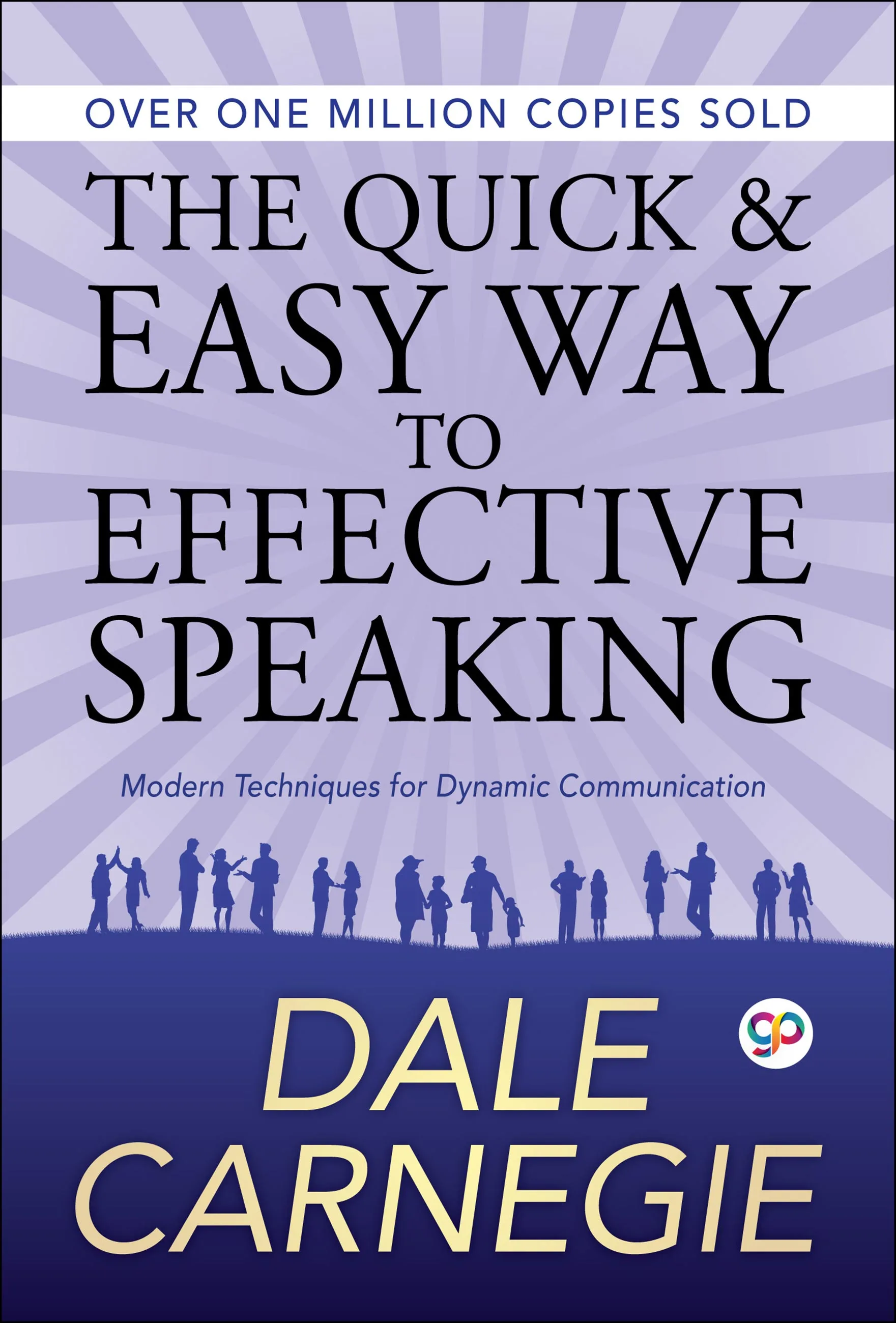
Download Cover Image
Do you want to download the full cover image for The Quick and Easy Way to Effective Speaking?