
How to Enjoy Your Life and Your Job
eBook
• INR 51.00
• English
• 9789387669437
No ratings yet
| Publisher | General Press |
|---|---|
| ISBN13 | 9789387669437 |
| ASIN/SKU | B07CFWRGQ2 |
| Book Format | eBook |
| Language | English |
| List Price | INR 51.00 |
| Subject Code | SEL027000, SEL021000, SEL036000, SEL042000 |
| Publishing Date | 11/04/2018 |
| Book Code | BD00068432 |
Buy this Book
Amazon Stores
Ebook Stores
Other Stores
Discover How to Enjoy Your Life and Your Job by Dale Carnegie. This book is published by General Press in eBook format, ISBN 9789387669437, ASIN B07CFWRGQ2, under Self-Help, Spirituality.
Book Description
What if enjoying your work and your everyday life had less to do with changing your circumstances and more to do with changing the way you approach them? 'How to Enjoy Your Life and Your Job' by Dale Carnegie is a practical self-help and personal development classic that explores how simple changes in attitude, habits, and relationships can make both professional and personal life more satisfying. Drawing on ideas developed through Carnegie’s famous approach to communication and human relations, the book offers accessible guidance for people who want to reduce unnecessary worry, build confidence, and find greater pleasure in their daily routines.
At the heart of the book is the idea that happiness is not something we should endlessly postpone until we earn more money, receive recognition, find the perfect job, or solve every problem. Carnegie encourages readers to pay attention to the present moment and discover satisfaction in the work and relationships already around them. He explains how approaching responsibilities with a constructive mindset can transform ordinary tasks, while learning to handle criticism, disagreements, pressure, and difficult people can prevent everyday frustrations from taking control of our lives.
The book also focuses strongly on the human side of success. Carnegie shows why genuine interest in other people, thoughtful communication, appreciation, and kindness can make workplaces more pleasant and relationships more rewarding. Rather than presenting happiness as an abstract ideal, he connects it with practical behaviors that can be adopted in everyday situations. His advice is especially relevant to anyone who feels stressed by work, bored with routine, anxious about the opinions of others, or caught in a cycle of dissatisfaction.
With its conversational tone and straightforward wisdom, 'How to Enjoy Your Life and Your Job' remains appealing because its central message is surprisingly timeless: a better life can begin with the way we think, work, and treat the people around us. Readers looking for practical lessons on happiness, workplace satisfaction, confidence, and personal growth will find plenty to reflect on—and perhaps discover that enjoying life is closer and more achievable than they imagined.
At the heart of the book is the idea that happiness is not something we should endlessly postpone until we earn more money, receive recognition, find the perfect job, or solve every problem. Carnegie encourages readers to pay attention to the present moment and discover satisfaction in the work and relationships already around them. He explains how approaching responsibilities with a constructive mindset can transform ordinary tasks, while learning to handle criticism, disagreements, pressure, and difficult people can prevent everyday frustrations from taking control of our lives.
The book also focuses strongly on the human side of success. Carnegie shows why genuine interest in other people, thoughtful communication, appreciation, and kindness can make workplaces more pleasant and relationships more rewarding. Rather than presenting happiness as an abstract ideal, he connects it with practical behaviors that can be adopted in everyday situations. His advice is especially relevant to anyone who feels stressed by work, bored with routine, anxious about the opinions of others, or caught in a cycle of dissatisfaction.
With its conversational tone and straightforward wisdom, 'How to Enjoy Your Life and Your Job' remains appealing because its central message is surprisingly timeless: a better life can begin with the way we think, work, and treat the people around us. Readers looking for practical lessons on happiness, workplace satisfaction, confidence, and personal growth will find plenty to reflect on—and perhaps discover that enjoying life is closer and more achievable than they imagined.
Author Biography
Dale Carnegie (1888–1955) was a pioneering American writer, lecturer, and developer of world-renowned courses in self-improvement, salesmanship, corporate training, public speaking, and interpersonal skills. Born into poverty on a farm in Maryville, Missouri, Carnegie sought a way out of his early struggles through education. He attended State Teachers College in Warrensburg, where he discovered a profound natural talent for debate and public speaking. After graduating, he worked various rigorous sales jobs—including selling bacon, soap, and lard for Armour and Company—before moving to New York City to briefly pursue a career in acting.
In 1912, recognizing a widespread need among professionals for improved communication skills, Carnegie convinced a local YMCA manager to let him teach a public speaking class in exchange for a percentage of the proceeds. The class was a massive, immediate success, ultimately leading to the establishment of the Dale Carnegie Institute. His core teaching philosophy centered on the idea that success in business and life depends far more on one's ability to communicate effectively, build self-confidence, and interact positively with others than on purely technical knowledge.
Carnegie’s monumental breakthrough occurred in 1936 with the publication of How to Win Friends and Influence People. Originally intended merely as a supplemental textbook for his courses, the book became an unprecedented overnight sensation. It offered practical, highly accessible advice on handling people, winning them over to your way of thinking, and leading without arousing resentment. It has since sold tens of millions of copies worldwide, fundamentally shaping the modern self-help genre.
Carnegie later authored several other influential works, including How to Stop Worrying and Start Living (1948). His pragmatic wisdom, rooted in genuine appreciation and empathy for others, continues to transform lives, cementing his enduring legacy as a titan of personal development.
In 1912, recognizing a widespread need among professionals for improved communication skills, Carnegie convinced a local YMCA manager to let him teach a public speaking class in exchange for a percentage of the proceeds. The class was a massive, immediate success, ultimately leading to the establishment of the Dale Carnegie Institute. His core teaching philosophy centered on the idea that success in business and life depends far more on one's ability to communicate effectively, build self-confidence, and interact positively with others than on purely technical knowledge.
Carnegie’s monumental breakthrough occurred in 1936 with the publication of How to Win Friends and Influence People. Originally intended merely as a supplemental textbook for his courses, the book became an unprecedented overnight sensation. It offered practical, highly accessible advice on handling people, winning them over to your way of thinking, and leading without arousing resentment. It has since sold tens of millions of copies worldwide, fundamentally shaping the modern self-help genre.
Carnegie later authored several other influential works, including How to Stop Worrying and Start Living (1948). His pragmatic wisdom, rooted in genuine appreciation and empathy for others, continues to transform lives, cementing his enduring legacy as a titan of personal development.
Editorial Reviews
Editorial Reviews will be added soon…
Book Summary
Dale Carnegie’s How to Enjoy Your Life and Your Job is a practical and deeply humane book about finding greater happiness in everyday living and working. Rather than presenting happiness as something that can be achieved only after becoming rich, successful, or free from problems, Carnegie argues that a satisfying life is largely built through our habits of thought, our relationships with others, and our attitude toward the work we do. The book brings together many of the ideas from Carnegie’s wider philosophy and shows how they can be applied to ordinary situations at home, at work, and in social life.
One of Carnegie’s central ideas is that happiness is not simply something that happens to us. It is strongly influenced by the way we respond to circumstances. We cannot control everything that happens in life, but we can often control the attitude with which we meet those events. Two people may face similar difficulties and experience them very differently because their thoughts and interpretations are different. Carnegie therefore encourages readers to develop habits that make the mind calmer, more grateful, and more constructive.
The book begins with the problem of worry. Carnegie sees worry as one of the greatest thieves of happiness. People often spend enormous amounts of emotional energy thinking about what might happen tomorrow, what went wrong yesterday, or what other people might think of them. Much of this anxiety concerns situations that have not yet happened and may never happen. By repeatedly imagining disasters, people make themselves suffer before reality gives them any reason to do so.
Carnegie’s practical response is to deal with problems in the present rather than allowing vague anxiety to dominate the mind. When faced with a difficult situation, he encourages people to ask what the worst possible outcome might be, accept that possibility if necessary, and then calmly work toward improving the situation. This method transforms worry into action. Instead of endlessly asking, “What if something goes wrong?” the person begins asking, “What can I do about it?”
Another important lesson is learning to live in the present. The past cannot be changed, while the future cannot be completely controlled. Continually regretting yesterday or fearing tomorrow prevents us from experiencing today. Carnegie encourages readers to think of each day as a separate unit of life. By concentrating on the present day, problems become more manageable and ordinary moments become more meaningful.
Carnegie also emphasizes the importance of accepting the inevitable. Some circumstances cannot be changed. We may lose money, face disappointment, encounter difficult people, experience failure, or suffer unexpected setbacks. Fighting mentally against an unchangeable reality only increases our suffering. Acceptance does not mean giving up. It means recognizing reality clearly so that energy can be directed toward whatever can still be improved.
The book pays special attention to criticism. Human beings naturally worry about what others think of them, but Carnegie argues that much of this worry is unnecessary. People are often too occupied with their own lives to spend as much time judging us as we imagine. Moreover, criticism is sometimes unavoidable. Even the most capable and generous person will have critics.
Carnegie therefore encourages readers to develop emotional independence. Instead of allowing every negative comment to destroy their peace of mind, people should ask whether the criticism contains something useful. If it does, they can learn from it. If it does not, they can let it go. The ability to accept useful criticism without being crushed by it is an important part of emotional maturity.
Another major theme is the importance of appreciation. Carnegie repeatedly reminds readers that happiness grows when we notice what is good in our lives. People often take health, friendship, family, employment, food, shelter, and countless ordinary comforts for granted. We become dissatisfied because we focus on what is missing rather than appreciating what is already present.
Gratitude, therefore, is not presented as a vague moral virtue. It is a practical habit that changes attention. When people consciously look for things to appreciate, they begin to experience their lives differently. An ordinary day can contain many small sources of pleasure if we are willing to notice them.
Carnegie also argues that our relationships have an enormous influence on happiness. People rarely enjoy life in isolation. We need friendship, affection, respect, and a sense of belonging. One of the best ways to improve relationships, according to Carnegie, is to become genuinely interested in other people.
Instead of constantly trying to impress others, we should listen to them. Instead of talking only about ourselves, we should ask questions about their interests and experiences. Remembering a person’s name, showing sincere appreciation, and avoiding unnecessary arguments can make social interactions warmer and more pleasant.
Carnegie strongly discourages the habit of criticizing and condemning others. Criticism often produces defensiveness rather than improvement. When people feel attacked, they usually concentrate on defending themselves instead of considering whether they need to change. Kindness and understanding, by contrast, create the possibility of cooperation.
This principle is especially important in the workplace. Carnegie recognizes that work occupies a large part of adult life, and therefore learning to enjoy one’s job can dramatically improve overall happiness. Not everyone can immediately change careers or find a perfect occupation. The more practical question is how to develop a better relationship with the work already being done.
One way to do this is to develop interest in the job itself. Even routine work can become more satisfying when a person looks for ways to improve skills, solve problems, serve others, or achieve excellence. Boredom often grows when work is seen merely as something to endure. A sense of purpose can make even ordinary responsibilities more meaningful.
Carnegie also emphasizes the importance of avoiding unnecessary competition with others. Comparing ourselves constantly with colleagues can produce envy, resentment, and insecurity. Someone will always earn more, receive more recognition, or appear more successful. A healthier approach is to measure progress against our own abilities and previous performance.
Another important lesson is to avoid allowing small irritations to dominate the day. Everyday life contains countless minor frustrations: rude behavior, delays, mistakes, misunderstandings, and inconveniences. If we react emotionally to every small annoyance, we give trivial events enormous power over our happiness. Carnegie encourages readers to develop perspective and ask whether a particular irritation will matter a week, a month, or a year from now.
The book also encourages purposeful activity. Idleness can give worry and negative thinking too much room. When people are engaged in meaningful work, hobbies, learning, service, or creative activities, they have less opportunity to become trapped in endless self-analysis. Activity does not solve every emotional problem, but it can prevent the mind from becoming unnecessarily preoccupied with itself.
Perhaps the most appealing aspect of Carnegie’s philosophy is its realism. He does not promise a life without disappointment. Instead, he teaches readers how to respond more intelligently to disappointment. Happiness does not mean laughing all the time or pretending that suffering does not exist. It means developing habits that prevent difficulties from destroying the whole of life.
Ultimately, How to Enjoy Your Life and Your Job is a book about perspective. Carnegie asks readers to stop postponing happiness until some imagined future when everything will finally be perfect. Life is happening now, in ordinary days filled with work, relationships, responsibilities, frustrations, and small pleasures.
The book’s deepest message is that a satisfying life is created through daily choices. We can choose to worry endlessly or deal with problems one at a time. We can dwell on criticism or learn what is useful and move forward. We can focus on what we lack or appreciate what we possess. We can treat work as a burden or search for meaning and mastery within it. We can criticize people around us or try to understand them.
Carnegie ultimately presents happiness not as a lucky accident but as a skill that can be cultivated. By reducing worry, living in the present, accepting what cannot be changed, developing gratitude, building warmer relationships, taking genuine interest in others, and finding meaning in our work, we can make everyday life considerably richer.
The enduring value of the book lies in its simple humanity. Carnegie understands that most people are not looking for extraordinary happiness every minute of the day. They want peace of mind, satisfying work, good relationships, and the ability to enjoy the ordinary moments that make up a life. His advice encourages us to stop waiting for life to become perfect and instead learn to live more wisely within the life we already have.
One of Carnegie’s central ideas is that happiness is not simply something that happens to us. It is strongly influenced by the way we respond to circumstances. We cannot control everything that happens in life, but we can often control the attitude with which we meet those events. Two people may face similar difficulties and experience them very differently because their thoughts and interpretations are different. Carnegie therefore encourages readers to develop habits that make the mind calmer, more grateful, and more constructive.
The book begins with the problem of worry. Carnegie sees worry as one of the greatest thieves of happiness. People often spend enormous amounts of emotional energy thinking about what might happen tomorrow, what went wrong yesterday, or what other people might think of them. Much of this anxiety concerns situations that have not yet happened and may never happen. By repeatedly imagining disasters, people make themselves suffer before reality gives them any reason to do so.
Carnegie’s practical response is to deal with problems in the present rather than allowing vague anxiety to dominate the mind. When faced with a difficult situation, he encourages people to ask what the worst possible outcome might be, accept that possibility if necessary, and then calmly work toward improving the situation. This method transforms worry into action. Instead of endlessly asking, “What if something goes wrong?” the person begins asking, “What can I do about it?”
Another important lesson is learning to live in the present. The past cannot be changed, while the future cannot be completely controlled. Continually regretting yesterday or fearing tomorrow prevents us from experiencing today. Carnegie encourages readers to think of each day as a separate unit of life. By concentrating on the present day, problems become more manageable and ordinary moments become more meaningful.
Carnegie also emphasizes the importance of accepting the inevitable. Some circumstances cannot be changed. We may lose money, face disappointment, encounter difficult people, experience failure, or suffer unexpected setbacks. Fighting mentally against an unchangeable reality only increases our suffering. Acceptance does not mean giving up. It means recognizing reality clearly so that energy can be directed toward whatever can still be improved.
The book pays special attention to criticism. Human beings naturally worry about what others think of them, but Carnegie argues that much of this worry is unnecessary. People are often too occupied with their own lives to spend as much time judging us as we imagine. Moreover, criticism is sometimes unavoidable. Even the most capable and generous person will have critics.
Carnegie therefore encourages readers to develop emotional independence. Instead of allowing every negative comment to destroy their peace of mind, people should ask whether the criticism contains something useful. If it does, they can learn from it. If it does not, they can let it go. The ability to accept useful criticism without being crushed by it is an important part of emotional maturity.
Another major theme is the importance of appreciation. Carnegie repeatedly reminds readers that happiness grows when we notice what is good in our lives. People often take health, friendship, family, employment, food, shelter, and countless ordinary comforts for granted. We become dissatisfied because we focus on what is missing rather than appreciating what is already present.
Gratitude, therefore, is not presented as a vague moral virtue. It is a practical habit that changes attention. When people consciously look for things to appreciate, they begin to experience their lives differently. An ordinary day can contain many small sources of pleasure if we are willing to notice them.
Carnegie also argues that our relationships have an enormous influence on happiness. People rarely enjoy life in isolation. We need friendship, affection, respect, and a sense of belonging. One of the best ways to improve relationships, according to Carnegie, is to become genuinely interested in other people.
Instead of constantly trying to impress others, we should listen to them. Instead of talking only about ourselves, we should ask questions about their interests and experiences. Remembering a person’s name, showing sincere appreciation, and avoiding unnecessary arguments can make social interactions warmer and more pleasant.
Carnegie strongly discourages the habit of criticizing and condemning others. Criticism often produces defensiveness rather than improvement. When people feel attacked, they usually concentrate on defending themselves instead of considering whether they need to change. Kindness and understanding, by contrast, create the possibility of cooperation.
This principle is especially important in the workplace. Carnegie recognizes that work occupies a large part of adult life, and therefore learning to enjoy one’s job can dramatically improve overall happiness. Not everyone can immediately change careers or find a perfect occupation. The more practical question is how to develop a better relationship with the work already being done.
One way to do this is to develop interest in the job itself. Even routine work can become more satisfying when a person looks for ways to improve skills, solve problems, serve others, or achieve excellence. Boredom often grows when work is seen merely as something to endure. A sense of purpose can make even ordinary responsibilities more meaningful.
Carnegie also emphasizes the importance of avoiding unnecessary competition with others. Comparing ourselves constantly with colleagues can produce envy, resentment, and insecurity. Someone will always earn more, receive more recognition, or appear more successful. A healthier approach is to measure progress against our own abilities and previous performance.
Another important lesson is to avoid allowing small irritations to dominate the day. Everyday life contains countless minor frustrations: rude behavior, delays, mistakes, misunderstandings, and inconveniences. If we react emotionally to every small annoyance, we give trivial events enormous power over our happiness. Carnegie encourages readers to develop perspective and ask whether a particular irritation will matter a week, a month, or a year from now.
The book also encourages purposeful activity. Idleness can give worry and negative thinking too much room. When people are engaged in meaningful work, hobbies, learning, service, or creative activities, they have less opportunity to become trapped in endless self-analysis. Activity does not solve every emotional problem, but it can prevent the mind from becoming unnecessarily preoccupied with itself.
Perhaps the most appealing aspect of Carnegie’s philosophy is its realism. He does not promise a life without disappointment. Instead, he teaches readers how to respond more intelligently to disappointment. Happiness does not mean laughing all the time or pretending that suffering does not exist. It means developing habits that prevent difficulties from destroying the whole of life.
Ultimately, How to Enjoy Your Life and Your Job is a book about perspective. Carnegie asks readers to stop postponing happiness until some imagined future when everything will finally be perfect. Life is happening now, in ordinary days filled with work, relationships, responsibilities, frustrations, and small pleasures.
The book’s deepest message is that a satisfying life is created through daily choices. We can choose to worry endlessly or deal with problems one at a time. We can dwell on criticism or learn what is useful and move forward. We can focus on what we lack or appreciate what we possess. We can treat work as a burden or search for meaning and mastery within it. We can criticize people around us or try to understand them.
Carnegie ultimately presents happiness not as a lucky accident but as a skill that can be cultivated. By reducing worry, living in the present, accepting what cannot be changed, developing gratitude, building warmer relationships, taking genuine interest in others, and finding meaning in our work, we can make everyday life considerably richer.
The enduring value of the book lies in its simple humanity. Carnegie understands that most people are not looking for extraordinary happiness every minute of the day. They want peace of mind, satisfying work, good relationships, and the ability to enjoy the ordinary moments that make up a life. His advice encourages us to stop waiting for life to become perfect and instead learn to live more wisely within the life we already have.
Sample Chapters
Chapter 1 : Find Yourself and Be Yourself: Remember, There is No One Else on Earth Like You
I have a letter from Mrs. Edith Allred, of Mount Airy, North Carolina: “As a child, I was extremely sensitive and shy,” she says in her letter. “I was overweight and my cheeks made me look even fatter than I was. I had an old-fashioned mother who thought it was foolish to make clothes look pretty. She always said: ‘Wide will wear while narrow will tear’; and she dressed me accordingly. I never went to parties; never had any fun; and when I went to school, I never joined the other children in outside activities, or even athletics. I was morbidly shy. I felt I was ‘different’ from everybody else, and entirely undesirable.
“When I grew up, I married a man who was several years my senior. But I didn’t change. My in-laws were a poised and self-confident family. They were everything I should have been but simply was not. I tried my best to be like them, but I couldn’t. Every attempt they made to draw me out of myself only drove me further into my shell. I became nervous and irritable. I avoided all friends. I got so bad I even dreaded the sound of the doorbell ringing! I was a failure. I knew it; and I was afraid my husband would find it out. So, whenever we were in public, I tried to be gay, and overacted my part. I knew I overacted; and I would be miserable for days afterwards. At last I became so unhappy that I could see no point in prolonging my existence. I began to think of suicide.”
What happened to change this unhappy woman’s life? Just a chance remark!
“A chance remark,” Mrs. Allred continued, “transformed my whole life. My mother-in-law was talking one day of how she brought her children up, and she said, ‘No matter what happened, I always insisted on their being themselves.’ … ‘On their being themselves.’ … That remark is what did it! In a flash, I realized I had brought all this misery on myself by trying to fit myself into a pattern to which I did not conform.
“I changed overnight! I started being myself. I tried to make a study of my own personality. Tried to find out what I was. I studied my strong points. I learned all I could about colors and styles, and dressed in a way that I felt was becoming to me. I reached out to make friends. I joined an organization—a small one at first—and was petrified with fright when they put me on a program. But each time I spoke, I gained a little courage. It took a long while—but today I have more happiness than I ever dreamed possible. In rearing my own children, I have always taught them the lesson I had to learn from such bitter experience: No matter what happens, always be yourself!”
This problem of being unwilling to be yourself is “as old as history,” says Dr. James Gordon Gilkey, “and as universal as human life.” This problem of being unwilling to be yourself is the hidden spring behind many neuroses and psychoses and complexes. Angelo Patri has written thirteen books and thousands of syndicated newspaper articles on the subject of child training, and he says: “Nobody is so miserable as he who longs to be somebody and something other than the person he is in body and mind.”
This craving to be something you are not is especially rampant in Hollywood. Sam Wood, one of Hollywood’s best-known directors, said the greatest headache he has with aspiring young actors is exactly this problem: to make them be themselves. They all want to be second-rate Lana Turners or third-rate Clark Gables. “The public has already had that flavor,” Sam Wood keeps telling them; “now it wants something else.”
Before he started directing such pictures as Goodbye, Mr. Chips and For Whom the Bell Tolls, Sam Wood spent years in the real-estate business, developing sales personalities. He declares that the same principles apply in the business world as in the world of moving pictures. You won’t get anywhere playing the ape. You can’t be a parrot. “Experience has taught me,” says Sam Wood, “that it is safest to drop, as quickly as possible, people who pretend to be what they aren’t.”
I asked Paul Boynton, then employment director for a major oil company, what is the biggest mistake people make in applying for jobs. He ought to know: he has interviewed more than sixty thousand job seekers; and he has written a book entitled 6 Ways to Get a Job. He replied: “The biggest mistake people make in applying for jobs is in not being themselves. Instead of taking their hair down and being completely frank, they often try to give you the answers they think you want.” But it doesn’t work, because nobody wants a phony. Nobody ever wants a counterfeit coin.
A certain daughter of a streetcar conductor had to learn that lesson the hard way. She longed to be a singer. But her face was her misfortune. She had a large mouth and protruding buck teeth. When she first sang in public—in a New Jersey night club—she tried to pull down her upper lip to cover her teeth. She tried to act “glamorous.” The results? She made herself ridiculous. She was headed for failure.
However, there was a man in this night club who heard the girl sing and thought she had talent. “See here,” he said bluntly, “I’ve been watching your performance and I know what it is you’re trying to hide. You’re ashamed of your teeth!” The girl was embarrassed, but the man continued, “What of it? Is there any particular crime in having buck teeth? Don’t try to hide them! Open your mouth, and the audience will love you when they see you’re not ashamed. Besides,” he said shrewdly, “those teeth you’re trying to hide may make your fortune!”
Cass Daley took his advice and forgot about her teeth. From that time on, she thought only about her audience. She opened her mouth wide and sang with such gusto and enjoyment that she became a top star in movies and radio. Other comedians tried to copy her!
The renowned William James was speaking of people who had never found themselves when he declared that the average person develops only ten percent of his or her latent mental abilities. “Compared to what we ought to be,” he wrote, “we are only half awake. We are making use of only a small part of our physical and mental resources. Stating the thing broadly, human individuals thus far live within their limits. They possess powers of various sorts which they habitually fail to use.”
You and I have such abilities, so let’s not waste a second worrying because we are not like other people. You are something new in this world. Never before, since the beginning of time, has there ever been anybody exactly like you; and never again throughout all the ages to come will there ever be anybody exactly like you again. The science of genetics informs us that you are what you are largely as a result of twenty-three chromosomes contributed by your father and twenty-three chromosomes contributed by your mother. These forty-six chromosomes comprise everything that determines what you inherit. In each chromosome there may be, says Amram Scheinfeld, “anywhere from scores to hundreds of genes—with a single gene, in some cases, able to change the whole life of an individual.” Truly, we are “fearfully and wonderfully” made.
Even after your mother and father met and mated, there was only one chance in 300,000 billion that the person who is specifically you would be born! In other words, if you had 300,000 billion brothers and sisters, they might all have been different from you. Is all this guesswork? No. It is a scientific fact. If you would like to read more about it, consult You and Heredity, by Amram Scheinfeld.
I can talk with conviction about this subject of being yourself because I feel deeply about it. I know what I am talking about. I know from bitter and costly experience. To illustrate: When I first came to New York from the cornfields of Missouri, I enrolled in the American Academy of Dramatic Arts. I aspired to be an actor. I had what I thought was a brilliant idea, a shortcut to success, an idea so simple, so foolproof, that I couldn’t understand why thousands of ambitious people hadn’t already discovered it. It was this: I would study how the famous actors of that day—John Drew, Walter Hampden, and Otis Skinner—got their effects. Then I would imitate the best points of each one of them and make myself into a shining, triumphant combination of all of them. How silly! How absurd! I had to waste years of my life imitating other people before it penetrated through my thick Missouri skull that I had to be myself, and that I couldn’t possibly be anyone else.
That distressing experience ought to have taught me a lasting lesson. But it didn’t. Not me. I was too dumb. I had to learn it all over again. Several years later, I set out to write what I hoped would be the best book on public speaking for businessmen that had ever been written. I had the same foolish idea about writing this book that I had formerly had about acting: I was going to borrow the ideas of a lot of other writers and put them all in one book—a book that would have everything. So I got scores of books on public speaking and spent a year incorporating their ideas into my manuscript. But it finally dawned on me once again that I was playing the fool. This hodgepodge of other men’s ideas that I had written was so synthetic, so dull, that no businessman would ever plod through it. So I tossed a year’s work into the wastebasket and started all over again. This time I said to myself: “You’ve got to be Dale Carnegie, with all his faults and limitations. You can’t possibly be anybody else.” So I quit trying to be a combination of other men, and rolled up my sleeves and did what I should have done in the first place: I wrote a textbook on public speaking out of my own experiences, observations, and convictions as a speaker and a teacher of speaking. I learned—for all time, I hope—the lesson that Sir Walter Raleigh learned. (I am not talking about the Sir Walter who threw his coat in the mud for the queen to step on. I am talking about the Sir Walter Raleigh who was professor of English literature at Oxford back in 1904.) “I can’t write a book commensurate with Shakespeare,” he said, “but I can write a book by me.”
Be yourself. Act on the sage advice that Irving Berlin gave the late George Gershwin. When Berlin and Gershwin first met, Berlin was famous but Gershwin was a struggling young composer working for thirty-five dollars a week in Tin Pan Alley. Berlin, impressed by Gershwin’s ability, offered Gershwin a job as his musical secretary at almost three times the salary he was then getting. “But don’t take the job,” Berlin advised. “If you do, you may develop into a second-rate Berlin. But if you insist on being yourself, someday you’ll be a first-rate Gershwin.”
Gershwin heeded that warning and slowly transformed himself into one of the significant American composers of his generation.
Charlie Chaplin, Will Rogers, Mary Margaret McBridge, Gene Autry, and millions of others had to learn the lesson I am trying to hammer home in this chapter. They had to learn the hard way—just as I did.
When Charlie Chaplin first started making films, the director insisted on Chaplin’s imitating a popular German comedian of that day. Charlie Chaplin got nowhere until he acted himself. Bob Hope had a similar experience: spent years in a singing-and-acting act—and got nowhere until he began to wisecrack and be himself. Will Rogers twirled a rope in vaudeville for years without saying a word. He got nowhere until he discovered his unique gift for humor and began to talk as he twirled his rope.
When Mary Margaret McBride first went on the air, she tried to be an Irish comedian and failed. When she tried to be just what she was—a plain country girl from Missouri—she became one of the most popular radio stars in New York.
When Gene Autry tried to get rid of his Texas accent and dressed like city boys and claimed he was from New York, people merely laughed behind his back. But when he started twanging his banjo and singing cowboy ballads, Gene Autry started out on a career that made him the world’s most popular cowboy both in pictures and on the radio.
You are something new in this world. Be glad of it. Make the most of what nature gave you. In the last analysis, all art is autobiographical. You can sing only what you are. You can paint only what you are. You must be what your experiences, your environment, and your heredity have made you. For better or for worse, you must cultivate your own little garden. For better or for worse, you must play your own little instrument in the orchestra of life.
As Emerson said in his essay on “Self-Reliance”: “There is a time in every man’s education when he arrives at the conviction that envy is ignorance; that imitation is suicide; that he must take himself for better, for worse, as his portion; that though the wide universe is full of good, no kernel of nourishing corn can come to him but through his toil bestowed on that plot of ground which is given to him to till. The power which resides in him is new in nature, and none but he knows what that is which he can do, nor does he know until he has tried.”
That is the way Emerson said it. But here is the way a poet—the late Douglas Malloch—said it:
If you can’t be a pine on the top of the hill,
Be a scrub in the valley—but be
The best little scrub by the side of the rill;
Be a bush, if you can’t be a tree.
If you can’t be a bush, be a bit of the grass,
And some highway happier make;
If you can’t be a muskie, then just be a bass—
But the liveliest bass in the lake!
We can’t all be captains, we’ve got to be crew,
There’s something for all of us here.
There’s big work to do and there’s lesser to do
And the task we must do is the near.
If you can’t be a highway, then just be a trail,
If you can’t be the sun, be a star;
It isn’t by size that you win or you fail—
Be the best of whatever you are!
To cultivate a mental attitude that will bring us peace and freedom, remember…
Let’s not imitate others.
Let’s find ourselves and be ourselves.
Chapter 2 : Four Good Working Habits That Will Help Prevent Fatigue and Worry
Good Working Habit No. 1
Clear Your Desk of All Papers Except Those Relating to the Immediate Problem at Hand.
Roland L. Williams, President of the Chicago and Northwestern Railway, once said, “A person with his desk piled high with papers on various matters will find his work much easier and more accurate if he clears that desk of all but the immediate problem at hand. I call this good housekeeping, and it is the number-one step toward efficiency.”
If you visit the Library of Congress in Washington, D.C., you will find five words painted on the ceiling—five words written by the poet Pope:
“Order is Heaven’s first law.”
Order ought to be the first law of business, too. But is it? No, the average desk is cluttered up with papers that haven’t been looked at for weeks. In fact, the publisher of a New Orleans newspaper once told me that his secretary cleared up one of his desks and found a typewriter that had been missing for two years!
The mere sight of a desk littered with unanswered mail and reports and memos is enough to breed confusion, tension, and worries. It is much worse than that. The constant reminder of “a million things to do and no time to do them” can worry you not only into tension and fatigue, but also into high blood pressure, heart trouble, and stomach ulcers.
Dr. John H. Stokes, professor, Graduate School of Medicine, University of Pennsylvania, read a paper before the American Medical Association—a paper entitled “Functional Neuroses as Complications of Organic Disease.” In that paper, Dr. Stokes listed eleven conditions under the title: “What to Look for in the Patient’s State of Mind.” Here is the first item on that list:
The sense of must or obligation; the unending stretch of things ahead that simply must be done.
But how can such an elementary procedure as clearing your desk and making decisions help you avoid this high pressure, this sense of must, this sense of an “unending stretch of things ahead” that simply have to b done? Dr. William L. Sadler, the famous psychiatrist, told of a patient who, by using this simple device, avoided a nervous breakdown. The man was an executive in a big Chicago firm. When he came to Dr. Sadler’s office, he was tense, nervous, worried. He knew he was heading for a tailspin, but he couldn’t quit work. He had to have help.
“While this man was telling me his story,” Dr. Sadler says, “my telephone rang. It was the hospital calling; and instead of deferring the matter, I took time right then to come to a decision. I always settle questions, if possible, right on the spot. I had no sooner hung up than the phone rang again. Again an urgent matter, which I took time to discuss. The third interruption came when a colleague of mine came to my office for advice on a patient who was critically ill. When I had finished with him, I turned to my caller and began to apologize for keeping him waiting. But he had brightened up. He had a completely different look on his face.”
“Don’t apologize, doctor!” this man said to Sadler. “In the last ten minutes, I think I’ve got a hunch as to what is wrong with me. I’m going back to my office and revise my working habits. … But before I go, do you mind if I take a look in your desk?”
Dr. Sadler opened up the drawers of his desk. All empty—except for supplies. “Tell me,” said the patient, “where do you keep your unfinished business?”
“Finished!” said Sadler.
“And where do you keep your unanswered mail?”
“Answered!” Sadler told him. “My rule is never to lay down a letter until I have answered it. I dictate the reply to my secretary at once.”
Six weeks later, this same executive invited Dr. Sadler to come to his office. He was changed—and so was his desk. He opened the desk drawers to show there was no unfinished business inside of the desk. “Six weeks ago,” this executive said, “I had three different desks in two different offices—and was snowed under by my work. I was never finished. After talking to you, I came back here and cleared out a wagonload of reports and old papers. Now I work at one desk, settle things as they come up, and don’t have a mountain of unfinished business nagging at me and making me tense and worried. But the most astonishing thing is I’ve recovered completely. There is nothing wrong anymore with my health!”
Charles Evans Hughes, former Chief Justice of the United States Supreme Court, said: “Men do not die from overwork. They die from dissipation and worry.” Yes, from dissipation of their energies—and worry because they never seem to get their work done.
Good Working Habit No. 2
Do Things in the Order of Their Importance.
Henry L. Doherty, founder of the nationwide Cities Service Company, said that regardless of how much salary he paid, there were two abilities he found it almost impossible to find.
Those two priceless abilities: first, the ability to think. Second, the ability to do things in the order of their importance.
Charles Luckman, the lad who started from scratch and climbed in twelve years to president of the Pepsodent Company, got a salary of a hundred thousand dollars a year, and made a million dollars besides—that lad declared that he owed much of his success to developing the two abilities that Henry L. Doherty said he found almost impossible to find. Charles Luckman said: “As far back as I can remember, I have gotten up at five o’clock in the morning because I can think better then than any other time—I can think better then and plan my day, plan to do things in the order of their importance.”
I have a letter from Mrs. Edith Allred, of Mount Airy, North Carolina: “As a child, I was extremely sensitive and shy,” she says in her letter. “I was overweight and my cheeks made me look even fatter than I was. I had an old-fashioned mother who thought it was foolish to make clothes look pretty. She always said: ‘Wide will wear while narrow will tear’; and she dressed me accordingly. I never went to parties; never had any fun; and when I went to school, I never joined the other children in outside activities, or even athletics. I was morbidly shy. I felt I was ‘different’ from everybody else, and entirely undesirable.
“When I grew up, I married a man who was several years my senior. But I didn’t change. My in-laws were a poised and self-confident family. They were everything I should have been but simply was not. I tried my best to be like them, but I couldn’t. Every attempt they made to draw me out of myself only drove me further into my shell. I became nervous and irritable. I avoided all friends. I got so bad I even dreaded the sound of the doorbell ringing! I was a failure. I knew it; and I was afraid my husband would find it out. So, whenever we were in public, I tried to be gay, and overacted my part. I knew I overacted; and I would be miserable for days afterwards. At last I became so unhappy that I could see no point in prolonging my existence. I began to think of suicide.”
What happened to change this unhappy woman’s life? Just a chance remark!
“A chance remark,” Mrs. Allred continued, “transformed my whole life. My mother-in-law was talking one day of how she brought her children up, and she said, ‘No matter what happened, I always insisted on their being themselves.’ … ‘On their being themselves.’ … That remark is what did it! In a flash, I realized I had brought all this misery on myself by trying to fit myself into a pattern to which I did not conform.
“I changed overnight! I started being myself. I tried to make a study of my own personality. Tried to find out what I was. I studied my strong points. I learned all I could about colors and styles, and dressed in a way that I felt was becoming to me. I reached out to make friends. I joined an organization—a small one at first—and was petrified with fright when they put me on a program. But each time I spoke, I gained a little courage. It took a long while—but today I have more happiness than I ever dreamed possible. In rearing my own children, I have always taught them the lesson I had to learn from such bitter experience: No matter what happens, always be yourself!”
This problem of being unwilling to be yourself is “as old as history,” says Dr. James Gordon Gilkey, “and as universal as human life.” This problem of being unwilling to be yourself is the hidden spring behind many neuroses and psychoses and complexes. Angelo Patri has written thirteen books and thousands of syndicated newspaper articles on the subject of child training, and he says: “Nobody is so miserable as he who longs to be somebody and something other than the person he is in body and mind.”
This craving to be something you are not is especially rampant in Hollywood. Sam Wood, one of Hollywood’s best-known directors, said the greatest headache he has with aspiring young actors is exactly this problem: to make them be themselves. They all want to be second-rate Lana Turners or third-rate Clark Gables. “The public has already had that flavor,” Sam Wood keeps telling them; “now it wants something else.”
Before he started directing such pictures as Goodbye, Mr. Chips and For Whom the Bell Tolls, Sam Wood spent years in the real-estate business, developing sales personalities. He declares that the same principles apply in the business world as in the world of moving pictures. You won’t get anywhere playing the ape. You can’t be a parrot. “Experience has taught me,” says Sam Wood, “that it is safest to drop, as quickly as possible, people who pretend to be what they aren’t.”
I asked Paul Boynton, then employment director for a major oil company, what is the biggest mistake people make in applying for jobs. He ought to know: he has interviewed more than sixty thousand job seekers; and he has written a book entitled 6 Ways to Get a Job. He replied: “The biggest mistake people make in applying for jobs is in not being themselves. Instead of taking their hair down and being completely frank, they often try to give you the answers they think you want.” But it doesn’t work, because nobody wants a phony. Nobody ever wants a counterfeit coin.
A certain daughter of a streetcar conductor had to learn that lesson the hard way. She longed to be a singer. But her face was her misfortune. She had a large mouth and protruding buck teeth. When she first sang in public—in a New Jersey night club—she tried to pull down her upper lip to cover her teeth. She tried to act “glamorous.” The results? She made herself ridiculous. She was headed for failure.
However, there was a man in this night club who heard the girl sing and thought she had talent. “See here,” he said bluntly, “I’ve been watching your performance and I know what it is you’re trying to hide. You’re ashamed of your teeth!” The girl was embarrassed, but the man continued, “What of it? Is there any particular crime in having buck teeth? Don’t try to hide them! Open your mouth, and the audience will love you when they see you’re not ashamed. Besides,” he said shrewdly, “those teeth you’re trying to hide may make your fortune!”
Cass Daley took his advice and forgot about her teeth. From that time on, she thought only about her audience. She opened her mouth wide and sang with such gusto and enjoyment that she became a top star in movies and radio. Other comedians tried to copy her!
The renowned William James was speaking of people who had never found themselves when he declared that the average person develops only ten percent of his or her latent mental abilities. “Compared to what we ought to be,” he wrote, “we are only half awake. We are making use of only a small part of our physical and mental resources. Stating the thing broadly, human individuals thus far live within their limits. They possess powers of various sorts which they habitually fail to use.”
You and I have such abilities, so let’s not waste a second worrying because we are not like other people. You are something new in this world. Never before, since the beginning of time, has there ever been anybody exactly like you; and never again throughout all the ages to come will there ever be anybody exactly like you again. The science of genetics informs us that you are what you are largely as a result of twenty-three chromosomes contributed by your father and twenty-three chromosomes contributed by your mother. These forty-six chromosomes comprise everything that determines what you inherit. In each chromosome there may be, says Amram Scheinfeld, “anywhere from scores to hundreds of genes—with a single gene, in some cases, able to change the whole life of an individual.” Truly, we are “fearfully and wonderfully” made.
Even after your mother and father met and mated, there was only one chance in 300,000 billion that the person who is specifically you would be born! In other words, if you had 300,000 billion brothers and sisters, they might all have been different from you. Is all this guesswork? No. It is a scientific fact. If you would like to read more about it, consult You and Heredity, by Amram Scheinfeld.
I can talk with conviction about this subject of being yourself because I feel deeply about it. I know what I am talking about. I know from bitter and costly experience. To illustrate: When I first came to New York from the cornfields of Missouri, I enrolled in the American Academy of Dramatic Arts. I aspired to be an actor. I had what I thought was a brilliant idea, a shortcut to success, an idea so simple, so foolproof, that I couldn’t understand why thousands of ambitious people hadn’t already discovered it. It was this: I would study how the famous actors of that day—John Drew, Walter Hampden, and Otis Skinner—got their effects. Then I would imitate the best points of each one of them and make myself into a shining, triumphant combination of all of them. How silly! How absurd! I had to waste years of my life imitating other people before it penetrated through my thick Missouri skull that I had to be myself, and that I couldn’t possibly be anyone else.
That distressing experience ought to have taught me a lasting lesson. But it didn’t. Not me. I was too dumb. I had to learn it all over again. Several years later, I set out to write what I hoped would be the best book on public speaking for businessmen that had ever been written. I had the same foolish idea about writing this book that I had formerly had about acting: I was going to borrow the ideas of a lot of other writers and put them all in one book—a book that would have everything. So I got scores of books on public speaking and spent a year incorporating their ideas into my manuscript. But it finally dawned on me once again that I was playing the fool. This hodgepodge of other men’s ideas that I had written was so synthetic, so dull, that no businessman would ever plod through it. So I tossed a year’s work into the wastebasket and started all over again. This time I said to myself: “You’ve got to be Dale Carnegie, with all his faults and limitations. You can’t possibly be anybody else.” So I quit trying to be a combination of other men, and rolled up my sleeves and did what I should have done in the first place: I wrote a textbook on public speaking out of my own experiences, observations, and convictions as a speaker and a teacher of speaking. I learned—for all time, I hope—the lesson that Sir Walter Raleigh learned. (I am not talking about the Sir Walter who threw his coat in the mud for the queen to step on. I am talking about the Sir Walter Raleigh who was professor of English literature at Oxford back in 1904.) “I can’t write a book commensurate with Shakespeare,” he said, “but I can write a book by me.”
Be yourself. Act on the sage advice that Irving Berlin gave the late George Gershwin. When Berlin and Gershwin first met, Berlin was famous but Gershwin was a struggling young composer working for thirty-five dollars a week in Tin Pan Alley. Berlin, impressed by Gershwin’s ability, offered Gershwin a job as his musical secretary at almost three times the salary he was then getting. “But don’t take the job,” Berlin advised. “If you do, you may develop into a second-rate Berlin. But if you insist on being yourself, someday you’ll be a first-rate Gershwin.”
Gershwin heeded that warning and slowly transformed himself into one of the significant American composers of his generation.
Charlie Chaplin, Will Rogers, Mary Margaret McBridge, Gene Autry, and millions of others had to learn the lesson I am trying to hammer home in this chapter. They had to learn the hard way—just as I did.
When Charlie Chaplin first started making films, the director insisted on Chaplin’s imitating a popular German comedian of that day. Charlie Chaplin got nowhere until he acted himself. Bob Hope had a similar experience: spent years in a singing-and-acting act—and got nowhere until he began to wisecrack and be himself. Will Rogers twirled a rope in vaudeville for years without saying a word. He got nowhere until he discovered his unique gift for humor and began to talk as he twirled his rope.
When Mary Margaret McBride first went on the air, she tried to be an Irish comedian and failed. When she tried to be just what she was—a plain country girl from Missouri—she became one of the most popular radio stars in New York.
When Gene Autry tried to get rid of his Texas accent and dressed like city boys and claimed he was from New York, people merely laughed behind his back. But when he started twanging his banjo and singing cowboy ballads, Gene Autry started out on a career that made him the world’s most popular cowboy both in pictures and on the radio.
You are something new in this world. Be glad of it. Make the most of what nature gave you. In the last analysis, all art is autobiographical. You can sing only what you are. You can paint only what you are. You must be what your experiences, your environment, and your heredity have made you. For better or for worse, you must cultivate your own little garden. For better or for worse, you must play your own little instrument in the orchestra of life.
As Emerson said in his essay on “Self-Reliance”: “There is a time in every man’s education when he arrives at the conviction that envy is ignorance; that imitation is suicide; that he must take himself for better, for worse, as his portion; that though the wide universe is full of good, no kernel of nourishing corn can come to him but through his toil bestowed on that plot of ground which is given to him to till. The power which resides in him is new in nature, and none but he knows what that is which he can do, nor does he know until he has tried.”
That is the way Emerson said it. But here is the way a poet—the late Douglas Malloch—said it:
If you can’t be a pine on the top of the hill,
Be a scrub in the valley—but be
The best little scrub by the side of the rill;
Be a bush, if you can’t be a tree.
If you can’t be a bush, be a bit of the grass,
And some highway happier make;
If you can’t be a muskie, then just be a bass—
But the liveliest bass in the lake!
We can’t all be captains, we’ve got to be crew,
There’s something for all of us here.
There’s big work to do and there’s lesser to do
And the task we must do is the near.
If you can’t be a highway, then just be a trail,
If you can’t be the sun, be a star;
It isn’t by size that you win or you fail—
Be the best of whatever you are!
To cultivate a mental attitude that will bring us peace and freedom, remember…
Let’s not imitate others.
Let’s find ourselves and be ourselves.
Chapter 2 : Four Good Working Habits That Will Help Prevent Fatigue and Worry
Good Working Habit No. 1
Clear Your Desk of All Papers Except Those Relating to the Immediate Problem at Hand.
Roland L. Williams, President of the Chicago and Northwestern Railway, once said, “A person with his desk piled high with papers on various matters will find his work much easier and more accurate if he clears that desk of all but the immediate problem at hand. I call this good housekeeping, and it is the number-one step toward efficiency.”
If you visit the Library of Congress in Washington, D.C., you will find five words painted on the ceiling—five words written by the poet Pope:
“Order is Heaven’s first law.”
Order ought to be the first law of business, too. But is it? No, the average desk is cluttered up with papers that haven’t been looked at for weeks. In fact, the publisher of a New Orleans newspaper once told me that his secretary cleared up one of his desks and found a typewriter that had been missing for two years!
The mere sight of a desk littered with unanswered mail and reports and memos is enough to breed confusion, tension, and worries. It is much worse than that. The constant reminder of “a million things to do and no time to do them” can worry you not only into tension and fatigue, but also into high blood pressure, heart trouble, and stomach ulcers.
Dr. John H. Stokes, professor, Graduate School of Medicine, University of Pennsylvania, read a paper before the American Medical Association—a paper entitled “Functional Neuroses as Complications of Organic Disease.” In that paper, Dr. Stokes listed eleven conditions under the title: “What to Look for in the Patient’s State of Mind.” Here is the first item on that list:
The sense of must or obligation; the unending stretch of things ahead that simply must be done.
But how can such an elementary procedure as clearing your desk and making decisions help you avoid this high pressure, this sense of must, this sense of an “unending stretch of things ahead” that simply have to b done? Dr. William L. Sadler, the famous psychiatrist, told of a patient who, by using this simple device, avoided a nervous breakdown. The man was an executive in a big Chicago firm. When he came to Dr. Sadler’s office, he was tense, nervous, worried. He knew he was heading for a tailspin, but he couldn’t quit work. He had to have help.
“While this man was telling me his story,” Dr. Sadler says, “my telephone rang. It was the hospital calling; and instead of deferring the matter, I took time right then to come to a decision. I always settle questions, if possible, right on the spot. I had no sooner hung up than the phone rang again. Again an urgent matter, which I took time to discuss. The third interruption came when a colleague of mine came to my office for advice on a patient who was critically ill. When I had finished with him, I turned to my caller and began to apologize for keeping him waiting. But he had brightened up. He had a completely different look on his face.”
“Don’t apologize, doctor!” this man said to Sadler. “In the last ten minutes, I think I’ve got a hunch as to what is wrong with me. I’m going back to my office and revise my working habits. … But before I go, do you mind if I take a look in your desk?”
Dr. Sadler opened up the drawers of his desk. All empty—except for supplies. “Tell me,” said the patient, “where do you keep your unfinished business?”
“Finished!” said Sadler.
“And where do you keep your unanswered mail?”
“Answered!” Sadler told him. “My rule is never to lay down a letter until I have answered it. I dictate the reply to my secretary at once.”
Six weeks later, this same executive invited Dr. Sadler to come to his office. He was changed—and so was his desk. He opened the desk drawers to show there was no unfinished business inside of the desk. “Six weeks ago,” this executive said, “I had three different desks in two different offices—and was snowed under by my work. I was never finished. After talking to you, I came back here and cleared out a wagonload of reports and old papers. Now I work at one desk, settle things as they come up, and don’t have a mountain of unfinished business nagging at me and making me tense and worried. But the most astonishing thing is I’ve recovered completely. There is nothing wrong anymore with my health!”
Charles Evans Hughes, former Chief Justice of the United States Supreme Court, said: “Men do not die from overwork. They die from dissipation and worry.” Yes, from dissipation of their energies—and worry because they never seem to get their work done.
Good Working Habit No. 2
Do Things in the Order of Their Importance.
Henry L. Doherty, founder of the nationwide Cities Service Company, said that regardless of how much salary he paid, there were two abilities he found it almost impossible to find.
Those two priceless abilities: first, the ability to think. Second, the ability to do things in the order of their importance.
Charles Luckman, the lad who started from scratch and climbed in twelve years to president of the Pepsodent Company, got a salary of a hundred thousand dollars a year, and made a million dollars besides—that lad declared that he owed much of his success to developing the two abilities that Henry L. Doherty said he found almost impossible to find. Charles Luckman said: “As far back as I can remember, I have gotten up at five o’clock in the morning because I can think better then than any other time—I can think better then and plan my day, plan to do things in the order of their importance.”
Reader Reviews
No reviews yet.
How to Enjoy Your Life and Your Job
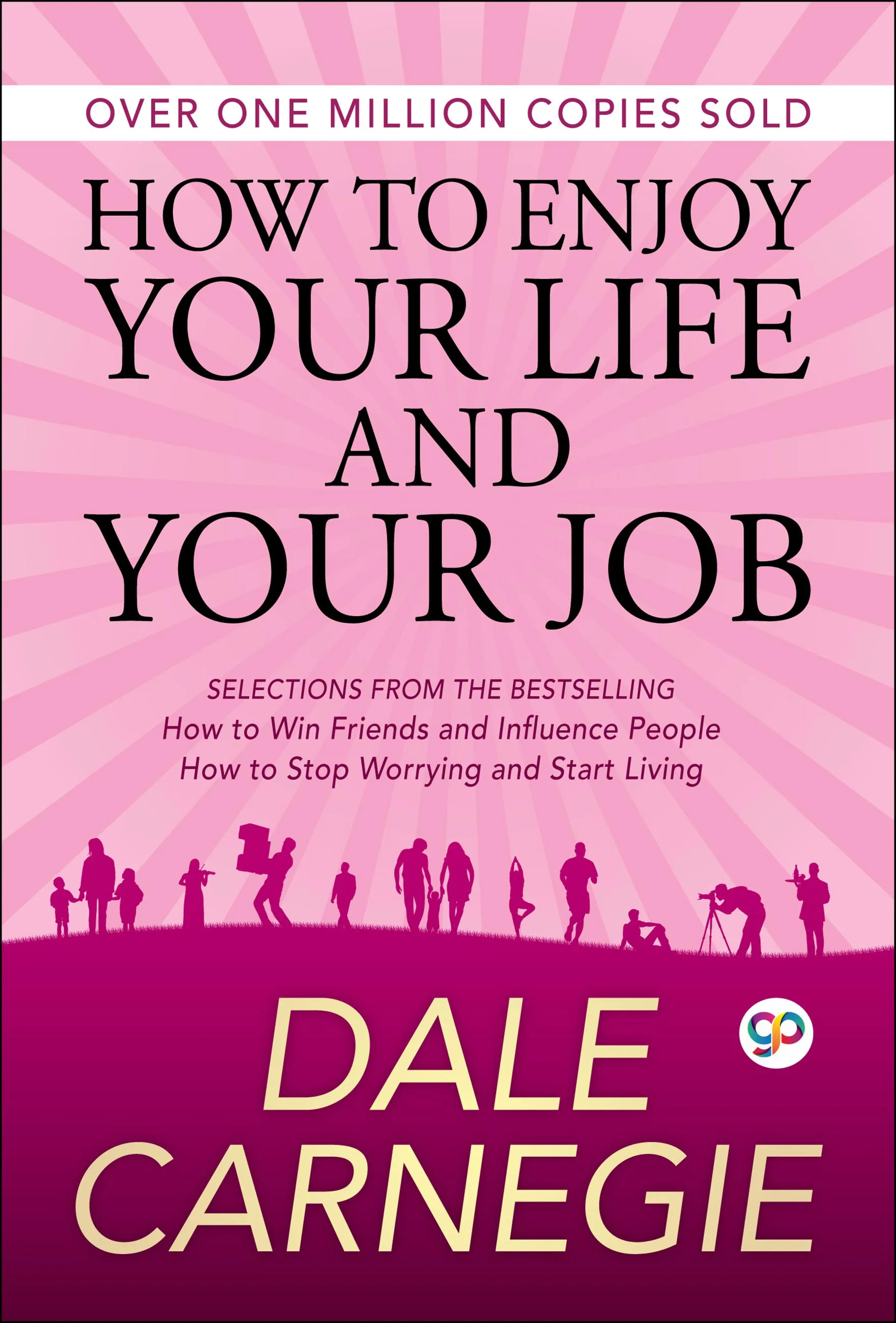
Download Cover Image
Do you want to download the full cover image for How to Enjoy Your Life and Your Job?