
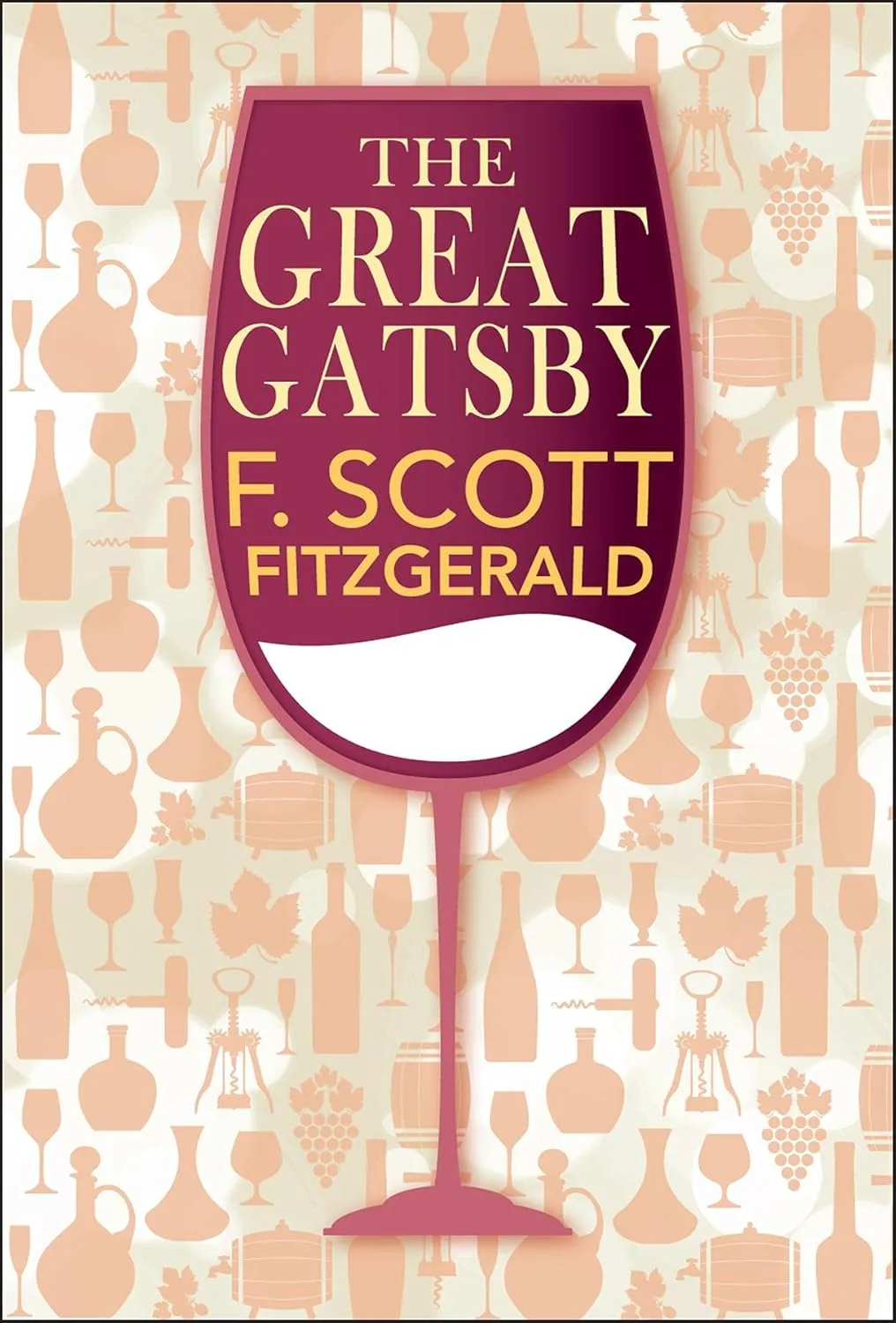
The Great Gatsby
eBook
• INR 76.00
• English
No ratings yet
| Publisher | General Press |
|---|---|
| ASIN/SKU | B07D1TRG3B |
| Book Format | eBook |
| Language | English |
| List Price | INR 76.00 |
| Subject Code | FIC004000, FIC052000, FIC027050 |
| Book Code | BD00068434 |
Buy this Book
Amazon Stores
Ebook Stores
Other Stores
Discover The Great Gatsby by F. Scott Fitzgerald. This book is published by General Press in eBook format, ASIN B07D1TRG3B, under Literature and Fiction, Historical Romances, Fiction Satire.
Book Description
F. Scott Fitzgerald’s 'The Great Gatsby' is a tragic and profoundly moving exploration of the American Dream, set against the glittering, hollow backdrop of the 1920s Jazz Age.
Narrated by the grounded but observant Nick Carraway, the story draws us into the orbit of his enigmatic neighbor, Jay Gatsby. Gatsby is a man of self-invented immense wealth, famous for hosting extravagant, dazzling parties at his Long Island mansion. Yet, beneath the champagne and jazz, he is driven by a singular, aching yearning: to reunite with Daisy Buchanan, his lost love who is now married to the arrogant, old-money aristocrat Tom Buchanan.
The novel strips away the glamour to reveal the profound loneliness of its characters. Gatsby’s relentless pursuit of the green light—a symbol of his idealized, impossible future with Daisy—is both beautiful and deeply naive. He mistakenly believes that love and time can be purchased and rewritten. As the summer heat intensifies, the careless, destructive nature of the wealthy elite leads to inevitable tragedy, leaving innocent lives shattered in its wake.
'The Great Gatsby' is a haunting meditation on the allure and the illusion of reinvention. Fitzgerald masterfully captures the fragility of human hope, showing how the relentless chase for an unattainable past can obscure the reality of the present. It remains a beautifully written, heartbreaking elegy for a fractured dream, reminding us of the heavy toll of loving an illusion.
Narrated by the grounded but observant Nick Carraway, the story draws us into the orbit of his enigmatic neighbor, Jay Gatsby. Gatsby is a man of self-invented immense wealth, famous for hosting extravagant, dazzling parties at his Long Island mansion. Yet, beneath the champagne and jazz, he is driven by a singular, aching yearning: to reunite with Daisy Buchanan, his lost love who is now married to the arrogant, old-money aristocrat Tom Buchanan.
The novel strips away the glamour to reveal the profound loneliness of its characters. Gatsby’s relentless pursuit of the green light—a symbol of his idealized, impossible future with Daisy—is both beautiful and deeply naive. He mistakenly believes that love and time can be purchased and rewritten. As the summer heat intensifies, the careless, destructive nature of the wealthy elite leads to inevitable tragedy, leaving innocent lives shattered in its wake.
'The Great Gatsby' is a haunting meditation on the allure and the illusion of reinvention. Fitzgerald masterfully captures the fragility of human hope, showing how the relentless chase for an unattainable past can obscure the reality of the present. It remains a beautifully written, heartbreaking elegy for a fractured dream, reminding us of the heavy toll of loving an illusion.
Author Biography
Francis Scott Key Fitzgerald (1896–1940) was an iconic American novelist and short-story writer who came to define the Jazz Age—a term he coined himself. Born in St. Paul, Minnesota, to an upper-middle-class family, Fitzgerald attended Princeton University, where he neglected his studies in favor of literary pursuits. He ultimately dropped out in 1917 to join the U.S. Army during World War I. While stationed in Alabama, he met and fell fiercely in love with Zelda Sayre, a wealthy Southern belle who would become his wife, enduring muse, and occasional rival.
His debut novel, This Side of Paradise (1920), was an overnight sensation that captured the youthful rebellion and shifting morals of the post-war generation. The book's massive success afforded him and Zelda a lavish, chaotic lifestyle split between New York, Paris, and the French Riviera. During this vibrant expatriate period in the 1920s, he formed a complex friendship with fellow author Ernest Hemingway and composed what is widely considered his masterpiece, The Great Gatsby (1925). Though it received mixed reviews and modest sales during his lifetime, the novel later became a cornerstone of classic American literature, renowned for its brilliant critique of the American Dream and its lyrical, melancholic prose.
Despite his early success, Fitzgerald’s later life was marred by financial struggles, severe alcoholism, and Zelda’s deteriorating mental health, which eventually required her long-term institutionalization. He channeled these darker, deeply personal themes into his ambitious but commercially disappointing 1934 novel, Tender Is the Night. In his final years, Fitzgerald moved to Hollywood to work as a screenwriter to pay off his mounting debts. He died of a heart attack at age 44, believing himself a forgotten failure. Today, however, he is celebrated globally as a master of the American novel, immortalized by his peerless ability to capture the glittering, tragic essence of his era.
His debut novel, This Side of Paradise (1920), was an overnight sensation that captured the youthful rebellion and shifting morals of the post-war generation. The book's massive success afforded him and Zelda a lavish, chaotic lifestyle split between New York, Paris, and the French Riviera. During this vibrant expatriate period in the 1920s, he formed a complex friendship with fellow author Ernest Hemingway and composed what is widely considered his masterpiece, The Great Gatsby (1925). Though it received mixed reviews and modest sales during his lifetime, the novel later became a cornerstone of classic American literature, renowned for its brilliant critique of the American Dream and its lyrical, melancholic prose.
Despite his early success, Fitzgerald’s later life was marred by financial struggles, severe alcoholism, and Zelda’s deteriorating mental health, which eventually required her long-term institutionalization. He channeled these darker, deeply personal themes into his ambitious but commercially disappointing 1934 novel, Tender Is the Night. In his final years, Fitzgerald moved to Hollywood to work as a screenwriter to pay off his mounting debts. He died of a heart attack at age 44, believing himself a forgotten failure. Today, however, he is celebrated globally as a master of the American novel, immortalized by his peerless ability to capture the glittering, tragic essence of his era.
Editorial Reviews
Editorial Reviews will be added soon…
Book Summary
F. Scott Fitzgerald’s "The Great Gatsby" is a quintessential tale of the Roaring Twenties, a glittering yet tragic exploration of the American Dream and the hollow decadence of the Jazz Age. The narrative is filtered through the observant, midwestern eyes of Nick Carraway, a young Yale graduate and World War I veteran who moves to New York in the summer of 1922 to learn the bond business. Renting a modest caretaker’s bungalow on Long Island’s West Egg, a neighborhood characterized by the ostentatious, newly acquired wealth of its residents, Nick finds himself living next door to a sprawling Gothic mansion. This estate belongs to the enigmatic Jay Gatsby, a man who throws incredibly lavish, wild parties every weekend, yet remains a phantom to his own guests.
Across the bay lies East Egg, a bastion of generational wealth, old money, and entrenched social aristocracy. Here, Nick reconnects with his distant cousin, the beautiful but melancholic Daisy Buchanan, and her hulking, enormously wealthy husband, Tom. Tom is a man defined by his physical dominance, staggering arrogance, and thinly veiled cruelty. During a tense dinner party, Nick is introduced to the cynical and fiercely independent professional golfer Jordan Baker, who casually reveals that Tom has a mistress in the city. This initial visit exposes Nick to the glittering surface of the Buchanans’ lives, but also to the profound boredom, moral bankruptcy, and restless dissatisfaction that roils just beneath their polished veneer.
The stark contrast between the wealthy elite and the working class is violently realized in the "valley of ashes," a desolate, gray industrial wasteland situated between West Egg and New York City. Looming over this bleak landscape is a fading billboard featuring the enormous, disembodied eyes of Doctor T.J. Eckleburg, which silently watch the moral decay unfolding below. It is here that Tom Buchanan forces Nick to meet his mistress, Myrtle Wilson, the vibrant, socially ambitious wife of George Wilson, a worn-down mechanic. Tom treats Myrtle as a disposable plaything, going so far as to break her nose during a drunken party in a New York apartment when she dares to chant Daisy’s name. This brutal incident cements the extreme entitlement of the old-money elite, who believe their wealth inoculates them from consequence.
As the summer progresses, Nick is formally invited to one of Gatsby’s legendary soirées. Amidst the swirling champagne, jazz music, and wild speculation about their host’s origins—rumors suggest he is a German spy or a murderer—Nick finally meets Jay Gatsby. Gatsby possesses an incredibly magnetic charm and a smile that seems to understand and believe in you exactly as you wish to be understood. However, Nick soon learns through Jordan Baker that Gatsby’s entire existence, from his fabricated Oxford pedigree to his monumental mansion, is a meticulously constructed stage set designed for a single audience member: Daisy Buchanan. Every night, Gatsby stands on his lawn, reaching out toward a faint green light at the end of Daisy’s dock, a beacon of his relentless, consuming hope.
We learn that five years prior, before he was sent off to the war, a young, penniless Gatsby fell deeply in love with Daisy in Louisville. Although she loved him, she ultimately lacked the patience to wait for him to make his fortune, choosing instead the financial security and social solidity offered by Tom Buchanan. Now, having amassed a vast bootlegging fortune, Gatsby is desperate to erase the last five years and reclaim the love he lost. He enlists Nick’s help to arrange a casual afternoon tea, effectively forcing a reunion between himself and Daisy. The meeting is initially incredibly awkward and fraught with nervous tension, but it quickly dissolves into a rekindled romance, setting off a dangerous chain of events.
As Gatsby and Daisy resume their affair, the fundamental tragedy of Gatsby’s character becomes painfully apparent. He is entirely possessed by a romantic idealism, believing with every fiber of his being that you can, in fact, repeat the past. He doesn't just want Daisy to leave Tom; he demands that she declare she never loved her husband at all, a requirement that highlights the impossible perfection of Gatsby’s fantasy. Meanwhile, Tom begins to suspect his wife’s infidelity. Despite his own blatant hypocrisies, Tom is outraged by the idea of his wife associating with a man he accurately identifies as a newly rich criminal, setting the stage for an inevitable and explosive confrontation.
The simmering tension finally boils over on a sweltering, oppressive summer day at the Plaza Hotel in Manhattan. Trapped in a stifling room, Tom mercilessly interrogates Gatsby, stripping away his carefully manicured facade to reveal the bootlegger beneath. Gatsby pressures Daisy to say she never loved Tom, but she crumbles under the weight of the demand, admitting that she loved both of them at different times. Tom, recognizing that he has completely broken Gatsby's hold over his wife, dismissively sends them both driving back to Long Island together in Gatsby’s bright yellow car, secure in the knowledge that Daisy will never leave the safety of her elite social standing for a criminal.
The return journey brings the novel's simmering tragedies to a violent head in the valley of ashes. Myrtle Wilson, having been locked in her room by a suspicious George, escapes and runs into the road upon seeing the yellow car, believing Tom is driving it. The car strikes and kills her instantly, speeding away into the night. When Nick catches up to them in East Egg, he discovers the horrifying truth: it was Daisy who was driving the car, not Gatsby. However, still completely devoted to his illusion and determined to protect the woman he loves, Gatsby firmly resolves to take the blame for the fatal accident, sealing his own tragic fate.
The aftermath of the accident is swift and brutal. Tom Buchanan, acting out of a mix of self-preservation and malicious vindictiveness, directs a heavily armed and grief-maddened George Wilson to Gatsby's estate, insinuating that Gatsby was both the driver of the car and Myrtle's secret lover. George arrives at the mansion to find Gatsby floating peacefully in his swimming pool, perhaps still waiting for a phone call from Daisy that will never come. George shoots and kills Gatsby before turning the gun on himself. In the wake of the murder, Tom and Daisy completely vanish, hastily packing their bags and retreating into their vast wealth and profound carelessness, leaving others to clean up the devastation they left in their wake.
The profound emptiness of Gatsby’s world is ultimately laid bare at his funeral. Despite the hundreds of people who eagerly consumed his food and liquor throughout the summer, only Nick, a single eccentric party guest, and Gatsby’s elderly father bother to attend. Deeply disgusted by the moral decay, the superficiality, and the callousness of the East Coast elite, Nick decides to move back to the Midwest. In the novel's haunting conclusion, Nick reflects on the tragic grandeur of Jay Gatsby. He realizes that Gatsby’s tragedy is the tragedy of the American Dream itself—a relentless, beautiful, and ultimately doomed reaching for a green light that is always receding into the past, blinding us to the reality that we are simply boats beating on against the current.
Across the bay lies East Egg, a bastion of generational wealth, old money, and entrenched social aristocracy. Here, Nick reconnects with his distant cousin, the beautiful but melancholic Daisy Buchanan, and her hulking, enormously wealthy husband, Tom. Tom is a man defined by his physical dominance, staggering arrogance, and thinly veiled cruelty. During a tense dinner party, Nick is introduced to the cynical and fiercely independent professional golfer Jordan Baker, who casually reveals that Tom has a mistress in the city. This initial visit exposes Nick to the glittering surface of the Buchanans’ lives, but also to the profound boredom, moral bankruptcy, and restless dissatisfaction that roils just beneath their polished veneer.
The stark contrast between the wealthy elite and the working class is violently realized in the "valley of ashes," a desolate, gray industrial wasteland situated between West Egg and New York City. Looming over this bleak landscape is a fading billboard featuring the enormous, disembodied eyes of Doctor T.J. Eckleburg, which silently watch the moral decay unfolding below. It is here that Tom Buchanan forces Nick to meet his mistress, Myrtle Wilson, the vibrant, socially ambitious wife of George Wilson, a worn-down mechanic. Tom treats Myrtle as a disposable plaything, going so far as to break her nose during a drunken party in a New York apartment when she dares to chant Daisy’s name. This brutal incident cements the extreme entitlement of the old-money elite, who believe their wealth inoculates them from consequence.
As the summer progresses, Nick is formally invited to one of Gatsby’s legendary soirées. Amidst the swirling champagne, jazz music, and wild speculation about their host’s origins—rumors suggest he is a German spy or a murderer—Nick finally meets Jay Gatsby. Gatsby possesses an incredibly magnetic charm and a smile that seems to understand and believe in you exactly as you wish to be understood. However, Nick soon learns through Jordan Baker that Gatsby’s entire existence, from his fabricated Oxford pedigree to his monumental mansion, is a meticulously constructed stage set designed for a single audience member: Daisy Buchanan. Every night, Gatsby stands on his lawn, reaching out toward a faint green light at the end of Daisy’s dock, a beacon of his relentless, consuming hope.
We learn that five years prior, before he was sent off to the war, a young, penniless Gatsby fell deeply in love with Daisy in Louisville. Although she loved him, she ultimately lacked the patience to wait for him to make his fortune, choosing instead the financial security and social solidity offered by Tom Buchanan. Now, having amassed a vast bootlegging fortune, Gatsby is desperate to erase the last five years and reclaim the love he lost. He enlists Nick’s help to arrange a casual afternoon tea, effectively forcing a reunion between himself and Daisy. The meeting is initially incredibly awkward and fraught with nervous tension, but it quickly dissolves into a rekindled romance, setting off a dangerous chain of events.
As Gatsby and Daisy resume their affair, the fundamental tragedy of Gatsby’s character becomes painfully apparent. He is entirely possessed by a romantic idealism, believing with every fiber of his being that you can, in fact, repeat the past. He doesn't just want Daisy to leave Tom; he demands that she declare she never loved her husband at all, a requirement that highlights the impossible perfection of Gatsby’s fantasy. Meanwhile, Tom begins to suspect his wife’s infidelity. Despite his own blatant hypocrisies, Tom is outraged by the idea of his wife associating with a man he accurately identifies as a newly rich criminal, setting the stage for an inevitable and explosive confrontation.
The simmering tension finally boils over on a sweltering, oppressive summer day at the Plaza Hotel in Manhattan. Trapped in a stifling room, Tom mercilessly interrogates Gatsby, stripping away his carefully manicured facade to reveal the bootlegger beneath. Gatsby pressures Daisy to say she never loved Tom, but she crumbles under the weight of the demand, admitting that she loved both of them at different times. Tom, recognizing that he has completely broken Gatsby's hold over his wife, dismissively sends them both driving back to Long Island together in Gatsby’s bright yellow car, secure in the knowledge that Daisy will never leave the safety of her elite social standing for a criminal.
The return journey brings the novel's simmering tragedies to a violent head in the valley of ashes. Myrtle Wilson, having been locked in her room by a suspicious George, escapes and runs into the road upon seeing the yellow car, believing Tom is driving it. The car strikes and kills her instantly, speeding away into the night. When Nick catches up to them in East Egg, he discovers the horrifying truth: it was Daisy who was driving the car, not Gatsby. However, still completely devoted to his illusion and determined to protect the woman he loves, Gatsby firmly resolves to take the blame for the fatal accident, sealing his own tragic fate.
The aftermath of the accident is swift and brutal. Tom Buchanan, acting out of a mix of self-preservation and malicious vindictiveness, directs a heavily armed and grief-maddened George Wilson to Gatsby's estate, insinuating that Gatsby was both the driver of the car and Myrtle's secret lover. George arrives at the mansion to find Gatsby floating peacefully in his swimming pool, perhaps still waiting for a phone call from Daisy that will never come. George shoots and kills Gatsby before turning the gun on himself. In the wake of the murder, Tom and Daisy completely vanish, hastily packing their bags and retreating into their vast wealth and profound carelessness, leaving others to clean up the devastation they left in their wake.
The profound emptiness of Gatsby’s world is ultimately laid bare at his funeral. Despite the hundreds of people who eagerly consumed his food and liquor throughout the summer, only Nick, a single eccentric party guest, and Gatsby’s elderly father bother to attend. Deeply disgusted by the moral decay, the superficiality, and the callousness of the East Coast elite, Nick decides to move back to the Midwest. In the novel's haunting conclusion, Nick reflects on the tragic grandeur of Jay Gatsby. He realizes that Gatsby’s tragedy is the tragedy of the American Dream itself—a relentless, beautiful, and ultimately doomed reaching for a green light that is always receding into the past, blinding us to the reality that we are simply boats beating on against the current.
Sample Chapters
Chapter 1
In my younger and more vulnerable years my father gave me some advice that I’ve been turning over in my mind ever since.
“Whenever you feel like criticizing any one,” he told me, “just remember that all the people in this world haven’t had the advantages that you’ve had.”
He didn’t say any more, but we’ve always been unusually communicative in a reserved way, and I understood that he meant a great deal more than that. In consequence, I’m inclined to reserve all judgments, a habit that has opened up many curious natures to me and also made me the victim of not a few veteran bores. The abnormal mind is quick to detect and attach itself to this quality when it appears in a normal person, and so it came about that in college I was unjustly accused of being a politician, because I was privy to the secret griefs of wild, unknown men. Most of the confidences were unsought – frequently I have feigned sleep, preoccupation, or a hostile levity when I realized by some unmistakable sign that an intimate revelation was quivering on the horizon; for the intimate revelations of young men, or at least the terms in which they express them, are usually plagiaristic and marred by obvious suppressions. Reserving judgments is a matter of infinite hope. I am still a little afraid of missing something if I forget that, as my father snobbishly suggested, and I snobbishly repeat, a sense of the fundamental decencies is parcelled out unequally at birth.
And, after boasting this way of my tolerance, I come to the admission that it has a limit. Conduct may be founded on the hard rock or the wet marshes, but after a certain point I don’t care what it’s founded on. When I came back from the East last autumn I felt that I wanted the world to be in uniform and at a sort of moral attention forever; I wanted no more riotous excursions with privileged glimpses into the human heart. Only Gatsby, the man who gives his name to this book, was exempt from my reaction – Gatsby, who represented everything for which I have an unaffected scorn. If personality is an unbroken series of successful gestures, then there was something gorgeous about him, some heightened sensitivity to the promises of life, as if he were related to one of those intricate machines that register earthquakes ten thousand miles away. This responsiveness had nothing to do with that flabby impressionability which is dignified under the name of the “creative temperament” – it was an extraordinary gift for hope, a romantic readiness such as I have never found in any other person and which it is not likely I shall ever find again. No – Gatsby turned out all right at the end; it is what preyed on Gatsby, what foul dust floated in the wake of his dreams that temporarily closed out my interest in the abortive sorrows and short-winded elations of men.
* * *
My family have been prominent, well-to-do people in this Middle Western city for three generations. The Carraways are something of a clan, and we have a tradition that we’re descended from the Dukes of Buccleuch, but the actual founder of my line was my grandfather’s brother, who came here in fifty-one, sent a substitute to the Civil War, and started the wholesale hardware business that my father carries on today.
I never saw this great-uncle, but I’m supposed to look like him – with special reference to the rather hard-boiled painting that hangs in father’s office. I graduated from New Haven in 1915, just a quarter of a century after my father, and a little later I participated in that delayed Teutonic migration known as the Great War. I enjoyed the counter-raid so thoroughly that I came back restless. Instead of being the warm center of the world, the Middle West now seemed like the ragged edge of the universe – so I decided to go East and learn the bond business. Everybody I knew was in the bond business, so I supposed it could support one more single man. All my aunts and uncles talked it over as if they were choosing a prep school for me, and finally said, “Why – ye-es,” with very grave, hesitant faces. Father agreed to finance me for a year, and after various delays I came East, permanently, I thought, in the spring of twenty-two.
The practical thing was to find rooms in the city, but it was a warm season, and I had just left a country of wide lawns and friendly trees, so when a young man at the office suggested that we take a house together in a commuting town, it sounded like a great idea. He found the house, a weather-beaten cardboard bungalow at eighty a month, but at the last minute the firm ordered him to Washington, and I went out to the country alone. I had a dog – at least I had him for a few days until he ran away – and an old Dodge and a Finnish woman, who made my bed and cooked breakfast and muttered Finnish wisdom to herself over the electric stove.
It was lonely for a day or so until one morning some man, more recently arrived than I, stopped me on the road.
“How do you get to West Egg village?” he asked helplessly.
I told him. And as I walked on I was lonely no longer. I was a guide, a pathfinder, an original settler. He had casually conferred on me the freedom of the neighborhood.
And so with the sunshine and the great bursts of leaves growing on the trees, just as things grow in fast movies, I had that familiar conviction that life was beginning over again with the summer.
There was so much to read, for one thing, and so much fine health to be pulled down out of the young breath-giving air. I bought a dozen volumes on banking and credit and investment securities, and they stood on my shelf in red and gold like new money from the mint, promising to unfold the shining secrets that only Midas and Morgan and Maecenas knew. And I had the high intention of reading many other books besides. I was rather literary in college – one year I wrote a series of very solemn and obvious editorials for the “Yale News” – and now I was going to bring back all such things into my life and become again that most limited of all specialists, the “well-rounded man.” This isn’t just an epigram – life is much more successfully looked at from a single window, after all.
It was a matter of chance that I should have rented a house in one of the strangest communities in North America. It was on that slender riotous island which extends itself due east of New York – and where there are, among other natural curiosities, two unusual formations of land. Twenty miles from the city a pair of enormous eggs, identical in contour and separated only by a courtesy bay, jut out into the most domesticated body of salt water in the Western hemisphere, the great wet barnyard of Long Island Sound. They are not perfect ovals – like the egg in the Columbus story, they are both crushed flat at the contact end – but their physical resemblance must be a source of perpetual confusion to the gulls that fly overhead. To the wingless a more arresting phenomenon is their dissimilarity in every particular except shape and size.
I lived at West Egg, the – well, the less fashionable of the two, though this is a most superficial tag to express the bizarre and not a little sinister contrast between them. My house was at the very tip of the egg, only fifty yards from the Sound, and squeezed between two huge places that rented for twelve or fifteen thousand a season. The one on my right was a colossal affair by any standard – it was a factual imitation of some Hotel de Ville in Normandy, with a tower on one side, spanking new under a thin beard of raw ivy, and a marble swimming pool, and more than forty acres of lawn and garden. It was Gatsby’s mansion. Or, rather, as I didn’t know Mr Gatsby, it was a mansion inhabited by a gentleman of that name. My own house was an eyesore, but it was a small eyesore, and it had been overlooked, so I had a view of the water, a partial view of my neighbor’s lawn, and the consoling proximity of millionaires – all for eighty dollars a month.
Across the courtesy bay the white palaces of fashionable East Egg glittered along the water, and the history of the summer really begins on the evening I drove over there to have dinner with the Tom Buchanans. Daisy was my second cousin once removed, and I’d known Tom in college. And just after the war I spent two days with them in Chicago.
Her husband, among various physical accomplishments, had been one of the most powerful ends that ever played football at New Haven – a national figure in a way, one of those men who reach such an acute limited excellence at twenty-one that everything afterward savors of anti-climax. His family were enormously wealthy – even in college his freedom with money was a matter for reproach – but now he’d left Chicago and come East in a fashion that rather took your breath away: for instance, he’d brought down a string of polo ponies from Lake Forest. It was hard to realize that a man in my own generation was wealthy enough to do that.
Why they came East I don’t know. They had spent a year in France for no particular reason, and then drifted here and there unrestfully wherever people played polo and were rich together. This was a permanent move, said Daisy over the telephone, but I didn’t believe it – I had no sight into Daisy’s heart, but I felt that Tom would drift on forever seeking, a little wistfully, for the dramatic turbulence of some irrecoverable football game.
And so it happened that on a warm windy evening I drove over to East Egg to see two old friends whom I scarcely knew at all. Their house was even more elaborate than I expected, a cheerful red-and-white Georgian Colonial mansion, overlooking the bay. The lawn started at the beach and ran toward the front door for a quarter of a mile, jumping over sun-dials and brick walks and burning gardens – finally when it reached the house drifting up the side in bright vines as though from the momentum of its run. The front was broken by a line of French windows, glowing now with reflected gold and wide open to the warm windy afternoon, and Tom Buchanan in riding clothes was standing with his legs apart on the front porch.
He had changed since his New Haven years. Now he was a sturdy straw-haired man of thirty with a rather hard mouth and a supercilious manner. Two shining arrogant eyes had established dominance over his face and gave him the appearance of always leaning aggressively forward. Not even the effeminate swank of his riding clothes could hide the enormous power of that body – he seemed to fill those glistening boots until he strained the top lacing, and you could see a great pack of muscle shifting when his shoulder moved under his thin coat. It was a body capable of enormous leverage – a cruel body.
His speaking voice, a gruff husky tenor, added to the impression of fractiousness he conveyed. There was a touch of paternal contempt in it, even toward people he liked – and there were men at New Haven who had hated his guts.
“Now, don’t think my opinion on these matters is final,” he seemed to say, “just because I’m stronger and more of a man than you are.” We were in the same senior society, and while we were never intimate I always had the impression that he approved of me and wanted me to like him with some harsh, defiant wistfulness of his own.
We talked for a few minutes on the sunny porch.
“I’ve got a nice place here,” he said, his eyes flashing about restlessly.
Turning me around by one arm, he moved a broad flat hand along the front vista, including in its sweep a sunken Italian garden, a half acre of deep, pungent roses, and a snub-nosed motorboat that bumped the tide offshore.
“It belonged to Demaine, the oil man.” He turned me around again, politely and abruptly. “We’ll go inside.”
We walked through a high hallway into a bright rosy-colored space, fragilely bound into the house by French windows at either end. The windows were ajar and gleaming white against the fresh grass outside that seemed to grow a little way into the house. A breeze blew through the room, blew curtains in at one end and out the other like pale flags, twisting them up toward the frosted wedding-cake of the ceiling, and then rippled over the wine-colored rug, making a shadow on it as wind does on the sea.
The only completely stationary object in the room was an enormous couch on which two young women were buoyed up as though upon an anchored balloon. They were both in white, and their dresses were rippling and fluttering as if they had just been blown back in after a short flight around the house. I must have stood for a few moments listening to the whip and snap of the curtains and the groan of a picture on the wall. Then there was a boom as Tom Buchanan shut the rear windows and the caught wind died out about the room, and the curtains and the rugs and the two young women ballooned slowly to the floor.
The younger of the two was a stranger to me. She was extended full length at her end of the divan, completely motionless, and with her chin raised a little, as if she were balancing something on it which was quite likely to fall. If she saw me out of the corner of her eyes she gave no hint of it – indeed, I was almost surprised into murmuring an apology for having disturbed her by coming in.
The other girl, Daisy, made an attempt to rise – she leaned slightly forward with a conscientious expression – then she laughed, an absurd, charming little laugh, and I laughed too and came forward into the room.
“I’m p-paralyzed with happiness.” She laughed again, as if she said something very witty, and held my hand for a moment, looking up into my face, promising that there was no one in the world she so much wanted to see. That was a way she had. She hinted in a murmur that the surname of the balancing girl was Baker. (I’ve heard it said that Daisy’s murmur was only to make people lean toward her; an irrelevant criticism that made it no less charming.)
At any rate, Miss Baker’s lips fluttered, she nodded at me almost imperceptibly, and then quickly tipped her head back again – the object she was balancing had obviously tottered a little and given her something of a fright. Again a sort of apology arose to my lips. Almost any exhibition of complete self-sufficiency draws a stunned tribute from me.
I looked back at my cousin, who began to ask me questions in her low, thrilling voice. It was the kind of voice that the ear follows up and down, as if each speech is an arrangement of notes that will never be played again. Her face was sad and lovely with bright things in it, bright eyes and a bright passionate mouth, but there was an excitement in her voice that men who had cared for her found difficult to forget: a singing compulsion, a whispered “Listen,” a promise that she had done gay, exciting things just a while since and that there were gay, exciting things hovering in the next hour.
I told her how I had stopped off in Chicago for a day on my way East, and how a dozen people had sent their love through me.
“Do they miss me?” she cried ecstatically.
“The whole town is desolate. All the cars have the left rear wheel painted black as a mourning wreath, and there’s a persistent wail all night along the north shore.”
“How gorgeous! Let’s go back, Tom. Tomorrow!” Then she added irrelevantly: “You ought to see the baby.”
“I’d like to.”
“She’s asleep. She’s three years old. Haven’t you ever seen her?”
“Never.”
“Well, you ought to see her. She’s–”
Tom Buchanan, who had been hovering restlessly about the room, stopped and rested his hand on my shoulder.
“What you doing, Nick?”
“I’m a bond man.”
“Who with?”
I told him.
“Never heard of them,” he remarked decisively.
This annoyed me.
“You will,” I answered shortly. “You will if you stay in the East.”
“Oh, I’ll stay in the East, don’t you worry,” he said, glancing at Daisy and then back at me, as if he were alert for something more. “I’d be a God damned fool to live anywhere else.”
At this point Miss Baker said: “Absolutely!” with such suddenness that I started – it was the first word she uttered since I came into the room. Evidently it surprised her as much as it did me, for she yawned and with a series of rapid, deft movements stood up into the room.
“I’m stiff,” she complained, “I’ve been lying on that sofa for as long as I can remember.”
“Don’t look at me,” Daisy retorted, “I’ve been trying to get you to New York all afternoon.”
“No, thanks,” said Miss Baker to the four cocktails just in from the pantry, “I’m absolutely in training.”
Her host looked at her incredulously.
“You are!” He took down his drink as if it were a drop in the bottom of a glass. “How you ever get anything done is beyond me.”
I looked at Miss Baker, wondering what it was she “got done.” I enjoyed looking at her. She was a slender, small-breasted girl, with an erect carriage, which she accentuated by throwing her body backward at the shoulders like a young cadet. Her gray sun-strained eyes looked back at me with polite reciprocal curiosity out of a wan, charming, discontented face. It occurred to me now that I had seen her, or a picture of her, somewhere before.
“You live in West Egg,” she remarked contemptuously. “I know somebody there.”
“I don’t know a single–”
“You must know Gatsby.”
“Gatsby?” demanded Daisy. “What Gatsby?”
Before I could reply that he was my neighbor dinner was announced; wedging his tense arm imperatively under mine, Tom Buchanan compelled me from the room as though he were moving a checker to another square.
Slenderly, languidly, their hands set lightly on their hips, the two young women preceded us out on to a rosy-colored porch, open toward the sunset, where four candles flickered on the table in the diminished wind.
“Why candles?” objected Daisy, frowning. She snapped them out with her fingers. “In two weeks it’ll be the longest day in the year.” She looked at us all radiantly. “Do you always watch for the longest day of the year and then miss it? I always watch for the longest day in the year and then miss it.”
“We ought to plan something,” yawned Miss Baker, sitting down at the table as if she were getting into bed.
“All right,” said Daisy. “What’ll we plan?” She turned to me helplessly: “What do people plan?”
Before I could answer her eyes fastened with an awed expression on her little finger.
“Look!” she complained; “I hurt it.”
We all looked – the knuckle was black and blue.
“You did it, Tom,” she said accusingly. “I know you didn’t mean to, but you did do it. That’s what I get for marrying a brute of a man, a great, big, hulking physical specimen of a–”
“I hate that word hulking,” objected Tom crossly, “even in kidding.”
“Hulking,” insisted Daisy.
Sometimes she and Miss Baker talked at once, unobtrusively and with a bantering inconsequence that was never quite chatter, that was as cool as their white dresses and their impersonal eyes in the absence of all desire. They were here, and they accepted Tom and me, making only a polite pleasant effort to entertain or to be entertained. They knew that presently dinner would be over and a little later the evening too would be over and casually put away. It was sharply different from the West, where an evening was hurried from phase to phase toward its close, in a continually disappointed anticipation or else in sheer nervous dread of the moment itself.
“You make me feel uncivilized, Daisy,” I confessed on my second glass of corky but rather impressive claret. “Can’t you talk about crops or something?”
In my younger and more vulnerable years my father gave me some advice that I’ve been turning over in my mind ever since.
“Whenever you feel like criticizing any one,” he told me, “just remember that all the people in this world haven’t had the advantages that you’ve had.”
He didn’t say any more, but we’ve always been unusually communicative in a reserved way, and I understood that he meant a great deal more than that. In consequence, I’m inclined to reserve all judgments, a habit that has opened up many curious natures to me and also made me the victim of not a few veteran bores. The abnormal mind is quick to detect and attach itself to this quality when it appears in a normal person, and so it came about that in college I was unjustly accused of being a politician, because I was privy to the secret griefs of wild, unknown men. Most of the confidences were unsought – frequently I have feigned sleep, preoccupation, or a hostile levity when I realized by some unmistakable sign that an intimate revelation was quivering on the horizon; for the intimate revelations of young men, or at least the terms in which they express them, are usually plagiaristic and marred by obvious suppressions. Reserving judgments is a matter of infinite hope. I am still a little afraid of missing something if I forget that, as my father snobbishly suggested, and I snobbishly repeat, a sense of the fundamental decencies is parcelled out unequally at birth.
And, after boasting this way of my tolerance, I come to the admission that it has a limit. Conduct may be founded on the hard rock or the wet marshes, but after a certain point I don’t care what it’s founded on. When I came back from the East last autumn I felt that I wanted the world to be in uniform and at a sort of moral attention forever; I wanted no more riotous excursions with privileged glimpses into the human heart. Only Gatsby, the man who gives his name to this book, was exempt from my reaction – Gatsby, who represented everything for which I have an unaffected scorn. If personality is an unbroken series of successful gestures, then there was something gorgeous about him, some heightened sensitivity to the promises of life, as if he were related to one of those intricate machines that register earthquakes ten thousand miles away. This responsiveness had nothing to do with that flabby impressionability which is dignified under the name of the “creative temperament” – it was an extraordinary gift for hope, a romantic readiness such as I have never found in any other person and which it is not likely I shall ever find again. No – Gatsby turned out all right at the end; it is what preyed on Gatsby, what foul dust floated in the wake of his dreams that temporarily closed out my interest in the abortive sorrows and short-winded elations of men.
* * *
My family have been prominent, well-to-do people in this Middle Western city for three generations. The Carraways are something of a clan, and we have a tradition that we’re descended from the Dukes of Buccleuch, but the actual founder of my line was my grandfather’s brother, who came here in fifty-one, sent a substitute to the Civil War, and started the wholesale hardware business that my father carries on today.
I never saw this great-uncle, but I’m supposed to look like him – with special reference to the rather hard-boiled painting that hangs in father’s office. I graduated from New Haven in 1915, just a quarter of a century after my father, and a little later I participated in that delayed Teutonic migration known as the Great War. I enjoyed the counter-raid so thoroughly that I came back restless. Instead of being the warm center of the world, the Middle West now seemed like the ragged edge of the universe – so I decided to go East and learn the bond business. Everybody I knew was in the bond business, so I supposed it could support one more single man. All my aunts and uncles talked it over as if they were choosing a prep school for me, and finally said, “Why – ye-es,” with very grave, hesitant faces. Father agreed to finance me for a year, and after various delays I came East, permanently, I thought, in the spring of twenty-two.
The practical thing was to find rooms in the city, but it was a warm season, and I had just left a country of wide lawns and friendly trees, so when a young man at the office suggested that we take a house together in a commuting town, it sounded like a great idea. He found the house, a weather-beaten cardboard bungalow at eighty a month, but at the last minute the firm ordered him to Washington, and I went out to the country alone. I had a dog – at least I had him for a few days until he ran away – and an old Dodge and a Finnish woman, who made my bed and cooked breakfast and muttered Finnish wisdom to herself over the electric stove.
It was lonely for a day or so until one morning some man, more recently arrived than I, stopped me on the road.
“How do you get to West Egg village?” he asked helplessly.
I told him. And as I walked on I was lonely no longer. I was a guide, a pathfinder, an original settler. He had casually conferred on me the freedom of the neighborhood.
And so with the sunshine and the great bursts of leaves growing on the trees, just as things grow in fast movies, I had that familiar conviction that life was beginning over again with the summer.
There was so much to read, for one thing, and so much fine health to be pulled down out of the young breath-giving air. I bought a dozen volumes on banking and credit and investment securities, and they stood on my shelf in red and gold like new money from the mint, promising to unfold the shining secrets that only Midas and Morgan and Maecenas knew. And I had the high intention of reading many other books besides. I was rather literary in college – one year I wrote a series of very solemn and obvious editorials for the “Yale News” – and now I was going to bring back all such things into my life and become again that most limited of all specialists, the “well-rounded man.” This isn’t just an epigram – life is much more successfully looked at from a single window, after all.
It was a matter of chance that I should have rented a house in one of the strangest communities in North America. It was on that slender riotous island which extends itself due east of New York – and where there are, among other natural curiosities, two unusual formations of land. Twenty miles from the city a pair of enormous eggs, identical in contour and separated only by a courtesy bay, jut out into the most domesticated body of salt water in the Western hemisphere, the great wet barnyard of Long Island Sound. They are not perfect ovals – like the egg in the Columbus story, they are both crushed flat at the contact end – but their physical resemblance must be a source of perpetual confusion to the gulls that fly overhead. To the wingless a more arresting phenomenon is their dissimilarity in every particular except shape and size.
I lived at West Egg, the – well, the less fashionable of the two, though this is a most superficial tag to express the bizarre and not a little sinister contrast between them. My house was at the very tip of the egg, only fifty yards from the Sound, and squeezed between two huge places that rented for twelve or fifteen thousand a season. The one on my right was a colossal affair by any standard – it was a factual imitation of some Hotel de Ville in Normandy, with a tower on one side, spanking new under a thin beard of raw ivy, and a marble swimming pool, and more than forty acres of lawn and garden. It was Gatsby’s mansion. Or, rather, as I didn’t know Mr Gatsby, it was a mansion inhabited by a gentleman of that name. My own house was an eyesore, but it was a small eyesore, and it had been overlooked, so I had a view of the water, a partial view of my neighbor’s lawn, and the consoling proximity of millionaires – all for eighty dollars a month.
Across the courtesy bay the white palaces of fashionable East Egg glittered along the water, and the history of the summer really begins on the evening I drove over there to have dinner with the Tom Buchanans. Daisy was my second cousin once removed, and I’d known Tom in college. And just after the war I spent two days with them in Chicago.
Her husband, among various physical accomplishments, had been one of the most powerful ends that ever played football at New Haven – a national figure in a way, one of those men who reach such an acute limited excellence at twenty-one that everything afterward savors of anti-climax. His family were enormously wealthy – even in college his freedom with money was a matter for reproach – but now he’d left Chicago and come East in a fashion that rather took your breath away: for instance, he’d brought down a string of polo ponies from Lake Forest. It was hard to realize that a man in my own generation was wealthy enough to do that.
Why they came East I don’t know. They had spent a year in France for no particular reason, and then drifted here and there unrestfully wherever people played polo and were rich together. This was a permanent move, said Daisy over the telephone, but I didn’t believe it – I had no sight into Daisy’s heart, but I felt that Tom would drift on forever seeking, a little wistfully, for the dramatic turbulence of some irrecoverable football game.
And so it happened that on a warm windy evening I drove over to East Egg to see two old friends whom I scarcely knew at all. Their house was even more elaborate than I expected, a cheerful red-and-white Georgian Colonial mansion, overlooking the bay. The lawn started at the beach and ran toward the front door for a quarter of a mile, jumping over sun-dials and brick walks and burning gardens – finally when it reached the house drifting up the side in bright vines as though from the momentum of its run. The front was broken by a line of French windows, glowing now with reflected gold and wide open to the warm windy afternoon, and Tom Buchanan in riding clothes was standing with his legs apart on the front porch.
He had changed since his New Haven years. Now he was a sturdy straw-haired man of thirty with a rather hard mouth and a supercilious manner. Two shining arrogant eyes had established dominance over his face and gave him the appearance of always leaning aggressively forward. Not even the effeminate swank of his riding clothes could hide the enormous power of that body – he seemed to fill those glistening boots until he strained the top lacing, and you could see a great pack of muscle shifting when his shoulder moved under his thin coat. It was a body capable of enormous leverage – a cruel body.
His speaking voice, a gruff husky tenor, added to the impression of fractiousness he conveyed. There was a touch of paternal contempt in it, even toward people he liked – and there were men at New Haven who had hated his guts.
“Now, don’t think my opinion on these matters is final,” he seemed to say, “just because I’m stronger and more of a man than you are.” We were in the same senior society, and while we were never intimate I always had the impression that he approved of me and wanted me to like him with some harsh, defiant wistfulness of his own.
We talked for a few minutes on the sunny porch.
“I’ve got a nice place here,” he said, his eyes flashing about restlessly.
Turning me around by one arm, he moved a broad flat hand along the front vista, including in its sweep a sunken Italian garden, a half acre of deep, pungent roses, and a snub-nosed motorboat that bumped the tide offshore.
“It belonged to Demaine, the oil man.” He turned me around again, politely and abruptly. “We’ll go inside.”
We walked through a high hallway into a bright rosy-colored space, fragilely bound into the house by French windows at either end. The windows were ajar and gleaming white against the fresh grass outside that seemed to grow a little way into the house. A breeze blew through the room, blew curtains in at one end and out the other like pale flags, twisting them up toward the frosted wedding-cake of the ceiling, and then rippled over the wine-colored rug, making a shadow on it as wind does on the sea.
The only completely stationary object in the room was an enormous couch on which two young women were buoyed up as though upon an anchored balloon. They were both in white, and their dresses were rippling and fluttering as if they had just been blown back in after a short flight around the house. I must have stood for a few moments listening to the whip and snap of the curtains and the groan of a picture on the wall. Then there was a boom as Tom Buchanan shut the rear windows and the caught wind died out about the room, and the curtains and the rugs and the two young women ballooned slowly to the floor.
The younger of the two was a stranger to me. She was extended full length at her end of the divan, completely motionless, and with her chin raised a little, as if she were balancing something on it which was quite likely to fall. If she saw me out of the corner of her eyes she gave no hint of it – indeed, I was almost surprised into murmuring an apology for having disturbed her by coming in.
The other girl, Daisy, made an attempt to rise – she leaned slightly forward with a conscientious expression – then she laughed, an absurd, charming little laugh, and I laughed too and came forward into the room.
“I’m p-paralyzed with happiness.” She laughed again, as if she said something very witty, and held my hand for a moment, looking up into my face, promising that there was no one in the world she so much wanted to see. That was a way she had. She hinted in a murmur that the surname of the balancing girl was Baker. (I’ve heard it said that Daisy’s murmur was only to make people lean toward her; an irrelevant criticism that made it no less charming.)
At any rate, Miss Baker’s lips fluttered, she nodded at me almost imperceptibly, and then quickly tipped her head back again – the object she was balancing had obviously tottered a little and given her something of a fright. Again a sort of apology arose to my lips. Almost any exhibition of complete self-sufficiency draws a stunned tribute from me.
I looked back at my cousin, who began to ask me questions in her low, thrilling voice. It was the kind of voice that the ear follows up and down, as if each speech is an arrangement of notes that will never be played again. Her face was sad and lovely with bright things in it, bright eyes and a bright passionate mouth, but there was an excitement in her voice that men who had cared for her found difficult to forget: a singing compulsion, a whispered “Listen,” a promise that she had done gay, exciting things just a while since and that there were gay, exciting things hovering in the next hour.
I told her how I had stopped off in Chicago for a day on my way East, and how a dozen people had sent their love through me.
“Do they miss me?” she cried ecstatically.
“The whole town is desolate. All the cars have the left rear wheel painted black as a mourning wreath, and there’s a persistent wail all night along the north shore.”
“How gorgeous! Let’s go back, Tom. Tomorrow!” Then she added irrelevantly: “You ought to see the baby.”
“I’d like to.”
“She’s asleep. She’s three years old. Haven’t you ever seen her?”
“Never.”
“Well, you ought to see her. She’s–”
Tom Buchanan, who had been hovering restlessly about the room, stopped and rested his hand on my shoulder.
“What you doing, Nick?”
“I’m a bond man.”
“Who with?”
I told him.
“Never heard of them,” he remarked decisively.
This annoyed me.
“You will,” I answered shortly. “You will if you stay in the East.”
“Oh, I’ll stay in the East, don’t you worry,” he said, glancing at Daisy and then back at me, as if he were alert for something more. “I’d be a God damned fool to live anywhere else.”
At this point Miss Baker said: “Absolutely!” with such suddenness that I started – it was the first word she uttered since I came into the room. Evidently it surprised her as much as it did me, for she yawned and with a series of rapid, deft movements stood up into the room.
“I’m stiff,” she complained, “I’ve been lying on that sofa for as long as I can remember.”
“Don’t look at me,” Daisy retorted, “I’ve been trying to get you to New York all afternoon.”
“No, thanks,” said Miss Baker to the four cocktails just in from the pantry, “I’m absolutely in training.”
Her host looked at her incredulously.
“You are!” He took down his drink as if it were a drop in the bottom of a glass. “How you ever get anything done is beyond me.”
I looked at Miss Baker, wondering what it was she “got done.” I enjoyed looking at her. She was a slender, small-breasted girl, with an erect carriage, which she accentuated by throwing her body backward at the shoulders like a young cadet. Her gray sun-strained eyes looked back at me with polite reciprocal curiosity out of a wan, charming, discontented face. It occurred to me now that I had seen her, or a picture of her, somewhere before.
“You live in West Egg,” she remarked contemptuously. “I know somebody there.”
“I don’t know a single–”
“You must know Gatsby.”
“Gatsby?” demanded Daisy. “What Gatsby?”
Before I could reply that he was my neighbor dinner was announced; wedging his tense arm imperatively under mine, Tom Buchanan compelled me from the room as though he were moving a checker to another square.
Slenderly, languidly, their hands set lightly on their hips, the two young women preceded us out on to a rosy-colored porch, open toward the sunset, where four candles flickered on the table in the diminished wind.
“Why candles?” objected Daisy, frowning. She snapped them out with her fingers. “In two weeks it’ll be the longest day in the year.” She looked at us all radiantly. “Do you always watch for the longest day of the year and then miss it? I always watch for the longest day in the year and then miss it.”
“We ought to plan something,” yawned Miss Baker, sitting down at the table as if she were getting into bed.
“All right,” said Daisy. “What’ll we plan?” She turned to me helplessly: “What do people plan?”
Before I could answer her eyes fastened with an awed expression on her little finger.
“Look!” she complained; “I hurt it.”
We all looked – the knuckle was black and blue.
“You did it, Tom,” she said accusingly. “I know you didn’t mean to, but you did do it. That’s what I get for marrying a brute of a man, a great, big, hulking physical specimen of a–”
“I hate that word hulking,” objected Tom crossly, “even in kidding.”
“Hulking,” insisted Daisy.
Sometimes she and Miss Baker talked at once, unobtrusively and with a bantering inconsequence that was never quite chatter, that was as cool as their white dresses and their impersonal eyes in the absence of all desire. They were here, and they accepted Tom and me, making only a polite pleasant effort to entertain or to be entertained. They knew that presently dinner would be over and a little later the evening too would be over and casually put away. It was sharply different from the West, where an evening was hurried from phase to phase toward its close, in a continually disappointed anticipation or else in sheer nervous dread of the moment itself.
“You make me feel uncivilized, Daisy,” I confessed on my second glass of corky but rather impressive claret. “Can’t you talk about crops or something?”
Reader Reviews
No reviews yet.
The Great Gatsby
Download Cover Image
Do you want to download the full cover image for The Great Gatsby?