
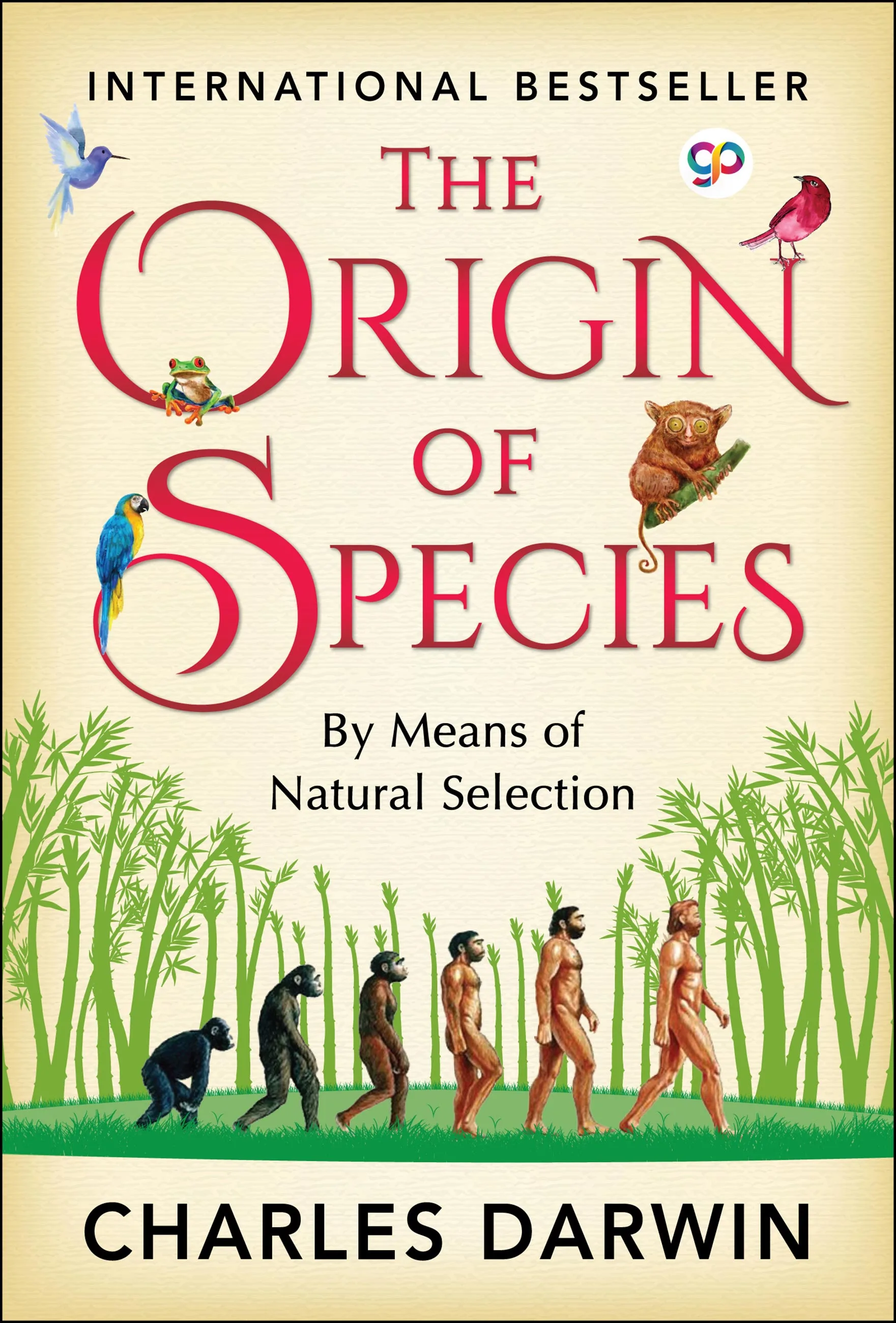
The Origin of Species
eBook
• 249 Pages
• INR 299.00
• English
• 9789387669673
No ratings yet
| Publisher | General Press |
|---|---|
| ISBN13 | 9789387669673 |
| ASIN/SKU | B07D62MTMM |
| Book Format | eBook |
| Language | English |
| Pages | 249 |
| List Price | INR 299.00 |
| Subject Code | SCI027000, SCI034000, SCI008000 |
| Publishing Date | 19/05/2018 |
| Book Code | BD00068441 |
Buy this Book
Amazon Stores
Ebook Stores
Other Stores
Discover The Origin of Species by Charles Darwin. This book is published by General Press in eBook format, ISBN 9789387669673, ASIN B07D62MTMM, under Science and Math, Biological Sciences, History and Philosophy of Science.
Book Description
Charles Darwin’s 'The Origin of Species' is a masterwork of scientific observation that forever changed how we understand our place in the natural world. At its heart, the book introduces the groundbreaking concept of natural selection, but it does so through the eyes of a deeply curious and patient observer.
Darwin explains that life on Earth is not static. Instead, every species is engaged in a quiet, continuous struggle for survival. Because resources are limited, only those creatures with traits best suited to their environment manage to thrive and pass those advantages on to the next generation. Over vast stretches of time, these tiny, gradual changes accumulate, branching out into the breathtaking diversity of life we see today.
What makes Darwin’s work so profoundly humane is his deep reverence for nature. He doesn't portray a cruel, mechanical world, but rather a beautifully intricate "tangled bank," where every plant, bird, and insect is intimately connected to one another through a shared, ancient heritage. He dismantles the idea of isolated, unchanging creations, offering instead a magnificent family tree of life that binds all living creatures together.
Ultimately, 'The Origin of Species' is far more than a biological treatise; it is a humbling and poetic reflection on existence itself. It invites us to look closely at the world, recognizing the quiet resilience of nature and the shared, unbroken thread of survival that seamlessly connects us to even the simplest forms of life.
Darwin explains that life on Earth is not static. Instead, every species is engaged in a quiet, continuous struggle for survival. Because resources are limited, only those creatures with traits best suited to their environment manage to thrive and pass those advantages on to the next generation. Over vast stretches of time, these tiny, gradual changes accumulate, branching out into the breathtaking diversity of life we see today.
What makes Darwin’s work so profoundly humane is his deep reverence for nature. He doesn't portray a cruel, mechanical world, but rather a beautifully intricate "tangled bank," where every plant, bird, and insect is intimately connected to one another through a shared, ancient heritage. He dismantles the idea of isolated, unchanging creations, offering instead a magnificent family tree of life that binds all living creatures together.
Ultimately, 'The Origin of Species' is far more than a biological treatise; it is a humbling and poetic reflection on existence itself. It invites us to look closely at the world, recognizing the quiet resilience of nature and the shared, unbroken thread of survival that seamlessly connects us to even the simplest forms of life.
Author Biography
Charles Robert Darwin, FRS was an English naturalist and geologist, best known for his contributions to evolutionary theory. He established that all species of life have descended over time from common ancestors, and in a joint publication with Alfred Russel Wallace introduced his scientific theory that this branching pattern of evolution resulted from a process that he called natural selection, in which the struggle for existence has a similar effect to the artificial selection involved in selective breeding.
Darwin published his theory of evolution with compelling evidence in his 1859 book On the Origin of Species, overcoming scientific rejection of earlier concepts of transmutation of species. By the 1870s the scientific community and much of the general public had accepted evolution as a fact. However, many favoured competing explanations and it was not until the emergence of the modern evolutionary synthesis from the 1930s to the 1950s that a broad consensus developed in which natural selection was the basic mechanism of evolution. In modified form, Darwin's scientific discovery is the unifying theory of the life sciences, explaining the diversity of life.
Darwin published his theory of evolution with compelling evidence in his 1859 book On the Origin of Species, overcoming scientific rejection of earlier concepts of transmutation of species. By the 1870s the scientific community and much of the general public had accepted evolution as a fact. However, many favoured competing explanations and it was not until the emergence of the modern evolutionary synthesis from the 1930s to the 1950s that a broad consensus developed in which natural selection was the basic mechanism of evolution. In modified form, Darwin's scientific discovery is the unifying theory of the life sciences, explaining the diversity of life.
Editorial Reviews
Editorial Reviews will be added soon…
Book Summary
Charles Darwin’s "On the Origin of Species", published in 1859, stands as one of the most consequential scientific works ever written, fundamentally altering humanity's understanding of the natural world. Before its publication, the prevailing belief in Western science and society was that all species were independently created by a divine designer and remained fixed and unchanging throughout time. Darwin shattered this static worldview by introducing a dynamic, elegantly simple, yet profoundly revolutionary concept: descent with modification driven by natural selection. Instead of presenting a dry, impenetrable academic treatise, Darwin crafted what he referred to as "one long argument," meticulously layering empirical evidence gathered over decades to prove that all life on Earth is connected through a vast, branching tree of common ancestry.
To make his radical theory accessible and intuitive to his Victorian audience, Darwin ingeniously began his book not with the wild jungles of distant continents, but with the familiar English countryside. He drew upon the well-known practices of agricultural breeders and pigeon fanciers to illustrate the concept of artificial selection. By intentionally mating animals or plants with desirable traits—whether it be a faster horse, a woollier sheep, or a pigeon with a uniquely shaped beak—humans had successfully sculpted entirely new varieties over relatively short periods. Darwin used this undeniable, observable reality to pose a critical question: if humans could produce such dramatic physical changes through selective breeding in just a few generations, what could the blind forces of nature accomplish given the unfathomable expanse of geological time?
Having established that variation naturally occurs and can be deliberately selected, Darwin shifted his focus to the untamed natural world, introducing the harsh reality of the "struggle for existence." Heavily influenced by the population theories of economist Thomas Malthus, Darwin observed that all organisms produce vastly more offspring than their environments can possibly support. Because resources such as food, water, space, and sunlight are inherently limited, a fierce, perpetual competition arises among individuals of the same species, as well as between different species. In this relentless struggle, only a fraction of the offspring born in any generation will survive long enough to reach maturity and reproduce. Nature, therefore, is not a perfectly harmonious garden, but a highly competitive arena where the slightest advantage can dictate survival.
This life-or-death struggle sets the stage for Darwin’s most famous mechanism: natural selection. Within any given population, individuals naturally exhibit slight, inheritable variations in their physical or behavioral traits. If a particular variation—perhaps a slightly thicker coat for enduring cold weather, or a beak better shaped to crack a specific type of nut—gives an organism even a marginal advantage in its specific environment, that individual is more likely to survive, thrive, and successfully mate. Consequently, they pass that advantageous trait on to the next generation. Over countless generations, this slow, unconscious process of environmental filtering preserves favorable adaptations and eliminates harmful ones, steadily molding populations to become perfectly suited to their ecological niches.
As environments change over time, or as populations migrate into entirely new territories, the pressures of natural selection shift accordingly. What was once a highly advantageous trait might become a liability, and previously neutral variations might suddenly offer a vital edge. Darwin explained that as isolated populations adapt to different environmental pressures over vast stretches of time, their traits slowly diverge. What begins as a slight variation eventually becomes a distinct variety, then a sub-species, and ultimately, a completely new species entirely incapable of interbreeding with its original ancestors. This principle of divergence elegantly explains the immense biodiversity of life, illustrating how a single common ancestor could eventually give rise to a spectacular array of distinct life forms filling every available ecological role.
Knowing his theory required immense stretches of time for these microscopic changes to accumulate, Darwin turned to the geological record. At the time, the relatively young science of geology was just beginning to grasp the true, staggering antiquity of the Earth. Darwin argued that the fossil record provided undeniable, albeit fragmented, evidence of extinct species that served as evolutionary stepping stones. He proactively addressed the glaring gaps in this record by comparing the earth’s geological history to a deeply damaged book with most of its pages missing and only scattered letters remaining. While we may not possess a perfect, unbroken chain of transitional fossils for every creature, the fossils we do uncover perfectly align with the broader narrative of gradual, sequential biological change over millions of years.
Further fortifying his argument, Darwin looked to biogeography, the geographical distribution of species across the globe. He noted that the flora and fauna of oceanic islands, such as the Galapagos, were distinct from, yet closely related to, those on the nearest mainland. If species were independently created specifically for their environments, one would expect identical environments around the world to harbor identical species. Instead, Darwin demonstrated that species are distributed based on their migration patterns and evolutionary history. The unique finches and tortoises of the Galapagos were not created out of nothing for those specific islands; they were the modified descendants of South American ancestors who had accidentally arrived and subsequently adapted to the highly specific conditions of their isolated new homes.
Darwin also found profound evidence for common ancestry hidden in the very architecture of living bodies. He pointed to morphology, noting the striking structural similarities between vastly different creatures. The skeletal framework of a human hand, the wing of a bat, the flipper of a whale, and the leg of a dog are all constructed from the exact same arrangement of bones, despite being used for entirely different functional purposes—grasping, flying, swimming, and running. Darwin argued that this underlying anatomical unity made absolutely no sense if each creature was designed from scratch for its specific function. However, it made perfect, logical sense if all these mammals inherited their fundamental skeletal blueprint from a single, distant common ancestor, which natural selection then slowly modified for different environments.
Demonstrating immense intellectual honesty, Darwin dedicated a significant portion of his book to addressing potential objections to his theory before his critics could even raise them. He openly grappled with the evolution of instinctual behaviors, like the complex comb-building of honeybees, and the development of staggeringly complex organs, such as the human eye. He argued that even the most complex eye could evolve from a simple, light-sensitive nerve through a long, unbroken series of tiny, incremental improvements, each providing a slight survival advantage to its possessor. By acknowledging and systematically dismantling the strongest arguments against him, Darwin fortified his own theory, showing that natural selection was a robust enough mechanism to explain both the simplest structures and the most breathtakingly complex wonders of the natural world.
"On the Origin of Species" concludes with a sense of profound reverence for the natural world, culminating in Darwin’s famous meditation on an "entangled bank" teeming with diverse, interdependent life forms. He reflected on the grandeur of viewing life not as a collection of static, disconnected creations, but as a dynamic, unbroken lineage stretching back to the dawn of time. Darwin’s masterpiece did more than just introduce a new biological concept; it fundamentally shifted the paradigm of human thought, permanently altering our relationship with the natural world. It replaced a narrative of rigid divine design with one of continuous, unguided, and beautifully chaotic adaptation, ultimately establishing the foundational framework upon which all of modern biology is built.
To make his radical theory accessible and intuitive to his Victorian audience, Darwin ingeniously began his book not with the wild jungles of distant continents, but with the familiar English countryside. He drew upon the well-known practices of agricultural breeders and pigeon fanciers to illustrate the concept of artificial selection. By intentionally mating animals or plants with desirable traits—whether it be a faster horse, a woollier sheep, or a pigeon with a uniquely shaped beak—humans had successfully sculpted entirely new varieties over relatively short periods. Darwin used this undeniable, observable reality to pose a critical question: if humans could produce such dramatic physical changes through selective breeding in just a few generations, what could the blind forces of nature accomplish given the unfathomable expanse of geological time?
Having established that variation naturally occurs and can be deliberately selected, Darwin shifted his focus to the untamed natural world, introducing the harsh reality of the "struggle for existence." Heavily influenced by the population theories of economist Thomas Malthus, Darwin observed that all organisms produce vastly more offspring than their environments can possibly support. Because resources such as food, water, space, and sunlight are inherently limited, a fierce, perpetual competition arises among individuals of the same species, as well as between different species. In this relentless struggle, only a fraction of the offspring born in any generation will survive long enough to reach maturity and reproduce. Nature, therefore, is not a perfectly harmonious garden, but a highly competitive arena where the slightest advantage can dictate survival.
This life-or-death struggle sets the stage for Darwin’s most famous mechanism: natural selection. Within any given population, individuals naturally exhibit slight, inheritable variations in their physical or behavioral traits. If a particular variation—perhaps a slightly thicker coat for enduring cold weather, or a beak better shaped to crack a specific type of nut—gives an organism even a marginal advantage in its specific environment, that individual is more likely to survive, thrive, and successfully mate. Consequently, they pass that advantageous trait on to the next generation. Over countless generations, this slow, unconscious process of environmental filtering preserves favorable adaptations and eliminates harmful ones, steadily molding populations to become perfectly suited to their ecological niches.
As environments change over time, or as populations migrate into entirely new territories, the pressures of natural selection shift accordingly. What was once a highly advantageous trait might become a liability, and previously neutral variations might suddenly offer a vital edge. Darwin explained that as isolated populations adapt to different environmental pressures over vast stretches of time, their traits slowly diverge. What begins as a slight variation eventually becomes a distinct variety, then a sub-species, and ultimately, a completely new species entirely incapable of interbreeding with its original ancestors. This principle of divergence elegantly explains the immense biodiversity of life, illustrating how a single common ancestor could eventually give rise to a spectacular array of distinct life forms filling every available ecological role.
Knowing his theory required immense stretches of time for these microscopic changes to accumulate, Darwin turned to the geological record. At the time, the relatively young science of geology was just beginning to grasp the true, staggering antiquity of the Earth. Darwin argued that the fossil record provided undeniable, albeit fragmented, evidence of extinct species that served as evolutionary stepping stones. He proactively addressed the glaring gaps in this record by comparing the earth’s geological history to a deeply damaged book with most of its pages missing and only scattered letters remaining. While we may not possess a perfect, unbroken chain of transitional fossils for every creature, the fossils we do uncover perfectly align with the broader narrative of gradual, sequential biological change over millions of years.
Further fortifying his argument, Darwin looked to biogeography, the geographical distribution of species across the globe. He noted that the flora and fauna of oceanic islands, such as the Galapagos, were distinct from, yet closely related to, those on the nearest mainland. If species were independently created specifically for their environments, one would expect identical environments around the world to harbor identical species. Instead, Darwin demonstrated that species are distributed based on their migration patterns and evolutionary history. The unique finches and tortoises of the Galapagos were not created out of nothing for those specific islands; they were the modified descendants of South American ancestors who had accidentally arrived and subsequently adapted to the highly specific conditions of their isolated new homes.
Darwin also found profound evidence for common ancestry hidden in the very architecture of living bodies. He pointed to morphology, noting the striking structural similarities between vastly different creatures. The skeletal framework of a human hand, the wing of a bat, the flipper of a whale, and the leg of a dog are all constructed from the exact same arrangement of bones, despite being used for entirely different functional purposes—grasping, flying, swimming, and running. Darwin argued that this underlying anatomical unity made absolutely no sense if each creature was designed from scratch for its specific function. However, it made perfect, logical sense if all these mammals inherited their fundamental skeletal blueprint from a single, distant common ancestor, which natural selection then slowly modified for different environments.
Demonstrating immense intellectual honesty, Darwin dedicated a significant portion of his book to addressing potential objections to his theory before his critics could even raise them. He openly grappled with the evolution of instinctual behaviors, like the complex comb-building of honeybees, and the development of staggeringly complex organs, such as the human eye. He argued that even the most complex eye could evolve from a simple, light-sensitive nerve through a long, unbroken series of tiny, incremental improvements, each providing a slight survival advantage to its possessor. By acknowledging and systematically dismantling the strongest arguments against him, Darwin fortified his own theory, showing that natural selection was a robust enough mechanism to explain both the simplest structures and the most breathtakingly complex wonders of the natural world.
"On the Origin of Species" concludes with a sense of profound reverence for the natural world, culminating in Darwin’s famous meditation on an "entangled bank" teeming with diverse, interdependent life forms. He reflected on the grandeur of viewing life not as a collection of static, disconnected creations, but as a dynamic, unbroken lineage stretching back to the dawn of time. Darwin’s masterpiece did more than just introduce a new biological concept; it fundamentally shifted the paradigm of human thought, permanently altering our relationship with the natural world. It replaced a narrative of rigid divine design with one of continuous, unguided, and beautifully chaotic adaptation, ultimately establishing the foundational framework upon which all of modern biology is built.
Sample Chapters
1. Variation Under Domestication
Causes of variability—Effects of habit—Correlation of growth— Inheritance—Character of domestic varieties—Difficulty of distinguishing between varieties and species—Origin of domestic varieties from one or more species—Domestic pigeons, their differences and origin—Principle of selection anciently followed, its effects—Methodical and unconscious selection—Unknown origin of our domestic productions—Circumstances favourable to man’s power of selection.
Causes of Variability
When we look to the individuals of the same variety or sub-variety of our older cultivated plants and animals, one of the first points which strikes us, is, that they generally differ much more from each other, than do the individuals of anyone species or variety in a state of nature. When we reflect on the vast diversity of the plants and animals which have been cultivated, and which have varied during all ages under the most different climates and treatment, I think we are driven to conclude that this greater variability is simply due to our domestic productions having been raised under conditions of life not so uniform as, and somewhat different from, those to which the parent— species have been exposed under nature. There is, also, I think, some probability in the view propounded by Andrew Knight, that the variability may be partly connected with excess of food. It seems pretty clear that organic beings must be exposed during several generations to the new conditions of life to cause any appreciable amount of variation; and that when the organisation has once begun to vary, it generally continues to vary for many generations. No case is on record of a variable being ceasing to be variable under cultivation. Our oldest cultivated plants, such as wheat, still often yield new varieties: our oldest domesticated animals are still capable of rapid improvement or modification.
It has been disputed at what period of life the causes of variability, whatever they may be, generally act; whether during the early or late period of development of the embryo, or at the instant of conception. Geoffroy St Hilaire’s experiments show that unnatural treatment of the embryo causes monstrosities; and monstrosities cannot be separated by any clear line of distinction from mere variations. But I am strongly inclined to suspect that the most frequent cause of variability may be attributed to the male and female reproductive elements having been affected prior to the act of conception. Several reasons make me believe in this; but the chief one is the remarkable effect which confinement or cultivation has on the functions of the reproductive system; this system appearing to be far more susceptible than any other part of the organisation, to the action of any change in the conditions of life. Nothing is more easy than to tame an animal, and few things more difficult than to get it to breed freely under confinement, even in the many cases when the male and female unite. How many animals there are which will not breed, though living long under not very close confinement in their native country! This is generally attributed to vitiated instincts; but how many cultivated plants display the utmost vigour, and yet rarely or never seed! In some few such cases it has been found out that very trifling changes, such as a little more or less water at some particular period of growth, will determine whether or not the plant sets a seed. I cannot here enter on the copious details which I have collected on the curious subject; but to show how singular the laws are which determine the reproduction of animals under confinement, I may just mention that carnivorous animals, even from the tropics, breed in this country pretty freely under confinement, with the exception of the plantigrades or bear family; whereas, carnivorous birds, with the rarest exceptions, hardly ever lay fertile eggs. Many exotic plants have pollen utterly worthless, in the same exact condition as in the most sterile hybrids. When, on the one hand, we see domesticated animals and plants, though often weak and sickly, yet breeding quite freely under confinement; and when, on the other hand, we see individuals, though taken young from a state of nature, perfectly tamed, long-lived, and healthy (of which I could give numerous instances), yet having their reproductive system so seriously affected by unperceived causes as to fail in acting, we need not be surprised at this system, when it does act under confinement, acting not quite regularly, and producing offspring not perfectly like their parents or variable.
Sterility has been said to be the bane of horticulture; but on this view we owe variability to the same cause which produces sterility; and variability is the source of all the choicest productions of the garden. I may add, that as some organisms will breed most freely under the most unnatural conditions (for instance, the rabbit and ferret kept in hutches), showing that their reproductive system has not been thus affected; so will some animals and plants withstand domestication or cultivation, and vary very slightly—perhaps hardly more than in a state of nature.
A long list could easily be given of ‘sporting plants’; by this term gardeners mean a single bud or offset, which suddenly assumes a new and sometimes very different character from that of the rest of the plant. Such buds can be propagated by grafting, &c., and sometimes by seed. These ‘sports’ are extremely rare under nature, but far from rare under cultivation; and in this case we see that the treatment of the parent has affected a bud or offset, and not the ovules or pollen. But it is the opinion of most physiologists that there is no essential difference between a bud and an ovule in their earliest stages of formation; so that, in fact, ‘sports’ support my view, that variability may be largely attributed to the ovules or pollen, or to both, having been affected by the treatment of the parent prior to the act of conception. These cases anyhow show that variation is not necessarily connected, as some authors have supposed, with the act of generation.
Seedlings from the same fruit, and the young of the same litter, sometimes differ considerably from each other, though both the young and the parents, as Müller has remarked, have apparently been exposed to exactly the same conditions of life; and this shows how unimportant the direct effects of the conditions of life are in comparison with the laws of reproduction, and of growth, and of inheritance; for had the action of the conditions been direct, if any of the young had varied, all would probably have varied in the same manner. To judge how much, in the case of any variation, we should attribute to the direct action of heat, moisture, light, food, etc., is most difficult: my impression is, that with animals such agencies have produced very little direct effect, though apparently more in the case of plants. Under this point of view, Mr Buckman’s recent experiments on plants seem extremely valuable. When all or nearly all the individuals exposed to certain conditions are affected in the same way, the change at first appears to be directly due to such conditions; but in some cases it can be shown that quite opposite conditions produce similar changes of structure. Nevertheless some slight amount of change may, I think, be attributed to the direct action of the conditions of life—as, in some cases, increased size from amount of food, colour from particular kinds of food and from light, and perhaps the thickness of fur from climate.
Effects of Habit and of the Use or Disuse of Parts; Correlated Variation; Inheritance
Habit also has a deciding influence, as in the period of flowering with plants when transported from one climate to another. In animals it has a more marked effect; for instance, I find in the domestic duck that the bones of the wing weigh less and the bones of the leg more, in proportion to the whole skeleton, than do the same bones in the wild-duck; and I presume that this change may be safely attributed to the domestic duck flying much less, and walking more, than its wild parent. The great and inherited development of the udders in cows and goats in countries where they are habitually milked, in comparison with the state of these organs in other countries, is another instance of the effect of use. Not a single domestic animal can be named which has not in some country drooping ears; and the view suggested by some authors, that the drooping is due to the disuse of the muscles of the ear, from the animals not being much alarmed by danger, seems probable.
There are many laws regulating variation, some few of which can be dimly seen, and will be hereafter briefly mentioned. I will here only allude to what may be called correlation of growth. Any change in the embryo or larva will almost certainly entail changes in the mature animal. In monstrosities, the correlations between quite distinct parts are very curious; and many instances are given in Isidore Geoffroy St Hilaire’s great work on this subject. Breeders believe that long limbs are almost always accompanied by an elongated head. Some instances of correlation are quite whimsical; thus cats with blue eyes are invariably deaf; colour and constitutional peculiarities go together, of which many remarkable cases could be given amongst animals and plants. From the facts collected by Heusinger, it appears that white sheep and pigs are differently affected from coloured individuals by certain vegetable poisons. Hairless dogs have imperfect teeth; long-haired and coarse-haired, animals are apt to have, as is asserted, long or many horns; pigeons with feathered feet have skin between their outer toes; pigeons with short beaks have small feet, and those with long beaks large feet. Hence, if man goes on selecting, and thus augmenting, any peculiarity, he will almost certainly unconsciously modify other parts of the structure, owing to the mysterious laws of the correlation of growth.
The result of the various, quite unknown, or dimly seen laws of variation is infinitely complex and diversified. It is well worth while carefully to study the several treatises published on some of our old cultivated plants, as on the hyacinth, potato, even the dahlia, &c.; and it is really surprising to note the endless points in structure and constitution in which the varieties and sub-varieties differ slightly from each other. The whole organisation seems to have become plastic, and tends to depart in some small degree from that of the parental type.
Any variation which is not inherited is unimportant for us. But the number and diversity of inheritable deviations of structure, both those of slight and those of considerable physiological importance, is endless. Dr Prosper Lucas’s treatise, in two large volumes, is the fullest and the best on this subject. No breeder doubts how strong is the tendency to inheritance: like produces like is his fundamental belief: doubts have been thrown on this principle by theoretical writers alone. When a deviation appears not unfrequently, and we see it in the father and child, we cannot tell whether it may not be due to the same original cause acting on both; but when amongst individuals, apparently exposed to the same conditions, any very rare deviation, due to some extraordinary combination of circumstances, appears in the parent— say, once amongst several million individuals—and it reappears in the child, the mere doctrine of chances almost compels us to attribute its reappearance to inheritance. Everyone must have heard of cases of albinism, prickly skin, hairy bodies, &c., appearing in several members of the same family. If strange and rare deviations of structure are truly inherited, less strange and commoner deviations may be freely admitted to be inheritable. Perhaps the correct way of viewing the whole subject, would be to look at the inheritance of every character whatever as the rule, and non-inheritance as the anomaly.
The laws governing inheritance are quite unknown; no one can say why the same peculiarity in different individuals of the same species, and in individuals of different species, is sometimes inherited and sometimes not so; why the child often reverts in certain characters to its grandfather or grandmother or other much more remote ancestor; why a peculiarity is often transmitted from one sex to both sexes, or to one sex alone, more commonly but not exclusively to the like sex. It is a fact of some little importance to us, that peculiarities appearing in the males of our domestic breed are often transmitted either exclusively, or in a much greater degree, to males alone. A much more important rule, which I think may be trusted, is that, whatever period of life a peculiarity first appears in, it tends to appear in the offspring at a corresponding age, though sometimes earlier. In many cases this could not be otherwise; thus the inherited peculiarities in the horns of cattle could appear only in the offspring when nearly mature; peculiarities in the silkworm are known to appear at the corresponding caterpillar or cocoon stage. But hereditary diseases and some other facts make me believe that the rule has a wider extension, and that when there is no apparent reason why a peculiarity should appear at any particular age, yet that it does tend to appear in the offspring at the same period at which it first appeared in the parent. I believe this rule to be of the highest importance in explaining the laws of embryology. These remarks are of course confined to the first appearance of the peculiarity, and not to its primary cause, which may have acted on the ovules or male element; in nearly the same manner as in the crossed offspring from a short-horned cow by a long-horned bull, the greater length of horn, though appearing late in life, is clearly due to the male element.
Having alluded to the subject of reversion, I may here refer to a statement often made by naturalists—namely, that our domestic varieties, when run wild, gradually but certainly revert in character to their aboriginal stocks. Hence it has been argued that no deductions can be drawn from domestic races to species in a state of nature. I have in vain endeavoured to discover on what decisive facts the above statement has so often and so boldly been made. There would be great difficulty in proving its truth: we may safely conclude that very many of the most strongly-marked domestic varieties could not possibly live in a wild state. In many cases we do not know what the aboriginal stock was, and so could not tell whether or not nearly perfect reversion had ensued. It would be quite necessary, in order to prevent the effects of intercrossing, that only a single variety should be turned loose in its new home. Nevertheless, as our varieties certainly do occasionally revert in some of their characters to ancestral forms, it seems to me not improbable, that if we could succeed in naturalising, or were to cultivate, during many generations, the several races, for instance, of the cabbage, in very poor soil (in which case, however, some effect would have to be attributed to the direct action of the poor soil), that they would to a large extent, or even wholly, revert to the wild aboriginal stock. Whether or not the experiment would succeed, is not of great importance for our line of argument; for by the experiment itself the conditions of life are changed. If it could be shown that our domestic varieties manifested a strong tendency to reversion—that is, to lose their acquired characters, whilst kept under unchanged conditions, and whilst kept in a considerable body, so that free intercrossing might check, by blending together, any slight deviations of structure, in such case, I grant that we could deduce nothing from domestic varieties in regard to species. But there is not a shadow of evidence in favour of this view: to assert that we could not breed our cart and race-horses, long and short-horned cattle, and poultry of various breeds, and esculent vegetables, for an almost infinite number of generations, would be opposed to all experience. I may add, that when under nature the conditions of life do change, variations and reversions of character probably do occur; but natural selection, as will hereafter be explained, will determine how far the new characters thus arising shall be preserved.
Character of Domestic Varieties; Difficulty of Distinguishing Between Varieties and Species; Origin of Domestic Varieties from One or More Species
When we look to the hereditary varieties or races of our domestic animals and plants, and compare them with species closely allied together, we generally perceive in each domestic race, as already remarked, less uniformity of character than in true species. Domestic races of the same species, also, often have a somewhat monstrous character; by which I mean, that, although differing from each other, and from the other species of the same genus, in several trifling respects, they often differ in an extreme degree in someone part, both when compared one with another, and more especially when compared with all the species in nature to which they are nearest allied. With these exceptions (and with that of the perfect fertility of varieties when crossed—a subject hereafter to be discussed), domestic races of the same species differ from each other in the same manner as, only in most cases in a lesser degree than do closely-allied species of the same genus in a state of nature. I think this must be admitted, when we find that there are hardly any domestic races, either amongst animals or plants, which have not been ranked by some competent judges as mere varieties, and by other competent judges as the descendants of aboriginally distinct species. If any marked distinction existed between domestic races and species, this source of doubt could not so perpetually recur. It has often been stated that domestic races do not differ from each other in characters of generic value. I think it could be shown that this statement is hardly correct; but naturalists differ most widely in determining what characters are of generic value; all such valuations being at present empirical. Moreover, on the view of the origin of genera which I shall presently give, we have no right to expect often to meet with generic differences in our domesticated productions.
When we attempt to estimate the amount of structural difference between the domestic races of the same species, we are soon involved in doubt, from not knowing whether they have descended from one or several parent-species. This point, if it could be cleared up, would be interesting; if, for instance, it could be shown that the greyhound, bloodhound, terrier, spaniel, and bull-dog, which we all know propagate their kind so truly, were the offspring of any single species, then such facts would have great weight in making us doubt about the immutability of the many very closely allied and natural species—for instance, of the many foxes— inhabiting different quarters of the world. I do not believe, as we shall presently see, that all our dogs have descended from anyone wild species; but, in the case of some other domestic races, there is presumptive, or even strong, evidence in favour of this view.
Causes of variability—Effects of habit—Correlation of growth— Inheritance—Character of domestic varieties—Difficulty of distinguishing between varieties and species—Origin of domestic varieties from one or more species—Domestic pigeons, their differences and origin—Principle of selection anciently followed, its effects—Methodical and unconscious selection—Unknown origin of our domestic productions—Circumstances favourable to man’s power of selection.
Causes of Variability
When we look to the individuals of the same variety or sub-variety of our older cultivated plants and animals, one of the first points which strikes us, is, that they generally differ much more from each other, than do the individuals of anyone species or variety in a state of nature. When we reflect on the vast diversity of the plants and animals which have been cultivated, and which have varied during all ages under the most different climates and treatment, I think we are driven to conclude that this greater variability is simply due to our domestic productions having been raised under conditions of life not so uniform as, and somewhat different from, those to which the parent— species have been exposed under nature. There is, also, I think, some probability in the view propounded by Andrew Knight, that the variability may be partly connected with excess of food. It seems pretty clear that organic beings must be exposed during several generations to the new conditions of life to cause any appreciable amount of variation; and that when the organisation has once begun to vary, it generally continues to vary for many generations. No case is on record of a variable being ceasing to be variable under cultivation. Our oldest cultivated plants, such as wheat, still often yield new varieties: our oldest domesticated animals are still capable of rapid improvement or modification.
It has been disputed at what period of life the causes of variability, whatever they may be, generally act; whether during the early or late period of development of the embryo, or at the instant of conception. Geoffroy St Hilaire’s experiments show that unnatural treatment of the embryo causes monstrosities; and monstrosities cannot be separated by any clear line of distinction from mere variations. But I am strongly inclined to suspect that the most frequent cause of variability may be attributed to the male and female reproductive elements having been affected prior to the act of conception. Several reasons make me believe in this; but the chief one is the remarkable effect which confinement or cultivation has on the functions of the reproductive system; this system appearing to be far more susceptible than any other part of the organisation, to the action of any change in the conditions of life. Nothing is more easy than to tame an animal, and few things more difficult than to get it to breed freely under confinement, even in the many cases when the male and female unite. How many animals there are which will not breed, though living long under not very close confinement in their native country! This is generally attributed to vitiated instincts; but how many cultivated plants display the utmost vigour, and yet rarely or never seed! In some few such cases it has been found out that very trifling changes, such as a little more or less water at some particular period of growth, will determine whether or not the plant sets a seed. I cannot here enter on the copious details which I have collected on the curious subject; but to show how singular the laws are which determine the reproduction of animals under confinement, I may just mention that carnivorous animals, even from the tropics, breed in this country pretty freely under confinement, with the exception of the plantigrades or bear family; whereas, carnivorous birds, with the rarest exceptions, hardly ever lay fertile eggs. Many exotic plants have pollen utterly worthless, in the same exact condition as in the most sterile hybrids. When, on the one hand, we see domesticated animals and plants, though often weak and sickly, yet breeding quite freely under confinement; and when, on the other hand, we see individuals, though taken young from a state of nature, perfectly tamed, long-lived, and healthy (of which I could give numerous instances), yet having their reproductive system so seriously affected by unperceived causes as to fail in acting, we need not be surprised at this system, when it does act under confinement, acting not quite regularly, and producing offspring not perfectly like their parents or variable.
Sterility has been said to be the bane of horticulture; but on this view we owe variability to the same cause which produces sterility; and variability is the source of all the choicest productions of the garden. I may add, that as some organisms will breed most freely under the most unnatural conditions (for instance, the rabbit and ferret kept in hutches), showing that their reproductive system has not been thus affected; so will some animals and plants withstand domestication or cultivation, and vary very slightly—perhaps hardly more than in a state of nature.
A long list could easily be given of ‘sporting plants’; by this term gardeners mean a single bud or offset, which suddenly assumes a new and sometimes very different character from that of the rest of the plant. Such buds can be propagated by grafting, &c., and sometimes by seed. These ‘sports’ are extremely rare under nature, but far from rare under cultivation; and in this case we see that the treatment of the parent has affected a bud or offset, and not the ovules or pollen. But it is the opinion of most physiologists that there is no essential difference between a bud and an ovule in their earliest stages of formation; so that, in fact, ‘sports’ support my view, that variability may be largely attributed to the ovules or pollen, or to both, having been affected by the treatment of the parent prior to the act of conception. These cases anyhow show that variation is not necessarily connected, as some authors have supposed, with the act of generation.
Seedlings from the same fruit, and the young of the same litter, sometimes differ considerably from each other, though both the young and the parents, as Müller has remarked, have apparently been exposed to exactly the same conditions of life; and this shows how unimportant the direct effects of the conditions of life are in comparison with the laws of reproduction, and of growth, and of inheritance; for had the action of the conditions been direct, if any of the young had varied, all would probably have varied in the same manner. To judge how much, in the case of any variation, we should attribute to the direct action of heat, moisture, light, food, etc., is most difficult: my impression is, that with animals such agencies have produced very little direct effect, though apparently more in the case of plants. Under this point of view, Mr Buckman’s recent experiments on plants seem extremely valuable. When all or nearly all the individuals exposed to certain conditions are affected in the same way, the change at first appears to be directly due to such conditions; but in some cases it can be shown that quite opposite conditions produce similar changes of structure. Nevertheless some slight amount of change may, I think, be attributed to the direct action of the conditions of life—as, in some cases, increased size from amount of food, colour from particular kinds of food and from light, and perhaps the thickness of fur from climate.
Effects of Habit and of the Use or Disuse of Parts; Correlated Variation; Inheritance
Habit also has a deciding influence, as in the period of flowering with plants when transported from one climate to another. In animals it has a more marked effect; for instance, I find in the domestic duck that the bones of the wing weigh less and the bones of the leg more, in proportion to the whole skeleton, than do the same bones in the wild-duck; and I presume that this change may be safely attributed to the domestic duck flying much less, and walking more, than its wild parent. The great and inherited development of the udders in cows and goats in countries where they are habitually milked, in comparison with the state of these organs in other countries, is another instance of the effect of use. Not a single domestic animal can be named which has not in some country drooping ears; and the view suggested by some authors, that the drooping is due to the disuse of the muscles of the ear, from the animals not being much alarmed by danger, seems probable.
There are many laws regulating variation, some few of which can be dimly seen, and will be hereafter briefly mentioned. I will here only allude to what may be called correlation of growth. Any change in the embryo or larva will almost certainly entail changes in the mature animal. In monstrosities, the correlations between quite distinct parts are very curious; and many instances are given in Isidore Geoffroy St Hilaire’s great work on this subject. Breeders believe that long limbs are almost always accompanied by an elongated head. Some instances of correlation are quite whimsical; thus cats with blue eyes are invariably deaf; colour and constitutional peculiarities go together, of which many remarkable cases could be given amongst animals and plants. From the facts collected by Heusinger, it appears that white sheep and pigs are differently affected from coloured individuals by certain vegetable poisons. Hairless dogs have imperfect teeth; long-haired and coarse-haired, animals are apt to have, as is asserted, long or many horns; pigeons with feathered feet have skin between their outer toes; pigeons with short beaks have small feet, and those with long beaks large feet. Hence, if man goes on selecting, and thus augmenting, any peculiarity, he will almost certainly unconsciously modify other parts of the structure, owing to the mysterious laws of the correlation of growth.
The result of the various, quite unknown, or dimly seen laws of variation is infinitely complex and diversified. It is well worth while carefully to study the several treatises published on some of our old cultivated plants, as on the hyacinth, potato, even the dahlia, &c.; and it is really surprising to note the endless points in structure and constitution in which the varieties and sub-varieties differ slightly from each other. The whole organisation seems to have become plastic, and tends to depart in some small degree from that of the parental type.
Any variation which is not inherited is unimportant for us. But the number and diversity of inheritable deviations of structure, both those of slight and those of considerable physiological importance, is endless. Dr Prosper Lucas’s treatise, in two large volumes, is the fullest and the best on this subject. No breeder doubts how strong is the tendency to inheritance: like produces like is his fundamental belief: doubts have been thrown on this principle by theoretical writers alone. When a deviation appears not unfrequently, and we see it in the father and child, we cannot tell whether it may not be due to the same original cause acting on both; but when amongst individuals, apparently exposed to the same conditions, any very rare deviation, due to some extraordinary combination of circumstances, appears in the parent— say, once amongst several million individuals—and it reappears in the child, the mere doctrine of chances almost compels us to attribute its reappearance to inheritance. Everyone must have heard of cases of albinism, prickly skin, hairy bodies, &c., appearing in several members of the same family. If strange and rare deviations of structure are truly inherited, less strange and commoner deviations may be freely admitted to be inheritable. Perhaps the correct way of viewing the whole subject, would be to look at the inheritance of every character whatever as the rule, and non-inheritance as the anomaly.
The laws governing inheritance are quite unknown; no one can say why the same peculiarity in different individuals of the same species, and in individuals of different species, is sometimes inherited and sometimes not so; why the child often reverts in certain characters to its grandfather or grandmother or other much more remote ancestor; why a peculiarity is often transmitted from one sex to both sexes, or to one sex alone, more commonly but not exclusively to the like sex. It is a fact of some little importance to us, that peculiarities appearing in the males of our domestic breed are often transmitted either exclusively, or in a much greater degree, to males alone. A much more important rule, which I think may be trusted, is that, whatever period of life a peculiarity first appears in, it tends to appear in the offspring at a corresponding age, though sometimes earlier. In many cases this could not be otherwise; thus the inherited peculiarities in the horns of cattle could appear only in the offspring when nearly mature; peculiarities in the silkworm are known to appear at the corresponding caterpillar or cocoon stage. But hereditary diseases and some other facts make me believe that the rule has a wider extension, and that when there is no apparent reason why a peculiarity should appear at any particular age, yet that it does tend to appear in the offspring at the same period at which it first appeared in the parent. I believe this rule to be of the highest importance in explaining the laws of embryology. These remarks are of course confined to the first appearance of the peculiarity, and not to its primary cause, which may have acted on the ovules or male element; in nearly the same manner as in the crossed offspring from a short-horned cow by a long-horned bull, the greater length of horn, though appearing late in life, is clearly due to the male element.
Having alluded to the subject of reversion, I may here refer to a statement often made by naturalists—namely, that our domestic varieties, when run wild, gradually but certainly revert in character to their aboriginal stocks. Hence it has been argued that no deductions can be drawn from domestic races to species in a state of nature. I have in vain endeavoured to discover on what decisive facts the above statement has so often and so boldly been made. There would be great difficulty in proving its truth: we may safely conclude that very many of the most strongly-marked domestic varieties could not possibly live in a wild state. In many cases we do not know what the aboriginal stock was, and so could not tell whether or not nearly perfect reversion had ensued. It would be quite necessary, in order to prevent the effects of intercrossing, that only a single variety should be turned loose in its new home. Nevertheless, as our varieties certainly do occasionally revert in some of their characters to ancestral forms, it seems to me not improbable, that if we could succeed in naturalising, or were to cultivate, during many generations, the several races, for instance, of the cabbage, in very poor soil (in which case, however, some effect would have to be attributed to the direct action of the poor soil), that they would to a large extent, or even wholly, revert to the wild aboriginal stock. Whether or not the experiment would succeed, is not of great importance for our line of argument; for by the experiment itself the conditions of life are changed. If it could be shown that our domestic varieties manifested a strong tendency to reversion—that is, to lose their acquired characters, whilst kept under unchanged conditions, and whilst kept in a considerable body, so that free intercrossing might check, by blending together, any slight deviations of structure, in such case, I grant that we could deduce nothing from domestic varieties in regard to species. But there is not a shadow of evidence in favour of this view: to assert that we could not breed our cart and race-horses, long and short-horned cattle, and poultry of various breeds, and esculent vegetables, for an almost infinite number of generations, would be opposed to all experience. I may add, that when under nature the conditions of life do change, variations and reversions of character probably do occur; but natural selection, as will hereafter be explained, will determine how far the new characters thus arising shall be preserved.
Character of Domestic Varieties; Difficulty of Distinguishing Between Varieties and Species; Origin of Domestic Varieties from One or More Species
When we look to the hereditary varieties or races of our domestic animals and plants, and compare them with species closely allied together, we generally perceive in each domestic race, as already remarked, less uniformity of character than in true species. Domestic races of the same species, also, often have a somewhat monstrous character; by which I mean, that, although differing from each other, and from the other species of the same genus, in several trifling respects, they often differ in an extreme degree in someone part, both when compared one with another, and more especially when compared with all the species in nature to which they are nearest allied. With these exceptions (and with that of the perfect fertility of varieties when crossed—a subject hereafter to be discussed), domestic races of the same species differ from each other in the same manner as, only in most cases in a lesser degree than do closely-allied species of the same genus in a state of nature. I think this must be admitted, when we find that there are hardly any domestic races, either amongst animals or plants, which have not been ranked by some competent judges as mere varieties, and by other competent judges as the descendants of aboriginally distinct species. If any marked distinction existed between domestic races and species, this source of doubt could not so perpetually recur. It has often been stated that domestic races do not differ from each other in characters of generic value. I think it could be shown that this statement is hardly correct; but naturalists differ most widely in determining what characters are of generic value; all such valuations being at present empirical. Moreover, on the view of the origin of genera which I shall presently give, we have no right to expect often to meet with generic differences in our domesticated productions.
When we attempt to estimate the amount of structural difference between the domestic races of the same species, we are soon involved in doubt, from not knowing whether they have descended from one or several parent-species. This point, if it could be cleared up, would be interesting; if, for instance, it could be shown that the greyhound, bloodhound, terrier, spaniel, and bull-dog, which we all know propagate their kind so truly, were the offspring of any single species, then such facts would have great weight in making us doubt about the immutability of the many very closely allied and natural species—for instance, of the many foxes— inhabiting different quarters of the world. I do not believe, as we shall presently see, that all our dogs have descended from anyone wild species; but, in the case of some other domestic races, there is presumptive, or even strong, evidence in favour of this view.
Reader Reviews
No reviews yet.
The Origin of Species
Download Cover Image
Do you want to download the full cover image for The Origin of Species?