
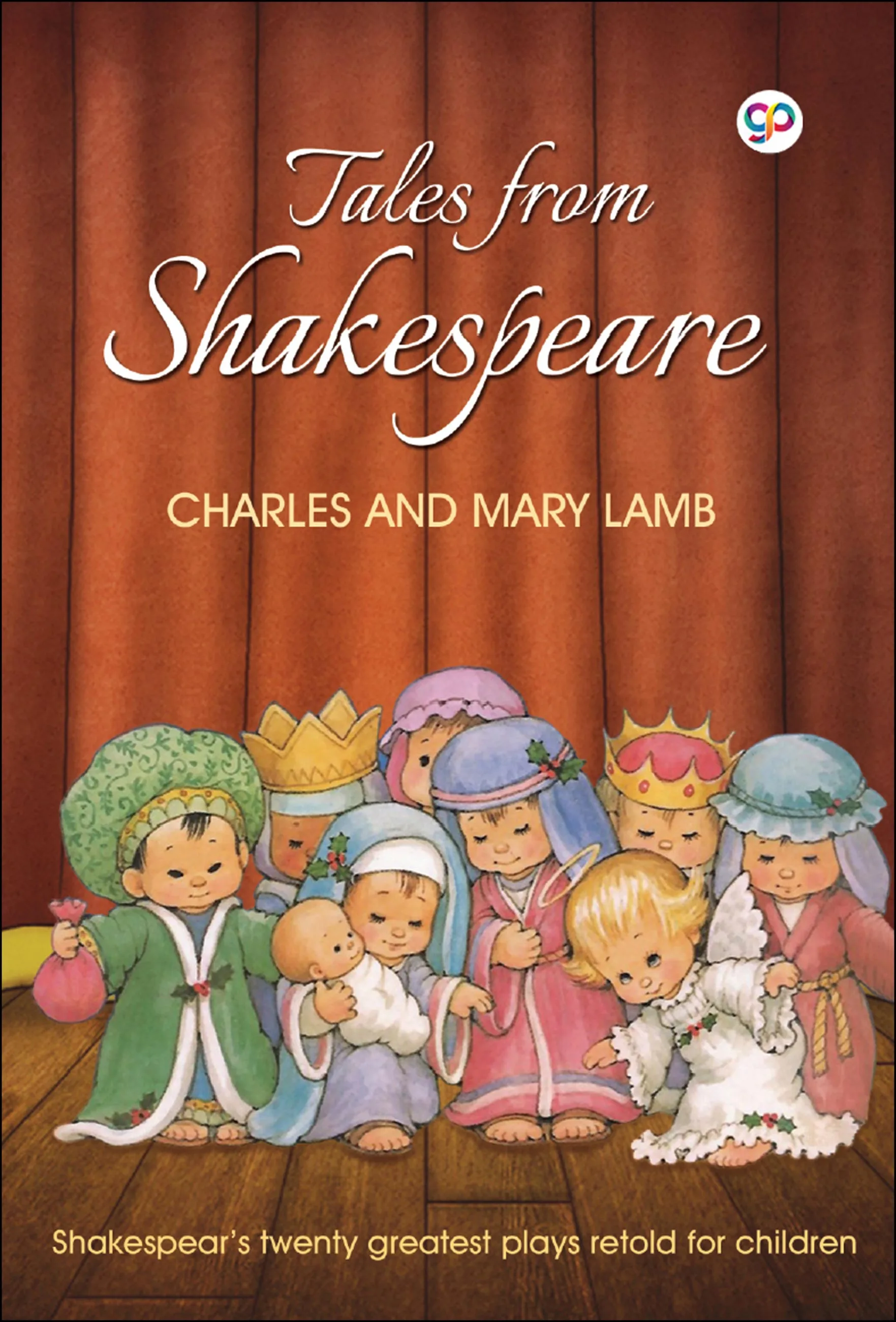
Tales from Shakespeare
eBook
• 146 Pages
• INR 51.00
• English
• 9789387669710
No ratings yet
| Publisher | General Press |
|---|---|
| ISBN13 | 9789387669710 |
| ASIN/SKU | B07D95DZT1 |
| Book Format | eBook |
| Language | English |
| Pages | 146 |
| List Price | INR 51.00 |
| Subject Code | FIC019000, JUV030000, PER004030 |
| Publishing Date | 24/05/2018 |
| Book Code | BD00068448 |
Buy this Book
Amazon Stores
Ebook Stores
Other Stores
Discover Tales from Shakespeare by Charles Lamb, Mary Lamb. This book is published by General Press in eBook format, ISBN 9789387669710, ASIN B07D95DZT1, under Children's Books, Children's Classics, Fairy Tales, Folk Tales and Myths.
Book Description
What if Shakespeare’s most famous stories could be enjoyed without the difficulty of his original language? 'Tales from Shakespeare' by Charles Lamb is a classic work of children’s literature and literary retelling that brings the drama, romance, comedy, tragedy, and timeless human emotions of Shakespeare’s plays to a wider audience through clear and engaging prose. Written with the help of his sister Mary Lamb, the book transforms twenty of Shakespeare’s best-known plays into accessible stories while preserving much of their original spirit and emotional power.
Rather than presenting Shakespeare’s plays in their original dramatic form, the Lambs retell them as flowing narratives. Readers encounter unforgettable characters caught in situations involving love, jealousy, ambition, betrayal, loyalty, mistaken identity, family conflict, revenge, and forgiveness. Stories drawn from plays such as 'Romeo and Juliet', 'Macbeth', 'Hamlet', 'Othello', 'King Lear', 'The Tempest', 'A Midsummer Night’s Dream', and 'Twelfth Night' introduce readers to the remarkable range of Shakespeare’s imagination. The retellings make complicated plots easier to follow while allowing the personalities and moral struggles of the characters to remain at the heart of each story.
One of the book’s greatest strengths is its ability to make Shakespeare feel intimate and approachable. The language is graceful but generally straightforward, making these adaptations useful for young readers, students encountering Shakespeare for the first time, and anyone who wants to understand the plots before reading the original plays. At the same time, the stories retain the atmosphere of Shakespeare’s world, where humor can stand beside sorrow and seemingly small choices can lead to life-changing consequences.
'Tales from Shakespeare' is more than a simplified introduction to classic plays; it is a charming gateway into one of the greatest bodies of literature in the English language. For readers curious about Shakespeare’s characters, stories, and enduring themes, these retellings offer an inviting place to begin—and may leave you eager to discover how the original plays tell these unforgettable tales.
Rather than presenting Shakespeare’s plays in their original dramatic form, the Lambs retell them as flowing narratives. Readers encounter unforgettable characters caught in situations involving love, jealousy, ambition, betrayal, loyalty, mistaken identity, family conflict, revenge, and forgiveness. Stories drawn from plays such as 'Romeo and Juliet', 'Macbeth', 'Hamlet', 'Othello', 'King Lear', 'The Tempest', 'A Midsummer Night’s Dream', and 'Twelfth Night' introduce readers to the remarkable range of Shakespeare’s imagination. The retellings make complicated plots easier to follow while allowing the personalities and moral struggles of the characters to remain at the heart of each story.
One of the book’s greatest strengths is its ability to make Shakespeare feel intimate and approachable. The language is graceful but generally straightforward, making these adaptations useful for young readers, students encountering Shakespeare for the first time, and anyone who wants to understand the plots before reading the original plays. At the same time, the stories retain the atmosphere of Shakespeare’s world, where humor can stand beside sorrow and seemingly small choices can lead to life-changing consequences.
'Tales from Shakespeare' is more than a simplified introduction to classic plays; it is a charming gateway into one of the greatest bodies of literature in the English language. For readers curious about Shakespeare’s characters, stories, and enduring themes, these retellings offer an inviting place to begin—and may leave you eager to discover how the original plays tell these unforgettable tales.
Author Biography
Charles Lamb was an English essayist with Welsh heritage, best known for his 'Essays of Elia' and for the children's book 'Tales from Shakespeare, which he produced along with his sister.
Mary Lamb (1764–1847) was an English writer. She is best known today for her collaboration with Charles on the collection Tales from Shakespeare. Mary suffered from mental illness, and in 1796 she stabbed her mother to death during a mental breakdown. She was confined to mental facilities off and on for most of her life. She and Charles presided over a literary circle in London that included the poets William Wordsworth and Samuel Taylor Coleridge, among others.
Mary Lamb (1764–1847) was an English writer. She is best known today for her collaboration with Charles on the collection Tales from Shakespeare. Mary suffered from mental illness, and in 1796 she stabbed her mother to death during a mental breakdown. She was confined to mental facilities off and on for most of her life. She and Charles presided over a literary circle in London that included the poets William Wordsworth and Samuel Taylor Coleridge, among others.
Editorial Reviews
Editorial Reviews will be added soon…
Book Summary
Tales from Shakespeare by Charles Lamb and Mary Lamb is a beloved collection of prose retellings of Shakespeare’s plays, first published in 1807. Its purpose was to make Shakespeare’s stories accessible to young readers who might find the original plays difficult because of their language, poetry, and dramatic structure. Charles Lamb adapted the tragedies, while Mary Lamb was responsible for most of the comedies. Rather than attempting to reproduce Shakespeare’s language, the Lambs simplify the plots and present the characters and events in clear narrative form. The result is an inviting introduction to Shakespeare’s world while preserving much of the emotional and moral power of the original plays.
The collection includes twenty plays, among them The Tempest, A Midsummer Night’s Dream, Macbeth, Hamlet, Othello, King Lear, Romeo and Juliet, The Merchant of Venice, As You Like It, Twelfth Night, Much Ado About Nothing, and The Winter’s Tale. Each tale condenses a complex drama into a story that can be understood without theatrical performance. The Lambs focus particularly on the central characters, major conflicts, important turning points, and emotional consequences of each play.
The collection begins with The Tempest, the story of Prospero, the rightful Duke of Milan, who has been driven from his position by his brother Antonio. Prospero and his daughter Miranda live on an island, where Prospero uses his magical knowledge to control spirits and events. When his enemies are brought to the island by a storm, Prospero has an opportunity to confront his past. Rather than taking revenge, he eventually chooses forgiveness. The story therefore introduces one of the collection’s recurring themes: the possibility of mercy overcoming anger.
In A Midsummer Night’s Dream, the world becomes playful and confusing as several groups of characters enter an enchanted forest. Young lovers become entangled through magical interference, while fairies and ordinary people cross paths. The comedy explores love as something unpredictable and sometimes irrational. The Lambs preserve the delightful confusion of Shakespeare’s original while making the transformations and misunderstandings easy to follow.
The darker tragedies receive equally vivid treatment. Macbeth tells the story of a Scottish nobleman whose ambition is awakened by three witches who predict that he will become king. Encouraged by Lady Macbeth, he murders King Duncan and takes the throne. Instead of bringing him satisfaction, the crime creates fear, suspicion, and further violence. Macbeth becomes increasingly tyrannical and isolated until his enemies defeat him. The story shows how ambition, when separated from moral restraint, can destroy both the individual and everyone around him.
Hamlet follows the young Prince of Denmark after the ghost of his father reveals that he was murdered by Hamlet’s uncle Claudius, who has taken the throne and married Hamlet’s mother. Hamlet struggles between the desire for revenge and uncertainty about what is right. His hesitation, reflection, and emotional turmoil lead to a series of tragic consequences. The Lambs emphasize Hamlet’s sensitive and thoughtful nature, making the story accessible while retaining its central themes of betrayal, grief, revenge, and moral uncertainty.
In Othello, Shakespeare’s tragedy of jealousy becomes a powerful study of trust and manipulation. Othello, a respected military commander, secretly marries Desdemona. Iago, resentful and jealous of Othello, deliberately makes him suspect that Desdemona is unfaithful. Othello gradually allows jealousy to overwhelm his judgment. The tragedy demonstrates how a malicious lie can destroy a relationship when fear becomes stronger than trust.
King Lear is perhaps the most emotionally devastating story in the collection. Lear, an aging king, decides to divide his kingdom among his daughters according to how much they declare their love for him. Goneril and Regan flatter him, while Cordelia, who genuinely loves him, refuses to exaggerate her feelings. Lear rejects Cordelia and soon discovers that the daughters who praised him most are the ones who treat him cruelly. His suffering gradually teaches him humility and a deeper understanding of love. The story combines family betrayal, madness, suffering, and reconciliation.
Romeo and Juliet tells the tragic story of two young lovers whose families are locked in a bitter feud. Romeo and Juliet marry secretly, hoping their love can overcome the hostility around them. A series of misunderstandings and accidents eventually leads to their deaths. Their tragedy finally shocks the Montagues and Capulets into recognizing the destructive consequences of their hatred. Love in the story is both beautiful and painfully vulnerable.
The collection also contains Shakespeare’s comedies, which explore mistaken identity, romantic confusion, friendship, and social transformation. In As You Like It, Rosalind disguises herself as a young man and enters the Forest of Arden, where several characters discover new possibilities away from the restrictions of court life. The forest becomes a place where people can temporarily escape their social roles and learn more about themselves.
Twelfth Night similarly depends upon disguise and mistaken identity. Viola, separated from her brother after a shipwreck, disguises herself as a young man and becomes involved in a complicated romantic triangle. The comedy explores the instability of identity and the unpredictability of love, eventually bringing several characters together through recognition and revelation.
In The Merchant of Venice, the Lambs recount the intertwined stories of Antonio, Bassanio, Portia, and Shylock. Bassanio seeks Portia’s hand in marriage, while Antonio agrees to borrow money from Shylock under a dangerous agreement. When Antonio cannot repay the loan, Shylock demands the penalty specified in their contract. Portia eventually disguises herself and intervenes in court. The story combines romance and comedy with serious questions about justice, mercy, prejudice, and the treatment of outsiders.
Other plays, such as Much Ado About Nothing and The Winter’s Tale, continue the collection’s exploration of love, jealousy, misunderstanding, forgiveness, and reconciliation. In each case, the Lambs simplify complicated plots without losing the emotional heart of the story.
One of the greatest achievements of Tales from Shakespeare is that it does not merely summarize Shakespeare mechanically. The Lambs transform drama into intimate storytelling. Characters become easier to understand, events unfold naturally, and difficult themes are presented through direct narrative. Their language is gentle and literary without becoming unnecessarily complicated.
The book also serves as a reminder that Shakespeare’s plays are not important only because of their famous language. Beneath the poetry are stories about ordinary human experiences: jealousy, love, ambition, grief, forgiveness, betrayal, friendship, pride, and the desire to belong. The Lambs bring these experiences to the foreground.
Ultimately, Tales from Shakespeare is both an introduction to Shakespeare and a work of literature in its own right. It opens the door to plays that might initially seem difficult while preserving their essential drama and humanity. The Lambs understood that young readers do not need every detail of Shakespeare’s original language before they can appreciate his characters and stories. By retelling the plays in lucid prose, they allow readers to encounter the emotional worlds of Shakespeare first—and perhaps return to the original plays later with a deeper understanding and affection.
The collection includes twenty plays, among them The Tempest, A Midsummer Night’s Dream, Macbeth, Hamlet, Othello, King Lear, Romeo and Juliet, The Merchant of Venice, As You Like It, Twelfth Night, Much Ado About Nothing, and The Winter’s Tale. Each tale condenses a complex drama into a story that can be understood without theatrical performance. The Lambs focus particularly on the central characters, major conflicts, important turning points, and emotional consequences of each play.
The collection begins with The Tempest, the story of Prospero, the rightful Duke of Milan, who has been driven from his position by his brother Antonio. Prospero and his daughter Miranda live on an island, where Prospero uses his magical knowledge to control spirits and events. When his enemies are brought to the island by a storm, Prospero has an opportunity to confront his past. Rather than taking revenge, he eventually chooses forgiveness. The story therefore introduces one of the collection’s recurring themes: the possibility of mercy overcoming anger.
In A Midsummer Night’s Dream, the world becomes playful and confusing as several groups of characters enter an enchanted forest. Young lovers become entangled through magical interference, while fairies and ordinary people cross paths. The comedy explores love as something unpredictable and sometimes irrational. The Lambs preserve the delightful confusion of Shakespeare’s original while making the transformations and misunderstandings easy to follow.
The darker tragedies receive equally vivid treatment. Macbeth tells the story of a Scottish nobleman whose ambition is awakened by three witches who predict that he will become king. Encouraged by Lady Macbeth, he murders King Duncan and takes the throne. Instead of bringing him satisfaction, the crime creates fear, suspicion, and further violence. Macbeth becomes increasingly tyrannical and isolated until his enemies defeat him. The story shows how ambition, when separated from moral restraint, can destroy both the individual and everyone around him.
Hamlet follows the young Prince of Denmark after the ghost of his father reveals that he was murdered by Hamlet’s uncle Claudius, who has taken the throne and married Hamlet’s mother. Hamlet struggles between the desire for revenge and uncertainty about what is right. His hesitation, reflection, and emotional turmoil lead to a series of tragic consequences. The Lambs emphasize Hamlet’s sensitive and thoughtful nature, making the story accessible while retaining its central themes of betrayal, grief, revenge, and moral uncertainty.
In Othello, Shakespeare’s tragedy of jealousy becomes a powerful study of trust and manipulation. Othello, a respected military commander, secretly marries Desdemona. Iago, resentful and jealous of Othello, deliberately makes him suspect that Desdemona is unfaithful. Othello gradually allows jealousy to overwhelm his judgment. The tragedy demonstrates how a malicious lie can destroy a relationship when fear becomes stronger than trust.
King Lear is perhaps the most emotionally devastating story in the collection. Lear, an aging king, decides to divide his kingdom among his daughters according to how much they declare their love for him. Goneril and Regan flatter him, while Cordelia, who genuinely loves him, refuses to exaggerate her feelings. Lear rejects Cordelia and soon discovers that the daughters who praised him most are the ones who treat him cruelly. His suffering gradually teaches him humility and a deeper understanding of love. The story combines family betrayal, madness, suffering, and reconciliation.
Romeo and Juliet tells the tragic story of two young lovers whose families are locked in a bitter feud. Romeo and Juliet marry secretly, hoping their love can overcome the hostility around them. A series of misunderstandings and accidents eventually leads to their deaths. Their tragedy finally shocks the Montagues and Capulets into recognizing the destructive consequences of their hatred. Love in the story is both beautiful and painfully vulnerable.
The collection also contains Shakespeare’s comedies, which explore mistaken identity, romantic confusion, friendship, and social transformation. In As You Like It, Rosalind disguises herself as a young man and enters the Forest of Arden, where several characters discover new possibilities away from the restrictions of court life. The forest becomes a place where people can temporarily escape their social roles and learn more about themselves.
Twelfth Night similarly depends upon disguise and mistaken identity. Viola, separated from her brother after a shipwreck, disguises herself as a young man and becomes involved in a complicated romantic triangle. The comedy explores the instability of identity and the unpredictability of love, eventually bringing several characters together through recognition and revelation.
In The Merchant of Venice, the Lambs recount the intertwined stories of Antonio, Bassanio, Portia, and Shylock. Bassanio seeks Portia’s hand in marriage, while Antonio agrees to borrow money from Shylock under a dangerous agreement. When Antonio cannot repay the loan, Shylock demands the penalty specified in their contract. Portia eventually disguises herself and intervenes in court. The story combines romance and comedy with serious questions about justice, mercy, prejudice, and the treatment of outsiders.
Other plays, such as Much Ado About Nothing and The Winter’s Tale, continue the collection’s exploration of love, jealousy, misunderstanding, forgiveness, and reconciliation. In each case, the Lambs simplify complicated plots without losing the emotional heart of the story.
One of the greatest achievements of Tales from Shakespeare is that it does not merely summarize Shakespeare mechanically. The Lambs transform drama into intimate storytelling. Characters become easier to understand, events unfold naturally, and difficult themes are presented through direct narrative. Their language is gentle and literary without becoming unnecessarily complicated.
The book also serves as a reminder that Shakespeare’s plays are not important only because of their famous language. Beneath the poetry are stories about ordinary human experiences: jealousy, love, ambition, grief, forgiveness, betrayal, friendship, pride, and the desire to belong. The Lambs bring these experiences to the foreground.
Ultimately, Tales from Shakespeare is both an introduction to Shakespeare and a work of literature in its own right. It opens the door to plays that might initially seem difficult while preserving their essential drama and humanity. The Lambs understood that young readers do not need every detail of Shakespeare’s original language before they can appreciate his characters and stories. By retelling the plays in lucid prose, they allow readers to encounter the emotional worlds of Shakespeare first—and perhaps return to the original plays later with a deeper understanding and affection.
Sample Chapters
Sample Chapters will be added soon…
Reader Reviews
No reviews yet.
Tales from Shakespeare
Download Cover Image
Do you want to download the full cover image for Tales from Shakespeare?