
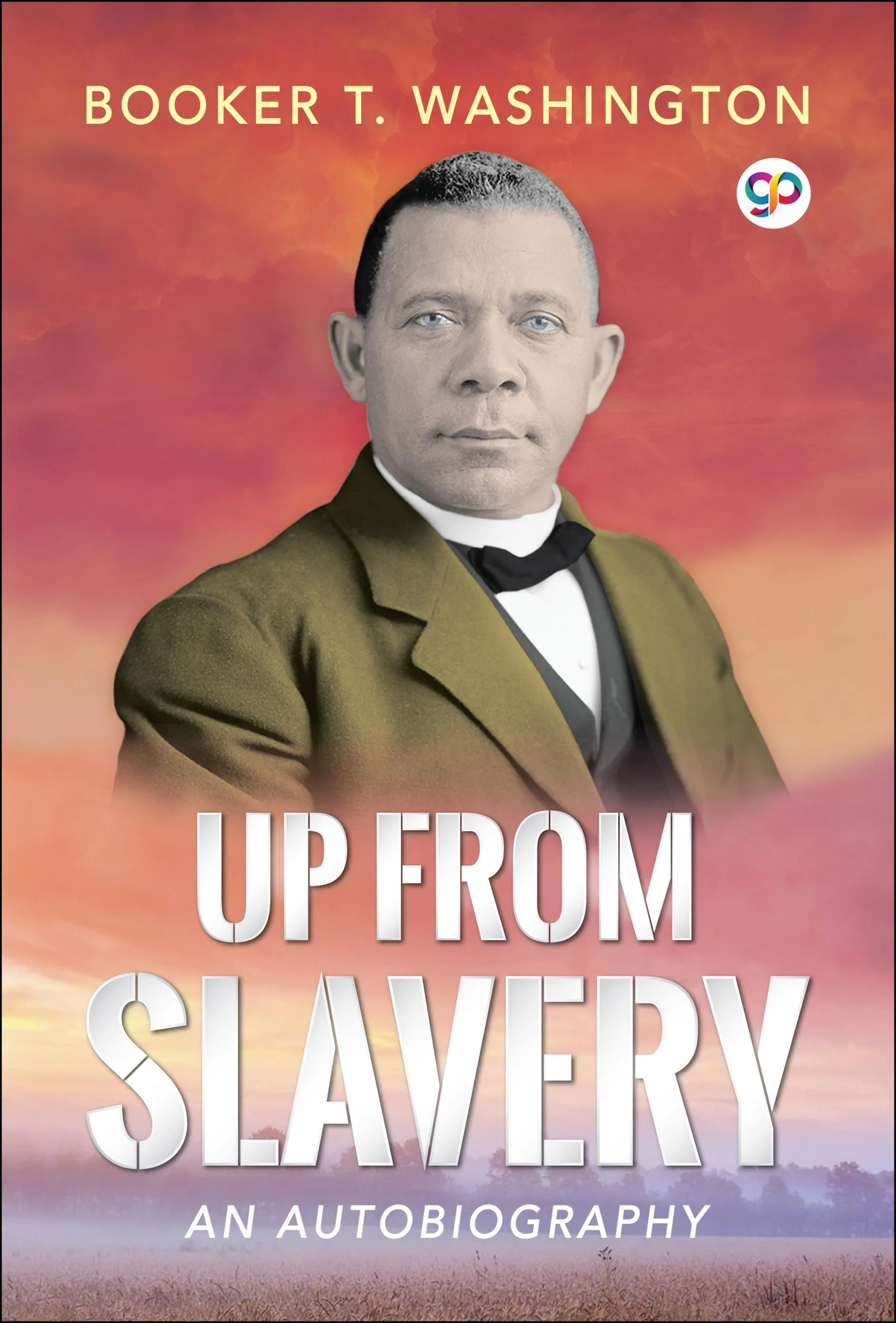
Up From Slavery: An Autobiography
eBook
• 124 Pages
• INR 51.00
• English
• 9789387669772
No ratings yet
| Publisher | General Press |
|---|---|
| ISBN13 | 9789387669772 |
| ASIN/SKU | B07D9VL7DF |
| Book Format | eBook |
| Language | English |
| Pages | 124 |
| List Price | INR 51.00 |
| Subject Code | BIO023000, BIO002010, BIO026000 |
| Publishing Date | 25/05/2018 |
| Book Code | BD00068450 |
Buy this Book
Amazon Stores
Ebook Stores
Other Stores
Discover Up From Slavery: An Autobiography by Booker T. Washington. This book is published by General Press in eBook format, ISBN 9789387669772, ASIN B07D9VL7DF, under Biographies and Memoirs, African American History, Historical Figures.
Book Description
What does it take to rise from a life shaped by poverty, racism, and oppression and build a future through education, hard work, and determination? 'Up From Slavery' by Booker T. Washington is a classic autobiographical work and memoir that traces his remarkable journey from slavery to becoming one of the most influential African American educators and leaders of his time.
Born into slavery in Virginia, Washington begins his story with childhood memories of hardship and uncertainty during the final years of slavery and the difficult period that followed emancipation. Freedom opens new possibilities, but it does not erase poverty, discrimination, or the enormous barriers facing formerly enslaved people. Washington describes his early hunger for education and the sacrifices he makes to attend school, eventually finding his way to the Hampton Institute. There, he learns not only academic subjects but also the value of discipline, self-reliance, practical skills, and dignity in work.
The heart of the book follows Washington's growing belief that education and economic independence can provide African Americans with a stronger foundation for social progress. His experiences lead him to become a teacher and eventually the principal of the Tuskegee Institute in Alabama, where he works to create educational opportunities for Black students. He shares the challenges of building the school from limited resources, earning community support, and developing an institution focused on practical education, agriculture, trades, and personal responsibility.
Alongside his personal story, Washington reflects on race relations, leadership, education, labor, poverty, and the meaning of progress. His philosophy has been widely debated, making the memoir valuable not only as an inspiring life story but also as an important historical document that reveals the complexities of African American life in post-Civil War America.
Warm, personal, and deeply rooted in American history, 'Up From Slavery' offers a powerful portrait of perseverance and ambition while raising lasting questions about freedom, equality, education, and opportunity. Washington's journey from slavery to national prominence is one that continues to invite readers to discover how determination can transform a life.
Born into slavery in Virginia, Washington begins his story with childhood memories of hardship and uncertainty during the final years of slavery and the difficult period that followed emancipation. Freedom opens new possibilities, but it does not erase poverty, discrimination, or the enormous barriers facing formerly enslaved people. Washington describes his early hunger for education and the sacrifices he makes to attend school, eventually finding his way to the Hampton Institute. There, he learns not only academic subjects but also the value of discipline, self-reliance, practical skills, and dignity in work.
The heart of the book follows Washington's growing belief that education and economic independence can provide African Americans with a stronger foundation for social progress. His experiences lead him to become a teacher and eventually the principal of the Tuskegee Institute in Alabama, where he works to create educational opportunities for Black students. He shares the challenges of building the school from limited resources, earning community support, and developing an institution focused on practical education, agriculture, trades, and personal responsibility.
Alongside his personal story, Washington reflects on race relations, leadership, education, labor, poverty, and the meaning of progress. His philosophy has been widely debated, making the memoir valuable not only as an inspiring life story but also as an important historical document that reveals the complexities of African American life in post-Civil War America.
Warm, personal, and deeply rooted in American history, 'Up From Slavery' offers a powerful portrait of perseverance and ambition while raising lasting questions about freedom, equality, education, and opportunity. Washington's journey from slavery to national prominence is one that continues to invite readers to discover how determination can transform a life.
Author Biography
Booker T. Washington (1856–1915) was a prominent African American educator, author, and civil rights leader. Born into slavery in Virginia, Washington was freed after the Civil War and embarked on a remarkable journey of self-education and advocacy.
Washington's most significant contribution came through his leadership as the principal of the Tuskegee Institute in Alabama, a historically black college he founded in 1881. Under his guidance, Tuskegee became renowned for its emphasis on vocational training and practical skills, providing African Americans with the tools needed to achieve economic independence and social mobility.
Washington's philosophy, often referred to as the "Atlanta Compromise," emphasized the importance of self-help, hard work, and education as the pathways to racial advancement. He believed in cooperation between the races and urged African Americans to focus on economic advancement rather than political agitation.
In addition to his work in education, Washington was a prolific author and speaker. His autobiography, "Up from Slavery," published in 1901, chronicled his journey from slavery to prominence and became a bestseller. Through his speeches and writings, Washington advocated for racial harmony and economic empowerment for African Americans.
While Washington's accommodationist approach drew criticism from some quarters, particularly from more radical civil rights leaders, his efforts laid the groundwork for later civil rights achievements. His legacy as a pioneering educator and advocate for African American advancement remains influential to this day.
Washington's most significant contribution came through his leadership as the principal of the Tuskegee Institute in Alabama, a historically black college he founded in 1881. Under his guidance, Tuskegee became renowned for its emphasis on vocational training and practical skills, providing African Americans with the tools needed to achieve economic independence and social mobility.
Washington's philosophy, often referred to as the "Atlanta Compromise," emphasized the importance of self-help, hard work, and education as the pathways to racial advancement. He believed in cooperation between the races and urged African Americans to focus on economic advancement rather than political agitation.
In addition to his work in education, Washington was a prolific author and speaker. His autobiography, "Up from Slavery," published in 1901, chronicled his journey from slavery to prominence and became a bestseller. Through his speeches and writings, Washington advocated for racial harmony and economic empowerment for African Americans.
While Washington's accommodationist approach drew criticism from some quarters, particularly from more radical civil rights leaders, his efforts laid the groundwork for later civil rights achievements. His legacy as a pioneering educator and advocate for African American advancement remains influential to this day.
Editorial Reviews
Editorial Reviews will be added soon…
Book Summary
Booker T. Washington’s Up From Slavery, published in 1901, is both an autobiography and a reflection on education, work, race, dignity, and social progress in the United States after slavery. Written by one of the most influential African American educators of his time, the book traces Washington’s journey from childhood slavery to his leadership of the Tuskegee Institute. His story is not simply a personal account of overcoming hardship. It is also an argument about how formerly enslaved people could build independence and self-respect through education, practical skills, disciplined work, and economic advancement.
Washington begins by describing his childhood in Virginia during the final years of slavery. He was born on a plantation, though the exact circumstances of his birth were uncertain, as was common among enslaved families. His mother, Jane, worked as a cook for the plantation household. Washington knew little about his father, and his early life was marked by poverty, uncertainty, and hard labor. Even as a child, he understood that his life was controlled by a system that denied enslaved people freedom and basic rights.
The end of the Civil War brought emancipation, but freedom did not immediately transform the lives of formerly enslaved people. Washington recalls the excitement surrounding emancipation and the powerful emotional effect it had on his family. His stepfather, however, moved to West Virginia in search of better economic opportunities, and Washington eventually joined him there. The young Washington worked in salt and coal mines while continuing to dream about education.
Education becomes the central force in Washington’s life. He had heard about Hampton Institute, a school for African Americans in Virginia, and became determined to attend. The journey to Hampton was difficult because he had almost no money. When he finally arrived, he was initially judged by the condition of his clothes and appearance. Instead of being admitted immediately, he was asked to clean a room. Washington treated the task seriously and performed it so carefully that the school’s head teacher, Miss Mackie, accepted him as a student.
This episode becomes one of the important lessons of the autobiography. Washington believes that no honest work should be considered beneath a person. Cleaning, farming, cooking, building, and other forms of labor can teach discipline and self-respect when performed well. Education, in his view, should not separate intellectual knowledge from practical life. A truly useful education should help people become capable of supporting themselves and contributing to their communities.
At Hampton, Washington studies under General Samuel C. Armstrong, whom he deeply admires. Armstrong becomes a model of leadership and character for him. Washington is especially impressed by Armstrong’s ability to combine discipline with compassion. From him, Washington learns that education should produce not merely educated individuals but people capable of serving others.
After completing his studies, Washington returns to the South and begins teaching. He soon becomes involved in the founding of the Tuskegee Institute in Alabama. When he arrives, the school has very few resources and no proper buildings. Yet Washington accepts the challenge with determination. He believes that the students themselves should participate in building the institution. They construct buildings, make bricks, grow food, work on farms, and learn trades alongside academic subjects.
Tuskegee therefore becomes more than a traditional school. It is a practical experiment in self-reliance. Washington wants students to graduate with skills that will allow them to earn a living rather than remain economically dependent on others. He emphasizes agriculture, carpentry, mechanics, printing, domestic science, and other practical fields. He believes that economic independence will strengthen the social position of African Americans.
One of the most important ideas in the book is Washington’s belief in the dignity of labor. He argues that manual work should not be associated with inferiority. Under slavery, labor had been forced upon Black people and therefore carried painful associations. Washington attempts to transform its meaning by presenting skilled labor as a source of independence and pride. A person who can build a house, grow food, repair machinery, or run a business has a form of freedom that cannot easily be taken away.
Washington also discusses the difficult racial conditions of his time. He describes discrimination, poverty, violence, and the obstacles facing African Americans in the South. However, his approach is often practical rather than confrontational. He argues that African Americans should focus on building strong communities, acquiring property, developing businesses, and gaining useful education. He believes that economic and moral advancement will gradually create greater respect and equality.
His philosophy became controversial because some African American leaders believed that Washington placed too much emphasis on industrial education and economic progress and not enough on immediate political and civil rights. Washington’s autobiography does not spend much time debating these disagreements, but his position is clear: he believes progress must be built patiently and concretely. He wants people to gain skills and economic strength that will make them less vulnerable to discrimination.
Washington also places great importance on character. He repeatedly emphasizes cleanliness, punctuality, discipline, honesty, thrift, and responsibility. He believes that education without character can be dangerous because knowledge alone does not guarantee wisdom. His students should learn not only how to make a living but also how to live responsibly.
The autobiography contains several important accounts of Washington’s public life. One of the most famous is his 1895 speech at the Atlanta Exposition. He argues that Black and white Americans should cooperate economically while African Americans develop their own skills and institutions. His famous metaphor of mutual cooperation expresses his belief that both races can benefit from practical partnership.
At the same time, Washington’s personal story reveals how much Tuskegee depends on his extraordinary energy. He travels widely to raise money, meets wealthy donors, encourages students, supervises construction, and manages the institution’s development. His achievements are therefore presented not as the result of luck but of persistent work.
The book’s title, Up From Slavery, captures Washington’s central message. His journey from slavery to educational leadership symbolizes the possibilities of transformation through determination and education. Yet the title does not mean that slavery has simply disappeared from history. Washington constantly shows how its effects continue in poverty, limited opportunities, and social prejudice.
Ultimately, Up From Slavery is a story about freedom as a process rather than a single event. Emancipation legally ended slavery, but Washington argues that genuine independence requires education, economic security, self-respect, and the ability to contribute meaningfully to society. His life becomes an example of this philosophy.
The book remains important because it presents both a remarkable personal journey and a window into the challenges faced by African Americans after emancipation. Washington’s ideas have been debated, particularly his approach to racial equality and political rights, but his emphasis on education, perseverance, dignity, and community development continues to resonate. His story reminds readers that progress often begins with small acts of determination: learning a skill, doing honest work well, building an institution, helping others, and refusing to accept difficult circumstances as the final definition of one’s life. Up From Slavery ultimately celebrates the human capacity to rise from oppression through courage, discipline, education, and an unwavering belief in the possibility of a better future.
Washington begins by describing his childhood in Virginia during the final years of slavery. He was born on a plantation, though the exact circumstances of his birth were uncertain, as was common among enslaved families. His mother, Jane, worked as a cook for the plantation household. Washington knew little about his father, and his early life was marked by poverty, uncertainty, and hard labor. Even as a child, he understood that his life was controlled by a system that denied enslaved people freedom and basic rights.
The end of the Civil War brought emancipation, but freedom did not immediately transform the lives of formerly enslaved people. Washington recalls the excitement surrounding emancipation and the powerful emotional effect it had on his family. His stepfather, however, moved to West Virginia in search of better economic opportunities, and Washington eventually joined him there. The young Washington worked in salt and coal mines while continuing to dream about education.
Education becomes the central force in Washington’s life. He had heard about Hampton Institute, a school for African Americans in Virginia, and became determined to attend. The journey to Hampton was difficult because he had almost no money. When he finally arrived, he was initially judged by the condition of his clothes and appearance. Instead of being admitted immediately, he was asked to clean a room. Washington treated the task seriously and performed it so carefully that the school’s head teacher, Miss Mackie, accepted him as a student.
This episode becomes one of the important lessons of the autobiography. Washington believes that no honest work should be considered beneath a person. Cleaning, farming, cooking, building, and other forms of labor can teach discipline and self-respect when performed well. Education, in his view, should not separate intellectual knowledge from practical life. A truly useful education should help people become capable of supporting themselves and contributing to their communities.
At Hampton, Washington studies under General Samuel C. Armstrong, whom he deeply admires. Armstrong becomes a model of leadership and character for him. Washington is especially impressed by Armstrong’s ability to combine discipline with compassion. From him, Washington learns that education should produce not merely educated individuals but people capable of serving others.
After completing his studies, Washington returns to the South and begins teaching. He soon becomes involved in the founding of the Tuskegee Institute in Alabama. When he arrives, the school has very few resources and no proper buildings. Yet Washington accepts the challenge with determination. He believes that the students themselves should participate in building the institution. They construct buildings, make bricks, grow food, work on farms, and learn trades alongside academic subjects.
Tuskegee therefore becomes more than a traditional school. It is a practical experiment in self-reliance. Washington wants students to graduate with skills that will allow them to earn a living rather than remain economically dependent on others. He emphasizes agriculture, carpentry, mechanics, printing, domestic science, and other practical fields. He believes that economic independence will strengthen the social position of African Americans.
One of the most important ideas in the book is Washington’s belief in the dignity of labor. He argues that manual work should not be associated with inferiority. Under slavery, labor had been forced upon Black people and therefore carried painful associations. Washington attempts to transform its meaning by presenting skilled labor as a source of independence and pride. A person who can build a house, grow food, repair machinery, or run a business has a form of freedom that cannot easily be taken away.
Washington also discusses the difficult racial conditions of his time. He describes discrimination, poverty, violence, and the obstacles facing African Americans in the South. However, his approach is often practical rather than confrontational. He argues that African Americans should focus on building strong communities, acquiring property, developing businesses, and gaining useful education. He believes that economic and moral advancement will gradually create greater respect and equality.
His philosophy became controversial because some African American leaders believed that Washington placed too much emphasis on industrial education and economic progress and not enough on immediate political and civil rights. Washington’s autobiography does not spend much time debating these disagreements, but his position is clear: he believes progress must be built patiently and concretely. He wants people to gain skills and economic strength that will make them less vulnerable to discrimination.
Washington also places great importance on character. He repeatedly emphasizes cleanliness, punctuality, discipline, honesty, thrift, and responsibility. He believes that education without character can be dangerous because knowledge alone does not guarantee wisdom. His students should learn not only how to make a living but also how to live responsibly.
The autobiography contains several important accounts of Washington’s public life. One of the most famous is his 1895 speech at the Atlanta Exposition. He argues that Black and white Americans should cooperate economically while African Americans develop their own skills and institutions. His famous metaphor of mutual cooperation expresses his belief that both races can benefit from practical partnership.
At the same time, Washington’s personal story reveals how much Tuskegee depends on his extraordinary energy. He travels widely to raise money, meets wealthy donors, encourages students, supervises construction, and manages the institution’s development. His achievements are therefore presented not as the result of luck but of persistent work.
The book’s title, Up From Slavery, captures Washington’s central message. His journey from slavery to educational leadership symbolizes the possibilities of transformation through determination and education. Yet the title does not mean that slavery has simply disappeared from history. Washington constantly shows how its effects continue in poverty, limited opportunities, and social prejudice.
Ultimately, Up From Slavery is a story about freedom as a process rather than a single event. Emancipation legally ended slavery, but Washington argues that genuine independence requires education, economic security, self-respect, and the ability to contribute meaningfully to society. His life becomes an example of this philosophy.
The book remains important because it presents both a remarkable personal journey and a window into the challenges faced by African Americans after emancipation. Washington’s ideas have been debated, particularly his approach to racial equality and political rights, but his emphasis on education, perseverance, dignity, and community development continues to resonate. His story reminds readers that progress often begins with small acts of determination: learning a skill, doing honest work well, building an institution, helping others, and refusing to accept difficult circumstances as the final definition of one’s life. Up From Slavery ultimately celebrates the human capacity to rise from oppression through courage, discipline, education, and an unwavering belief in the possibility of a better future.
Sample Chapters
Chapter 1 : A Slave Among Slaves
I was born a slave on a plantation in Franklin County, Virginia. I am not quite sure of the exact place or exact date of my birth, but at any rate I suspect I must have been born somewhere and at some time. As nearly as I have been able to learn, I was born near a cross-roads post-office called Hale’s Ford, and the year was 1858 or 1859. I do not know the month or the day. The earliest impressions I can now recall are of the plantation and the slave quarters—the latter being the part of the plantation where the slaves had their cabins.
My life had its beginning in the midst of the most miserable, desolate, and discouraging surroundings. This was so, however, not because my owners were especially cruel, for they were not, as compared with many others. I was born in a typical log cabin, about fourteen by sixteen feet square. In this cabin I lived with my mother and a brother and sister till after the Civil War, when we were all declared free.
Of my ancestry I know almost nothing. In the slave quarters, and even later, I heard whispered conversations among the coloured people of the tortures which the slaves, including, no doubt, my ancestors on my mother’s side, suffered in the middle passage of the slave ship while being conveyed from Africa to America. I have been unsuccessful in securing any information that would throw any accurate light upon the history of my family beyond my mother. She, I remember, had a half-brother and a half-sister. In the days of slavery not very much attention was given to family history and family records—that is, black family records. My mother, I suppose, attracted the attention of a purchaser who was afterward my owner and hers. Her addition to the slave family attracted about as much attention as the purchase of a new horse or cow. Of my father I know even less than of my mother. I do not even know his name. I have heard reports to the effect that he was a white man who lived on one of the near-by plantations. Whoever he was, I never heard of his taking the least interest in me or providing in any way for my rearing. But I do not find especial fault with him. He was simply another unfortunate victim of the institution which the Nation unhappily had engrafted upon it at that time.
The cabin was not only our living-place, but was also used as the kitchen for the plantation. My mother was the plantation cook. The cabin was without glass windows; it had only openings in the side which let in the light, and also the cold, chilly air of winter. There was a door to the cabin—that is, something that was called a door—but the uncertain hinges by which it was hung, and the large cracks in it, to say nothing of the fact that it was too small, made the room a very uncomfortable one. In addition to these openings there was, in the lower right-hand corner of the room, the “cat-hole,”—a contrivance which almost every mansion or cabin in Virginia possessed during the ante-bellum period. The “cat-hole” was a square opening, about seven by eight inches, provided for the purpose of letting the cat pass in and out of the house at will during the night. In the case of our particular cabin I could never understand the necessity for this convenience, since there were at least a half-dozen other places in the cabin that would have accommodated the cats. There was no wooden floor in our cabin, the naked earth being used as a floor. In the centre of the earthen floor there was a large, deep opening covered with boards, which was used as a place in which to store sweet potatoes during the winter. An impression of this potato-hole is very distinctly engraved upon my memory, because I recall that during the process of putting the potatoes in or taking them out I would often come into possession of one or two, which I roasted and thoroughly enjoyed. There was no cooking-stove on our plantation, and all the cooking for the whites and slaves my mother had to do over an open fireplace, mostly in pots and “skillets.” While the poorly built cabin caused us to suffer with cold in the winter, the heat from the open fireplace in summer was equally trying.
The early years of my life, which were spent in the little cabin, were not very different from those of thousands of other slaves. My mother, of course, had little time in which to give attention to the training of her children during the day. She snatched a few moments for our care in the early morning before her work began, and at night after the day’s work was done. One of my earliest recollections is that of my mother cooking a chicken late at night, and awakening her children for the purpose of feeding them. How or where she got it I do not know. I presume, however, it was procured from our owner’s farm. Some people may call this theft. If such a thing were to happen now, I should condemn it as theft myself. But taking place at the time it did, and for the reason that it did, no one could ever make me believe that my mother was guilty of thieving. She was simply a victim of the system of slavery. I cannot remember having slept in a bed until after our family was declared free by the Emancipation Proclamation. Three children—John, my older brother, Amanda, my sister, and myself—had a pallet on the dirt floor, or, to be more correct, we slept in and on a bundle of filthy rags laid upon the dirt floor.
I was asked not long ago to tell something about the sports and pastimes that I engaged in during my youth. Until that question was asked it had never occurred to me that there was no period of my life that was devoted to play. From the time that I can remember anything, almost every day of my life has been occupied in some kind of labour; though I think I would now be a more useful man if I had had time for sports. During the period that I spent in slavery I was not large enough to be of much service, still I was occupied most of the time in cleaning the yards, carrying water to the men in the fields, or going to the mill, to which I used to take the corn, once a week, to be ground. The mill was about three miles from the plantation. This work I always dreaded. The heavy bag of corn would be thrown across the back of the horse, and the corn divided about evenly on each side; but in some way, almost without exception, on these trips, the corn would so shift as to become unbalanced and would fall off the horse, and often I would fall with it. As I was not strong enough to reload the corn upon the horse, I would have to wait, sometimes for many hours, till a chance passer-by came along who would help me out of my trouble. The hours while waiting for some one were usually spent in crying. The time consumed in this way made me late in reaching the mill, and by the time I got my corn ground and reached home it would be far into the night. The road was a lonely one, and often led through dense forests. I was always frightened. The woods were said to be full of soldiers who had deserted from the army, and I had been told that the first thing a deserter did to a Negro boy when he found him alone was to cut off his ears. Besides, when I was late in getting home I knew I would always get a severe scolding or a flogging.
I had no schooling whatever while I was a slave, though I remember on several occasions I went as far as the schoolhouse door with one of my young mistresses to carry her books. The picture of several dozen boys and girls in a schoolroom engaged in study made a deep impression upon me, and I had the feeling that to get into a schoolhouse and study in this way would be about the same as getting into paradise.
So far as I can now recall, the first knowledge that I got of the fact that we were slaves, and that freedom of the slaves was being discussed, was early one morning before day, when I was awakened by my mother kneeling over her children and fervently praying that Lincoln and his armies might be successful, and that one day she and her children might be free. In this connection I have never been able to understand how the slaves throughout the South, completely ignorant as were the masses so far as books or newspapers were concerned, were able to keep themselves so accurately and completely informed about the great National questions that were agitating the country. From the time that Garrison, Lovejoy, and others began to agitate for freedom, the slaves throughout the South kept in close touch with the progress of the movement. Though I was a mere child during the preparation for the Civil War and during the war itself, I now recall the many late-at-night whispered discussions that I heard my mother and the other slaves on the plantation indulge in. These discussions showed that they understood the situation, and that they kept themselves informed of events by what was termed the “grape-vine” telegraph.
During the campaign when Lincoln was first a candidate for the Presidency, the slaves on our far-off plantation, miles from any railroad or large city or daily newspaper, knew what the issues involved were. When war was begun between the North and the South, every slave on our plantation felt and knew that, though other issues were discussed, the primal one was that of slavery. Even the most ignorant members of my race on the remote plantations felt in their hearts, with a certainty that admitted of no doubt, that the freedom of the slaves would be the one great result of the war, if the Northern armies conquered. Every success of the Federal armies and every defeat of the Confederate forces was watched with the keenest and most intense interest. Often the slaves got knowledge of the results of great battles before the white people received it. This news was usually gotten from the coloured man who was sent to the post-office for the mail. In our case the post-office was about three miles from the plantation, and the mail came once or twice a week. The man who was sent to the office would linger about the place long enough to get the drift of the conversation from the group of white people who naturally congregated there, after receiving their mail, to discuss the latest news. The mail-carrier on his way back to our master’s house would as naturally retail the news that he had secured among the slaves, and in this way they often heard of important events before the white people at the “big house,” as the master’s house was called.
I cannot remember a single instance during my childhood or early boyhood when our entire family sat down to the table together, and God’s blessing was asked, and the family ate a meal in a civilized manner. On the plantation in Virginia, and even later, meals were gotten by the children very much as dumb animals get theirs. It was a piece of bread here and a scrap of meat there. It was a cup of milk at one time and some potatoes at another. Sometimes a portion of our family would eat out of the skillet or pot, while some one else would eat from a tin plate held on the knees, and often using nothing but the hands with which to hold the food. When I had grown to sufficient size, I was required to go to the “big house” at meal-times to fan the flies from the table by means of a large set of paper fans operated by a pulley. Naturally much of the conversation of the white people turned upon the subject of freedom and the war, and I absorbed a good deal of it. I remember that at one time I saw two of my young mistresses and some lady visitors eating ginger-cakes, in the yard. At that time those cakes seemed to me to be absolutely the most tempting and desirable things that I had ever seen; and I then and there resolved that, if I ever got free, the height of my ambition would be reached if I could get to the point where I could secure and eat ginger-cakes in the way that I saw those ladies doing.
Of course as the war was prolonged the white people, in many cases, often found it difficult to secure food for themselves. I think the slaves felt the deprivation less than the whites, because the usual diet for slaves was corn bread and pork, and these could be raised on the plantation; but coffee, tea, sugar, and other articles which the whites had been accustomed to use could not be raised on the plantation, and the conditions brought about by the war frequently made it impossible to secure these things. The whites were often in great straits. Parched corn was used for coffee, and a kind of black molasses was used instead of sugar. Many times nothing was used to sweeten the so-called tea and coffee.
The first pair of shoes that I recall wearing were wooden ones. They had rough leather on the top, but the bottoms, which were about an inch thick, were of wood. When I walked they made a fearful noise, and besides this they were very inconvenient, since there was no yielding to the natural pressure of the foot. In wearing them one presented and exceedingly awkward appearance. The most trying ordeal that I was forced to endure as a slave boy, however, was the wearing of a flax shirt. In the portion of Virginia where I lived it was common to use flax as part of the clothing for the slaves. That part of the flax from which our clothing was made was largely the refuse, which of course was the cheapest and roughest part. I can scarcely imagine any torture, except, perhaps, the pulling of a tooth, that is equal to that caused by putting on a new flax shirt for the first time. It is almost equal to the feeling that one would experience if he had a dozen or more chestnut burrs, or a hundred small pin-points, in contact with his flesh. Even to this day I can recall accurately the tortures that I underwent when putting on one of these garments. The fact that my flesh was soft and tender added to the pain. But I had no choice. I had to wear the flax shirt or none; and had it been left to me to choose, I should have chosen to wear no covering. In connection with the flax shirt, my brother John, who is several years older than I am, performed one of the most generous acts that I ever heard of one slave relative doing for another. On several occasions when I was being forced to wear a new flax shirt, he generously agreed to put it on in my stead and wear it for several days, till it was “broken in.” Until I had grown to be quite a youth this single garment was all that I wore.
One may get the idea, from what I have said, that there was bitter feeling toward the white people on the part of my race, because of the fact that most of the white population was away fighting in a war which would result in keeping the Negro in slavery if the South was successful. In the case of the slaves on our place this was not true, and it was not true of any large portion of the slave population in the South where the Negro was treated with anything like decency. During the Civil War one of my young masters was killed, and two were severely wounded. I recall the feeling of sorrow which existed among the slaves when they heard of the death of “Mars’ Billy.” It was no sham sorrow, but real. Some of the slaves had nursed “Mars’ Billy”; others had played with him when he was a child. “Mars’ Billy” had begged for mercy in the case of others when the overseer or master was thrashing them. The sorrow in the slave quarter was only second to that in the “big house.” When the two young masters were brought home wounded, the sympathy of the slaves was shown in many ways. They were just as anxious to assist in the nursing as the family relatives of the wounded. Some of the slaves would even beg for the privilege of sitting up at night to nurse their wounded masters. This tenderness and sympathy on the part of those held in bondage was a result of their kindly and generous nature. In order to defend and protect the women and children who were left on the plantations when the white males went to war, the slaves would have laid down their lives. The slave who was selected to sleep in the “big house” during the absence of the males was considered to have the place of honour. Any one attempting to harm “young Mistress” or “old Mistress” during the night would have had to cross the dead body of the slave to do so. I do not know how many have noticed it, but I think that it will be found to be true that there are few instances, either in slavery or freedom, in which a member of my race has been known to betray a specific trust.
As a rule, not only did the members of my race entertain no feelings of bitterness against the whites before and during the war, but there are many instances of Negroes tenderly caring for their former masters and mistresses who for some reason have become poor and dependent since the war. I know of instances where the former masters of slaves have for years been supplied with money by their former slaves to keep them from suffering. I have known of still other cases in which the former slaves have assisted in the education of the descendants of their former owners. I know of a case on a large plantation in the South in which a young white man, the son of the former owner of the estate, has become so reduced in purse and self-control by reason of drink that he is a pitiable creature; and yet, notwithstanding the poverty of the coloured people themselves on this plantation, they have for years supplied this young white man with the necessities of life. One sends him a little coffee or sugar, another a little meat, and so on. Nothing that the coloured people possess is too good for the son of “old Mars’ Tom,” who will perhaps never be permitted to suffer while any remain on the place who knew directly or indirectly of “old Mars’ Tom.”
I have said that there are few instances of a member of my race betraying a specific trust. One of the best illustrations of this which I know of is in the case of an ex-slave from Virginia whom I met not long ago in a little town in the state of Ohio. I found that this man had made a contract with his master, two or three years previous to the Emancipation Proclamation, to the effect that the slave was to be permitted to buy himself, by paying so much per year for his body; and while he was paying for himself, he was to be permitted to labour where and for whom he pleased. Finding that he could secure better wages in Ohio, he went there. When freedom came, he was still in debt to his master some three hundred dollars. Notwithstanding that the Emancipation Proclamation freed him from any obligation to his master, this black man walked the greater portion of the distance back to where his old master lived in Virginia, and placed the last dollar, with interest, in his hands. In talking to me about this, the man told me that he knew that he did not have to pay the debt, but that he had given his word to the master, and his word he had never broken. He felt that he could not enjoy his freedom till he had fulfilled his promise.
From some things that I have said one may get the idea that some of the slaves did not want freedom. This is not true. I have never seen one who did not want to be free, or one who would return to slavery.
I was born a slave on a plantation in Franklin County, Virginia. I am not quite sure of the exact place or exact date of my birth, but at any rate I suspect I must have been born somewhere and at some time. As nearly as I have been able to learn, I was born near a cross-roads post-office called Hale’s Ford, and the year was 1858 or 1859. I do not know the month or the day. The earliest impressions I can now recall are of the plantation and the slave quarters—the latter being the part of the plantation where the slaves had their cabins.
My life had its beginning in the midst of the most miserable, desolate, and discouraging surroundings. This was so, however, not because my owners were especially cruel, for they were not, as compared with many others. I was born in a typical log cabin, about fourteen by sixteen feet square. In this cabin I lived with my mother and a brother and sister till after the Civil War, when we were all declared free.
Of my ancestry I know almost nothing. In the slave quarters, and even later, I heard whispered conversations among the coloured people of the tortures which the slaves, including, no doubt, my ancestors on my mother’s side, suffered in the middle passage of the slave ship while being conveyed from Africa to America. I have been unsuccessful in securing any information that would throw any accurate light upon the history of my family beyond my mother. She, I remember, had a half-brother and a half-sister. In the days of slavery not very much attention was given to family history and family records—that is, black family records. My mother, I suppose, attracted the attention of a purchaser who was afterward my owner and hers. Her addition to the slave family attracted about as much attention as the purchase of a new horse or cow. Of my father I know even less than of my mother. I do not even know his name. I have heard reports to the effect that he was a white man who lived on one of the near-by plantations. Whoever he was, I never heard of his taking the least interest in me or providing in any way for my rearing. But I do not find especial fault with him. He was simply another unfortunate victim of the institution which the Nation unhappily had engrafted upon it at that time.
The cabin was not only our living-place, but was also used as the kitchen for the plantation. My mother was the plantation cook. The cabin was without glass windows; it had only openings in the side which let in the light, and also the cold, chilly air of winter. There was a door to the cabin—that is, something that was called a door—but the uncertain hinges by which it was hung, and the large cracks in it, to say nothing of the fact that it was too small, made the room a very uncomfortable one. In addition to these openings there was, in the lower right-hand corner of the room, the “cat-hole,”—a contrivance which almost every mansion or cabin in Virginia possessed during the ante-bellum period. The “cat-hole” was a square opening, about seven by eight inches, provided for the purpose of letting the cat pass in and out of the house at will during the night. In the case of our particular cabin I could never understand the necessity for this convenience, since there were at least a half-dozen other places in the cabin that would have accommodated the cats. There was no wooden floor in our cabin, the naked earth being used as a floor. In the centre of the earthen floor there was a large, deep opening covered with boards, which was used as a place in which to store sweet potatoes during the winter. An impression of this potato-hole is very distinctly engraved upon my memory, because I recall that during the process of putting the potatoes in or taking them out I would often come into possession of one or two, which I roasted and thoroughly enjoyed. There was no cooking-stove on our plantation, and all the cooking for the whites and slaves my mother had to do over an open fireplace, mostly in pots and “skillets.” While the poorly built cabin caused us to suffer with cold in the winter, the heat from the open fireplace in summer was equally trying.
The early years of my life, which were spent in the little cabin, were not very different from those of thousands of other slaves. My mother, of course, had little time in which to give attention to the training of her children during the day. She snatched a few moments for our care in the early morning before her work began, and at night after the day’s work was done. One of my earliest recollections is that of my mother cooking a chicken late at night, and awakening her children for the purpose of feeding them. How or where she got it I do not know. I presume, however, it was procured from our owner’s farm. Some people may call this theft. If such a thing were to happen now, I should condemn it as theft myself. But taking place at the time it did, and for the reason that it did, no one could ever make me believe that my mother was guilty of thieving. She was simply a victim of the system of slavery. I cannot remember having slept in a bed until after our family was declared free by the Emancipation Proclamation. Three children—John, my older brother, Amanda, my sister, and myself—had a pallet on the dirt floor, or, to be more correct, we slept in and on a bundle of filthy rags laid upon the dirt floor.
I was asked not long ago to tell something about the sports and pastimes that I engaged in during my youth. Until that question was asked it had never occurred to me that there was no period of my life that was devoted to play. From the time that I can remember anything, almost every day of my life has been occupied in some kind of labour; though I think I would now be a more useful man if I had had time for sports. During the period that I spent in slavery I was not large enough to be of much service, still I was occupied most of the time in cleaning the yards, carrying water to the men in the fields, or going to the mill, to which I used to take the corn, once a week, to be ground. The mill was about three miles from the plantation. This work I always dreaded. The heavy bag of corn would be thrown across the back of the horse, and the corn divided about evenly on each side; but in some way, almost without exception, on these trips, the corn would so shift as to become unbalanced and would fall off the horse, and often I would fall with it. As I was not strong enough to reload the corn upon the horse, I would have to wait, sometimes for many hours, till a chance passer-by came along who would help me out of my trouble. The hours while waiting for some one were usually spent in crying. The time consumed in this way made me late in reaching the mill, and by the time I got my corn ground and reached home it would be far into the night. The road was a lonely one, and often led through dense forests. I was always frightened. The woods were said to be full of soldiers who had deserted from the army, and I had been told that the first thing a deserter did to a Negro boy when he found him alone was to cut off his ears. Besides, when I was late in getting home I knew I would always get a severe scolding or a flogging.
I had no schooling whatever while I was a slave, though I remember on several occasions I went as far as the schoolhouse door with one of my young mistresses to carry her books. The picture of several dozen boys and girls in a schoolroom engaged in study made a deep impression upon me, and I had the feeling that to get into a schoolhouse and study in this way would be about the same as getting into paradise.
So far as I can now recall, the first knowledge that I got of the fact that we were slaves, and that freedom of the slaves was being discussed, was early one morning before day, when I was awakened by my mother kneeling over her children and fervently praying that Lincoln and his armies might be successful, and that one day she and her children might be free. In this connection I have never been able to understand how the slaves throughout the South, completely ignorant as were the masses so far as books or newspapers were concerned, were able to keep themselves so accurately and completely informed about the great National questions that were agitating the country. From the time that Garrison, Lovejoy, and others began to agitate for freedom, the slaves throughout the South kept in close touch with the progress of the movement. Though I was a mere child during the preparation for the Civil War and during the war itself, I now recall the many late-at-night whispered discussions that I heard my mother and the other slaves on the plantation indulge in. These discussions showed that they understood the situation, and that they kept themselves informed of events by what was termed the “grape-vine” telegraph.
During the campaign when Lincoln was first a candidate for the Presidency, the slaves on our far-off plantation, miles from any railroad or large city or daily newspaper, knew what the issues involved were. When war was begun between the North and the South, every slave on our plantation felt and knew that, though other issues were discussed, the primal one was that of slavery. Even the most ignorant members of my race on the remote plantations felt in their hearts, with a certainty that admitted of no doubt, that the freedom of the slaves would be the one great result of the war, if the Northern armies conquered. Every success of the Federal armies and every defeat of the Confederate forces was watched with the keenest and most intense interest. Often the slaves got knowledge of the results of great battles before the white people received it. This news was usually gotten from the coloured man who was sent to the post-office for the mail. In our case the post-office was about three miles from the plantation, and the mail came once or twice a week. The man who was sent to the office would linger about the place long enough to get the drift of the conversation from the group of white people who naturally congregated there, after receiving their mail, to discuss the latest news. The mail-carrier on his way back to our master’s house would as naturally retail the news that he had secured among the slaves, and in this way they often heard of important events before the white people at the “big house,” as the master’s house was called.
I cannot remember a single instance during my childhood or early boyhood when our entire family sat down to the table together, and God’s blessing was asked, and the family ate a meal in a civilized manner. On the plantation in Virginia, and even later, meals were gotten by the children very much as dumb animals get theirs. It was a piece of bread here and a scrap of meat there. It was a cup of milk at one time and some potatoes at another. Sometimes a portion of our family would eat out of the skillet or pot, while some one else would eat from a tin plate held on the knees, and often using nothing but the hands with which to hold the food. When I had grown to sufficient size, I was required to go to the “big house” at meal-times to fan the flies from the table by means of a large set of paper fans operated by a pulley. Naturally much of the conversation of the white people turned upon the subject of freedom and the war, and I absorbed a good deal of it. I remember that at one time I saw two of my young mistresses and some lady visitors eating ginger-cakes, in the yard. At that time those cakes seemed to me to be absolutely the most tempting and desirable things that I had ever seen; and I then and there resolved that, if I ever got free, the height of my ambition would be reached if I could get to the point where I could secure and eat ginger-cakes in the way that I saw those ladies doing.
Of course as the war was prolonged the white people, in many cases, often found it difficult to secure food for themselves. I think the slaves felt the deprivation less than the whites, because the usual diet for slaves was corn bread and pork, and these could be raised on the plantation; but coffee, tea, sugar, and other articles which the whites had been accustomed to use could not be raised on the plantation, and the conditions brought about by the war frequently made it impossible to secure these things. The whites were often in great straits. Parched corn was used for coffee, and a kind of black molasses was used instead of sugar. Many times nothing was used to sweeten the so-called tea and coffee.
The first pair of shoes that I recall wearing were wooden ones. They had rough leather on the top, but the bottoms, which were about an inch thick, were of wood. When I walked they made a fearful noise, and besides this they were very inconvenient, since there was no yielding to the natural pressure of the foot. In wearing them one presented and exceedingly awkward appearance. The most trying ordeal that I was forced to endure as a slave boy, however, was the wearing of a flax shirt. In the portion of Virginia where I lived it was common to use flax as part of the clothing for the slaves. That part of the flax from which our clothing was made was largely the refuse, which of course was the cheapest and roughest part. I can scarcely imagine any torture, except, perhaps, the pulling of a tooth, that is equal to that caused by putting on a new flax shirt for the first time. It is almost equal to the feeling that one would experience if he had a dozen or more chestnut burrs, or a hundred small pin-points, in contact with his flesh. Even to this day I can recall accurately the tortures that I underwent when putting on one of these garments. The fact that my flesh was soft and tender added to the pain. But I had no choice. I had to wear the flax shirt or none; and had it been left to me to choose, I should have chosen to wear no covering. In connection with the flax shirt, my brother John, who is several years older than I am, performed one of the most generous acts that I ever heard of one slave relative doing for another. On several occasions when I was being forced to wear a new flax shirt, he generously agreed to put it on in my stead and wear it for several days, till it was “broken in.” Until I had grown to be quite a youth this single garment was all that I wore.
One may get the idea, from what I have said, that there was bitter feeling toward the white people on the part of my race, because of the fact that most of the white population was away fighting in a war which would result in keeping the Negro in slavery if the South was successful. In the case of the slaves on our place this was not true, and it was not true of any large portion of the slave population in the South where the Negro was treated with anything like decency. During the Civil War one of my young masters was killed, and two were severely wounded. I recall the feeling of sorrow which existed among the slaves when they heard of the death of “Mars’ Billy.” It was no sham sorrow, but real. Some of the slaves had nursed “Mars’ Billy”; others had played with him when he was a child. “Mars’ Billy” had begged for mercy in the case of others when the overseer or master was thrashing them. The sorrow in the slave quarter was only second to that in the “big house.” When the two young masters were brought home wounded, the sympathy of the slaves was shown in many ways. They were just as anxious to assist in the nursing as the family relatives of the wounded. Some of the slaves would even beg for the privilege of sitting up at night to nurse their wounded masters. This tenderness and sympathy on the part of those held in bondage was a result of their kindly and generous nature. In order to defend and protect the women and children who were left on the plantations when the white males went to war, the slaves would have laid down their lives. The slave who was selected to sleep in the “big house” during the absence of the males was considered to have the place of honour. Any one attempting to harm “young Mistress” or “old Mistress” during the night would have had to cross the dead body of the slave to do so. I do not know how many have noticed it, but I think that it will be found to be true that there are few instances, either in slavery or freedom, in which a member of my race has been known to betray a specific trust.
As a rule, not only did the members of my race entertain no feelings of bitterness against the whites before and during the war, but there are many instances of Negroes tenderly caring for their former masters and mistresses who for some reason have become poor and dependent since the war. I know of instances where the former masters of slaves have for years been supplied with money by their former slaves to keep them from suffering. I have known of still other cases in which the former slaves have assisted in the education of the descendants of their former owners. I know of a case on a large plantation in the South in which a young white man, the son of the former owner of the estate, has become so reduced in purse and self-control by reason of drink that he is a pitiable creature; and yet, notwithstanding the poverty of the coloured people themselves on this plantation, they have for years supplied this young white man with the necessities of life. One sends him a little coffee or sugar, another a little meat, and so on. Nothing that the coloured people possess is too good for the son of “old Mars’ Tom,” who will perhaps never be permitted to suffer while any remain on the place who knew directly or indirectly of “old Mars’ Tom.”
I have said that there are few instances of a member of my race betraying a specific trust. One of the best illustrations of this which I know of is in the case of an ex-slave from Virginia whom I met not long ago in a little town in the state of Ohio. I found that this man had made a contract with his master, two or three years previous to the Emancipation Proclamation, to the effect that the slave was to be permitted to buy himself, by paying so much per year for his body; and while he was paying for himself, he was to be permitted to labour where and for whom he pleased. Finding that he could secure better wages in Ohio, he went there. When freedom came, he was still in debt to his master some three hundred dollars. Notwithstanding that the Emancipation Proclamation freed him from any obligation to his master, this black man walked the greater portion of the distance back to where his old master lived in Virginia, and placed the last dollar, with interest, in his hands. In talking to me about this, the man told me that he knew that he did not have to pay the debt, but that he had given his word to the master, and his word he had never broken. He felt that he could not enjoy his freedom till he had fulfilled his promise.
From some things that I have said one may get the idea that some of the slaves did not want freedom. This is not true. I have never seen one who did not want to be free, or one who would return to slavery.
Reader Reviews
No reviews yet.
Up From Slavery: An Autobiography
Download Cover Image
Do you want to download the full cover image for Up From Slavery: An Autobiography?