
The Story of My Life: An Autobiography
eBook
• 65 Pages
• INR 51.00
• English
• 9789387669758
No ratings yet
| Publisher | General Press |
|---|---|
| ISBN13 | 9789387669758 |
| ASIN/SKU | B07D9X81WW |
| Book Format | eBook |
| Language | English |
| Pages | 65 |
| List Price | INR 51.00 |
| Subject Code | BIO000000, BIO022000, BIO033000 |
| Publishing Date | 25/05/2018 |
| Book Code | BD00068453 |
Buy this Book
Amazon Stores
Ebook Stores
Other Stores
Discover The Story of My Life: An Autobiography by Helen Keller. This book is published by General Press in eBook format, ISBN 9789387669758, ASIN B07D9X81WW, under Biographies and Memoirs, History, Autobiographies.
Book Description
What happens when a child loses both sight and hearing before she can fully understand the world around her? 'The Story of My Life' by Helen Keller is a classic autobiographical memoir that tells the remarkable story of a young girl’s journey from isolation and frustration toward language, education, independence, and self-discovery. Written with remarkable honesty and emotional warmth, the book offers far more than an account of disability; it is a deeply personal reflection on learning, perseverance, friendship, and the extraordinary power of human connection.
Helen Keller was only nineteen months old when a severe illness left her blind and deaf. Growing up unable to communicate effectively with the people around her, she often struggled to express her thoughts and emotions. Her frustration sometimes appeared as anger and difficult behavior, not because she lacked intelligence or curiosity, but because she had no reliable way to make herself understood. Her life begins to change dramatically when Anne Sullivan, a young and determined teacher, enters her world. Through patience, discipline, affection, and an innovative approach to teaching, Sullivan gradually helps Helen connect words with the people, objects, and experiences around her.
As Helen discovers language, an entirely new world opens before her. She becomes eager to read, explore nature, study, and communicate with others. Her education takes her beyond the limits that society might have placed on her, leading her toward formal schooling and intellectual growth. Along the way, Keller describes the people who influenced her, the books that inspired her, her love of nature, and the challenges she faced while learning to live more independently. She also reflects on the moments of misunderstanding, loneliness, achievement, and wonder that shaped her character.
What makes 'The Story of My Life' so enduring is Keller’s ability to describe ordinary experiences with extraordinary sensitivity. Her story is ultimately about the human desire to understand and be understood, and about how education can transform a life. Readers interested in Helen Keller, inspirational memoirs, disability history, or classic autobiographies will find this book both moving and thought-provoking. Yet the most powerful part of Keller’s journey is not simply what she overcame, but what she discovered along the way—and that is what makes her story worth experiencing for yourself.
Helen Keller was only nineteen months old when a severe illness left her blind and deaf. Growing up unable to communicate effectively with the people around her, she often struggled to express her thoughts and emotions. Her frustration sometimes appeared as anger and difficult behavior, not because she lacked intelligence or curiosity, but because she had no reliable way to make herself understood. Her life begins to change dramatically when Anne Sullivan, a young and determined teacher, enters her world. Through patience, discipline, affection, and an innovative approach to teaching, Sullivan gradually helps Helen connect words with the people, objects, and experiences around her.
As Helen discovers language, an entirely new world opens before her. She becomes eager to read, explore nature, study, and communicate with others. Her education takes her beyond the limits that society might have placed on her, leading her toward formal schooling and intellectual growth. Along the way, Keller describes the people who influenced her, the books that inspired her, her love of nature, and the challenges she faced while learning to live more independently. She also reflects on the moments of misunderstanding, loneliness, achievement, and wonder that shaped her character.
What makes 'The Story of My Life' so enduring is Keller’s ability to describe ordinary experiences with extraordinary sensitivity. Her story is ultimately about the human desire to understand and be understood, and about how education can transform a life. Readers interested in Helen Keller, inspirational memoirs, disability history, or classic autobiographies will find this book both moving and thought-provoking. Yet the most powerful part of Keller’s journey is not simply what she overcame, but what she discovered along the way—and that is what makes her story worth experiencing for yourself.
Author Biography
Helen Keller was born on June 27, 1880. A life-threatening illness at the age of 19 months took away her vision and hearing. Her parents contacted Perkins institute for the Blind in Boston at the recommendation of Alexander Graham Bell. Here, Helen Keller was introduced to Anne Sullivan, a tutor, who played an important role in her life educating her and bringing her talents out to the world. She received many honorary degrees and the Presidential Medal of Freedom. She has also written The World I live In and Helen Keller's Journal. She died on June 1, 1968.
Editorial Reviews
Editorial Reviews will be added soon…
Book Summary
Helen Keller’s The Story of My Life is a remarkable autobiography about overcoming isolation, discovering language, pursuing education, and developing a meaningful relationship with the world. First published in 1903, the book tells the story of Keller’s early childhood, her struggle to communicate after becoming deaf and blind, and the extraordinary influence of her teacher, Anne Sullivan. More than a story about disability, it is a deeply human account of how education, patience, friendship, and determination can transform a life. Keller’s narrative shows that the greatest barriers are not always physical; sometimes the most difficult obstacles are the absence of communication, understanding, and opportunity.
Helen Keller was born in 1880 in Tuscumbia, Alabama. As a healthy young child, she was curious, energetic, and closely connected with her family. However, when she was only nineteen months old, she suffered a severe illness that left her both deaf and blind. The illness changed her life completely. Although Keller retained her intelligence and her desire to understand the world, she suddenly lost the ordinary ways through which a young child learns to communicate and make sense of her surroundings.
Her early years after the illness were extremely difficult. Keller could not see the faces of the people around her or hear their voices. She developed her own crude methods of communicating with her family, using gestures and signs that only a few people understood. As she grew older, however, her inability to express her thoughts became increasingly frustrating. She was intelligent enough to know that there were things she wanted to say, but she had no reliable language with which to say them.
This frustration sometimes resulted in anger and difficult behavior. Keller describes herself as a wild and unruly child during this period. She could become impatient when others failed to understand what she wanted, and she often responded with tantrums. Looking back, she makes it clear that her behavior was largely the result of living inside a world she could not properly communicate with. She had thoughts, emotions, curiosity, and desires, but no adequate means of sharing them.
Everything began to change when Anne Mansfield Sullivan arrived in Keller’s life in 1887. Sullivan, herself visually impaired during part of her childhood, became Helen’s teacher and lifelong companion. She understood that Keller did not simply need to be disciplined; she needed to be given language. Sullivan began teaching her through finger spelling, tracing words into Helen’s hand.
At first, Helen did not understand that the movements made by Sullivan’s fingers represented names for objects. She could imitate the signs, but the deeper meaning escaped her. The breakthrough came at the famous water-pump scene. Sullivan placed one of Helen’s hands under flowing water and repeatedly spelled “water” into her other hand. Suddenly Helen understood that the finger movements were a symbol for the thing she was experiencing. She realized that everything around her could have a name.
This moment was, in Keller’s words and experience, like the opening of a new world. Language gave her access to thought in a new way. Once she understood the connection between words and objects, she became eager to learn more. She began asking for the names of everything around her. The world that had previously seemed confusing and disconnected gradually became organized through language.
Sullivan’s teaching methods were based on patience, repetition, direct experience, and constant encouragement. She did not simply give Helen information. She allowed her to touch objects, experience situations, and then learn the words associated with them. Through this process, Keller began developing not only vocabulary but also a deeper understanding of abstract ideas.
One of the most fascinating aspects of the autobiography is Keller’s description of discovering concepts that cannot be physically touched. Words such as love, think, and understand initially seemed difficult because they did not refer to concrete objects. Sullivan helped her grasp these ideas through examples and conversations. Keller gradually learned that language could represent not only things but also feelings, relationships, ideas, and invisible qualities.
As her education progressed, Keller developed an extraordinary appetite for reading. Books became one of the most important sources of knowledge and pleasure in her life. Because she could not see printed words, she learned through raised type and later through Braille. Reading allowed her to travel beyond the physical limitations of her surroundings. Through books, she encountered history, literature, philosophy, poetry, and the experiences of people from distant times and places.
Keller’s relationship with nature was also important. Although she could not see landscapes in the ordinary sense, she experienced the natural world through touch, smell, movement, temperature, and soundless impressions. She describes trees, flowers, gardens, weather, and outdoor experiences with remarkable sensitivity. Her descriptions demonstrate that perception is not limited to the conventional senses. She developed her own intimate relationship with the natural world.
Her education eventually took her beyond her home and into formal institutions. She attended the Perkins Institution for the Blind and later studied at the Wright-Humason School for the Deaf. Her academic ambitions grew steadily. She wanted not merely to receive special instruction but to participate in the broader world of education. This desire eventually led her to Radcliffe College, where she became the first deaf-blind person to earn a Bachelor of Arts degree.
Keller’s college experience was both inspiring and difficult. She had to work through textbooks and lectures with the assistance of others, and she often found that educational institutions were not designed for someone with her disabilities. She describes the enormous effort required to keep pace with other students. Yet she remained determined. Her achievement was not simply a personal victory; it demonstrated what education and persistence could make possible when opportunity was provided.
Throughout the book, Anne Sullivan remains central to Keller’s success. Keller presents her teacher not merely as an instructor but as the person who opened the door between her inner world and the world around her. Sullivan’s patience, affection, intelligence, and determination gave Keller the tools through which she could develop independently. Their relationship became a lifelong friendship built on trust and mutual affection.
Keller also acknowledges the importance of many other people who supported her education and development. Family members, teachers, friends, and writers all contributed to her intellectual growth. She does not present herself as someone who succeeded entirely alone. Instead, her story demonstrates how individual determination and the support of others can work together.
One of the autobiography’s strongest themes is the transformative power of education. For Keller, education is not simply the accumulation of facts. It is the process of discovering one’s place in the world. Knowledge gives a person the ability to think independently, communicate with others, appreciate beauty, and imagine possibilities beyond immediate circumstances.
The book also contains a quiet message about courage. Keller does not pretend that her life was easy after she learned language. She faced continual obstacles, moments of frustration, physical limitations, and social barriers. Yet she learned to focus not only on what she could not do but on what she could learn and experience. Her courage is therefore not presented as the absence of difficulty but as the decision to continue growing despite it.
Ultimately, The Story of My Life is a celebration of human connection and the possibilities created by education. Helen Keller’s journey from a frustrated, isolated child to an educated and intellectually ambitious young woman demonstrates the extraordinary difference that communication can make. Anne Sullivan gave her the key to language, but Keller’s own curiosity, determination, and love of learning carried her forward.
The enduring power of the book lies in its deeply personal perspective. Keller does not ask readers simply to admire her achievements. She invites them to understand what it means to discover a world that had once seemed inaccessible. Her story reminds us that the human desire to learn, communicate, love, and participate in life can survive even under extraordinary circumstances. Above all, The Story of My Life is a testament to the idea that education can turn isolation into connection, confusion into understanding, and limitation into possibility.
Helen Keller was born in 1880 in Tuscumbia, Alabama. As a healthy young child, she was curious, energetic, and closely connected with her family. However, when she was only nineteen months old, she suffered a severe illness that left her both deaf and blind. The illness changed her life completely. Although Keller retained her intelligence and her desire to understand the world, she suddenly lost the ordinary ways through which a young child learns to communicate and make sense of her surroundings.
Her early years after the illness were extremely difficult. Keller could not see the faces of the people around her or hear their voices. She developed her own crude methods of communicating with her family, using gestures and signs that only a few people understood. As she grew older, however, her inability to express her thoughts became increasingly frustrating. She was intelligent enough to know that there were things she wanted to say, but she had no reliable language with which to say them.
This frustration sometimes resulted in anger and difficult behavior. Keller describes herself as a wild and unruly child during this period. She could become impatient when others failed to understand what she wanted, and she often responded with tantrums. Looking back, she makes it clear that her behavior was largely the result of living inside a world she could not properly communicate with. She had thoughts, emotions, curiosity, and desires, but no adequate means of sharing them.
Everything began to change when Anne Mansfield Sullivan arrived in Keller’s life in 1887. Sullivan, herself visually impaired during part of her childhood, became Helen’s teacher and lifelong companion. She understood that Keller did not simply need to be disciplined; she needed to be given language. Sullivan began teaching her through finger spelling, tracing words into Helen’s hand.
At first, Helen did not understand that the movements made by Sullivan’s fingers represented names for objects. She could imitate the signs, but the deeper meaning escaped her. The breakthrough came at the famous water-pump scene. Sullivan placed one of Helen’s hands under flowing water and repeatedly spelled “water” into her other hand. Suddenly Helen understood that the finger movements were a symbol for the thing she was experiencing. She realized that everything around her could have a name.
This moment was, in Keller’s words and experience, like the opening of a new world. Language gave her access to thought in a new way. Once she understood the connection between words and objects, she became eager to learn more. She began asking for the names of everything around her. The world that had previously seemed confusing and disconnected gradually became organized through language.
Sullivan’s teaching methods were based on patience, repetition, direct experience, and constant encouragement. She did not simply give Helen information. She allowed her to touch objects, experience situations, and then learn the words associated with them. Through this process, Keller began developing not only vocabulary but also a deeper understanding of abstract ideas.
One of the most fascinating aspects of the autobiography is Keller’s description of discovering concepts that cannot be physically touched. Words such as love, think, and understand initially seemed difficult because they did not refer to concrete objects. Sullivan helped her grasp these ideas through examples and conversations. Keller gradually learned that language could represent not only things but also feelings, relationships, ideas, and invisible qualities.
As her education progressed, Keller developed an extraordinary appetite for reading. Books became one of the most important sources of knowledge and pleasure in her life. Because she could not see printed words, she learned through raised type and later through Braille. Reading allowed her to travel beyond the physical limitations of her surroundings. Through books, she encountered history, literature, philosophy, poetry, and the experiences of people from distant times and places.
Keller’s relationship with nature was also important. Although she could not see landscapes in the ordinary sense, she experienced the natural world through touch, smell, movement, temperature, and soundless impressions. She describes trees, flowers, gardens, weather, and outdoor experiences with remarkable sensitivity. Her descriptions demonstrate that perception is not limited to the conventional senses. She developed her own intimate relationship with the natural world.
Her education eventually took her beyond her home and into formal institutions. She attended the Perkins Institution for the Blind and later studied at the Wright-Humason School for the Deaf. Her academic ambitions grew steadily. She wanted not merely to receive special instruction but to participate in the broader world of education. This desire eventually led her to Radcliffe College, where she became the first deaf-blind person to earn a Bachelor of Arts degree.
Keller’s college experience was both inspiring and difficult. She had to work through textbooks and lectures with the assistance of others, and she often found that educational institutions were not designed for someone with her disabilities. She describes the enormous effort required to keep pace with other students. Yet she remained determined. Her achievement was not simply a personal victory; it demonstrated what education and persistence could make possible when opportunity was provided.
Throughout the book, Anne Sullivan remains central to Keller’s success. Keller presents her teacher not merely as an instructor but as the person who opened the door between her inner world and the world around her. Sullivan’s patience, affection, intelligence, and determination gave Keller the tools through which she could develop independently. Their relationship became a lifelong friendship built on trust and mutual affection.
Keller also acknowledges the importance of many other people who supported her education and development. Family members, teachers, friends, and writers all contributed to her intellectual growth. She does not present herself as someone who succeeded entirely alone. Instead, her story demonstrates how individual determination and the support of others can work together.
One of the autobiography’s strongest themes is the transformative power of education. For Keller, education is not simply the accumulation of facts. It is the process of discovering one’s place in the world. Knowledge gives a person the ability to think independently, communicate with others, appreciate beauty, and imagine possibilities beyond immediate circumstances.
The book also contains a quiet message about courage. Keller does not pretend that her life was easy after she learned language. She faced continual obstacles, moments of frustration, physical limitations, and social barriers. Yet she learned to focus not only on what she could not do but on what she could learn and experience. Her courage is therefore not presented as the absence of difficulty but as the decision to continue growing despite it.
Ultimately, The Story of My Life is a celebration of human connection and the possibilities created by education. Helen Keller’s journey from a frustrated, isolated child to an educated and intellectually ambitious young woman demonstrates the extraordinary difference that communication can make. Anne Sullivan gave her the key to language, but Keller’s own curiosity, determination, and love of learning carried her forward.
The enduring power of the book lies in its deeply personal perspective. Keller does not ask readers simply to admire her achievements. She invites them to understand what it means to discover a world that had once seemed inaccessible. Her story reminds us that the human desire to learn, communicate, love, and participate in life can survive even under extraordinary circumstances. Above all, The Story of My Life is a testament to the idea that education can turn isolation into connection, confusion into understanding, and limitation into possibility.
Sample Chapters
Chapter 1
It is with a kind of fear that I begin to write the history of my life. I have, as it were, a superstitious hesitation in lifting the veil that clings about my childhood like a golden mist. The task of writing an autobiography is a difficult one. When I try to classify my earliest impressions, I find that fact and fancy look alike across the years that link the past with the present. The woman paints the child’s experiences in her own fantasy. A few impressions stand out vividly from the first years of my life; but “the shadows of the prison-house are on the rest.” Besides, many of the joys and sorrows of childhood have lost their poignancy; and many incidents of vital importance in my early education have been forgotten in the excitement of great discoveries. In order, therefore, not to be tedious I shall try to present in a series of sketches only the episodes that seem to me to be the most interesting and important.
I was born on June 27, 1880, in Tuscumbia, a little town of northern Alabama.
The family on my father’s side is—descended from Caspar Keller, a native of Switzerland, who settled in Maryland. One of my Swiss ancestors was the first teacher of the deaf in Zurich and wrote a book on the subject of their education—rather a singular coincidence; though it is true that there is no king who has not had a slave among his ancestors, and no slave who has not had a king among his.
My grandfather, Caspar Keller’s son, “entered” large tracts of land in Alabama and finally settled there. I have been told that once a year he went from Tuscumbia to Philadelphia on horseback to purchase supplies for the plantation, and my aunt has in her possession many of the letters to his family, which give charming and vivid accounts of these trips.
My Grandmother Keller was a daughter of one of Lafayette’s aides, Alexander Moore, and granddaughter of Alexander Spotswood, an early Colonial Governor of Virginia. She was also second cousin to Robert E. Lee.
My father, Arthur H. Keller, was a captain in the Confederate Army, and my mother, Kate Adams, was his second wife and many years younger. Her grandfather, Benjamin Adams, married Susanna E. Goodhue, and lived in Newbury, Massachusetts, for many years. Their son, Charles Adams, was born in Newburyport, Massachusetts, and moved to Helena, Arkansas. When the Civil War broke out, he fought on the side of the South and became a brigadier-general. He married Lucy Helen Everett, who belonged to the same family of Everetts as Edward Everett and Dr. Edward Everett Hale. After the war was over the family moved to Memphis, Tennessee.
I lived, up to the time of the illness that deprived me of my sight and hearing, in a tiny house consisting of a large square room and a small one, in which the servant slept. It is a custom in the South to build a small house near the homestead as an annex to be used on occasion. Such a house my father built after the Civil War, and when he married my mother they went to live in it. It was completely covered with vines, climbing roses and honeysuckles. From the garden it looked like an arbor. The little porch was hidden from view by a screen of yellow roses and Southern smilax. It was the favourite haunt of hummingbirds and bees.
The Keller homestead, where the family lived, was a few steps from our little rose-bower. It was called “Ivy Green” because the house and the surrounding trees and fences were covered with beautiful English ivy. Its old-fashioned garden was the paradise of my childhood.
Even in the days before my teacher came, I used to feel along the square stiff boxwood hedges, and, guided by the sense of smell, would find the first violets and lilies. There, too, after a fit of temper, I went to find comfort and to hide my hot face in the cool leaves and grass. What joy it was to lose myself in that garden of flowers, to wander happily from spot to spot, until, coming suddenly upon a beautiful vine, I recognized it by its leaves and blossoms, and knew it was the vine which covered the tumble-down summer-house at the farther end of the garden! Here, also, were trailing clematis, drooping jessamine, and some rare sweet flowers called butterfly lilies, because their fragile petals resemble butterflies’ wings. But the roses—they were loveliest of all. Never have I found in the greenhouses of the North such heart-satisfying roses as the climbing roses of my southern home. They used to hang in long festoons from our porch, filling the whole air with their fragrance, untainted by any earthy smell; and in the early morning, washed in the dew, they felt so soft, so pure, I could not help wondering if they did not resemble the asphodels of God’s garden.
The beginning of my life was simple and much like every other little life. I came, I saw, I conquered, as the first baby in the family always does. There was the usual amount of discussion as to a name for me. The first baby in the family was not to be lightly named, every one was emphatic about that. My father suggested the name of Mildred Campbell, an ancestor whom he highly esteemed, and he declined to take any further part in the discussion. My mother solved the problem by giving it as her wish that I should be called after her mother, whose maiden name was Helen Everett. But in the excitement of carrying me to church my father lost the name on the way, very naturally, since it was one in which he had declined to have a part. When the minister asked him for it, he just remembered that it had been decided to call me after my grandmother, and he gave her name as Helen Adams.
I am told that while I was still in long dresses I showed many signs of an eager, self-asserting disposition. Everything that I saw other people do I insisted upon imitating. At six months I could pipe out “How d’ye,” and one day I attracted every one’s attention by saying “Tea, tea, tea” quite plainly. Even after my illness I remembered one of the words I had learned in these early months. It was the word “water,” and I continued to make some sound for that word after all other speech was lost. I ceased making the sound “wah-wah” only when I learned to spell the word.
They tell me I walked the day I was a year old. My mother had just taken me out of the bath-tub and was holding me in her lap, when I was suddenly attracted by the flickering shadows of leaves that danced in the sunlight on the smooth floor. I slipped from my mother’s lap and almost ran toward them. The impulse gone, I fell down and cried for her to take me up in her arms.
These happy days did not last long. One brief spring, musical with the song of robin and mockingbird, one summer rich in fruit and roses, one autumn of gold and crimson sped by and left their gifts at the feet of an eager, delighted child. Then, in the dreary month of February, came the illness which closed my eyes and ears and plunged me into the unconsciousness of a new-born baby. They called it acute congestion of the stomach and brain. The doctor thought I could not live. Early one morning, however, the fever left me as suddenly and mysteriously as it had come. There was great rejoicing in the family that morning, but no one, not even the doctor, knew that I should never see or hear again.
I fancy I still have confused recollections of that illness. I especially remember the tenderness with which my mother tried to soothe me in my waking hours of fret and pain, and the agony and bewilderment with which I awoke after a tossing half sleep, and turned my eyes, so dry and hot, to the wall, away from the once-loved light, which came to me dim and yet more dim each day. But, except for these fleeting memories, if, indeed, they be memories, it all seems very unreal, like a nightmare. Gradually I got used to the silence and darkness that surrounded me and forgot that it had ever been different, until she came—my teacher—who was to set my spirit free. But during the first nineteen months of my life I had caught glimpses of broad, green fields, a luminous sky, trees and flowers which the darkness that followed could not wholly blot out. If we have once seen, “the day is ours, and what the day has shown.”
Chapter 2
I cannot recall what happened during the first months after my illness. I only know that I sat in my mother’s lap or clung to her dress as she went about her household duties. My hands felt every object and observed every motion, and in this way I learned to know many things. Soon I felt the need of some communication with others and began to make crude signs. A shake of the head meant “No” and a nod, “Yes,” a pull meant “Come” and a push, “Go.” Was it bread that I wanted? Then I would imitate the acts of cutting the slices and buttering them. If I wanted my mother to make ice-cream for dinner I made the sign for working the freezer and shivered, indicating cold. My mother, moreover, succeeded in making me understand a good deal. I always knew when she wished me to bring her something, and I would run upstairs or anywhere else she indicated. Indeed, I owe to her loving wisdom all that was bright and good in my long night.
I understood a good deal of what was going on about me. At five I learned to fold and put away the clean clothes when they were brought in from the laundry, and I distinguished my own from the rest. I knew by the way my mother and aunt dressed when they were going out, and I invariably begged to go with them. I was always sent for when there was company, and when the guests took their leave, I waved my hand to them, I think with a vague remembrance of the meaning of the gesture. One day some gentlemen called on my mother, and I felt the shutting of the front door and other sounds that indicated their arrival. On a sudden thought I ran upstairs before any one could stop me, to put on my idea of a company dress. Standing before the mirror, as I had seen others do, I anointed mine head with oil and covered my face thickly with powder. Then I pinned a veil over my head so that it covered my face and fell in folds down to my shoulders, and tied an enormous bustle round my small waist, so that it dangled behind, almost meeting the hem of my skirt. Thus attired I went down to help entertain the company.
I do not remember when I first realized that I was different from other people; but I knew it before my teacher came to me. I had noticed that my mother and my friends did not use signs as I did when they wanted anything done, but talked with their mouths. Sometimes I stood between two persons who were conversing and touched their lips. I could not understand, and was vexed. I moved my lips and gesticulated frantically without result. This made me so angry at times that I kicked and screamed until I was exhausted.
I think I knew when I was naughty, for I knew that it hurt Ella, my nurse, to kick her, and when my fit of temper was over I had a feeling akin to regret. But I cannot remember any instance in which this feeling prevented me from repeating the naughtiness when I failed to get what I wanted.
In those days a little colored girl, Martha Washington, the child of our cook, and Belle, an old setter and a great hunter in her day, were my constant companions. Martha Washington understood my signs, and I seldom had any difficulty in making her do just as I wished. It pleased me to domineer over her, and she generally submitted to my tyranny rather than risk a hand-to-hand encounter. I was strong, active, indifferent to consequences. I knew my own mind well enough and always had my own way, even if I had to fight tooth and nail for it. We spent a great deal of time in the kitchen, kneading dough balls, helping make ice-cream, grinding coffee, quarreling over the cake-bowl, and feeding the hens and turkeys that swarmed about the kitchen steps. Many of them were so tame that they would eat from my hand and let me feel them. One big gobbler snatched a tomato from me one day and ran away with it. Inspired, perhaps, by Master Gobbler’s success, we carried off to the woodpile a cake which the cook had just frosted, and ate every bit of it. I was quite ill afterward, and I wonder if retribution also overtook the turkey.
The guinea-fowl likes to hide her nest in out-of-the-way places, and it was one of my greatest delights to hunt for the eggs in the long grass. I could not tell Martha Washington when I wanted to go egg-hunting, but I would double my hands and put them on the ground, which meant something round in the grass, and Martha always understood. When we were fortunate enough to find a nest I never allowed her to carry the eggs home, making her understand by emphatic signs that she might fall and break them.
The sheds where the corn was stored, the stable where the horses were kept, and the yard where the cows were milked morning and evening were unfailing sources of interest to Martha and me. The milkers would let me keep my hands on the cows while they milked, and I often got well switched by the cow for my curiosity.
The making ready for Christmas was always a delight to me. Of course I did not know what it was all about, but I enjoyed the pleasant odors that filled the house and the tidbits that were given to Martha Washington and me to keep us quiet. We were sadly in the way, but that did not interfere with our pleasure in the least. They allowed us to grind the spices, pick over the raisins and lick the stirring spoons. I hung my stocking because the others did; I cannot remember, however, that the ceremony interested me especially, nor did my curiosity cause me to wake before daylight to look for my gifts.
Martha Washington had as great a love of mischief as I. Two little children were seated on the veranda steps one hot July afternoon. One was black as ebony, with little bunches of fuzzy hair tied with shoestrings sticking out all over her head like corkscrews. The other was white, with long golden curls. One child was six years old, the other two or three years older. The younger child was blind—that was I—and the other was Martha Washington. We were busy cutting out paper dolls; but we soon wearied of this amusement, and after cutting up our shoestrings and clipping all the leaves off the honeysuckle that were within reach, I turned my attention to Martha’s corkscrews. She objected at first, but finally submitted. Thinking that turn and turn about is fair play, she seized the scissors and cut off one of my curls, and would have cut them all off but for my mother’s timely interference.
Belle, our dog, my other companion, was old and lazy and liked to sleep by the open fire rather than to romp with me. I tried hard to teach her my sign language, but she was dull and inattentive. She sometimes started and quivered with excitement, then she became perfectly rigid, as dogs do when they point a bird. I did not then know why Belle acted in this way; but I knew she was not doing as I wished. This vexed me and the lesson always ended in a one-sided boxing match. Belle would get up, stretch herself lazily, give one or two contemptuous sniffs, go to the opposite side of the hearth and lie down again, and I, wearied and disappointed, went off in search of Martha.
Many incidents of those early years are fixed in my memory, isolated, but clear and distinct, making the sense of that silent, aimless, dayless life all the more intense.
One day I happened to spill water on my apron, and I spread it out to dry before the fire which was flickering on the sitting-room hearth. The apron did not dry quickly enough to suit me, so I drew nearer and threw it right over the hot ashes. The fire leaped into life; the flames encircled me so that in a moment my clothes were blazing. I made a terrified noise that brought Viny, my old nurse, to the rescue. Throwing a blanket over me, she almost suffocated me, but she put out the fire. Except for my hands and hair I was not badly burned.
About this time I found out the use of a key. One morning I locked my mother up in the pantry, where she was obliged to remain three hours, as the servants were in a detached part of the house. She kept pounding on the door, while I sat outside on the porch steps and laughed with glee as I felt the jar of the pounding. This most naughty prank of mine convinced my parents that I must be taught as soon as possible. After my teacher, Miss Sullivan, came to me, I sought an early opportunity to lock her in her room. I went upstairs with something which my mother made me understand I was to give to Miss Sullivan; but no sooner had I given it to her than I slammed the door to, locked it, and hid the key under the wardrobe in the hall. I could not be induced to tell where the key was. My father was obliged to get a ladder and take Miss Sullivan out through the window—much to my delight. Months after I produced the key.
When I was about five years old we moved from the little vine-covered house to a large new one. The family consisted of my father and mother, two older half-brothers, and, afterward, a little sister, Mildred. My earliest distinct recollection of my father is making my way through great drifts of newspapers to his side and finding him alone, holding a sheet of paper before his face. I was greatly puzzled to know what he was doing. I imitated this action, even wearing his spectacles, thinking they might help solve the mystery. But I did not find out the secret for several years. Then I learned what those papers were, and that my father edited one of them.
My father was most loving and indulgent, devoted to his home, seldom leaving us, except in the hunting season. He was a great hunter, I have been told, and a celebrated shot. Next to his family he loved his dogs and gun. His hospitality was great, almost to a fault, and he seldom came home without bringing a guest. His special pride was the big garden where, it was said, he raised the finest watermelons and strawberries in the country; and to me he brought the first ripe grapes and the choicest berries. I remember his caressing touch as he led me from tree to tree, from vine to vine, and his eager delight in whatever pleased me.
He was a famous story-teller; after I had acquired language he used to spell clumsily into my hand his cleverest anecdotes, and nothing pleased him more than to have me repeat them at an opportune moment.
I was in the North, enjoying the last beautiful days of the summer of 1896, when I heard the news of my father’s death. He had had a short illness, there had been a brief time of acute suffering, then all was over. This was my first great sorrow—my first personal experience with death.
How shall I write of my mother? She is so near to me that it almost seems indelicate to speak of her.
For a long time I regarded my little sister as an intruder. I knew that I had ceased to be my mother’s only darling, and the thought filled me with jealousy. She sat in my mother’s lap constantly, where I used to sit, and seemed to take up all her care and time. One day something happened which seemed to me to be adding insult to injury.
It is with a kind of fear that I begin to write the history of my life. I have, as it were, a superstitious hesitation in lifting the veil that clings about my childhood like a golden mist. The task of writing an autobiography is a difficult one. When I try to classify my earliest impressions, I find that fact and fancy look alike across the years that link the past with the present. The woman paints the child’s experiences in her own fantasy. A few impressions stand out vividly from the first years of my life; but “the shadows of the prison-house are on the rest.” Besides, many of the joys and sorrows of childhood have lost their poignancy; and many incidents of vital importance in my early education have been forgotten in the excitement of great discoveries. In order, therefore, not to be tedious I shall try to present in a series of sketches only the episodes that seem to me to be the most interesting and important.
I was born on June 27, 1880, in Tuscumbia, a little town of northern Alabama.
The family on my father’s side is—descended from Caspar Keller, a native of Switzerland, who settled in Maryland. One of my Swiss ancestors was the first teacher of the deaf in Zurich and wrote a book on the subject of their education—rather a singular coincidence; though it is true that there is no king who has not had a slave among his ancestors, and no slave who has not had a king among his.
My grandfather, Caspar Keller’s son, “entered” large tracts of land in Alabama and finally settled there. I have been told that once a year he went from Tuscumbia to Philadelphia on horseback to purchase supplies for the plantation, and my aunt has in her possession many of the letters to his family, which give charming and vivid accounts of these trips.
My Grandmother Keller was a daughter of one of Lafayette’s aides, Alexander Moore, and granddaughter of Alexander Spotswood, an early Colonial Governor of Virginia. She was also second cousin to Robert E. Lee.
My father, Arthur H. Keller, was a captain in the Confederate Army, and my mother, Kate Adams, was his second wife and many years younger. Her grandfather, Benjamin Adams, married Susanna E. Goodhue, and lived in Newbury, Massachusetts, for many years. Their son, Charles Adams, was born in Newburyport, Massachusetts, and moved to Helena, Arkansas. When the Civil War broke out, he fought on the side of the South and became a brigadier-general. He married Lucy Helen Everett, who belonged to the same family of Everetts as Edward Everett and Dr. Edward Everett Hale. After the war was over the family moved to Memphis, Tennessee.
I lived, up to the time of the illness that deprived me of my sight and hearing, in a tiny house consisting of a large square room and a small one, in which the servant slept. It is a custom in the South to build a small house near the homestead as an annex to be used on occasion. Such a house my father built after the Civil War, and when he married my mother they went to live in it. It was completely covered with vines, climbing roses and honeysuckles. From the garden it looked like an arbor. The little porch was hidden from view by a screen of yellow roses and Southern smilax. It was the favourite haunt of hummingbirds and bees.
The Keller homestead, where the family lived, was a few steps from our little rose-bower. It was called “Ivy Green” because the house and the surrounding trees and fences were covered with beautiful English ivy. Its old-fashioned garden was the paradise of my childhood.
Even in the days before my teacher came, I used to feel along the square stiff boxwood hedges, and, guided by the sense of smell, would find the first violets and lilies. There, too, after a fit of temper, I went to find comfort and to hide my hot face in the cool leaves and grass. What joy it was to lose myself in that garden of flowers, to wander happily from spot to spot, until, coming suddenly upon a beautiful vine, I recognized it by its leaves and blossoms, and knew it was the vine which covered the tumble-down summer-house at the farther end of the garden! Here, also, were trailing clematis, drooping jessamine, and some rare sweet flowers called butterfly lilies, because their fragile petals resemble butterflies’ wings. But the roses—they were loveliest of all. Never have I found in the greenhouses of the North such heart-satisfying roses as the climbing roses of my southern home. They used to hang in long festoons from our porch, filling the whole air with their fragrance, untainted by any earthy smell; and in the early morning, washed in the dew, they felt so soft, so pure, I could not help wondering if they did not resemble the asphodels of God’s garden.
The beginning of my life was simple and much like every other little life. I came, I saw, I conquered, as the first baby in the family always does. There was the usual amount of discussion as to a name for me. The first baby in the family was not to be lightly named, every one was emphatic about that. My father suggested the name of Mildred Campbell, an ancestor whom he highly esteemed, and he declined to take any further part in the discussion. My mother solved the problem by giving it as her wish that I should be called after her mother, whose maiden name was Helen Everett. But in the excitement of carrying me to church my father lost the name on the way, very naturally, since it was one in which he had declined to have a part. When the minister asked him for it, he just remembered that it had been decided to call me after my grandmother, and he gave her name as Helen Adams.
I am told that while I was still in long dresses I showed many signs of an eager, self-asserting disposition. Everything that I saw other people do I insisted upon imitating. At six months I could pipe out “How d’ye,” and one day I attracted every one’s attention by saying “Tea, tea, tea” quite plainly. Even after my illness I remembered one of the words I had learned in these early months. It was the word “water,” and I continued to make some sound for that word after all other speech was lost. I ceased making the sound “wah-wah” only when I learned to spell the word.
They tell me I walked the day I was a year old. My mother had just taken me out of the bath-tub and was holding me in her lap, when I was suddenly attracted by the flickering shadows of leaves that danced in the sunlight on the smooth floor. I slipped from my mother’s lap and almost ran toward them. The impulse gone, I fell down and cried for her to take me up in her arms.
These happy days did not last long. One brief spring, musical with the song of robin and mockingbird, one summer rich in fruit and roses, one autumn of gold and crimson sped by and left their gifts at the feet of an eager, delighted child. Then, in the dreary month of February, came the illness which closed my eyes and ears and plunged me into the unconsciousness of a new-born baby. They called it acute congestion of the stomach and brain. The doctor thought I could not live. Early one morning, however, the fever left me as suddenly and mysteriously as it had come. There was great rejoicing in the family that morning, but no one, not even the doctor, knew that I should never see or hear again.
I fancy I still have confused recollections of that illness. I especially remember the tenderness with which my mother tried to soothe me in my waking hours of fret and pain, and the agony and bewilderment with which I awoke after a tossing half sleep, and turned my eyes, so dry and hot, to the wall, away from the once-loved light, which came to me dim and yet more dim each day. But, except for these fleeting memories, if, indeed, they be memories, it all seems very unreal, like a nightmare. Gradually I got used to the silence and darkness that surrounded me and forgot that it had ever been different, until she came—my teacher—who was to set my spirit free. But during the first nineteen months of my life I had caught glimpses of broad, green fields, a luminous sky, trees and flowers which the darkness that followed could not wholly blot out. If we have once seen, “the day is ours, and what the day has shown.”
Chapter 2
I cannot recall what happened during the first months after my illness. I only know that I sat in my mother’s lap or clung to her dress as she went about her household duties. My hands felt every object and observed every motion, and in this way I learned to know many things. Soon I felt the need of some communication with others and began to make crude signs. A shake of the head meant “No” and a nod, “Yes,” a pull meant “Come” and a push, “Go.” Was it bread that I wanted? Then I would imitate the acts of cutting the slices and buttering them. If I wanted my mother to make ice-cream for dinner I made the sign for working the freezer and shivered, indicating cold. My mother, moreover, succeeded in making me understand a good deal. I always knew when she wished me to bring her something, and I would run upstairs or anywhere else she indicated. Indeed, I owe to her loving wisdom all that was bright and good in my long night.
I understood a good deal of what was going on about me. At five I learned to fold and put away the clean clothes when they were brought in from the laundry, and I distinguished my own from the rest. I knew by the way my mother and aunt dressed when they were going out, and I invariably begged to go with them. I was always sent for when there was company, and when the guests took their leave, I waved my hand to them, I think with a vague remembrance of the meaning of the gesture. One day some gentlemen called on my mother, and I felt the shutting of the front door and other sounds that indicated their arrival. On a sudden thought I ran upstairs before any one could stop me, to put on my idea of a company dress. Standing before the mirror, as I had seen others do, I anointed mine head with oil and covered my face thickly with powder. Then I pinned a veil over my head so that it covered my face and fell in folds down to my shoulders, and tied an enormous bustle round my small waist, so that it dangled behind, almost meeting the hem of my skirt. Thus attired I went down to help entertain the company.
I do not remember when I first realized that I was different from other people; but I knew it before my teacher came to me. I had noticed that my mother and my friends did not use signs as I did when they wanted anything done, but talked with their mouths. Sometimes I stood between two persons who were conversing and touched their lips. I could not understand, and was vexed. I moved my lips and gesticulated frantically without result. This made me so angry at times that I kicked and screamed until I was exhausted.
I think I knew when I was naughty, for I knew that it hurt Ella, my nurse, to kick her, and when my fit of temper was over I had a feeling akin to regret. But I cannot remember any instance in which this feeling prevented me from repeating the naughtiness when I failed to get what I wanted.
In those days a little colored girl, Martha Washington, the child of our cook, and Belle, an old setter and a great hunter in her day, were my constant companions. Martha Washington understood my signs, and I seldom had any difficulty in making her do just as I wished. It pleased me to domineer over her, and she generally submitted to my tyranny rather than risk a hand-to-hand encounter. I was strong, active, indifferent to consequences. I knew my own mind well enough and always had my own way, even if I had to fight tooth and nail for it. We spent a great deal of time in the kitchen, kneading dough balls, helping make ice-cream, grinding coffee, quarreling over the cake-bowl, and feeding the hens and turkeys that swarmed about the kitchen steps. Many of them were so tame that they would eat from my hand and let me feel them. One big gobbler snatched a tomato from me one day and ran away with it. Inspired, perhaps, by Master Gobbler’s success, we carried off to the woodpile a cake which the cook had just frosted, and ate every bit of it. I was quite ill afterward, and I wonder if retribution also overtook the turkey.
The guinea-fowl likes to hide her nest in out-of-the-way places, and it was one of my greatest delights to hunt for the eggs in the long grass. I could not tell Martha Washington when I wanted to go egg-hunting, but I would double my hands and put them on the ground, which meant something round in the grass, and Martha always understood. When we were fortunate enough to find a nest I never allowed her to carry the eggs home, making her understand by emphatic signs that she might fall and break them.
The sheds where the corn was stored, the stable where the horses were kept, and the yard where the cows were milked morning and evening were unfailing sources of interest to Martha and me. The milkers would let me keep my hands on the cows while they milked, and I often got well switched by the cow for my curiosity.
The making ready for Christmas was always a delight to me. Of course I did not know what it was all about, but I enjoyed the pleasant odors that filled the house and the tidbits that were given to Martha Washington and me to keep us quiet. We were sadly in the way, but that did not interfere with our pleasure in the least. They allowed us to grind the spices, pick over the raisins and lick the stirring spoons. I hung my stocking because the others did; I cannot remember, however, that the ceremony interested me especially, nor did my curiosity cause me to wake before daylight to look for my gifts.
Martha Washington had as great a love of mischief as I. Two little children were seated on the veranda steps one hot July afternoon. One was black as ebony, with little bunches of fuzzy hair tied with shoestrings sticking out all over her head like corkscrews. The other was white, with long golden curls. One child was six years old, the other two or three years older. The younger child was blind—that was I—and the other was Martha Washington. We were busy cutting out paper dolls; but we soon wearied of this amusement, and after cutting up our shoestrings and clipping all the leaves off the honeysuckle that were within reach, I turned my attention to Martha’s corkscrews. She objected at first, but finally submitted. Thinking that turn and turn about is fair play, she seized the scissors and cut off one of my curls, and would have cut them all off but for my mother’s timely interference.
Belle, our dog, my other companion, was old and lazy and liked to sleep by the open fire rather than to romp with me. I tried hard to teach her my sign language, but she was dull and inattentive. She sometimes started and quivered with excitement, then she became perfectly rigid, as dogs do when they point a bird. I did not then know why Belle acted in this way; but I knew she was not doing as I wished. This vexed me and the lesson always ended in a one-sided boxing match. Belle would get up, stretch herself lazily, give one or two contemptuous sniffs, go to the opposite side of the hearth and lie down again, and I, wearied and disappointed, went off in search of Martha.
Many incidents of those early years are fixed in my memory, isolated, but clear and distinct, making the sense of that silent, aimless, dayless life all the more intense.
One day I happened to spill water on my apron, and I spread it out to dry before the fire which was flickering on the sitting-room hearth. The apron did not dry quickly enough to suit me, so I drew nearer and threw it right over the hot ashes. The fire leaped into life; the flames encircled me so that in a moment my clothes were blazing. I made a terrified noise that brought Viny, my old nurse, to the rescue. Throwing a blanket over me, she almost suffocated me, but she put out the fire. Except for my hands and hair I was not badly burned.
About this time I found out the use of a key. One morning I locked my mother up in the pantry, where she was obliged to remain three hours, as the servants were in a detached part of the house. She kept pounding on the door, while I sat outside on the porch steps and laughed with glee as I felt the jar of the pounding. This most naughty prank of mine convinced my parents that I must be taught as soon as possible. After my teacher, Miss Sullivan, came to me, I sought an early opportunity to lock her in her room. I went upstairs with something which my mother made me understand I was to give to Miss Sullivan; but no sooner had I given it to her than I slammed the door to, locked it, and hid the key under the wardrobe in the hall. I could not be induced to tell where the key was. My father was obliged to get a ladder and take Miss Sullivan out through the window—much to my delight. Months after I produced the key.
When I was about five years old we moved from the little vine-covered house to a large new one. The family consisted of my father and mother, two older half-brothers, and, afterward, a little sister, Mildred. My earliest distinct recollection of my father is making my way through great drifts of newspapers to his side and finding him alone, holding a sheet of paper before his face. I was greatly puzzled to know what he was doing. I imitated this action, even wearing his spectacles, thinking they might help solve the mystery. But I did not find out the secret for several years. Then I learned what those papers were, and that my father edited one of them.
My father was most loving and indulgent, devoted to his home, seldom leaving us, except in the hunting season. He was a great hunter, I have been told, and a celebrated shot. Next to his family he loved his dogs and gun. His hospitality was great, almost to a fault, and he seldom came home without bringing a guest. His special pride was the big garden where, it was said, he raised the finest watermelons and strawberries in the country; and to me he brought the first ripe grapes and the choicest berries. I remember his caressing touch as he led me from tree to tree, from vine to vine, and his eager delight in whatever pleased me.
He was a famous story-teller; after I had acquired language he used to spell clumsily into my hand his cleverest anecdotes, and nothing pleased him more than to have me repeat them at an opportune moment.
I was in the North, enjoying the last beautiful days of the summer of 1896, when I heard the news of my father’s death. He had had a short illness, there had been a brief time of acute suffering, then all was over. This was my first great sorrow—my first personal experience with death.
How shall I write of my mother? She is so near to me that it almost seems indelicate to speak of her.
For a long time I regarded my little sister as an intruder. I knew that I had ceased to be my mother’s only darling, and the thought filled me with jealousy. She sat in my mother’s lap constantly, where I used to sit, and seemed to take up all her care and time. One day something happened which seemed to me to be adding insult to injury.
Reader Reviews
No reviews yet.
The Story of My Life: An Autobiography
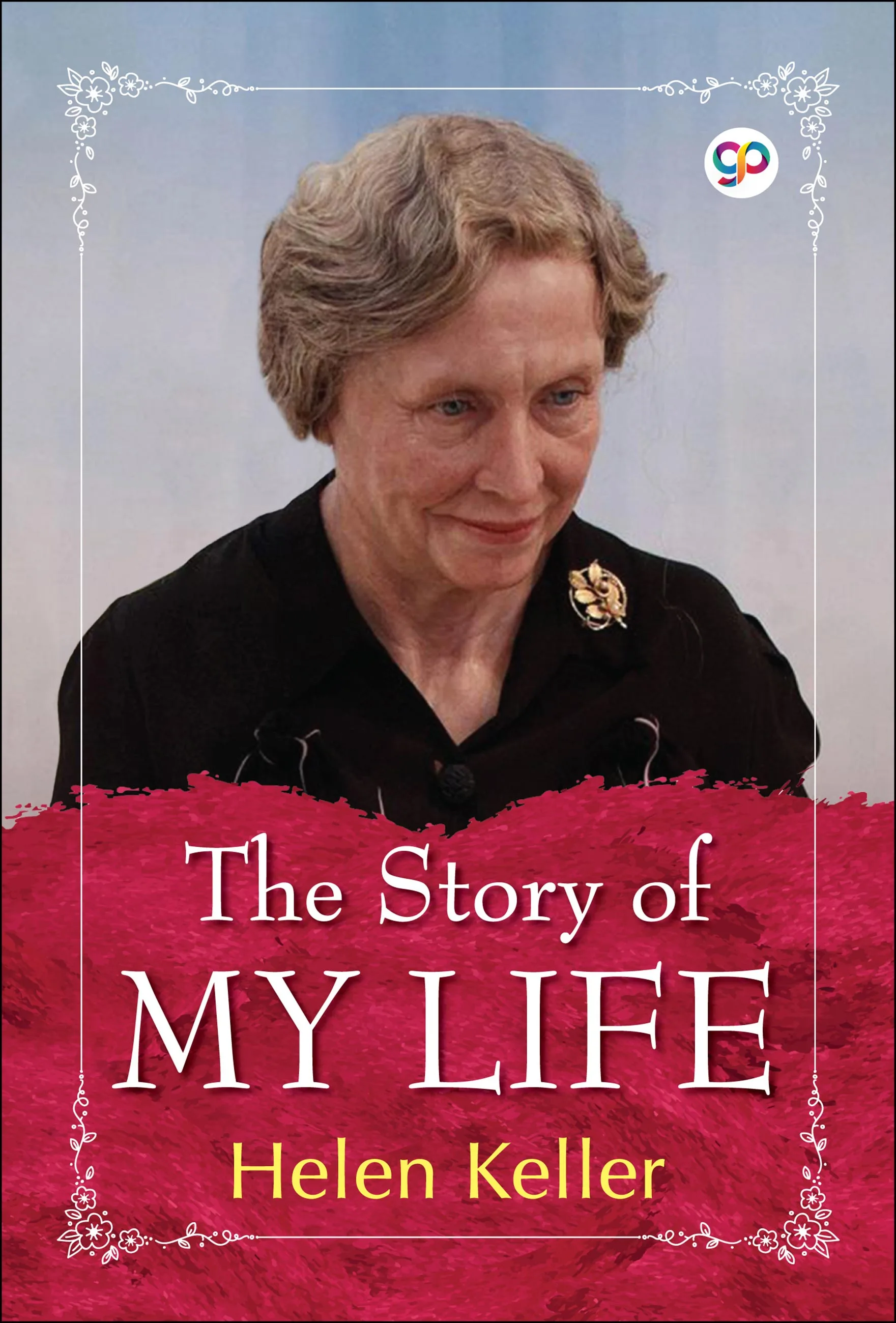
Download Cover Image
Do you want to download the full cover image for The Story of My Life: An Autobiography?