
Favourite Tales from the Arabian Nights
eBook
• 296 Pages
• INR 51.00
• English
• 9789387669802
No ratings yet
| Publisher | General Press |
|---|---|
| ISBN13 | 9789387669802 |
| ASIN/SKU | B07DMRLT4R |
| Book Format | eBook |
| Language | English |
| Pages | 296 |
| List Price | INR 51.00 |
| Subject Code | FIC019000, FIC005060, FIC009100, FIC009000 |
| Publishing Date | 07/06/2018 |
| Book Code | BD00068456 |
Buy this Book
Amazon Stores
Ebook Stores
Other Stores
Discover Favourite Tales from the Arabian Nights by Sir Richard F. Burton. This book is published by General Press in eBook format, ISBN 9789387669802, ASIN B07DMRLT4R, under Literature and Fiction, Fairy Tales and Folklore, Short Stories.
Book Description
There was once a king known for his ravenous desire and destructive passion. His rapine hunger devoured many women and left them dead with his throes of passion. King Shahryar was known for his lust and when his eyes befell the gorgeous Scheherazade, all thought the girl was lost to his hunger. However, Scheherazade hatched a plan which imprinted her name in eternity as one of the greatest legendary storytellers of all time. She proposed telling Shahryar stories and the curious ruler agreed, though impatient to make love to her. He listened and as soon she had his attention, Scheherazade stopped the story, promising to continue the next night. Curious to know what happened next, the ruler left her untouched.
The woman's plan continued for 1001 nights and engulfed Shahryar in a series of stories which mixed all the magic and mystery of Arabia. These stories have entered fairy tale mythos everywhere and brought characters as vivid as Aladdin and the Genie, Sinbad the Sailor and Ali Baba and the Forty Thieves to readers everywhere. In these stories, readers are whisked away to a land of promise, of magic carpets and turban wearing Arabs in a time long ago. Revisit the deserts of Arabia and be mystified as characters drag you into their illusions of yesteryears, night after night, for all nights to come. Night which become so magical that they seem almost Arabian.
The woman's plan continued for 1001 nights and engulfed Shahryar in a series of stories which mixed all the magic and mystery of Arabia. These stories have entered fairy tale mythos everywhere and brought characters as vivid as Aladdin and the Genie, Sinbad the Sailor and Ali Baba and the Forty Thieves to readers everywhere. In these stories, readers are whisked away to a land of promise, of magic carpets and turban wearing Arabs in a time long ago. Revisit the deserts of Arabia and be mystified as characters drag you into their illusions of yesteryears, night after night, for all nights to come. Night which become so magical that they seem almost Arabian.
Author Biography
Sir Richard Francis Burton was an English Geographer, writer, explorer, translator, orientalist and cartographer known mainly for his translations of several eastern texts and works, including The Kama Sutra of Vatsyayana, The Kasidah of Haji Abdu El-Yezdi and The Perfumed Garden of the Shaykh Nefzawi.
A captain in the East India Company, he was later employed by the Royal Geographical Society to explore the east coast of Africa and later led an expedition guided by the locals to see Lake Tanganyika, becoming the first European to do so.
A captain in the East India Company, he was later employed by the Royal Geographical Society to explore the east coast of Africa and later led an expedition guided by the locals to see Lake Tanganyika, becoming the first European to do so.
Editorial Reviews
Editorial Reviews will be added soon…
Book Summary
Favourite Tales from the Arabian Nights, associated with Sir Richard Francis Burton’s celebrated translation of The Thousand and One Nights, brings together a selection of stories from one of the world’s most enduring collections of traditional literature. Rather than being a single continuous novel, the Arabian Nights is a vast tapestry of interconnected tales involving kings, merchants, sailors, lovers, thieves, magicians, genies, princesses, and ordinary people whose lives suddenly become extraordinary. Its stories move between the realistic and the fantastic, the comic and the tragic, the romantic and the frightening.
The larger collection is framed by the story of Shahryar and Scheherazade, which gives the entire work its distinctive structure. Shahryar, a powerful king, becomes convinced that women cannot be trusted after discovering his wife's betrayal. In anger and despair, he decides to marry a new woman each night and have her executed the following morning. Eventually, Scheherazade, the intelligent daughter of the king's vizier, volunteers to marry him.
Scheherazade understands that force cannot change the king's mind immediately, so she uses storytelling. On her first night with him, she begins a fascinating tale but deliberately stops before the ending. The king, curious to know what happens next, postpones her execution for another day. The following night she completes one story and begins another, again leaving it unfinished. She continues this process for one thousand and one nights.
The stories gradually change Shahryar. Through Scheherazade's narratives, he encounters examples of loyalty and betrayal, wisdom and foolishness, generosity and greed, love and jealousy, justice and cruelty. The storytelling process gives him time to reconsider his beliefs. In the end, he abandons his murderous plan, and Scheherazade's intelligence and courage save not only her own life but potentially the lives of countless women.
The frame story is important because it establishes one of the collection's central ideas: stories have the power to transform people. Scheherazade does not defeat violence with greater violence. She uses imagination, patience, knowledge, and psychological understanding. Her stories become a means of survival and eventually a path toward moral change.
Among the best-known tales associated with the collection is “Aladdin and the Wonderful Lamp.” Aladdin begins as a poor and undisciplined young man whose life changes when a magician discovers that he can enter a mysterious cave and retrieve a magical lamp. The magician intends to use Aladdin for his own purposes, but Aladdin eventually gains control of the lamp and discovers that its genie can grant extraordinary wishes.
With the genie's help, Aladdin rises from poverty to wealth and builds a magnificent palace. He wins the love of a princess and appears to have achieved everything he could desire. Yet the story also shows the dangers of relying entirely on magical power. The lamp becomes an object of obsession and creates vulnerability. Aladdin must eventually use courage and intelligence, not merely supernatural assistance, to recover what he has lost.
Another famous story is “Ali Baba and the Forty Thieves.” Ali Baba is a poor woodcutter who accidentally discovers a secret cave belonging to a group of thieves. The cave opens with the famous command that reveals its treasure. Ali Baba takes some of the wealth, but his discovery puts him in danger when the thieves realize that someone knows their secret.
The story emphasizes cleverness and presence of mind, particularly through Morgiana, Ali Baba's intelligent servant. She repeatedly notices dangers that others overlook and ultimately helps protect the household. Morgiana is one of the collection's memorable examples of intelligence defeating physical power. The thieves possess wealth and violence, but they are repeatedly outwitted by someone who observes carefully and acts decisively.
“The Story of Sinbad the Sailor” offers a very different kind of adventure. Sinbad is a merchant and traveler who undertakes a series of extraordinary voyages. Each journey brings shipwrecks, strange islands, enormous creatures, dangerous peoples, hidden treasures, and unexpected escapes. His adventures transform travel into a test of courage and resourcefulness.
Sinbad's stories also reflect the commercial world of the medieval Middle East, where merchants traveled long distances in search of goods and opportunities. His adventures combine fantasy with practical concerns about trade, wealth, survival, and risk. Sinbad repeatedly becomes wealthy and then places himself in danger again, suggesting both the excitement and instability of a life driven by adventure.
The Arabian Nights also contains numerous tales of lovers separated by social barriers, family opposition, deception, and fate. Romantic stories often involve mistaken identities, secret marriages, jealous rivals, magical transformations, and unexpected reunions. Love is powerful, but it is rarely simple. Characters must often demonstrate patience, loyalty, and courage before they can achieve happiness.
Magic is another defining feature of the collection. Genies, enchanted objects, transformations, flying creatures, spells, and supernatural beings appear alongside ordinary human concerns. Yet magic rarely solves everything permanently. A character may receive enormous power but still face jealousy, greed, betrayal, or poor judgment. In this way, supernatural stories often reflect very human problems.
The collection repeatedly explores the relationship between wisdom and power. Kings have enormous authority but can make terrible decisions. Poor people may possess remarkable intelligence. Wealth can create security but can also attract enemies. Physical strength can be defeated by cleverness. Again and again, characters survive because they think carefully rather than because they are the strongest.
Another recurring theme is fortune and reversals of fate. A poor person can suddenly become rich; a powerful ruler can lose everything; a prisoner can become a king; a traveler can discover unimaginable treasure. This constant movement between prosperity and disaster creates much of the excitement of the stories.
At the same time, the tales frequently contain moral lessons. Greed can lead to destruction, arrogance invites downfall, generosity can be rewarded, and cleverness can save the innocent. However, the stories are rarely as simple as moral fables. Characters are often complicated, and outcomes can depend as much on luck and circumstance as on virtue.
Burton's translation is historically significant, although modern readers should approach it with an awareness of its nineteenth-century language, cultural assumptions, and editorial choices. His version is famous for its extensive notes and its attempt to preserve the richness and variety of the original material. Some elements of Burton's presentation can feel dated to contemporary readers, but his work played a major role in introducing English-speaking audiences to the extraordinary world of the Arabian Nights.
What makes these stories endure is their extraordinary variety. A reader can move from a palace to a desert, from a merchant ship to an enchanted cave, from a royal court to a humble household. One story may provoke laughter, another fear, another wonder, and another sympathy. The collection refuses to remain within a single genre.
Ultimately, Favourite Tales from the Arabian Nights is a celebration of storytelling itself. Its characters live in a world where fortune can change overnight and where ordinary life can suddenly open into the marvelous. Yet beneath the magic are familiar human experiences: ambition, jealousy, love, fear, greed, generosity, curiosity, loss, and hope.
The enduring lesson of Scheherazade's world is that imagination can be a form of strength. Stories preserve memory, entertain suffering people, challenge powerful rulers, and reveal truths that direct instruction may fail to communicate. The Arabian Nights survives because it does not offer only one lesson or one kind of pleasure. It offers an entire universe of stories.
For modern readers, the collection remains an invitation to enter that universe—to travel with Sinbad, marvel at Aladdin's lamp, fear the Forty Thieves, and listen with Shahryar as Scheherazade begins another tale. Its deepest magic lies not in the genies or enchanted objects, but in the simple human discovery that a well-told story can hold attention, awaken empathy, and change the way we see the world.
The larger collection is framed by the story of Shahryar and Scheherazade, which gives the entire work its distinctive structure. Shahryar, a powerful king, becomes convinced that women cannot be trusted after discovering his wife's betrayal. In anger and despair, he decides to marry a new woman each night and have her executed the following morning. Eventually, Scheherazade, the intelligent daughter of the king's vizier, volunteers to marry him.
Scheherazade understands that force cannot change the king's mind immediately, so she uses storytelling. On her first night with him, she begins a fascinating tale but deliberately stops before the ending. The king, curious to know what happens next, postpones her execution for another day. The following night she completes one story and begins another, again leaving it unfinished. She continues this process for one thousand and one nights.
The stories gradually change Shahryar. Through Scheherazade's narratives, he encounters examples of loyalty and betrayal, wisdom and foolishness, generosity and greed, love and jealousy, justice and cruelty. The storytelling process gives him time to reconsider his beliefs. In the end, he abandons his murderous plan, and Scheherazade's intelligence and courage save not only her own life but potentially the lives of countless women.
The frame story is important because it establishes one of the collection's central ideas: stories have the power to transform people. Scheherazade does not defeat violence with greater violence. She uses imagination, patience, knowledge, and psychological understanding. Her stories become a means of survival and eventually a path toward moral change.
Among the best-known tales associated with the collection is “Aladdin and the Wonderful Lamp.” Aladdin begins as a poor and undisciplined young man whose life changes when a magician discovers that he can enter a mysterious cave and retrieve a magical lamp. The magician intends to use Aladdin for his own purposes, but Aladdin eventually gains control of the lamp and discovers that its genie can grant extraordinary wishes.
With the genie's help, Aladdin rises from poverty to wealth and builds a magnificent palace. He wins the love of a princess and appears to have achieved everything he could desire. Yet the story also shows the dangers of relying entirely on magical power. The lamp becomes an object of obsession and creates vulnerability. Aladdin must eventually use courage and intelligence, not merely supernatural assistance, to recover what he has lost.
Another famous story is “Ali Baba and the Forty Thieves.” Ali Baba is a poor woodcutter who accidentally discovers a secret cave belonging to a group of thieves. The cave opens with the famous command that reveals its treasure. Ali Baba takes some of the wealth, but his discovery puts him in danger when the thieves realize that someone knows their secret.
The story emphasizes cleverness and presence of mind, particularly through Morgiana, Ali Baba's intelligent servant. She repeatedly notices dangers that others overlook and ultimately helps protect the household. Morgiana is one of the collection's memorable examples of intelligence defeating physical power. The thieves possess wealth and violence, but they are repeatedly outwitted by someone who observes carefully and acts decisively.
“The Story of Sinbad the Sailor” offers a very different kind of adventure. Sinbad is a merchant and traveler who undertakes a series of extraordinary voyages. Each journey brings shipwrecks, strange islands, enormous creatures, dangerous peoples, hidden treasures, and unexpected escapes. His adventures transform travel into a test of courage and resourcefulness.
Sinbad's stories also reflect the commercial world of the medieval Middle East, where merchants traveled long distances in search of goods and opportunities. His adventures combine fantasy with practical concerns about trade, wealth, survival, and risk. Sinbad repeatedly becomes wealthy and then places himself in danger again, suggesting both the excitement and instability of a life driven by adventure.
The Arabian Nights also contains numerous tales of lovers separated by social barriers, family opposition, deception, and fate. Romantic stories often involve mistaken identities, secret marriages, jealous rivals, magical transformations, and unexpected reunions. Love is powerful, but it is rarely simple. Characters must often demonstrate patience, loyalty, and courage before they can achieve happiness.
Magic is another defining feature of the collection. Genies, enchanted objects, transformations, flying creatures, spells, and supernatural beings appear alongside ordinary human concerns. Yet magic rarely solves everything permanently. A character may receive enormous power but still face jealousy, greed, betrayal, or poor judgment. In this way, supernatural stories often reflect very human problems.
The collection repeatedly explores the relationship between wisdom and power. Kings have enormous authority but can make terrible decisions. Poor people may possess remarkable intelligence. Wealth can create security but can also attract enemies. Physical strength can be defeated by cleverness. Again and again, characters survive because they think carefully rather than because they are the strongest.
Another recurring theme is fortune and reversals of fate. A poor person can suddenly become rich; a powerful ruler can lose everything; a prisoner can become a king; a traveler can discover unimaginable treasure. This constant movement between prosperity and disaster creates much of the excitement of the stories.
At the same time, the tales frequently contain moral lessons. Greed can lead to destruction, arrogance invites downfall, generosity can be rewarded, and cleverness can save the innocent. However, the stories are rarely as simple as moral fables. Characters are often complicated, and outcomes can depend as much on luck and circumstance as on virtue.
Burton's translation is historically significant, although modern readers should approach it with an awareness of its nineteenth-century language, cultural assumptions, and editorial choices. His version is famous for its extensive notes and its attempt to preserve the richness and variety of the original material. Some elements of Burton's presentation can feel dated to contemporary readers, but his work played a major role in introducing English-speaking audiences to the extraordinary world of the Arabian Nights.
What makes these stories endure is their extraordinary variety. A reader can move from a palace to a desert, from a merchant ship to an enchanted cave, from a royal court to a humble household. One story may provoke laughter, another fear, another wonder, and another sympathy. The collection refuses to remain within a single genre.
Ultimately, Favourite Tales from the Arabian Nights is a celebration of storytelling itself. Its characters live in a world where fortune can change overnight and where ordinary life can suddenly open into the marvelous. Yet beneath the magic are familiar human experiences: ambition, jealousy, love, fear, greed, generosity, curiosity, loss, and hope.
The enduring lesson of Scheherazade's world is that imagination can be a form of strength. Stories preserve memory, entertain suffering people, challenge powerful rulers, and reveal truths that direct instruction may fail to communicate. The Arabian Nights survives because it does not offer only one lesson or one kind of pleasure. It offers an entire universe of stories.
For modern readers, the collection remains an invitation to enter that universe—to travel with Sinbad, marvel at Aladdin's lamp, fear the Forty Thieves, and listen with Shahryar as Scheherazade begins another tale. Its deepest magic lies not in the genies or enchanted objects, but in the simple human discovery that a well-told story can hold attention, awaken empathy, and change the way we see the world.
Sample Chapters
Sample Chapters will be added soon…
Reader Reviews
No reviews yet.
Favourite Tales from the Arabian Nights
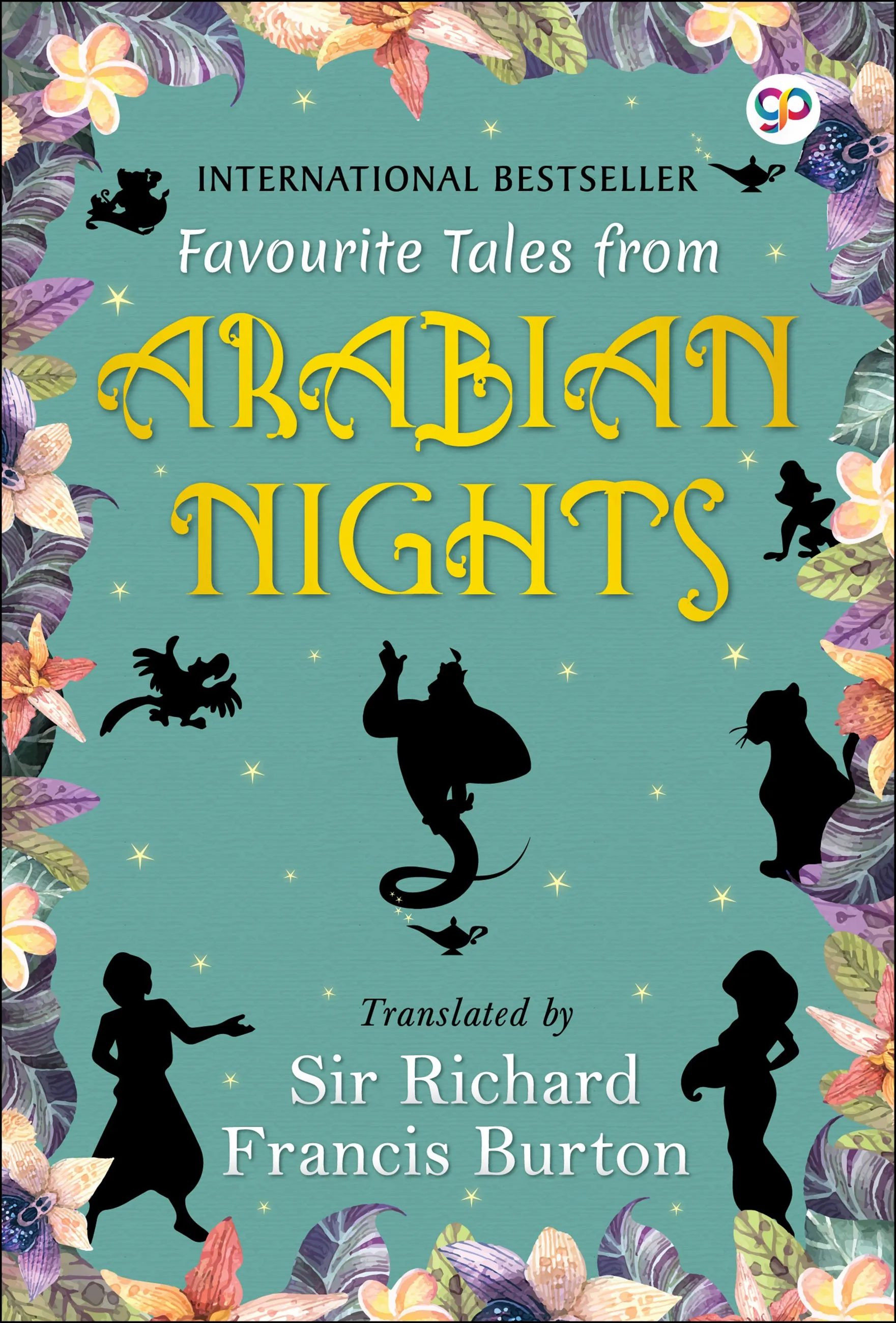
Download Cover Image
Do you want to download the full cover image for Favourite Tales from the Arabian Nights?