
Sense and Sensibility
eBook
• 188 Pages
• INR 51.00
• English
• 9789387669826
5.0
| 1 rating
|
| Publisher | General Press |
|---|---|
| ISBN13 | 9789387669826 |
| ASIN/SKU | B07DNKBBYS |
| Book Format | eBook |
| Language | English |
| Pages | 188 |
| List Price | INR 51.00 |
| Subject Code | FIC044000, FIC004000, FIC027050 |
| Publishing Date | 11/06/2018 |
| Book Code | BD00068459 |
Buy this Book
Amazon Stores
Ebook Stores
Other Stores
Discover Sense and Sensibility by Jane Austen. This book is published by General Press in eBook format, ISBN 9789387669826, ASIN B07DNKBBYS, under Literature and Fiction, Women's Literature and Fiction, Historical Romances.
Book Description
Jane Austen’s 'Sense and Sensibility' is a tender, deeply observant novel that explores the delicate balance between reason and emotion. The story centers on the Dashwood sisters, who are left suddenly impoverished and socially vulnerable following the death of their father. Forced to move to a modest cottage, the two sisters navigate the precarious world of nineteenth-century courtship with entirely different approaches to life and love.
Elinor, the eldest, embodies "sense." She guards her feelings behind a wall of quiet composure, even as her heart breaks in silence over her complicated attachment to the kind but conflicted Edward Ferrars. In stark contrast, her younger sister Marianne is the very picture of "sensibility." She lives purely through her passions, falling recklessly in love with the charming, dashing John Willoughby while completely dismissing the steadfast affection of the older, honorable Colonel Brandon.
As the sisters endure painful betrayals and dashed hopes, Austen masterfully weaves a story of profound growth. Marianne’s unbridled emotions eventually lead her to a near-fatal physical and emotional collapse, teaching her the vital necessity of restraint. Meanwhile, Elinor’s stoic endurance reveals the hidden toll of repressing one's true feelings.
Ultimately, the novel is a beautiful celebration of sisterhood and personal evolution. Austen illustrates that neither cold logic nor unchecked passion is sufficient on its own. True maturity and lasting happiness are found only when the mind and the heart learn to gently guide one another.
Elinor, the eldest, embodies "sense." She guards her feelings behind a wall of quiet composure, even as her heart breaks in silence over her complicated attachment to the kind but conflicted Edward Ferrars. In stark contrast, her younger sister Marianne is the very picture of "sensibility." She lives purely through her passions, falling recklessly in love with the charming, dashing John Willoughby while completely dismissing the steadfast affection of the older, honorable Colonel Brandon.
As the sisters endure painful betrayals and dashed hopes, Austen masterfully weaves a story of profound growth. Marianne’s unbridled emotions eventually lead her to a near-fatal physical and emotional collapse, teaching her the vital necessity of restraint. Meanwhile, Elinor’s stoic endurance reveals the hidden toll of repressing one's true feelings.
Ultimately, the novel is a beautiful celebration of sisterhood and personal evolution. Austen illustrates that neither cold logic nor unchecked passion is sufficient on its own. True maturity and lasting happiness are found only when the mind and the heart learn to gently guide one another.
Author Biography
Jane Austen was an English novelist whose works of romantic fiction, set among the landed gentry, earned her a place as one of the most widely read writers in English literature, her realism and biting social commentary cementing her historical importance among scholars and critics. Austen lived her entire life as part of a close-knit family located on the lower fringes of the English landed gentry. She was educated primarily by her father and older brothers as well as through her own reading. The steadfast support of her family was critical to her development as a professional writer.
Her artistic apprenticeship lasted from her teenage years until she was about 35 years old. During this period, she experimented with various literary forms, including the epistolary novel which she tried then abandoned, and wrote and extensively revised three major novels and began a fourth. From 1811 until 1816, with the release of 'Sense and Sensibility' (1811), 'Pride and Prejudice' (1813), 'Mansfield Park' (1814) and 'Emma' (1815), she achieved success as a published writer. She wrote two additional novels, 'Northanger Abbey' and 'Persuasion', both published posthumously in 1818, and began a third, which was eventually titled 'Sanditon', but died before completing it. Austen's works critique the novels of sensibility of the second half of the 18th century and are part of the transition to 19th-century realism.
Her plots, though fundamentally comic, highlight the dependence of women on marriage to secure social standing and economic security. Her work brought her little personal fame and only a few positive reviews during her lifetime, but the publication in 1869 of her nephew's 'A Memoir of Jane Austen' introduced her to a wider public, and by the 1940s she had become widely accepted in academia as a great English writer. The second half of the 20th century saw a proliferation of Austen scholarship and the emergence of a Janeite fan culture.
Her artistic apprenticeship lasted from her teenage years until she was about 35 years old. During this period, she experimented with various literary forms, including the epistolary novel which she tried then abandoned, and wrote and extensively revised three major novels and began a fourth. From 1811 until 1816, with the release of 'Sense and Sensibility' (1811), 'Pride and Prejudice' (1813), 'Mansfield Park' (1814) and 'Emma' (1815), she achieved success as a published writer. She wrote two additional novels, 'Northanger Abbey' and 'Persuasion', both published posthumously in 1818, and began a third, which was eventually titled 'Sanditon', but died before completing it. Austen's works critique the novels of sensibility of the second half of the 18th century and are part of the transition to 19th-century realism.
Her plots, though fundamentally comic, highlight the dependence of women on marriage to secure social standing and economic security. Her work brought her little personal fame and only a few positive reviews during her lifetime, but the publication in 1869 of her nephew's 'A Memoir of Jane Austen' introduced her to a wider public, and by the 1940s she had become widely accepted in academia as a great English writer. The second half of the 20th century saw a proliferation of Austen scholarship and the emergence of a Janeite fan culture.
Editorial Reviews
Editorial Reviews will be added soon…
Book Summary
"Sense and Sensibility" by Jane Austen is a classic novel of manners that explores the contrasting personalities of two sisters, Elinor and Marianne Dashwood, as they navigate love, family, disappointment, and social expectations in early nineteenth-century England. After the death of their father, the Dashwood women are left in a financially uncertain position because the family estate passes to John Dashwood, the son from Mr. Dashwood's first marriage. Although John promises to care for his stepmother and sisters, he is persuaded by his ambitious wife, Fanny, to offer them very little support. Forced to leave the home they have always known, Mrs. Dashwood and her daughters move to the modest Barton Cottage in Devonshire. While their circumstances change dramatically, the sisters respond to their new reality in very different ways. Elinor approaches life with reason, self-control, and quiet strength, whereas Marianne embraces emotion, passion, and complete honesty in expressing her feelings.
Soon after arriving at Barton Cottage, the Dashwoods become part of a welcoming local community. Elinor develops a growing affection for Edward Ferrars, Fanny Dashwood's gentle and thoughtful brother. Although Edward clearly returns her feelings, he often appears reserved and burdened by an unspoken concern. Elinor senses that something is preventing him from openly expressing his intentions, yet she refuses to make assumptions or allow hope to overcome good judgment. Marianne, by contrast, quickly falls deeply in love with the charming and handsome John Willoughby. Their shared love of poetry, music, and nature creates an intense emotional bond, and Marianne becomes convinced that they are destined to marry. Their happiness seems complete, leading those around them to expect an engagement at any moment.
The course of both romances changes unexpectedly. Willoughby suddenly leaves Devon for London without offering Marianne any clear explanation. His departure leaves her heartbroken, and she struggles to understand why the man who had appeared so devoted could abandon her so abruptly. Marianne refuses to hide her grief, openly expressing every emotion she experiences. Elinor, though equally disappointed by her own uncertain relationship with Edward, chooses to conceal her feelings in order to protect her family and fulfil her responsibilities. Jane Austen uses the sisters' contrasting responses to disappointment to explore two different approaches to life's hardships: one governed by emotional impulse and the other by calm resilience.
As the story progresses, Elinor discovers the painful truth behind Edward's unusual behaviour. Years earlier, he had secretly become engaged to Lucy Steele, an ambitious young woman who now reveals the engagement in confidence, knowing the information will deeply affect Elinor. Although devastated by the news, Elinor keeps her emotions under careful control and continues to treat everyone with kindness and dignity. Her quiet suffering remains hidden from most of those around her, demonstrating her remarkable strength of character. Meanwhile, Edward faces increasing pressure from his wealthy family, who strongly oppose his engagement because Lucy lacks social status and financial security. Rather than sacrificing his honour for personal advantage, Edward remains determined to keep the promise he once made.
Marianne's hopes are shattered when she encounters Willoughby again in London. Instead of welcoming her warmly, he behaves with unexpected coldness and distance, leaving her humiliated and confused. The truth gradually emerges that Willoughby has chosen to marry the wealthy Miss Grey in order to secure financial stability rather than follow his heart. Later revelations explain that his decision was influenced not only by financial difficulties but also by earlier irresponsible actions that had damaged his reputation. Although he still possesses genuine affection for Marianne, he lacks the courage and integrity needed to place love above personal comfort. Marianne's heartbreak becomes one of the novel's most emotional moments, forcing her to confront the painful difference between romantic ideals and human weakness.
Throughout these events, several other characters influence the sisters' journeys. Colonel Brandon, a quiet, honourable, and compassionate gentleman, has admired Marianne from the beginning despite her initial lack of interest in him. Unlike Willoughby, Brandon demonstrates patience, loyalty, and genuine concern for others without seeking admiration or attention. His own difficult past has taught him sympathy and emotional maturity, qualities that Marianne initially fails to appreciate. At the same time, Mrs. Jennings, though often humorous and overly curious about other people's affairs, proves to be generous and genuinely caring whenever the Dashwoods need support. These relationships help illustrate the importance of judging people by their actions rather than by first impressions or outward charm.
Marianne's emotional suffering eventually affects her physical health. During a visit to the countryside, she becomes seriously ill, causing great anxiety for her family. Elinor remains constantly by her sister's side, offering comfort and unwavering support despite her own emotional burdens. Marianne's illness becomes a turning point in her personal development. As she recovers, she begins to reflect honestly on her behaviour and recognises that allowing emotion alone to govern her life has brought unnecessary pain both to herself and to those who love her. She gradually learns to value patience, self-discipline, and thoughtful judgment without abandoning her naturally warm and affectionate personality. This growth represents the balance between feeling and reason that lies at the heart of the novel.
The misunderstandings surrounding Edward's engagement are eventually resolved in an unexpected way. Lucy Steele secretly transfers her affections to Edward's younger brother, Robert Ferrars, and marries him instead. With his former engagement legally and morally ended, Edward is finally free to express his love for Elinor. Their long-delayed happiness is especially satisfying because it is built upon mutual respect, honesty, and enduring loyalty rather than sudden passion. Elinor, who has quietly endured disappointment throughout the novel, is finally able to reveal the depth of her own emotions. Her restraint has never reflected a lack of feeling but rather a strength of character that enables her to act wisely even in moments of personal sorrow.
By the novel's conclusion, both sisters find lasting happiness, though in ways they could never have anticipated at the beginning. Elinor marries Edward and enjoys a peaceful life founded on trust and shared values. Marianne, having gained greater maturity through experience, comes to recognise Colonel Brandon's steadfast devotion and eventually returns his affection. Their marriage reflects a love based not on excitement alone but on respect, understanding, and emotional security. "Sense and Sensibility" ultimately presents a thoughtful exploration of love, family, duty, and personal growth. Jane Austen suggests that while emotion gives life its warmth and beauty, it must be balanced by wisdom, patience, and self-control. Through memorable characters, gentle humour, and keen observations of human nature, the novel remains a timeless story about learning from experience and discovering that lasting happiness often comes from balancing the heart with the mind.
Soon after arriving at Barton Cottage, the Dashwoods become part of a welcoming local community. Elinor develops a growing affection for Edward Ferrars, Fanny Dashwood's gentle and thoughtful brother. Although Edward clearly returns her feelings, he often appears reserved and burdened by an unspoken concern. Elinor senses that something is preventing him from openly expressing his intentions, yet she refuses to make assumptions or allow hope to overcome good judgment. Marianne, by contrast, quickly falls deeply in love with the charming and handsome John Willoughby. Their shared love of poetry, music, and nature creates an intense emotional bond, and Marianne becomes convinced that they are destined to marry. Their happiness seems complete, leading those around them to expect an engagement at any moment.
The course of both romances changes unexpectedly. Willoughby suddenly leaves Devon for London without offering Marianne any clear explanation. His departure leaves her heartbroken, and she struggles to understand why the man who had appeared so devoted could abandon her so abruptly. Marianne refuses to hide her grief, openly expressing every emotion she experiences. Elinor, though equally disappointed by her own uncertain relationship with Edward, chooses to conceal her feelings in order to protect her family and fulfil her responsibilities. Jane Austen uses the sisters' contrasting responses to disappointment to explore two different approaches to life's hardships: one governed by emotional impulse and the other by calm resilience.
As the story progresses, Elinor discovers the painful truth behind Edward's unusual behaviour. Years earlier, he had secretly become engaged to Lucy Steele, an ambitious young woman who now reveals the engagement in confidence, knowing the information will deeply affect Elinor. Although devastated by the news, Elinor keeps her emotions under careful control and continues to treat everyone with kindness and dignity. Her quiet suffering remains hidden from most of those around her, demonstrating her remarkable strength of character. Meanwhile, Edward faces increasing pressure from his wealthy family, who strongly oppose his engagement because Lucy lacks social status and financial security. Rather than sacrificing his honour for personal advantage, Edward remains determined to keep the promise he once made.
Marianne's hopes are shattered when she encounters Willoughby again in London. Instead of welcoming her warmly, he behaves with unexpected coldness and distance, leaving her humiliated and confused. The truth gradually emerges that Willoughby has chosen to marry the wealthy Miss Grey in order to secure financial stability rather than follow his heart. Later revelations explain that his decision was influenced not only by financial difficulties but also by earlier irresponsible actions that had damaged his reputation. Although he still possesses genuine affection for Marianne, he lacks the courage and integrity needed to place love above personal comfort. Marianne's heartbreak becomes one of the novel's most emotional moments, forcing her to confront the painful difference between romantic ideals and human weakness.
Throughout these events, several other characters influence the sisters' journeys. Colonel Brandon, a quiet, honourable, and compassionate gentleman, has admired Marianne from the beginning despite her initial lack of interest in him. Unlike Willoughby, Brandon demonstrates patience, loyalty, and genuine concern for others without seeking admiration or attention. His own difficult past has taught him sympathy and emotional maturity, qualities that Marianne initially fails to appreciate. At the same time, Mrs. Jennings, though often humorous and overly curious about other people's affairs, proves to be generous and genuinely caring whenever the Dashwoods need support. These relationships help illustrate the importance of judging people by their actions rather than by first impressions or outward charm.
Marianne's emotional suffering eventually affects her physical health. During a visit to the countryside, she becomes seriously ill, causing great anxiety for her family. Elinor remains constantly by her sister's side, offering comfort and unwavering support despite her own emotional burdens. Marianne's illness becomes a turning point in her personal development. As she recovers, she begins to reflect honestly on her behaviour and recognises that allowing emotion alone to govern her life has brought unnecessary pain both to herself and to those who love her. She gradually learns to value patience, self-discipline, and thoughtful judgment without abandoning her naturally warm and affectionate personality. This growth represents the balance between feeling and reason that lies at the heart of the novel.
The misunderstandings surrounding Edward's engagement are eventually resolved in an unexpected way. Lucy Steele secretly transfers her affections to Edward's younger brother, Robert Ferrars, and marries him instead. With his former engagement legally and morally ended, Edward is finally free to express his love for Elinor. Their long-delayed happiness is especially satisfying because it is built upon mutual respect, honesty, and enduring loyalty rather than sudden passion. Elinor, who has quietly endured disappointment throughout the novel, is finally able to reveal the depth of her own emotions. Her restraint has never reflected a lack of feeling but rather a strength of character that enables her to act wisely even in moments of personal sorrow.
By the novel's conclusion, both sisters find lasting happiness, though in ways they could never have anticipated at the beginning. Elinor marries Edward and enjoys a peaceful life founded on trust and shared values. Marianne, having gained greater maturity through experience, comes to recognise Colonel Brandon's steadfast devotion and eventually returns his affection. Their marriage reflects a love based not on excitement alone but on respect, understanding, and emotional security. "Sense and Sensibility" ultimately presents a thoughtful exploration of love, family, duty, and personal growth. Jane Austen suggests that while emotion gives life its warmth and beauty, it must be balanced by wisdom, patience, and self-control. Through memorable characters, gentle humour, and keen observations of human nature, the novel remains a timeless story about learning from experience and discovering that lasting happiness often comes from balancing the heart with the mind.
Sample Chapters
Chapter 1
The family of Dashwood had been long settled in Sussex. Their estate was large, and their residence was at Norland Park, in the centre of the of their property, where for many generations they had lived in so respectable a manner as to engage the general good opinion of their surrounding acquaintance. The late owner of this estate was a single man, who lived to a very advanced age, and who for many years of his life had a constant companion and housekeeper in his sister. But her death, which happened ten years before his own, produced a great alteration in his home; for to supply her loss, he invited and received into his house the family of his nephew, Mr Henry Dashwood, the legal inheritor of the Norland estate, and the person to whom he intended to bequeath it. In the society of his nephew and niece, and their children, the old gentleman’s days were comfortably spent. His attachment to them all increased. The constant attention of Mr and Mrs Henry Dashwood to his wishes, which proceeded not merely from interest, but from goodness of heart, gave him every degree of solid comfort which his age could receive; and the cheerfulness of the children added a relish to his existence.
By a former marriage, Mr Henry Dashwood had one son; by his present lady, three daughters. The son, a steady, respectable young man, was amply provided for by the fortune of his mother, which had been large, and half of which devolved on him on his coming of age. By his own marriage, likewise, which happened soon afterwards, he added to his wealth. To him, therefore, the succession to the Norland estate was not so really important as to his sisters; for their fortune, independent of what might arise to them from their father’s inheriting that property, could be but small. Their mother had nothing, and their father only seven thousand pounds in his own disposal; for the remaining moiety of his first wife’s fortune was also secured to her child, and he had only a life interest in it.
The old gentleman died; his will was read, and like almost every other will, gave as much disappointment as pleasure. He was neither so unjust, nor so ungrateful, as to leave his estate from his nephew; but he left it to him on such terms as destroyed half the value of the bequest. Mr Dashwood had wished for it more for the sake of his wife and daughters than for himself or his son; but to his son, and his son’s son, a child of four years old, it was secured, in such a way, as to leave to himself no power of providing for those who were most dear to him, and who most needed a provision, by any charge on the estate, or by any sale of its valuable woods. The whole was tied up for the benefit of this child, who, in occasional visits with his father and mother at Norland had so far gained on the affections of his uncle, by such attractions as are by no means unusual in children of two or three years old: an imperfect articulation, an earnest desire of having his own way, many cunning tricks, and a great deal of noise, as to outweigh all the value of all the attention which, for years, he had received from his niece and her daughters. He meant not to be unkind, however, and as a mark of his affection for the three girls, he left them a thousand pounds a-piece.
Mr Dashwood’s disappointment was at first severe; but his temper was cheerful and sanguine, and he might reasonably hope to live many years, and by living economically, lay by a considerable sum from the produce of an estate already large, and capable of almost immediate improvement. But the fortune, which had been so tardy in coming, was his only one twelve-month. He survived his uncle no longer; and ten thousand pounds, including the late legacies, was all that remained for his widow and daughters.
His son was sent for, as soon as his danger was known, and to him Mr Dashwood recommended, with all the strength and urgency which illness could command, the interest of his mother-in-law and sisters.
Mr John Dashwood had not the strong feelings of the rest of the family; but he was affected by a recommendation of such a nature at such a time, and he promised to do everything in his power to make them comfortable. His father was rendered easy by such an assurance, and Mr John Dashwood had then leisure to consider how much there might prudently be in his power to do for them.
He was not an ill-disposed young man, unless to be rather cold-hearted, and rather selfish, is to be ill-disposed: but he was, in general, well respected; for he conducted himself with propriety in the discharge of his ordinary duties. Had he married a more amiable woman, he might have been made still more respectable than he was; he might even have been made amiable himself; for he was very young when he married, and very fond of his wife. But Mrs John Dashwood was a strong caricature of himself; more narrow-minded and selfish.
When he gave his promise to his father, he meditated within himself to increase the fortunes of his sisters by the present of a thousand pounds a-piece. He then really thought himself equal to it. The prospect of four thousand a-year, in addition to his present income, besides the remaining half of his own mother’s fortune, warmed his heart and made him feel capable of generosity. ‘Yes, he would give them three thousand pounds: it would be liberal and handsome! It would be enough to make them completely easy. Three thousand pounds! He could spare so considerable a sum with little inconvenience.’ He thought of it all day long, and for many days successively, and he did not repent.
No sooner was his father’s funeral over, than Mrs John Dashwood, without sending any notice of her intention to her mother-in-law, arrived with her child and their attendants. No one could dispute her right to come; the house was her husband’s from the moment of his father’s decease; but the indelicacy of her conduct was so much the greater, and to a woman in Mrs Dashwood’s situation, with only common feelings, must have been highly unpleasing; but in her mind there was a sense of honour so keen, a generosity so romantic, that any offence of the kind, by whomsoever given or received, was to her a source of immoveable disgust. Mrs John Dashwood had never been a favourite with any of her husband’s family: but she had had no opportunity, till the present, of showing them with how little attention to the comfort of other people she could act when occasion required it.
So acutely did Mrs Dashwood feel this ungracious behaviour, and so earnestly did she despise her daughter-in-law for it, that, on the arrival of the latter, she would have quitted the house for ever, had not the entreaty of her eldest girl induced her first to reflect on the propriety of going, and her own tender love for all her three children determined her afterwards to stay, and for their sakes avoid a breach with their brother.
Elinor, this eldest daughter whose advice was so effectual, possessed a strength of understanding, and coolness of judgment, which qualified her, though only nineteen, to be the counsellor of her mother, and enabled her frequently to counteract, to the advantage of them all, that eagerness of mind in Mrs Dashwood which must generally have led to imprudence. She had an excellent heart; her disposition was affectionate, and her feelings were strong: but she knew how to govern them: it was a knowledge which her mother had yet to learn, and which one of her sisters had resolved never to be taught.
Marianne’s abilities were, in many respects, quite equal to Elinor’s. She was sensible and clever, but eager in everything; her sorrows, her joys, could have no moderation. She was generous, amiable, interesting: she was everything but prudent. The resemblance between her and her mother was strikingly great.
Elinor saw, with concern, the excess of her sister’s sensibility; but by Mrs Dashwood it was valued and cherished. They encouraged each other now in the violence of their affliction. The agony of grief which overpowered them at first, was voluntarily renewed, was sought for, was created again and again. They gave themselves up wholly to their sorrow, seeking increase of wretchedness in every reflection that could afford it, and resolved against ever admitting consolation in future. Elinor, too, was deeply afflicted; but still she could struggle, she could exert herself. She could consult with her brother, could receive her sister-in-law on her arrival, and treat her with proper attention: and could strive to rouse her mother to similar exertion, and encourage her to similar forbearance.
Margaret, the other sister, was a good-humoured, well-disposed girl; but as she had already imbibed a good deal of Marianne’s romance, without having much of her sense, she did not, at thirteen, bid fair to equal her sisters at a more advanced period of life.
Chapter 2
Mrs John Dashwood now installed herself mistress of Norland; and her mother and sisters-in-law were degraded to the condition of visitors. As such, however, they were treated by her with quiet civility; and by her husband with as much kindness as he could feel towards anybody beyond himself, his wife, and their child. He really pressed them, with some earnestness, to consider Norland as their home; and, as no plan appeared so eligible to Mrs Dashwood as remaining there till she could accommodate herself with a house in the neighbourhood, his invitation was accepted.
A continuance in a place where everything reminded her of former delight, was exactly what suited her mind. In seasons of cheerfulness, no temper could be more cheerful than hers, or possess, in a greater degree, that sanguine expectation of happiness which is happiness itself. But in sorrow she must be equally carried away by her fancy, and as far beyond consolation as in pleasure she was beyond alloy.
Mrs John Dashwood did not at all approve of what her husband intended to do for his sisters. To take three thousand pounds from the fortune of their dear little boy, would be impoverishing him to the most dreadful degree. She begged him to think again on the subject. How could he answer it to himself to rob his child, and his only child too, of so large a sum? And what possible claim could the Miss Dashwoods, who were related to him only by half-blood, which she considered as no relationship at all, have on his generosity to so large an amount? It was very well known that no affection was ever supposed to exist between the children of any man by different marriages; and why was he to ruin himself, and their poor little Harry, by giving away all his money to his half-sisters?
‘It was my father’s last request to me,’ replied her husband, ‘that I should assist his widow and daughters.’
‘He did not know what he was talking, of, I dare say; ten to one but he was light-headed at the time. Had he been in his right senses, he could not have thought of such a thing as begging you to give away half your fortune from your own child.’
‘He did not stipulate for any particular sum, my dear Fanny; he only requested me, in general terms, to assist them, and make their situation more comfortable than it was in his power to do. Perhaps it would have been as well if he had left it wholly to myself. He could hardly suppose I should neglect them. But as he required the promise, I could not do less than give it: at least I thought so at the time. The promise, therefore, was given, and must be performed. Something must be done for them whenever they leave Norland and settle in a new home.’
‘Well, then, let something be done for them; but that something need not be three thousand pounds. Consider,’ she added, ‘that when the money is once parted with, it never can return. Your sisters will marry, and it will be gone forever. If, indeed, it could ever be restored to our poor little boy…’
‘Why, to be sure,’ said her husband, very gravely, ‘that would make a great difference. The time may come when Harry will regret that so large a sum was parted with. If he should have a numerous family, for instance, it would be a very convenient addition.’
‘To be sure it would.’
‘Perhaps, then, it would be better for all parties if the sum were diminished one half. Five hundred pounds would be a prodigious increase to their fortunes.’
‘Oh, beyond anything great! What brother on earth would do half as much for his sisters, even if really his sisters! And as it is – only half-blood! – But you have such a generous spirit!’
‘I would not wish to do anything mean,’ he replied. ‘One had rather, on such occasions, do too much than too little. No one, at least, can think I have not done enough for them: even themselves, they can hardly expect more.’
‘There is no knowing what they may expect,’ said the lady, ‘but we are not to think of their expectations: the question is, what you can afford to do.’
‘Certainly, and I think I may afford to give them five hundred pounds a-piece. As it is, without any addition of mine, they will each have above three thousand pounds on their mother’s death: a very comfortable fortune for any young woman.’
‘To be sure it is: and, indeed, it strikes me that they can want no addition at all. They will have ten thousand pounds divided amongst them. If they marry, they will be sure of doing well; and if they do not, they may all live very comfortably together on the interest of ten thousand pounds.’
‘That is very true, and, therefore, I do not know whether, upon the whole, it would not be more advisable to do something for their mother while she lives rather than for them; something of the annuity kind I mean. My sisters would feel the good effects of it as well as herself. A hundred a year would make them all perfectly comfortable.’
His wife hesitated a little, however, in giving her consent to this plan.
‘To be sure,’ said she, ‘it is better than parting with fifteen hundred pounds at once. But then, if Mrs Dashwood should live fifteen years, we shall be completely taken in.’
‘Fifteen years! My dear Fanny; her life cannot be worth half that purchase.’
‘Certainly not; but if you observe, people always live forever when there is any annuity to be paid them; and she is very stout and healthy, and hardly forty. An annuity is a very serious business; it comes over and over every year, and there is no getting rid of it. You are not aware of what you are doing. I have known a great deal of the trouble of annuities; for my mother was clogged with the payment of three to old superannuated servants by my father’s will, and it is amazing how disagreeable she found it. Twice every year, these annuities were to be paid; and then there was the trouble of getting it to them; and then one of them was said to have died, and afterwards it turned out to be no such thing. My mother was quite sick of it. Her income was not her own, she said, with such perpetual claims on it; and it was the more unkind in my father, because, otherwise, the money would have been entirely at my mother’s disposal, without any restriction whatever. It has given me such an abhorrence of annuities, that I am sure I would not pin myself down to the payment of one for all the world.’
‘It is certainly an unpleasant thing,’ replied Mr Dashwood, ‘to have those kind of yearly drains on one’s income. One’s fortune, as your mother justly says, is not one’s own. To be tied down to the regular payment of such a sum, on every rent day, is by no means desirable: it takes away one’s independence.’
‘Undoubtedly; and, after all, you have no thanks for it. They think themselves secure, you do no more than what is expected, and it raises no gratitude at all. If I were you, whatever I did should be done at my own discretion entirely. I would not bind myself to allow them anything yearly. It may be very inconvenient some years to spare a hundred, or even fifty pounds, from our own expenses.’
‘I believe you are right, my love; it will be better that there should be no annuity in the case; whatever I may give them occasionally will be of far greater assistance than a yearly allowance, because they would only enlarge their style of living if they felt sure of a larger income, and would not be sixpence the richer for it at the end of the year. It will certainly be much the best way. A present of fifty pounds, now and then, will prevent their ever being distressed for money, and will, I think, be amply discharging my promise to my father.’
‘To be sure it will. Indeed, to say the truth, I am convinced within myself, that your father had no idea of your giving them any money at all. The assistance he thought of, I dare say, was only such as might be reasonably expected of you; for instance, such as looking out for a comfortable small house for them, helping them to move their things, and sending them presents of fish and game, and so forth, whenever they are in season. I’ll lay my life that he meant nothing further; indeed, it would be very strange and unreasonable if he did. Do but consider, my dear Mr Dashwood, how excessively comfortable your mother-in-law and her daughters may live on the interest of seven thousand pounds, besides the thousand pounds belonging to each of the girls, which brings them in fifty pounds a-year a-piece, and, of course, they will pay their mother for their board out of it. Altogether, they will have five hundred a-year amongst them, and what on earth can four women want for more than that? They will live so cheap! Their housekeeping will be nothing at all. They will have no carriage, no horses, and hardly any servants; they will keep no company, and can have no expenses of any kind! Only conceive how comfortable they will be! Five hundred a-year! I am sure I cannot imagine how they will spend half of it; and as to your giving them more, it is quite absurd to think of it. They will be much more able to give you something.’
‘Upon my word,’ said Mr Dashwood, ‘I believe you are perfectly right. My father certainly could mean nothing more by his request to me than what you say. I clearly understand it now, and I will strictly fulfil my engagement by such acts of assistance and kindness to them as you have described. When my mother removes into another house, my services shall be readily given to accommodate her as far as I can. Some little present of furniture, too, may be acceptable then.’
‘Certainly,’ returned Mrs John Dashwood. ‘But, however, one thing must be considered. When your father and mother moved to Norland, though the furniture of Stanhill was sold, all the china, plate, and linen was saved, and is now left to your mother. Her house will therefore be almost completely fitted up as soon as she takes it.’
‘That is a material consideration, undoubtedly. A valuable legacy indeed! And yet some of the plate would have been a very pleasant addition to our own stock here.’
‘Yes; and the set of breakfast china is twice as handsome as what belongs to this house. A great deal too handsome, in my opinion, for any place they can ever afford to live in. But, however, so it is. Your father thought only of them. And I must say this: that you owe no particular gratitude to him, nor attention to his wishes, for we very well know that if he could, he would have left almost everything in the world to them.’
This argument was irresistible. It gave to his intentions whatever of decision was wanting before; and he finally resolved, that it would be absolutely unnecessary, if not highly indecorous, to do more for the widow and children of his father, than such kind of neighbourly acts as his own wife pointed out.
The family of Dashwood had been long settled in Sussex. Their estate was large, and their residence was at Norland Park, in the centre of the of their property, where for many generations they had lived in so respectable a manner as to engage the general good opinion of their surrounding acquaintance. The late owner of this estate was a single man, who lived to a very advanced age, and who for many years of his life had a constant companion and housekeeper in his sister. But her death, which happened ten years before his own, produced a great alteration in his home; for to supply her loss, he invited and received into his house the family of his nephew, Mr Henry Dashwood, the legal inheritor of the Norland estate, and the person to whom he intended to bequeath it. In the society of his nephew and niece, and their children, the old gentleman’s days were comfortably spent. His attachment to them all increased. The constant attention of Mr and Mrs Henry Dashwood to his wishes, which proceeded not merely from interest, but from goodness of heart, gave him every degree of solid comfort which his age could receive; and the cheerfulness of the children added a relish to his existence.
By a former marriage, Mr Henry Dashwood had one son; by his present lady, three daughters. The son, a steady, respectable young man, was amply provided for by the fortune of his mother, which had been large, and half of which devolved on him on his coming of age. By his own marriage, likewise, which happened soon afterwards, he added to his wealth. To him, therefore, the succession to the Norland estate was not so really important as to his sisters; for their fortune, independent of what might arise to them from their father’s inheriting that property, could be but small. Their mother had nothing, and their father only seven thousand pounds in his own disposal; for the remaining moiety of his first wife’s fortune was also secured to her child, and he had only a life interest in it.
The old gentleman died; his will was read, and like almost every other will, gave as much disappointment as pleasure. He was neither so unjust, nor so ungrateful, as to leave his estate from his nephew; but he left it to him on such terms as destroyed half the value of the bequest. Mr Dashwood had wished for it more for the sake of his wife and daughters than for himself or his son; but to his son, and his son’s son, a child of four years old, it was secured, in such a way, as to leave to himself no power of providing for those who were most dear to him, and who most needed a provision, by any charge on the estate, or by any sale of its valuable woods. The whole was tied up for the benefit of this child, who, in occasional visits with his father and mother at Norland had so far gained on the affections of his uncle, by such attractions as are by no means unusual in children of two or three years old: an imperfect articulation, an earnest desire of having his own way, many cunning tricks, and a great deal of noise, as to outweigh all the value of all the attention which, for years, he had received from his niece and her daughters. He meant not to be unkind, however, and as a mark of his affection for the three girls, he left them a thousand pounds a-piece.
Mr Dashwood’s disappointment was at first severe; but his temper was cheerful and sanguine, and he might reasonably hope to live many years, and by living economically, lay by a considerable sum from the produce of an estate already large, and capable of almost immediate improvement. But the fortune, which had been so tardy in coming, was his only one twelve-month. He survived his uncle no longer; and ten thousand pounds, including the late legacies, was all that remained for his widow and daughters.
His son was sent for, as soon as his danger was known, and to him Mr Dashwood recommended, with all the strength and urgency which illness could command, the interest of his mother-in-law and sisters.
Mr John Dashwood had not the strong feelings of the rest of the family; but he was affected by a recommendation of such a nature at such a time, and he promised to do everything in his power to make them comfortable. His father was rendered easy by such an assurance, and Mr John Dashwood had then leisure to consider how much there might prudently be in his power to do for them.
He was not an ill-disposed young man, unless to be rather cold-hearted, and rather selfish, is to be ill-disposed: but he was, in general, well respected; for he conducted himself with propriety in the discharge of his ordinary duties. Had he married a more amiable woman, he might have been made still more respectable than he was; he might even have been made amiable himself; for he was very young when he married, and very fond of his wife. But Mrs John Dashwood was a strong caricature of himself; more narrow-minded and selfish.
When he gave his promise to his father, he meditated within himself to increase the fortunes of his sisters by the present of a thousand pounds a-piece. He then really thought himself equal to it. The prospect of four thousand a-year, in addition to his present income, besides the remaining half of his own mother’s fortune, warmed his heart and made him feel capable of generosity. ‘Yes, he would give them three thousand pounds: it would be liberal and handsome! It would be enough to make them completely easy. Three thousand pounds! He could spare so considerable a sum with little inconvenience.’ He thought of it all day long, and for many days successively, and he did not repent.
No sooner was his father’s funeral over, than Mrs John Dashwood, without sending any notice of her intention to her mother-in-law, arrived with her child and their attendants. No one could dispute her right to come; the house was her husband’s from the moment of his father’s decease; but the indelicacy of her conduct was so much the greater, and to a woman in Mrs Dashwood’s situation, with only common feelings, must have been highly unpleasing; but in her mind there was a sense of honour so keen, a generosity so romantic, that any offence of the kind, by whomsoever given or received, was to her a source of immoveable disgust. Mrs John Dashwood had never been a favourite with any of her husband’s family: but she had had no opportunity, till the present, of showing them with how little attention to the comfort of other people she could act when occasion required it.
So acutely did Mrs Dashwood feel this ungracious behaviour, and so earnestly did she despise her daughter-in-law for it, that, on the arrival of the latter, she would have quitted the house for ever, had not the entreaty of her eldest girl induced her first to reflect on the propriety of going, and her own tender love for all her three children determined her afterwards to stay, and for their sakes avoid a breach with their brother.
Elinor, this eldest daughter whose advice was so effectual, possessed a strength of understanding, and coolness of judgment, which qualified her, though only nineteen, to be the counsellor of her mother, and enabled her frequently to counteract, to the advantage of them all, that eagerness of mind in Mrs Dashwood which must generally have led to imprudence. She had an excellent heart; her disposition was affectionate, and her feelings were strong: but she knew how to govern them: it was a knowledge which her mother had yet to learn, and which one of her sisters had resolved never to be taught.
Marianne’s abilities were, in many respects, quite equal to Elinor’s. She was sensible and clever, but eager in everything; her sorrows, her joys, could have no moderation. She was generous, amiable, interesting: she was everything but prudent. The resemblance between her and her mother was strikingly great.
Elinor saw, with concern, the excess of her sister’s sensibility; but by Mrs Dashwood it was valued and cherished. They encouraged each other now in the violence of their affliction. The agony of grief which overpowered them at first, was voluntarily renewed, was sought for, was created again and again. They gave themselves up wholly to their sorrow, seeking increase of wretchedness in every reflection that could afford it, and resolved against ever admitting consolation in future. Elinor, too, was deeply afflicted; but still she could struggle, she could exert herself. She could consult with her brother, could receive her sister-in-law on her arrival, and treat her with proper attention: and could strive to rouse her mother to similar exertion, and encourage her to similar forbearance.
Margaret, the other sister, was a good-humoured, well-disposed girl; but as she had already imbibed a good deal of Marianne’s romance, without having much of her sense, she did not, at thirteen, bid fair to equal her sisters at a more advanced period of life.
Chapter 2
Mrs John Dashwood now installed herself mistress of Norland; and her mother and sisters-in-law were degraded to the condition of visitors. As such, however, they were treated by her with quiet civility; and by her husband with as much kindness as he could feel towards anybody beyond himself, his wife, and their child. He really pressed them, with some earnestness, to consider Norland as their home; and, as no plan appeared so eligible to Mrs Dashwood as remaining there till she could accommodate herself with a house in the neighbourhood, his invitation was accepted.
A continuance in a place where everything reminded her of former delight, was exactly what suited her mind. In seasons of cheerfulness, no temper could be more cheerful than hers, or possess, in a greater degree, that sanguine expectation of happiness which is happiness itself. But in sorrow she must be equally carried away by her fancy, and as far beyond consolation as in pleasure she was beyond alloy.
Mrs John Dashwood did not at all approve of what her husband intended to do for his sisters. To take three thousand pounds from the fortune of their dear little boy, would be impoverishing him to the most dreadful degree. She begged him to think again on the subject. How could he answer it to himself to rob his child, and his only child too, of so large a sum? And what possible claim could the Miss Dashwoods, who were related to him only by half-blood, which she considered as no relationship at all, have on his generosity to so large an amount? It was very well known that no affection was ever supposed to exist between the children of any man by different marriages; and why was he to ruin himself, and their poor little Harry, by giving away all his money to his half-sisters?
‘It was my father’s last request to me,’ replied her husband, ‘that I should assist his widow and daughters.’
‘He did not know what he was talking, of, I dare say; ten to one but he was light-headed at the time. Had he been in his right senses, he could not have thought of such a thing as begging you to give away half your fortune from your own child.’
‘He did not stipulate for any particular sum, my dear Fanny; he only requested me, in general terms, to assist them, and make their situation more comfortable than it was in his power to do. Perhaps it would have been as well if he had left it wholly to myself. He could hardly suppose I should neglect them. But as he required the promise, I could not do less than give it: at least I thought so at the time. The promise, therefore, was given, and must be performed. Something must be done for them whenever they leave Norland and settle in a new home.’
‘Well, then, let something be done for them; but that something need not be three thousand pounds. Consider,’ she added, ‘that when the money is once parted with, it never can return. Your sisters will marry, and it will be gone forever. If, indeed, it could ever be restored to our poor little boy…’
‘Why, to be sure,’ said her husband, very gravely, ‘that would make a great difference. The time may come when Harry will regret that so large a sum was parted with. If he should have a numerous family, for instance, it would be a very convenient addition.’
‘To be sure it would.’
‘Perhaps, then, it would be better for all parties if the sum were diminished one half. Five hundred pounds would be a prodigious increase to their fortunes.’
‘Oh, beyond anything great! What brother on earth would do half as much for his sisters, even if really his sisters! And as it is – only half-blood! – But you have such a generous spirit!’
‘I would not wish to do anything mean,’ he replied. ‘One had rather, on such occasions, do too much than too little. No one, at least, can think I have not done enough for them: even themselves, they can hardly expect more.’
‘There is no knowing what they may expect,’ said the lady, ‘but we are not to think of their expectations: the question is, what you can afford to do.’
‘Certainly, and I think I may afford to give them five hundred pounds a-piece. As it is, without any addition of mine, they will each have above three thousand pounds on their mother’s death: a very comfortable fortune for any young woman.’
‘To be sure it is: and, indeed, it strikes me that they can want no addition at all. They will have ten thousand pounds divided amongst them. If they marry, they will be sure of doing well; and if they do not, they may all live very comfortably together on the interest of ten thousand pounds.’
‘That is very true, and, therefore, I do not know whether, upon the whole, it would not be more advisable to do something for their mother while she lives rather than for them; something of the annuity kind I mean. My sisters would feel the good effects of it as well as herself. A hundred a year would make them all perfectly comfortable.’
His wife hesitated a little, however, in giving her consent to this plan.
‘To be sure,’ said she, ‘it is better than parting with fifteen hundred pounds at once. But then, if Mrs Dashwood should live fifteen years, we shall be completely taken in.’
‘Fifteen years! My dear Fanny; her life cannot be worth half that purchase.’
‘Certainly not; but if you observe, people always live forever when there is any annuity to be paid them; and she is very stout and healthy, and hardly forty. An annuity is a very serious business; it comes over and over every year, and there is no getting rid of it. You are not aware of what you are doing. I have known a great deal of the trouble of annuities; for my mother was clogged with the payment of three to old superannuated servants by my father’s will, and it is amazing how disagreeable she found it. Twice every year, these annuities were to be paid; and then there was the trouble of getting it to them; and then one of them was said to have died, and afterwards it turned out to be no such thing. My mother was quite sick of it. Her income was not her own, she said, with such perpetual claims on it; and it was the more unkind in my father, because, otherwise, the money would have been entirely at my mother’s disposal, without any restriction whatever. It has given me such an abhorrence of annuities, that I am sure I would not pin myself down to the payment of one for all the world.’
‘It is certainly an unpleasant thing,’ replied Mr Dashwood, ‘to have those kind of yearly drains on one’s income. One’s fortune, as your mother justly says, is not one’s own. To be tied down to the regular payment of such a sum, on every rent day, is by no means desirable: it takes away one’s independence.’
‘Undoubtedly; and, after all, you have no thanks for it. They think themselves secure, you do no more than what is expected, and it raises no gratitude at all. If I were you, whatever I did should be done at my own discretion entirely. I would not bind myself to allow them anything yearly. It may be very inconvenient some years to spare a hundred, or even fifty pounds, from our own expenses.’
‘I believe you are right, my love; it will be better that there should be no annuity in the case; whatever I may give them occasionally will be of far greater assistance than a yearly allowance, because they would only enlarge their style of living if they felt sure of a larger income, and would not be sixpence the richer for it at the end of the year. It will certainly be much the best way. A present of fifty pounds, now and then, will prevent their ever being distressed for money, and will, I think, be amply discharging my promise to my father.’
‘To be sure it will. Indeed, to say the truth, I am convinced within myself, that your father had no idea of your giving them any money at all. The assistance he thought of, I dare say, was only such as might be reasonably expected of you; for instance, such as looking out for a comfortable small house for them, helping them to move their things, and sending them presents of fish and game, and so forth, whenever they are in season. I’ll lay my life that he meant nothing further; indeed, it would be very strange and unreasonable if he did. Do but consider, my dear Mr Dashwood, how excessively comfortable your mother-in-law and her daughters may live on the interest of seven thousand pounds, besides the thousand pounds belonging to each of the girls, which brings them in fifty pounds a-year a-piece, and, of course, they will pay their mother for their board out of it. Altogether, they will have five hundred a-year amongst them, and what on earth can four women want for more than that? They will live so cheap! Their housekeeping will be nothing at all. They will have no carriage, no horses, and hardly any servants; they will keep no company, and can have no expenses of any kind! Only conceive how comfortable they will be! Five hundred a-year! I am sure I cannot imagine how they will spend half of it; and as to your giving them more, it is quite absurd to think of it. They will be much more able to give you something.’
‘Upon my word,’ said Mr Dashwood, ‘I believe you are perfectly right. My father certainly could mean nothing more by his request to me than what you say. I clearly understand it now, and I will strictly fulfil my engagement by such acts of assistance and kindness to them as you have described. When my mother removes into another house, my services shall be readily given to accommodate her as far as I can. Some little present of furniture, too, may be acceptable then.’
‘Certainly,’ returned Mrs John Dashwood. ‘But, however, one thing must be considered. When your father and mother moved to Norland, though the furniture of Stanhill was sold, all the china, plate, and linen was saved, and is now left to your mother. Her house will therefore be almost completely fitted up as soon as she takes it.’
‘That is a material consideration, undoubtedly. A valuable legacy indeed! And yet some of the plate would have been a very pleasant addition to our own stock here.’
‘Yes; and the set of breakfast china is twice as handsome as what belongs to this house. A great deal too handsome, in my opinion, for any place they can ever afford to live in. But, however, so it is. Your father thought only of them. And I must say this: that you owe no particular gratitude to him, nor attention to his wishes, for we very well know that if he could, he would have left almost everything in the world to them.’
This argument was irresistible. It gave to his intentions whatever of decision was wanting before; and he finally resolved, that it would be absolutely unnecessary, if not highly indecorous, to do more for the widow and children of his father, than such kind of neighbourly acts as his own wife pointed out.
Reader Reviews
Jennifer
07-08-2026
Sense and Sensibility by Jane Austen is a beautifully crafted classic that explores love, family, and the balance between reason and emotion. Through the contrasting personalities of sisters Elinor and Marianne Dashwood, Austen examines how different approaches to life and relationships shape one's happiness and personal growth. The novel is filled with memorable characters, subtle humour, and sharp observations about society, marriage, and human nature.
Austen's elegant writing and witty dialogue make the story both engaging and thought-provoking. Although the pace is slower than many modern novels, the emotional depth and realistic character development keep readers invested throughout. The relationships feel genuine, and the lessons about patience, resilience, and self-awareness remain just as meaningful today as when the book was first published.
Overall, Sense and Sensibility is a timeless and rewarding read that combines romance, intelligence, and emotional insight, making it a must-read for lovers of classic literature.
Sense and Sensibility
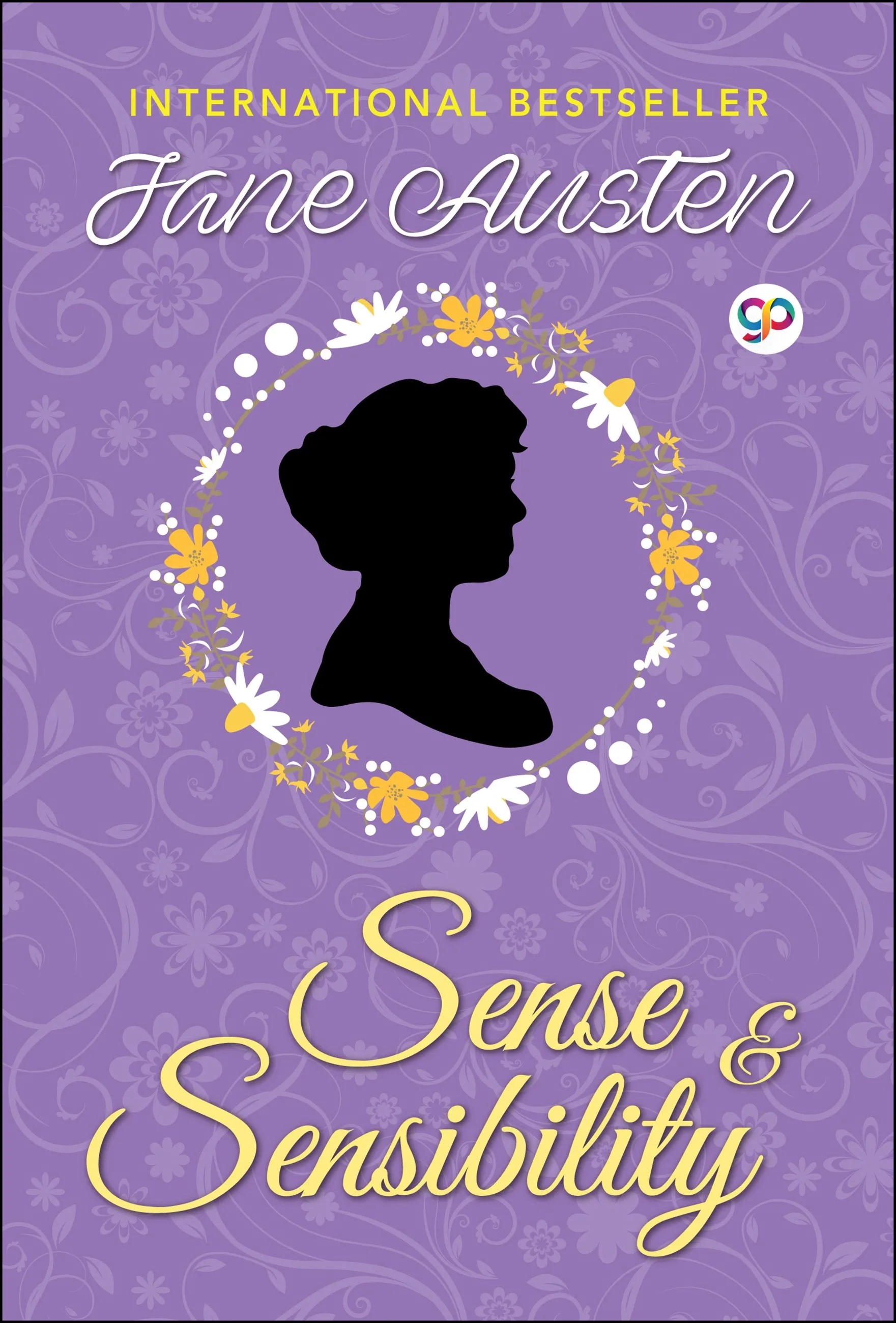
Download Cover Image
Do you want to download the full cover image for Sense and Sensibility?