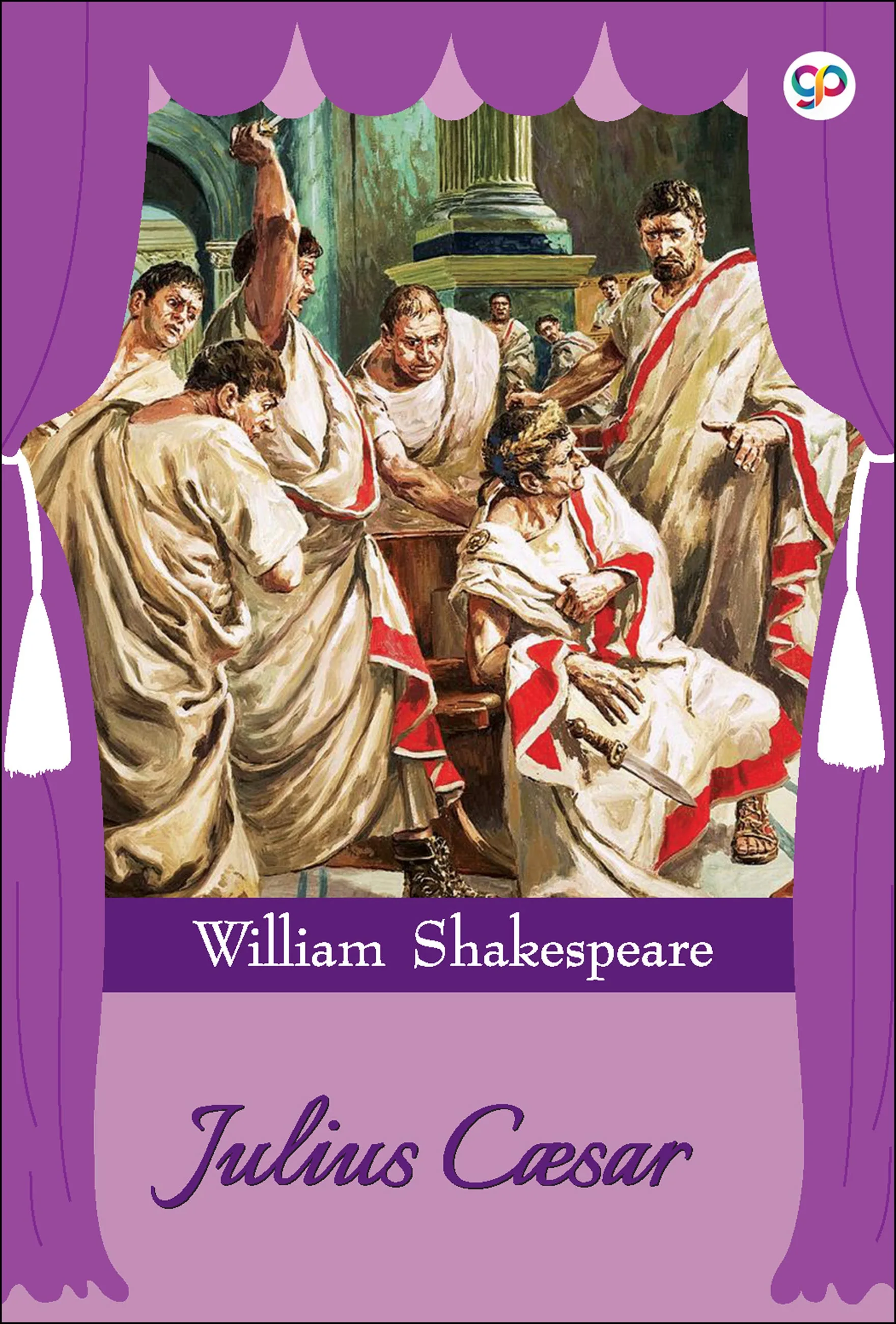
Julius Caesar
eBook
• 137 Pages
• INR 51.00
• English
• 9789387669949
No ratings yet
| Publisher | General Press |
|---|---|
| ISBN13 | 9789387669949 |
| ASIN/SKU | B07DYY8HHD |
| Book Format | eBook |
| Language | English |
| Pages | 137 |
| List Price | INR 51.00 |
| Subject Code | DRA003000, DRA004000, DRA010000, FIC004000 |
| Publishing Date | 23/06/2018 |
| Book Code | BD00068470 |
Buy this Book
Amazon Stores
Ebook Stores
Other Stores
Discover Julius Caesar by William Shakespeare. This book is published by General Press in eBook format, ISBN 9789387669949, ASIN B07DYY8HHD, under Literature and Fiction, Classics, Drama.
Book Description
Power can turn friends into enemies, and the struggle to protect a republic can demand choices that change history forever. 'Julius Caesar' by William Shakespeare is a classic historical tragedy and political drama that explores ambition, loyalty, betrayal, honor, and the dangerous consequences of political violence.
Set in ancient Rome, the play follows Julius Caesar as he returns to the city after a series of military victories and finds himself surrounded by admiration, suspicion, and growing political tension. Many Romans see Caesar as a strong leader who can restore order, while others fear that his increasing popularity and authority could destroy the Roman Republic and replace it with dictatorship. Among those deeply troubled by this possibility is Brutus, a respected Roman who values his country but is also personally connected to Caesar.
As opposition to Caesar grows, Brutus becomes caught between friendship and duty. Cassius, a clever and persuasive political conspirator, recognizes Brutus's influence and works to convince him that Caesar must be stopped for the good of Rome. The conspiracy gradually expands, bringing together men who claim to act in defense of liberty. Shakespeare presents their arguments with remarkable complexity, making it difficult to see the conflict as a simple battle between heroes and villains.
The story builds toward a dramatic political crisis that tests the meaning of patriotism, leadership, and public duty. After the conspirators take decisive action, Rome is thrown into uncertainty, and the consequences of their choices become increasingly difficult to control. Powerful speeches, shifting loyalties, public unrest, and personal rivalries drive the tragedy forward as the characters struggle to understand what they have set in motion.
More than a story about one famous Roman leader, 'Julius Caesar' is a timeless examination of political power and human judgment. Its questions about ambition, freedom, persuasion, and the price of political action remain surprisingly relevant today. With its unforgettable characters and intense dramatic moments, Shakespeare's tragedy continues to challenge readers to decide for themselves where loyalty ends and betrayal begins—and what happens when the fate of a nation is placed in the hands of a few determined individuals.
Set in ancient Rome, the play follows Julius Caesar as he returns to the city after a series of military victories and finds himself surrounded by admiration, suspicion, and growing political tension. Many Romans see Caesar as a strong leader who can restore order, while others fear that his increasing popularity and authority could destroy the Roman Republic and replace it with dictatorship. Among those deeply troubled by this possibility is Brutus, a respected Roman who values his country but is also personally connected to Caesar.
As opposition to Caesar grows, Brutus becomes caught between friendship and duty. Cassius, a clever and persuasive political conspirator, recognizes Brutus's influence and works to convince him that Caesar must be stopped for the good of Rome. The conspiracy gradually expands, bringing together men who claim to act in defense of liberty. Shakespeare presents their arguments with remarkable complexity, making it difficult to see the conflict as a simple battle between heroes and villains.
The story builds toward a dramatic political crisis that tests the meaning of patriotism, leadership, and public duty. After the conspirators take decisive action, Rome is thrown into uncertainty, and the consequences of their choices become increasingly difficult to control. Powerful speeches, shifting loyalties, public unrest, and personal rivalries drive the tragedy forward as the characters struggle to understand what they have set in motion.
More than a story about one famous Roman leader, 'Julius Caesar' is a timeless examination of political power and human judgment. Its questions about ambition, freedom, persuasion, and the price of political action remain surprisingly relevant today. With its unforgettable characters and intense dramatic moments, Shakespeare's tragedy continues to challenge readers to decide for themselves where loyalty ends and betrayal begins—and what happens when the fate of a nation is placed in the hands of a few determined individuals.
Author Biography
William Shakespeare (baptised 26 April 1564) was an English poet and playwright, widely regarded as the greatest writer in the English language and the world's pre-eminent dramatist. He is often called England's national poet and the 'Bard of Avon' (or simply "The Bard"). His surviving works consist of 37 plays, 154 sonnets, two long narrative poems, and several other poems. His plays have been translated into every major living language.
Shakespeare was born and raised in Stratford-upon-Avon. Scholars believe that he died on his fifty-second birthday, coinciding with St George’s Day. At the age of 18 he married Anne Hathaway, who bore him three children: Susanna, twins Hamnet and Judith. Between 1585 and 1592 he began a successful career in London as an actor, writer, and part owner of the playing company the Lord Chamberlain's Men, later known as the King's Men. He appears to have retired to Stratford around 1613, where he died three years later.
Shakespeare produced most of his known work between 1590 and 1613. His early plays were mainly comedies and histories, genres he raised to the peak of sophistication and artistry by the end of the sixteenth century. Next he wrote mainly tragedies until about 1608. He was a respected poet and playwright in his own day, but his reputation did not rise to its present heights until the nineteenth century. The Romantics, in particular, acclaimed Shakespeare's genius, and the Victorians hero-worshipped Shakespeare. In the twentieth century, his work was repeatedly adopted and rediscovered by new movements in scholarship and performance. His plays remain highly popular today and are consistently performed and reinterpreted in diverse cultural and political contexts throughout the world.
Shakespeare was born and raised in Stratford-upon-Avon. Scholars believe that he died on his fifty-second birthday, coinciding with St George’s Day. At the age of 18 he married Anne Hathaway, who bore him three children: Susanna, twins Hamnet and Judith. Between 1585 and 1592 he began a successful career in London as an actor, writer, and part owner of the playing company the Lord Chamberlain's Men, later known as the King's Men. He appears to have retired to Stratford around 1613, where he died three years later.
Shakespeare produced most of his known work between 1590 and 1613. His early plays were mainly comedies and histories, genres he raised to the peak of sophistication and artistry by the end of the sixteenth century. Next he wrote mainly tragedies until about 1608. He was a respected poet and playwright in his own day, but his reputation did not rise to its present heights until the nineteenth century. The Romantics, in particular, acclaimed Shakespeare's genius, and the Victorians hero-worshipped Shakespeare. In the twentieth century, his work was repeatedly adopted and rediscovered by new movements in scholarship and performance. His plays remain highly popular today and are consistently performed and reinterpreted in diverse cultural and political contexts throughout the world.
Editorial Reviews
Editorial Reviews will be added soon…
Book Summary
William Shakespeare’s Julius Caesar is a political tragedy about ambition, power, loyalty, betrayal, and the fragile nature of democracy. Set in ancient Rome, the play dramatizes the events surrounding Julius Caesar’s assassination and the violent political struggle that follows. Although Caesar is the title character, the story is equally concerned with Brutus, a respected Roman who becomes convinced that killing Caesar is necessary to save the Republic. Through Brutus’s tragic choices, Shakespeare explores a difficult question: Can violence ever be justified in the name of political freedom?
The play begins after Julius Caesar has returned to Rome following a series of military victories. The Roman people celebrate him enthusiastically, and Caesar’s popularity has grown enormously. Some Romans fear that he is becoming too powerful and may eventually make himself king. Among those who are deeply concerned is Cassius, an intelligent and manipulative politician who dislikes Caesar’s growing authority.
Cassius attempts to persuade Brutus to join a conspiracy against Caesar. Brutus is a respected Roman aristocrat who genuinely loves his country. He does not hate Caesar personally. In fact, he admires him. His conflict is therefore moral rather than personal. Cassius exploits Brutus’s fear that Caesar’s ambition will destroy the Roman Republic.
Eventually, Brutus joins the conspirators. Their plan is to assassinate Caesar before he becomes a dictator. They believe that Caesar’s death will restore freedom to Rome. The irony is that the conspirators themselves are preparing an act of political violence that will plunge Rome into chaos.
Several warnings appear before Caesar’s assassination. A soothsayer famously tells Caesar to “beware the Ides of March.” Caesar also receives a warning through his wife, Calpurnia, who has a disturbing dream about his death. At first, Caesar considers staying home, but Decius persuades him to go to the Senate by reinterpreting Calpurnia’s dream as a favorable sign.
The conspirators surround Caesar in the Senate. They approach him under the pretense of asking for mercy for a political prisoner. When Caesar refuses, the conspirators attack him. Brutus participates in the murder, and Caesar is shocked to see his trusted friend among the attackers. His death marks the beginning of the Republic’s collapse rather than its salvation.
After the assassination, Brutus believes that the conspirators can explain their actions to the Roman people. He gives a speech arguing that Caesar had to die because he loved Rome more than he loved Caesar. His reasoning is calm and logical, and the crowd initially accepts it.
Then Mark Antony delivers his famous funeral speech. Antony appears to respect the conspirators and repeatedly calls Brutus and the others “honourable men.” Yet his speech is carefully designed to turn the crowd against them. He reminds the citizens of Caesar’s generosity and displays Caesar’s bloodied body and will.
The crowd becomes furious. Rome descends into disorder, and the conspirators lose control of the situation. Antony joins forces with Caesar’s adopted heir, Octavius, and together they prepare to confront Brutus and Cassius.
The second half of the play becomes increasingly tragic. Brutus and Cassius raise armies against Antony and Octavius. Although they are on the same side, their relationship is strained by disagreements about money, morality, and military decisions.
Brutus remains committed to what he believes is honorable. He refuses to become completely corrupt even during wartime. Cassius, however, is more practical and cynical. Their differences reveal the contrast between idealism and political realism.
Before the final battle, Caesar’s ghost appears to Brutus. The ghost tells him that they will meet again at Philippi, suggesting that Brutus cannot escape the consequences of Caesar’s death.
At the Battle of Philippi, the conspirators are gradually defeated. Cassius receives false information that his forces have been overwhelmed and, believing that all is lost, orders his servant to kill him. His death is deeply ironic because he dies before discovering that the situation was not as hopeless as he believed.
Brutus continues fighting but eventually recognizes that the republican cause has failed. Rather than allowing himself to be captured and publicly humiliated, he chooses suicide. Before dying, he reflects on Caesar and acknowledges that Caesar’s spirit has ultimately prevailed.
Antony and Octavius arrive after Brutus’s death. Antony pays tribute to Brutus, calling him the noblest Roman because, unlike the other conspirators, he acted from what he sincerely believed was love of Rome rather than personal jealousy.
The play ends with Octavius emerging as the dominant political figure. The Republic that Brutus wanted to save has effectively disappeared. Caesar is dead, but his death has not restored freedom. Instead, it has created conditions for another form of centralized power.
This outcome is the central irony of the tragedy. The conspirators kill Caesar because they fear that he will become a tyrant, yet their assassination produces civil war and eventually helps clear the way for Octavius’s rise.
Shakespeare therefore refuses to present political morality as simple. Brutus is neither a villain nor an uncomplicated hero. He is a man who sincerely wants to protect Rome but makes a catastrophic decision. His greatest weakness is that he believes good intentions can guarantee good results.
Cassius, meanwhile, understands political manipulation better than Brutus, but his jealousy and distrust make him equally destructive. Antony demonstrates another kind of political intelligence: he understands emotion, public opinion, and power.
Ultimately, Julius Caesar is a tragedy about the consequences of political idealism without sufficient understanding of human nature. The play asks whether leaders can be judged only by their intentions, whether violence can genuinely preserve freedom, and whether political power can ever remain separated from ambition.
Its enduring message is that the struggle for power is rarely controlled by those who begin it. Caesar’s assassins believe they are ending tyranny, but they unleash forces they cannot contain. In trying to save Rome through violence, they help destroy the political order they hoped to preserve.
Shakespeare’s tragedy remains powerful because its questions extend far beyond ancient Rome. It examines the difficult relationship between personal loyalty and public duty, the danger of political ambition, the power of persuasion, and the unpredictable consequences of attempting to change history through force.
The play begins after Julius Caesar has returned to Rome following a series of military victories. The Roman people celebrate him enthusiastically, and Caesar’s popularity has grown enormously. Some Romans fear that he is becoming too powerful and may eventually make himself king. Among those who are deeply concerned is Cassius, an intelligent and manipulative politician who dislikes Caesar’s growing authority.
Cassius attempts to persuade Brutus to join a conspiracy against Caesar. Brutus is a respected Roman aristocrat who genuinely loves his country. He does not hate Caesar personally. In fact, he admires him. His conflict is therefore moral rather than personal. Cassius exploits Brutus’s fear that Caesar’s ambition will destroy the Roman Republic.
Eventually, Brutus joins the conspirators. Their plan is to assassinate Caesar before he becomes a dictator. They believe that Caesar’s death will restore freedom to Rome. The irony is that the conspirators themselves are preparing an act of political violence that will plunge Rome into chaos.
Several warnings appear before Caesar’s assassination. A soothsayer famously tells Caesar to “beware the Ides of March.” Caesar also receives a warning through his wife, Calpurnia, who has a disturbing dream about his death. At first, Caesar considers staying home, but Decius persuades him to go to the Senate by reinterpreting Calpurnia’s dream as a favorable sign.
The conspirators surround Caesar in the Senate. They approach him under the pretense of asking for mercy for a political prisoner. When Caesar refuses, the conspirators attack him. Brutus participates in the murder, and Caesar is shocked to see his trusted friend among the attackers. His death marks the beginning of the Republic’s collapse rather than its salvation.
After the assassination, Brutus believes that the conspirators can explain their actions to the Roman people. He gives a speech arguing that Caesar had to die because he loved Rome more than he loved Caesar. His reasoning is calm and logical, and the crowd initially accepts it.
Then Mark Antony delivers his famous funeral speech. Antony appears to respect the conspirators and repeatedly calls Brutus and the others “honourable men.” Yet his speech is carefully designed to turn the crowd against them. He reminds the citizens of Caesar’s generosity and displays Caesar’s bloodied body and will.
The crowd becomes furious. Rome descends into disorder, and the conspirators lose control of the situation. Antony joins forces with Caesar’s adopted heir, Octavius, and together they prepare to confront Brutus and Cassius.
The second half of the play becomes increasingly tragic. Brutus and Cassius raise armies against Antony and Octavius. Although they are on the same side, their relationship is strained by disagreements about money, morality, and military decisions.
Brutus remains committed to what he believes is honorable. He refuses to become completely corrupt even during wartime. Cassius, however, is more practical and cynical. Their differences reveal the contrast between idealism and political realism.
Before the final battle, Caesar’s ghost appears to Brutus. The ghost tells him that they will meet again at Philippi, suggesting that Brutus cannot escape the consequences of Caesar’s death.
At the Battle of Philippi, the conspirators are gradually defeated. Cassius receives false information that his forces have been overwhelmed and, believing that all is lost, orders his servant to kill him. His death is deeply ironic because he dies before discovering that the situation was not as hopeless as he believed.
Brutus continues fighting but eventually recognizes that the republican cause has failed. Rather than allowing himself to be captured and publicly humiliated, he chooses suicide. Before dying, he reflects on Caesar and acknowledges that Caesar’s spirit has ultimately prevailed.
Antony and Octavius arrive after Brutus’s death. Antony pays tribute to Brutus, calling him the noblest Roman because, unlike the other conspirators, he acted from what he sincerely believed was love of Rome rather than personal jealousy.
The play ends with Octavius emerging as the dominant political figure. The Republic that Brutus wanted to save has effectively disappeared. Caesar is dead, but his death has not restored freedom. Instead, it has created conditions for another form of centralized power.
This outcome is the central irony of the tragedy. The conspirators kill Caesar because they fear that he will become a tyrant, yet their assassination produces civil war and eventually helps clear the way for Octavius’s rise.
Shakespeare therefore refuses to present political morality as simple. Brutus is neither a villain nor an uncomplicated hero. He is a man who sincerely wants to protect Rome but makes a catastrophic decision. His greatest weakness is that he believes good intentions can guarantee good results.
Cassius, meanwhile, understands political manipulation better than Brutus, but his jealousy and distrust make him equally destructive. Antony demonstrates another kind of political intelligence: he understands emotion, public opinion, and power.
Ultimately, Julius Caesar is a tragedy about the consequences of political idealism without sufficient understanding of human nature. The play asks whether leaders can be judged only by their intentions, whether violence can genuinely preserve freedom, and whether political power can ever remain separated from ambition.
Its enduring message is that the struggle for power is rarely controlled by those who begin it. Caesar’s assassins believe they are ending tyranny, but they unleash forces they cannot contain. In trying to save Rome through violence, they help destroy the political order they hoped to preserve.
Shakespeare’s tragedy remains powerful because its questions extend far beyond ancient Rome. It examines the difficult relationship between personal loyalty and public duty, the danger of political ambition, the power of persuasion, and the unpredictable consequences of attempting to change history through force.
Sample Chapters
Characters in the Play
JULIUS CÆSAR and CÆSAR’S GHOST.
CALPHURNIA, Cæsar’s wife.
OCTAVIUS CÆSAR : Triumvir after the death of Julius Cæsar.
MARK ANTONY : Triumvir after the death of Julius Cæsar.
LEPIDUS : Triumvir after the death of Julius Cæsar.
MARCUS BRUTUS, who joins the conspiracy.
PORTIA, Brutus’ wife.
LUCIUS, Brutus’ servant.
CICERO : Senator
PUBLIUS : Senator
POPILLIUS LENA : Senator
CAIUS CASSIUS : Conspirator against Julius Cæsar.
CASKA : Conspirator against Julius Cæsar.
TREBONIUS : Conspirator against Julius Cæsar.
CAIUS LIGARIUS : Conspirator against Julius Cæsar.
DECIUS BRUTUS : Conspirator against Julius Cæsar.
METELLUS CIMBER : Conspirator against Julius Cæsar.
CINNA : Conspirator against Julius Cæsar.
FLAVIUS and MURELLUS, tribunes.
A Soothsayer.
ARTEMIDORUS.
CINNA the Poet.
Another Poet.
PINDARUS, Cassius’ bondman.
LUCILLIUS, MESSALA, VARRUS, CLAUDIO, young CATO,
LABIO, DARDANIUS, CLITUS, another FLAVIUS, STRATO, TITINIUS,
STATILLIUS and VOLUMNIUS, campaigners for Brutus and Cassius.
COBBLER, CARPENTER and other PLEBEIANS (‘Commoners’).
MESSENGER.
CITIZENS, SOLDIERS, BEARERS and SERVANTS.
Locations: Rome; the vicinity of Sardis; the plains of Philippi.
Act 1
Scene 1. Rome. A street.
Enter a CARPENTER, a COBBLER and other COMMONERS; then enter, approaching them, FLAVIUS and MURELLUS.
FLAVIUS : Hence! Home, you idle creatures, get you home!
Is this a holiday? What, know you not,
Being mechanical, you ought not walk
Upon a labouring day without the sign
Of your profession? – Speak, what trade art thou?
CARP. : Why, sir, a carpenter.
MURELLUS : Where is thy leather apron and thy rule?
What dost thou with thy best apparel on?
– You, sir, what trade are you?
COBBLER : Truly, sir, in respect of a fine workman, I am but, as you would say, a cobbler.
MURELLUS : But what trade art thou? Answer me directly.
COBBLER : A trade, sir, that I hope I may use with a safe conscience, which is indeed, sir, a mender of bad soles.
FLAVIUS : What trade, thou knave? Thou naughty knave, what trade?
COBBLER : Nay, I beseech you, sir, be not out with me; yet if you be out, sir, I can mend you.
MURELLUS : What mean’st thou by that? ‘Mend’ me, thou saucy fellow?
COBBLER : Why, sir, cobble you.
FLAVIUS : Thou art a cobbler, art thou?
COBBLER : Truly, sir, all that I live by is with the awl: I meddle with no tradesman’s matters, nor women’s matters, but with awl. I am indeed, sir, a surgeon to old shoes: when they are in great danger, I recover them. As proper men as ever trod upon neat’s leather have gone upon my handiwork.
FLAVIUS : But wherefore art not in thy shop today?
Why dost thou lead these men about the streets?
COBBLER : Truly, sir, to wear out their shoes, to get myself into more work. But indeed, sir, we make holiday to see Cæsar and to rejoice in his triumph.
MURELLUS : Wherefore rejoice? What conquest brings he home?
What tributaries follow him to Rome,
To grace in captive bonds his chariot-wheels?
You blocks, you stones, you worse than senseless things!
O you hard hearts, you cruel men of Rome,
Knew you not Pompey? Many a time and oft
Have you climbed up to walls and battlements,
To towers and windows, yea, to chimney-tops,
Your infants in your arms, and there have sat
The live-long day, with patient expectation,
To see great Pompey pass the streets of Rome;
And when you saw his chariot but appear,
Have you not made an universal shout,
That Tiber trembled underneath her banks
To hear the replication of your sounds
Made in her concave shores?
And do you now put on your best attire?
And do you now cull out a holiday?
And do you now strew flowers in his way,
That comes in triumph over Pompey’s blood?
Be gone!
Run to your houses, fall upon your knees,
Pray to the gods to intermit the plague
That needs must light on this ingratitude.
FLAVIUS : Go, go, good countrymen, and for this fault
Assemble all the poor men of your sort;
Draw them to Tiber banks, and weep your tears
Into the channel, till the lowest stream
Do kiss the most exalted shores of all.
[Exeunt all the commoners.
See whe’r their basest mettle be not moved:
They vanish tongue-tied in their guiltiness.
Go you down that way towards the Capitol:
This way will I. Disrobe the images,
If you do find them decked with cer’monies.
MURELLUS : May we do so?
You know it is the Feast of Lupercal.
FLAVIUS : It is no matter; let no images
Be hung with Cæsar’s trophies. I’ll about,
And drive away the vulgar from the streets;
So do you too, where you perceive them thick.
These growing feathers, plucked from Cæsar’s wing,
Will make him fly an ordinary pitch,
Who else would soar above the view of men
And keep us all in servile fearfulness.
[Exeunt.
JULIUS CÆSAR and CÆSAR’S GHOST.
CALPHURNIA, Cæsar’s wife.
OCTAVIUS CÆSAR : Triumvir after the death of Julius Cæsar.
MARK ANTONY : Triumvir after the death of Julius Cæsar.
LEPIDUS : Triumvir after the death of Julius Cæsar.
MARCUS BRUTUS, who joins the conspiracy.
PORTIA, Brutus’ wife.
LUCIUS, Brutus’ servant.
CICERO : Senator
PUBLIUS : Senator
POPILLIUS LENA : Senator
CAIUS CASSIUS : Conspirator against Julius Cæsar.
CASKA : Conspirator against Julius Cæsar.
TREBONIUS : Conspirator against Julius Cæsar.
CAIUS LIGARIUS : Conspirator against Julius Cæsar.
DECIUS BRUTUS : Conspirator against Julius Cæsar.
METELLUS CIMBER : Conspirator against Julius Cæsar.
CINNA : Conspirator against Julius Cæsar.
FLAVIUS and MURELLUS, tribunes.
A Soothsayer.
ARTEMIDORUS.
CINNA the Poet.
Another Poet.
PINDARUS, Cassius’ bondman.
LUCILLIUS, MESSALA, VARRUS, CLAUDIO, young CATO,
LABIO, DARDANIUS, CLITUS, another FLAVIUS, STRATO, TITINIUS,
STATILLIUS and VOLUMNIUS, campaigners for Brutus and Cassius.
COBBLER, CARPENTER and other PLEBEIANS (‘Commoners’).
MESSENGER.
CITIZENS, SOLDIERS, BEARERS and SERVANTS.
Locations: Rome; the vicinity of Sardis; the plains of Philippi.
Act 1
Scene 1. Rome. A street.
Enter a CARPENTER, a COBBLER and other COMMONERS; then enter, approaching them, FLAVIUS and MURELLUS.
FLAVIUS : Hence! Home, you idle creatures, get you home!
Is this a holiday? What, know you not,
Being mechanical, you ought not walk
Upon a labouring day without the sign
Of your profession? – Speak, what trade art thou?
CARP. : Why, sir, a carpenter.
MURELLUS : Where is thy leather apron and thy rule?
What dost thou with thy best apparel on?
– You, sir, what trade are you?
COBBLER : Truly, sir, in respect of a fine workman, I am but, as you would say, a cobbler.
MURELLUS : But what trade art thou? Answer me directly.
COBBLER : A trade, sir, that I hope I may use with a safe conscience, which is indeed, sir, a mender of bad soles.
FLAVIUS : What trade, thou knave? Thou naughty knave, what trade?
COBBLER : Nay, I beseech you, sir, be not out with me; yet if you be out, sir, I can mend you.
MURELLUS : What mean’st thou by that? ‘Mend’ me, thou saucy fellow?
COBBLER : Why, sir, cobble you.
FLAVIUS : Thou art a cobbler, art thou?
COBBLER : Truly, sir, all that I live by is with the awl: I meddle with no tradesman’s matters, nor women’s matters, but with awl. I am indeed, sir, a surgeon to old shoes: when they are in great danger, I recover them. As proper men as ever trod upon neat’s leather have gone upon my handiwork.
FLAVIUS : But wherefore art not in thy shop today?
Why dost thou lead these men about the streets?
COBBLER : Truly, sir, to wear out their shoes, to get myself into more work. But indeed, sir, we make holiday to see Cæsar and to rejoice in his triumph.
MURELLUS : Wherefore rejoice? What conquest brings he home?
What tributaries follow him to Rome,
To grace in captive bonds his chariot-wheels?
You blocks, you stones, you worse than senseless things!
O you hard hearts, you cruel men of Rome,
Knew you not Pompey? Many a time and oft
Have you climbed up to walls and battlements,
To towers and windows, yea, to chimney-tops,
Your infants in your arms, and there have sat
The live-long day, with patient expectation,
To see great Pompey pass the streets of Rome;
And when you saw his chariot but appear,
Have you not made an universal shout,
That Tiber trembled underneath her banks
To hear the replication of your sounds
Made in her concave shores?
And do you now put on your best attire?
And do you now cull out a holiday?
And do you now strew flowers in his way,
That comes in triumph over Pompey’s blood?
Be gone!
Run to your houses, fall upon your knees,
Pray to the gods to intermit the plague
That needs must light on this ingratitude.
FLAVIUS : Go, go, good countrymen, and for this fault
Assemble all the poor men of your sort;
Draw them to Tiber banks, and weep your tears
Into the channel, till the lowest stream
Do kiss the most exalted shores of all.
[Exeunt all the commoners.
See whe’r their basest mettle be not moved:
They vanish tongue-tied in their guiltiness.
Go you down that way towards the Capitol:
This way will I. Disrobe the images,
If you do find them decked with cer’monies.
MURELLUS : May we do so?
You know it is the Feast of Lupercal.
FLAVIUS : It is no matter; let no images
Be hung with Cæsar’s trophies. I’ll about,
And drive away the vulgar from the streets;
So do you too, where you perceive them thick.
These growing feathers, plucked from Cæsar’s wing,
Will make him fly an ordinary pitch,
Who else would soar above the view of men
And keep us all in servile fearfulness.
[Exeunt.
Reader Reviews
No reviews yet.
Julius Caesar