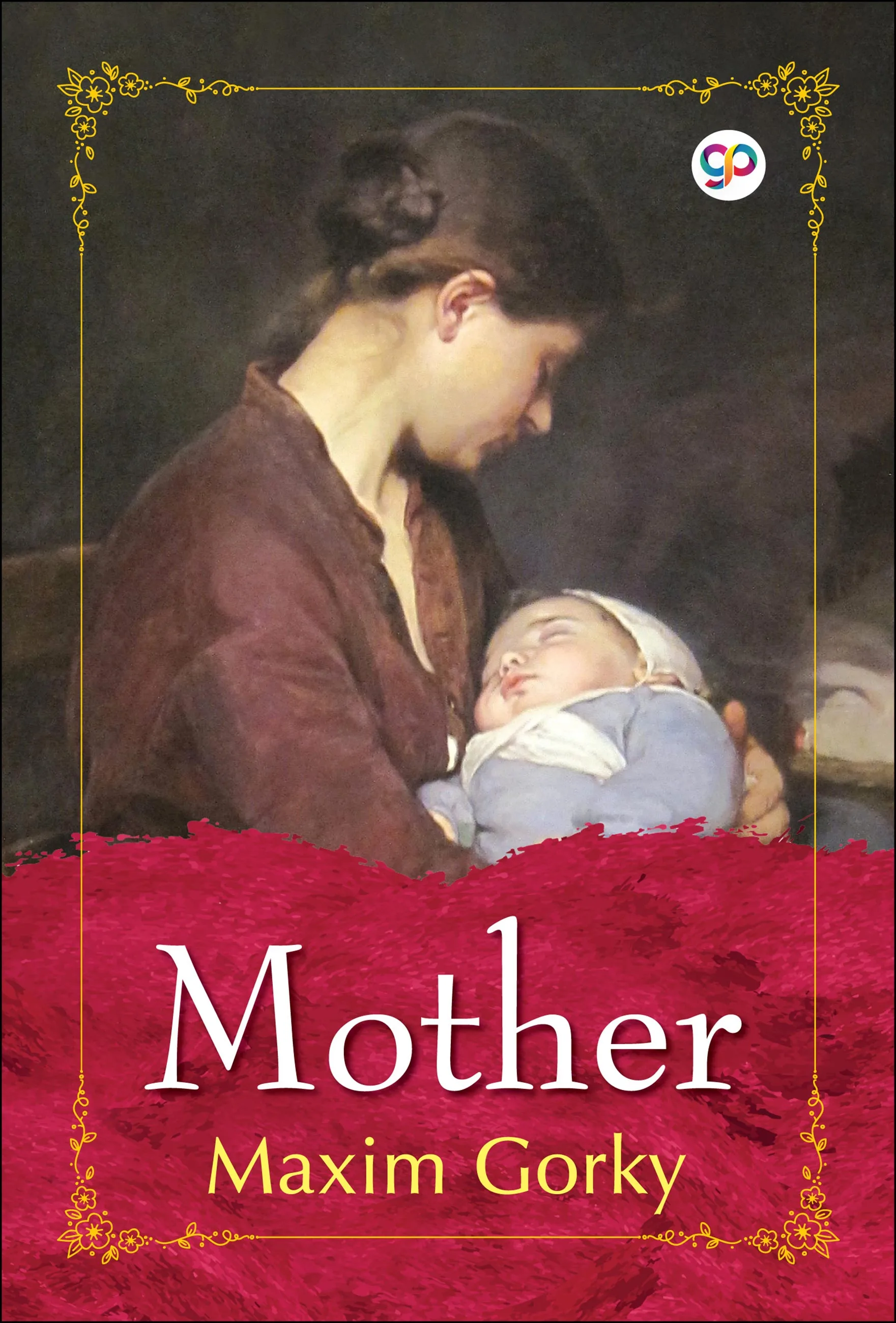
Mother
eBook
• 391 Pages
• INR 70.00
• English
• 9789387669956
No ratings yet
| Publisher | General Press |
|---|---|
| ISBN13 | 9789387669956 |
| ASIN/SKU | B07DZ1FBCP |
| Book Format | eBook |
| Language | English |
| Pages | 391 |
| List Price | INR 70.00 |
| Subject Code | FIC004000, FAM013000, FAM032000, PSY013000 |
| Publishing Date | 23/06/2018 |
| Book Code | BD00068472 |
Buy this Book
Amazon Stores
Ebook Stores
Other Stores
Discover Mother by Maxim Gorky. This book is published by General Press in eBook format, ISBN 9789387669956, ASIN B07DZ1FBCP, under Literature and Fiction, Russian Literature, Women's Fiction.
Book Description
What happens when an ordinary mother discovers that her son’s struggle is part of a much larger fight for justice? 'Mother' by Maxim Gorky is a powerful political and social realist novel that follows the awakening of an unassuming woman amid the growing revolutionary movement in pre-revolutionary Russia. First published in 1906, the novel explores oppression, poverty, courage, family, and the transformative power of political awareness.
The story centers on Pelageya Nilovna, a quiet working-class woman whose life has been shaped by hardship and fear. She lives with her son, Pavel Vlasov, a young factory worker who becomes increasingly involved in socialist ideas and revolutionary activities. At first, Pelageya struggles to understand Pavel’s beliefs and is frightened by the risks he takes. His growing commitment to challenging the harsh conditions faced by workers gradually opens her eyes to the injustice surrounding them.
As Pavel and his fellow activists begin distributing literature, organizing meetings, and speaking openly about workers’ rights, Pelageya is drawn into a world that is completely unfamiliar to her. What begins as a mother’s concern for her son slowly develops into something deeper: a personal awakening. She starts to recognize the dignity, suffering, and hopes of ordinary people and discovers a strength within herself that she never knew existed.
Gorky uses Pelageya’s transformation to portray the wider awakening of a society struggling under poverty and political repression. The novel does not simply focus on revolution as a political event; it examines how ideas can change individuals and how courage can grow from love, suffering, and human solidarity. Through its working-class characters and emotionally charged narrative, 'Mother' presents a moving picture of people searching for freedom and a better future.
At its heart, 'Mother' is a story about transformation—the journey from fear and helplessness toward understanding and courage. Gorky’s vivid portrayal of ordinary people gives the novel its lasting emotional power, making it both a significant work of Russian literature and a compelling exploration of social change. To discover how far Pelageya’s newfound courage takes her, readers will want to experience the full journey of 'Mother'.
The story centers on Pelageya Nilovna, a quiet working-class woman whose life has been shaped by hardship and fear. She lives with her son, Pavel Vlasov, a young factory worker who becomes increasingly involved in socialist ideas and revolutionary activities. At first, Pelageya struggles to understand Pavel’s beliefs and is frightened by the risks he takes. His growing commitment to challenging the harsh conditions faced by workers gradually opens her eyes to the injustice surrounding them.
As Pavel and his fellow activists begin distributing literature, organizing meetings, and speaking openly about workers’ rights, Pelageya is drawn into a world that is completely unfamiliar to her. What begins as a mother’s concern for her son slowly develops into something deeper: a personal awakening. She starts to recognize the dignity, suffering, and hopes of ordinary people and discovers a strength within herself that she never knew existed.
Gorky uses Pelageya’s transformation to portray the wider awakening of a society struggling under poverty and political repression. The novel does not simply focus on revolution as a political event; it examines how ideas can change individuals and how courage can grow from love, suffering, and human solidarity. Through its working-class characters and emotionally charged narrative, 'Mother' presents a moving picture of people searching for freedom and a better future.
At its heart, 'Mother' is a story about transformation—the journey from fear and helplessness toward understanding and courage. Gorky’s vivid portrayal of ordinary people gives the novel its lasting emotional power, making it both a significant work of Russian literature and a compelling exploration of social change. To discover how far Pelageya’s newfound courage takes her, readers will want to experience the full journey of 'Mother'.
Author Biography
Maksim Gorky was a Soviet author and founder of the socialist realism literary method. He was also a political activist who spent several lengthy stays in Capri and Italy. Gorky traveled throughout his native land and at one point became friends with Lenin. His travels overwhelmed him with the vastness and beauty of his country and they also made him sharply aware of the ignorance and poverty of its people. This novel tells the story of the common proletariat who protested against the czar and the capitalists which eventually led to the October Revolution. Pelageya is the wife on a factory worker who ignores the political upheaval in her country in favor of caring for her personal life. She represents hundreds of workers who are concerned with living their lives. Her son Pavel takes a different path and joins the revolution inspiring many Russians who were living under a capitalistic society in Russia. Gorky saw the "mother country" as supporting her children as they fought for their rights.
Editorial Reviews
Editorial Reviews will be added soon…
Book Summary
Mother by Maxim Gorky is a powerful political and social novel about poverty, exploitation, political awakening, and the growth of revolutionary consciousness among ordinary working people. First published in 1906, the novel is set in the industrial world of pre-revolutionary Russia, where factory workers live under harsh conditions and have little control over their lives. At the center of the story is Pelageya Nilovna, a poor and frightened working-class woman whose son, Pavel Vlasov, becomes involved in the revolutionary socialist movement. What begins as the story of a timid mother slowly becomes the story of a woman discovering courage, dignity, purpose, and solidarity. Mother is therefore not only a political novel but also a story of personal transformation, showing how an individual can change when she begins to understand the forces shaping her life and the lives of those around her.
The novel opens in an atmosphere of poverty, exhaustion, and fear. Pelageya Nilovna has spent most of her life suffering under the authority of her brutal husband, Mikhail Vlasov. He is a violent factory worker and an alcoholic who regularly abuses her. Their marriage has taught Pelageya to live quietly, avoid conflict, and endure suffering without protest. She has learned to regard fear and obedience as ordinary parts of life. Her husband eventually dies, leaving her alone with her son Pavel. At first, she expects Pavel to follow the same destructive path as his father, but she soon discovers that he is very different.
Pavel initially appears withdrawn and serious, but he gradually becomes involved with a group of young workers who are reading forbidden political literature and discussing the conditions of the working class. These young revolutionaries are influenced by socialist ideas and believe that workers are being exploited by factory owners and oppressed by the existing political system. Pavel begins distributing illegal pamphlets, attending meetings, and speaking with other workers about their rights. His activities frighten his mother, who has spent her entire life trying to avoid attracting the attention of authorities.
Pelageya does not understand Pavel's political ideas at first. She sees only the danger. She knows that people who challenge the authorities can be arrested, beaten, imprisoned, or sent away. Her instinct is therefore to protect her son by keeping him away from trouble. But Pavel explains that the life they are living is itself unjust. The workers spend long hours in dangerous factories for very little money, while those who control the factories benefit from their labor. The more Pelageya listens, the more she begins to recognize the connection between her personal suffering and the larger social conditions around her.
This is the central transformation of Mother. Pelageya's awakening does not happen suddenly. It occurs through repeated encounters with people who are willing to question the world around them. She gradually learns that her family's misery is not simply the result of personal bad luck or individual weakness. It is connected to poverty, class inequality, exploitation, and political repression. Her understanding of suffering changes from something private into something social. This change gives her a new sense of purpose.
Pavel's friends become increasingly important to the household. Among them is Andrei Nakhodka, often called Andrei or the Ukrainian, a warm and devoted revolutionary who develops a close relationship with Pelageya. He treats her with respect and affection, something she has rarely experienced from men. Through conversations with Andrei and the other young activists, Pelageya begins to feel that she is part of a larger human community. These people are not simply Pavel's dangerous friends anymore. They become like a new family.
The novel's revolutionary characters are presented as young people who are willing to sacrifice their comfort and safety for a larger social cause. Pavel becomes particularly committed to spreading political ideas among the workers. He believes that education is essential because ignorance allows oppression to continue. If workers can understand their position and recognize their common interests, they can organize themselves and demand change. This belief in education and collective consciousness is one of the major themes of Gorky's novel.
A major turning point occurs when Pavel and his comrades become involved in organizing workers and distributing revolutionary literature. The authorities consider such activity a serious threat. Meetings are watched, literature is prohibited, and activists are arrested. Yet repression often strengthens the movement rather than destroying it. When one person is arrested, others take his or her place. The movement becomes increasingly difficult to suppress because the ideas have begun to spread.
Pelageya's role gradually changes as well. At first, she is merely the mother of a revolutionary. Later, she becomes an active participant in the movement. Because she appears harmless and ordinary, she can sometimes carry pamphlets and revolutionary materials without attracting as much suspicion as the younger activists. She begins distributing literature herself. This is a major symbolic development. The frightened woman who once wanted nothing more than to keep her son safe now takes personal risks for the same cause that once terrified her.
The title Mother therefore has a meaning far beyond Pelageya's biological relationship with Pavel. She becomes a symbolic mother of the movement itself. Her maternal compassion expands from one child to many. Instead of thinking only about Pavel's safety, she begins to care about the suffering of all workers. Her love becomes social and political. This transformation is one of the novel's most moving elements because Gorky presents political awakening as an extension of ordinary human compassion.
The May Day demonstration becomes one of the novel's most important events. Workers gather publicly and march with revolutionary banners and slogans. Pavel and his comrades openly participate despite knowing that the authorities are prepared to stop them. The demonstration is both hopeful and dangerous. It shows that the workers are beginning to act collectively, but it also demonstrates the power of the state to use force against them.
Pavel's participation leads to his arrest. The authorities view him as a dangerous agitator, but his imprisonment does not silence him. Instead, he becomes even more committed. His trial later becomes an opportunity for him to express his beliefs publicly. Pavel refuses to present himself as a criminal who has merely broken the law. He argues that the existing social order itself is unjust and that those who fight against injustice should not be ashamed of their actions.
The court represents more than a legal institution. It symbolizes the larger political system that the revolutionaries oppose. Pavel's trial makes clear that the authorities are not interested in understanding his ideas. Their purpose is to maintain order and punish anyone who challenges it. The courtroom therefore becomes another stage in the conflict between individual conscience and institutional power.
Pelageya is deeply affected by her son's imprisonment and trial. She is proud of him but also afraid of what may happen. Her emotional development is particularly important here. Earlier in the novel, fear dominated her decisions. Now she can experience fear without allowing it to control her. She understands that Pavel's sacrifice has meaning. Her courage does not mean that she stops feeling pain; rather, she learns to act despite pain.
Another important theme in Mother is the relationship between personal love and political commitment. Pavel loves his mother, but he cannot allow his love for her to become a reason to abandon his beliefs. Pelageya eventually understands this. Her own love changes as well. At the beginning, she wants to protect Pavel from the world. By the end, she understands that protecting him cannot mean preventing him from following his conscience. She comes to respect his ideals even when they put him in danger.
Gorky also presents the revolutionary movement as an alternative community. The workers and activists share food, literature, ideas, and emotional support. They care for one another because they believe that their individual lives are connected. This sense of solidarity contrasts sharply with the isolation and cruelty of the world Pelageya knew under her husband and within the oppressive factory environment. The movement offers her not only a political explanation of society but also a new experience of human fellowship.
The novel's political message is unmistakable. Gorky portrays the working class as a group suffering under an economic and political system that benefits a privileged minority. Factory workers are exhausted, poorly paid, and denied meaningful control over their lives. The state protects the existing order through surveillance, censorship, arrests, imprisonment, and violence. Gorky presents revolutionary organization as the response to this injustice.
Yet Mother is more effective as a story of human awakening than as a simple political argument. Pelageya's transformation gives the political material emotional force. Readers experience the changing world through the eyes of someone who begins without political knowledge. Because she has suffered personally, she understands injustice emotionally before she understands it intellectually. Her journey from fear to awareness mirrors the larger journey Gorky wants the reader to recognize.
The novel also explores the power of ideas and literature. Pamphlets and books are treated as dangerous because they can change the way people see the world. Once workers begin questioning the conditions they have accepted as inevitable, those conditions become harder to maintain. Reading becomes a form of liberation. Knowledge gives people language for experiences they previously understood only as private suffering.
At the same time, Gorky does not portray every revolutionary as flawless. The young activists experience disagreements, emotional struggles, exhaustion, and uncertainty. Their commitment is sometimes idealistic and uncompromising. This human dimension keeps them from becoming completely abstract political symbols. They are young people trying to understand how to create a better world while living under intense pressure.
The final movement of the story becomes increasingly tragic. Pavel is sentenced and separated from ordinary life, while the authorities attempt to suppress the revolutionary network. Pelageya continues spreading the message despite the danger. Her courage reaches its fullest expression when she refuses to retreat even as repression closes around her. The woman who once believed that survival required silence now understands that silence can itself become a form of surrender.
The ending emphasizes both sacrifice and hope. The revolutionaries may be defeated in individual confrontations, arrested, imprisoned, or killed, but the ideas they carry cannot easily be destroyed. Pelageya's transformation demonstrates that the movement has already succeeded in one important sense: it has changed the consciousness of an ordinary person. The authorities can imprison Pavel, but they cannot return his mother to the frightened woman she once was.
Ultimately, Mother by Maxim Gorky is a powerful story about how personal suffering can develop into social awareness and how love can grow into solidarity. Pelageya Nilovna begins as a battered, frightened woman who has spent her life obeying others. Through Pavel and his revolutionary friends, she learns to understand her suffering in a broader social context. She discovers courage, friendship, political consciousness, and a sense of purpose. Pavel's journey is important, but Pelageya's transformation gives the novel its emotional center.
For readers searching for a Mother by Maxim Gorky summary, Mother novel summary, Mother by Gorky analysis, Pelageya Nilovna character sketch, Pavel Vlasov character, themes of Mother by Maxim Gorky, Russian revolutionary literature, socialist literature, or an explanation of Gorky's Mother, the novel can ultimately be understood as a story of awakening. Gorky shows that oppression survives partly because people are taught to believe that their suffering is inevitable and individual. Once they recognize their shared condition, they can begin to imagine another way of living. Pelageya's journey from a fearful mother to a courageous participant in a larger struggle gives the novel its enduring emotional power. Mother is political, but at its heart it is also deeply human: it is about discovering one's voice, finding dignity after a lifetime of fear, and learning that compassion can become the first step toward courage and collective change.
The novel opens in an atmosphere of poverty, exhaustion, and fear. Pelageya Nilovna has spent most of her life suffering under the authority of her brutal husband, Mikhail Vlasov. He is a violent factory worker and an alcoholic who regularly abuses her. Their marriage has taught Pelageya to live quietly, avoid conflict, and endure suffering without protest. She has learned to regard fear and obedience as ordinary parts of life. Her husband eventually dies, leaving her alone with her son Pavel. At first, she expects Pavel to follow the same destructive path as his father, but she soon discovers that he is very different.
Pavel initially appears withdrawn and serious, but he gradually becomes involved with a group of young workers who are reading forbidden political literature and discussing the conditions of the working class. These young revolutionaries are influenced by socialist ideas and believe that workers are being exploited by factory owners and oppressed by the existing political system. Pavel begins distributing illegal pamphlets, attending meetings, and speaking with other workers about their rights. His activities frighten his mother, who has spent her entire life trying to avoid attracting the attention of authorities.
Pelageya does not understand Pavel's political ideas at first. She sees only the danger. She knows that people who challenge the authorities can be arrested, beaten, imprisoned, or sent away. Her instinct is therefore to protect her son by keeping him away from trouble. But Pavel explains that the life they are living is itself unjust. The workers spend long hours in dangerous factories for very little money, while those who control the factories benefit from their labor. The more Pelageya listens, the more she begins to recognize the connection between her personal suffering and the larger social conditions around her.
This is the central transformation of Mother. Pelageya's awakening does not happen suddenly. It occurs through repeated encounters with people who are willing to question the world around them. She gradually learns that her family's misery is not simply the result of personal bad luck or individual weakness. It is connected to poverty, class inequality, exploitation, and political repression. Her understanding of suffering changes from something private into something social. This change gives her a new sense of purpose.
Pavel's friends become increasingly important to the household. Among them is Andrei Nakhodka, often called Andrei or the Ukrainian, a warm and devoted revolutionary who develops a close relationship with Pelageya. He treats her with respect and affection, something she has rarely experienced from men. Through conversations with Andrei and the other young activists, Pelageya begins to feel that she is part of a larger human community. These people are not simply Pavel's dangerous friends anymore. They become like a new family.
The novel's revolutionary characters are presented as young people who are willing to sacrifice their comfort and safety for a larger social cause. Pavel becomes particularly committed to spreading political ideas among the workers. He believes that education is essential because ignorance allows oppression to continue. If workers can understand their position and recognize their common interests, they can organize themselves and demand change. This belief in education and collective consciousness is one of the major themes of Gorky's novel.
A major turning point occurs when Pavel and his comrades become involved in organizing workers and distributing revolutionary literature. The authorities consider such activity a serious threat. Meetings are watched, literature is prohibited, and activists are arrested. Yet repression often strengthens the movement rather than destroying it. When one person is arrested, others take his or her place. The movement becomes increasingly difficult to suppress because the ideas have begun to spread.
Pelageya's role gradually changes as well. At first, she is merely the mother of a revolutionary. Later, she becomes an active participant in the movement. Because she appears harmless and ordinary, she can sometimes carry pamphlets and revolutionary materials without attracting as much suspicion as the younger activists. She begins distributing literature herself. This is a major symbolic development. The frightened woman who once wanted nothing more than to keep her son safe now takes personal risks for the same cause that once terrified her.
The title Mother therefore has a meaning far beyond Pelageya's biological relationship with Pavel. She becomes a symbolic mother of the movement itself. Her maternal compassion expands from one child to many. Instead of thinking only about Pavel's safety, she begins to care about the suffering of all workers. Her love becomes social and political. This transformation is one of the novel's most moving elements because Gorky presents political awakening as an extension of ordinary human compassion.
The May Day demonstration becomes one of the novel's most important events. Workers gather publicly and march with revolutionary banners and slogans. Pavel and his comrades openly participate despite knowing that the authorities are prepared to stop them. The demonstration is both hopeful and dangerous. It shows that the workers are beginning to act collectively, but it also demonstrates the power of the state to use force against them.
Pavel's participation leads to his arrest. The authorities view him as a dangerous agitator, but his imprisonment does not silence him. Instead, he becomes even more committed. His trial later becomes an opportunity for him to express his beliefs publicly. Pavel refuses to present himself as a criminal who has merely broken the law. He argues that the existing social order itself is unjust and that those who fight against injustice should not be ashamed of their actions.
The court represents more than a legal institution. It symbolizes the larger political system that the revolutionaries oppose. Pavel's trial makes clear that the authorities are not interested in understanding his ideas. Their purpose is to maintain order and punish anyone who challenges it. The courtroom therefore becomes another stage in the conflict between individual conscience and institutional power.
Pelageya is deeply affected by her son's imprisonment and trial. She is proud of him but also afraid of what may happen. Her emotional development is particularly important here. Earlier in the novel, fear dominated her decisions. Now she can experience fear without allowing it to control her. She understands that Pavel's sacrifice has meaning. Her courage does not mean that she stops feeling pain; rather, she learns to act despite pain.
Another important theme in Mother is the relationship between personal love and political commitment. Pavel loves his mother, but he cannot allow his love for her to become a reason to abandon his beliefs. Pelageya eventually understands this. Her own love changes as well. At the beginning, she wants to protect Pavel from the world. By the end, she understands that protecting him cannot mean preventing him from following his conscience. She comes to respect his ideals even when they put him in danger.
Gorky also presents the revolutionary movement as an alternative community. The workers and activists share food, literature, ideas, and emotional support. They care for one another because they believe that their individual lives are connected. This sense of solidarity contrasts sharply with the isolation and cruelty of the world Pelageya knew under her husband and within the oppressive factory environment. The movement offers her not only a political explanation of society but also a new experience of human fellowship.
The novel's political message is unmistakable. Gorky portrays the working class as a group suffering under an economic and political system that benefits a privileged minority. Factory workers are exhausted, poorly paid, and denied meaningful control over their lives. The state protects the existing order through surveillance, censorship, arrests, imprisonment, and violence. Gorky presents revolutionary organization as the response to this injustice.
Yet Mother is more effective as a story of human awakening than as a simple political argument. Pelageya's transformation gives the political material emotional force. Readers experience the changing world through the eyes of someone who begins without political knowledge. Because she has suffered personally, she understands injustice emotionally before she understands it intellectually. Her journey from fear to awareness mirrors the larger journey Gorky wants the reader to recognize.
The novel also explores the power of ideas and literature. Pamphlets and books are treated as dangerous because they can change the way people see the world. Once workers begin questioning the conditions they have accepted as inevitable, those conditions become harder to maintain. Reading becomes a form of liberation. Knowledge gives people language for experiences they previously understood only as private suffering.
At the same time, Gorky does not portray every revolutionary as flawless. The young activists experience disagreements, emotional struggles, exhaustion, and uncertainty. Their commitment is sometimes idealistic and uncompromising. This human dimension keeps them from becoming completely abstract political symbols. They are young people trying to understand how to create a better world while living under intense pressure.
The final movement of the story becomes increasingly tragic. Pavel is sentenced and separated from ordinary life, while the authorities attempt to suppress the revolutionary network. Pelageya continues spreading the message despite the danger. Her courage reaches its fullest expression when she refuses to retreat even as repression closes around her. The woman who once believed that survival required silence now understands that silence can itself become a form of surrender.
The ending emphasizes both sacrifice and hope. The revolutionaries may be defeated in individual confrontations, arrested, imprisoned, or killed, but the ideas they carry cannot easily be destroyed. Pelageya's transformation demonstrates that the movement has already succeeded in one important sense: it has changed the consciousness of an ordinary person. The authorities can imprison Pavel, but they cannot return his mother to the frightened woman she once was.
Ultimately, Mother by Maxim Gorky is a powerful story about how personal suffering can develop into social awareness and how love can grow into solidarity. Pelageya Nilovna begins as a battered, frightened woman who has spent her life obeying others. Through Pavel and his revolutionary friends, she learns to understand her suffering in a broader social context. She discovers courage, friendship, political consciousness, and a sense of purpose. Pavel's journey is important, but Pelageya's transformation gives the novel its emotional center.
For readers searching for a Mother by Maxim Gorky summary, Mother novel summary, Mother by Gorky analysis, Pelageya Nilovna character sketch, Pavel Vlasov character, themes of Mother by Maxim Gorky, Russian revolutionary literature, socialist literature, or an explanation of Gorky's Mother, the novel can ultimately be understood as a story of awakening. Gorky shows that oppression survives partly because people are taught to believe that their suffering is inevitable and individual. Once they recognize their shared condition, they can begin to imagine another way of living. Pelageya's journey from a fearful mother to a courageous participant in a larger struggle gives the novel its enduring emotional power. Mother is political, but at its heart it is also deeply human: it is about discovering one's voice, finding dignity after a lifetime of fear, and learning that compassion can become the first step toward courage and collective change.
Sample Chapters
Sample Chapters will be added soon…
Reader Reviews
No reviews yet.
Mother