
The Autobiography of Theodore Roosevelt
eBook
• INR 70.00
• English
• 9788180320521
No ratings yet
| Publisher | General Press |
|---|---|
| ISBN13 | 9788180320521 |
| ASIN/SKU | B07F189XHG |
| Book Format | eBook |
| Language | English |
| List Price | INR 70.00 |
| Subject Code | BIO011000, BIO006000 |
| Publishing Date | 25/06/2018 |
| Book Code | BD00068473 |
Buy this Book
Amazon Stores
Ebook Stores
Other Stores
Discover The Autobiography of Theodore Roosevelt by Theodore Roosevelt. This book is published by General Press in eBook format, ISBN 9788180320521, ASIN B07F189XHG, under Biographies and Memoirs, Autobiographies, Presidents and Heads of State.
Book Description
Regarded as one of the greatest Presidents of The United States, Theodore Roosevelt (1858-1919) led a full and vibrant life that reflected his storied personality and presence. 'The Autobiography of Theodore Roosevelt' is an invaluable literary work and a true gift to readers, as it is a glimpse into the psyche of such an enigmatic historical figure. Roosevelt led a life rich in accomplishments not limited to his being the youngest president in US history. He was a courageous soldier, posthumously receiving the Medal of Honor for his creation and leadership of the Rough Riders in Cuba during the Spanish-American War. He was also the first American to win a Nobel Peace prize, which he received for his negotiation of the end of the Russo-Japanese War. In addition, Roosevelt was an adventurer with a taste for hunting and exploring, especially in South America, where a river is named after him. His iconic slogan, "Speak softly and carry a big stick," is still quoted and embodied by politicians to this very day, exemplifying his indelible impact on the history of the United States.
Author Biography
Theodore Roosevelt (1858–1919) was an American statesman, soldier, naturalist, historian, and author who served as the 26th President of the United States. Remembered for his boundless energy, fearless leadership, and progressive vision, Roosevelt transformed the American presidency and left a lasting mark on politics, conservation, and international diplomacy. Beyond his achievements in public office, he was also a prolific writer whose books reflected his deep interests in history, nature, exploration, and public service.
Roosevelt was born on October 27, 1858, in New York City into a prosperous family. As a child, he suffered from severe asthma and poor health, but he refused to let physical challenges limit his ambitions. Through determination, exercise, and a lifelong commitment to self-improvement, he developed remarkable physical and mental resilience. He studied at Harvard University, where he cultivated his passion for history, science, and literature while preparing for a career in public life.
Roosevelt entered politics at a young age, serving in the New York State Assembly before holding several important government positions. During the Spanish–American War in 1898, he resigned as Assistant Secretary of the Navy to organize the volunteer cavalry regiment known as the Rough Riders. His leadership during the Battle of San Juan Hill made him a national hero and propelled him into higher office. After serving as Governor of New York and Vice President, he became President in 1901 following the assassination of William McKinley.
As president, Roosevelt championed progressive reforms, strengthened federal regulation of large corporations, promoted consumer protection, and expanded the nation's role in world affairs. He was also a passionate conservationist, creating national forests, wildlife refuges, and national parks that protected millions of acres of natural land. In 1906, he became the first American to receive the Nobel Peace Prize for helping mediate the end of the Russo-Japanese War.
Alongside his political career, Roosevelt wrote more than thirty books, including The Rough Riders, The Winning of the West, and African Game Trails. His works reflected his enthusiasm for history, adventure, and the natural world.
Theodore Roosevelt died on January 6, 1919. Today, he is remembered as one of America's most dynamic presidents and a remarkable writer whose leadership, intellectual curiosity, and dedication to conservation continue to inspire people around the world. His life remains a powerful example of courage, public service, and the pursuit of excellence.
Roosevelt was born on October 27, 1858, in New York City into a prosperous family. As a child, he suffered from severe asthma and poor health, but he refused to let physical challenges limit his ambitions. Through determination, exercise, and a lifelong commitment to self-improvement, he developed remarkable physical and mental resilience. He studied at Harvard University, where he cultivated his passion for history, science, and literature while preparing for a career in public life.
Roosevelt entered politics at a young age, serving in the New York State Assembly before holding several important government positions. During the Spanish–American War in 1898, he resigned as Assistant Secretary of the Navy to organize the volunteer cavalry regiment known as the Rough Riders. His leadership during the Battle of San Juan Hill made him a national hero and propelled him into higher office. After serving as Governor of New York and Vice President, he became President in 1901 following the assassination of William McKinley.
As president, Roosevelt championed progressive reforms, strengthened federal regulation of large corporations, promoted consumer protection, and expanded the nation's role in world affairs. He was also a passionate conservationist, creating national forests, wildlife refuges, and national parks that protected millions of acres of natural land. In 1906, he became the first American to receive the Nobel Peace Prize for helping mediate the end of the Russo-Japanese War.
Alongside his political career, Roosevelt wrote more than thirty books, including The Rough Riders, The Winning of the West, and African Game Trails. His works reflected his enthusiasm for history, adventure, and the natural world.
Theodore Roosevelt died on January 6, 1919. Today, he is remembered as one of America's most dynamic presidents and a remarkable writer whose leadership, intellectual curiosity, and dedication to conservation continue to inspire people around the world. His life remains a powerful example of courage, public service, and the pursuit of excellence.
Editorial Reviews
Editorial Reviews will be added soon…
Book Summary
Theodore Roosevelt’s The Autobiography of Theodore Roosevelt is much more than a record of one American president’s life. First published in 1913, it is a vivid account of the experiences, convictions, struggles, political battles, adventures, and ideals that shaped one of the most energetic figures in American history. Roosevelt does not present his life as a quiet sequence of dates and achievements. Instead, he tells his story as a lesson in character, responsibility, public service, courage, physical effort, leadership, and active citizenship. The autobiography covers his childhood, political career, experiences in the American West, work in New York politics and law enforcement, military service, governorship of New York, presidency, conservation policies, foreign affairs, and his vision of social and industrial justice. Its fifteen chapters move from personal history toward increasingly broad questions about what a democratic society should demand from its leaders and citizens.
At the heart of the book is Roosevelt’s belief that a meaningful life requires action. He repeatedly rejects the idea that people should simply accept their limitations, circumstances, or inherited position. His own childhood provides the first example. Roosevelt describes himself as a physically weak and sickly boy who suffered from asthma and other health difficulties. Rather than allowing this weakness to define him, he deliberately trained himself. Exercise, boxing, riding, walking, outdoor activity, and disciplined effort gradually transformed his physical confidence. For Roosevelt, this experience became a lifelong philosophy: courage is not merely something a person possesses naturally; it can be developed through practice. The lesson is larger than physical fitness. He believes that character itself is strengthened when people confront difficulty instead of avoiding it. This makes the autobiography particularly compelling because the famous “strenuous” Roosevelt is shown not as someone who was born fearless, but as someone who consciously worked to become stronger.
Roosevelt also places considerable importance on family, ancestry, education, and personal relationships. He discusses his Dutch ancestry on his father’s side and the influence of his parents, particularly his father, whom he regarded with extraordinary admiration. His family background helped give him a strong sense of duty, but the autobiography makes clear that Roosevelt did not believe ancestry alone created greatness. What mattered was what a person did with the opportunities and responsibilities life provided. His early interest in natural history, reading, science, hunting, and the outdoors also became central to his personality. These interests were not merely hobbies. They helped develop the observational habits, physical independence, curiosity, and appreciation for nature that later influenced his conservation policies.
One of the most important themes in The Autobiography of Theodore Roosevelt is the idea of the “strenuous life.” Roosevelt’s philosophy is not simply about working hard for personal success. He believes that people should willingly accept difficult responsibilities when those responsibilities serve a larger purpose. Comfort, in his view, can become dangerous when it produces laziness, indifference, or avoidance of duty. He therefore celebrates effort, discipline, adventure, courage, and service. His ideal citizen is energetic and engaged rather than passive. This philosophy explains why the autobiography frequently moves between personal anecdotes and political principles. Roosevelt wants readers to understand that his political career grew naturally from his broader conception of life: identify a worthwhile goal, accept the difficulty involved, and work persistently toward it.
The chapter on practical politics introduces another important dimension of Roosevelt’s personality. He entered politics at a relatively young age and quickly became dissatisfied with corruption and political machines. Yet he did not believe that reformers should remain outside politics simply because politics was imperfect. Instead, he argued that honest people had to enter political life and work within institutions if they wanted to change them. This became a recurring principle throughout his career. Roosevelt’s political philosophy was therefore neither purely idealistic nor purely pragmatic. He believed in ideals, but he also believed that ideals were useless if they could not be translated into practical action. This combination of idealism and practicality explains the title of one of the book’s chapters, “Applied Idealism.”
Roosevelt’s experiences in the American West form some of the most colorful sections of the autobiography. After the devastating personal losses he experienced in his young adulthood, he went to the Dakota Territory, where he became involved in ranching, hunting, riding, and frontier life. His time in “Cowboy Land” profoundly affected his understanding of courage and self-reliance. The West gave him an environment in which physical endurance and personal responsibility mattered in immediate and unmistakable ways. He describes ranch life, encounters with criminals, harsh weather, hunting expeditions, and the everyday challenges of frontier existence. These experiences helped shape the public image of Roosevelt as a vigorous outdoorsman, but they also reinforced his deeper belief that character emerges through confronting real difficulties.
His later work with the New York Police Department demonstrates how strongly he believed in institutional reform. As police commissioner, Roosevelt encountered corruption, political influence, inefficiency, and resistance to change. Rather than treating the position as ceremonial, he approached it as an opportunity to make government work more honestly and effectively. His efforts to enforce regulations, improve standards, and challenge entrenched interests illustrate a recurring pattern in the autobiography: Roosevelt sees public office as an active responsibility rather than a source of prestige. He expects officials to make decisions, accept criticism, and withstand opposition when they believe reform is necessary. His approach to government is energetic and sometimes confrontational, but it is consistently rooted in the conviction that public institutions exist to serve the public.
The Spanish-American War represents another major turning point. Roosevelt describes the United States as inadequately prepared for war and recalls his own involvement with the Rough Riders and the campaign in Cuba. His account emphasizes leadership under pressure, courage in battle, and the importance of preparation. The famous charge at San Juan Hill becomes part of his larger argument about military readiness and national responsibility. Roosevelt’s account is naturally self-conscious and patriotic, and readers should remember that it is an autobiography rather than a detached military history. Nevertheless, these chapters reveal how deeply he connected individual courage with national strength.
Roosevelt’s rise to the governorship of New York and eventually the presidency shows how rapidly his political career developed. As governor, he confronted powerful political interests and began advancing reforms that challenged established arrangements. His experience in New York prepared him for the presidency by teaching him how difficult it was to reconcile competing interests while maintaining a clear political direction. When he became president following the assassination of William McKinley, Roosevelt transformed the office into a more visible and activist center of national leadership.
The presidential chapters are among the most important parts of the book because they explain Roosevelt’s understanding of executive power. He describes his efforts to make the Republican Party more progressive and presents his administration as an attempt to balance economic development with public responsibility. His famous “Square Deal” philosophy sought fairness among different groups in American society. Roosevelt did not advocate simply choosing between business and labor. Instead, he argued that government should prevent powerful interests from abusing their position and should protect the broader public interest. The autobiography therefore offers an important window into the Progressive Era and Roosevelt’s belief that modern government had to respond to problems created by industrialization.
Conservation occupies a particularly important place in Roosevelt’s presidential philosophy. His lifelong love of nature evolved into a political conviction that America’s natural resources belonged not merely to the present generation but also to the future. Forests, wildlife, minerals, waterways, and public lands had to be managed responsibly rather than exploited without limits. The chapter “The Natural Resources of the Nation” demonstrates how Roosevelt connected environmental stewardship with national strength. Conservation, for him, was not an anti-development philosophy. He believed America could grow economically while still protecting the resources necessary for future prosperity. This remains one of the most enduring aspects of his political legacy.
Foreign policy receives extensive treatment as well. Roosevelt explains the philosophy associated with the “Big Stick,” arguing that diplomacy worked best when backed by credible national strength. His discussion of the Monroe Doctrine and the Panama Canal reveals his belief that the United States had become a major world power with corresponding international responsibilities. His foreign policy was assertive and has remained controversial, particularly when judged from modern perspectives. Yet the autobiography makes his underlying reasoning clear: Roosevelt believed weakness invited danger, while responsible strength could help maintain order and protect national interests.
The chapters on social and industrial justice reveal another side of Roosevelt’s political thinking. He was deeply concerned about the tensions produced by industrial capitalism, including the power of corporations, conflicts between labor and management, and economic inequality. He did not embrace socialism, but neither did he accept an unrestricted form of laissez-faire capitalism. Instead, he advocated regulation and public oversight when private power became so great that it threatened democratic government. His “Square Deal” was therefore an attempt to create a middle course between class warfare and corporate domination. He believed that both wealth and labor carried responsibilities toward society.
Roosevelt’s discussion of the Panama Canal and international affairs further demonstrates his preference for energetic government. He presents large national projects as examples of what determined leadership can accomplish. The canal represented not only an engineering achievement but also an expression of America’s growing international role. Roosevelt understood infrastructure, commerce, military strategy, diplomacy, and national prestige as interconnected issues. His presidency, as portrayed in the autobiography, was consequently based on the idea that government should not be afraid of ambitious undertakings when national interests were at stake.
The final chapter, “The Peace of Righteousness,” brings many of the book’s themes together. Roosevelt argues that genuine peace does not necessarily come from avoiding conflict at all costs. Instead, he believes that peace must be supported by justice, preparedness, courage, and national strength. This idea reflects his broader philosophy throughout the autobiography: refusing to confront difficult problems does not make them disappear. Whether the challenge involves physical weakness, political corruption, corporate power, international threats, or social injustice, Roosevelt believes the proper response is active engagement.
Ultimately, The Autobiography of Theodore Roosevelt is a portrait of a man who understood life as a continuous test of energy, courage, responsibility, and usefulness. It is certainly not an impartial biography. Roosevelt selects his experiences, explains his motives, defends his decisions, and presents his political philosophy from his own perspective. That subjectivity is part of the book’s value. Readers encounter Roosevelt not as a distant historical figure but as a forceful personality who is eager to explain why he acted as he did. The book’s chapter structure moves from “Boyhood and Youth” and “The Vigor of Life” through “Practical Politics,” “In Cowboy Land,” the New York Police, the governorship, the presidency, conservation, social justice, foreign policy, and finally the idea of righteous peace.
The lasting appeal of The Autobiography of Theodore Roosevelt lies in its central message: a worthwhile life requires participation. Roosevelt repeatedly encourages readers to resist passivity, develop their abilities, accept responsibility, and contribute to something larger than themselves. His political views can certainly be debated, and some aspects of his worldview reflect the assumptions and limitations of his era. Nevertheless, his emphasis on perseverance, public service, physical and intellectual discipline, conservation, responsible leadership, and civic engagement remains powerful. For readers searching for a summary of The Autobiography of Theodore Roosevelt, a biography of Theodore Roosevelt, an account of his presidency, or an explanation of the ideas behind the Square Deal and the strenuous life, this book provides something unusually valuable: Roosevelt’s own explanation of how he became the man he believed America needed. It is at once a political memoir, adventure narrative, leadership reflection, and statement of personal philosophy—and its central challenge to the reader is simple but demanding: do not merely watch life happen; meet its difficulties with courage, work, and purpose.
At the heart of the book is Roosevelt’s belief that a meaningful life requires action. He repeatedly rejects the idea that people should simply accept their limitations, circumstances, or inherited position. His own childhood provides the first example. Roosevelt describes himself as a physically weak and sickly boy who suffered from asthma and other health difficulties. Rather than allowing this weakness to define him, he deliberately trained himself. Exercise, boxing, riding, walking, outdoor activity, and disciplined effort gradually transformed his physical confidence. For Roosevelt, this experience became a lifelong philosophy: courage is not merely something a person possesses naturally; it can be developed through practice. The lesson is larger than physical fitness. He believes that character itself is strengthened when people confront difficulty instead of avoiding it. This makes the autobiography particularly compelling because the famous “strenuous” Roosevelt is shown not as someone who was born fearless, but as someone who consciously worked to become stronger.
Roosevelt also places considerable importance on family, ancestry, education, and personal relationships. He discusses his Dutch ancestry on his father’s side and the influence of his parents, particularly his father, whom he regarded with extraordinary admiration. His family background helped give him a strong sense of duty, but the autobiography makes clear that Roosevelt did not believe ancestry alone created greatness. What mattered was what a person did with the opportunities and responsibilities life provided. His early interest in natural history, reading, science, hunting, and the outdoors also became central to his personality. These interests were not merely hobbies. They helped develop the observational habits, physical independence, curiosity, and appreciation for nature that later influenced his conservation policies.
One of the most important themes in The Autobiography of Theodore Roosevelt is the idea of the “strenuous life.” Roosevelt’s philosophy is not simply about working hard for personal success. He believes that people should willingly accept difficult responsibilities when those responsibilities serve a larger purpose. Comfort, in his view, can become dangerous when it produces laziness, indifference, or avoidance of duty. He therefore celebrates effort, discipline, adventure, courage, and service. His ideal citizen is energetic and engaged rather than passive. This philosophy explains why the autobiography frequently moves between personal anecdotes and political principles. Roosevelt wants readers to understand that his political career grew naturally from his broader conception of life: identify a worthwhile goal, accept the difficulty involved, and work persistently toward it.
The chapter on practical politics introduces another important dimension of Roosevelt’s personality. He entered politics at a relatively young age and quickly became dissatisfied with corruption and political machines. Yet he did not believe that reformers should remain outside politics simply because politics was imperfect. Instead, he argued that honest people had to enter political life and work within institutions if they wanted to change them. This became a recurring principle throughout his career. Roosevelt’s political philosophy was therefore neither purely idealistic nor purely pragmatic. He believed in ideals, but he also believed that ideals were useless if they could not be translated into practical action. This combination of idealism and practicality explains the title of one of the book’s chapters, “Applied Idealism.”
Roosevelt’s experiences in the American West form some of the most colorful sections of the autobiography. After the devastating personal losses he experienced in his young adulthood, he went to the Dakota Territory, where he became involved in ranching, hunting, riding, and frontier life. His time in “Cowboy Land” profoundly affected his understanding of courage and self-reliance. The West gave him an environment in which physical endurance and personal responsibility mattered in immediate and unmistakable ways. He describes ranch life, encounters with criminals, harsh weather, hunting expeditions, and the everyday challenges of frontier existence. These experiences helped shape the public image of Roosevelt as a vigorous outdoorsman, but they also reinforced his deeper belief that character emerges through confronting real difficulties.
His later work with the New York Police Department demonstrates how strongly he believed in institutional reform. As police commissioner, Roosevelt encountered corruption, political influence, inefficiency, and resistance to change. Rather than treating the position as ceremonial, he approached it as an opportunity to make government work more honestly and effectively. His efforts to enforce regulations, improve standards, and challenge entrenched interests illustrate a recurring pattern in the autobiography: Roosevelt sees public office as an active responsibility rather than a source of prestige. He expects officials to make decisions, accept criticism, and withstand opposition when they believe reform is necessary. His approach to government is energetic and sometimes confrontational, but it is consistently rooted in the conviction that public institutions exist to serve the public.
The Spanish-American War represents another major turning point. Roosevelt describes the United States as inadequately prepared for war and recalls his own involvement with the Rough Riders and the campaign in Cuba. His account emphasizes leadership under pressure, courage in battle, and the importance of preparation. The famous charge at San Juan Hill becomes part of his larger argument about military readiness and national responsibility. Roosevelt’s account is naturally self-conscious and patriotic, and readers should remember that it is an autobiography rather than a detached military history. Nevertheless, these chapters reveal how deeply he connected individual courage with national strength.
Roosevelt’s rise to the governorship of New York and eventually the presidency shows how rapidly his political career developed. As governor, he confronted powerful political interests and began advancing reforms that challenged established arrangements. His experience in New York prepared him for the presidency by teaching him how difficult it was to reconcile competing interests while maintaining a clear political direction. When he became president following the assassination of William McKinley, Roosevelt transformed the office into a more visible and activist center of national leadership.
The presidential chapters are among the most important parts of the book because they explain Roosevelt’s understanding of executive power. He describes his efforts to make the Republican Party more progressive and presents his administration as an attempt to balance economic development with public responsibility. His famous “Square Deal” philosophy sought fairness among different groups in American society. Roosevelt did not advocate simply choosing between business and labor. Instead, he argued that government should prevent powerful interests from abusing their position and should protect the broader public interest. The autobiography therefore offers an important window into the Progressive Era and Roosevelt’s belief that modern government had to respond to problems created by industrialization.
Conservation occupies a particularly important place in Roosevelt’s presidential philosophy. His lifelong love of nature evolved into a political conviction that America’s natural resources belonged not merely to the present generation but also to the future. Forests, wildlife, minerals, waterways, and public lands had to be managed responsibly rather than exploited without limits. The chapter “The Natural Resources of the Nation” demonstrates how Roosevelt connected environmental stewardship with national strength. Conservation, for him, was not an anti-development philosophy. He believed America could grow economically while still protecting the resources necessary for future prosperity. This remains one of the most enduring aspects of his political legacy.
Foreign policy receives extensive treatment as well. Roosevelt explains the philosophy associated with the “Big Stick,” arguing that diplomacy worked best when backed by credible national strength. His discussion of the Monroe Doctrine and the Panama Canal reveals his belief that the United States had become a major world power with corresponding international responsibilities. His foreign policy was assertive and has remained controversial, particularly when judged from modern perspectives. Yet the autobiography makes his underlying reasoning clear: Roosevelt believed weakness invited danger, while responsible strength could help maintain order and protect national interests.
The chapters on social and industrial justice reveal another side of Roosevelt’s political thinking. He was deeply concerned about the tensions produced by industrial capitalism, including the power of corporations, conflicts between labor and management, and economic inequality. He did not embrace socialism, but neither did he accept an unrestricted form of laissez-faire capitalism. Instead, he advocated regulation and public oversight when private power became so great that it threatened democratic government. His “Square Deal” was therefore an attempt to create a middle course between class warfare and corporate domination. He believed that both wealth and labor carried responsibilities toward society.
Roosevelt’s discussion of the Panama Canal and international affairs further demonstrates his preference for energetic government. He presents large national projects as examples of what determined leadership can accomplish. The canal represented not only an engineering achievement but also an expression of America’s growing international role. Roosevelt understood infrastructure, commerce, military strategy, diplomacy, and national prestige as interconnected issues. His presidency, as portrayed in the autobiography, was consequently based on the idea that government should not be afraid of ambitious undertakings when national interests were at stake.
The final chapter, “The Peace of Righteousness,” brings many of the book’s themes together. Roosevelt argues that genuine peace does not necessarily come from avoiding conflict at all costs. Instead, he believes that peace must be supported by justice, preparedness, courage, and national strength. This idea reflects his broader philosophy throughout the autobiography: refusing to confront difficult problems does not make them disappear. Whether the challenge involves physical weakness, political corruption, corporate power, international threats, or social injustice, Roosevelt believes the proper response is active engagement.
Ultimately, The Autobiography of Theodore Roosevelt is a portrait of a man who understood life as a continuous test of energy, courage, responsibility, and usefulness. It is certainly not an impartial biography. Roosevelt selects his experiences, explains his motives, defends his decisions, and presents his political philosophy from his own perspective. That subjectivity is part of the book’s value. Readers encounter Roosevelt not as a distant historical figure but as a forceful personality who is eager to explain why he acted as he did. The book’s chapter structure moves from “Boyhood and Youth” and “The Vigor of Life” through “Practical Politics,” “In Cowboy Land,” the New York Police, the governorship, the presidency, conservation, social justice, foreign policy, and finally the idea of righteous peace.
The lasting appeal of The Autobiography of Theodore Roosevelt lies in its central message: a worthwhile life requires participation. Roosevelt repeatedly encourages readers to resist passivity, develop their abilities, accept responsibility, and contribute to something larger than themselves. His political views can certainly be debated, and some aspects of his worldview reflect the assumptions and limitations of his era. Nevertheless, his emphasis on perseverance, public service, physical and intellectual discipline, conservation, responsible leadership, and civic engagement remains powerful. For readers searching for a summary of The Autobiography of Theodore Roosevelt, a biography of Theodore Roosevelt, an account of his presidency, or an explanation of the ideas behind the Square Deal and the strenuous life, this book provides something unusually valuable: Roosevelt’s own explanation of how he became the man he believed America needed. It is at once a political memoir, adventure narrative, leadership reflection, and statement of personal philosophy—and its central challenge to the reader is simple but demanding: do not merely watch life happen; meet its difficulties with courage, work, and purpose.
Sample Chapters
Sample Chapters will be added soon…
Reader Reviews
No reviews yet.
The Autobiography of Theodore Roosevelt
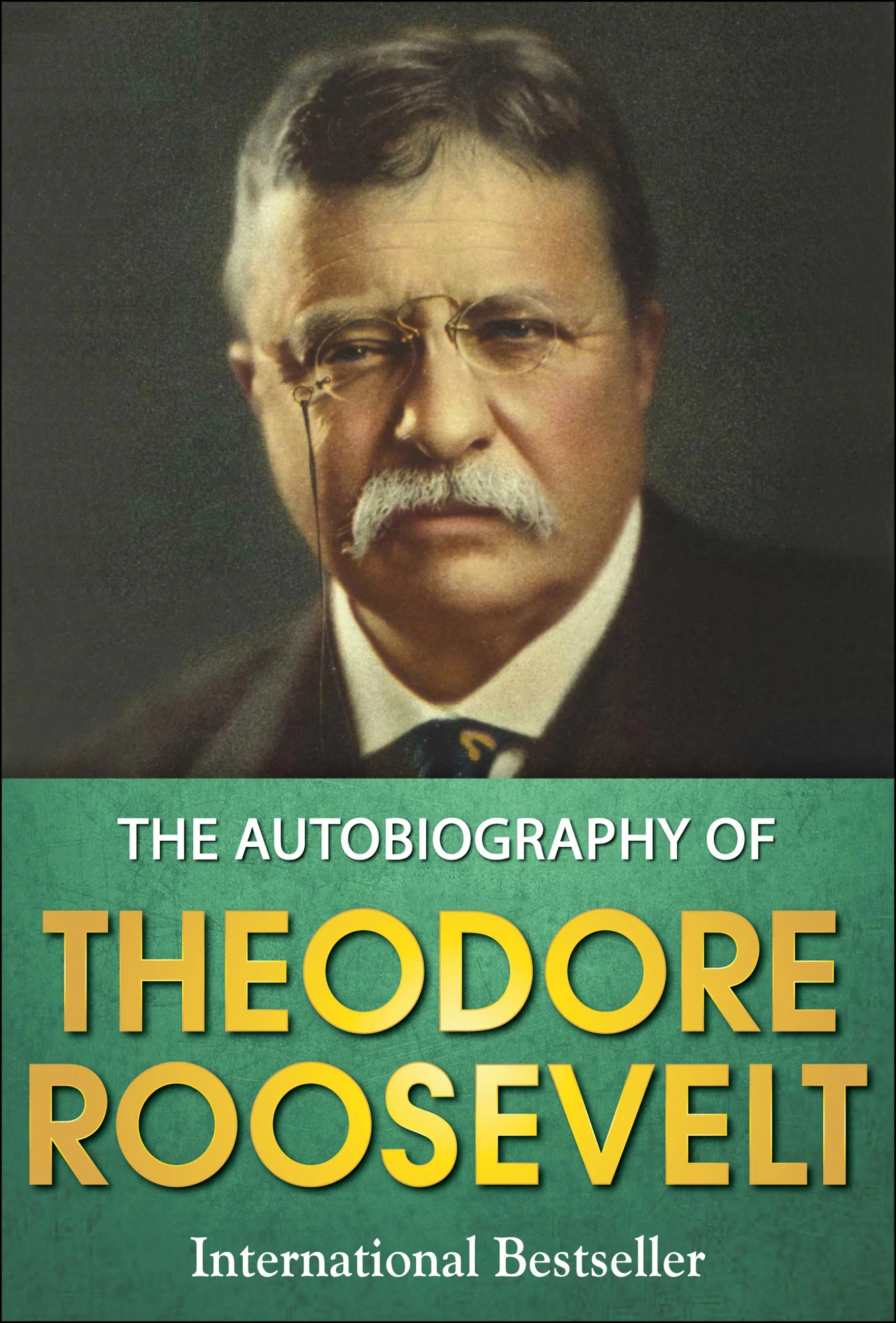
Download Cover Image
Do you want to download the full cover image for The Autobiography of Theodore Roosevelt?