
The Autobiography of Charles Darwin
eBook
• INR 70.00
• English
• 9788180320514
No ratings yet
| Publisher | General Press |
|---|---|
| ISBN13 | 9788180320514 |
| ASIN/SKU | B07F1FQ6N6 |
| Book Format | eBook |
| Language | English |
| List Price | INR 70.00 |
| Subject Code | SCI100000, BIO015000 |
| Publishing Date | 25/06/2018 |
| Book Code | BD00068476 |
Buy this Book
Amazon Stores
Ebook Stores
Other Stores
Discover The Autobiography of Charles Darwin by Charles Darwin. This book is published by General Press in eBook format, ISBN 9788180320514, ASIN B07F1FQ6N6, under Biographies and Memoirs, Autobiographies, Scientists and Inventors.
Book Description
This is the autobiography of one of the most influential people of the modern age. This was taken from writings and letters that Darwin wrote for his family, edited by his son Francis Darwin, and published posthumously.
Author Biography
Charles Robert Darwin, FRS was an English naturalist and geologist, best known for his contributions to evolutionary theory. He established that all species of life have descended over time from common ancestors, and in a joint publication with Alfred Russel Wallace introduced his scientific theory that this branching pattern of evolution resulted from a process that he called natural selection, in which the struggle for existence has a similar effect to the artificial selection involved in selective breeding.
Darwin published his theory of evolution with compelling evidence in his 1859 book On the Origin of Species, overcoming scientific rejection of earlier concepts of transmutation of species. By the 1870s the scientific community and much of the general public had accepted evolution as a fact. However, many favoured competing explanations and it was not until the emergence of the modern evolutionary synthesis from the 1930s to the 1950s that a broad consensus developed in which natural selection was the basic mechanism of evolution. In modified form, Darwin's scientific discovery is the unifying theory of the life sciences, explaining the diversity of life.
Darwin published his theory of evolution with compelling evidence in his 1859 book On the Origin of Species, overcoming scientific rejection of earlier concepts of transmutation of species. By the 1870s the scientific community and much of the general public had accepted evolution as a fact. However, many favoured competing explanations and it was not until the emergence of the modern evolutionary synthesis from the 1930s to the 1950s that a broad consensus developed in which natural selection was the basic mechanism of evolution. In modified form, Darwin's scientific discovery is the unifying theory of the life sciences, explaining the diversity of life.
Editorial Reviews
Editorial Reviews will be added soon…
Book Summary
The Autobiography of Charles Darwin is a deeply personal account of the life, intellectual development, scientific career, and changing beliefs of one of the most influential naturalists in history. Darwin originally wrote the memoir for his family under the title Recollections of the Development of my Mind and Character. He began it in 1876 and completed the main autobiographical sketch that year. It was published after his death in 1882, in 1887, as part of The Life and Letters of Charles Darwin, edited by his son Francis Darwin. The first published version omitted some passages concerning Darwin’s religious doubts and criticism of Christianity; later editions restored those sections.
Unlike a conventional autobiography designed to celebrate a public career, Darwin’s memoir is unusually modest and reflective. He does not present himself as a heroic genius who knew from childhood that he would revolutionize science. Instead, he describes himself as a curious boy whose interests gradually changed, sometimes through accidents, disappointments, friendships, and opportunities that he could not have predicted. This makes the book especially valuable for readers searching for a biography of Charles Darwin, an autobiography summary, or an account of how Darwin developed the ideas that eventually led to the theory of evolution by natural selection. The memoir shows that his scientific career was built less on sudden flashes of genius than on patient observation, collecting evidence, comparing facts, and continually asking questions about the natural world.
Darwin begins by looking back at his childhood and family background. Born in Shrewsbury in 1809, he grew up in a prosperous and intellectually accomplished family. His father, Robert Darwin, was a successful physician, while his grandfather Erasmus Darwin had been a physician, poet, inventor, and natural philosopher. Darwin remembers himself as a lively and curious child with a strong fascination for collecting objects. He collected coins, seals, minerals, shells, and other natural curiosities. This early habit of collecting would later become an important part of his scientific character. Even before he understood science systematically, he enjoyed finding things, comparing them, and discovering differences between them.
His childhood was also shaped by the death of his mother, Susannah Darwin, when he was eight years old. He was educated initially at home and later at a school in Shrewsbury. Darwin admits that he was not an especially successful student in the conventional sense. He did not find the classical curriculum particularly exciting, and his father became concerned that he was not applying himself seriously enough. Darwin’s recollection of his school years is revealing because it shows how little his future career could have been predicted from his early academic performance. His strongest interests were outside the classroom, especially in collecting, hunting, observing nature, and reading about natural history.
Darwin’s father eventually sent him to the University of Edinburgh to study medicine. Darwin discovered that medicine did not suit him. The lectures did not hold his attention, and he was deeply disturbed by witnessing surgical procedures performed without modern anesthesia. More importantly, he realized that he was increasingly drawn toward natural history rather than medical practice. Edinburgh nevertheless became an important stage in his intellectual development because he encountered scientists and learned how to observe and investigate nature more systematically.
At Edinburgh, Darwin became acquainted with Robert Grant, a zoologist and admirer of evolutionary ideas associated with earlier thinkers. Through Grant and other contacts, Darwin began taking natural history seriously. He studied marine organisms and learned about scientific investigation through direct observation. These experiences helped him recognize that science was not simply a matter of reading established authorities. It required collecting evidence and being willing to question accepted explanations. Darwin eventually abandoned the idea of becoming a physician and turned toward another possible profession.
His father then suggested that he enter the clergy. Darwin went to Cambridge, where he studied at Christ’s College with the expectation that he would become an Anglican clergyman. Cambridge was far more important to his future than he initially understood. He developed friendships with leading naturalists, particularly John Stevens Henslow, whose influence would become decisive. Henslow encouraged Darwin’s interest in botany and natural history and helped introduce him to the scientific community. Darwin also formed a friendship with Adam Sedgwick, a prominent geologist, and learned field geology under his guidance.
Darwin’s Cambridge years reveal an important feature of his character: he was capable of combining enthusiasm with intense concentration when a subject genuinely fascinated him. He enjoyed shooting and outdoor pursuits, but his interest in beetle collecting, botany, geology, and natural history steadily became more serious. His collection of beetles was especially important because it trained him to notice small variations and classify organisms carefully. The habits that might have looked like youthful hobbies gradually became the foundation of his scientific method.
The greatest turning point in Darwin’s life came when Henslow recommended him for the voyage of HMS Beagle. Captain Robert FitzRoy was preparing for a surveying expedition and wanted a naturalist to accompany the voyage. Darwin initially faced opposition from his father, who believed the expedition might be a poor choice. Darwin eventually received his father’s permission after his uncle Josiah Wedgwood helped persuade him. The voyage began in December 1831 and continued until October 1836. Darwin later described it as the most important event in his life because it determined the direction of his entire career.
The Beagle voyage became the intellectual foundation of Darwin’s scientific development. During nearly five years of travel, he observed geology, plants, animals, fossils, landscapes, and human societies across South America and other parts of the world. Darwin remembers the voyage with extraordinary vividness. The tropical vegetation, the deserts of Patagonia, the mountains of Tierra del Fuego, and his travels through remote landscapes left powerful impressions on him. More importantly, the voyage taught him how to observe nature patiently and how to connect individual facts into larger explanations.
South America was particularly important. Darwin discovered fossils of enormous extinct mammals that resembled living species in the same region. He noticed that closely related animals replaced one another geographically, suggesting relationships between species and their environments. These observations challenged the idea that species were completely fixed and unchanging. The Galápagos Islands provided another crucial set of clues. Darwin noticed that organisms on different islands were often closely related but differed from island to island. He also observed that the species of the Galápagos had strong connections with South American forms. These patterns would eventually become central to his thinking about evolution.
Geology also transformed Darwin’s understanding of nature. He was deeply influenced by Charles Lyell’s principle of uniformitarianism, which emphasized that geological features could be explained through gradual processes operating over immense periods of time. The idea that landscapes could change slowly over millions of years helped Darwin imagine that biological change might also occur gradually. Nature no longer appeared to him as a fixed arrangement created once and for all. It became a dynamic history in which organisms and environments had changed over enormous spans of time.
After returning to England in 1836, Darwin quickly became part of the scientific community. He worked on the enormous collection of specimens gathered during the Beagle voyage and published his Journal of Researches, later widely known as The Voyage of the Beagle. He also worked with specialists to describe the animals he had collected and continued his geological investigations. The voyage had given him facts, but the years afterward were necessary to understand what those facts meant.
During this period Darwin began thinking seriously about the “transmutation” of species—the possibility that species change over time. He opened a notebook devoted to the subject in 1837 and continued investigating the problem for decades. The observations from the Beagle remained particularly important: fossil mammals resembling living South American animals, geographic replacement of related species, and variations among the animals and plants of the Galápagos. Darwin came to believe that these patterns could not be adequately explained if every species had been separately and independently created in its present form.
Darwin’s autobiography also makes clear that he did not immediately discover natural selection. His theory developed gradually. He considered many possible explanations and recognized that the problem was extraordinarily difficult. He was particularly impressed by the artificial selection practiced by breeders. Humans could modify domesticated animals and plants by selecting individuals with desirable characteristics. Darwin began asking whether nature might produce a similar effect without conscious human direction. If organisms vary and more individuals are born than can survive, then those with advantageous variations might be more likely to survive and reproduce. Over many generations, such differences could accumulate.
Thomas Malthus’s work on population also influenced Darwin’s thinking. Malthus argued that populations tend to increase faster than resources can support them, producing competition and struggle. Darwin realized that this principle could help explain natural selection. If organisms vary, if some variations provide advantages, and if survival and reproduction are limited by competition, then favorable characteristics could become more common over generations. This became the core mechanism behind his theory of evolution by natural selection.
One of the most interesting features of Darwin’s autobiography is his honesty about how long he delayed publishing his evolutionary ideas. He had become convinced that species were not fixed, but he understood that the implications were enormous and potentially controversial. He continued collecting evidence rather than rushing into publication. His patience eventually resulted in an enormous body of research. In the 1850s he devoted years to his studies of barnacles, an apparently narrow subject that nevertheless gave him valuable experience with variation, classification, species boundaries, and detailed biological comparison. He completed this major work before returning fully to the problem of evolution.
The publication of On the Origin of Species in 1859 transformed Darwin’s life and the intellectual history of biology. The book argued that species are related through common descent and that natural selection can explain the adaptation and diversification of organisms. Darwin’s autobiography does not present the Origin as the product of one isolated moment of inspiration. Instead, it appears as the culmination of decades of collecting facts, testing ideas, reading scientific literature, corresponding with other naturalists, and refining arguments.
Darwin also reflects on the reception of his scientific work. He recognizes that his theories challenged deeply established beliefs, especially regarding the separate creation and fixed nature of species. Yet his approach was not to attack opponents personally. He generally emphasizes evidence and scientific reasoning. His greatest satisfaction came from discovering explanations that could bring many apparently unrelated facts together. This intellectual pleasure—finding a coherent pattern in nature—is one of the strongest themes of the autobiography.
Family life occupies an important place in the later sections. Darwin married his cousin Emma Wedgwood in 1839, and their marriage became a central source of stability and affection. They moved from London to Down House in Kent in 1842, where Darwin spent the rest of his life. The Darwin household became closely connected with his scientific work. Emma supported him, his children grew up around his experiments and observations, and members of the family assisted with various aspects of his research. The Darwin Correspondence Project emphasizes how deeply family life was intertwined with his work, from correspondence during the Beagle voyage to the contributions of his children to his scientific activities.
Darwin’s health, however, was a persistent problem. He describes periods of serious illness and explains how his poor health limited his ability to travel, conduct fieldwork, and participate in social life. Nevertheless, he continued working intensely. His scientific method adapted to his physical limitations. Instead of relying entirely on field expeditions, he conducted experiments at home, corresponded with scientists, studied specimens, and accumulated observations from many sources. His career therefore becomes a lesson in intellectual persistence: even when physical circumstances restricted him, he continued investigating questions that fascinated him.
Another important aspect of the autobiography is Darwin’s changing attitude toward religion. In his youth, he had accepted Christianity and considered becoming a clergyman. His experiences as a naturalist and his growing scientific understanding gradually complicated his religious beliefs. He eventually moved away from the certainty of his earlier faith and became deeply skeptical about traditional Christian doctrines. The published 1887 autobiography originally omitted some of his stronger comments on religion because his son Francis edited them out; later editions restored these passages. This part of the memoir is important because it shows that Darwin’s intellectual development extended beyond biology. His scientific investigations changed the way he thought about humanity, nature, and religious belief.
Darwin also reflects on his own intellectual strengths and limitations. He is strikingly modest about his abilities. He does not claim exceptional brilliance in mathematics or abstract philosophy. Instead, he believes his greatest strength was the ability to observe facts, recognize relationships, and pursue questions persistently. He describes his capacity for noticing things that others might overlook and for retaining a large collection of observations. His self-assessment makes the autobiography particularly valuable because it presents scientific achievement as a combination of curiosity, discipline, patience, and careful reasoning rather than as pure genius.
His reflections on the loss of certain interests are equally revealing. Darwin notes that as he became increasingly absorbed in scientific work, he lost some of his earlier enjoyment of poetry, music, art, and literature. He regrets this narrowing of his emotional and intellectual range. This admission adds a human dimension to the portrait of the great scientist. Darwin recognizes that intense specialization brought enormous intellectual rewards but also involved personal costs. His autobiography is therefore not simply a celebration of scientific achievement; it is also a reflection on how a life devoted to one pursuit can reshape a person’s personality.
Ultimately, The Autobiography of Charles Darwin is the story of a mind developing through experience. Darwin begins as a curious boy who loves collecting specimens and spending time outdoors. He becomes an uncertain medical student, then an aspiring clergyman, then a naturalist on a world-changing voyage, and finally one of history’s most influential scientists. The transformation is gradual. There is no single moment when Darwin suddenly becomes “Charles Darwin.” Instead, each stage supplies experiences, observations, friendships, failures, and questions that prepare him for the next.
For readers searching for The Autobiography of Charles Darwin summary, analysis, key ideas, or an account of Darwin’s life and scientific development, the book is best understood as a study of intellectual formation as much as a traditional autobiography. Its most important lesson is that revolutionary ideas often emerge slowly from ordinary habits of curiosity. Darwin’s theory of evolution was built from years of observation, travel, geological study, specimen collection, correspondence, experimentation, and patient reflection. The Beagle voyage gave him extraordinary experiences, but it was his willingness to continue asking questions long afterward that turned those experiences into science.
The enduring value of Darwin’s autobiography lies in this combination of scientific importance and personal honesty. It shows the man behind On the Origin of Species: a careful observer, devoted family man, persistent researcher, reluctant revolutionary, and deeply reflective thinker. Darwin’s story reminds readers that intellectual breakthroughs rarely arrive fully formed. They develop through curiosity, evidence, uncertainty, revision, and perseverance. His life demonstrates how a person with no clear early indication of greatness can gradually develop a way of thinking powerful enough to transform an entire field. In that sense, The Autobiography of Charles Darwin is not only the story of the scientist who changed our understanding of evolution; it is also a humane account of how a mind is shaped by experience and how patient attention to the natural world can lead to ideas that permanently change the way humanity understands its place in nature.
Unlike a conventional autobiography designed to celebrate a public career, Darwin’s memoir is unusually modest and reflective. He does not present himself as a heroic genius who knew from childhood that he would revolutionize science. Instead, he describes himself as a curious boy whose interests gradually changed, sometimes through accidents, disappointments, friendships, and opportunities that he could not have predicted. This makes the book especially valuable for readers searching for a biography of Charles Darwin, an autobiography summary, or an account of how Darwin developed the ideas that eventually led to the theory of evolution by natural selection. The memoir shows that his scientific career was built less on sudden flashes of genius than on patient observation, collecting evidence, comparing facts, and continually asking questions about the natural world.
Darwin begins by looking back at his childhood and family background. Born in Shrewsbury in 1809, he grew up in a prosperous and intellectually accomplished family. His father, Robert Darwin, was a successful physician, while his grandfather Erasmus Darwin had been a physician, poet, inventor, and natural philosopher. Darwin remembers himself as a lively and curious child with a strong fascination for collecting objects. He collected coins, seals, minerals, shells, and other natural curiosities. This early habit of collecting would later become an important part of his scientific character. Even before he understood science systematically, he enjoyed finding things, comparing them, and discovering differences between them.
His childhood was also shaped by the death of his mother, Susannah Darwin, when he was eight years old. He was educated initially at home and later at a school in Shrewsbury. Darwin admits that he was not an especially successful student in the conventional sense. He did not find the classical curriculum particularly exciting, and his father became concerned that he was not applying himself seriously enough. Darwin’s recollection of his school years is revealing because it shows how little his future career could have been predicted from his early academic performance. His strongest interests were outside the classroom, especially in collecting, hunting, observing nature, and reading about natural history.
Darwin’s father eventually sent him to the University of Edinburgh to study medicine. Darwin discovered that medicine did not suit him. The lectures did not hold his attention, and he was deeply disturbed by witnessing surgical procedures performed without modern anesthesia. More importantly, he realized that he was increasingly drawn toward natural history rather than medical practice. Edinburgh nevertheless became an important stage in his intellectual development because he encountered scientists and learned how to observe and investigate nature more systematically.
At Edinburgh, Darwin became acquainted with Robert Grant, a zoologist and admirer of evolutionary ideas associated with earlier thinkers. Through Grant and other contacts, Darwin began taking natural history seriously. He studied marine organisms and learned about scientific investigation through direct observation. These experiences helped him recognize that science was not simply a matter of reading established authorities. It required collecting evidence and being willing to question accepted explanations. Darwin eventually abandoned the idea of becoming a physician and turned toward another possible profession.
His father then suggested that he enter the clergy. Darwin went to Cambridge, where he studied at Christ’s College with the expectation that he would become an Anglican clergyman. Cambridge was far more important to his future than he initially understood. He developed friendships with leading naturalists, particularly John Stevens Henslow, whose influence would become decisive. Henslow encouraged Darwin’s interest in botany and natural history and helped introduce him to the scientific community. Darwin also formed a friendship with Adam Sedgwick, a prominent geologist, and learned field geology under his guidance.
Darwin’s Cambridge years reveal an important feature of his character: he was capable of combining enthusiasm with intense concentration when a subject genuinely fascinated him. He enjoyed shooting and outdoor pursuits, but his interest in beetle collecting, botany, geology, and natural history steadily became more serious. His collection of beetles was especially important because it trained him to notice small variations and classify organisms carefully. The habits that might have looked like youthful hobbies gradually became the foundation of his scientific method.
The greatest turning point in Darwin’s life came when Henslow recommended him for the voyage of HMS Beagle. Captain Robert FitzRoy was preparing for a surveying expedition and wanted a naturalist to accompany the voyage. Darwin initially faced opposition from his father, who believed the expedition might be a poor choice. Darwin eventually received his father’s permission after his uncle Josiah Wedgwood helped persuade him. The voyage began in December 1831 and continued until October 1836. Darwin later described it as the most important event in his life because it determined the direction of his entire career.
The Beagle voyage became the intellectual foundation of Darwin’s scientific development. During nearly five years of travel, he observed geology, plants, animals, fossils, landscapes, and human societies across South America and other parts of the world. Darwin remembers the voyage with extraordinary vividness. The tropical vegetation, the deserts of Patagonia, the mountains of Tierra del Fuego, and his travels through remote landscapes left powerful impressions on him. More importantly, the voyage taught him how to observe nature patiently and how to connect individual facts into larger explanations.
South America was particularly important. Darwin discovered fossils of enormous extinct mammals that resembled living species in the same region. He noticed that closely related animals replaced one another geographically, suggesting relationships between species and their environments. These observations challenged the idea that species were completely fixed and unchanging. The Galápagos Islands provided another crucial set of clues. Darwin noticed that organisms on different islands were often closely related but differed from island to island. He also observed that the species of the Galápagos had strong connections with South American forms. These patterns would eventually become central to his thinking about evolution.
Geology also transformed Darwin’s understanding of nature. He was deeply influenced by Charles Lyell’s principle of uniformitarianism, which emphasized that geological features could be explained through gradual processes operating over immense periods of time. The idea that landscapes could change slowly over millions of years helped Darwin imagine that biological change might also occur gradually. Nature no longer appeared to him as a fixed arrangement created once and for all. It became a dynamic history in which organisms and environments had changed over enormous spans of time.
After returning to England in 1836, Darwin quickly became part of the scientific community. He worked on the enormous collection of specimens gathered during the Beagle voyage and published his Journal of Researches, later widely known as The Voyage of the Beagle. He also worked with specialists to describe the animals he had collected and continued his geological investigations. The voyage had given him facts, but the years afterward were necessary to understand what those facts meant.
During this period Darwin began thinking seriously about the “transmutation” of species—the possibility that species change over time. He opened a notebook devoted to the subject in 1837 and continued investigating the problem for decades. The observations from the Beagle remained particularly important: fossil mammals resembling living South American animals, geographic replacement of related species, and variations among the animals and plants of the Galápagos. Darwin came to believe that these patterns could not be adequately explained if every species had been separately and independently created in its present form.
Darwin’s autobiography also makes clear that he did not immediately discover natural selection. His theory developed gradually. He considered many possible explanations and recognized that the problem was extraordinarily difficult. He was particularly impressed by the artificial selection practiced by breeders. Humans could modify domesticated animals and plants by selecting individuals with desirable characteristics. Darwin began asking whether nature might produce a similar effect without conscious human direction. If organisms vary and more individuals are born than can survive, then those with advantageous variations might be more likely to survive and reproduce. Over many generations, such differences could accumulate.
Thomas Malthus’s work on population also influenced Darwin’s thinking. Malthus argued that populations tend to increase faster than resources can support them, producing competition and struggle. Darwin realized that this principle could help explain natural selection. If organisms vary, if some variations provide advantages, and if survival and reproduction are limited by competition, then favorable characteristics could become more common over generations. This became the core mechanism behind his theory of evolution by natural selection.
One of the most interesting features of Darwin’s autobiography is his honesty about how long he delayed publishing his evolutionary ideas. He had become convinced that species were not fixed, but he understood that the implications were enormous and potentially controversial. He continued collecting evidence rather than rushing into publication. His patience eventually resulted in an enormous body of research. In the 1850s he devoted years to his studies of barnacles, an apparently narrow subject that nevertheless gave him valuable experience with variation, classification, species boundaries, and detailed biological comparison. He completed this major work before returning fully to the problem of evolution.
The publication of On the Origin of Species in 1859 transformed Darwin’s life and the intellectual history of biology. The book argued that species are related through common descent and that natural selection can explain the adaptation and diversification of organisms. Darwin’s autobiography does not present the Origin as the product of one isolated moment of inspiration. Instead, it appears as the culmination of decades of collecting facts, testing ideas, reading scientific literature, corresponding with other naturalists, and refining arguments.
Darwin also reflects on the reception of his scientific work. He recognizes that his theories challenged deeply established beliefs, especially regarding the separate creation and fixed nature of species. Yet his approach was not to attack opponents personally. He generally emphasizes evidence and scientific reasoning. His greatest satisfaction came from discovering explanations that could bring many apparently unrelated facts together. This intellectual pleasure—finding a coherent pattern in nature—is one of the strongest themes of the autobiography.
Family life occupies an important place in the later sections. Darwin married his cousin Emma Wedgwood in 1839, and their marriage became a central source of stability and affection. They moved from London to Down House in Kent in 1842, where Darwin spent the rest of his life. The Darwin household became closely connected with his scientific work. Emma supported him, his children grew up around his experiments and observations, and members of the family assisted with various aspects of his research. The Darwin Correspondence Project emphasizes how deeply family life was intertwined with his work, from correspondence during the Beagle voyage to the contributions of his children to his scientific activities.
Darwin’s health, however, was a persistent problem. He describes periods of serious illness and explains how his poor health limited his ability to travel, conduct fieldwork, and participate in social life. Nevertheless, he continued working intensely. His scientific method adapted to his physical limitations. Instead of relying entirely on field expeditions, he conducted experiments at home, corresponded with scientists, studied specimens, and accumulated observations from many sources. His career therefore becomes a lesson in intellectual persistence: even when physical circumstances restricted him, he continued investigating questions that fascinated him.
Another important aspect of the autobiography is Darwin’s changing attitude toward religion. In his youth, he had accepted Christianity and considered becoming a clergyman. His experiences as a naturalist and his growing scientific understanding gradually complicated his religious beliefs. He eventually moved away from the certainty of his earlier faith and became deeply skeptical about traditional Christian doctrines. The published 1887 autobiography originally omitted some of his stronger comments on religion because his son Francis edited them out; later editions restored these passages. This part of the memoir is important because it shows that Darwin’s intellectual development extended beyond biology. His scientific investigations changed the way he thought about humanity, nature, and religious belief.
Darwin also reflects on his own intellectual strengths and limitations. He is strikingly modest about his abilities. He does not claim exceptional brilliance in mathematics or abstract philosophy. Instead, he believes his greatest strength was the ability to observe facts, recognize relationships, and pursue questions persistently. He describes his capacity for noticing things that others might overlook and for retaining a large collection of observations. His self-assessment makes the autobiography particularly valuable because it presents scientific achievement as a combination of curiosity, discipline, patience, and careful reasoning rather than as pure genius.
His reflections on the loss of certain interests are equally revealing. Darwin notes that as he became increasingly absorbed in scientific work, he lost some of his earlier enjoyment of poetry, music, art, and literature. He regrets this narrowing of his emotional and intellectual range. This admission adds a human dimension to the portrait of the great scientist. Darwin recognizes that intense specialization brought enormous intellectual rewards but also involved personal costs. His autobiography is therefore not simply a celebration of scientific achievement; it is also a reflection on how a life devoted to one pursuit can reshape a person’s personality.
Ultimately, The Autobiography of Charles Darwin is the story of a mind developing through experience. Darwin begins as a curious boy who loves collecting specimens and spending time outdoors. He becomes an uncertain medical student, then an aspiring clergyman, then a naturalist on a world-changing voyage, and finally one of history’s most influential scientists. The transformation is gradual. There is no single moment when Darwin suddenly becomes “Charles Darwin.” Instead, each stage supplies experiences, observations, friendships, failures, and questions that prepare him for the next.
For readers searching for The Autobiography of Charles Darwin summary, analysis, key ideas, or an account of Darwin’s life and scientific development, the book is best understood as a study of intellectual formation as much as a traditional autobiography. Its most important lesson is that revolutionary ideas often emerge slowly from ordinary habits of curiosity. Darwin’s theory of evolution was built from years of observation, travel, geological study, specimen collection, correspondence, experimentation, and patient reflection. The Beagle voyage gave him extraordinary experiences, but it was his willingness to continue asking questions long afterward that turned those experiences into science.
The enduring value of Darwin’s autobiography lies in this combination of scientific importance and personal honesty. It shows the man behind On the Origin of Species: a careful observer, devoted family man, persistent researcher, reluctant revolutionary, and deeply reflective thinker. Darwin’s story reminds readers that intellectual breakthroughs rarely arrive fully formed. They develop through curiosity, evidence, uncertainty, revision, and perseverance. His life demonstrates how a person with no clear early indication of greatness can gradually develop a way of thinking powerful enough to transform an entire field. In that sense, The Autobiography of Charles Darwin is not only the story of the scientist who changed our understanding of evolution; it is also a humane account of how a mind is shaped by experience and how patient attention to the natural world can lead to ideas that permanently change the way humanity understands its place in nature.
Sample Chapters
Sample Chapters will be added soon…
Reader Reviews
No reviews yet.
The Autobiography of Charles Darwin
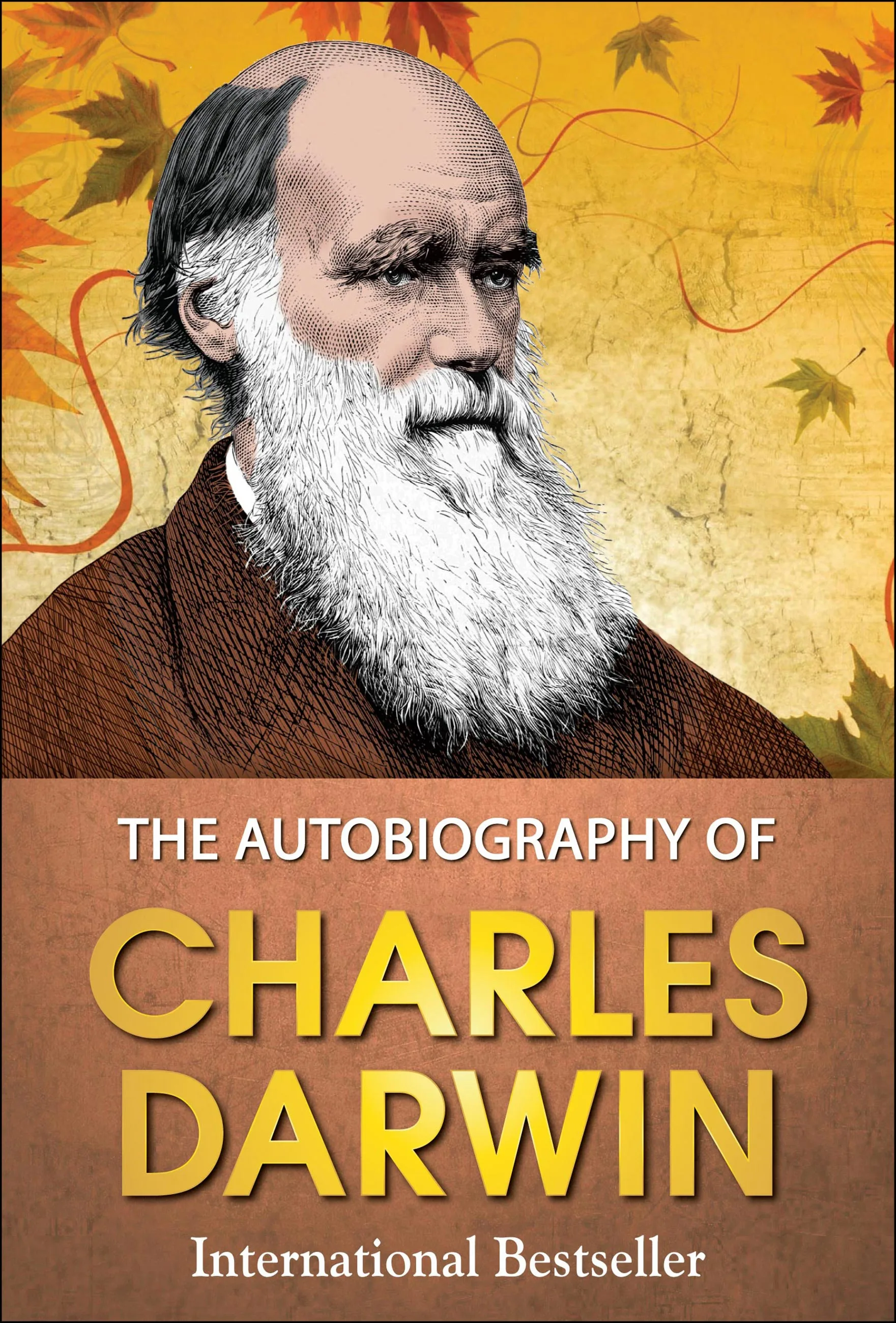
Download Cover Image
Do you want to download the full cover image for The Autobiography of Charles Darwin?