
Romeo and Juliet
eBook
• 116 Pages
• INR 51.00
• English
• 9789387669963
No ratings yet
| Publisher | General Press |
|---|---|
| ISBN13 | 9789387669963 |
| ASIN/SKU | B07F1YF7XY |
| Book Format | eBook |
| Language | English |
| Pages | 116 |
| List Price | INR 51.00 |
| Subject Code | DRA003000, DRA004000, DRA010000, FIC004000 |
| Publishing Date | 26/06/2018 |
| Book Code | BD00068478 |
Buy this Book
Amazon Stores
Ebook Stores
Other Stores
Discover Romeo and Juliet by William Shakespeare. This book is published by General Press in eBook format, ISBN 9789387669963, ASIN B07F1YF7XY, under Literature and Fiction, Romance, Classics.
Book Description
William Shakespeare’s "Romeo and Juliet" is a heartbreaking, timeless exploration of the fragility of young love when caught in the crossfire of ancient, inherited hatred. Set in the sunlit, volatile streets of Verona, the play revolves around the bitter, senseless blood feud between two noble families: the Montagues and the Capulets.
Amidst this chaotic violence, young Romeo Montague and Juliet Capulet meet by chance and fall in a profoundly tender, transcendent love. Recognizing the impossible divide between their families, they are married in secret by the well-meaning Friar Laurence, who desperately hopes their union might finally heal the city’s wounds. However, the brutal reality of their world swiftly shatters their quiet hope. A fatal street brawl leaves Romeo’s closest friend dead, driving Romeo to slay Juliet’s cousin in revenge.
Banished from Verona and separated from his new bride, Romeo’s absence sets off a tragic chain of desperate miscommunications. To escape a forced marriage, Juliet fakes her own death with a sleeping potion. Tragically, the message explaining her plan never reaches Romeo. Believing his beloved is truly gone, he returns to her tomb and ends his life, only for Juliet to awaken moments later and, in her unbearable grief, follow him in death.
Written with breathtaking, lucid poetry, 'Romeo and Juliet' is not merely a romance, but a deeply humane plea for empathy. It gently reminds us of the devastating human cost of blind prejudice and the enduring, transformative power of selfless love.
Amidst this chaotic violence, young Romeo Montague and Juliet Capulet meet by chance and fall in a profoundly tender, transcendent love. Recognizing the impossible divide between their families, they are married in secret by the well-meaning Friar Laurence, who desperately hopes their union might finally heal the city’s wounds. However, the brutal reality of their world swiftly shatters their quiet hope. A fatal street brawl leaves Romeo’s closest friend dead, driving Romeo to slay Juliet’s cousin in revenge.
Banished from Verona and separated from his new bride, Romeo’s absence sets off a tragic chain of desperate miscommunications. To escape a forced marriage, Juliet fakes her own death with a sleeping potion. Tragically, the message explaining her plan never reaches Romeo. Believing his beloved is truly gone, he returns to her tomb and ends his life, only for Juliet to awaken moments later and, in her unbearable grief, follow him in death.
Written with breathtaking, lucid poetry, 'Romeo and Juliet' is not merely a romance, but a deeply humane plea for empathy. It gently reminds us of the devastating human cost of blind prejudice and the enduring, transformative power of selfless love.
Author Biography
William Shakespeare (baptised 26 April 1564) was an English poet and playwright, widely regarded as the greatest writer in the English language and the world's pre-eminent dramatist. He is often called England's national poet and the 'Bard of Avon' (or simply "The Bard"). His surviving works consist of 37 plays, 154 sonnets, two long narrative poems, and several other poems. His plays have been translated into every major living language.
Shakespeare was born and raised in Stratford-upon-Avon. Scholars believe that he died on his fifty-second birthday, coinciding with St George’s Day. At the age of 18 he married Anne Hathaway, who bore him three children: Susanna, twins Hamnet and Judith. Between 1585 and 1592 he began a successful career in London as an actor, writer, and part owner of the playing company the Lord Chamberlain's Men, later known as the King's Men. He appears to have retired to Stratford around 1613, where he died three years later.
Shakespeare produced most of his known work between 1590 and 1613. His early plays were mainly comedies and histories, genres he raised to the peak of sophistication and artistry by the end of the sixteenth century. Next he wrote mainly tragedies until about 1608. He was a respected poet and playwright in his own day, but his reputation did not rise to its present heights until the nineteenth century. The Romantics, in particular, acclaimed Shakespeare's genius, and the Victorians hero-worshipped Shakespeare. In the twentieth century, his work was repeatedly adopted and rediscovered by new movements in scholarship and performance. His plays remain highly popular today and are consistently performed and reinterpreted in diverse cultural and political contexts throughout the world.
Shakespeare was born and raised in Stratford-upon-Avon. Scholars believe that he died on his fifty-second birthday, coinciding with St George’s Day. At the age of 18 he married Anne Hathaway, who bore him three children: Susanna, twins Hamnet and Judith. Between 1585 and 1592 he began a successful career in London as an actor, writer, and part owner of the playing company the Lord Chamberlain's Men, later known as the King's Men. He appears to have retired to Stratford around 1613, where he died three years later.
Shakespeare produced most of his known work between 1590 and 1613. His early plays were mainly comedies and histories, genres he raised to the peak of sophistication and artistry by the end of the sixteenth century. Next he wrote mainly tragedies until about 1608. He was a respected poet and playwright in his own day, but his reputation did not rise to its present heights until the nineteenth century. The Romantics, in particular, acclaimed Shakespeare's genius, and the Victorians hero-worshipped Shakespeare. In the twentieth century, his work was repeatedly adopted and rediscovered by new movements in scholarship and performance. His plays remain highly popular today and are consistently performed and reinterpreted in diverse cultural and political contexts throughout the world.
Editorial Reviews
Editorial Reviews will be added soon…
Book Summary
William Shakespeare's "Romeo and Juliet" is one of the world's most celebrated tragedies, telling the timeless story of two young lovers whose lives are destroyed by hatred, misunderstanding, and fate. Set in the beautiful Italian city of Verona, the play begins with a long-standing feud between two noble families, the Montagues and the Capulets. Their bitter rivalry has divided the city for years, leading to frequent street fights and endless resentment. Amid this atmosphere of hostility lives Romeo Montague, a sensitive young man who believes he is deeply in love with a young woman named Rosaline. However, his sorrow over her rejection soon fades when he attends a masked ball at the Capulet household with his friends. There, he catches sight of Juliet Capulet, and in a single moment, both young people experience a powerful and unexpected love that changes their lives forever. Neither realizes at first that the other belongs to the enemy family.
When Romeo and Juliet discover each other's identities, they are shocked but unable to ignore the intense feelings growing between them. That very night, Romeo secretly enters the Capulet garden, where he overhears Juliet confessing her love for him from her balcony. Their famous exchange beneath the moonlight reveals their innocence, passion, and hope for a future beyond their families' hatred. They decide that love is more important than old grudges and arrange to marry in secret. Friar Laurence, a respected priest who believes the marriage may eventually bring peace between the feuding families, agrees to perform the ceremony. Assisted by Juliet's loyal Nurse, the couple is married the following day, filled with dreams of reconciliation and happiness despite the dangers surrounding them.
Soon after the wedding, tragedy begins to unfold. Tybalt, Juliet's hot-tempered cousin, is furious that Romeo attended the Capulet feast and challenges him to a duel. Because Romeo is now secretly Tybalt's relative through marriage, he refuses to fight, confusing and angering everyone around him. Romeo's close friend Mercutio, unable to tolerate Tybalt's insults, accepts the challenge instead. During the fight, Romeo attempts to separate them, but Tybalt fatally wounds Mercutio. Before dying, Mercutio curses both families, recognizing that their senseless hatred has destroyed innocent lives. Grief and rage overcome Romeo, who then fights Tybalt and kills him. Although Romeo acts out of revenge and sorrow, his actions have devastating consequences. The Prince of Verona spares Romeo's life but sentences him to exile from the city, separating him from Juliet just hours after their marriage.
Romeo secretly spends one final night with Juliet before leaving Verona for Mantua. Their farewell is filled with sadness, as both sense that darker days lie ahead. Meanwhile, Juliet's parents, unaware of her marriage, believe she is grieving Tybalt's death. Hoping to lift her spirits, they arrange for her to marry the wealthy and respectable Count Paris. Juliet is horrified because she is already Romeo's wife. When she refuses the marriage, her father becomes furious, threatening to disown her if she does not obey. Feeling abandoned and desperate, Juliet turns to Friar Laurence for help. The Friar devises a risky plan that he hopes will reunite the young couple. He gives Juliet a special potion that will place her in a deep sleep, making her appear dead for nearly two days. During this time, Romeo will be informed of the plan and come to the family tomb to rescue her after she awakens.
Juliet bravely drinks the potion despite her fears. The following morning, her family discovers what appears to be her lifeless body and is overwhelmed with grief. The joyful preparations for her wedding suddenly become funeral arrangements. The Capulet household, once filled with celebration, falls silent with mourning. Juliet is laid to rest in the family tomb, while Friar Laurence sends a letter explaining the plan to Romeo in Mantua. Unfortunately, fate intervenes. The messenger carrying the letter is delayed and never reaches Romeo. Instead, Romeo hears the false news that Juliet has died. Devastated beyond reason, he believes life has lost all meaning. Determined to die beside the woman he loves, he purchases poison and rushes back to Verona.
When Romeo reaches the Capulet tomb, he encounters Count Paris, who has come to mourn Juliet. Mistaking Romeo's intentions, Paris confronts him, and the two fight. Romeo kills Paris but mourns him with compassion before entering the tomb. There he sees Juliet lying motionless and believes she is truly dead. Speaking tenderly to her one last time, he drinks the poison and dies at her side. Moments later, Juliet awakens from the potion's effects and finds Romeo lifeless beside her. Friar Laurence arrives too late to prevent the disaster and urges Juliet to flee, but she refuses to leave Romeo. Overcome with grief and unwilling to live without him, she takes Romeo's dagger and ends her own life. Their deaths complete the heartbreaking tragedy that had been building throughout the play.
The shocking discovery of Romeo and Juliet's bodies brings both families together at last. Friar Laurence explains the secret marriage, the failed plan, and the series of unfortunate events that led to the lovers' deaths. The Montagues and Capulets finally recognize the terrible cost of their hatred. Years of pride, revenge, and violence have destroyed not only Romeo and Juliet but also many innocent lives, including Mercutio, Tybalt, and Paris. Filled with remorse, the two families agree to end their feud forever. As a lasting symbol of reconciliation, they promise to honor the memory of the young couple with monuments that will remind future generations of the price of hatred and the power of love.
Although Romeo and Juliet is remembered primarily as a love story, Shakespeare also explores many deeper themes. The play examines the conflict between individual desire and social expectations, showing how young people often struggle against traditions imposed by older generations. Fate also plays a significant role, with repeated references to the lovers as "star-crossed," suggesting that destiny guides many of the tragic events. At the same time, Shakespeare leaves room to question whether the tragedy results from fate alone or from the choices people make. Rash decisions, impulsive actions, poor communication, and stubborn pride all contribute to the heartbreaking outcome. Even small misunderstandings, such as the undelivered letter, become catastrophic because of the tense circumstances surrounding the lovers.
Shakespeare also presents unforgettable characters whose emotions feel remarkably real despite the centuries that have passed since the play was written. Romeo is passionate, emotional, and quick to act, while Juliet grows from an innocent young girl into a courageous and determined woman willing to risk everything for love. Supporting characters such as Mercutio bring wit and energy, while the Nurse provides warmth, humor, and maternal affection. Friar Laurence serves as a well-meaning but flawed figure whose attempts to solve problems through secrecy ultimately fail. Even characters with limited appearances, like Tybalt and Paris, play important roles in shaping the events that lead to the tragedy. Their strengths and weaknesses make the story deeply human rather than simply symbolic.
More than four hundred years after it was first performed, Romeo and Juliet continues to captivate readers and audiences across the world. Its emotional depth, memorable language, and universal themes have inspired countless adaptations in literature, theatre, film, music, and popular culture. At its heart, the play reminds us that love has the power to cross barriers of family, class, and prejudice, but it also warns that hatred, intolerance, and revenge can destroy even the purest of human relationships. Shakespeare's masterpiece remains both a moving romance and a profound tragedy, encouraging every generation to value compassion over conflict, understanding over pride, and peace over endless division. Through the unforgettable story of Romeo and Juliet, Shakespeare created a work that continues to speak to the hopes, fears, and emotions shared by people everywhere.
When Romeo and Juliet discover each other's identities, they are shocked but unable to ignore the intense feelings growing between them. That very night, Romeo secretly enters the Capulet garden, where he overhears Juliet confessing her love for him from her balcony. Their famous exchange beneath the moonlight reveals their innocence, passion, and hope for a future beyond their families' hatred. They decide that love is more important than old grudges and arrange to marry in secret. Friar Laurence, a respected priest who believes the marriage may eventually bring peace between the feuding families, agrees to perform the ceremony. Assisted by Juliet's loyal Nurse, the couple is married the following day, filled with dreams of reconciliation and happiness despite the dangers surrounding them.
Soon after the wedding, tragedy begins to unfold. Tybalt, Juliet's hot-tempered cousin, is furious that Romeo attended the Capulet feast and challenges him to a duel. Because Romeo is now secretly Tybalt's relative through marriage, he refuses to fight, confusing and angering everyone around him. Romeo's close friend Mercutio, unable to tolerate Tybalt's insults, accepts the challenge instead. During the fight, Romeo attempts to separate them, but Tybalt fatally wounds Mercutio. Before dying, Mercutio curses both families, recognizing that their senseless hatred has destroyed innocent lives. Grief and rage overcome Romeo, who then fights Tybalt and kills him. Although Romeo acts out of revenge and sorrow, his actions have devastating consequences. The Prince of Verona spares Romeo's life but sentences him to exile from the city, separating him from Juliet just hours after their marriage.
Romeo secretly spends one final night with Juliet before leaving Verona for Mantua. Their farewell is filled with sadness, as both sense that darker days lie ahead. Meanwhile, Juliet's parents, unaware of her marriage, believe she is grieving Tybalt's death. Hoping to lift her spirits, they arrange for her to marry the wealthy and respectable Count Paris. Juliet is horrified because she is already Romeo's wife. When she refuses the marriage, her father becomes furious, threatening to disown her if she does not obey. Feeling abandoned and desperate, Juliet turns to Friar Laurence for help. The Friar devises a risky plan that he hopes will reunite the young couple. He gives Juliet a special potion that will place her in a deep sleep, making her appear dead for nearly two days. During this time, Romeo will be informed of the plan and come to the family tomb to rescue her after she awakens.
Juliet bravely drinks the potion despite her fears. The following morning, her family discovers what appears to be her lifeless body and is overwhelmed with grief. The joyful preparations for her wedding suddenly become funeral arrangements. The Capulet household, once filled with celebration, falls silent with mourning. Juliet is laid to rest in the family tomb, while Friar Laurence sends a letter explaining the plan to Romeo in Mantua. Unfortunately, fate intervenes. The messenger carrying the letter is delayed and never reaches Romeo. Instead, Romeo hears the false news that Juliet has died. Devastated beyond reason, he believes life has lost all meaning. Determined to die beside the woman he loves, he purchases poison and rushes back to Verona.
When Romeo reaches the Capulet tomb, he encounters Count Paris, who has come to mourn Juliet. Mistaking Romeo's intentions, Paris confronts him, and the two fight. Romeo kills Paris but mourns him with compassion before entering the tomb. There he sees Juliet lying motionless and believes she is truly dead. Speaking tenderly to her one last time, he drinks the poison and dies at her side. Moments later, Juliet awakens from the potion's effects and finds Romeo lifeless beside her. Friar Laurence arrives too late to prevent the disaster and urges Juliet to flee, but she refuses to leave Romeo. Overcome with grief and unwilling to live without him, she takes Romeo's dagger and ends her own life. Their deaths complete the heartbreaking tragedy that had been building throughout the play.
The shocking discovery of Romeo and Juliet's bodies brings both families together at last. Friar Laurence explains the secret marriage, the failed plan, and the series of unfortunate events that led to the lovers' deaths. The Montagues and Capulets finally recognize the terrible cost of their hatred. Years of pride, revenge, and violence have destroyed not only Romeo and Juliet but also many innocent lives, including Mercutio, Tybalt, and Paris. Filled with remorse, the two families agree to end their feud forever. As a lasting symbol of reconciliation, they promise to honor the memory of the young couple with monuments that will remind future generations of the price of hatred and the power of love.
Although Romeo and Juliet is remembered primarily as a love story, Shakespeare also explores many deeper themes. The play examines the conflict between individual desire and social expectations, showing how young people often struggle against traditions imposed by older generations. Fate also plays a significant role, with repeated references to the lovers as "star-crossed," suggesting that destiny guides many of the tragic events. At the same time, Shakespeare leaves room to question whether the tragedy results from fate alone or from the choices people make. Rash decisions, impulsive actions, poor communication, and stubborn pride all contribute to the heartbreaking outcome. Even small misunderstandings, such as the undelivered letter, become catastrophic because of the tense circumstances surrounding the lovers.
Shakespeare also presents unforgettable characters whose emotions feel remarkably real despite the centuries that have passed since the play was written. Romeo is passionate, emotional, and quick to act, while Juliet grows from an innocent young girl into a courageous and determined woman willing to risk everything for love. Supporting characters such as Mercutio bring wit and energy, while the Nurse provides warmth, humor, and maternal affection. Friar Laurence serves as a well-meaning but flawed figure whose attempts to solve problems through secrecy ultimately fail. Even characters with limited appearances, like Tybalt and Paris, play important roles in shaping the events that lead to the tragedy. Their strengths and weaknesses make the story deeply human rather than simply symbolic.
More than four hundred years after it was first performed, Romeo and Juliet continues to captivate readers and audiences across the world. Its emotional depth, memorable language, and universal themes have inspired countless adaptations in literature, theatre, film, music, and popular culture. At its heart, the play reminds us that love has the power to cross barriers of family, class, and prejudice, but it also warns that hatred, intolerance, and revenge can destroy even the purest of human relationships. Shakespeare's masterpiece remains both a moving romance and a profound tragedy, encouraging every generation to value compassion over conflict, understanding over pride, and peace over endless division. Through the unforgettable story of Romeo and Juliet, Shakespeare created a work that continues to speak to the hopes, fears, and emotions shared by people everywhere.
Sample Chapters
Characters in the Play
ESCALUS, Prince of Verona.
PARIS, a young nobleman, kinsman to the Prince.
MOUNTAGUE, head of the Veronese family at feud with the Capulets.
MOUNTAGUE’S WIFE.
ROMEO, son of the Mountagues.
BENVOLIO, nephew to Mountague and friend to Romeo.
MERCUTIO, kinsman to the Prince and friend to Romeo.
CAPULET, head of the Veronese family at feud with the Mountagues.
CAPULET’S WIFE.
JULIET, daughter of the Capulets.
TYBALT, nephew to Capulet’s wife.
PETRUCHIO, friend of Tybalt.
COUSIN CAPULET, an old gentleman.
NURSE to Juliet.
FRIAR LAWRENCE, Franciscan confessor to Romeo and Juliet.
FRIAR JOHN, another Franciscan friar.
APOTHECARY.
PAGE TO PARIS.
ABRAM, servant to Mountague.
BALTHASAR, servant to Romeo.
PETER, a Capulet servant attending the nurse.
SAMPSON : Servant of Capulet
GREGORY : Servant of Capulet.
ANTHONY : Servant of Capulet
POTPAN : Servant of Capulet
SIMON CATLING : Musician
HUGH REBECK : Musician
JAMES SOUNDPOST : Musician
WATCHMEN.
CITIZENS OF VERONA.
CHORUS.
Prologue
Enter CHORUS
CHORUS : Two households, both alike in dignity
(In fair Verona, where we lay our scene),
From ancient grudge break to new mutiny,
Where civil blood makes civil hands unclean.
From forth the fatal loins of these two foes,
A pair of star-crossed lovers take their life:
Whose misadventured piteous overthrows
Doth with their death bury their parents’ strife.
The fearful passage of their death-marked love,
And the continuance of their parents’ rage,
Which, but their children’s end, nought could remove,
Is now the two hours’ traffic of our stage;
The which, if you with patient ears attend,
What here shall miss, our toil shall strive to mend.
[Exit.
Act 1
Scene 1. Verona. A public place.
Enter SAMPSON and GREGORY of the house of CAPULET, with swords and bucklers.
SAMPSON : Gregory, on my word we’ll not carry coals.
GREGORY : No, for then we should be colliers.
SAMPSON : I mean, if we be in choler, we’ll draw.
GREGORY : Ay, while you live, draw your neck out of collar.
SAMPSON : I strike quickly, being moved.
GREGORY : But thou art not quickly moved to strike.
SAMPSON : A dog of the house of Mountague moves me.
GREGORY : To move is to stir, and to be valiant is to stand: therefore if thou art moved thou runn’st away.
SAMPSON : A dog of that house shall move me to stand: I will take the wall of any man or maid of Mountague’s.
GREGORY : That shows thee a weak slave, for the weakest goes to the wall.
SAMPSON : ’Tis true, and therefore women, being the weaker vessels, are ever thrust to the wall: therefore I will push Mountague’s men from the wall, and thrust his maids to the wall.
GREGORY : The quarrel is between our masters, and us their men.
SAMPSON : ’Tis all one; I will show myself a tyrant: when I have fought with the men, I will be cruel with the maids: I will cut off their heads.
GREGORY : The heads of the maids?
SAMPSON : Ay, the heads of the maids, or their maidenheads; take it in what sense thou wilt.
GREGORY : They must take it in sense that feel it.
SAMPSON : Me they shall feel while I am able to stand, and ’tis known I am a pretty piece of flesh.
GREGORY : ’Tis well thou art not fish; if thou hadst, thou hadst been poor John. Draw thy tool: here comes two of the house of Mountagues.
Enter ABRAM and another SERVANT.
SAMPSON : My naked weapon is out: quarrel; I will back thee.
GREGORY : How? Turn thy back and run?
SAMPSON : Fear me not.
GREGORY : No, marry: I fear thee!
SAMPSON : Let us take the law of our sides: let them begin.
GREGORY : I will frown as I pass by, and let them take it as they list.
SAMPSON : Nay, as they dare. I will bite my thumb at them, which is disgrace to them if they bear it.
ABRAM : Do you bite your thumb at us, sir?
SAMPSON : I do bite my thumb, sir.
ABRAM : Do you bite your thumb at us, sir?
SAMPSON : [aside to Gregory:] Is the law of our side if I say ay?
GREGORY : No.
SAMPSON : [to Abram:] No, sir, I do not bite my thumb at you, sir, but I bite my thumb, sir.
GREGORY : Do you quarrel, sir?
ABRAM : Quarrel, sir? No, sir.
SAMPSON : But if you do, sir, I am for you: I serve as good a man as you.
ABRAM : No better.
SAMPSON : Well, sir.
Enter BENVOLIO on one side, TYBALT on the other.
GREGORY : [aside to Sampson, on seeing Tybalt:] Say ‘better’: here comes one of my master’s kinsmen.
SAMPSON : [to Abram:] Yes, better, sir.
ABRAM : You lie.
SAMPSON : Draw, if you be men. Gregory, remember thy washing blow.
[They fight.
BENVOLIO : [drawing:] Part, fools!
Put up your swords; you know not what you do.
TYBALT : What, art thou drawn among these heartless hinds?
Turn thee, Benvolio; look upon thy death.
BENVOLIO : I do but keep the peace: put up thy sword,
Or manage it to part these men with me.
Tybalt : What, drawn, and talk of peace? I hate the word,
As I hate hell, all Mountagues, and thee:
Have at thee, coward.
They fight. Enter three or four CITIZENS with clubs or partisans, and an OFFICER.
OFFICER : Clubs, bills, and partisans! Strike, beat them down!
Down with the Capulets, down with the Mountagues!
Enter old CAPULET in his gown, and his WIFE.
CAPULET : What noise is this? Give me my long sword, ho!
C.’S WIFE : A crutch, a crutch! Why call you for a sword?
Enter old MOUNTAGUE and his WIFE.
CAPULET : My sword, I say! Old Mountague is come,
And flourishes his blade in spite of me.
MOUNT. : Thou villain Capulet! – Hold me not, let me go.
M.’S WIFE : Thou shalt not stir one foot to seek a foe.
Enter PRINCE ESCALUS with his train.
PRINCE : Rebellious subjects, enemies to peace,
Profaners of this neighbour-stainèd steel –
Will they not hear? – What ho! You men, you beasts,
That quench the fire of your pernicious rage
With purple fountains issuing from your veins:
On pain of torture, from those bloody hands
Throw your mistempered weapons to the ground,
And hear the sentence of your moved Prince.
Three civil brawls, bred of an airy word,
By thee, old Capulet and Mountague,
Have thrice disturbed the quiet of our streets,
And made Verona’s ancient citizens
Cast by their grave-beseeming ornaments
To wield old partisans, in hands as old,
Cankered with peace, to part your cankered hate.
If ever you disturb our streets again,
Your lives shall pay the forfeit of the peace.
For this time, all the rest depart away:
You, Capulet, shall go along with me;
And, Mountague, come you this afternoon,
To know our farther pleasure in this case,
To old Freetown, our common judgment-place.
Once more, on pain of death, all men depart.
[Exeunt all but Mountague, his wife, and Benvolio.
MOUNT. : Who set this ancient quarrel new abroach?
Speak, nephew, were you by when it began?
BENVOLIO : Here were the servants of your adversary
And yours, close fighting ere I did approach:
I drew to part them; in the instant came
The fiery Tybalt, with his sword prepared,
Which, as he breathed defiance to my ears,
He swung about his head, and cut the winds,
Who, nothing hurt withal, hissed him in scorn.
While we were interchanging thrusts and blows,
Came more and more, and fought on part and part,
Till the Prince came, who parted either part.
M.’S WIFE : O where is Romeo? Saw you him today?
Right glad I am he was not at this fray.
BENVOLIO : Madam, an hour before the worshipped sun
Peered forth the golden window of the east,
A troubled mind drave me to walk abroad,
Where, underneath the grove of sycamore
That westward rooteth from this city’s side,
So early walking did I see your son:
Towards him I made, but he was ware of me,
And stole into the covert of the wood.
I, measuring his affections by my own,
Which then most sought where most might not be found,
Being one too many by my weary self,
Pursued my humour, not pursuing his,
And gladly shunned who gladly fled from me.
MOUNT. : Many a morning hath he there been seen,
With tears augmenting the fresh morning’s dew,
Adding to clouds more clouds with his deep sighs;
But all so soon as the all-cheering sun
Should in the farthest east begin to draw
The shady curtains from Aurora’s bed,
Away from light steals home my heavy son,
And private in his chamber pens himself,
Shuts up his windows, locks fair daylight out,
And makes himself an artificial night.
Black and portentous must this humour prove,
Unless good counsel may the cause remove.
BENVOLIO : My noble uncle, do you know the cause?
MOUNT. : I neither know it, nor can learn of him.
BENVOLIO : Have you impórtuned him by any means?
MOUNT. : Both by myself and many other friends:
But he, his own affections’ counsellor,
Is to himself – I will not say how true –
But to himself so secret and so close,
So far from sounding and discovery,
As is the bud bit with an envious worm
Ere he can spread his sweet leaves to the air
Or dedicate his beauty to the sun.
Could we but learn from whence his sorrows grow,
We would as willingly give cure as know.
Enter ROMEO.
BENVOLIO : See where he comes. So please you, step aside:
I’ll know his grievance or be much denied.
MOUNT. : I would thou wert so happy by thy stay
To hear true shrift. Come, madam, let’s away.
[Exeunt Mountague and his wife.
BENVOLIO : Good morrow, cousin.
ROMEO : Is the day so young?
BENVOLIO : But new struck nine.
ROMEO : Ay me, sad hours seem long.
Was that my father that went hence so fast?
BENVOLIO : It was. What sadness lengthens Romeo’s hours?
ROMEO : Not having that which, having, makes them short.
BENVOLIO : In love?
ROMEO : Out –
BENVOLIO : Of love?
ROMEO : Out of her favour where I am in love.
BENVOLIO : Alas that Love, so gentle in his view,
Should be so tyrannous and rough in proof!
ROMEO : Alas that Love, whose view is muffled still,
Should without eyes see pathways to his will!
Where shall we dine? – O me! What fray was here?
Yet tell me not, for I have heard it all:
Here’s much to do with hate, but more with love:
Why, then, O brawling love, O loving hate,
O anything of nothing first create!
O heavy lightness, serious vanity,
Misshapen chaos of well-seeming forms,
Feather of lead, bright smoke, cold fire, sick health,
Still-waking sleep, that is not what it is!
This love feel I, that feel no love in this.
Dost thou not laugh?
BENVOLIO : No, coz, I rather weep.
ROMEO : Good heart, at what?
BENVOLIO : At thy good heart’s oppression.
ROMEO : Why, such is love’s transgression.
Griefs of mine own lie heavy in my breast,
Which thou wilt propagate, to have it pressed
With more of thine. This love that thou hast shown
Doth add more grief to too much of mine own.
Love is a smoke made with the fume of sighs;
Being purged, a fire sparkling in lovers’ eyes;
Being vexed, a sea nourished with lovers’ tears.
What is it else? A madness most discreet,
A choking gall and a preserving sweet.
Farewell, my coz.
BENVOLIO : Soft, I will go along;
And if you leave me so, you do me wrong.
ROMEO : Tut, I have lost myself, I am not here,
This is not Romeo, he’s some other where.
BENVOLIO : Tell me in sadness, who is that you love?
ROMEO : What, shall I groan and tell thee?
BENVOLIO : Groan? Why no:
But sadly tell me, who?
ROMEO : Bid a sick man in sadness make his will –
A word ill urged to one that is so ill.
In sadness, cousin, I do love a woman.
BENVOLIO : I aimed so near when I supposed you loved.
ROMEO : A right good markman; and she’s fair I love.
BENVOLIO : A right fair mark, fair coz, is soonest hit.
ROMEO : Well, in that hit you miss. She’ll not be hit
With Cupid’s arrow: she hath Dian’s wit,
And, in strong proof of chastity well armed,
From Love’s weak childish bow she lives unharmed.
She will not stay the siege of loving terms,
Nor bide th’encounter of assailing eyes,
Nor ope her lap to saint-seducing gold.
O, she is rich in beauty, only poor
That, when she dies, with beauty dies her store.
BENVOLIO : Then she hath sworn that she will still live chaste?
ROMEO : She hath, and in that sparing makes huge waste:
For beauty, starved with her severity,
Cuts beauty off from all posterity.
She is too fair, too wise, wisely too fair,
To merit bliss by making me despair:
She hath forsworn to love, and in that vow
Do I live dead, that live to tell it now.
BENVOLIO : Be ruled by me: forget to think of her.
ROMEO : O, teach me how I should forget to think.
BENVOLIO : By giving liberty unto thine eyes:
Examine other beauties.
ROMEO : ’Tis the way
To call hers (exquisite) in question more.
These happy masks that kiss fair ladies’ brows,
Being black, put us in mind they hide the fair.
He that is strucken blind cannot forget
The precious treasure of his eyesight lost.
Show me a mistress that is passing fair:
What doth her beauty serve but as a note
Where I may read who passed that passing fair?
Farewell, thou canst not teach me to forget.
BENVOLIO : I’ll pay that doctrine, or else die in debt.
[Exeunt.
ESCALUS, Prince of Verona.
PARIS, a young nobleman, kinsman to the Prince.
MOUNTAGUE, head of the Veronese family at feud with the Capulets.
MOUNTAGUE’S WIFE.
ROMEO, son of the Mountagues.
BENVOLIO, nephew to Mountague and friend to Romeo.
MERCUTIO, kinsman to the Prince and friend to Romeo.
CAPULET, head of the Veronese family at feud with the Mountagues.
CAPULET’S WIFE.
JULIET, daughter of the Capulets.
TYBALT, nephew to Capulet’s wife.
PETRUCHIO, friend of Tybalt.
COUSIN CAPULET, an old gentleman.
NURSE to Juliet.
FRIAR LAWRENCE, Franciscan confessor to Romeo and Juliet.
FRIAR JOHN, another Franciscan friar.
APOTHECARY.
PAGE TO PARIS.
ABRAM, servant to Mountague.
BALTHASAR, servant to Romeo.
PETER, a Capulet servant attending the nurse.
SAMPSON : Servant of Capulet
GREGORY : Servant of Capulet.
ANTHONY : Servant of Capulet
POTPAN : Servant of Capulet
SIMON CATLING : Musician
HUGH REBECK : Musician
JAMES SOUNDPOST : Musician
WATCHMEN.
CITIZENS OF VERONA.
CHORUS.
Prologue
Enter CHORUS
CHORUS : Two households, both alike in dignity
(In fair Verona, where we lay our scene),
From ancient grudge break to new mutiny,
Where civil blood makes civil hands unclean.
From forth the fatal loins of these two foes,
A pair of star-crossed lovers take their life:
Whose misadventured piteous overthrows
Doth with their death bury their parents’ strife.
The fearful passage of their death-marked love,
And the continuance of their parents’ rage,
Which, but their children’s end, nought could remove,
Is now the two hours’ traffic of our stage;
The which, if you with patient ears attend,
What here shall miss, our toil shall strive to mend.
[Exit.
Act 1
Scene 1. Verona. A public place.
Enter SAMPSON and GREGORY of the house of CAPULET, with swords and bucklers.
SAMPSON : Gregory, on my word we’ll not carry coals.
GREGORY : No, for then we should be colliers.
SAMPSON : I mean, if we be in choler, we’ll draw.
GREGORY : Ay, while you live, draw your neck out of collar.
SAMPSON : I strike quickly, being moved.
GREGORY : But thou art not quickly moved to strike.
SAMPSON : A dog of the house of Mountague moves me.
GREGORY : To move is to stir, and to be valiant is to stand: therefore if thou art moved thou runn’st away.
SAMPSON : A dog of that house shall move me to stand: I will take the wall of any man or maid of Mountague’s.
GREGORY : That shows thee a weak slave, for the weakest goes to the wall.
SAMPSON : ’Tis true, and therefore women, being the weaker vessels, are ever thrust to the wall: therefore I will push Mountague’s men from the wall, and thrust his maids to the wall.
GREGORY : The quarrel is between our masters, and us their men.
SAMPSON : ’Tis all one; I will show myself a tyrant: when I have fought with the men, I will be cruel with the maids: I will cut off their heads.
GREGORY : The heads of the maids?
SAMPSON : Ay, the heads of the maids, or their maidenheads; take it in what sense thou wilt.
GREGORY : They must take it in sense that feel it.
SAMPSON : Me they shall feel while I am able to stand, and ’tis known I am a pretty piece of flesh.
GREGORY : ’Tis well thou art not fish; if thou hadst, thou hadst been poor John. Draw thy tool: here comes two of the house of Mountagues.
Enter ABRAM and another SERVANT.
SAMPSON : My naked weapon is out: quarrel; I will back thee.
GREGORY : How? Turn thy back and run?
SAMPSON : Fear me not.
GREGORY : No, marry: I fear thee!
SAMPSON : Let us take the law of our sides: let them begin.
GREGORY : I will frown as I pass by, and let them take it as they list.
SAMPSON : Nay, as they dare. I will bite my thumb at them, which is disgrace to them if they bear it.
ABRAM : Do you bite your thumb at us, sir?
SAMPSON : I do bite my thumb, sir.
ABRAM : Do you bite your thumb at us, sir?
SAMPSON : [aside to Gregory:] Is the law of our side if I say ay?
GREGORY : No.
SAMPSON : [to Abram:] No, sir, I do not bite my thumb at you, sir, but I bite my thumb, sir.
GREGORY : Do you quarrel, sir?
ABRAM : Quarrel, sir? No, sir.
SAMPSON : But if you do, sir, I am for you: I serve as good a man as you.
ABRAM : No better.
SAMPSON : Well, sir.
Enter BENVOLIO on one side, TYBALT on the other.
GREGORY : [aside to Sampson, on seeing Tybalt:] Say ‘better’: here comes one of my master’s kinsmen.
SAMPSON : [to Abram:] Yes, better, sir.
ABRAM : You lie.
SAMPSON : Draw, if you be men. Gregory, remember thy washing blow.
[They fight.
BENVOLIO : [drawing:] Part, fools!
Put up your swords; you know not what you do.
TYBALT : What, art thou drawn among these heartless hinds?
Turn thee, Benvolio; look upon thy death.
BENVOLIO : I do but keep the peace: put up thy sword,
Or manage it to part these men with me.
Tybalt : What, drawn, and talk of peace? I hate the word,
As I hate hell, all Mountagues, and thee:
Have at thee, coward.
They fight. Enter three or four CITIZENS with clubs or partisans, and an OFFICER.
OFFICER : Clubs, bills, and partisans! Strike, beat them down!
Down with the Capulets, down with the Mountagues!
Enter old CAPULET in his gown, and his WIFE.
CAPULET : What noise is this? Give me my long sword, ho!
C.’S WIFE : A crutch, a crutch! Why call you for a sword?
Enter old MOUNTAGUE and his WIFE.
CAPULET : My sword, I say! Old Mountague is come,
And flourishes his blade in spite of me.
MOUNT. : Thou villain Capulet! – Hold me not, let me go.
M.’S WIFE : Thou shalt not stir one foot to seek a foe.
Enter PRINCE ESCALUS with his train.
PRINCE : Rebellious subjects, enemies to peace,
Profaners of this neighbour-stainèd steel –
Will they not hear? – What ho! You men, you beasts,
That quench the fire of your pernicious rage
With purple fountains issuing from your veins:
On pain of torture, from those bloody hands
Throw your mistempered weapons to the ground,
And hear the sentence of your moved Prince.
Three civil brawls, bred of an airy word,
By thee, old Capulet and Mountague,
Have thrice disturbed the quiet of our streets,
And made Verona’s ancient citizens
Cast by their grave-beseeming ornaments
To wield old partisans, in hands as old,
Cankered with peace, to part your cankered hate.
If ever you disturb our streets again,
Your lives shall pay the forfeit of the peace.
For this time, all the rest depart away:
You, Capulet, shall go along with me;
And, Mountague, come you this afternoon,
To know our farther pleasure in this case,
To old Freetown, our common judgment-place.
Once more, on pain of death, all men depart.
[Exeunt all but Mountague, his wife, and Benvolio.
MOUNT. : Who set this ancient quarrel new abroach?
Speak, nephew, were you by when it began?
BENVOLIO : Here were the servants of your adversary
And yours, close fighting ere I did approach:
I drew to part them; in the instant came
The fiery Tybalt, with his sword prepared,
Which, as he breathed defiance to my ears,
He swung about his head, and cut the winds,
Who, nothing hurt withal, hissed him in scorn.
While we were interchanging thrusts and blows,
Came more and more, and fought on part and part,
Till the Prince came, who parted either part.
M.’S WIFE : O where is Romeo? Saw you him today?
Right glad I am he was not at this fray.
BENVOLIO : Madam, an hour before the worshipped sun
Peered forth the golden window of the east,
A troubled mind drave me to walk abroad,
Where, underneath the grove of sycamore
That westward rooteth from this city’s side,
So early walking did I see your son:
Towards him I made, but he was ware of me,
And stole into the covert of the wood.
I, measuring his affections by my own,
Which then most sought where most might not be found,
Being one too many by my weary self,
Pursued my humour, not pursuing his,
And gladly shunned who gladly fled from me.
MOUNT. : Many a morning hath he there been seen,
With tears augmenting the fresh morning’s dew,
Adding to clouds more clouds with his deep sighs;
But all so soon as the all-cheering sun
Should in the farthest east begin to draw
The shady curtains from Aurora’s bed,
Away from light steals home my heavy son,
And private in his chamber pens himself,
Shuts up his windows, locks fair daylight out,
And makes himself an artificial night.
Black and portentous must this humour prove,
Unless good counsel may the cause remove.
BENVOLIO : My noble uncle, do you know the cause?
MOUNT. : I neither know it, nor can learn of him.
BENVOLIO : Have you impórtuned him by any means?
MOUNT. : Both by myself and many other friends:
But he, his own affections’ counsellor,
Is to himself – I will not say how true –
But to himself so secret and so close,
So far from sounding and discovery,
As is the bud bit with an envious worm
Ere he can spread his sweet leaves to the air
Or dedicate his beauty to the sun.
Could we but learn from whence his sorrows grow,
We would as willingly give cure as know.
Enter ROMEO.
BENVOLIO : See where he comes. So please you, step aside:
I’ll know his grievance or be much denied.
MOUNT. : I would thou wert so happy by thy stay
To hear true shrift. Come, madam, let’s away.
[Exeunt Mountague and his wife.
BENVOLIO : Good morrow, cousin.
ROMEO : Is the day so young?
BENVOLIO : But new struck nine.
ROMEO : Ay me, sad hours seem long.
Was that my father that went hence so fast?
BENVOLIO : It was. What sadness lengthens Romeo’s hours?
ROMEO : Not having that which, having, makes them short.
BENVOLIO : In love?
ROMEO : Out –
BENVOLIO : Of love?
ROMEO : Out of her favour where I am in love.
BENVOLIO : Alas that Love, so gentle in his view,
Should be so tyrannous and rough in proof!
ROMEO : Alas that Love, whose view is muffled still,
Should without eyes see pathways to his will!
Where shall we dine? – O me! What fray was here?
Yet tell me not, for I have heard it all:
Here’s much to do with hate, but more with love:
Why, then, O brawling love, O loving hate,
O anything of nothing first create!
O heavy lightness, serious vanity,
Misshapen chaos of well-seeming forms,
Feather of lead, bright smoke, cold fire, sick health,
Still-waking sleep, that is not what it is!
This love feel I, that feel no love in this.
Dost thou not laugh?
BENVOLIO : No, coz, I rather weep.
ROMEO : Good heart, at what?
BENVOLIO : At thy good heart’s oppression.
ROMEO : Why, such is love’s transgression.
Griefs of mine own lie heavy in my breast,
Which thou wilt propagate, to have it pressed
With more of thine. This love that thou hast shown
Doth add more grief to too much of mine own.
Love is a smoke made with the fume of sighs;
Being purged, a fire sparkling in lovers’ eyes;
Being vexed, a sea nourished with lovers’ tears.
What is it else? A madness most discreet,
A choking gall and a preserving sweet.
Farewell, my coz.
BENVOLIO : Soft, I will go along;
And if you leave me so, you do me wrong.
ROMEO : Tut, I have lost myself, I am not here,
This is not Romeo, he’s some other where.
BENVOLIO : Tell me in sadness, who is that you love?
ROMEO : What, shall I groan and tell thee?
BENVOLIO : Groan? Why no:
But sadly tell me, who?
ROMEO : Bid a sick man in sadness make his will –
A word ill urged to one that is so ill.
In sadness, cousin, I do love a woman.
BENVOLIO : I aimed so near when I supposed you loved.
ROMEO : A right good markman; and she’s fair I love.
BENVOLIO : A right fair mark, fair coz, is soonest hit.
ROMEO : Well, in that hit you miss. She’ll not be hit
With Cupid’s arrow: she hath Dian’s wit,
And, in strong proof of chastity well armed,
From Love’s weak childish bow she lives unharmed.
She will not stay the siege of loving terms,
Nor bide th’encounter of assailing eyes,
Nor ope her lap to saint-seducing gold.
O, she is rich in beauty, only poor
That, when she dies, with beauty dies her store.
BENVOLIO : Then she hath sworn that she will still live chaste?
ROMEO : She hath, and in that sparing makes huge waste:
For beauty, starved with her severity,
Cuts beauty off from all posterity.
She is too fair, too wise, wisely too fair,
To merit bliss by making me despair:
She hath forsworn to love, and in that vow
Do I live dead, that live to tell it now.
BENVOLIO : Be ruled by me: forget to think of her.
ROMEO : O, teach me how I should forget to think.
BENVOLIO : By giving liberty unto thine eyes:
Examine other beauties.
ROMEO : ’Tis the way
To call hers (exquisite) in question more.
These happy masks that kiss fair ladies’ brows,
Being black, put us in mind they hide the fair.
He that is strucken blind cannot forget
The precious treasure of his eyesight lost.
Show me a mistress that is passing fair:
What doth her beauty serve but as a note
Where I may read who passed that passing fair?
Farewell, thou canst not teach me to forget.
BENVOLIO : I’ll pay that doctrine, or else die in debt.
[Exeunt.
Reader Reviews
No reviews yet.
Romeo and Juliet
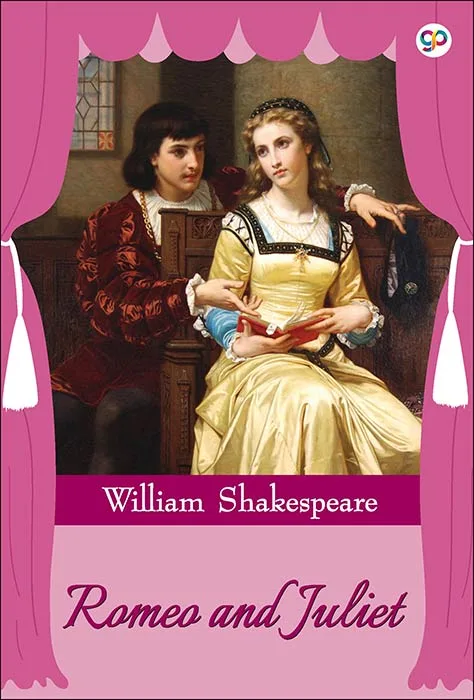
Download Cover Image
Do you want to download the full cover image for Romeo and Juliet?