
The Ladies' Book of Etiquette and Manual of Politeness
eBook
• INR 51.00
• English
• 9788180320378
No ratings yet
| Publisher | General Press |
|---|---|
| ISBN13 | 9788180320378 |
| ASIN/SKU | B07F1YF7XZ |
| Book Format | eBook |
| Language | English |
| List Price | INR 51.00 |
| Subject Code | SEL044000, REF011000 |
| Publishing Date | 26/06/2018 |
| Book Code | BD00068479 |
Buy this Book
Amazon Stores
Ebook Stores
Other Stores
Discover The Ladies' Book of Etiquette and Manual of Politeness by Florence Hartley. This book is published by General Press in eBook format, ISBN 9788180320378, ASIN B07F1YF7XZ, under Reference, Women's Studies, Social Etiquette.
Book Description
If the correct rules of etiquette fail you, never fear for this handy guide will instruct you in the correct ladylike manner! This indispensable nineteenth century guidebook will entertain, educate and inspire in equal measure. What should you do if you notice a stranger’s dress is tucked up at the back? What are you meant to say if you are offered food you don’t like at a dinner party? And what ought you to wear if you’re invited to a ball? If these questions baffle you, fear not!
For help is at hand in the form of The Ladies’ Book of Etiquette. Florence Hartley’s insightful etiquette guide was first published in 1860, and yet her witty and useful advice on behaving like a lady often still rings true down the ages. You don’t need to live in the nineteenth century to agree with Hartley that it is rude to finish someone else’s jokes. Whatever the situation, whether the reader would like to know how to be as ladylike as possible when seasick or the best colour schemes for bridesmaids’ dresses, this thorough and wide-ranging book will provide sensible and succinct guidance, as well as shed light into life in the nineteenth century. Did you know that apparently you could spot a lady who had laced her corset too tightly from the lack of circulation making her nose go red?
Published alongside The Gentlemen’s Book of Etiquette, this is the perfect gift for that special someone in your life, or as a treat to yourself as you aspire to set step on the path towards becoming a lady! Let every action, while it is finished in strict accordance with etiquette, be, at the same time, easy, as if dictated solely by the heart. To be truly polite, remember you must be polite at all times, and under all circumstances.
For help is at hand in the form of The Ladies’ Book of Etiquette. Florence Hartley’s insightful etiquette guide was first published in 1860, and yet her witty and useful advice on behaving like a lady often still rings true down the ages. You don’t need to live in the nineteenth century to agree with Hartley that it is rude to finish someone else’s jokes. Whatever the situation, whether the reader would like to know how to be as ladylike as possible when seasick or the best colour schemes for bridesmaids’ dresses, this thorough and wide-ranging book will provide sensible and succinct guidance, as well as shed light into life in the nineteenth century. Did you know that apparently you could spot a lady who had laced her corset too tightly from the lack of circulation making her nose go red?
Published alongside The Gentlemen’s Book of Etiquette, this is the perfect gift for that special someone in your life, or as a treat to yourself as you aspire to set step on the path towards becoming a lady! Let every action, while it is finished in strict accordance with etiquette, be, at the same time, easy, as if dictated solely by the heart. To be truly polite, remember you must be polite at all times, and under all circumstances.
Author Biography
Florence Hartley was a nineteenth-century American author and etiquette expert whose writings offered practical guidance on social behavior, personal character, and everyday life. She is best remembered for her influential book The Ladies' Book of Etiquette, and Manual of Politeness (1860), a work that became one of the most widely read etiquette guides of the Victorian era. Through her thoughtful advice, Hartley sought to help readers cultivate kindness, dignity, and self-respect rather than simply follow rigid social rules.
Although relatively little is known about her early life and personal background, Hartley emerged as a respected writer during a period when books on manners and moral conduct were highly valued in American society. The mid-nineteenth century was a time of rapid social and cultural change, and many people looked for guidance on how to conduct themselves with confidence and grace. Hartley responded to this need by writing in a clear, practical, and compassionate style that appealed to readers from a wide range of backgrounds.
Her best-known work, The Ladies' Book of Etiquette, and Manual of Politeness, covered far more than formal manners. It offered advice on conversation, hospitality, friendship, marriage, family relationships, dress, education, and personal responsibility. Rather than focusing solely on outward appearances, Hartley emphasized qualities such as honesty, humility, generosity, and consideration for others. She believed that genuine courtesy came from good character and thoughtful behavior, making her advice both timeless and meaningful.
In addition to etiquette, Hartley's writing reflected the values and expectations of Victorian America. While some of her recommendations mirror the social conventions of her time, many of her underlying principles—respect, empathy, patience, and integrity—continue to resonate with modern readers. Historians and literary scholars often study her work to better understand the customs, gender roles, and social ideals of nineteenth-century American life.
Florence Hartley's books remain valuable not only as historical documents but also as reminders that true politeness is rooted in compassion and respect for others. Her ability to present practical wisdom in an accessible and engaging manner helped her earn a lasting place among America's notable writers on etiquette. Today, she is remembered as an insightful author whose work preserved the social values of her era while continuing to inspire thoughtful and courteous living across generations.
Although relatively little is known about her early life and personal background, Hartley emerged as a respected writer during a period when books on manners and moral conduct were highly valued in American society. The mid-nineteenth century was a time of rapid social and cultural change, and many people looked for guidance on how to conduct themselves with confidence and grace. Hartley responded to this need by writing in a clear, practical, and compassionate style that appealed to readers from a wide range of backgrounds.
Her best-known work, The Ladies' Book of Etiquette, and Manual of Politeness, covered far more than formal manners. It offered advice on conversation, hospitality, friendship, marriage, family relationships, dress, education, and personal responsibility. Rather than focusing solely on outward appearances, Hartley emphasized qualities such as honesty, humility, generosity, and consideration for others. She believed that genuine courtesy came from good character and thoughtful behavior, making her advice both timeless and meaningful.
In addition to etiquette, Hartley's writing reflected the values and expectations of Victorian America. While some of her recommendations mirror the social conventions of her time, many of her underlying principles—respect, empathy, patience, and integrity—continue to resonate with modern readers. Historians and literary scholars often study her work to better understand the customs, gender roles, and social ideals of nineteenth-century American life.
Florence Hartley's books remain valuable not only as historical documents but also as reminders that true politeness is rooted in compassion and respect for others. Her ability to present practical wisdom in an accessible and engaging manner helped her earn a lasting place among America's notable writers on etiquette. Today, she is remembered as an insightful author whose work preserved the social values of her era while continuing to inspire thoughtful and courteous living across generations.
Editorial Reviews
Editorial Reviews will be added soon…
Book Summary
The Ladies' Book of Etiquette and Manual of Politeness by Florence Hartley is a fascinating nineteenth-century guide to manners, social behavior, personal presentation, and the responsibilities expected of a woman in “polite society.” First published in 1860, the book was designed as a practical handbook for women who wanted to understand the rules governing conversation, dress, visiting, entertaining, dining, letter writing, public conduct, marriage, health, and everyday social relationships. Its scope is remarkably broad: the original contents include twenty-six chapters followed by practical “receipts” concerning the complexion, hair, and wardrobe. Although many of Hartley’s rules belong unmistakably to Victorian-era American society, the book remains valuable today because it reveals how ideas of courtesy, femininity, dignity, self-control, and social respectability were understood in the nineteenth century.
The central idea of Hartley’s etiquette philosophy is that good manners are not merely a collection of external rules; they should grow out of consideration for other people. The book begins from the premise that politeness is closely connected with kindness, sympathy, self-restraint, and an awareness of other people's feelings. This makes the book more interesting than a simple catalogue of instructions about which fork to use or when to pay a visit. Hartley is concerned with character as much as behavior. A woman may know every formal rule of society and still be unpleasant if she is selfish, inattentive, boastful, rude, or insensitive. For Hartley, genuine refinement is demonstrated through the ability to make other people comfortable. This principle gives the book a surprisingly humane foundation, even though many of its specific social expectations are now outdated.
The first major subject is conversation, and Hartley treats conversation as one of the clearest tests of good breeding. She argues that a successful conversationalist must be able both to speak and to listen. The ability to communicate one's own ideas is important, but it must be balanced by sincere attention to the person speaking. Interrupting, monopolizing a discussion, ignoring someone, or shifting attention toward another conversation are presented as signs of poor manners. Hartley’s advice is especially interesting because it emphasizes social generosity rather than performance. Conversation is not supposed to be an opportunity to display intelligence at someone else's expense. It is a shared activity in which curiosity, sympathy, tact, and attentiveness matter. For modern readers searching for timeless lessons about how to be a good conversationalist, social etiquette, listening skills, and graceful communication, this remains one of the strongest sections of the book.
Hartley next turns to dress, revealing how closely appearance and social judgment were connected in nineteenth-century society. She encourages women to dress appropriately for their circumstances, occasion, age, and means rather than treating expensive clothing as proof of superiority. One particularly revealing theme is her criticism of extravagance. Hartley suggests that a woman who dresses simply and responsibly may command more genuine respect than someone who wears costly clothing while creating financial strain for herself or her family. The underlying lesson is that elegance is not necessarily synonymous with expense. Clothing should be clean, suitable, tasteful, and appropriate rather than merely showy. At the same time, her detailed concern with fashion, appearance, and feminine presentation reflects the social pressures placed upon women of her period.
The chapters on traveling and hotel behavior demonstrate how comprehensive Hartley intended her etiquette manual to be. Travel could expose a woman to unfamiliar people, public spaces, servants, transportation arrangements, and temporary living situations, all of which required self-possession and courtesy. Hartley explains how a lady should conduct herself when away from home, emphasizing quiet dignity, consideration for fellow travelers, and proper interaction with hotel employees. The hotel chapter is particularly useful as a historical window because it shows that etiquette extended far beyond formal parties and private homes. Good manners were expected even in unfamiliar environments where social identities and relationships were less established.
A large portion of the book deals with entertaining and visiting, including evening parties, morning receptions, calls, dinners, and ordinary visits. Hartley divides many of these discussions between the responsibilities of the hostess and those of the guest. This distinction reveals an important principle: etiquette is reciprocal. The hostess must make guests feel welcome without appearing anxious or overbearing, while the guest must respect the household and avoid creating inconvenience. A gracious hostess pays attention to the comfort of visitors, introduces people appropriately, encourages conversation, and manages the event without making her guests feel that they are being managed. A good guest, meanwhile, arrives at the proper time, respects the host's arrangements, and knows when it is appropriate to leave.
The chapters on dinner parties and table etiquette take this concern with consideration into one of the most socially sensitive settings of the period. Hartley explains how a hostess should organize a dinner and how a guest should behave at the table. Her advice emphasizes restraint, attentiveness, cleanliness, and awareness of fellow diners. Interestingly, she argues that table manners should be practiced even when eating alone because habits become natural through repetition. This is a broader lesson about etiquette: graceful behavior should not be something performed only when other people are watching. If courtesy is merely theatrical, it will eventually become stiff and artificial. Good habits, in Hartley’s view, should become part of one's natural character.
Conduct in the street extends the same principles into public life. Hartley is concerned with how women walk, interact with acquaintances, respond to strangers, and conduct themselves when seen in public. Her standards are heavily shaped by nineteenth-century expectations concerning female respectability, modesty, and propriety. Modern readers will naturally find some of these rules restrictive, but they are historically significant because they show how closely a woman's public behavior was connected to her reputation. The street was not simply a place to travel through; it was a social environment in which appearance, posture, speech, and association could be observed and judged.
The chapter on letter writing is another particularly valuable section for contemporary readers. In an age when handwritten correspondence was central to social life, letters carried much of the responsibility now handled by telephone calls, email, and messaging. Hartley explains the importance of appropriate language, structure, tone, and courtesy. A letter should communicate clearly without becoming careless or overly familiar. The principles behind this advice remain recognizable today: consider the recipient, choose words thoughtfully, avoid unnecessary offense, and understand that written communication can easily create misunderstandings because tone is not always visible.
Hartley places considerable importance on polite deportment and good habits, suggesting that manners are ultimately rooted in everyday behavior. Posture, speech, gestures, personal cleanliness, punctuality, self-control, and attentiveness all contribute to the impression a person makes. This section connects outward manners with inner discipline. Someone who is constantly impatient, careless, noisy, or self-centered will struggle to appear genuinely refined no matter how perfectly they understand formal etiquette. Hartley therefore treats etiquette as a form of personal training. Repeated good habits gradually create an appearance of natural grace.
The sections on church, balls, and places of amusement show how etiquette operated across different public settings. In church, solemnity, respect, quietness, and appropriate dress are emphasized. At balls, both hostesses and guests have specific responsibilities concerning invitations, introductions, dancing, partners, and social interaction. Places of amusement similarly require awareness of others and appropriate public behavior. The details may seem quaint now, but together they demonstrate the book's larger ambition: Hartley wants her reader to know how to behave confidently in almost every major social situation she might encounter.
One of the most extensive chapters is devoted to accomplishments. This reflects the nineteenth-century ideal that a socially accomplished woman should cultivate useful and attractive skills. Music, artistic pursuits, needlework, and other accomplishments were associated with education, refinement, and social usefulness. The idea of accomplishment is significant because Hartley does not present a lady as someone whose only purpose is to look attractive. She is expected to develop abilities that can enrich social life and demonstrate cultivation. Yet the chapter also reflects the limitations of the era, since many of these accomplishments were closely tied to the domestic and social roles assigned to women.
Hartley’s discussion of servants provides another revealing glimpse into Victorian household culture. The household was often organized around a hierarchy of domestic labor, and etiquette included rules governing how women should interact with servants. Hartley emphasizes order, fairness, proper supervision, and respectful management, while still assuming the class structure of her time. For modern readers, this chapter is best read historically. It illustrates how etiquette manuals did more than teach politeness between social equals; they also instructed people on how to behave within established class and household hierarchies.
The chapters concerning marriage and bridal etiquette move from general social behavior into one of the most important transitions in a nineteenth-century woman's life. Hartley advises young women contemplating marriage to think seriously about character and compatibility rather than being guided solely by romantic excitement or social position. The advice reflects the economic and social realities of her era, when marriage could profoundly determine a woman's future. The bridal etiquette section then turns to the ceremonial and social expectations surrounding engagement, wedding preparations, invitations, clothing, guests, and the wedding itself. The detailed treatment of marriage demonstrates how strongly etiquette was connected to major life transitions.
The chapter on health adds another dimension to the book. Hartley does not treat personal appearance as completely separate from physical well-being. Health, cleanliness, sensible habits, rest, and proper care of the body are connected to a woman's ability to carry herself with confidence and grace. Some of the period-specific advice should obviously not be treated as modern medical guidance, but the broader emphasis on health and personal care remains understandable. The final miscellaneous section and the practical recipes for the complexion, hair, and wardrobe turn the book into something approaching a complete domestic manual. The original volume explicitly advertised guidance on manners, dress, deportment, conversation, entertaining, letter writing, servants, health, accomplishments, and personal care.
What makes The Ladies' Book of Etiquette and Manual of Politeness especially interesting today is the tension between its timeless social wisdom and its historical limitations. Some rules are tied closely to nineteenth-century ideas about class, gender, femininity, marriage, and respectability. A modern reader does not need to accept those rules literally to appreciate what the book reveals about its culture. At the same time, many underlying principles remain surprisingly relevant: listen when people speak, avoid embarrassing others, dress appropriately for the occasion, write thoughtfully, respect hospitality, control unnecessary displays of ego, and make an effort to put other people at ease.
Ultimately, Florence Hartley’s book is not simply a manual explaining Victorian etiquette for women. It is a portrait of a society in which manners functioned as a language of character and social identity. To be “polite” meant more than knowing formal rules; it meant demonstrating self-control, consideration, modesty, generosity, and awareness of one's surroundings. The book assumes a world of morning calls, dinner parties, balls, handwritten letters, domestic servants, formal courtship, and carefully regulated public behavior, but beneath those historical details lies a recognizable human concern: How should we behave toward other people if we want to live gracefully in society?
For readers looking for a summary of The Ladies' Book of Etiquette and Manual of Politeness, Florence Hartley’s etiquette rules, Victorian manners, nineteenth-century social etiquette, proper conduct for women, table manners, conversation etiquette, ballroom etiquette, letter-writing etiquette, or the history of women's etiquette, the book offers both practical instruction and cultural insight. Its lasting appeal comes from this combination. It teaches the manners of a vanished social world while inviting modern readers to reconsider the deeper meaning of courtesy. Its most enduring message is that elegance is not merely what a person wears or how perfectly she follows a social rule. True refinement is visible in the way she listens, speaks, welcomes, responds, restrains herself, and considers the feelings of others. In that sense, beneath all its corsets, calling cards, dinner parties, balls, and formal visits, Hartley’s book preserves an idea that remains remarkably current: good manners are ultimately a form of respect for other people.
The central idea of Hartley’s etiquette philosophy is that good manners are not merely a collection of external rules; they should grow out of consideration for other people. The book begins from the premise that politeness is closely connected with kindness, sympathy, self-restraint, and an awareness of other people's feelings. This makes the book more interesting than a simple catalogue of instructions about which fork to use or when to pay a visit. Hartley is concerned with character as much as behavior. A woman may know every formal rule of society and still be unpleasant if she is selfish, inattentive, boastful, rude, or insensitive. For Hartley, genuine refinement is demonstrated through the ability to make other people comfortable. This principle gives the book a surprisingly humane foundation, even though many of its specific social expectations are now outdated.
The first major subject is conversation, and Hartley treats conversation as one of the clearest tests of good breeding. She argues that a successful conversationalist must be able both to speak and to listen. The ability to communicate one's own ideas is important, but it must be balanced by sincere attention to the person speaking. Interrupting, monopolizing a discussion, ignoring someone, or shifting attention toward another conversation are presented as signs of poor manners. Hartley’s advice is especially interesting because it emphasizes social generosity rather than performance. Conversation is not supposed to be an opportunity to display intelligence at someone else's expense. It is a shared activity in which curiosity, sympathy, tact, and attentiveness matter. For modern readers searching for timeless lessons about how to be a good conversationalist, social etiquette, listening skills, and graceful communication, this remains one of the strongest sections of the book.
Hartley next turns to dress, revealing how closely appearance and social judgment were connected in nineteenth-century society. She encourages women to dress appropriately for their circumstances, occasion, age, and means rather than treating expensive clothing as proof of superiority. One particularly revealing theme is her criticism of extravagance. Hartley suggests that a woman who dresses simply and responsibly may command more genuine respect than someone who wears costly clothing while creating financial strain for herself or her family. The underlying lesson is that elegance is not necessarily synonymous with expense. Clothing should be clean, suitable, tasteful, and appropriate rather than merely showy. At the same time, her detailed concern with fashion, appearance, and feminine presentation reflects the social pressures placed upon women of her period.
The chapters on traveling and hotel behavior demonstrate how comprehensive Hartley intended her etiquette manual to be. Travel could expose a woman to unfamiliar people, public spaces, servants, transportation arrangements, and temporary living situations, all of which required self-possession and courtesy. Hartley explains how a lady should conduct herself when away from home, emphasizing quiet dignity, consideration for fellow travelers, and proper interaction with hotel employees. The hotel chapter is particularly useful as a historical window because it shows that etiquette extended far beyond formal parties and private homes. Good manners were expected even in unfamiliar environments where social identities and relationships were less established.
A large portion of the book deals with entertaining and visiting, including evening parties, morning receptions, calls, dinners, and ordinary visits. Hartley divides many of these discussions between the responsibilities of the hostess and those of the guest. This distinction reveals an important principle: etiquette is reciprocal. The hostess must make guests feel welcome without appearing anxious or overbearing, while the guest must respect the household and avoid creating inconvenience. A gracious hostess pays attention to the comfort of visitors, introduces people appropriately, encourages conversation, and manages the event without making her guests feel that they are being managed. A good guest, meanwhile, arrives at the proper time, respects the host's arrangements, and knows when it is appropriate to leave.
The chapters on dinner parties and table etiquette take this concern with consideration into one of the most socially sensitive settings of the period. Hartley explains how a hostess should organize a dinner and how a guest should behave at the table. Her advice emphasizes restraint, attentiveness, cleanliness, and awareness of fellow diners. Interestingly, she argues that table manners should be practiced even when eating alone because habits become natural through repetition. This is a broader lesson about etiquette: graceful behavior should not be something performed only when other people are watching. If courtesy is merely theatrical, it will eventually become stiff and artificial. Good habits, in Hartley’s view, should become part of one's natural character.
Conduct in the street extends the same principles into public life. Hartley is concerned with how women walk, interact with acquaintances, respond to strangers, and conduct themselves when seen in public. Her standards are heavily shaped by nineteenth-century expectations concerning female respectability, modesty, and propriety. Modern readers will naturally find some of these rules restrictive, but they are historically significant because they show how closely a woman's public behavior was connected to her reputation. The street was not simply a place to travel through; it was a social environment in which appearance, posture, speech, and association could be observed and judged.
The chapter on letter writing is another particularly valuable section for contemporary readers. In an age when handwritten correspondence was central to social life, letters carried much of the responsibility now handled by telephone calls, email, and messaging. Hartley explains the importance of appropriate language, structure, tone, and courtesy. A letter should communicate clearly without becoming careless or overly familiar. The principles behind this advice remain recognizable today: consider the recipient, choose words thoughtfully, avoid unnecessary offense, and understand that written communication can easily create misunderstandings because tone is not always visible.
Hartley places considerable importance on polite deportment and good habits, suggesting that manners are ultimately rooted in everyday behavior. Posture, speech, gestures, personal cleanliness, punctuality, self-control, and attentiveness all contribute to the impression a person makes. This section connects outward manners with inner discipline. Someone who is constantly impatient, careless, noisy, or self-centered will struggle to appear genuinely refined no matter how perfectly they understand formal etiquette. Hartley therefore treats etiquette as a form of personal training. Repeated good habits gradually create an appearance of natural grace.
The sections on church, balls, and places of amusement show how etiquette operated across different public settings. In church, solemnity, respect, quietness, and appropriate dress are emphasized. At balls, both hostesses and guests have specific responsibilities concerning invitations, introductions, dancing, partners, and social interaction. Places of amusement similarly require awareness of others and appropriate public behavior. The details may seem quaint now, but together they demonstrate the book's larger ambition: Hartley wants her reader to know how to behave confidently in almost every major social situation she might encounter.
One of the most extensive chapters is devoted to accomplishments. This reflects the nineteenth-century ideal that a socially accomplished woman should cultivate useful and attractive skills. Music, artistic pursuits, needlework, and other accomplishments were associated with education, refinement, and social usefulness. The idea of accomplishment is significant because Hartley does not present a lady as someone whose only purpose is to look attractive. She is expected to develop abilities that can enrich social life and demonstrate cultivation. Yet the chapter also reflects the limitations of the era, since many of these accomplishments were closely tied to the domestic and social roles assigned to women.
Hartley’s discussion of servants provides another revealing glimpse into Victorian household culture. The household was often organized around a hierarchy of domestic labor, and etiquette included rules governing how women should interact with servants. Hartley emphasizes order, fairness, proper supervision, and respectful management, while still assuming the class structure of her time. For modern readers, this chapter is best read historically. It illustrates how etiquette manuals did more than teach politeness between social equals; they also instructed people on how to behave within established class and household hierarchies.
The chapters concerning marriage and bridal etiquette move from general social behavior into one of the most important transitions in a nineteenth-century woman's life. Hartley advises young women contemplating marriage to think seriously about character and compatibility rather than being guided solely by romantic excitement or social position. The advice reflects the economic and social realities of her era, when marriage could profoundly determine a woman's future. The bridal etiquette section then turns to the ceremonial and social expectations surrounding engagement, wedding preparations, invitations, clothing, guests, and the wedding itself. The detailed treatment of marriage demonstrates how strongly etiquette was connected to major life transitions.
The chapter on health adds another dimension to the book. Hartley does not treat personal appearance as completely separate from physical well-being. Health, cleanliness, sensible habits, rest, and proper care of the body are connected to a woman's ability to carry herself with confidence and grace. Some of the period-specific advice should obviously not be treated as modern medical guidance, but the broader emphasis on health and personal care remains understandable. The final miscellaneous section and the practical recipes for the complexion, hair, and wardrobe turn the book into something approaching a complete domestic manual. The original volume explicitly advertised guidance on manners, dress, deportment, conversation, entertaining, letter writing, servants, health, accomplishments, and personal care.
What makes The Ladies' Book of Etiquette and Manual of Politeness especially interesting today is the tension between its timeless social wisdom and its historical limitations. Some rules are tied closely to nineteenth-century ideas about class, gender, femininity, marriage, and respectability. A modern reader does not need to accept those rules literally to appreciate what the book reveals about its culture. At the same time, many underlying principles remain surprisingly relevant: listen when people speak, avoid embarrassing others, dress appropriately for the occasion, write thoughtfully, respect hospitality, control unnecessary displays of ego, and make an effort to put other people at ease.
Ultimately, Florence Hartley’s book is not simply a manual explaining Victorian etiquette for women. It is a portrait of a society in which manners functioned as a language of character and social identity. To be “polite” meant more than knowing formal rules; it meant demonstrating self-control, consideration, modesty, generosity, and awareness of one's surroundings. The book assumes a world of morning calls, dinner parties, balls, handwritten letters, domestic servants, formal courtship, and carefully regulated public behavior, but beneath those historical details lies a recognizable human concern: How should we behave toward other people if we want to live gracefully in society?
For readers looking for a summary of The Ladies' Book of Etiquette and Manual of Politeness, Florence Hartley’s etiquette rules, Victorian manners, nineteenth-century social etiquette, proper conduct for women, table manners, conversation etiquette, ballroom etiquette, letter-writing etiquette, or the history of women's etiquette, the book offers both practical instruction and cultural insight. Its lasting appeal comes from this combination. It teaches the manners of a vanished social world while inviting modern readers to reconsider the deeper meaning of courtesy. Its most enduring message is that elegance is not merely what a person wears or how perfectly she follows a social rule. True refinement is visible in the way she listens, speaks, welcomes, responds, restrains herself, and considers the feelings of others. In that sense, beneath all its corsets, calling cards, dinner parties, balls, and formal visits, Hartley’s book preserves an idea that remains remarkably current: good manners are ultimately a form of respect for other people.
Sample Chapters
Sample Chapters will be added soon…
Reader Reviews
No reviews yet.
The Ladies' Book of Etiquette and Manual of Politeness
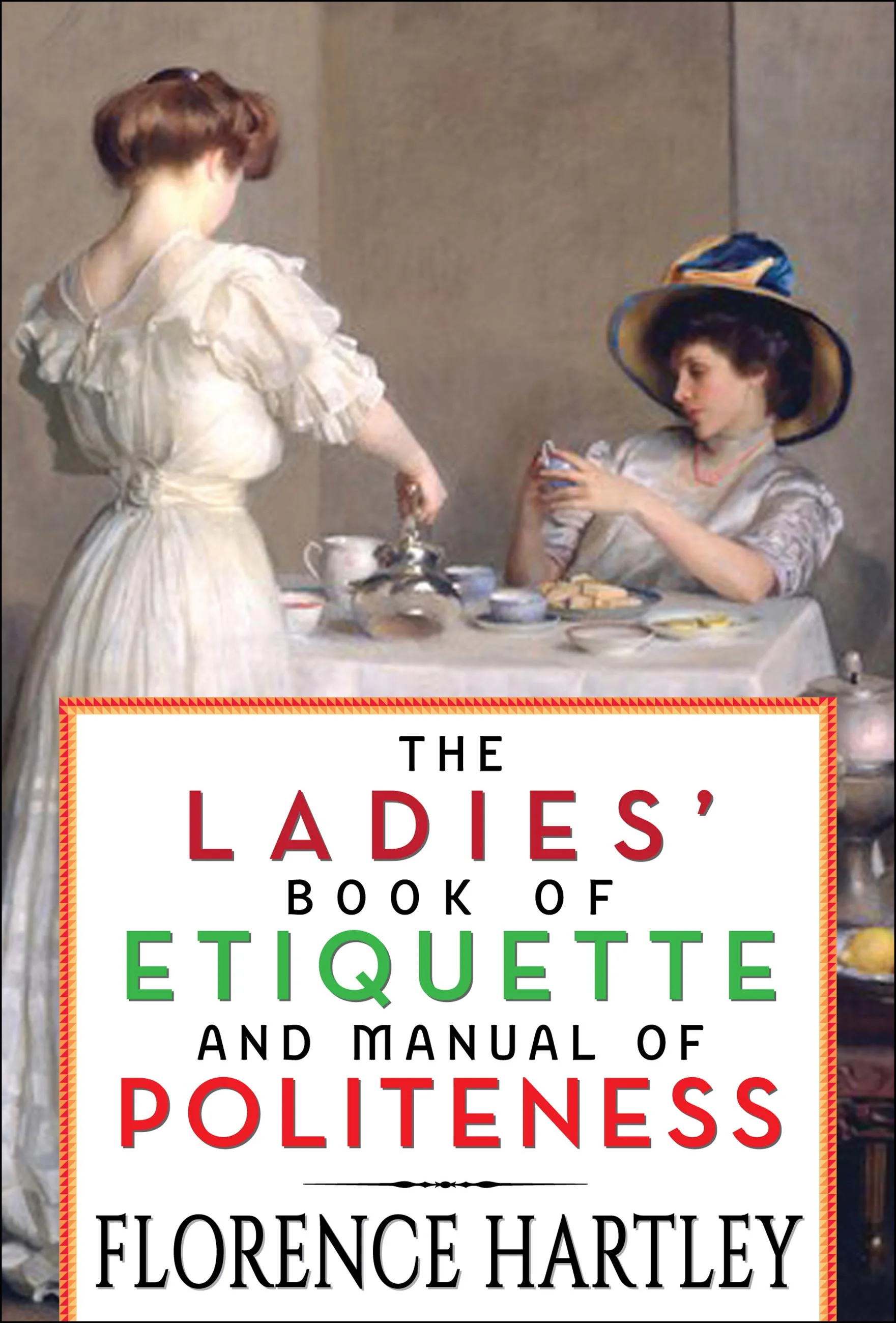
Download Cover Image
Do you want to download the full cover image for The Ladies' Book of Etiquette and Manual of Politeness?