
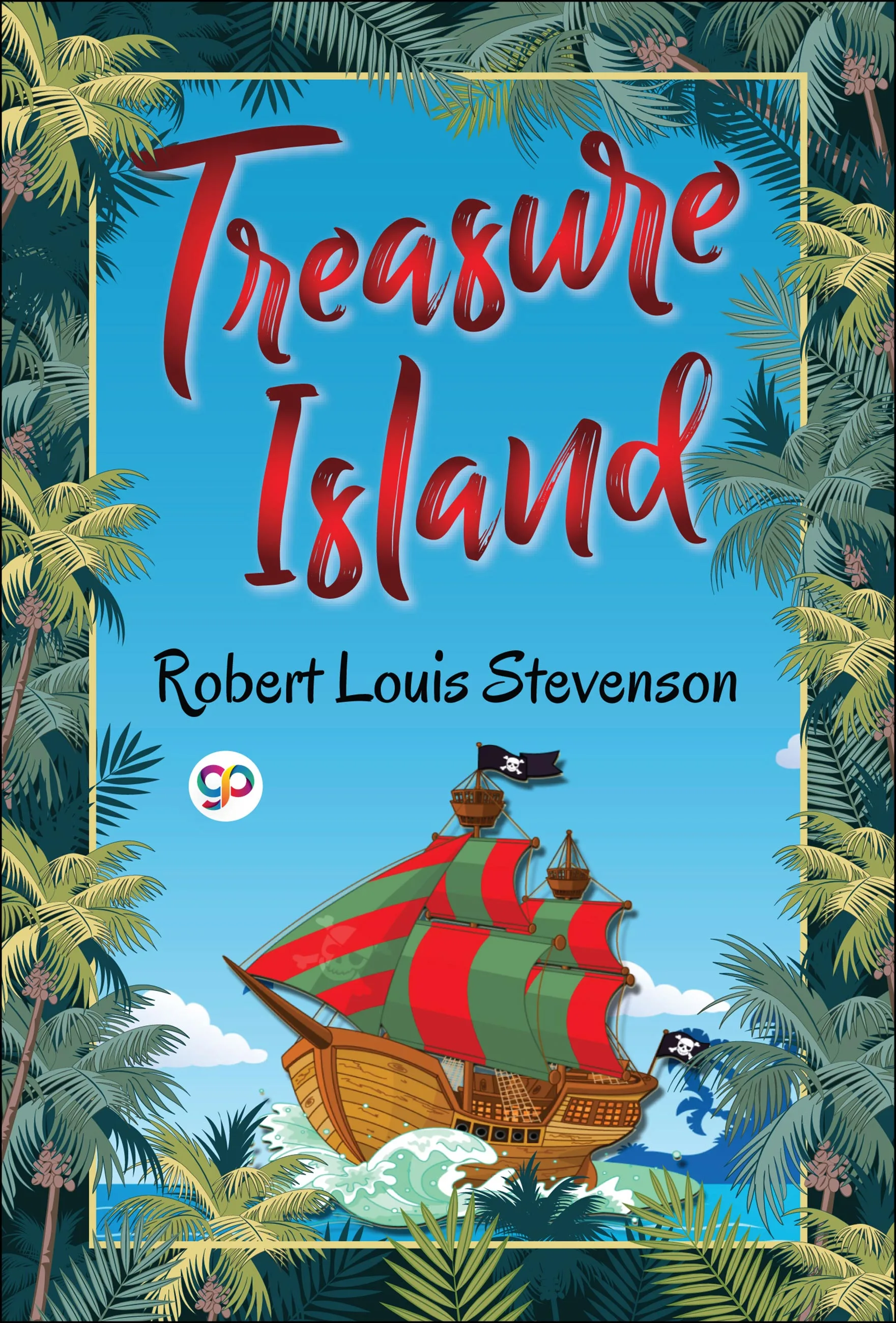
Treasure Island
eBook
• 139 Pages
• INR 51.00
• English
• 9789387669994
No ratings yet
| Publisher | General Press |
|---|---|
| ISBN13 | 9789387669994 |
| ASIN/SKU | B07F24S5PW |
| Book Format | eBook |
| Language | English |
| Pages | 139 |
| List Price | INR 51.00 |
| Subject Code | PER004000, DRA001010, FIC019000, YAF017000 |
| Publishing Date | 26/06/2018 |
| Book Code | BD00068485 |
Buy this Book
Amazon Stores
Ebook Stores
Other Stores
Discover Treasure Island by Robert Louis Stevenson. This book is published by General Press in eBook format, ISBN 9789387669994, ASIN B07F24S5PW, under Children's Books, Children's Classics, Sea Adventures.
Book Description
Few adventure stories have captured the thrill of buried treasure, dangerous seas, and hidden betrayal as vividly as 'Treasure Island'. Written by Robert Louis Stevenson, this classic adventure fiction novel follows a young boy whose ordinary life is transformed when a mysterious treasure map brings him face-to-face with pirates, danger, and the lure of fortune.
The story begins at the Admiral Benbow Inn, where young Jim Hawkins encounters a frightening old sailor named Billy Bones. After the sailor's sudden death, Jim discovers a mysterious sea chest containing a map that points toward a legendary treasure buried on a distant island. The discovery sets an exciting journey in motion, drawing Jim and his companions into a dangerous expedition aboard the ship Hispaniola. What first appears to be a straightforward treasure hunt soon becomes a struggle for survival as Jim realizes that not everyone on the voyage can be trusted.
At the center of the adventure is the unforgettable Long John Silver, a charismatic and cunning pirate whose friendliness hides a dangerous ambition. As the ship sails toward Treasure Island, tensions grow between the honest members of the expedition and the pirates secretly planning a mutiny. Once the travelers reach the island, the search for Captain Flint's legendary treasure becomes a tense battle of courage, intelligence, loyalty, and deception. Jim is forced to grow quickly, facing frightening situations that test his judgment and bravery.
More than a simple tale of pirates and gold, 'Treasure Island' explores greed, loyalty, courage, deception, and the difficult choices that separate heroes from villains. Stevenson's vivid descriptions, memorable characters, suspenseful action, and atmosphere of mystery have helped make the novel one of the most influential pirate adventures ever written. Whether you are discovering it for the first time or returning to its familiar shores, 'Treasure Island' promises a journey filled with danger, excitement, and secrets—and the greatest treasure may be the adventure itself.
The story begins at the Admiral Benbow Inn, where young Jim Hawkins encounters a frightening old sailor named Billy Bones. After the sailor's sudden death, Jim discovers a mysterious sea chest containing a map that points toward a legendary treasure buried on a distant island. The discovery sets an exciting journey in motion, drawing Jim and his companions into a dangerous expedition aboard the ship Hispaniola. What first appears to be a straightforward treasure hunt soon becomes a struggle for survival as Jim realizes that not everyone on the voyage can be trusted.
At the center of the adventure is the unforgettable Long John Silver, a charismatic and cunning pirate whose friendliness hides a dangerous ambition. As the ship sails toward Treasure Island, tensions grow between the honest members of the expedition and the pirates secretly planning a mutiny. Once the travelers reach the island, the search for Captain Flint's legendary treasure becomes a tense battle of courage, intelligence, loyalty, and deception. Jim is forced to grow quickly, facing frightening situations that test his judgment and bravery.
More than a simple tale of pirates and gold, 'Treasure Island' explores greed, loyalty, courage, deception, and the difficult choices that separate heroes from villains. Stevenson's vivid descriptions, memorable characters, suspenseful action, and atmosphere of mystery have helped make the novel one of the most influential pirate adventures ever written. Whether you are discovering it for the first time or returning to its familiar shores, 'Treasure Island' promises a journey filled with danger, excitement, and secrets—and the greatest treasure may be the adventure itself.
Author Biography
Robert Louis Stevenson was a Scottish novelist, poet, and travel writer, and a leading representative of English literature. He was greatly admired by many authors, including Jorge Luis Borges, Ernest Hemingway, Rudyard Kipling and Vladimir Nabokov.
He was born in Edinburgh, Scotland. A sickly child, Stevenson was an invalid for part of his childhood and remained in ill health throughout his life. He began studying engineering at Edinburgh University but soon switched to law. His true inclination, however, was for writing. For several years after completing his studies, Stevenson traveled on the Continent, gathering ideas for his writing. His Inland Voyage (1878) and Travels with a Donkey (1878) describe some of his experiences there. A variety of essays and short stories followed, most of which were published in magazines. It was with the publication of Treasure Island in 1883, however, that Stevenson achieved wide recognition and fame. This was followed by his most successful adventure story, Kidnapped, which appeared in 1886. The Master of Ballantrae, in particular, is a study of evil character, and this study is taken even further in The Strange Case of Dr. Jekyll and Mr. Hyde (1886).
In 1887 Stevenson and his wife, Fanny, went to the United States, first to the health spas of Saranac Lake, New York, and then on to the West Coast. From there they set out for the South Seas in 1889. Except for one trip to Sidney, Australia, Stevenson spent the remainder of his life on the island of Samoa with his devoted wife and stepson. While there he wrote The Wrecker (1892), Island Nights Entertainments (1893), and Catriona (1893), a sequel to Kidnapped. He also worked on St. Ives and The Weir of Hermiston, which many consider to be his masterpiece. He died suddenly of apoplexy, leaving both of these works unfinished. Both were published posthumously; St. Ives was completed by Sir Arthur Quiller-Couch, and The Weir of Hermiston was published unfinished.
He was born in Edinburgh, Scotland. A sickly child, Stevenson was an invalid for part of his childhood and remained in ill health throughout his life. He began studying engineering at Edinburgh University but soon switched to law. His true inclination, however, was for writing. For several years after completing his studies, Stevenson traveled on the Continent, gathering ideas for his writing. His Inland Voyage (1878) and Travels with a Donkey (1878) describe some of his experiences there. A variety of essays and short stories followed, most of which were published in magazines. It was with the publication of Treasure Island in 1883, however, that Stevenson achieved wide recognition and fame. This was followed by his most successful adventure story, Kidnapped, which appeared in 1886. The Master of Ballantrae, in particular, is a study of evil character, and this study is taken even further in The Strange Case of Dr. Jekyll and Mr. Hyde (1886).
In 1887 Stevenson and his wife, Fanny, went to the United States, first to the health spas of Saranac Lake, New York, and then on to the West Coast. From there they set out for the South Seas in 1889. Except for one trip to Sidney, Australia, Stevenson spent the remainder of his life on the island of Samoa with his devoted wife and stepson. While there he wrote The Wrecker (1892), Island Nights Entertainments (1893), and Catriona (1893), a sequel to Kidnapped. He also worked on St. Ives and The Weir of Hermiston, which many consider to be his masterpiece. He died suddenly of apoplexy, leaving both of these works unfinished. Both were published posthumously; St. Ives was completed by Sir Arthur Quiller-Couch, and The Weir of Hermiston was published unfinished.
Editorial Reviews
Editorial Reviews will be added soon…
Book Summary
Robert Louis Stevenson’s Treasure Island is one of the great adventure novels of English literature. First published in book form in 1883, it tells the story of Jim Hawkins, a young boy who becomes involved in a dangerous search for buried treasure. With pirates, secret maps, storms, mutiny, sea voyages, hidden identities, and sudden acts of courage, the novel has all the excitement of a classic adventure story. Yet its lasting appeal comes from more than action. At its heart, Treasure Island is also a story about growing up, learning to judge character, facing fear, and discovering that people are rarely as simple as they first appear.
The story begins at the Admiral Benbow Inn, which belongs to Jim Hawkins’s parents. One day, a mysterious old sailor named Billy Bones arrives and takes a room at the inn. He is rough, secretive, and clearly frightened of someone. He spends much of his time drinking rum and watching the road anxiously. He asks Jim to keep an eye out for a seafaring man with one leg. Billy’s fear becomes understandable when other pirates begin appearing and threatening him.
Billy receives the “black spot,” a pirate warning that signifies a judgment against him. Shortly afterward, he dies, leaving behind a sea chest. Jim and his mother search the chest and discover valuable papers, including a map showing the location of Captain Flint’s buried treasure. Jim takes the map to Dr. Livesey and Squire Trelawney. Excited by the possibility of finding the treasure, they decide to organize an expedition.
Squire Trelawney arranges a ship called the Hispaniola and gathers a crew. Among the sailors is Long John Silver, the ship’s cook, who appears friendly, intelligent, and trustworthy. Silver is charismatic and physically capable, and he quickly earns Jim’s confidence. He has a parrot named Captain Flint, whose repeated pirate phrases add a touch of humor to the story.
The voyage begins peacefully, but Jim soon discovers that danger is hiding beneath the surface. While hiding inside a barrel of apples, he accidentally overhears Silver speaking with several sailors. He learns that Silver and many members of the crew are former pirates who once served under the notorious Captain Flint. They plan to seize the treasure for themselves after the island is reached. Their intention is to wait until the treasure has been found and then take control of the ship.
Jim immediately tells Dr. Livesey, Squire Trelawney, and Captain Smollett what he has heard. The loyal members of the expedition realize that they are outnumbered and must be extremely careful. Captain Smollett, who had been suspicious of the crew from the beginning, prepares a plan for dealing with the mutiny.
When the ship reaches Treasure Island, the tension finally explodes. The pirates go ashore, and Jim secretly leaves the ship. While exploring the island, he meets Ben Gunn, a strange and lonely former pirate who has been marooned there for years. Ben Gunn tells Jim that he knows something about Captain Flint’s treasure and offers to help him. His isolation has made him eccentric, but he ultimately becomes an important ally.
Jim’s adventures on the island gradually make him more independent. He witnesses violence, encounters pirates, and repeatedly finds himself in situations where adults cannot protect him. At one point, he manages to reach the Hispaniola and cuts the ship loose, preventing the pirates from using it freely. He then encounters Israel Hands, one of the dangerous pirates, and becomes involved in a struggle that tests his courage and judgment.
Meanwhile, the loyal men retreat to a stockade on the island. The pirates attack them, leading to a violent battle. The defenders manage to hold their position, but their situation remains precarious. The pirates are dangerous, but their own greed and lack of unity begin to weaken them. Long John Silver is especially interesting because he is both ruthless and remarkably practical. He is willing to betray others when necessary, but he is also capable of recognizing courage and intelligence.
Silver is the most complex character in the novel. At first, he appears to be a friendly and trustworthy cook. Later, he is revealed as the leader of the mutineers. Yet Stevenson does not turn him into a simple villain. Silver possesses intelligence, charm, courage, and an instinct for survival. He can be cruel, but he can also be surprisingly protective of Jim. His relationship with the boy becomes one of the most fascinating elements of the story. Jim knows that Silver is dangerous, but he also finds himself fascinated by him.
Eventually, the pirates discover the location marked on the treasure map. They expect to find Captain Flint’s enormous treasure buried there. However, when they reach the spot, they discover that the treasure is gone. The shock destroys much of their confidence. Ben Gunn had already found the treasure and secretly moved it to his cave.
The disappearance of the treasure changes the balance of power. The loyal group, helped by Ben Gunn, eventually secures the treasure and escapes the island. Silver, realizing that his position has become hopeless, abandons the pirates and escapes with the others. He takes a small portion of the treasure with him. Although he remains a criminal, he proves once again that survival is his greatest talent.
Jim returns home with the others, but the adventure has changed him. He has experienced fear, violence, betrayal, and responsibility at an unusually young age. The treasure brings wealth, but the journey itself gives him something more important: maturity. He learns that appearances can be deceptive, that courage does not mean having no fear, and that intelligence can be as valuable as physical strength.
The treasure itself is therefore only one part of the novel’s meaning. Stevenson uses the search for gold to explore greed and temptation. The pirates are driven by the belief that wealth will solve all their problems, but their obsession brings violence, betrayal, and death. By contrast, Jim’s journey is ultimately about character. He begins as an ordinary boy at an inn and becomes someone capable of making difficult decisions independently.
The island also serves as a perfect setting for this transformation. Away from the safety of home, Jim has to depend on himself. The unfamiliar landscape, hidden caves, dense vegetation, and dangerous coastlines create an atmosphere of uncertainty. Every part of the island seems capable of hiding either treasure or danger.
What makes Treasure Island especially memorable is Stevenson’s ability to combine suspense with vivid characterization. The novel established many of the images now strongly associated with pirate stories: buried treasure, treasure maps marked with an “X,” wooden ships, mutinies, one-legged pirates, parrots, and secret caves. Yet the story never feels like a collection of clichés because the characters give these elements emotional life.
In the end, Treasure Island is much more than a story about finding gold. It is a coming-of-age tale disguised as a pirate adventure. Jim Hawkins begins with curiosity and innocence and ends with experience and self-knowledge. Long John Silver remains an unforgettable figure because he represents the complicated nature of human beings—capable of charm and cruelty, loyalty and betrayal, selfishness and unexpected kindness. Stevenson’s great achievement is to make the reader feel both the excitement of the adventure and the deeper lesson behind it: the greatest treasure is not necessarily what is buried underground, but the courage, judgment, and wisdom a person gains while searching for it.
The story begins at the Admiral Benbow Inn, which belongs to Jim Hawkins’s parents. One day, a mysterious old sailor named Billy Bones arrives and takes a room at the inn. He is rough, secretive, and clearly frightened of someone. He spends much of his time drinking rum and watching the road anxiously. He asks Jim to keep an eye out for a seafaring man with one leg. Billy’s fear becomes understandable when other pirates begin appearing and threatening him.
Billy receives the “black spot,” a pirate warning that signifies a judgment against him. Shortly afterward, he dies, leaving behind a sea chest. Jim and his mother search the chest and discover valuable papers, including a map showing the location of Captain Flint’s buried treasure. Jim takes the map to Dr. Livesey and Squire Trelawney. Excited by the possibility of finding the treasure, they decide to organize an expedition.
Squire Trelawney arranges a ship called the Hispaniola and gathers a crew. Among the sailors is Long John Silver, the ship’s cook, who appears friendly, intelligent, and trustworthy. Silver is charismatic and physically capable, and he quickly earns Jim’s confidence. He has a parrot named Captain Flint, whose repeated pirate phrases add a touch of humor to the story.
The voyage begins peacefully, but Jim soon discovers that danger is hiding beneath the surface. While hiding inside a barrel of apples, he accidentally overhears Silver speaking with several sailors. He learns that Silver and many members of the crew are former pirates who once served under the notorious Captain Flint. They plan to seize the treasure for themselves after the island is reached. Their intention is to wait until the treasure has been found and then take control of the ship.
Jim immediately tells Dr. Livesey, Squire Trelawney, and Captain Smollett what he has heard. The loyal members of the expedition realize that they are outnumbered and must be extremely careful. Captain Smollett, who had been suspicious of the crew from the beginning, prepares a plan for dealing with the mutiny.
When the ship reaches Treasure Island, the tension finally explodes. The pirates go ashore, and Jim secretly leaves the ship. While exploring the island, he meets Ben Gunn, a strange and lonely former pirate who has been marooned there for years. Ben Gunn tells Jim that he knows something about Captain Flint’s treasure and offers to help him. His isolation has made him eccentric, but he ultimately becomes an important ally.
Jim’s adventures on the island gradually make him more independent. He witnesses violence, encounters pirates, and repeatedly finds himself in situations where adults cannot protect him. At one point, he manages to reach the Hispaniola and cuts the ship loose, preventing the pirates from using it freely. He then encounters Israel Hands, one of the dangerous pirates, and becomes involved in a struggle that tests his courage and judgment.
Meanwhile, the loyal men retreat to a stockade on the island. The pirates attack them, leading to a violent battle. The defenders manage to hold their position, but their situation remains precarious. The pirates are dangerous, but their own greed and lack of unity begin to weaken them. Long John Silver is especially interesting because he is both ruthless and remarkably practical. He is willing to betray others when necessary, but he is also capable of recognizing courage and intelligence.
Silver is the most complex character in the novel. At first, he appears to be a friendly and trustworthy cook. Later, he is revealed as the leader of the mutineers. Yet Stevenson does not turn him into a simple villain. Silver possesses intelligence, charm, courage, and an instinct for survival. He can be cruel, but he can also be surprisingly protective of Jim. His relationship with the boy becomes one of the most fascinating elements of the story. Jim knows that Silver is dangerous, but he also finds himself fascinated by him.
Eventually, the pirates discover the location marked on the treasure map. They expect to find Captain Flint’s enormous treasure buried there. However, when they reach the spot, they discover that the treasure is gone. The shock destroys much of their confidence. Ben Gunn had already found the treasure and secretly moved it to his cave.
The disappearance of the treasure changes the balance of power. The loyal group, helped by Ben Gunn, eventually secures the treasure and escapes the island. Silver, realizing that his position has become hopeless, abandons the pirates and escapes with the others. He takes a small portion of the treasure with him. Although he remains a criminal, he proves once again that survival is his greatest talent.
Jim returns home with the others, but the adventure has changed him. He has experienced fear, violence, betrayal, and responsibility at an unusually young age. The treasure brings wealth, but the journey itself gives him something more important: maturity. He learns that appearances can be deceptive, that courage does not mean having no fear, and that intelligence can be as valuable as physical strength.
The treasure itself is therefore only one part of the novel’s meaning. Stevenson uses the search for gold to explore greed and temptation. The pirates are driven by the belief that wealth will solve all their problems, but their obsession brings violence, betrayal, and death. By contrast, Jim’s journey is ultimately about character. He begins as an ordinary boy at an inn and becomes someone capable of making difficult decisions independently.
The island also serves as a perfect setting for this transformation. Away from the safety of home, Jim has to depend on himself. The unfamiliar landscape, hidden caves, dense vegetation, and dangerous coastlines create an atmosphere of uncertainty. Every part of the island seems capable of hiding either treasure or danger.
What makes Treasure Island especially memorable is Stevenson’s ability to combine suspense with vivid characterization. The novel established many of the images now strongly associated with pirate stories: buried treasure, treasure maps marked with an “X,” wooden ships, mutinies, one-legged pirates, parrots, and secret caves. Yet the story never feels like a collection of clichés because the characters give these elements emotional life.
In the end, Treasure Island is much more than a story about finding gold. It is a coming-of-age tale disguised as a pirate adventure. Jim Hawkins begins with curiosity and innocence and ends with experience and self-knowledge. Long John Silver remains an unforgettable figure because he represents the complicated nature of human beings—capable of charm and cruelty, loyalty and betrayal, selfishness and unexpected kindness. Stevenson’s great achievement is to make the reader feel both the excitement of the adventure and the deeper lesson behind it: the greatest treasure is not necessarily what is buried underground, but the courage, judgment, and wisdom a person gains while searching for it.
Sample Chapters
Sample Chapters will be added soon…
Reader Reviews
No reviews yet.
Treasure Island
Download Cover Image
Do you want to download the full cover image for Treasure Island?