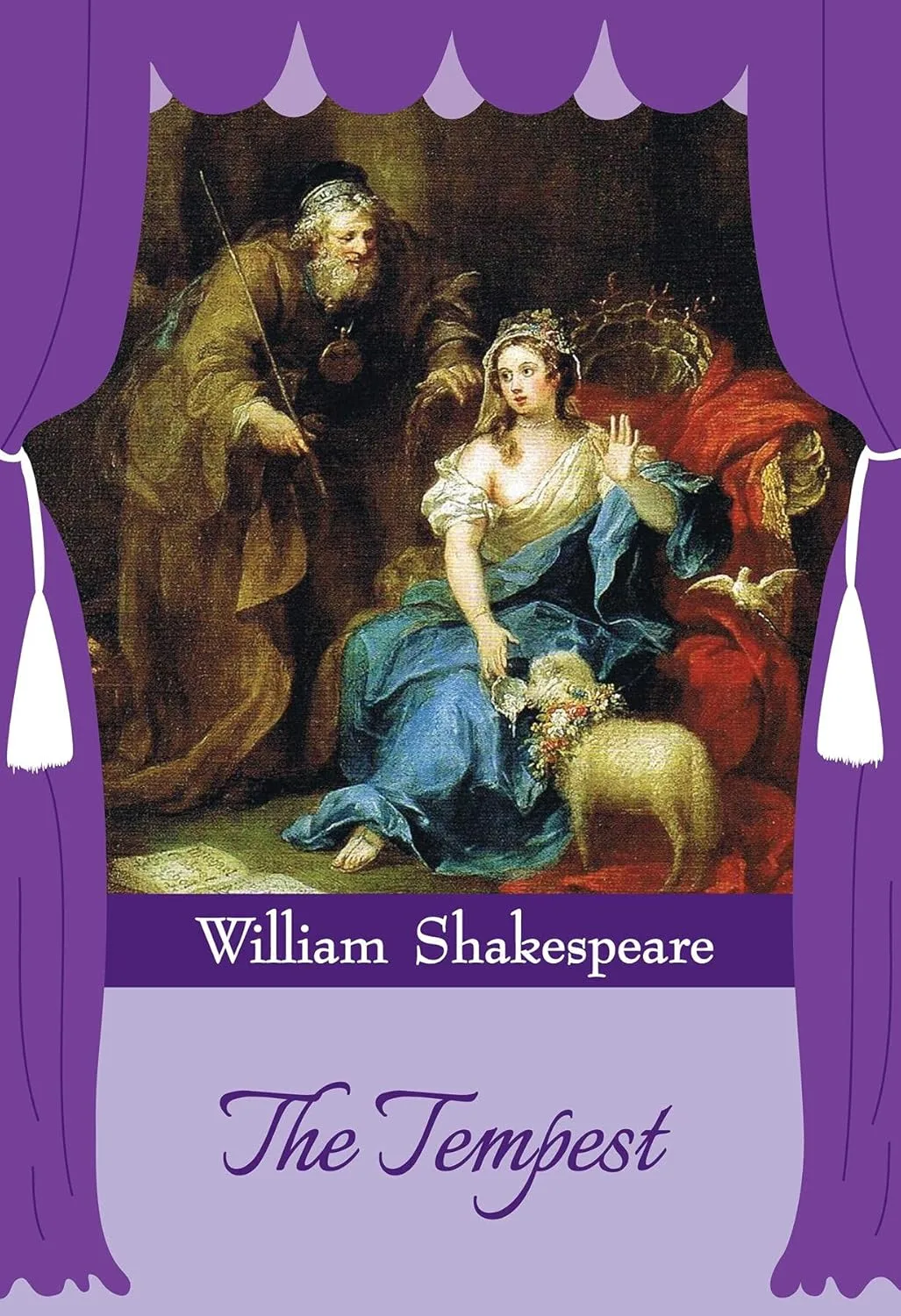
The Tempest
eBook
• INR 86.00
• English
No ratings yet
| Publisher | General Press |
|---|---|
| ASIN/SKU | B07F4T7CQ2 |
| Book Format | eBook |
| Language | English |
| List Price | INR 86.00 |
| Subject Code | DRA003000, DRA004000, DRA010000, FIC004000 |
| Book Code | BD00068498 |
Buy this Book
Amazon Stores
Ebook Stores
Other Stores
Discover The Tempest by William Shakespeare. This book is published by General Press in eBook format, ASIN B07F4T7CQ2, under Literature and Fiction, Classics, Drama.
Book Description
The Tempest by William Shakespeare is one of the playwright’s final and most imaginative works, believed to have been written around 1610–1611. Blending elements of romance, fantasy, and drama, the play explores timeless themes of forgiveness, justice, power, freedom, and reconciliation. Set on a mysterious island filled with magic and wonder, it tells a story of betrayal, redemption, and the healing power of mercy.
The narrative follows Prospero, the rightful Duke of Milan, who has lived in exile with his daughter Miranda after being overthrown by his ambitious brother Antonio. Using his mastery of magic, Prospero conjures a violent storm that brings his former enemies to the island. As they struggle to survive, hidden truths emerge, old conflicts are confronted, and each character is forced to reckon with guilt, ambition, and the consequences of past actions. Along the way, the innocent love that blossoms between Miranda and Ferdinand offers hope for a future built on trust and unity.
Throughout the play, Shakespeare examines the delicate balance between authority and compassion, revenge and forgiveness, and illusion and reality. The magical spirit Ariel and the island’s native inhabitant Caliban add further depth, raising enduring questions about freedom, servitude, and the nature of civilization.
Written in lyrical and evocative language, The Tempest remains one of Shakespeare’s most profound and moving works. Its blend of enchantment, emotional depth, and philosophical reflection continues to captivate readers, reminding them that true strength lies not in vengeance but in mercy, wisdom, and the willingness to let go of the past.
The narrative follows Prospero, the rightful Duke of Milan, who has lived in exile with his daughter Miranda after being overthrown by his ambitious brother Antonio. Using his mastery of magic, Prospero conjures a violent storm that brings his former enemies to the island. As they struggle to survive, hidden truths emerge, old conflicts are confronted, and each character is forced to reckon with guilt, ambition, and the consequences of past actions. Along the way, the innocent love that blossoms between Miranda and Ferdinand offers hope for a future built on trust and unity.
Throughout the play, Shakespeare examines the delicate balance between authority and compassion, revenge and forgiveness, and illusion and reality. The magical spirit Ariel and the island’s native inhabitant Caliban add further depth, raising enduring questions about freedom, servitude, and the nature of civilization.
Written in lyrical and evocative language, The Tempest remains one of Shakespeare’s most profound and moving works. Its blend of enchantment, emotional depth, and philosophical reflection continues to captivate readers, reminding them that true strength lies not in vengeance but in mercy, wisdom, and the willingness to let go of the past.
Author Biography
William Shakespeare (baptised 26 April 1564) was an English poet and playwright, widely regarded as the greatest writer in the English language and the world's pre-eminent dramatist. He is often called England's national poet and the 'Bard of Avon' (or simply "The Bard"). His surviving works consist of 37 plays, 154 sonnets, two long narrative poems, and several other poems. His plays have been translated into every major living language.
Shakespeare was born and raised in Stratford-upon-Avon. Scholars believe that he died on his fifty-second birthday, coinciding with St George’s Day. At the age of 18 he married Anne Hathaway, who bore him three children: Susanna, twins Hamnet and Judith. Between 1585 and 1592 he began a successful career in London as an actor, writer, and part owner of the playing company the Lord Chamberlain's Men, later known as the King's Men. He appears to have retired to Stratford around 1613, where he died three years later.
Shakespeare produced most of his known work between 1590 and 1613. His early plays were mainly comedies and histories, genres he raised to the peak of sophistication and artistry by the end of the sixteenth century. Next he wrote mainly tragedies until about 1608. He was a respected poet and playwright in his own day, but his reputation did not rise to its present heights until the nineteenth century. The Romantics, in particular, acclaimed Shakespeare's genius, and the Victorians hero-worshipped Shakespeare. In the twentieth century, his work was repeatedly adopted and rediscovered by new movements in scholarship and performance. His plays remain highly popular today and are consistently performed and reinterpreted in diverse cultural and political contexts throughout the world.
Shakespeare was born and raised in Stratford-upon-Avon. Scholars believe that he died on his fifty-second birthday, coinciding with St George’s Day. At the age of 18 he married Anne Hathaway, who bore him three children: Susanna, twins Hamnet and Judith. Between 1585 and 1592 he began a successful career in London as an actor, writer, and part owner of the playing company the Lord Chamberlain's Men, later known as the King's Men. He appears to have retired to Stratford around 1613, where he died three years later.
Shakespeare produced most of his known work between 1590 and 1613. His early plays were mainly comedies and histories, genres he raised to the peak of sophistication and artistry by the end of the sixteenth century. Next he wrote mainly tragedies until about 1608. He was a respected poet and playwright in his own day, but his reputation did not rise to its present heights until the nineteenth century. The Romantics, in particular, acclaimed Shakespeare's genius, and the Victorians hero-worshipped Shakespeare. In the twentieth century, his work was repeatedly adopted and rediscovered by new movements in scholarship and performance. His plays remain highly popular today and are consistently performed and reinterpreted in diverse cultural and political contexts throughout the world.
Editorial Reviews
Editorial Reviews will be added soon…
Book Summary
The Tempest by William Shakespeare is one of Shakespeare’s most fascinating and frequently studied plays, combining romance, political drama, magic, comedy, shipwreck, betrayal, and philosophical reflection on power and forgiveness. First performed around 1611, the play follows Prospero, the former Duke of Milan, who has been overthrown by his brother Antonio and forced into exile on a remote island with his young daughter Miranda. Years later, Prospero uses magic to create a violent storm that brings his enemies to the island. What follows is not simply a story of revenge. Instead, The Tempest becomes a profound exploration of forgiveness, authority, freedom, colonialism, family, ambition, illusion, and the possibility of changing after doing wrong. The play’s relatively compact plot conceals a surprisingly complex moral journey, especially for Prospero, who must decide whether to punish those who betrayed him or release his anger and forgive them.
The story begins at sea during a terrifying storm. A ship carrying Alonso, the King of Naples, his son Ferdinand, his brother Sebastian, Antonio, Gonzalo, and other nobles is caught in a violent tempest. The passengers believe that the ship is about to be destroyed. Shakespeare immediately places the audience in a world of confusion and danger, with sailors struggling to control the vessel while the nobles panic. The storm appears chaotic, but it is actually carefully planned. Prospero, who possesses powerful magical abilities, has created the tempest from his island. He wants to bring his old enemies to shore so that he can confront the events that caused his exile.
Prospero lives on the island with his daughter Miranda. He explains to her that the people aboard the ship are connected to their painful past. Years earlier, Prospero was the rightful Duke of Milan, but he became so absorbed in his studies of magic and philosophy that he neglected the practical responsibilities of governing. His brother Antonio took advantage of this weakness. Antonio formed an alliance with Alonso, the King of Naples, and helped remove Prospero from power. Prospero and Miranda were placed in a small boat and sent out to sea. They survived because Gonzalo secretly provided them with food, clothing, and Prospero’s precious books. Eventually, they reached the island where they have lived ever since.
This history is essential to understanding Prospero’s character. He is both victim and ruler. He suffered a genuine betrayal, but he is also a powerful man who controls nearly everyone around him. His magic allows him to manipulate events, command spirits, and influence the people who arrive on the island. He has spent years preparing for the moment when his enemies will return within his reach. The tempest is therefore not merely a natural disaster. It is the beginning of Prospero’s carefully designed confrontation with his past.
One of Prospero’s most important servants is Ariel, a magical spirit who carries out Prospero’s commands. Ariel created much of the illusion surrounding the storm and helps separate the ship’s passengers into different groups. Ariel is loyal to Prospero but longs for freedom. Prospero had rescued Ariel from imprisonment by the witch Sycorax, who had previously controlled the island. Because Prospero freed Ariel, he expects complete obedience in return. Yet their relationship raises an important question that runs throughout the play: what is the difference between liberation and another form of control?
Another central figure is Caliban, the son of Sycorax. Caliban considers the island his inheritance because his mother lived there before Prospero arrived. At first, he helped Prospero and Miranda by teaching them about the island and its resources. Their relationship eventually deteriorated. Prospero now treats Caliban as a servant and threatens him with magical punishment. Caliban resents Prospero deeply and believes that the island has been taken from him. His character has become particularly important in modern interpretations of The Tempest because his situation raises questions about colonization, ownership, exploitation, and the treatment of indigenous peoples.
After the storm, Ferdinand, Alonso’s son, becomes separated from the others. Prospero arranges for Ferdinand and Miranda to meet. Miranda has lived almost entirely away from other young people, so Ferdinand immediately attracts her attention. Ferdinand is equally fascinated by Miranda. Their meeting develops into one of the play’s central romantic relationships. Their love also has a political significance because Ferdinand is the son of the King of Naples, while Miranda is the daughter of the former Duke of Milan. Their marriage can unite families and repair political divisions that once produced betrayal and violence.
Prospero, however, does not simply allow their romance to develop without testing Ferdinand. He accuses Ferdinand of being a potential threat and forces him to perform difficult labor, including carrying and piling logs. Ferdinand accepts the punishment because his love for Miranda is stronger than his resentment. Miranda, seeing him suffer, feels compassion for him. Their relationship is notably innocent compared with the political corruption and betrayal that surround them. Their love represents the possibility of beginning again rather than repeating the conflicts of the older generation.
Meanwhile, Alonso and his companions search for Ferdinand. Alonso is devastated because he believes his son has drowned. His grief makes him vulnerable to despair, while Antonio and Sebastian continue to demonstrate their dangerous ambition. Antonio, the same man who betrayed Prospero years earlier, encourages Sebastian to consider murdering Alonso so that Sebastian can become king of Naples. The possibility of repeating the original crime is important because Shakespeare shows that political ambition has not disappeared. Even after the supernatural disruption of the storm, some characters remain trapped in the same patterns of greed and betrayal.
A comic subplot develops around Caliban, Stephano, and Trinculo. Stephano is Alonso’s drunken butler, while Trinculo is another servant. Caliban encounters them and, impressed by Stephano’s supply of alcohol, decides that Stephano should become his new master. He persuades Stephano to help overthrow Prospero and take control of the island. The three plotters imagine that they can seize Prospero’s power, but their plan is ridiculous and ultimately fails. Shakespeare uses this comic episode to parody political rebellion and the desire for power. Caliban wants freedom from Prospero, yet his solution is to replace Prospero with another master, showing how difficult genuine freedom can be when a person has lived under domination.
As the play develops, Prospero’s control over the island becomes increasingly complete. He uses magical spirits and elaborate illusions to frighten, confuse, and confront his enemies. At one point, Ariel appears before Alonso and the other nobles in the form of a harpy and accuses them of their past wrongdoing. The men are overwhelmed by guilt and supernatural terror. Alonso, in particular, believes that Ferdinand’s death is punishment for what he did to Prospero years earlier.
This moment is crucial because Prospero has finally achieved the power he wanted. His enemies are helpless. He could punish them severely, but he begins to recognize that revenge will not necessarily heal the past. Ariel observes the suffering of the human characters and expresses sympathy for them. Prospero realizes that if a spirit without human feelings can feel compassion, he too should be capable of mercy. His attitude begins to change.
The central theme of The Tempest is forgiveness. Prospero has every reason to be angry. His brother betrayed him, his political position was stolen, and he and Miranda were exiled. Yet Shakespeare does not present revenge as the ultimate solution. Prospero eventually chooses forgiveness over destruction. This decision is the emotional center of the play. He understands that holding onto anger gives the past continued power over him. By forgiving his enemies, Prospero can finally leave the past behind.
Prospero therefore gives up the revenge that he has been planning for years. He confronts Antonio and Alonso and reveals his identity. Alonso is shocked and relieved to discover that Prospero is alive. Prospero also reveals that Ferdinand is alive, and the young couple’s reunion brings enormous joy to Alonso. Their love provides evidence that the future does not have to repeat the mistakes of the past. Prospero and Alonso can establish a new relationship through their children.
The discovery of Ferdinand and Miranda together also helps resolve the political conflict. Alonso accepts Miranda as Ferdinand’s future wife, and the marriage promises to unite Naples and Milan. Antonio and Sebastian, however, are not given the same kind of elaborate redemption. Antonio does not openly express deep remorse, which makes the ending more complicated than a simple moral transformation. Shakespeare leaves some characters morally unfinished, reminding the audience that forgiveness does not necessarily mean that every wrongdoer becomes virtuous.
Prospero’s relationship with Ariel also reaches its natural conclusion. After accomplishing his purposes, Prospero promises Ariel freedom. This is one of the most significant moments in the play because Prospero finally begins releasing the people and spirits he has controlled. He also decides to abandon magic. His magical powers have allowed him to dominate the island and manipulate his enemies, but he recognizes that he must eventually return to ordinary human life.
The ending also brings Caliban, Stephano, and Trinculo’s failed rebellion to a close. Their attempt to overthrow Prospero collapses, and Caliban recognizes that he has been foolish. His final attitude suggests that he has learned something from the experience, although Shakespeare does not provide him with the same kind of political restoration or reconciliation given to the European nobles. The unresolved complexity surrounding Caliban is one reason modern readers continue to debate the play’s treatment of power and colonialism.
Another major theme in The Tempest is the nature of power. Prospero begins the play as a wronged ruler but gradually becomes a ruler of the island himself. He commands Ariel, controls Caliban, tests Ferdinand, manipulates his enemies, and determines the course of events. This creates an important moral tension: a person who has suffered from political oppression can still become controlling when given power. Shakespeare does not present authority as automatically good or bad. Instead, he asks how people use power and whether they can willingly give it up.
The theme of illusion and reality is equally important. Prospero’s magic creates spectacles, music, storms, spirits, and visions. Characters repeatedly struggle to understand what is real. This makes the island resemble a theater, where Prospero acts as both magician and director. The connection between Prospero and Shakespeare himself has led many readers to interpret the play as a meditation on art and creativity. Prospero creates a temporary world, controls its characters, and eventually dismisses the spectacle. His decision to renounce magic can therefore be understood as a symbolic farewell to artistic power itself.
The title The Tempest has both literal and symbolic meanings. The physical storm begins the story, but the characters also experience emotional and political tempests. Alonso suffers grief, Antonio and Sebastian experience ambition, Caliban experiences resentment, Miranda encounters love, and Prospero confronts anger and forgiveness. By the end, the external storm has passed, but the more important storm inside Prospero has also been calmed.
Ultimately, The Tempest by William Shakespeare is a story about what happens after betrayal. Rather than ending with violent revenge, Shakespeare asks whether a damaged past can be transformed through forgiveness. Prospero begins as a man consumed by the memory of what was done to him. He has spent years developing the power necessary to control his enemies. Yet when he finally possesses absolute power over them, he realizes that revenge cannot restore the life he lost. Forgiveness, instead, allows him to move forward.
The play concludes with reconciliation, freedom, and departure. Prospero prepares to return to Milan, where he can reclaim his political position. Miranda and Ferdinand look toward a new future together. Ariel is finally promised freedom. Caliban remains on the island, while the political relationships among the human characters are repaired as far as possible. Prospero prepares to leave behind the magical world he created.
For readers seeking a summary of The Tempest, the play can ultimately be understood as Shakespeare’s exploration of revenge versus forgiveness, power versus freedom, and illusion versus reality. Its story of Prospero, Miranda, Ariel, Caliban, Ferdinand, Alonso, and Antonio combines adventure with deep philosophical questions. The storm that begins the play destroys the old order, but it also creates an opportunity for renewal. Prospero’s greatest achievement is not defeating his enemies; it is overcoming his desire to destroy them. By choosing mercy, relinquishing magic, freeing Ariel, and preparing to return to the human world, he finally breaks free from the past. That is what gives The Tempest its enduring emotional power: beneath its magic and spectacle is a deeply human story about being hurt, holding onto anger, and eventually finding the courage to let go.
The story begins at sea during a terrifying storm. A ship carrying Alonso, the King of Naples, his son Ferdinand, his brother Sebastian, Antonio, Gonzalo, and other nobles is caught in a violent tempest. The passengers believe that the ship is about to be destroyed. Shakespeare immediately places the audience in a world of confusion and danger, with sailors struggling to control the vessel while the nobles panic. The storm appears chaotic, but it is actually carefully planned. Prospero, who possesses powerful magical abilities, has created the tempest from his island. He wants to bring his old enemies to shore so that he can confront the events that caused his exile.
Prospero lives on the island with his daughter Miranda. He explains to her that the people aboard the ship are connected to their painful past. Years earlier, Prospero was the rightful Duke of Milan, but he became so absorbed in his studies of magic and philosophy that he neglected the practical responsibilities of governing. His brother Antonio took advantage of this weakness. Antonio formed an alliance with Alonso, the King of Naples, and helped remove Prospero from power. Prospero and Miranda were placed in a small boat and sent out to sea. They survived because Gonzalo secretly provided them with food, clothing, and Prospero’s precious books. Eventually, they reached the island where they have lived ever since.
This history is essential to understanding Prospero’s character. He is both victim and ruler. He suffered a genuine betrayal, but he is also a powerful man who controls nearly everyone around him. His magic allows him to manipulate events, command spirits, and influence the people who arrive on the island. He has spent years preparing for the moment when his enemies will return within his reach. The tempest is therefore not merely a natural disaster. It is the beginning of Prospero’s carefully designed confrontation with his past.
One of Prospero’s most important servants is Ariel, a magical spirit who carries out Prospero’s commands. Ariel created much of the illusion surrounding the storm and helps separate the ship’s passengers into different groups. Ariel is loyal to Prospero but longs for freedom. Prospero had rescued Ariel from imprisonment by the witch Sycorax, who had previously controlled the island. Because Prospero freed Ariel, he expects complete obedience in return. Yet their relationship raises an important question that runs throughout the play: what is the difference between liberation and another form of control?
Another central figure is Caliban, the son of Sycorax. Caliban considers the island his inheritance because his mother lived there before Prospero arrived. At first, he helped Prospero and Miranda by teaching them about the island and its resources. Their relationship eventually deteriorated. Prospero now treats Caliban as a servant and threatens him with magical punishment. Caliban resents Prospero deeply and believes that the island has been taken from him. His character has become particularly important in modern interpretations of The Tempest because his situation raises questions about colonization, ownership, exploitation, and the treatment of indigenous peoples.
After the storm, Ferdinand, Alonso’s son, becomes separated from the others. Prospero arranges for Ferdinand and Miranda to meet. Miranda has lived almost entirely away from other young people, so Ferdinand immediately attracts her attention. Ferdinand is equally fascinated by Miranda. Their meeting develops into one of the play’s central romantic relationships. Their love also has a political significance because Ferdinand is the son of the King of Naples, while Miranda is the daughter of the former Duke of Milan. Their marriage can unite families and repair political divisions that once produced betrayal and violence.
Prospero, however, does not simply allow their romance to develop without testing Ferdinand. He accuses Ferdinand of being a potential threat and forces him to perform difficult labor, including carrying and piling logs. Ferdinand accepts the punishment because his love for Miranda is stronger than his resentment. Miranda, seeing him suffer, feels compassion for him. Their relationship is notably innocent compared with the political corruption and betrayal that surround them. Their love represents the possibility of beginning again rather than repeating the conflicts of the older generation.
Meanwhile, Alonso and his companions search for Ferdinand. Alonso is devastated because he believes his son has drowned. His grief makes him vulnerable to despair, while Antonio and Sebastian continue to demonstrate their dangerous ambition. Antonio, the same man who betrayed Prospero years earlier, encourages Sebastian to consider murdering Alonso so that Sebastian can become king of Naples. The possibility of repeating the original crime is important because Shakespeare shows that political ambition has not disappeared. Even after the supernatural disruption of the storm, some characters remain trapped in the same patterns of greed and betrayal.
A comic subplot develops around Caliban, Stephano, and Trinculo. Stephano is Alonso’s drunken butler, while Trinculo is another servant. Caliban encounters them and, impressed by Stephano’s supply of alcohol, decides that Stephano should become his new master. He persuades Stephano to help overthrow Prospero and take control of the island. The three plotters imagine that they can seize Prospero’s power, but their plan is ridiculous and ultimately fails. Shakespeare uses this comic episode to parody political rebellion and the desire for power. Caliban wants freedom from Prospero, yet his solution is to replace Prospero with another master, showing how difficult genuine freedom can be when a person has lived under domination.
As the play develops, Prospero’s control over the island becomes increasingly complete. He uses magical spirits and elaborate illusions to frighten, confuse, and confront his enemies. At one point, Ariel appears before Alonso and the other nobles in the form of a harpy and accuses them of their past wrongdoing. The men are overwhelmed by guilt and supernatural terror. Alonso, in particular, believes that Ferdinand’s death is punishment for what he did to Prospero years earlier.
This moment is crucial because Prospero has finally achieved the power he wanted. His enemies are helpless. He could punish them severely, but he begins to recognize that revenge will not necessarily heal the past. Ariel observes the suffering of the human characters and expresses sympathy for them. Prospero realizes that if a spirit without human feelings can feel compassion, he too should be capable of mercy. His attitude begins to change.
The central theme of The Tempest is forgiveness. Prospero has every reason to be angry. His brother betrayed him, his political position was stolen, and he and Miranda were exiled. Yet Shakespeare does not present revenge as the ultimate solution. Prospero eventually chooses forgiveness over destruction. This decision is the emotional center of the play. He understands that holding onto anger gives the past continued power over him. By forgiving his enemies, Prospero can finally leave the past behind.
Prospero therefore gives up the revenge that he has been planning for years. He confronts Antonio and Alonso and reveals his identity. Alonso is shocked and relieved to discover that Prospero is alive. Prospero also reveals that Ferdinand is alive, and the young couple’s reunion brings enormous joy to Alonso. Their love provides evidence that the future does not have to repeat the mistakes of the past. Prospero and Alonso can establish a new relationship through their children.
The discovery of Ferdinand and Miranda together also helps resolve the political conflict. Alonso accepts Miranda as Ferdinand’s future wife, and the marriage promises to unite Naples and Milan. Antonio and Sebastian, however, are not given the same kind of elaborate redemption. Antonio does not openly express deep remorse, which makes the ending more complicated than a simple moral transformation. Shakespeare leaves some characters morally unfinished, reminding the audience that forgiveness does not necessarily mean that every wrongdoer becomes virtuous.
Prospero’s relationship with Ariel also reaches its natural conclusion. After accomplishing his purposes, Prospero promises Ariel freedom. This is one of the most significant moments in the play because Prospero finally begins releasing the people and spirits he has controlled. He also decides to abandon magic. His magical powers have allowed him to dominate the island and manipulate his enemies, but he recognizes that he must eventually return to ordinary human life.
The ending also brings Caliban, Stephano, and Trinculo’s failed rebellion to a close. Their attempt to overthrow Prospero collapses, and Caliban recognizes that he has been foolish. His final attitude suggests that he has learned something from the experience, although Shakespeare does not provide him with the same kind of political restoration or reconciliation given to the European nobles. The unresolved complexity surrounding Caliban is one reason modern readers continue to debate the play’s treatment of power and colonialism.
Another major theme in The Tempest is the nature of power. Prospero begins the play as a wronged ruler but gradually becomes a ruler of the island himself. He commands Ariel, controls Caliban, tests Ferdinand, manipulates his enemies, and determines the course of events. This creates an important moral tension: a person who has suffered from political oppression can still become controlling when given power. Shakespeare does not present authority as automatically good or bad. Instead, he asks how people use power and whether they can willingly give it up.
The theme of illusion and reality is equally important. Prospero’s magic creates spectacles, music, storms, spirits, and visions. Characters repeatedly struggle to understand what is real. This makes the island resemble a theater, where Prospero acts as both magician and director. The connection between Prospero and Shakespeare himself has led many readers to interpret the play as a meditation on art and creativity. Prospero creates a temporary world, controls its characters, and eventually dismisses the spectacle. His decision to renounce magic can therefore be understood as a symbolic farewell to artistic power itself.
The title The Tempest has both literal and symbolic meanings. The physical storm begins the story, but the characters also experience emotional and political tempests. Alonso suffers grief, Antonio and Sebastian experience ambition, Caliban experiences resentment, Miranda encounters love, and Prospero confronts anger and forgiveness. By the end, the external storm has passed, but the more important storm inside Prospero has also been calmed.
Ultimately, The Tempest by William Shakespeare is a story about what happens after betrayal. Rather than ending with violent revenge, Shakespeare asks whether a damaged past can be transformed through forgiveness. Prospero begins as a man consumed by the memory of what was done to him. He has spent years developing the power necessary to control his enemies. Yet when he finally possesses absolute power over them, he realizes that revenge cannot restore the life he lost. Forgiveness, instead, allows him to move forward.
The play concludes with reconciliation, freedom, and departure. Prospero prepares to return to Milan, where he can reclaim his political position. Miranda and Ferdinand look toward a new future together. Ariel is finally promised freedom. Caliban remains on the island, while the political relationships among the human characters are repaired as far as possible. Prospero prepares to leave behind the magical world he created.
For readers seeking a summary of The Tempest, the play can ultimately be understood as Shakespeare’s exploration of revenge versus forgiveness, power versus freedom, and illusion versus reality. Its story of Prospero, Miranda, Ariel, Caliban, Ferdinand, Alonso, and Antonio combines adventure with deep philosophical questions. The storm that begins the play destroys the old order, but it also creates an opportunity for renewal. Prospero’s greatest achievement is not defeating his enemies; it is overcoming his desire to destroy them. By choosing mercy, relinquishing magic, freeing Ariel, and preparing to return to the human world, he finally breaks free from the past. That is what gives The Tempest its enduring emotional power: beneath its magic and spectacle is a deeply human story about being hurt, holding onto anger, and eventually finding the courage to let go.
Sample Chapters
Sample Chapters will be added soon…
Reader Reviews
No reviews yet.
The Tempest