
The Magic of Faith
eBook
• INR 86.00
• English
No ratings yet
| Publisher | General Press |
|---|---|
| ASIN/SKU | B07KX85LZZ |
| Book Format | eBook |
| Language | English |
| List Price | INR 86.00 |
| Subject Code | SEL032000, REL067000, OCC010000, SEL031000 |
| Book Code | BD00068515 |
Buy this Book
Amazon Stores
Ebook Stores
Other Stores
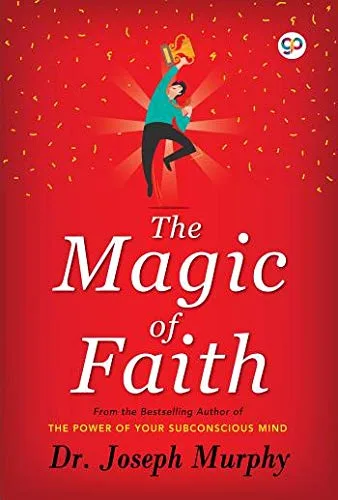
Discover The Magic of Faith by Joseph Murphy. This book is published by General Press in eBook format, ASIN B07KX85LZZ, under Self-Help, Spirituality.
Book Description
The Magic of Faith by Joseph Murphy is an inspiring work of spiritual self-help that explores the transformative power of faith in shaping one's thoughts, attitudes, and life experiences. Drawing on principles of spirituality, psychology, and practical living, Murphy explains that faith is not simply a religious belief but a dynamic force that influences the subconscious mind and guides human actions. He encourages readers to cultivate unwavering trust in the positive possibilities of life, believing that inner conviction can become a powerful catalyst for personal growth and lasting fulfillment.
Throughout the book, Murphy illustrates how fear, doubt, and negative thinking often limit human potential, while confidence, hope, and constructive belief can open the door to new opportunities. He emphasizes the importance of prayer, positive affirmations, visualization, and disciplined thinking as tools for strengthening faith and overcoming life's challenges. Rather than presenting faith as passive optimism, he describes it as an active state of mind that inspires purposeful action, resilience, and emotional balance. Through practical examples and reflective insights, the book encourages readers to replace limiting beliefs with empowering ones and approach life with courage and expectation.
Written in a warm, accessible, and encouraging style, The Magic of Faith blends timeless spiritual wisdom with practical guidance for everyday living. Its central message is that genuine faith begins within and has the power to transform both perspective and behavior. More than a motivational book, it is a thoughtful invitation to develop inner peace, self-confidence, and trust in life's possibilities, reminding readers that enduring success and happiness are often rooted in the strength of one's beliefs and the willingness to act upon them.
Throughout the book, Murphy illustrates how fear, doubt, and negative thinking often limit human potential, while confidence, hope, and constructive belief can open the door to new opportunities. He emphasizes the importance of prayer, positive affirmations, visualization, and disciplined thinking as tools for strengthening faith and overcoming life's challenges. Rather than presenting faith as passive optimism, he describes it as an active state of mind that inspires purposeful action, resilience, and emotional balance. Through practical examples and reflective insights, the book encourages readers to replace limiting beliefs with empowering ones and approach life with courage and expectation.
Written in a warm, accessible, and encouraging style, The Magic of Faith blends timeless spiritual wisdom with practical guidance for everyday living. Its central message is that genuine faith begins within and has the power to transform both perspective and behavior. More than a motivational book, it is a thoughtful invitation to develop inner peace, self-confidence, and trust in life's possibilities, reminding readers that enduring success and happiness are often rooted in the strength of one's beliefs and the willingness to act upon them.
Author Biography
Born in 1898 in County Cork, Ireland, Joseph Murphy was raised in a devout Catholic family and initially studied for the priesthood within the Jesuit order. However, his expanding intellectual curiosity soon led him to question traditional orthodox teachings. In his early twenties, he made the pivotal decision to leave the seminary and emigrate to the United States, arriving in New York City with very little money. There, he worked as a pharmacist while continuing his intense spiritual and philosophical explorations.
In America, Murphy became deeply immersed in the New Thought movement, studying under prominent spiritual teachers like Ernest Holmes and Emmet Fox. His unyielding quest for spiritual understanding also took him to India, where he spent significant time studying Eastern religions and Hindu philosophy. This diverse theological education allowed him to uniquely synthesize Eastern spiritual traditions with Western psychological concepts, forming the bedrock of his later teachings on the power of the human mind.
Upon returning to the United States, Murphy relocated to Los Angeles and became an ordained minister of the Church of Divine Science. Over the next several decades, he built one of the largest New Thought congregations in the country. His dynamic weekly Sunday lectures attracted thousands of attendees, and his popular radio broadcasts reached millions globally, establishing him as a premier voice in the mid-twentieth century self-help and human potential movements.
Murphy's enduring legacy was firmly cemented in 1963 with the publication of his masterpiece, The Power of Your Subconscious Mind. The book elegantly combined spiritual wisdom with practical psychological techniques, arguing that individuals can dramatically alter their reality, health, and success by reprogramming their subconscious beliefs. It quickly became a massive international bestseller and remains a foundational text in modern personal development literature, continuing to inspire countless readers long after Murphy's death in 1981.
In America, Murphy became deeply immersed in the New Thought movement, studying under prominent spiritual teachers like Ernest Holmes and Emmet Fox. His unyielding quest for spiritual understanding also took him to India, where he spent significant time studying Eastern religions and Hindu philosophy. This diverse theological education allowed him to uniquely synthesize Eastern spiritual traditions with Western psychological concepts, forming the bedrock of his later teachings on the power of the human mind.
Upon returning to the United States, Murphy relocated to Los Angeles and became an ordained minister of the Church of Divine Science. Over the next several decades, he built one of the largest New Thought congregations in the country. His dynamic weekly Sunday lectures attracted thousands of attendees, and his popular radio broadcasts reached millions globally, establishing him as a premier voice in the mid-twentieth century self-help and human potential movements.
Murphy's enduring legacy was firmly cemented in 1963 with the publication of his masterpiece, The Power of Your Subconscious Mind. The book elegantly combined spiritual wisdom with practical psychological techniques, arguing that individuals can dramatically alter their reality, health, and success by reprogramming their subconscious beliefs. It quickly became a massive international bestseller and remains a foundational text in modern personal development literature, continuing to inspire countless readers long after Murphy's death in 1981.
Editorial Reviews
Editorial Reviews will be added soon…
Book Summary
The Magic of Faith by Joseph Murphy is a spiritual self-help book built around a simple but powerful idea: faith is not merely the acceptance of a religious belief; it is a creative force that can transform the way a person thinks, feels, acts, and experiences life. Murphy argues that every human being possesses a deep spiritual power within, and that this inner power becomes available when we learn to replace fear, doubt, and limitation with faith, love, confidence, and a clear mental picture of what we desire. The book explores eight closely connected themes, including the presence of God, the realization of desire, happiness, relationships, emotional control, and the transformation of one’s sense of identity.
Murphy’s starting point is that the divine is not distant from human beings. He repeatedly encourages readers to recognize the presence of God within themselves. For him, God is an infinite intelligence and source of wisdom, love, peace, and creative power. The individual does not have to search for this power somewhere outside. Instead, spiritual growth begins by becoming aware of it within. Murphy believes that this awareness can change a person’s entire outlook. Someone who sees himself as helpless may live with fear and uncertainty, while someone who recognizes an inner spiritual source can develop confidence, peace, and a stronger sense of possibility.
The opening chapter, “The Song of Triumph,” draws inspiration from the biblical Song of Solomon. Murphy interprets its language of love as a spiritual relationship between the individual and the Divine. For him, faith should not be cold or mechanical. It should be accompanied by love, joy, enthusiasm, and a feeling of intimate connection with God. Prayer therefore becomes more than asking for favors. It becomes an expression of trust and communion. Murphy encourages readers to concentrate on the feeling of having their prayers answered rather than continually thinking about obstacles. Instead of allowing fear to dominate the imagination, they should cultivate an inner sense of victory, peace, and gratitude.
This leads naturally to the chapter on “The Practice of the Presence of God.” Murphy teaches that a person should consciously remember the divine presence throughout daily life. Rather than treating spirituality as something reserved for churches or special occasions, he presents it as a continuous inner awareness. When a person faces a difficult situation, he should remember that wisdom and strength are available within. When experiencing fear, he should turn inward toward peace. When facing uncertainty, he should trust that guidance can emerge through the deeper mind. This practice gradually changes the individual’s mental habits and creates a more peaceful relationship with life.
One of the book’s central subjects is “Realizing Your Desire.” Murphy believes that desire itself can be meaningful because it points toward something a person is capable of imagining and pursuing. The important question is not simply what we want, but how we mentally and emotionally relate to that desire. If someone wants success but constantly imagines failure, rejection, or poverty, the desire is weakened by contradictory thoughts. Murphy therefore encourages readers to form a clear mental picture of the desired outcome and to accept it inwardly as something possible and attainable.
For Murphy, faith means more than hoping that something good might happen. It means developing an inner conviction that the desired result can become real. This is why imagination plays such an important role. The mind should become familiar with the desired state before external circumstances appear to confirm it. A person who repeatedly imagines himself as confident, successful, peaceful, or prosperous begins to develop an inner identity consistent with those qualities. The emphasis is therefore on changing the inner picture first.
The title chapter, “The Magic of Faith,” develops this principle most directly. Murphy describes faith as a force that helps people overcome fear and recognize opportunities. Doubt often appears when a person attempts something unfamiliar. Instead of allowing that doubt to become a permanent conclusion, Murphy advises the reader to challenge it immediately. Fear, in his view, often reflects inherited assumptions about failure, limitation, and inadequacy. Faith replaces those assumptions with a constructive conviction that the individual has access to greater resources than he may have previously believed.
Murphy uses the biblical story of Peter walking on the water to illustrate the relationship between faith and doubt. As long as Peter maintains his confidence, he moves forward, but when fear takes control, he begins to sink. Murphy interprets this story psychologically and spiritually: the dominant idea in the mind influences emotional reactions and behavior. When confidence dominates, a person acts with courage; when fear dominates, the same person may retreat from opportunities.
The next major theme is happiness. Murphy argues that happiness should not be treated solely as a reward that arrives after every external problem has been solved. It can become a deliberate mental and spiritual choice. People often tell themselves that they will be happy once they obtain more money, receive recognition, find a relationship, or solve a particular difficulty. Murphy challenges this approach by encouraging readers to cultivate peace and gratitude in the present. Morning affirmations, prayer, constructive thinking, and appreciation can help establish happiness as an inner habit rather than something completely dependent upon circumstances.
Murphy then turns to human relationships. “Harmonious Human Relations” teaches that people often react not simply to what others do, but to the thoughts and interpretations they attach to those actions. If someone continually thinks about resentment, anger, or revenge, he carries those emotions within himself. Murphy therefore recommends responding to others with goodwill, forgiveness, and constructive thoughts. This does not mean approving of harmful behavior; rather, it means refusing to allow another person’s actions to control one’s inner peace.
Another important section, “How to Control Your Emotions,” explores the connection between thought and feeling. Murphy does not suggest that people should pretend negative emotions do not exist. Instead, he encourages them to recognize that emotions can be influenced by the thoughts they repeatedly entertain. Fear can be strengthened by fearful imagination, while calmness can be strengthened by thoughts of security and trust. By changing habitual thinking, a person can gradually develop greater emotional stability.
The final theme, “Changing the Feeling of ‘I,’” brings the book’s ideas together. Murphy argues that people often live according to an unconscious definition of who they believe themselves to be. Someone who thinks, “I am unlucky,” “I am weak,” or “I can never succeed” may unknowingly organize his behavior around that identity. Murphy encourages readers to replace such limiting definitions with a deeper spiritual identity. His suggested affirmation centers on the idea that the individual is spirit and is connected with the presence of God. Through repeated practice, he believes this new sense of identity can influence thought, feeling, and conduct.
Ultimately, The Magic of Faith is a book about inner transformation. Murphy asks readers to stop seeing themselves as passive victims of circumstances and to recognize the importance of their thoughts, beliefs, emotions, and spiritual awareness. His philosophy is rooted in the New Thought tradition and includes claims about faith and the mind that modern readers may interpret spiritually rather than scientifically. Nevertheless, the book’s practical message is clear: fear and negative expectations can restrict human potential, while confidence, constructive imagination, love, and purposeful thinking can encourage a person to live more courageously.
The “magic” in Murphy’s teaching is therefore the transformation that occurs when belief becomes a lived experience. Faith gives desire direction, imagination gives it form, emotion gives it vitality, and persistent practice helps turn an inner conviction into a way of living. Above all, Murphy wants readers to understand that peace, confidence, happiness, and spiritual strength are not qualities reserved for a fortunate few. They can be cultivated by anyone willing to examine the inner world and consciously choose more life-giving beliefs. In this sense, the book is less about waiting for miracles and more about discovering a deeper source of hope and possibility within oneself.
Murphy’s starting point is that the divine is not distant from human beings. He repeatedly encourages readers to recognize the presence of God within themselves. For him, God is an infinite intelligence and source of wisdom, love, peace, and creative power. The individual does not have to search for this power somewhere outside. Instead, spiritual growth begins by becoming aware of it within. Murphy believes that this awareness can change a person’s entire outlook. Someone who sees himself as helpless may live with fear and uncertainty, while someone who recognizes an inner spiritual source can develop confidence, peace, and a stronger sense of possibility.
The opening chapter, “The Song of Triumph,” draws inspiration from the biblical Song of Solomon. Murphy interprets its language of love as a spiritual relationship between the individual and the Divine. For him, faith should not be cold or mechanical. It should be accompanied by love, joy, enthusiasm, and a feeling of intimate connection with God. Prayer therefore becomes more than asking for favors. It becomes an expression of trust and communion. Murphy encourages readers to concentrate on the feeling of having their prayers answered rather than continually thinking about obstacles. Instead of allowing fear to dominate the imagination, they should cultivate an inner sense of victory, peace, and gratitude.
This leads naturally to the chapter on “The Practice of the Presence of God.” Murphy teaches that a person should consciously remember the divine presence throughout daily life. Rather than treating spirituality as something reserved for churches or special occasions, he presents it as a continuous inner awareness. When a person faces a difficult situation, he should remember that wisdom and strength are available within. When experiencing fear, he should turn inward toward peace. When facing uncertainty, he should trust that guidance can emerge through the deeper mind. This practice gradually changes the individual’s mental habits and creates a more peaceful relationship with life.
One of the book’s central subjects is “Realizing Your Desire.” Murphy believes that desire itself can be meaningful because it points toward something a person is capable of imagining and pursuing. The important question is not simply what we want, but how we mentally and emotionally relate to that desire. If someone wants success but constantly imagines failure, rejection, or poverty, the desire is weakened by contradictory thoughts. Murphy therefore encourages readers to form a clear mental picture of the desired outcome and to accept it inwardly as something possible and attainable.
For Murphy, faith means more than hoping that something good might happen. It means developing an inner conviction that the desired result can become real. This is why imagination plays such an important role. The mind should become familiar with the desired state before external circumstances appear to confirm it. A person who repeatedly imagines himself as confident, successful, peaceful, or prosperous begins to develop an inner identity consistent with those qualities. The emphasis is therefore on changing the inner picture first.
The title chapter, “The Magic of Faith,” develops this principle most directly. Murphy describes faith as a force that helps people overcome fear and recognize opportunities. Doubt often appears when a person attempts something unfamiliar. Instead of allowing that doubt to become a permanent conclusion, Murphy advises the reader to challenge it immediately. Fear, in his view, often reflects inherited assumptions about failure, limitation, and inadequacy. Faith replaces those assumptions with a constructive conviction that the individual has access to greater resources than he may have previously believed.
Murphy uses the biblical story of Peter walking on the water to illustrate the relationship between faith and doubt. As long as Peter maintains his confidence, he moves forward, but when fear takes control, he begins to sink. Murphy interprets this story psychologically and spiritually: the dominant idea in the mind influences emotional reactions and behavior. When confidence dominates, a person acts with courage; when fear dominates, the same person may retreat from opportunities.
The next major theme is happiness. Murphy argues that happiness should not be treated solely as a reward that arrives after every external problem has been solved. It can become a deliberate mental and spiritual choice. People often tell themselves that they will be happy once they obtain more money, receive recognition, find a relationship, or solve a particular difficulty. Murphy challenges this approach by encouraging readers to cultivate peace and gratitude in the present. Morning affirmations, prayer, constructive thinking, and appreciation can help establish happiness as an inner habit rather than something completely dependent upon circumstances.
Murphy then turns to human relationships. “Harmonious Human Relations” teaches that people often react not simply to what others do, but to the thoughts and interpretations they attach to those actions. If someone continually thinks about resentment, anger, or revenge, he carries those emotions within himself. Murphy therefore recommends responding to others with goodwill, forgiveness, and constructive thoughts. This does not mean approving of harmful behavior; rather, it means refusing to allow another person’s actions to control one’s inner peace.
Another important section, “How to Control Your Emotions,” explores the connection between thought and feeling. Murphy does not suggest that people should pretend negative emotions do not exist. Instead, he encourages them to recognize that emotions can be influenced by the thoughts they repeatedly entertain. Fear can be strengthened by fearful imagination, while calmness can be strengthened by thoughts of security and trust. By changing habitual thinking, a person can gradually develop greater emotional stability.
The final theme, “Changing the Feeling of ‘I,’” brings the book’s ideas together. Murphy argues that people often live according to an unconscious definition of who they believe themselves to be. Someone who thinks, “I am unlucky,” “I am weak,” or “I can never succeed” may unknowingly organize his behavior around that identity. Murphy encourages readers to replace such limiting definitions with a deeper spiritual identity. His suggested affirmation centers on the idea that the individual is spirit and is connected with the presence of God. Through repeated practice, he believes this new sense of identity can influence thought, feeling, and conduct.
Ultimately, The Magic of Faith is a book about inner transformation. Murphy asks readers to stop seeing themselves as passive victims of circumstances and to recognize the importance of their thoughts, beliefs, emotions, and spiritual awareness. His philosophy is rooted in the New Thought tradition and includes claims about faith and the mind that modern readers may interpret spiritually rather than scientifically. Nevertheless, the book’s practical message is clear: fear and negative expectations can restrict human potential, while confidence, constructive imagination, love, and purposeful thinking can encourage a person to live more courageously.
The “magic” in Murphy’s teaching is therefore the transformation that occurs when belief becomes a lived experience. Faith gives desire direction, imagination gives it form, emotion gives it vitality, and persistent practice helps turn an inner conviction into a way of living. Above all, Murphy wants readers to understand that peace, confidence, happiness, and spiritual strength are not qualities reserved for a fortunate few. They can be cultivated by anyone willing to examine the inner world and consciously choose more life-giving beliefs. In this sense, the book is less about waiting for miracles and more about discovering a deeper source of hope and possibility within oneself.
Sample Chapters
Sample Chapters will be added soon…
Reader Reviews
No reviews yet.
The Magic of Faith
Download Cover Image
Do you want to download the full cover image for The Magic of Faith?