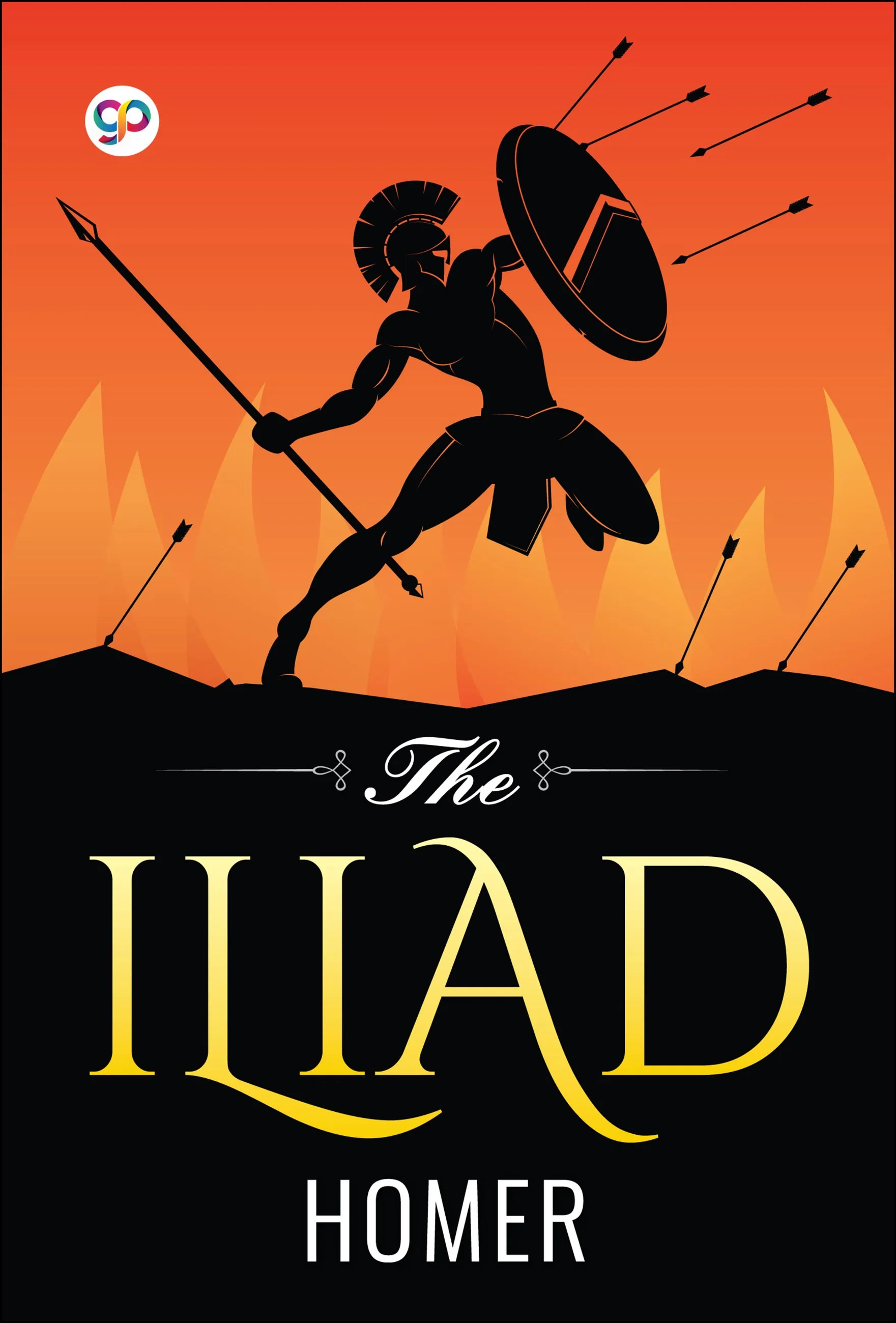
The Iliad
eBook
• INR 51.00
• English
• 9789388118859
No ratings yet
| Publisher | General Press |
|---|---|
| ISBN13 | 9789388118859 |
| ASIN/SKU | B07L42769P |
| Book Format | eBook |
| Language | English |
| List Price | INR 51.00 |
| Subject Code | POE014000, FIC004000 |
| Publishing Date | 27/11/2018 |
| Book Code | BD00068522 |
Buy this Book
Amazon Stores
Ebook Stores
Other Stores
Discover The Iliad by Homer. This book is published by General Press in eBook format, ISBN 9789388118859, ASIN B07L42769P, under Literature and Fiction, Poetry.
Book Description
Few works of literature have captured the fury, pride, grief, and glory of war as powerfully as 'The Iliad'. Written by Homer, this ancient Greek epic poem and classic work of heroic literature centers on the Trojan War, but at its heart is a deeply human story about anger, honor, friendship, loss, and the terrible cost of conflict.
The poem begins with a bitter dispute between Achilles, the greatest warrior among the Greeks, and Agamemnon, the leader of the Greek forces. Their quarrel sets off a chain of events that changes the course of the war and leaves the Greek army struggling against the Trojans. As battles rage outside the walls of Troy, Homer moves beyond the clash of armies to explore the emotions of the people caught within it. Achilles wrestles with wounded pride and questions of honor, while Hector, Troy’s greatest defender, faces the responsibilities of protecting his city, family, and people. Gods and goddesses also interfere in the conflict, taking sides and influencing human lives according to their own rivalries and desires.
Rather than presenting war as simple heroism, 'The Iliad' reveals both its grandeur and its devastation. Moments of courage and triumph stand beside fear, sorrow, and the suffering of ordinary people. The relationship between Achilles and his closest companion, the loyalty of Hector to Troy, and the grief shared by both sides give the epic an emotional depth that still feels remarkably modern.
With its unforgettable warriors, dramatic battles, powerful speeches, and timeless exploration of human nature, 'The Iliad' remains one of the foundational works of Western literature. Its story of rage and redemption continues to raise questions about what people are willing to sacrifice for pride, honor, and those they love—questions that make this ancient epic impossible to forget.
The poem begins with a bitter dispute between Achilles, the greatest warrior among the Greeks, and Agamemnon, the leader of the Greek forces. Their quarrel sets off a chain of events that changes the course of the war and leaves the Greek army struggling against the Trojans. As battles rage outside the walls of Troy, Homer moves beyond the clash of armies to explore the emotions of the people caught within it. Achilles wrestles with wounded pride and questions of honor, while Hector, Troy’s greatest defender, faces the responsibilities of protecting his city, family, and people. Gods and goddesses also interfere in the conflict, taking sides and influencing human lives according to their own rivalries and desires.
Rather than presenting war as simple heroism, 'The Iliad' reveals both its grandeur and its devastation. Moments of courage and triumph stand beside fear, sorrow, and the suffering of ordinary people. The relationship between Achilles and his closest companion, the loyalty of Hector to Troy, and the grief shared by both sides give the epic an emotional depth that still feels remarkably modern.
With its unforgettable warriors, dramatic battles, powerful speeches, and timeless exploration of human nature, 'The Iliad' remains one of the foundational works of Western literature. Its story of rage and redemption continues to raise questions about what people are willing to sacrifice for pride, honor, and those they love—questions that make this ancient epic impossible to forget.
Author Biography
Homer is the legendary ancient Greek epic poet traditionally credited with composing the Iliad and the Odyssey. These two monumental epic poems are widely considered the foundational pillars of Western literature, shaping not just classical Greek culture but the entire trajectory of subsequent storytelling.
The actual details of his life remain entirely shrouded in myth and mystery, sparking an ongoing scholarly debate known as the "Homeric Question." Historians and classicists still argue over whether Homer was a single historical genius or merely a convenient name attributed to generations of storytellers in a long oral tradition. Ancient tradition paints him as a blind, wandering bard originating from Ionia—a region on the central coast of modern-day Turkey—who lived sometime between the 12th and 8th centuries BCE.
His credited works are masterpieces of the ancient world. The Iliad focuses on a few crucial, violent weeks during the ten-year Trojan War, exploring themes of glory, fate, and the destructive wrath of the warrior Achilles. The Odyssey shifts focus to cunning and survival, chronicling the perilous, decade-long journey of the hero Odysseus as he attempts to return home to Ithaca after the fall of Troy. Both epics were originally composed in dactylic hexameter, a rhythmic poetic meter designed to help traveling performers memorize and recite tens of thousands of lines aloud without the aid of written text.
Ultimately, even if the man named Homer never existed as a singular author, his cultural footprint is unparalleled. His epics formed the core of ancient Greek education and moral philosophy, directly influencing the tragedies of classical Athens, the imperial literature of Rome, and countless generations of writers, artists, and thinkers. Today, his work remains universally celebrated as the spectacular dawn of the Western literary tradition.
The actual details of his life remain entirely shrouded in myth and mystery, sparking an ongoing scholarly debate known as the "Homeric Question." Historians and classicists still argue over whether Homer was a single historical genius or merely a convenient name attributed to generations of storytellers in a long oral tradition. Ancient tradition paints him as a blind, wandering bard originating from Ionia—a region on the central coast of modern-day Turkey—who lived sometime between the 12th and 8th centuries BCE.
His credited works are masterpieces of the ancient world. The Iliad focuses on a few crucial, violent weeks during the ten-year Trojan War, exploring themes of glory, fate, and the destructive wrath of the warrior Achilles. The Odyssey shifts focus to cunning and survival, chronicling the perilous, decade-long journey of the hero Odysseus as he attempts to return home to Ithaca after the fall of Troy. Both epics were originally composed in dactylic hexameter, a rhythmic poetic meter designed to help traveling performers memorize and recite tens of thousands of lines aloud without the aid of written text.
Ultimately, even if the man named Homer never existed as a singular author, his cultural footprint is unparalleled. His epics formed the core of ancient Greek education and moral philosophy, directly influencing the tragedies of classical Athens, the imperial literature of Rome, and countless generations of writers, artists, and thinkers. Today, his work remains universally celebrated as the spectacular dawn of the Western literary tradition.
Editorial Reviews
Editorial Reviews will be added soon…
Book Summary
"The Iliad" by Homer is one of the greatest epics in world literature, capturing the tragedy, heroism, and emotional depth of the Trojan War. Although the war itself lasted ten years, the poem focuses on only a few weeks during its final phase. At its heart is the destructive anger of the Greek warrior Achilles, whose wounded pride changes the course of countless lives. Rather than presenting war as a glorious adventure, Homer reveals its terrible cost through the grief of soldiers, the suffering of families, and the fragile nature of honor. Filled with unforgettable heroes, divine intervention, and powerful human emotions, The Iliad remains a timeless exploration of courage, fate, pride, and compassion.
The story begins as the Greek army continues its long siege of Troy. Tension erupts between Achilles, the greatest warrior among the Greeks, and Agamemnon, the commander of the Greek forces. After Agamemnon is forced to return his captive woman, Chryseis, to end a plague sent by Apollo, he demands Achilles' captive, Briseis, as compensation. Deeply insulted, Achilles sees this as an attack on his honor and refuses to fight any longer. Despite appeals from his friends, he withdraws from the battlefield and asks his mother, the sea goddess Thetis, to persuade Zeus to let the Trojans gain the upper hand. Zeus agrees, allowing the Greeks to suffer so that Achilles' importance becomes painfully clear.
With Achilles absent, the balance of the war shifts dramatically. The Trojan prince Hector emerges as the city's greatest defender and leads a series of successful attacks against the Greeks. Brave, honorable, and devoted to his family and homeland, Hector becomes the emotional center of the Trojan side. Homer presents memorable scenes within Troy, including Hector's touching farewell to his wife, Andromache, and their infant son. These moments reveal the human cost of war, reminding readers that every soldier is also a father, husband, son, or brother. While the Greeks struggle to defend their ships, the Trojans gain confidence and push closer to victory than ever before.
Recognizing the desperate situation, the Greek leaders attempt to reconcile with Achilles. Agamemnon offers valuable gifts, wealth, and the return of Briseis, hoping to persuade the warrior to return. Odysseus, Ajax, and Phoenix personally visit Achilles with this offer, but his anger remains stronger than his sense of duty. He argues that no reward can restore the honor that was taken from him and questions whether glory earned in battle is worth a short and violent life. Achilles' refusal allows Homer to explore the conflict between personal pride and collective responsibility, showing how one man's choices can influence the fate of thousands.
As the fighting intensifies, the Greeks face near defeat. Their greatest heroes, including Diomedes, Odysseus, and Ajax, fight courageously but cannot fully stop the Trojan advance. Eventually, Hector leads his warriors to the Greek ships, threatening to burn the fleet and trap the Greek army. Watching his friends suffer, Achilles still refuses to fight. However, he allows his beloved companion Patroclus to wear his famous armor and lead the Myrmidons into battle. Patroclus successfully drives the Trojans away from the ships, inspiring the Greeks to fight back. Carried away by success, he pursues the Trojans all the way to the walls of Troy despite Achilles' warning not to go too far.
Patroclus' bravery ultimately leads to his death. Apollo weakens him during battle, and Hector delivers the fatal blow while believing he has defeated Achilles himself. The death of Patroclus becomes the emotional turning point of the entire epic. Overwhelmed by grief, guilt, and rage, Achilles realizes that his stubborn pride has cost the life of the person he loved most. His sorrow transforms into a fierce desire for revenge. His mother Thetis asks the god Hephaestus to forge magnificent new armor for her son, including a legendary shield decorated with scenes of peace, war, nature, and everyday life, symbolizing the complexity of the human world that Achilles must protect.
Now returned to battle, Achilles becomes an unstoppable force. He drives the Trojans back toward their city, defeating countless warriors with unmatched strength and determination. His anger has become even more terrifying than before, consuming everything in its path. Along the banks of the River Scamander, he kills so many Trojans that the river itself rises against him in fury. Even the gods become involved in the conflict, with different deities supporting either the Greeks or the Trojans according to their own rivalries and loyalties. These divine interventions emphasize the belief that human lives are deeply influenced by forces beyond their control, yet individual choices still carry immense consequences.
The climax of the poem arrives when Achilles confronts Hector outside the walls of Troy. Knowing that his fate is sealed, Hector first loses his courage and runs around the city three times before finally deciding to stand and fight. The duel is one of the most famous scenes in literature. Achilles ultimately kills Hector and, driven by overwhelming grief and hatred, ties Hector's body to his chariot and drags it around the walls of Troy. This shocking act dishonors the fallen hero and causes immense sorrow to Hector's family, especially King Priam, Queen Hecuba, and Andromache. Achilles' revenge may satisfy his anger temporarily, but it does not bring him peace or heal the pain caused by Patroclus' death.
In the final and most moving episode of the epic, the elderly King Priam secretly enters the Greek camp to beg Achilles for the return of his son's body. Kneeling before the man who killed Hector, Priam reminds Achilles of his own father and asks him to show mercy. The encounter breaks through Achilles' anger, and both men weep together—one for his lost son, the other for his lost friend and the father he may never see again. Moved by compassion, Achilles returns Hector's body with honor and grants the Trojans time to conduct a proper funeral. The poem ends not with the fall of Troy, but with Hector's burial, emphasizing reconciliation, shared humanity, and respect even between enemies.
More than a story of battles and legendary heroes, 'The Iliad' is a profound meditation on human nature. Homer explores themes of honor, pride, mortality, friendship, destiny, compassion, and the devastating consequences of war. Every victory comes with unbearable loss, and every act of courage is shadowed by the certainty of death. The epic reminds readers that true greatness lies not only in strength but also in the ability to understand suffering, forgive, and recognize the humanity of others. Through its unforgettable characters, poetic grandeur, and timeless emotional insight, The Iliad continues to inspire readers across generations as one of the greatest achievements in the history of world literature.
The story begins as the Greek army continues its long siege of Troy. Tension erupts between Achilles, the greatest warrior among the Greeks, and Agamemnon, the commander of the Greek forces. After Agamemnon is forced to return his captive woman, Chryseis, to end a plague sent by Apollo, he demands Achilles' captive, Briseis, as compensation. Deeply insulted, Achilles sees this as an attack on his honor and refuses to fight any longer. Despite appeals from his friends, he withdraws from the battlefield and asks his mother, the sea goddess Thetis, to persuade Zeus to let the Trojans gain the upper hand. Zeus agrees, allowing the Greeks to suffer so that Achilles' importance becomes painfully clear.
With Achilles absent, the balance of the war shifts dramatically. The Trojan prince Hector emerges as the city's greatest defender and leads a series of successful attacks against the Greeks. Brave, honorable, and devoted to his family and homeland, Hector becomes the emotional center of the Trojan side. Homer presents memorable scenes within Troy, including Hector's touching farewell to his wife, Andromache, and their infant son. These moments reveal the human cost of war, reminding readers that every soldier is also a father, husband, son, or brother. While the Greeks struggle to defend their ships, the Trojans gain confidence and push closer to victory than ever before.
Recognizing the desperate situation, the Greek leaders attempt to reconcile with Achilles. Agamemnon offers valuable gifts, wealth, and the return of Briseis, hoping to persuade the warrior to return. Odysseus, Ajax, and Phoenix personally visit Achilles with this offer, but his anger remains stronger than his sense of duty. He argues that no reward can restore the honor that was taken from him and questions whether glory earned in battle is worth a short and violent life. Achilles' refusal allows Homer to explore the conflict between personal pride and collective responsibility, showing how one man's choices can influence the fate of thousands.
As the fighting intensifies, the Greeks face near defeat. Their greatest heroes, including Diomedes, Odysseus, and Ajax, fight courageously but cannot fully stop the Trojan advance. Eventually, Hector leads his warriors to the Greek ships, threatening to burn the fleet and trap the Greek army. Watching his friends suffer, Achilles still refuses to fight. However, he allows his beloved companion Patroclus to wear his famous armor and lead the Myrmidons into battle. Patroclus successfully drives the Trojans away from the ships, inspiring the Greeks to fight back. Carried away by success, he pursues the Trojans all the way to the walls of Troy despite Achilles' warning not to go too far.
Patroclus' bravery ultimately leads to his death. Apollo weakens him during battle, and Hector delivers the fatal blow while believing he has defeated Achilles himself. The death of Patroclus becomes the emotional turning point of the entire epic. Overwhelmed by grief, guilt, and rage, Achilles realizes that his stubborn pride has cost the life of the person he loved most. His sorrow transforms into a fierce desire for revenge. His mother Thetis asks the god Hephaestus to forge magnificent new armor for her son, including a legendary shield decorated with scenes of peace, war, nature, and everyday life, symbolizing the complexity of the human world that Achilles must protect.
Now returned to battle, Achilles becomes an unstoppable force. He drives the Trojans back toward their city, defeating countless warriors with unmatched strength and determination. His anger has become even more terrifying than before, consuming everything in its path. Along the banks of the River Scamander, he kills so many Trojans that the river itself rises against him in fury. Even the gods become involved in the conflict, with different deities supporting either the Greeks or the Trojans according to their own rivalries and loyalties. These divine interventions emphasize the belief that human lives are deeply influenced by forces beyond their control, yet individual choices still carry immense consequences.
The climax of the poem arrives when Achilles confronts Hector outside the walls of Troy. Knowing that his fate is sealed, Hector first loses his courage and runs around the city three times before finally deciding to stand and fight. The duel is one of the most famous scenes in literature. Achilles ultimately kills Hector and, driven by overwhelming grief and hatred, ties Hector's body to his chariot and drags it around the walls of Troy. This shocking act dishonors the fallen hero and causes immense sorrow to Hector's family, especially King Priam, Queen Hecuba, and Andromache. Achilles' revenge may satisfy his anger temporarily, but it does not bring him peace or heal the pain caused by Patroclus' death.
In the final and most moving episode of the epic, the elderly King Priam secretly enters the Greek camp to beg Achilles for the return of his son's body. Kneeling before the man who killed Hector, Priam reminds Achilles of his own father and asks him to show mercy. The encounter breaks through Achilles' anger, and both men weep together—one for his lost son, the other for his lost friend and the father he may never see again. Moved by compassion, Achilles returns Hector's body with honor and grants the Trojans time to conduct a proper funeral. The poem ends not with the fall of Troy, but with Hector's burial, emphasizing reconciliation, shared humanity, and respect even between enemies.
More than a story of battles and legendary heroes, 'The Iliad' is a profound meditation on human nature. Homer explores themes of honor, pride, mortality, friendship, destiny, compassion, and the devastating consequences of war. Every victory comes with unbearable loss, and every act of courage is shadowed by the certainty of death. The epic reminds readers that true greatness lies not only in strength but also in the ability to understand suffering, forgive, and recognize the humanity of others. Through its unforgettable characters, poetic grandeur, and timeless emotional insight, The Iliad continues to inspire readers across generations as one of the greatest achievements in the history of world literature.
Sample Chapters
Chapter 1
ARGUMENT : The Contention of Achilles and Agamemnon
In the war of Troy, the Greeks having sacked some of the neighbouring towns, and taken from thence two beautiful captives, Chryseis and Briseis, allotted the first to Agamemnon, and the last to Achilles. Chryses, the father of Chryseis, and priest of Apollo, comes to the Grecian camp to ransom her; with which the action of the poem opens, in the tenth year of the siege. The priest being refused, and insolently dismissed by Agamemnon, entreats for vengeance from his god; who inflicts a pestilence on the Greeks. Achilles calls a council, and encourages Chalcas to declare the cause of it; who attributes it to the refusal of Chryseis. The king, being obliged to send back his captive, enters into a furious contest with Achilles, which Nestor pacifies; however, as he had the absolute command of the army, he seizes on Briseis in revenge. Achilles in discontent withdraws himself and his forces from the rest of the Greeks; and complaining to Thetis, she supplicates Jupiter to render them sensible of the wrong done to her son, by giving victory to the Trojans. Jupiter, granting her suit, incenses Juno: between whom the debate runs high, till they are reconciled by the address of Vulcan.
The time of two-and-twenty days is taken up in this book: nine during the plague, one in the council and quarrel of the princes, and twelve for Jupiter’s stay with the Æthiopians, at whose return Thetis prefers her petition. The scene lies in the Grecian camp, then changes to Chrysa, and lastly to Olympus.
Achilles’ wrath, to Greece the direful spring
Of woes unnumber’d, heavenly goddess, sing!
That wrath which hurl’d to Pluto’s gloomy reign
The souls of mighty chiefs untimely slain;
Whose limbs unburied on the naked shore,
Devouring dogs and hungry vultures tore.
Since great Achilles and Atrides strove,
Such was the sovereign doom, and such the will of Jove!
Declare, O Muse! In what ill-fated hour
Sprung the fierce strife, from what offended power
Latona’s son a dire contagion spread,
And heap’d the camp with mountains of the dead;
The king of men his reverent priest defied,
And for the king’s offence the people died.
For Chryses sought with costly gifts to gain
His captive daughter from the victor’s chain.
Suppliant the venerable father stands;
Apollo’s awful ensigns grace his hands
By these he begs; and lowly bending down,
Extends the sceptre and the laurel crown
He sued to all, but chief implored for grace
The brother-kings, of Atreus’ royal race
“Ye kings and warriors! may your vows be crown’d,
And Troy’s proud walls lie level with the ground.
May Jove restore you when your toils are o’er
Safe to the pleasures of your native shore.
But, oh! relieve a wretched parent’s pain,
And give Chryseis to these arms again;
If mercy fail, yet let my presents move,
And dread avenging Phoebus, son of Jove.”
The Greeks in shouts their joint assent declare,
The priest to reverence, and release the fair.
Not so Atrides; he, with kingly pride,
Repulsed the sacred sire, and thus replied:
“Hence on thy life, and fly these hostile plains,
Nor ask, presumptuous, what the king detains
Hence, with thy laurel crown, and golden rod,
Nor trust too far those ensigns of thy god.
Mine is thy daughter, priest, and shall remain;
And prayers, and tears, and bribes, shall plead in vain;
Till time shall rifle every youthful grace,
And age dismiss her from my cold embrace,
In daily labours of the loom employ’d,
Or doom’d to deck the bed she once enjoy’d
Hence then; to Argos shall the maid retire,
Far from her native soil and weeping sire.”
Homer Invoking the Muse
The trembling priest along the shore return’d,
And in the anguish of a father mourn’d.
Disconsolate, not daring to complain,
Silent he wander’d by the sounding main;
Still, safe at distance, to his god he prays,
The god who darts around the world his rays.
“O Smintheus! Sprung from fair Latona’s line,
Thou guardian power of Cilla the divine,
Thou source of light! Whom Tenedos adores,
And whose bright presence gilds thy Chrysa’s shores.
If e’er with wreaths I hung thy sacred fane,
Or fed the flames with fat of oxen slain;
God of the silver bow! Thy shafts employ,
Avenge thy servant, and the Greeks destroy.”
Thus Chryses pray’d.—the favouring power attends,
And from Olympus’ lofty tops descends.
Bent was his bow, the Grecian hearts to wound;
Fierce as he moved, his silver shafts resound.
Breathing revenge, a sudden night he spread,
And gloomy darkness roll’d about his head.
The fleet in view, he twang’d his deadly bow,
And hissing fly the feather’d fates below.
On mules and dogs the infection first began;
And last, the vengeful arrows fix’d in man.
For nine long nights, through all the dusky air,
The pyres, thick-flaming, shot a dismal glare.
But ere the tenth revolving day was run,
Inspired by Juno, Thetis’ godlike son
Convened to council all the Grecian train;
For much the goddess mourn’d her heroes slain.
The assembly seated, rising o’er the rest,
Achilles thus the king of men address’d:
“Why leave we not the fatal Trojan shore,
And measure back the seas we cross’d before?
The plague destroying whom the sword would spare,
‘Tis time to save the few remains of war.
But let some prophet, or some sacred sage,
Explore the cause of great Apollo’s rage;
Or learn the wasteful vengeance to remove
By mystic dreams, for dreams descend from Jove.
If broken vows this heavy curse have laid,
Let altars smoke, and hecatombs be paid.
So Heaven, atoned, shall dying Greece restore,
And Phoebus dart his burning shafts no more.”
He said, and sat: when Chalcas thus replied;
Chalcas the wise, the Grecian priest and guide,
That sacred seer, whose comprehensive view,
The past, the present, and the future knew:
Uprising slow, the venerable sage
Thus spoke the prudence and the fears of age:
“Beloved of Jove, Achilles! would’st thou know
Why angry Phoebus bends his fatal bow?
First give thy faith, and plight a prince’s word
Of sure protection, by thy power and sword:
For I must speak what wisdom would conceal,
And truths, invidious to the great, reveal,
Bold is the task, when subjects, grown too wise,
Instruct a monarch where his error lies;
For though we deem the short-lived fury past,
‘Tis sure the mighty will revenge at last.”
To whom Pelides:—”From thy inmost soul
Speak what thou know’st, and speak without control.
E’en by that god I swear who rules the day,
To whom thy hands the vows of Greece convey.
And whose bless’d oracles thy lips declare;
Long as Achilles breathes this vital air,
No daring Greek, of all the numerous band,
Against his priest shall lift an impious hand;
Not e’en the chief by whom our hosts are led,
The king of kings, shall touch that sacred head.”
Encouraged thus, the blameless man replies:
“Nor vows unpaid, nor slighted sacrifice,
But he, our chief, provoked the raging pest,
Apollo’s vengeance for his injured priest.
Nor will the god’s awaken’d fury cease,
But plagues shall spread, and funeral fires increase,
Till the great king, without a ransom paid,
To her own Chrysa send the black-eyed maid.
Perhaps, with added sacrifice and prayer,
The priest may pardon, and the god may spare.”
The prophet spoke: when with a gloomy frown
The monarch started from his shining throne;
Black choler fill’d his breast that boil’d with ire,
And from his eye-balls flash’d the living fire:
“Augur accursed! denouncing mischief still,
Prophet of plagues, forever boding ill!
Still must that tongue some wounding message bring,
And still thy priestly pride provoke thy king?
For this are Phoebus’ oracles explored,
To teach the Greeks to murmur at their lord?
For this with falsehood is my honour stain’d,
Is heaven offended, and a priest profaned;
Because my prize, my beauteous maid, I hold,
And heavenly charms prefer to proffer’d gold?
A maid, unmatch’d in manners as in face,
Skill’d in each art, and crown’d with every grace;
Not half so dear were Clytaemnestra’s charms,
When first her blooming beauties bless’d my arms.
Yet, if the gods demand her, let her sail;
Our cares are only for the public weal:
Let me be deem’d the hateful cause of all,
And suffer, rather than my people fall.
The prize, the beauteous prize, I will resign,
So dearly valued, and so justly mine.
But since for common good I yield the fair,
My private loss let grateful Greece repair;
Nor unrewarded let your prince complain,
That he alone has fought and bled in vain.”
“Insatiate king (Achilles thus replies),
Fond of the power, but fonder of the prize!
Would’st thou the Greeks their lawful prey should yield,
The due reward of many a well-fought field?
The spoils of cities razed and warriors slain,
We share with justice, as with toil we gain;
But to resume whate’er thy avarice craves
(That trick of tyrants) may be borne by slaves.
Yet if our chief for plunder only fight,
The spoils of Ilion shall thy loss requite,
Whene’er, by Jove’s decree, our conquering powers
Shall humble to the dust her lofty towers.”
Then thus the king: “Shall I my prize resign
With tame content, and thou possess’d of thine?
Great as thou art, and like a god in fight,
Think not to rob me of a soldier’s right.
At thy demand shall I restore the maid?
First let the just equivalent be paid;
Such as a king might ask; and let it be
A treasure worthy her, and worthy me.
Or grant me this, or with a monarch’s claim
This hand shall seize some other captive dame.
The mighty Ajax shall his prize resign;
Ulysses’ spoils, or even thy own, be mine.
The man who suffers, loudly may complain;
And rage he may, but he shall rage in vain.
But this when time requires.—It now remains
We launch a bark to plough the watery plains,
And waft the sacrifice to Chrysa’s shores,
With chosen pilots, and with labouring oars.
Soon shall the fair the sable ship ascend,
And some deputed prince the charge attend:
This Creta’s king, or Ajax shall fulfil,
Or wise Ulysses see perform’d our will;
Or, if our royal pleasure shall ordain,
Achilles’ self conduct her o’er the main;
Let fierce Achilles, dreadful in his rage,
The god propitiate, and the pest assuage.”
MARS
At this, Pelides, frowning stern, replied:
“O tyrant, arm’d with insolence and pride!
Inglorious slave to interest, ever join’d
With fraud, unworthy of a royal mind!
What generous Greek, obedient to thy word,
Shall form an ambush, or shall lift the sword?
What cause have I to war at thy decree?
The distant Trojans never injured me;
To Phthia’s realms no hostile troops they led:
Safe in her vales my warlike coursers fed;
Far hence removed, the hoarse-resounding main,
And walls of rocks, secure my native reign,
Whose fruitful soil luxuriant harvests grace,
Rich in her fruits, and in her martial race.
Hither we sail’d, a voluntary throng,
To avenge a private, not a public wrong:
What else to Troy the assembled nations draws,
But thine, ungrateful, and thy brother’s cause?
Is this the pay our blood and toils deserve;
Disgraced and injured by the man we serve?
And darest thou threat to snatch my prize away,
Due to the deeds of many a dreadful day?
A prize as small, O tyrant! match’d with thine,
As thy own actions if compared to mine.
Thine in each conquest is the wealthy prey,
Though mine the sweat and danger of the day.
Some trivial present to my ships I bear:
Or barren praises pay the wounds of war.
But know, proud monarch, I’m thy slave no more;
My fleet shall waft me to Thessalia’s shore:
Left by Achilles on the Trojan plain,
What spoils, what conquests, shall Atrides gain?”
To this the king: “Fly, mighty warrior! Fly;
Thy aid we need not, and thy threats defy.
There want not chiefs in such a cause to fight,
And Jove himself shall guard a monarch’s right.
Of all the kings (the god’s distinguish’d care)
To power superior none such hatred bear:
Strife and debate thy restless soul employ,
And wars and horrors are thy savage joy,
If thou hast strength, ‘twas Heaven that strength bestow’d;
For now, vain man! Thy valour is from God.
Haste, launch thy vessels, fly with speed away;
Rule thy own realms with arbitrary sway;
I heed thee not, but prize at equal rate
Thy short-lived friendship, and thy groundless hate.
Go, threat thy earth-born Myrmidons:—but here
‘Tis mine to threaten, prince, and thine to fear.
Know, if the god the beauteous dame demand,
My bark shall waft her to her native land;
But then prepare, imperious prince! prepare,
Fierce as thou art, to yield thy captive fair:
Even in thy tent I’ll seize the blooming prize,
They loved Briseis with the radiant eyes.
Hence shalt thou prove my might, and curse the hour
Thou stood’st a rival of imperial power;
And hence, to all our hosts it shall be known,
That kings are subject to the gods alone.”
Achilles heard, with grief and rage oppress’d,
His heart swell’d high, and labour’d in his breast;
Distracting thoughts by turns his bosom ruled;
Now fired by wrath, and now by reason cool’d:
That prompts his hand to draw the deadly sword,
Force through the Greeks, and pierce their haughty lord;
This whispers soft his vengeance to control,
And calm the rising tempest of his soul.
Just as in anguish of suspense he stay’d,
While half unsheathed appear’d the glittering blade,
Minerva swift descended from above,
Sent by the sister and the wife of Jove
(For both the princes claim’d her equal care);
Behind she stood, and by the golden hair
Achilles seized; to him alone confess’d;
A sable cloud conceal’d her from the rest.
He sees, and sudden to the goddess cries,
Known by the flames that sparkle from her eyes:
Minerva Repressing the Fury of Achilles
“Descends Minerva, in her guardian care,
A heavenly witness of the wrongs I bear
From Atreus’ son?—Then let those eyes that view
The daring crime, behold the vengeance too.”
“Forbear (the progeny of Jove replies)
To calm thy fury I forsake the skies:
Let great Achilles, to the gods resign’d,
To reason yield the empire o’er his mind.
By awful Juno this command is given;
The king and you are both the care of heaven.
The force of keen reproaches let him feel;
But sheathe, obedient, thy revenging steel.
For I pronounce (and trust a heavenly power)
Thy injured honour has its fated hour,
When the proud monarch shall thy arms implores
And bribe thy friendship with a boundless store.
Then let revenge no longer bear the sway;
Command thy passions, and the gods obey.”
To her Pelides:—”With regardful ear,
‘Tis just, O goddess! I thy dictates hear.
Hard as it is, my vengeance I suppress:
Those who revere the gods the gods will bless.”
He said, observant of the blue-eyed maid;
Then in the sheath return’d the shining blade.
The goddess swift to high Olympus flies,
And joins the sacred senate of the skies.
Nor yet the rage his boiling breast forsook,
Which thus redoubling on Atrides broke:
“O monster! mix’d of insolence and fear,
Thou dog in forehead, but in heart a deer!
When wert thou known in ambush’d fights to dare,
Or nobly face the horrid front of war?
‘Tis ours, the chance of fighting fields to try;
Thine to look on, and bid the valiant die:
So much ‘tis safer through the camp to go,
And rob a subject, than despoil a foe.
Scourge of thy people, violent and base!
Sent in Jove’s anger on a slavish race;
Who, lost to sense of generous freedom past,
Are tamed to wrongs;—or this had been thy last.
Now by this sacred sceptre hear me swear,
Which never more shall leaves or blossoms bear,
Which sever’d from the trunk (as I from thee)
On the bare mountains left its parent tree;
This sceptre, form’d by temper’d steel to prove
An ensign of the delegates of Jove,
From whom the power of laws and justice springs
(Tremendous oath! inviolate to kings);
By this I swear:—when bleeding Greece again
Shall call Achilles, she shall call in vain.
When, flush’d with slaughter, Hector comes to spread
The purpled shore with mountains of the dead,
Then shall thou mourn the affront thy madness gave,
Forced to deplore when impotent to save:
Then rage in bitterness of soul to know
This act has made the bravest Greek thy foe.”
He spoke; and furious hurl’d against the ground
His sceptre starr’d with golden studs around:
Then sternly silent sat. With like disdain
The raging king return’d his frowns again.
To calm their passion with the words of age,
Slow from his seat arose the Pylian sage,
Experienced Nestor, in persuasion skill’d;
Words, sweet as honey, from his lips distill’d:
Two generations now had pass’d away,
Wise by his rules, and happy by his sway;
Two ages o’er his native realm he reign’d,
And now the example of the third remain’d.
All view’d with awe the venerable man;
Who thus with mild benevolence began:—
“What shame, what woe is this to Greece! What joy
To Troy’s proud monarch, and the friends of Troy!
That adverse gods commit to stern debate
The best, the bravest, of the Grecian state.
Young as ye are, this youthful heat restrain,
Nor think your Nestor’s years and wisdom vain.
A godlike race of heroes once I knew,
Such as no more these aged eyes shall view!
Lives there a chief to match Pirithous’ fame,
Dryas the bold, or Ceneus’ deathless name;
Theseus, endued with more than mortal might,
Or Polyphemus, like the gods in fight?
With these of old, to toils of battle bred,
In early youth my hardy days I led;
Fired with the thirst which virtuous envy breeds,
And smit with love of honourable deeds,
Strongest of men, they pierced the mountain boar,
Ranged the wild deserts red with monsters’ gore,
And from their hills the shaggy Centaurs tore:
Yet these with soft persuasive arts I sway’d;
When Nestor spoke, they listen’d and obey’d.
If in my youth, even these esteem’d me wise;
Do you, young warriors, hear my age advise.
Atrides, seize not on the beauteous slave;
That prize the Greeks by common suffrage gave:
Nor thou, Achilles, treat our prince with pride;
Let kings be just, and sovereign power preside.
Thee, the first honours of the war adorn,
Like gods in strength, and of a goddess born;
Him, awful majesty exalts above
The powers of earth, and sceptred sons of Jove.
Let both unite with well-consenting mind,
So shall authority with strength be join’d.
Leave me, O king! To calm Achilles’ rage;
Rule thou thyself, as more advanced in age.
Forbid it, gods! Achilles should be lost,
The pride of Greece, and bulwark of our host.”
This said, he ceased. The king of men replies:
“Thy years are awful, and thy words are wise.
But that imperious, that unconquer’d soul,
No laws can limit, no respect control.
Before his pride must his superiors fall;
His word the law, and he the lord of all?
Him must our hosts, our chiefs, ourself obey?
What king can bear a rival in his sway?
Grant that the gods his matchless force have given;
Has foul reproach a privilege from heaven?”
Here on the monarch’s speech Achilles broke,
And furious, thus, and interrupting spoke:
“Tyrant, I well deserved thy galling chain,
To live thy slave, and still to serve in vain,
Should I submit to each unjust decree:—
Command thy vassals, but command not me.
Seize on Briseis, whom the Grecians doom’d
My prize of war, yet tamely see resumed;
And seize secure; no more Achilles draws
His conquering sword in any woman’s cause.
The gods command me to forgive the past:
But let this first invasion be the last:
For now, thy blood, when next thou darest invade,
Shall stream in vengeance on my reeking blade.”
ARGUMENT : The Contention of Achilles and Agamemnon
In the war of Troy, the Greeks having sacked some of the neighbouring towns, and taken from thence two beautiful captives, Chryseis and Briseis, allotted the first to Agamemnon, and the last to Achilles. Chryses, the father of Chryseis, and priest of Apollo, comes to the Grecian camp to ransom her; with which the action of the poem opens, in the tenth year of the siege. The priest being refused, and insolently dismissed by Agamemnon, entreats for vengeance from his god; who inflicts a pestilence on the Greeks. Achilles calls a council, and encourages Chalcas to declare the cause of it; who attributes it to the refusal of Chryseis. The king, being obliged to send back his captive, enters into a furious contest with Achilles, which Nestor pacifies; however, as he had the absolute command of the army, he seizes on Briseis in revenge. Achilles in discontent withdraws himself and his forces from the rest of the Greeks; and complaining to Thetis, she supplicates Jupiter to render them sensible of the wrong done to her son, by giving victory to the Trojans. Jupiter, granting her suit, incenses Juno: between whom the debate runs high, till they are reconciled by the address of Vulcan.
The time of two-and-twenty days is taken up in this book: nine during the plague, one in the council and quarrel of the princes, and twelve for Jupiter’s stay with the Æthiopians, at whose return Thetis prefers her petition. The scene lies in the Grecian camp, then changes to Chrysa, and lastly to Olympus.
Achilles’ wrath, to Greece the direful spring
Of woes unnumber’d, heavenly goddess, sing!
That wrath which hurl’d to Pluto’s gloomy reign
The souls of mighty chiefs untimely slain;
Whose limbs unburied on the naked shore,
Devouring dogs and hungry vultures tore.
Since great Achilles and Atrides strove,
Such was the sovereign doom, and such the will of Jove!
Declare, O Muse! In what ill-fated hour
Sprung the fierce strife, from what offended power
Latona’s son a dire contagion spread,
And heap’d the camp with mountains of the dead;
The king of men his reverent priest defied,
And for the king’s offence the people died.
For Chryses sought with costly gifts to gain
His captive daughter from the victor’s chain.
Suppliant the venerable father stands;
Apollo’s awful ensigns grace his hands
By these he begs; and lowly bending down,
Extends the sceptre and the laurel crown
He sued to all, but chief implored for grace
The brother-kings, of Atreus’ royal race
“Ye kings and warriors! may your vows be crown’d,
And Troy’s proud walls lie level with the ground.
May Jove restore you when your toils are o’er
Safe to the pleasures of your native shore.
But, oh! relieve a wretched parent’s pain,
And give Chryseis to these arms again;
If mercy fail, yet let my presents move,
And dread avenging Phoebus, son of Jove.”
The Greeks in shouts their joint assent declare,
The priest to reverence, and release the fair.
Not so Atrides; he, with kingly pride,
Repulsed the sacred sire, and thus replied:
“Hence on thy life, and fly these hostile plains,
Nor ask, presumptuous, what the king detains
Hence, with thy laurel crown, and golden rod,
Nor trust too far those ensigns of thy god.
Mine is thy daughter, priest, and shall remain;
And prayers, and tears, and bribes, shall plead in vain;
Till time shall rifle every youthful grace,
And age dismiss her from my cold embrace,
In daily labours of the loom employ’d,
Or doom’d to deck the bed she once enjoy’d
Hence then; to Argos shall the maid retire,
Far from her native soil and weeping sire.”
Homer Invoking the Muse
The trembling priest along the shore return’d,
And in the anguish of a father mourn’d.
Disconsolate, not daring to complain,
Silent he wander’d by the sounding main;
Still, safe at distance, to his god he prays,
The god who darts around the world his rays.
“O Smintheus! Sprung from fair Latona’s line,
Thou guardian power of Cilla the divine,
Thou source of light! Whom Tenedos adores,
And whose bright presence gilds thy Chrysa’s shores.
If e’er with wreaths I hung thy sacred fane,
Or fed the flames with fat of oxen slain;
God of the silver bow! Thy shafts employ,
Avenge thy servant, and the Greeks destroy.”
Thus Chryses pray’d.—the favouring power attends,
And from Olympus’ lofty tops descends.
Bent was his bow, the Grecian hearts to wound;
Fierce as he moved, his silver shafts resound.
Breathing revenge, a sudden night he spread,
And gloomy darkness roll’d about his head.
The fleet in view, he twang’d his deadly bow,
And hissing fly the feather’d fates below.
On mules and dogs the infection first began;
And last, the vengeful arrows fix’d in man.
For nine long nights, through all the dusky air,
The pyres, thick-flaming, shot a dismal glare.
But ere the tenth revolving day was run,
Inspired by Juno, Thetis’ godlike son
Convened to council all the Grecian train;
For much the goddess mourn’d her heroes slain.
The assembly seated, rising o’er the rest,
Achilles thus the king of men address’d:
“Why leave we not the fatal Trojan shore,
And measure back the seas we cross’d before?
The plague destroying whom the sword would spare,
‘Tis time to save the few remains of war.
But let some prophet, or some sacred sage,
Explore the cause of great Apollo’s rage;
Or learn the wasteful vengeance to remove
By mystic dreams, for dreams descend from Jove.
If broken vows this heavy curse have laid,
Let altars smoke, and hecatombs be paid.
So Heaven, atoned, shall dying Greece restore,
And Phoebus dart his burning shafts no more.”
He said, and sat: when Chalcas thus replied;
Chalcas the wise, the Grecian priest and guide,
That sacred seer, whose comprehensive view,
The past, the present, and the future knew:
Uprising slow, the venerable sage
Thus spoke the prudence and the fears of age:
“Beloved of Jove, Achilles! would’st thou know
Why angry Phoebus bends his fatal bow?
First give thy faith, and plight a prince’s word
Of sure protection, by thy power and sword:
For I must speak what wisdom would conceal,
And truths, invidious to the great, reveal,
Bold is the task, when subjects, grown too wise,
Instruct a monarch where his error lies;
For though we deem the short-lived fury past,
‘Tis sure the mighty will revenge at last.”
To whom Pelides:—”From thy inmost soul
Speak what thou know’st, and speak without control.
E’en by that god I swear who rules the day,
To whom thy hands the vows of Greece convey.
And whose bless’d oracles thy lips declare;
Long as Achilles breathes this vital air,
No daring Greek, of all the numerous band,
Against his priest shall lift an impious hand;
Not e’en the chief by whom our hosts are led,
The king of kings, shall touch that sacred head.”
Encouraged thus, the blameless man replies:
“Nor vows unpaid, nor slighted sacrifice,
But he, our chief, provoked the raging pest,
Apollo’s vengeance for his injured priest.
Nor will the god’s awaken’d fury cease,
But plagues shall spread, and funeral fires increase,
Till the great king, without a ransom paid,
To her own Chrysa send the black-eyed maid.
Perhaps, with added sacrifice and prayer,
The priest may pardon, and the god may spare.”
The prophet spoke: when with a gloomy frown
The monarch started from his shining throne;
Black choler fill’d his breast that boil’d with ire,
And from his eye-balls flash’d the living fire:
“Augur accursed! denouncing mischief still,
Prophet of plagues, forever boding ill!
Still must that tongue some wounding message bring,
And still thy priestly pride provoke thy king?
For this are Phoebus’ oracles explored,
To teach the Greeks to murmur at their lord?
For this with falsehood is my honour stain’d,
Is heaven offended, and a priest profaned;
Because my prize, my beauteous maid, I hold,
And heavenly charms prefer to proffer’d gold?
A maid, unmatch’d in manners as in face,
Skill’d in each art, and crown’d with every grace;
Not half so dear were Clytaemnestra’s charms,
When first her blooming beauties bless’d my arms.
Yet, if the gods demand her, let her sail;
Our cares are only for the public weal:
Let me be deem’d the hateful cause of all,
And suffer, rather than my people fall.
The prize, the beauteous prize, I will resign,
So dearly valued, and so justly mine.
But since for common good I yield the fair,
My private loss let grateful Greece repair;
Nor unrewarded let your prince complain,
That he alone has fought and bled in vain.”
“Insatiate king (Achilles thus replies),
Fond of the power, but fonder of the prize!
Would’st thou the Greeks their lawful prey should yield,
The due reward of many a well-fought field?
The spoils of cities razed and warriors slain,
We share with justice, as with toil we gain;
But to resume whate’er thy avarice craves
(That trick of tyrants) may be borne by slaves.
Yet if our chief for plunder only fight,
The spoils of Ilion shall thy loss requite,
Whene’er, by Jove’s decree, our conquering powers
Shall humble to the dust her lofty towers.”
Then thus the king: “Shall I my prize resign
With tame content, and thou possess’d of thine?
Great as thou art, and like a god in fight,
Think not to rob me of a soldier’s right.
At thy demand shall I restore the maid?
First let the just equivalent be paid;
Such as a king might ask; and let it be
A treasure worthy her, and worthy me.
Or grant me this, or with a monarch’s claim
This hand shall seize some other captive dame.
The mighty Ajax shall his prize resign;
Ulysses’ spoils, or even thy own, be mine.
The man who suffers, loudly may complain;
And rage he may, but he shall rage in vain.
But this when time requires.—It now remains
We launch a bark to plough the watery plains,
And waft the sacrifice to Chrysa’s shores,
With chosen pilots, and with labouring oars.
Soon shall the fair the sable ship ascend,
And some deputed prince the charge attend:
This Creta’s king, or Ajax shall fulfil,
Or wise Ulysses see perform’d our will;
Or, if our royal pleasure shall ordain,
Achilles’ self conduct her o’er the main;
Let fierce Achilles, dreadful in his rage,
The god propitiate, and the pest assuage.”
MARS
At this, Pelides, frowning stern, replied:
“O tyrant, arm’d with insolence and pride!
Inglorious slave to interest, ever join’d
With fraud, unworthy of a royal mind!
What generous Greek, obedient to thy word,
Shall form an ambush, or shall lift the sword?
What cause have I to war at thy decree?
The distant Trojans never injured me;
To Phthia’s realms no hostile troops they led:
Safe in her vales my warlike coursers fed;
Far hence removed, the hoarse-resounding main,
And walls of rocks, secure my native reign,
Whose fruitful soil luxuriant harvests grace,
Rich in her fruits, and in her martial race.
Hither we sail’d, a voluntary throng,
To avenge a private, not a public wrong:
What else to Troy the assembled nations draws,
But thine, ungrateful, and thy brother’s cause?
Is this the pay our blood and toils deserve;
Disgraced and injured by the man we serve?
And darest thou threat to snatch my prize away,
Due to the deeds of many a dreadful day?
A prize as small, O tyrant! match’d with thine,
As thy own actions if compared to mine.
Thine in each conquest is the wealthy prey,
Though mine the sweat and danger of the day.
Some trivial present to my ships I bear:
Or barren praises pay the wounds of war.
But know, proud monarch, I’m thy slave no more;
My fleet shall waft me to Thessalia’s shore:
Left by Achilles on the Trojan plain,
What spoils, what conquests, shall Atrides gain?”
To this the king: “Fly, mighty warrior! Fly;
Thy aid we need not, and thy threats defy.
There want not chiefs in such a cause to fight,
And Jove himself shall guard a monarch’s right.
Of all the kings (the god’s distinguish’d care)
To power superior none such hatred bear:
Strife and debate thy restless soul employ,
And wars and horrors are thy savage joy,
If thou hast strength, ‘twas Heaven that strength bestow’d;
For now, vain man! Thy valour is from God.
Haste, launch thy vessels, fly with speed away;
Rule thy own realms with arbitrary sway;
I heed thee not, but prize at equal rate
Thy short-lived friendship, and thy groundless hate.
Go, threat thy earth-born Myrmidons:—but here
‘Tis mine to threaten, prince, and thine to fear.
Know, if the god the beauteous dame demand,
My bark shall waft her to her native land;
But then prepare, imperious prince! prepare,
Fierce as thou art, to yield thy captive fair:
Even in thy tent I’ll seize the blooming prize,
They loved Briseis with the radiant eyes.
Hence shalt thou prove my might, and curse the hour
Thou stood’st a rival of imperial power;
And hence, to all our hosts it shall be known,
That kings are subject to the gods alone.”
Achilles heard, with grief and rage oppress’d,
His heart swell’d high, and labour’d in his breast;
Distracting thoughts by turns his bosom ruled;
Now fired by wrath, and now by reason cool’d:
That prompts his hand to draw the deadly sword,
Force through the Greeks, and pierce their haughty lord;
This whispers soft his vengeance to control,
And calm the rising tempest of his soul.
Just as in anguish of suspense he stay’d,
While half unsheathed appear’d the glittering blade,
Minerva swift descended from above,
Sent by the sister and the wife of Jove
(For both the princes claim’d her equal care);
Behind she stood, and by the golden hair
Achilles seized; to him alone confess’d;
A sable cloud conceal’d her from the rest.
He sees, and sudden to the goddess cries,
Known by the flames that sparkle from her eyes:
Minerva Repressing the Fury of Achilles
“Descends Minerva, in her guardian care,
A heavenly witness of the wrongs I bear
From Atreus’ son?—Then let those eyes that view
The daring crime, behold the vengeance too.”
“Forbear (the progeny of Jove replies)
To calm thy fury I forsake the skies:
Let great Achilles, to the gods resign’d,
To reason yield the empire o’er his mind.
By awful Juno this command is given;
The king and you are both the care of heaven.
The force of keen reproaches let him feel;
But sheathe, obedient, thy revenging steel.
For I pronounce (and trust a heavenly power)
Thy injured honour has its fated hour,
When the proud monarch shall thy arms implores
And bribe thy friendship with a boundless store.
Then let revenge no longer bear the sway;
Command thy passions, and the gods obey.”
To her Pelides:—”With regardful ear,
‘Tis just, O goddess! I thy dictates hear.
Hard as it is, my vengeance I suppress:
Those who revere the gods the gods will bless.”
He said, observant of the blue-eyed maid;
Then in the sheath return’d the shining blade.
The goddess swift to high Olympus flies,
And joins the sacred senate of the skies.
Nor yet the rage his boiling breast forsook,
Which thus redoubling on Atrides broke:
“O monster! mix’d of insolence and fear,
Thou dog in forehead, but in heart a deer!
When wert thou known in ambush’d fights to dare,
Or nobly face the horrid front of war?
‘Tis ours, the chance of fighting fields to try;
Thine to look on, and bid the valiant die:
So much ‘tis safer through the camp to go,
And rob a subject, than despoil a foe.
Scourge of thy people, violent and base!
Sent in Jove’s anger on a slavish race;
Who, lost to sense of generous freedom past,
Are tamed to wrongs;—or this had been thy last.
Now by this sacred sceptre hear me swear,
Which never more shall leaves or blossoms bear,
Which sever’d from the trunk (as I from thee)
On the bare mountains left its parent tree;
This sceptre, form’d by temper’d steel to prove
An ensign of the delegates of Jove,
From whom the power of laws and justice springs
(Tremendous oath! inviolate to kings);
By this I swear:—when bleeding Greece again
Shall call Achilles, she shall call in vain.
When, flush’d with slaughter, Hector comes to spread
The purpled shore with mountains of the dead,
Then shall thou mourn the affront thy madness gave,
Forced to deplore when impotent to save:
Then rage in bitterness of soul to know
This act has made the bravest Greek thy foe.”
He spoke; and furious hurl’d against the ground
His sceptre starr’d with golden studs around:
Then sternly silent sat. With like disdain
The raging king return’d his frowns again.
To calm their passion with the words of age,
Slow from his seat arose the Pylian sage,
Experienced Nestor, in persuasion skill’d;
Words, sweet as honey, from his lips distill’d:
Two generations now had pass’d away,
Wise by his rules, and happy by his sway;
Two ages o’er his native realm he reign’d,
And now the example of the third remain’d.
All view’d with awe the venerable man;
Who thus with mild benevolence began:—
“What shame, what woe is this to Greece! What joy
To Troy’s proud monarch, and the friends of Troy!
That adverse gods commit to stern debate
The best, the bravest, of the Grecian state.
Young as ye are, this youthful heat restrain,
Nor think your Nestor’s years and wisdom vain.
A godlike race of heroes once I knew,
Such as no more these aged eyes shall view!
Lives there a chief to match Pirithous’ fame,
Dryas the bold, or Ceneus’ deathless name;
Theseus, endued with more than mortal might,
Or Polyphemus, like the gods in fight?
With these of old, to toils of battle bred,
In early youth my hardy days I led;
Fired with the thirst which virtuous envy breeds,
And smit with love of honourable deeds,
Strongest of men, they pierced the mountain boar,
Ranged the wild deserts red with monsters’ gore,
And from their hills the shaggy Centaurs tore:
Yet these with soft persuasive arts I sway’d;
When Nestor spoke, they listen’d and obey’d.
If in my youth, even these esteem’d me wise;
Do you, young warriors, hear my age advise.
Atrides, seize not on the beauteous slave;
That prize the Greeks by common suffrage gave:
Nor thou, Achilles, treat our prince with pride;
Let kings be just, and sovereign power preside.
Thee, the first honours of the war adorn,
Like gods in strength, and of a goddess born;
Him, awful majesty exalts above
The powers of earth, and sceptred sons of Jove.
Let both unite with well-consenting mind,
So shall authority with strength be join’d.
Leave me, O king! To calm Achilles’ rage;
Rule thou thyself, as more advanced in age.
Forbid it, gods! Achilles should be lost,
The pride of Greece, and bulwark of our host.”
This said, he ceased. The king of men replies:
“Thy years are awful, and thy words are wise.
But that imperious, that unconquer’d soul,
No laws can limit, no respect control.
Before his pride must his superiors fall;
His word the law, and he the lord of all?
Him must our hosts, our chiefs, ourself obey?
What king can bear a rival in his sway?
Grant that the gods his matchless force have given;
Has foul reproach a privilege from heaven?”
Here on the monarch’s speech Achilles broke,
And furious, thus, and interrupting spoke:
“Tyrant, I well deserved thy galling chain,
To live thy slave, and still to serve in vain,
Should I submit to each unjust decree:—
Command thy vassals, but command not me.
Seize on Briseis, whom the Grecians doom’d
My prize of war, yet tamely see resumed;
And seize secure; no more Achilles draws
His conquering sword in any woman’s cause.
The gods command me to forgive the past:
But let this first invasion be the last:
For now, thy blood, when next thou darest invade,
Shall stream in vengeance on my reeking blade.”
Reader Reviews
No reviews yet.
The Iliad