
The Adventures of Sherlock Holmes
eBook
• INR 51.00
• English
• 9789388118965
No ratings yet
| Publisher | General Press |
|---|---|
| ISBN13 | 9789388118965 |
| ASIN/SKU | B07L9XZN45 |
| Book Format | eBook |
| Language | English |
| List Price | INR 51.00 |
| Subject Code | FIC004000, FIC029000 |
| Publishing Date | 11/12/2018 |
| Book Code | BD00068523 |
Buy this Book
Amazon Stores
Ebook Stores
Other Stores
Discover The Adventures of Sherlock Holmes by Sir Arthur Conan Doyle. This book is published by General Press in eBook format, ISBN 9789388118965, ASIN B07L9XZN45, under Mystery, Thriller and Suspense, Mystery and Detective, Crime Fiction.
Book Description
Sherlock Holmes, the most famous private detective in literature, makes his first appearance in these stories. With his remarkable memory and knowledge of scientific facts, Sherlock Holmes gets to the bottom of all the crimes he faces. They first appeared as stories in the Strand Magazine and feature some of his most famous and enjoyable cases.
STORIES:
1. A Scandal in Bohemia
2. The Red-headed League
3. A Case of Identity
4. The Boscombe Valley Mystery
5. The Five Orange Pips
6. The Man with the Twisted Lip
7. The Adventure of the Blue Carbuncle
8. The Adventure of the Speckled Band
9. The Adventure of the Engineer's Thumb
10. The Adventure of the Noble Bachelor
11. The Adventure of the Beryl Coronet
12. The Adventure of the Copper Beeches
STORIES:
1. A Scandal in Bohemia
2. The Red-headed League
3. A Case of Identity
4. The Boscombe Valley Mystery
5. The Five Orange Pips
6. The Man with the Twisted Lip
7. The Adventure of the Blue Carbuncle
8. The Adventure of the Speckled Band
9. The Adventure of the Engineer's Thumb
10. The Adventure of the Noble Bachelor
11. The Adventure of the Beryl Coronet
12. The Adventure of the Copper Beeches
Author Biography
Arthur Conan Doyle was born the third of ten siblings on 22 May 1859 in Edinburgh, Scotland. His father, Charles Altamont Doyle, was born in England of Irish descent, and his mother, born Mary Foley, was Irish. They were married in 1855. At the age of nine Conan Doyle was sent to the Roman Catholic Jesuit preparatory school, Hodder Place, Stonyhurst. He then went on to Stonyhurst College, leaving in 1875. From 1876 to 1881 he studied medicine at the University of Edinburgh. This required that he provide periodic medical assistance in the towns of Aston (now a district of Birmingham) and Sheffield. While studying, Conan Doyle began writing short stories. His first published story appeared in 'Chambers's Edinburgh Journal' before he was 20. Following his graduation, he was employed as a ship's doctor on the SS Mayumba during a voyage to the West African coast. He completed his doctorate on the subject of tabes dorsalis in 1885. In 1885, Conan Doyle married Louisa Hawkins, known as 'Touie'. She suffered from tuberculosis and died on 4 July 1906. The following year he married Jean Elizabeth Leckie, whom he had first met and fallen in love with in 1897. Due to his sense of loyalty he had maintained a purely platonic relationship with Jean while his first wife was alive. Jean died in London on 27 June 1940. Conan Doyle fathered five children. Two with his first wife—Mary Louise (28 January 1889 – 12 June 1976), and Arthur Alleyne Kingsley, known as Kingsley (15 November 1892 – 28 October 1918). With his second wife he had three children—Denis Percy Stewart (17 March 1909 – 9 March 1955), second husband in 1936 of Georgian Princess Nina Mdivani (circa 1910 – 19 February 1987; former sister-in-law of Barbara Hutton); Adrian Malcolm (19 November 1910–3 June 1970) and Jean Lena Annette (21 December 1912–18 November 1997). Conan Doyle was found clutching his chest in the hall of Windlesham, his house in Crowborough, East Sussex, on 7 July 1930. He had died of a heart attack at age 71. His last words were directed toward his wife: "You are wonderful."
Editorial Reviews
Editorial Reviews will be added soon…
Book Summary
The Adventures of Sherlock Holmes by Sir Arthur Conan Doyle is one of the most influential collections in the history of detective fiction. First published in 1892, the book brings together twelve Sherlock Holmes stories narrated by Dr. John Watson, Holmes’s loyal friend, companion, and chronicler. Rather than presenting one continuous mystery, the collection introduces readers to a series of apparently impossible crimes, strange disappearances, secret relationships, blackmail schemes, stolen documents, hidden identities, and dangerous conspiracies. At the center of every story is Sherlock Holmes, the brilliant consulting detective whose extraordinary powers of observation, deduction, logical reasoning, and knowledge of human behavior allow him to uncover facts that remain invisible to everyone else. The collection established many of the characteristics now associated with the modern detective story and helped transform Holmes into one of the most recognizable fictional characters in the world.
The book opens with “A Scandal in Bohemia,” which immediately demonstrates that Sherlock Holmes is not simply a clever investigator but a man capable of understanding people with remarkable precision. Holmes is approached by the King of Bohemia, who fears that an embarrassing photograph may fall into the hands of Irene Adler, a woman from his past. The king wants Holmes to recover the photograph before it can be used against him. Holmes disguises himself and carefully studies Adler’s behavior, eventually discovering where she has hidden the photograph. Yet the story contains an important surprise: Adler realizes what Holmes is attempting and outmaneuvers him. She leaves the country with the evidence, proving that intelligence and observation are not exclusively male qualities. Holmes, impressed by her resourcefulness, remembers her as “the woman” who defeated him.
The second story, “The Red-Headed League,” introduces one of Holmes’s most entertaining investigations. Jabez Wilson, a London pawnbroker, tells Holmes about a strange organization that hired him simply because he had red hair. His task was to copy an encyclopedia for several hours each day in exchange for generous payment. Then, without warning, the organization disappears. Holmes quickly suspects that the bizarre employment scheme is designed to distract Wilson from something happening elsewhere. His investigation reveals that criminals have been using the basement of a nearby shop to dig a tunnel toward a bank. The apparent absurdity of the red-headed league is therefore part of an elaborate criminal deception. Holmes’s success comes from recognizing that strange details may be deliberately constructed to hide a practical motive.
In “A Case of Identity,” Holmes investigates the disappearance of a man named Hosmer Angel, who had become engaged to Mary Sutherland. Hosmer vanishes on the day of their wedding, leaving Mary heartbroken and confused. Holmes eventually determines that the mysterious man is actually Mary’s stepfather in disguise. The stepfather created the false identity to prevent Mary from marrying another man and thereby keeping control of her income. The case demonstrates Holmes’s ability to recognize deception behind apparently romantic circumstances. It also reveals one of the recurring themes of the collection: ordinary domestic situations can conceal surprisingly elaborate forms of manipulation.
“The Boscombe Valley Mystery” takes Holmes away from London and into the countryside. A man is accused of murdering his father, and the available evidence seems strongly against him. Holmes, however, examines the physical clues and discovers that the crime has a hidden history. The real killer is a man connected to the victim’s past, and the son has been falsely suspected because he was found near the scene. Holmes’s investigation demonstrates his ability to distinguish circumstantial evidence from genuine proof. The story also emphasizes the importance of examining the past because present-day crimes may be consequences of earlier secrets.
In “The Five Orange Pips,” Holmes investigates a mysterious series of deaths connected with five orange seeds sent through the mail. The apparently meaningless object turns out to be a warning associated with a secret organization and a dangerous history. Holmes tries to protect his client, but the case ends tragically. This story is particularly significant because it shows that Holmes’s intelligence does not make him omnipotent. Sometimes he can identify the danger but cannot overcome circumstances quickly enough to save a life. The episode adds a darker dimension to the collection and reminds readers that detective stories can involve genuine tragedy.
“The Man with the Twisted Lip” begins when a woman asks Watson to help locate her missing husband. Watson discovers that the man may have been seen entering an opium den, and the mystery becomes increasingly strange. Holmes eventually reveals that the missing man has been living under a false identity as a beggar. His transformation is so convincing that even people who know him fail to recognize him. The story explores the idea that identity can be constructed through appearance and social expectation. Holmes sees beyond the disguise because he focuses on behavior and evidence rather than surface impressions.
In “The Adventure of the Blue Carbuncle,” Holmes investigates a stolen jewel that turns up inside a Christmas goose. The story begins with a hat and a bird, seemingly trivial objects, but Holmes uses them to reconstruct the life of the unknown owner. The investigation eventually leads to a valuable blue gemstone that had been stolen from a hotel guest. The suspected thief is identified, but Holmes makes an unusual decision: he lets him go. Holmes believes the man is frightened and unlikely to repeat the crime, and he decides that the lesson of the experience may be enough. This story reveals a more compassionate side of Holmes and shows that justice, in his mind, is not always identical to punishment.
“The Speckled Band” is one of the collection’s most famous and frightening stories. Helen Stoner comes to Holmes because she fears that her stepfather is planning to kill her. Her sister had previously died under mysterious circumstances after mentioning a strange “speckled band.” Holmes investigates the family home and discovers a horrifying method of murder involving a poisonous snake trained to move through a ventilation system. The story combines the atmosphere of Gothic horror with Holmes’s rational investigation. What initially appears supernatural turns out to have a carefully engineered physical explanation. Holmes’s ability to remain calm in the face of terror is central to the story’s impact.
“The Engineer’s Thumb” begins when a young hydraulic engineer arrives at Watson’s medical practice after suffering a terrible injury. He explains that he was hired to repair machinery at a remote location and gradually realized that the machine was connected to a criminal operation involving counterfeit money. He was attacked when he discovered too much. Holmes investigates the case and confirms the engineer’s account. Unlike some of the other stories, this case is less about solving a conventional murder mystery and more about uncovering a hidden criminal enterprise. It demonstrates Holmes’s willingness to follow unusual clues wherever they lead.
In “The Noble Bachelor,” Holmes investigates the disappearance of a bride immediately after her wedding. Lord Robert St. Simon’s bride, Hatty Doran, seems to have vanished without explanation. The case appears to involve scandal or even foul play, but Holmes eventually discovers that the bride has simply left because she mistakenly believed her former lover was dead and then encountered him unexpectedly. The story is another example of Doyle’s ability to build suspense around misunderstandings. Holmes’s investigation separates emotional assumptions from factual reality.
“The Beryl Coronet” centers on a valuable royal object entrusted to the banker Alexander Holder. The coronet is damaged and apparently stolen, and Holder suspects his son of committing the crime. Holmes carefully examines the evidence and eventually determines what really happened. As in several other stories, the obvious suspect is not the true culprit. Holmes’s method depends on reconstructing events rather than accepting the most convenient explanation. The story also explores the emotional pressure that accompanies wealth and reputation.
The collection concludes with “The Adventure of the Copper Beeches,” in which Holmes investigates the disturbing employment of a young governess named Violet Hunter. She has been offered unusually high wages to work at a country estate under strange conditions. She is required to cut her hair, wear particular clothing, and sit in specific places. Holmes suspects that these demands are connected to a larger deception. His investigation reveals that the household is manipulating appearances in order to conceal a family secret. The story ends the collection by returning to one of its recurring themes: people often use appearances to control what others believe.
Across all twelve stories, Dr. Watson plays a crucial role. He is not merely Holmes’s friend; he is the reader’s guide into Holmes’s extraordinary mind. Watson is intelligent, observant, courageous, and medically trained, but he cannot match Holmes’s deductive abilities. His occasional misunderstanding allows Doyle to conceal important clues from the reader without making Holmes seem artificially secretive. Watson is often astonished by Holmes’s conclusions, and the explanation that follows provides the satisfying revelation characteristic of detective fiction. Their friendship also gives the stories warmth. Holmes may be emotionally reserved and intensely analytical, but Watson’s loyalty and affection humanize him.
Holmes’s investigative method is the defining feature of the collection. He begins with observation rather than assumption. A hat, footprint, cigarette ash, handwriting sample, clothing detail, or unusual behavior may become the key to an entire case. He then combines these observations with specialized knowledge. Holmes understands chemistry, anatomy, literature, tobacco, handwriting, geography, disguises, and criminal behavior. His famous method of deduction is actually a combination of careful observation, elimination, inference, and accumulated expertise. Doyle repeatedly shows that what appears miraculous is often the result of paying attention to details that other people ignore.
Another important theme is the contrast between appearance and reality. Again and again, the obvious explanation turns out to be wrong. A mysterious organization is a criminal distraction; a missing bride has not been murdered; a beggar is actually a wealthy man; a family tragedy has been engineered through a deadly animal; and an innocent-looking employment arrangement hides a sinister purpose. Holmes succeeds because he refuses to accept appearances as facts. His greatest strength is not simply intelligence but disciplined skepticism.
The collection also presents London as a fascinating environment for mystery. Victorian London is filled with crowded streets, wealthy neighborhoods, boarding houses, country estates, train stations, shops, criminal networks, and hidden corners. Holmes moves comfortably between different levels of society. He can enter a royal household, investigate a poor neighborhood, disguise himself as a laborer, or visit a criminal hideout. This social mobility allows Doyle to use detective fiction as a way of exploring Victorian society itself.
At the same time, The Adventures of Sherlock Holmes is filled with humor and human observation. Holmes’s eccentric habits, Watson’s reactions, dramatic clients, ridiculous criminals, and surprising twists prevent the stories from becoming overly grim. Holmes is intensely serious about solving mysteries, but his personality can be playful and theatrical. His disguises, violin playing, experiments, and sudden bursts of activity make him more than a calculating machine. He is a character whose intelligence is inseparable from curiosity.
Ultimately, The Adventures of Sherlock Holmes is a landmark collection because it established a model for detective fiction that continues to influence books, films, television, and popular culture. The twelve stories demonstrate the enduring appeal of a brilliant investigator confronted with seemingly impossible problems. Yet the collection’s real strength lies in the relationship between logic and human emotion. Holmes can decode physical evidence with extraordinary precision, but the mysteries he encounters are created by jealousy, love, greed, fear, shame, ambition, revenge, and desperation.
For readers searching for The Adventures of Sherlock Holmes summary, analysis, themes, characters, or an explanation of Sherlock Holmes’s deductive method, the book offers far more than a series of clever puzzles. It is a portrait of a detective whose greatest weapon is attention: the ability to see what others overlook and to remain skeptical when appearances seem convincing. Through Watson’s engaging narration, Arthur Conan Doyle turns that method into compelling storytelling. Each mystery begins with uncertainty and ends with a revelation, but the deeper pleasure comes from watching apparently insignificant details become meaningful. More than a century after its publication, The Adventures of Sherlock Holmes remains a classic of mystery and detective fiction because it captures a timeless human fascination: the belief that even the most confusing problem may have an answer if we observe carefully, think clearly, and refuse to be deceived by appearances.
The book opens with “A Scandal in Bohemia,” which immediately demonstrates that Sherlock Holmes is not simply a clever investigator but a man capable of understanding people with remarkable precision. Holmes is approached by the King of Bohemia, who fears that an embarrassing photograph may fall into the hands of Irene Adler, a woman from his past. The king wants Holmes to recover the photograph before it can be used against him. Holmes disguises himself and carefully studies Adler’s behavior, eventually discovering where she has hidden the photograph. Yet the story contains an important surprise: Adler realizes what Holmes is attempting and outmaneuvers him. She leaves the country with the evidence, proving that intelligence and observation are not exclusively male qualities. Holmes, impressed by her resourcefulness, remembers her as “the woman” who defeated him.
The second story, “The Red-Headed League,” introduces one of Holmes’s most entertaining investigations. Jabez Wilson, a London pawnbroker, tells Holmes about a strange organization that hired him simply because he had red hair. His task was to copy an encyclopedia for several hours each day in exchange for generous payment. Then, without warning, the organization disappears. Holmes quickly suspects that the bizarre employment scheme is designed to distract Wilson from something happening elsewhere. His investigation reveals that criminals have been using the basement of a nearby shop to dig a tunnel toward a bank. The apparent absurdity of the red-headed league is therefore part of an elaborate criminal deception. Holmes’s success comes from recognizing that strange details may be deliberately constructed to hide a practical motive.
In “A Case of Identity,” Holmes investigates the disappearance of a man named Hosmer Angel, who had become engaged to Mary Sutherland. Hosmer vanishes on the day of their wedding, leaving Mary heartbroken and confused. Holmes eventually determines that the mysterious man is actually Mary’s stepfather in disguise. The stepfather created the false identity to prevent Mary from marrying another man and thereby keeping control of her income. The case demonstrates Holmes’s ability to recognize deception behind apparently romantic circumstances. It also reveals one of the recurring themes of the collection: ordinary domestic situations can conceal surprisingly elaborate forms of manipulation.
“The Boscombe Valley Mystery” takes Holmes away from London and into the countryside. A man is accused of murdering his father, and the available evidence seems strongly against him. Holmes, however, examines the physical clues and discovers that the crime has a hidden history. The real killer is a man connected to the victim’s past, and the son has been falsely suspected because he was found near the scene. Holmes’s investigation demonstrates his ability to distinguish circumstantial evidence from genuine proof. The story also emphasizes the importance of examining the past because present-day crimes may be consequences of earlier secrets.
In “The Five Orange Pips,” Holmes investigates a mysterious series of deaths connected with five orange seeds sent through the mail. The apparently meaningless object turns out to be a warning associated with a secret organization and a dangerous history. Holmes tries to protect his client, but the case ends tragically. This story is particularly significant because it shows that Holmes’s intelligence does not make him omnipotent. Sometimes he can identify the danger but cannot overcome circumstances quickly enough to save a life. The episode adds a darker dimension to the collection and reminds readers that detective stories can involve genuine tragedy.
“The Man with the Twisted Lip” begins when a woman asks Watson to help locate her missing husband. Watson discovers that the man may have been seen entering an opium den, and the mystery becomes increasingly strange. Holmes eventually reveals that the missing man has been living under a false identity as a beggar. His transformation is so convincing that even people who know him fail to recognize him. The story explores the idea that identity can be constructed through appearance and social expectation. Holmes sees beyond the disguise because he focuses on behavior and evidence rather than surface impressions.
In “The Adventure of the Blue Carbuncle,” Holmes investigates a stolen jewel that turns up inside a Christmas goose. The story begins with a hat and a bird, seemingly trivial objects, but Holmes uses them to reconstruct the life of the unknown owner. The investigation eventually leads to a valuable blue gemstone that had been stolen from a hotel guest. The suspected thief is identified, but Holmes makes an unusual decision: he lets him go. Holmes believes the man is frightened and unlikely to repeat the crime, and he decides that the lesson of the experience may be enough. This story reveals a more compassionate side of Holmes and shows that justice, in his mind, is not always identical to punishment.
“The Speckled Band” is one of the collection’s most famous and frightening stories. Helen Stoner comes to Holmes because she fears that her stepfather is planning to kill her. Her sister had previously died under mysterious circumstances after mentioning a strange “speckled band.” Holmes investigates the family home and discovers a horrifying method of murder involving a poisonous snake trained to move through a ventilation system. The story combines the atmosphere of Gothic horror with Holmes’s rational investigation. What initially appears supernatural turns out to have a carefully engineered physical explanation. Holmes’s ability to remain calm in the face of terror is central to the story’s impact.
“The Engineer’s Thumb” begins when a young hydraulic engineer arrives at Watson’s medical practice after suffering a terrible injury. He explains that he was hired to repair machinery at a remote location and gradually realized that the machine was connected to a criminal operation involving counterfeit money. He was attacked when he discovered too much. Holmes investigates the case and confirms the engineer’s account. Unlike some of the other stories, this case is less about solving a conventional murder mystery and more about uncovering a hidden criminal enterprise. It demonstrates Holmes’s willingness to follow unusual clues wherever they lead.
In “The Noble Bachelor,” Holmes investigates the disappearance of a bride immediately after her wedding. Lord Robert St. Simon’s bride, Hatty Doran, seems to have vanished without explanation. The case appears to involve scandal or even foul play, but Holmes eventually discovers that the bride has simply left because she mistakenly believed her former lover was dead and then encountered him unexpectedly. The story is another example of Doyle’s ability to build suspense around misunderstandings. Holmes’s investigation separates emotional assumptions from factual reality.
“The Beryl Coronet” centers on a valuable royal object entrusted to the banker Alexander Holder. The coronet is damaged and apparently stolen, and Holder suspects his son of committing the crime. Holmes carefully examines the evidence and eventually determines what really happened. As in several other stories, the obvious suspect is not the true culprit. Holmes’s method depends on reconstructing events rather than accepting the most convenient explanation. The story also explores the emotional pressure that accompanies wealth and reputation.
The collection concludes with “The Adventure of the Copper Beeches,” in which Holmes investigates the disturbing employment of a young governess named Violet Hunter. She has been offered unusually high wages to work at a country estate under strange conditions. She is required to cut her hair, wear particular clothing, and sit in specific places. Holmes suspects that these demands are connected to a larger deception. His investigation reveals that the household is manipulating appearances in order to conceal a family secret. The story ends the collection by returning to one of its recurring themes: people often use appearances to control what others believe.
Across all twelve stories, Dr. Watson plays a crucial role. He is not merely Holmes’s friend; he is the reader’s guide into Holmes’s extraordinary mind. Watson is intelligent, observant, courageous, and medically trained, but he cannot match Holmes’s deductive abilities. His occasional misunderstanding allows Doyle to conceal important clues from the reader without making Holmes seem artificially secretive. Watson is often astonished by Holmes’s conclusions, and the explanation that follows provides the satisfying revelation characteristic of detective fiction. Their friendship also gives the stories warmth. Holmes may be emotionally reserved and intensely analytical, but Watson’s loyalty and affection humanize him.
Holmes’s investigative method is the defining feature of the collection. He begins with observation rather than assumption. A hat, footprint, cigarette ash, handwriting sample, clothing detail, or unusual behavior may become the key to an entire case. He then combines these observations with specialized knowledge. Holmes understands chemistry, anatomy, literature, tobacco, handwriting, geography, disguises, and criminal behavior. His famous method of deduction is actually a combination of careful observation, elimination, inference, and accumulated expertise. Doyle repeatedly shows that what appears miraculous is often the result of paying attention to details that other people ignore.
Another important theme is the contrast between appearance and reality. Again and again, the obvious explanation turns out to be wrong. A mysterious organization is a criminal distraction; a missing bride has not been murdered; a beggar is actually a wealthy man; a family tragedy has been engineered through a deadly animal; and an innocent-looking employment arrangement hides a sinister purpose. Holmes succeeds because he refuses to accept appearances as facts. His greatest strength is not simply intelligence but disciplined skepticism.
The collection also presents London as a fascinating environment for mystery. Victorian London is filled with crowded streets, wealthy neighborhoods, boarding houses, country estates, train stations, shops, criminal networks, and hidden corners. Holmes moves comfortably between different levels of society. He can enter a royal household, investigate a poor neighborhood, disguise himself as a laborer, or visit a criminal hideout. This social mobility allows Doyle to use detective fiction as a way of exploring Victorian society itself.
At the same time, The Adventures of Sherlock Holmes is filled with humor and human observation. Holmes’s eccentric habits, Watson’s reactions, dramatic clients, ridiculous criminals, and surprising twists prevent the stories from becoming overly grim. Holmes is intensely serious about solving mysteries, but his personality can be playful and theatrical. His disguises, violin playing, experiments, and sudden bursts of activity make him more than a calculating machine. He is a character whose intelligence is inseparable from curiosity.
Ultimately, The Adventures of Sherlock Holmes is a landmark collection because it established a model for detective fiction that continues to influence books, films, television, and popular culture. The twelve stories demonstrate the enduring appeal of a brilliant investigator confronted with seemingly impossible problems. Yet the collection’s real strength lies in the relationship between logic and human emotion. Holmes can decode physical evidence with extraordinary precision, but the mysteries he encounters are created by jealousy, love, greed, fear, shame, ambition, revenge, and desperation.
For readers searching for The Adventures of Sherlock Holmes summary, analysis, themes, characters, or an explanation of Sherlock Holmes’s deductive method, the book offers far more than a series of clever puzzles. It is a portrait of a detective whose greatest weapon is attention: the ability to see what others overlook and to remain skeptical when appearances seem convincing. Through Watson’s engaging narration, Arthur Conan Doyle turns that method into compelling storytelling. Each mystery begins with uncertainty and ends with a revelation, but the deeper pleasure comes from watching apparently insignificant details become meaningful. More than a century after its publication, The Adventures of Sherlock Holmes remains a classic of mystery and detective fiction because it captures a timeless human fascination: the belief that even the most confusing problem may have an answer if we observe carefully, think clearly, and refuse to be deceived by appearances.
Sample Chapters
Sample Chapters will be added soon…
Reader Reviews
No reviews yet.
The Adventures of Sherlock Holmes
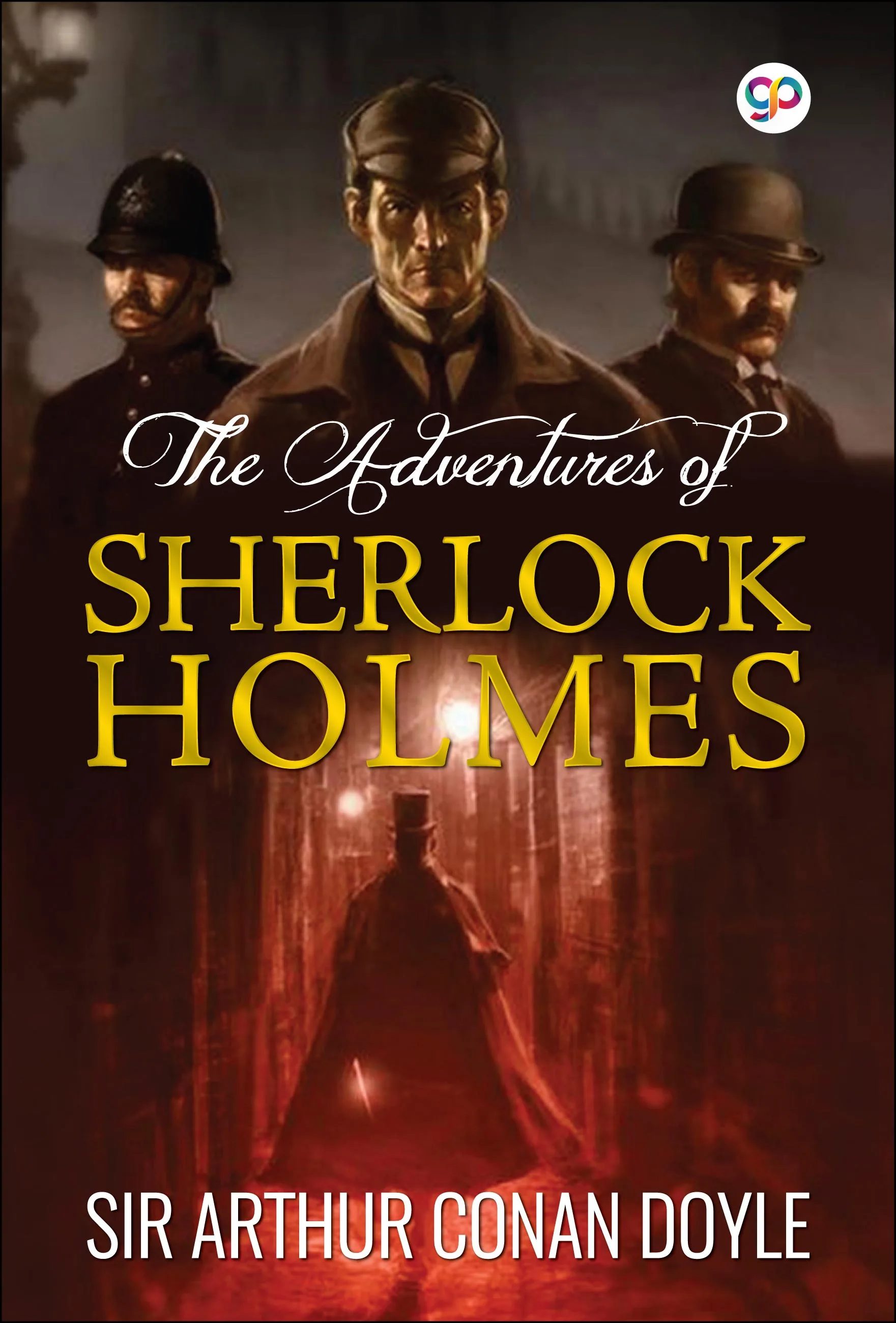
Download Cover Image
Do you want to download the full cover image for The Adventures of Sherlock Holmes?