
Journey to the Center of the Earth
eBook
• INR 51.00
• English
• 9789388760133
No ratings yet
| Publisher | General Press |
|---|---|
| ISBN13 | 9789388760133 |
| ASIN/SKU | B07M7F9DNQ |
| Book Format | eBook |
| Language | English |
| List Price | INR 51.00 |
| Subject Code | FIC004000, FIC002000 |
| Publishing Date | 04/01/2019 |
| Book Code | BD00068528 |
Buy this Book
Amazon Stores
Ebook Stores
Other Stores
Discover Journey to the Center of the Earth by Jules Verne. This book is published by General Press in eBook format, ISBN 9789388760133, ASIN B07M7F9DNQ, under Science Fiction and Fantasy, Classic Science Fiction, Exploration and Discovery.
Book Description
Originally published in 1864, Jules Verne's classic remains critically acclaimed for its style and imaginative visions. Verne wrote many fantasy stories that later proved remarkably prescient. When German professor Otto Liedenbrock finds a coded message in an original runic manuscript of Snorri Sturluson’s Icelandic saga, 'Heimskringla', he discovers what he believes to be a secret passage to the center of the Earth. Professor Liedenbrock, who has long hypothesized that there are volcanic tubes which descend deep into the Earth, embarks immediately for Iceland on a journey of scientific discovery to prove his belief. Along with his reluctant nephew, Alex, and Icelandic guide Hans Bjelke, whom they have hired, the three descend into the bowels of a volcanic crater. A dangerous journey awaits them as they attempt to travel to the center of the Earth. Following a subterranean river to a vast ocean, which they traverse on a raft, they ultimately discover a world filled with prehistoric plants and animals.
Author Biography
Jules Verne (1828-1905) was a French author best known for his tales of adventure, including Twenty Thousand Leagues under the Sea, Journey to the Center of the Earth, and Around the World in Eighty Days. A true visionary, Verne foresaw the skyscraper, the submarine, and the airplane, among many other inventions, and is now regarded as one of the fathers of science fiction.
Editorial Reviews
Editorial Reviews will be added soon…
Book Summary
Journey to the Center of the Earth by Jules Verne is one of the most famous science fiction and adventure novels ever written. First published in French in 1864 as Voyage au centre de la Terre, the novel combines scientific curiosity, exploration, suspense, fantasy, and the romance of the unknown. It follows Professor Otto Lidenbrock, his young nephew Axel, and their Icelandic guide Hans as they descend through an extinct Icelandic volcano in search of the Earth’s mysterious interior.
Rather than being simply a story about reaching the literal center of the planet, Jules Verne’s novel is about the human desire to discover what lies beyond the limits of ordinary knowledge. It asks what happens when scientific ambition, courage, fear, imagination, and the forces of nature collide. The result is a thrilling underground expedition filled with ancient fossils, prehistoric animals, subterranean oceans, enormous caverns, geological mysteries, and unexpected dangers.
The Mysterious Manuscript
The adventure begins in Hamburg in 1863, where Axel lives with his eccentric uncle, Professor Otto Lidenbrock. The professor is an enthusiastic scientist with a particular passion for geology and mineralogy. He is brilliant, impatient, stubborn, and completely absorbed by scientific discovery.
One day, Lidenbrock brings home an ancient Icelandic manuscript. While examining the book, he and Axel discover a mysterious piece of parchment containing strange characters and a coded message. The message is connected to Arne Saknussemm, a sixteenth-century Icelandic alchemist who apparently claimed to have discovered a route leading into the interior of the Earth.
Lidenbrock becomes obsessed with solving the mystery. Axel initially hopes that the message will remain undeciphered because he knows his uncle well enough to understand what will happen if the instructions prove genuine: Lidenbrock will want to follow them immediately.
Eventually, Axel manages to understand the hidden message. It reveals directions to a passage beneath Snæfellsjökull, an Icelandic volcano. According to Saknussemm, a traveler who enters the correct crater at the right moment can descend into the Earth and eventually reach its center.
For Lidenbrock, this is the opportunity of a lifetime. For Axel, it sounds like a death sentence.
Axel’s Fear and the Decision to Travel
Axel serves as the narrator of the story, and his personality provides an important contrast to his uncle's relentless confidence. He is scientifically educated and fascinated by geology, but he is also cautious and emotionally sensitive. He understands that the proposed expedition is extraordinarily dangerous.
Axel does not want to leave Hamburg and certainly does not want to descend into the unknown depths of the Earth. He is also in love with Graüben, who encourages him to undertake the journey. She believes the adventure will help him become more courageous and independent.
Eventually, Axel agrees to accompany Lidenbrock. The two men travel north to Iceland, where they hire Hans Bjelke, a quiet and remarkably dependable Icelandic guide. Hans becomes the third member of the expedition. Unlike the excitable professor and anxious Axel, Hans rarely wastes words or panics. His calm practicality repeatedly saves the expedition.
The three travelers make their way toward Snæfellsjökull, carrying provisions and scientific equipment. The expedition is carefully prepared, but once they enter the volcano, careful preparation can only take them so far.
Descent into the Earth
At Snæfellsjökull, the travelers identify the correct crater by following Saknussemm’s instructions. They begin their descent through a volcanic passage and enter a complicated network of underground tunnels.
At first, the journey seems to confirm Lidenbrock’s scientific expectations. The explorers examine rocks, minerals, geological formations, and layers of the Earth’s crust. Verne uses these observations to give the adventure a scientific character. The underground world is not simply a magical fantasyland; it is presented as a place that can be observed, measured, classified, and studied.
Yet their progress soon becomes dangerous.
Lidenbrock chooses a passage that turns out to be a dead end. The travelers are forced to retrace their steps, and their water supply becomes dangerously low. Axel grows increasingly frightened. Their scientific expedition suddenly becomes a basic struggle for survival.
The situation becomes critical when Axel is exhausted and nearly dies from thirst. Just when the expedition seems doomed, Hans discovers water behind a rock wall. He breaks through it, revealing an underground stream. The explorers drink from it and regain their strength. In honor of their guide, they name the stream the Hansbach.
The discovery changes the expedition. Instead of merely being an obstacle, the underground river becomes a guide leading them deeper into the Earth.
Axel Becomes Lost
As the travelers continue downward, the tunnels become increasingly confusing. At one point Axel becomes separated from his uncle and Hans. Alone in the darkness, he experiences one of the most frightening episodes of the novel.
Without the reassurance of his companions, Axel confronts the psychological terror of the underground world. He does not know where he is, how far he has traveled, or whether he will ever find his way back. The darkness and isolation become almost as threatening as the physical dangers around him.
Eventually, Axel manages to reconnect with Lidenbrock and Hans. His experience marks an important stage in his personal development. At the beginning of the novel, Axel is essentially a young man who is frightened by the unknown. The expedition gradually forces him to become more resilient, courageous, and independent.
This is one of the reasons the novel remains more than a simple adventure story. Axel's physical journey into the Earth is also a journey toward maturity.
The Underground World
After passing through the tunnels, the explorers make an astonishing discovery: they enter an enormous subterranean cavern containing a vast underground sea.
This is the moment when the novel expands from geological adventure into spectacular science fiction.
The cavern is immense, with an artificial-looking sky and strange natural phenomena. There are forests, enormous rock formations, clouds, and an underground ocean. The explorers find evidence of prehistoric life preserved deep beneath the Earth's surface.
Verne creates a world that feels both scientifically intriguing and fantastical. The deeper the travelers go, the farther they seem to move away from the familiar nineteenth-century world above them.
The underground landscape also allows Verne to explore one of the central ideas of the novel: the Earth contains a history far older and stranger than human civilization. Beneath the familiar surface lies a record of vanished worlds.
The Prehistoric Sea
Hans constructs a raft, allowing the three travelers to cross the subterranean ocean. Their voyage becomes one of the most memorable parts of the book.
The underground sea is not peaceful. As they sail across it, they encounter enormous prehistoric marine creatures, including an ichthyosaurus and a plesiosaurus. The creatures engage in a violent struggle in the water, giving Axel and the others a terrifying glimpse of a prehistoric world that they had believed belonged entirely to the distant past.
The encounter emphasizes Verne’s fascination with paleontology and evolutionary history. His characters are not merely tourists in a fantasy world. They are observers witnessing evidence of geological ages that existed long before humanity.
Soon afterward, a violent storm strikes the underground sea. The explorers' raft is battered by the force of the storm, and they are thrown far from their intended route.
Once again, nature proves stronger than human planning.
Fossils, Giants, and Evidence of Ancient Life
After surviving the storm, the explorers reach another part of the underground world. They encounter fossilized remains of prehistoric animals and discover evidence suggesting that human beings may also have existed in this ancient environment.
One of the strangest discoveries is the apparent presence of a gigantic human-like figure among herds of prehistoric animals. The image reinforces the dreamlike quality of the expedition. The explorers are no longer simply traveling through geological tunnels; they appear to have entered a lost chapter of Earth's history.
Yet Verne continually balances wonder with scientific curiosity. Lidenbrock wants to understand and classify everything he sees. Axel, meanwhile, is often overwhelmed by the implications of their discoveries.
Their expedition therefore becomes a confrontation between what humanity thinks it knows and what the world may actually contain.
Finding Saknussemm’s Path
Eventually, the travelers discover a passage marked with the initials of Arne Saknussemm. This is crucial because it provides evidence that the mysterious alchemist really did travel through this subterranean world.
Their excitement is quickly replaced by another problem: the passage is blocked.
Rather than turning back, the explorers decide to remove the obstruction with explosives. Their action sets off a dramatic chain of events. The rock barrier gives way, and water rushes into the passage.
The explorers are carried into a powerful subterranean current. Their situation becomes increasingly uncontrollable as they are swept downward and then violently upward through a volcanic passage.
At this point, the expedition has effectively ceased to be a carefully controlled scientific journey. The explorers are at the mercy of geological forces far more powerful than themselves.
The Escape from the Earth
Instead of reaching the literal center of the Earth, Lidenbrock, Axel, and Hans are carried upward through a volcanic chimney. Their raft is caught in a powerful current and eventually expelled from the Earth through an active volcano.
They emerge not in Iceland, but on Stromboli, a volcanic island in Italy. Their extraordinary journey has effectively carried them from the northern Atlantic region to the Mediterranean.
The travelers survive, return to civilization, and eventually make their way back to Hamburg. Lidenbrock becomes celebrated for the discoveries associated with the expedition, while Axel returns to his ordinary life and marries Graüben.
Although they never literally reach the Earth's center, the expedition is still an enormous success. They have seen things that conventional science could scarcely have imagined.
Major Themes in Journey to the Center of the Earth
One of the strongest themes in Journey to the Center of the Earth is the power of scientific curiosity. Lidenbrock's determination is sometimes reckless, but it comes from a genuine desire to understand the natural world. Verne presents knowledge as an adventure in itself.
Another important theme is courage and personal growth. Axel begins as a frightened young man who wants to avoid danger. By the end of the expedition, he has endured isolation, hunger, thirst, storms, prehistoric creatures, and volcanic forces. His journey transforms him.
The novel also explores intuition versus evidence. Lidenbrock and Axel frequently interpret the same discoveries differently. Their disagreement reflects a larger question about how scientific knowledge develops: should people trust established theories, personal intuition, or direct observation? The underground journey repeatedly challenges what the characters believe to be true.
Nature versus human ambition is another central idea. Lidenbrock wants to control the expedition through knowledge and planning, but the underground world continually reminds him of humanity's limitations. Water, storms, earthquakes, volcanoes, darkness, and prehistoric creatures all demonstrate that nature cannot simply be commanded.
Finally, the novel celebrates the mystery of the unknown. Verne's greatest achievement is perhaps the way he makes the unexplored world feel irresistible. Every tunnel suggests another tunnel. Every discovery raises another question. The deeper the explorers travel, the more they realize how little they understand.
Conclusion
Journey to the Center of the Earth by Jules Verne remains a classic because it combines an exciting adventure with a powerful fascination for science, exploration, and discovery. Its story of Professor Lidenbrock, Axel, and Hans descending through Snæfellsjökull into a hidden prehistoric world has influenced generations of science fiction and adventure writers.
The novel is filled with memorable images: an ancient coded manuscript, an Icelandic volcano, underground rivers, enormous caverns, prehistoric creatures, a mysterious subterranean ocean, violent storms, fossilized animals, and a volcanic escape. Yet beneath these spectacular elements is a simple and enduring idea: the world is larger, stranger, and more mysterious than we imagine.
Axel's journey also gives the story its emotional center. He begins by fearing the unknown, but his encounter with the unknown changes him. Lidenbrock represents relentless intellectual curiosity, Hans represents quiet practical wisdom, and Axel stands between them, learning how to transform fear into courage.
Verne does not ultimately give his readers a conventional journey to the exact center of the Earth. Instead, he gives them something more imaginative: a journey into the hidden history of the planet and into the limits of human knowledge. That is why Journey to the Center of the Earth continues to appeal to readers searching for classic science fiction, Victorian adventure, exploration novels, Jules Verne books, underground adventure stories, prehistoric worlds, and imaginative journeys into the unknown.
It is, at heart, a celebration of curiosity—the belief that beyond every familiar boundary there may be another world waiting to be discovered.
Rather than being simply a story about reaching the literal center of the planet, Jules Verne’s novel is about the human desire to discover what lies beyond the limits of ordinary knowledge. It asks what happens when scientific ambition, courage, fear, imagination, and the forces of nature collide. The result is a thrilling underground expedition filled with ancient fossils, prehistoric animals, subterranean oceans, enormous caverns, geological mysteries, and unexpected dangers.
The Mysterious Manuscript
The adventure begins in Hamburg in 1863, where Axel lives with his eccentric uncle, Professor Otto Lidenbrock. The professor is an enthusiastic scientist with a particular passion for geology and mineralogy. He is brilliant, impatient, stubborn, and completely absorbed by scientific discovery.
One day, Lidenbrock brings home an ancient Icelandic manuscript. While examining the book, he and Axel discover a mysterious piece of parchment containing strange characters and a coded message. The message is connected to Arne Saknussemm, a sixteenth-century Icelandic alchemist who apparently claimed to have discovered a route leading into the interior of the Earth.
Lidenbrock becomes obsessed with solving the mystery. Axel initially hopes that the message will remain undeciphered because he knows his uncle well enough to understand what will happen if the instructions prove genuine: Lidenbrock will want to follow them immediately.
Eventually, Axel manages to understand the hidden message. It reveals directions to a passage beneath Snæfellsjökull, an Icelandic volcano. According to Saknussemm, a traveler who enters the correct crater at the right moment can descend into the Earth and eventually reach its center.
For Lidenbrock, this is the opportunity of a lifetime. For Axel, it sounds like a death sentence.
Axel’s Fear and the Decision to Travel
Axel serves as the narrator of the story, and his personality provides an important contrast to his uncle's relentless confidence. He is scientifically educated and fascinated by geology, but he is also cautious and emotionally sensitive. He understands that the proposed expedition is extraordinarily dangerous.
Axel does not want to leave Hamburg and certainly does not want to descend into the unknown depths of the Earth. He is also in love with Graüben, who encourages him to undertake the journey. She believes the adventure will help him become more courageous and independent.
Eventually, Axel agrees to accompany Lidenbrock. The two men travel north to Iceland, where they hire Hans Bjelke, a quiet and remarkably dependable Icelandic guide. Hans becomes the third member of the expedition. Unlike the excitable professor and anxious Axel, Hans rarely wastes words or panics. His calm practicality repeatedly saves the expedition.
The three travelers make their way toward Snæfellsjökull, carrying provisions and scientific equipment. The expedition is carefully prepared, but once they enter the volcano, careful preparation can only take them so far.
Descent into the Earth
At Snæfellsjökull, the travelers identify the correct crater by following Saknussemm’s instructions. They begin their descent through a volcanic passage and enter a complicated network of underground tunnels.
At first, the journey seems to confirm Lidenbrock’s scientific expectations. The explorers examine rocks, minerals, geological formations, and layers of the Earth’s crust. Verne uses these observations to give the adventure a scientific character. The underground world is not simply a magical fantasyland; it is presented as a place that can be observed, measured, classified, and studied.
Yet their progress soon becomes dangerous.
Lidenbrock chooses a passage that turns out to be a dead end. The travelers are forced to retrace their steps, and their water supply becomes dangerously low. Axel grows increasingly frightened. Their scientific expedition suddenly becomes a basic struggle for survival.
The situation becomes critical when Axel is exhausted and nearly dies from thirst. Just when the expedition seems doomed, Hans discovers water behind a rock wall. He breaks through it, revealing an underground stream. The explorers drink from it and regain their strength. In honor of their guide, they name the stream the Hansbach.
The discovery changes the expedition. Instead of merely being an obstacle, the underground river becomes a guide leading them deeper into the Earth.
Axel Becomes Lost
As the travelers continue downward, the tunnels become increasingly confusing. At one point Axel becomes separated from his uncle and Hans. Alone in the darkness, he experiences one of the most frightening episodes of the novel.
Without the reassurance of his companions, Axel confronts the psychological terror of the underground world. He does not know where he is, how far he has traveled, or whether he will ever find his way back. The darkness and isolation become almost as threatening as the physical dangers around him.
Eventually, Axel manages to reconnect with Lidenbrock and Hans. His experience marks an important stage in his personal development. At the beginning of the novel, Axel is essentially a young man who is frightened by the unknown. The expedition gradually forces him to become more resilient, courageous, and independent.
This is one of the reasons the novel remains more than a simple adventure story. Axel's physical journey into the Earth is also a journey toward maturity.
The Underground World
After passing through the tunnels, the explorers make an astonishing discovery: they enter an enormous subterranean cavern containing a vast underground sea.
This is the moment when the novel expands from geological adventure into spectacular science fiction.
The cavern is immense, with an artificial-looking sky and strange natural phenomena. There are forests, enormous rock formations, clouds, and an underground ocean. The explorers find evidence of prehistoric life preserved deep beneath the Earth's surface.
Verne creates a world that feels both scientifically intriguing and fantastical. The deeper the travelers go, the farther they seem to move away from the familiar nineteenth-century world above them.
The underground landscape also allows Verne to explore one of the central ideas of the novel: the Earth contains a history far older and stranger than human civilization. Beneath the familiar surface lies a record of vanished worlds.
The Prehistoric Sea
Hans constructs a raft, allowing the three travelers to cross the subterranean ocean. Their voyage becomes one of the most memorable parts of the book.
The underground sea is not peaceful. As they sail across it, they encounter enormous prehistoric marine creatures, including an ichthyosaurus and a plesiosaurus. The creatures engage in a violent struggle in the water, giving Axel and the others a terrifying glimpse of a prehistoric world that they had believed belonged entirely to the distant past.
The encounter emphasizes Verne’s fascination with paleontology and evolutionary history. His characters are not merely tourists in a fantasy world. They are observers witnessing evidence of geological ages that existed long before humanity.
Soon afterward, a violent storm strikes the underground sea. The explorers' raft is battered by the force of the storm, and they are thrown far from their intended route.
Once again, nature proves stronger than human planning.
Fossils, Giants, and Evidence of Ancient Life
After surviving the storm, the explorers reach another part of the underground world. They encounter fossilized remains of prehistoric animals and discover evidence suggesting that human beings may also have existed in this ancient environment.
One of the strangest discoveries is the apparent presence of a gigantic human-like figure among herds of prehistoric animals. The image reinforces the dreamlike quality of the expedition. The explorers are no longer simply traveling through geological tunnels; they appear to have entered a lost chapter of Earth's history.
Yet Verne continually balances wonder with scientific curiosity. Lidenbrock wants to understand and classify everything he sees. Axel, meanwhile, is often overwhelmed by the implications of their discoveries.
Their expedition therefore becomes a confrontation between what humanity thinks it knows and what the world may actually contain.
Finding Saknussemm’s Path
Eventually, the travelers discover a passage marked with the initials of Arne Saknussemm. This is crucial because it provides evidence that the mysterious alchemist really did travel through this subterranean world.
Their excitement is quickly replaced by another problem: the passage is blocked.
Rather than turning back, the explorers decide to remove the obstruction with explosives. Their action sets off a dramatic chain of events. The rock barrier gives way, and water rushes into the passage.
The explorers are carried into a powerful subterranean current. Their situation becomes increasingly uncontrollable as they are swept downward and then violently upward through a volcanic passage.
At this point, the expedition has effectively ceased to be a carefully controlled scientific journey. The explorers are at the mercy of geological forces far more powerful than themselves.
The Escape from the Earth
Instead of reaching the literal center of the Earth, Lidenbrock, Axel, and Hans are carried upward through a volcanic chimney. Their raft is caught in a powerful current and eventually expelled from the Earth through an active volcano.
They emerge not in Iceland, but on Stromboli, a volcanic island in Italy. Their extraordinary journey has effectively carried them from the northern Atlantic region to the Mediterranean.
The travelers survive, return to civilization, and eventually make their way back to Hamburg. Lidenbrock becomes celebrated for the discoveries associated with the expedition, while Axel returns to his ordinary life and marries Graüben.
Although they never literally reach the Earth's center, the expedition is still an enormous success. They have seen things that conventional science could scarcely have imagined.
Major Themes in Journey to the Center of the Earth
One of the strongest themes in Journey to the Center of the Earth is the power of scientific curiosity. Lidenbrock's determination is sometimes reckless, but it comes from a genuine desire to understand the natural world. Verne presents knowledge as an adventure in itself.
Another important theme is courage and personal growth. Axel begins as a frightened young man who wants to avoid danger. By the end of the expedition, he has endured isolation, hunger, thirst, storms, prehistoric creatures, and volcanic forces. His journey transforms him.
The novel also explores intuition versus evidence. Lidenbrock and Axel frequently interpret the same discoveries differently. Their disagreement reflects a larger question about how scientific knowledge develops: should people trust established theories, personal intuition, or direct observation? The underground journey repeatedly challenges what the characters believe to be true.
Nature versus human ambition is another central idea. Lidenbrock wants to control the expedition through knowledge and planning, but the underground world continually reminds him of humanity's limitations. Water, storms, earthquakes, volcanoes, darkness, and prehistoric creatures all demonstrate that nature cannot simply be commanded.
Finally, the novel celebrates the mystery of the unknown. Verne's greatest achievement is perhaps the way he makes the unexplored world feel irresistible. Every tunnel suggests another tunnel. Every discovery raises another question. The deeper the explorers travel, the more they realize how little they understand.
Conclusion
Journey to the Center of the Earth by Jules Verne remains a classic because it combines an exciting adventure with a powerful fascination for science, exploration, and discovery. Its story of Professor Lidenbrock, Axel, and Hans descending through Snæfellsjökull into a hidden prehistoric world has influenced generations of science fiction and adventure writers.
The novel is filled with memorable images: an ancient coded manuscript, an Icelandic volcano, underground rivers, enormous caverns, prehistoric creatures, a mysterious subterranean ocean, violent storms, fossilized animals, and a volcanic escape. Yet beneath these spectacular elements is a simple and enduring idea: the world is larger, stranger, and more mysterious than we imagine.
Axel's journey also gives the story its emotional center. He begins by fearing the unknown, but his encounter with the unknown changes him. Lidenbrock represents relentless intellectual curiosity, Hans represents quiet practical wisdom, and Axel stands between them, learning how to transform fear into courage.
Verne does not ultimately give his readers a conventional journey to the exact center of the Earth. Instead, he gives them something more imaginative: a journey into the hidden history of the planet and into the limits of human knowledge. That is why Journey to the Center of the Earth continues to appeal to readers searching for classic science fiction, Victorian adventure, exploration novels, Jules Verne books, underground adventure stories, prehistoric worlds, and imaginative journeys into the unknown.
It is, at heart, a celebration of curiosity—the belief that beyond every familiar boundary there may be another world waiting to be discovered.
Sample Chapters
Sample Chapters will be added soon…
Reader Reviews
No reviews yet.
Journey to the Center of the Earth
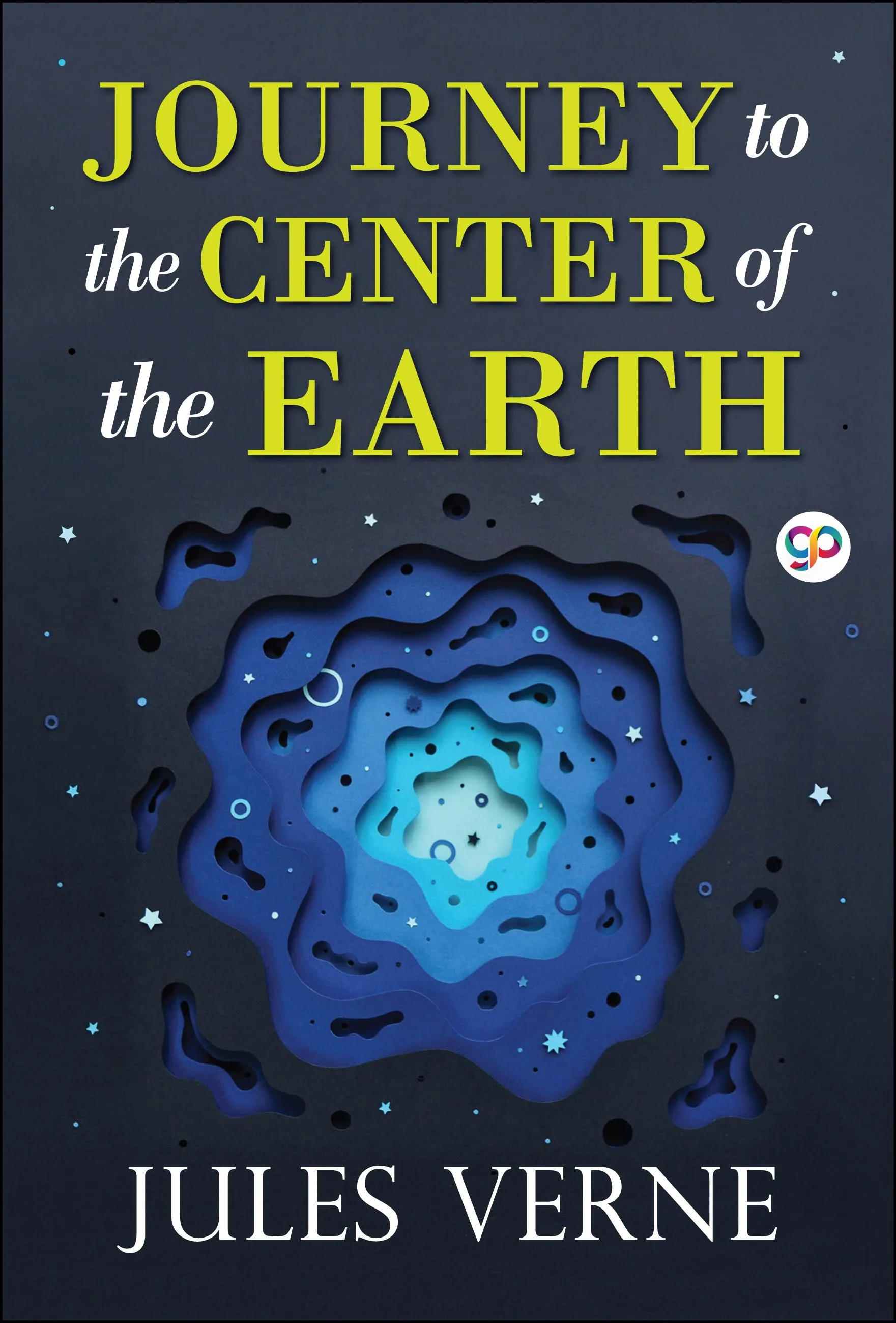
Download Cover Image
Do you want to download the full cover image for Journey to the Center of the Earth?