
The Count of Monte Cristo
eBook
• INR 51.00
• English
• 9789388760072
No ratings yet
| Publisher | General Press |
|---|---|
| ISBN13 | 9789388760072 |
| ASIN/SKU | B07MRNMBXL |
| Book Format | eBook |
| Language | English |
| List Price | INR 51.00 |
| Subject Code | FIC004000, FIC002000, FIC031020 |
| Publishing Date | 20/12/2018 |
| Book Code | BD00068545 |
Buy this Book
Amazon Stores
Ebook Stores
Other Stores
Discover The Count of Monte Cristo by Alexandre Dumas. This book is published by General Press in eBook format, ISBN 9789388760072, ASIN B07MRNMBXL, under Literature and Fiction, Historical Thrillers, Action and Adventure Fiction.
Book Description
Alexandre Dumas’s 'The Count of Monte Cristo' is a sweeping, deeply human epic about betrayal, endurance, and the heavy price of revenge. The story follows Edmond Dantès, a kind and promising young sailor whose life is shattered on the eve of his wedding when jealous rivals falsely accuse him of treason. Condemned to the nightmarish island prison of the Château d'If, Edmond spends fourteen agonizing years in darkness.
There, he befriends a wise fellow captive, Abbé Faria, who not only educates him but also reveals the location of a vast hidden treasure. Following a daring escape, Edmond claims the fortune and reinvents himself as the enigmatic Count of Monte Cristo. Armed with immense wealth and limitless patience, he weaves a brilliant, devastating web to destroy the three men who stole his life.
Yet, beneath the thrilling adventure lies a profound psychological study of a man consumed by grief and righteous fury. As the Count's flawless vengeance begins to harm innocent bystanders, he is forced to confront the limits of his own morality. Dumas masterfully explores the dangerous illusion that humans can wield divine justice, revealing how a heart hardened by bitterness must eventually choose between endless destruction or the quiet grace of forgiveness.
Ultimately, the novel is a testament to the resilience of the human spirit. It is a timeless, beautiful tale that reminds us that true freedom comes not from destroying our enemies, but from learning to hope and love again.
There, he befriends a wise fellow captive, Abbé Faria, who not only educates him but also reveals the location of a vast hidden treasure. Following a daring escape, Edmond claims the fortune and reinvents himself as the enigmatic Count of Monte Cristo. Armed with immense wealth and limitless patience, he weaves a brilliant, devastating web to destroy the three men who stole his life.
Yet, beneath the thrilling adventure lies a profound psychological study of a man consumed by grief and righteous fury. As the Count's flawless vengeance begins to harm innocent bystanders, he is forced to confront the limits of his own morality. Dumas masterfully explores the dangerous illusion that humans can wield divine justice, revealing how a heart hardened by bitterness must eventually choose between endless destruction or the quiet grace of forgiveness.
Ultimately, the novel is a testament to the resilience of the human spirit. It is a timeless, beautiful tale that reminds us that true freedom comes not from destroying our enemies, but from learning to hope and love again.
Author Biography
Alexandre Dumas (1802–1870) was a celebrated French novelist and playwright, renowned for his swashbuckling historical adventures and prolific literary output. Born in Villers-Cotterêts, France, Dumas was the son of Thomas-Alexandre Dumas, a general in Napoleon’s army of Afro-Caribbean descent. Despite facing racial prejudice, Dumas pursued a literary career in Paris, first achieving success with plays like Henri III and His Court (1829).
In his early and middle years, Dumas turned to historical fiction, collaborating with assistants such as Auguste Maquet. He achieved lasting fame with The Three Musketeers (1844), Twenty Years After (1845), and The Count of Monte Cristo (1844–1846). These novels captivated readers with their action, intricate plots, and vivid characters. His writing blended romance, history, and adventure, making him one of the most widely read French authors of all time.
Dumas was incredibly prolific, writing hundreds of works, including essays, travel books, and a multi-volume memoir. He also founded a theater and engaged in political causes, including support for Italian unification. Though he faced financial difficulties later in life, his popularity remained high.
Alexandre Dumas died in 1870 near Dieppe. His legacy endures worldwide, with his novels continuously adapted for stage, film, and television.
In his early and middle years, Dumas turned to historical fiction, collaborating with assistants such as Auguste Maquet. He achieved lasting fame with The Three Musketeers (1844), Twenty Years After (1845), and The Count of Monte Cristo (1844–1846). These novels captivated readers with their action, intricate plots, and vivid characters. His writing blended romance, history, and adventure, making him one of the most widely read French authors of all time.
Dumas was incredibly prolific, writing hundreds of works, including essays, travel books, and a multi-volume memoir. He also founded a theater and engaged in political causes, including support for Italian unification. Though he faced financial difficulties later in life, his popularity remained high.
Alexandre Dumas died in 1870 near Dieppe. His legacy endures worldwide, with his novels continuously adapted for stage, film, and television.
Editorial Reviews
Editorial Reviews will be added soon…
Book Summary
Alexandre Dumas’s masterpiece, "The Count of Monte Cristo", is a sweeping epic of betrayal, endurance, and meticulously calculated vengeance set against the turbulent historical backdrop of nineteenth-century France. The narrative begins in the port city of Marseille in 1815, introducing Edmond Dantès, a dashing, capable, and profoundly optimistic nineteen-year-old sailor. Dantès’s life is on the precipice of perfection; he has just successfully commanded the merchant ship *Pharaon* home after the sudden death of its captain, earning him a promised promotion from the ship's grateful owner, Monsieur Morrel. More importantly, he is deeply in love with the beautiful Mercédès and is entirely focused on their impending marriage. His infectious happiness and rapid ascent, however, unknowingly breed a toxic resentment among those lurking in the periphery of his golden life.
This simmering jealousy culminates in a devastating and cowardly conspiracy. Three men work together to destroy Dantès. Fernand Mondego, a local fisherman, is fiercely in love with Mercédès and deeply covets Dantès's place by her side. Danglars, the ship’s supercargo, is intensely jealous of Dantès’s youth, promotion, and professional success. Together, aided by the drunken indifference of Dantès's neighbor, Caderousse, they draft an anonymous letter accusing the young sailor of being a Bonapartist traitor—a highly dangerous accusation in the politically volatile era just after Napoleon’s first exile. On the very day of his wedding, Dantès is abruptly arrested, torn from his beloved bride-to-be, and dragged before the local deputy crown prosecutor, a politically ambitious man named Gérard de Villefort.
Initially, Villefort recognizes Dantès’s obvious innocence and prepares to release him. However, during the interrogation, Villefort discovers that Dantès is carrying a letter from the exiled Napoleon, entrusted to him by his dying captain, addressed to a Monsieur Noirtier in Paris. To his absolute horror, Villefort realizes that Noirtier is his own father, a staunch and known Bonapartist. Knowing that his father’s treasonous correspondence could destroy his own burgeoning royalist career, Villefort makes a ruthlessly self-serving decision. He burns the letter, silences Dantès, and condemns the innocent young man to the Château d'If, a notorious and inescapable island fortress off the coast of Marseille, meant strictly for the most dangerous political prisoners.
Within the damp, lightless dungeons of the Château d'If, Dantès loses fourteen years of his youth to agonizing solitude and despair. Initially consumed by confusion and a profound desire for death, his trajectory changes entirely when he makes contact with the Abbé Faria, an elderly Italian priest in a neighboring cell who has spent years digging a futile escape tunnel. Faria becomes a surrogate father to Dantès, transforming the uneducated sailor into a formidable intellectual. The priest teaches him languages, mathematics, science, history, and philosophy. More crucially, Faria applies cold logic to Dantès’s tragedy, helping the naive sailor deduce the exact identities of the men who orchestrated his downfall. The agonizing desire for suicide is instantly replaced by an absolute, unquenchable thirst for retribution.
Before succumbing to a fatal seizure, the Abbé Faria entrusts Dantès with a closely guarded secret: the location of a vast, ancient treasure buried on the uninhabited island of Monte Cristo. Upon Faria’s death, Dantès executes a daring and desperate escape. He transfers Faria’s corpse to his own bed and sews himself inside the priest’s burial sack. Unaware of the substitution, the prison guards throw the heavy sack into the turbulent sea. Dantès manages to cut himself free, survives the treacherous waters, and is eventually rescued by a crew of smugglers. He soon finds his way to the island of Monte Cristo, where he unearths wealth beyond his wildest comprehension. With limitless resources at his disposal, Edmond Dantès essentially ceases to exist; he begins the long process of reinventing himself as an instrument of divine justice.
Over the next decade, the protagonist travels the world, cultivating a network of spies, acquiring esoteric knowledge, and adopting various personas to prepare for his return to France. When he finally emerges in Parisian society, he is the Count of Monte Cristo—a mysterious, impeccably aristocratic, and impossibly wealthy figure who entirely captivates the social elite. His former betrayers, now among the most powerful and wealthy men in France, do not recognize the hardened, sophisticated aristocrat as the naive sailor they destroyed decades ago. Danglars has become a wealthy baron and Paris's most prominent banker; Fernand is now the Count de Morcerf and a celebrated military hero, married to Mercédès; and Villefort holds the prestigious position of chief royal prosecutor. The Count meticulously ingratiates himself into their lives, perfectly poised to strike.
The Count’s revenge is not swift violence, but a terrifyingly slow and poetic dismantling of his enemies' lives, using their own foundational sins against them. He begins with Fernand. The Count exposes the dark truth behind Fernand’s fabricated military glory: he had actually betrayed and murdered his benefactor, the ruler of Yanina, and sold the man's wife and daughter into slavery. The Count brings the daughter, Haydée, to Paris to testify against him in a formal hearing. Fernand is publicly disgraced, stripped of his honor, and abandoned by Mercédès and their son, Albert, who recognize the painful justice in the Count's actions. Utterly destroyed and left with absolutely nothing, Fernand takes his own life.
Next, the Count targets Villefort, striking at the heart of the prosecutor's rigidly maintained illusion of familial respectability. The Count covertly introduces Villefort’s ambitious second wife, Héloïse, to the concept of undetectable poisons. Driven by a twisted desire to secure an exclusive inheritance for her own son, she begins systematically murdering members of the Villefort household. Simultaneously, the Count exposes Villefort’s deepest, most damning secret in a crowded courtroom: years ago, Villefort had an illicit affair with Danglars's wife and attempted to bury their newborn child alive to avoid a social scandal. As Villefort rushes home from this public ruin, he finds his wife has poisoned herself and their young son. The sheer weight of this absolute devastation shatters Villefort’s mind, leaving him completely insane.
For Danglars, the primary architect of the original betrayal, the punishment is appropriately financial. The Count manipulates the telegraph system to feed Danglars false market information, causing him to lose immense sums of money in poor investments. The Count further orchestrates the destruction of Danglars’s reputation and credit lines until the once-mighty banker is forced to flee France in disgrace, absconding with stolen charity funds. In Italy, Danglars is captured by ruthless bandits secretly employed by the Count. They starve him, forcing him to pay exorbitant, ruinous sums for mere scraps of food until his entire stolen fortune is drained. Only when Danglars is a broken, penniless shell of a man does the Count reveal his true identity and grant him his life, leaving him to wander in agonizing poverty.
Yet, this godlike orchestration of divine retribution exacts a heavy psychological toll on the Count himself. The unintended death of Villefort’s young son forces him to confront the profound hubris of assuming the role of Providence. Recognizing the collateral damage his vengeance has caused, he finds a measure of redemption by using his remaining power to save the life of Maximilian Morrel, the son of his loyal former employer, and ensuring Maximilian’s happiness with Villefort’s surviving daughter, Valentine. Having completed his dark mission and balanced the scales of justice, the Count leaves the bulk of his immense fortune to the young couple. He sails away into the horizon with Haydée, leaving behind a final, enduring testament of wisdom for those who endure suffering: that all human wisdom is contained in two words, "wait and hope."
This simmering jealousy culminates in a devastating and cowardly conspiracy. Three men work together to destroy Dantès. Fernand Mondego, a local fisherman, is fiercely in love with Mercédès and deeply covets Dantès's place by her side. Danglars, the ship’s supercargo, is intensely jealous of Dantès’s youth, promotion, and professional success. Together, aided by the drunken indifference of Dantès's neighbor, Caderousse, they draft an anonymous letter accusing the young sailor of being a Bonapartist traitor—a highly dangerous accusation in the politically volatile era just after Napoleon’s first exile. On the very day of his wedding, Dantès is abruptly arrested, torn from his beloved bride-to-be, and dragged before the local deputy crown prosecutor, a politically ambitious man named Gérard de Villefort.
Initially, Villefort recognizes Dantès’s obvious innocence and prepares to release him. However, during the interrogation, Villefort discovers that Dantès is carrying a letter from the exiled Napoleon, entrusted to him by his dying captain, addressed to a Monsieur Noirtier in Paris. To his absolute horror, Villefort realizes that Noirtier is his own father, a staunch and known Bonapartist. Knowing that his father’s treasonous correspondence could destroy his own burgeoning royalist career, Villefort makes a ruthlessly self-serving decision. He burns the letter, silences Dantès, and condemns the innocent young man to the Château d'If, a notorious and inescapable island fortress off the coast of Marseille, meant strictly for the most dangerous political prisoners.
Within the damp, lightless dungeons of the Château d'If, Dantès loses fourteen years of his youth to agonizing solitude and despair. Initially consumed by confusion and a profound desire for death, his trajectory changes entirely when he makes contact with the Abbé Faria, an elderly Italian priest in a neighboring cell who has spent years digging a futile escape tunnel. Faria becomes a surrogate father to Dantès, transforming the uneducated sailor into a formidable intellectual. The priest teaches him languages, mathematics, science, history, and philosophy. More crucially, Faria applies cold logic to Dantès’s tragedy, helping the naive sailor deduce the exact identities of the men who orchestrated his downfall. The agonizing desire for suicide is instantly replaced by an absolute, unquenchable thirst for retribution.
Before succumbing to a fatal seizure, the Abbé Faria entrusts Dantès with a closely guarded secret: the location of a vast, ancient treasure buried on the uninhabited island of Monte Cristo. Upon Faria’s death, Dantès executes a daring and desperate escape. He transfers Faria’s corpse to his own bed and sews himself inside the priest’s burial sack. Unaware of the substitution, the prison guards throw the heavy sack into the turbulent sea. Dantès manages to cut himself free, survives the treacherous waters, and is eventually rescued by a crew of smugglers. He soon finds his way to the island of Monte Cristo, where he unearths wealth beyond his wildest comprehension. With limitless resources at his disposal, Edmond Dantès essentially ceases to exist; he begins the long process of reinventing himself as an instrument of divine justice.
Over the next decade, the protagonist travels the world, cultivating a network of spies, acquiring esoteric knowledge, and adopting various personas to prepare for his return to France. When he finally emerges in Parisian society, he is the Count of Monte Cristo—a mysterious, impeccably aristocratic, and impossibly wealthy figure who entirely captivates the social elite. His former betrayers, now among the most powerful and wealthy men in France, do not recognize the hardened, sophisticated aristocrat as the naive sailor they destroyed decades ago. Danglars has become a wealthy baron and Paris's most prominent banker; Fernand is now the Count de Morcerf and a celebrated military hero, married to Mercédès; and Villefort holds the prestigious position of chief royal prosecutor. The Count meticulously ingratiates himself into their lives, perfectly poised to strike.
The Count’s revenge is not swift violence, but a terrifyingly slow and poetic dismantling of his enemies' lives, using their own foundational sins against them. He begins with Fernand. The Count exposes the dark truth behind Fernand’s fabricated military glory: he had actually betrayed and murdered his benefactor, the ruler of Yanina, and sold the man's wife and daughter into slavery. The Count brings the daughter, Haydée, to Paris to testify against him in a formal hearing. Fernand is publicly disgraced, stripped of his honor, and abandoned by Mercédès and their son, Albert, who recognize the painful justice in the Count's actions. Utterly destroyed and left with absolutely nothing, Fernand takes his own life.
Next, the Count targets Villefort, striking at the heart of the prosecutor's rigidly maintained illusion of familial respectability. The Count covertly introduces Villefort’s ambitious second wife, Héloïse, to the concept of undetectable poisons. Driven by a twisted desire to secure an exclusive inheritance for her own son, she begins systematically murdering members of the Villefort household. Simultaneously, the Count exposes Villefort’s deepest, most damning secret in a crowded courtroom: years ago, Villefort had an illicit affair with Danglars's wife and attempted to bury their newborn child alive to avoid a social scandal. As Villefort rushes home from this public ruin, he finds his wife has poisoned herself and their young son. The sheer weight of this absolute devastation shatters Villefort’s mind, leaving him completely insane.
For Danglars, the primary architect of the original betrayal, the punishment is appropriately financial. The Count manipulates the telegraph system to feed Danglars false market information, causing him to lose immense sums of money in poor investments. The Count further orchestrates the destruction of Danglars’s reputation and credit lines until the once-mighty banker is forced to flee France in disgrace, absconding with stolen charity funds. In Italy, Danglars is captured by ruthless bandits secretly employed by the Count. They starve him, forcing him to pay exorbitant, ruinous sums for mere scraps of food until his entire stolen fortune is drained. Only when Danglars is a broken, penniless shell of a man does the Count reveal his true identity and grant him his life, leaving him to wander in agonizing poverty.
Yet, this godlike orchestration of divine retribution exacts a heavy psychological toll on the Count himself. The unintended death of Villefort’s young son forces him to confront the profound hubris of assuming the role of Providence. Recognizing the collateral damage his vengeance has caused, he finds a measure of redemption by using his remaining power to save the life of Maximilian Morrel, the son of his loyal former employer, and ensuring Maximilian’s happiness with Villefort’s surviving daughter, Valentine. Having completed his dark mission and balanced the scales of justice, the Count leaves the bulk of his immense fortune to the young couple. He sails away into the horizon with Haydée, leaving behind a final, enduring testament of wisdom for those who endure suffering: that all human wisdom is contained in two words, "wait and hope."
Sample Chapters
VOLUME 1
Chapter 1: Marseilles—The Arrival
On the 24th of February, 1815, the look-out at Notre-Dame de la Garde signalled the three-master, the Pharaon from Smyrna, Trieste, and Naples.
As usual, a pilot put off immediately, and rounding the Château d’If, got on board the vessel between Cape Morgiou and Rion island.
Immediately, and according to custom, the ramparts of Fort Saint-Jean were covered with spectators; it is always an event at Marseilles for a ship to come into port, especially when this ship, like the Pharaon, has been built, rigged, and laden at the old Phocee docks, and belongs to an owner of the city.
The ship drew on and had safely passed the strait, which some volcanic shock has made between the Calasareigne and Jaros islands; had doubled Pomègue, and approached the harbor under topsails, jib, and spanker, but so slowly and sedately that the idlers, with that instinct which is the forerunner of evil, asked one another what misfortune could have happened on board. However, those experienced in navigation saw plainly that if any accident had occurred, it was not to the vessel herself, for she bore down with all the evidence of being skilfully handled, the anchor a-cockbill, the jib-boom guys already eased off, and standing by the side of the pilot, who was steering the Pharaon towards the narrow entrance of the inner port, was a young man, who, with activity and vigilant eye, watched every motion of the ship, and repeated each direction of the pilot.
The vague disquietude which prevailed among the spectators had so much affected one of the crowd that he did not await the arrival of the vessel in harbor, but jumping into a small skiff, desired to be pulled alongside the Pharaon, which he reached as she rounded into La Réserve basin.
When the young man on board saw this person approach, he left his station by the pilot, and, hat in hand, leaned over the ship’s bulwarks.
He was a fine, tall, slim young fellow of eighteen or twenty, with black eyes, and hair as dark as a raven’s wing; and his whole appearance bespoke that calmness and resolution peculiar to men accustomed from their cradle to contend with danger.
“Ah, is it you, Dantès?” cried the man in the skiff. “What’s the matter? and why have you such an air of sadness aboard?”
“A great misfortune, M. Morrel,” replied the young man, “a great misfortune, for me especially! Off Civita Vecchia we lost our brave Captain Leclere.”
“And the cargo?” inquired the owner, eagerly.
“Is all safe, M. Morrel; and I think you will be satisfied on that head. But poor Captain Leclere——”
“What happened to him?” asked the owner, with an air of considerable resignation. “What happened to the worthy captain?”
“He died.”
“Fell into the sea?”
“No, sir, he died of brain-fever in dreadful agony.” Then turning to the crew, he said, “Bear a hand there, to take in sail!”
All hands obeyed, and at once the eight or ten seamen who composed the crew, sprang to their respective stations at the spanker brails and outhaul, topsail sheets and halyards, the jib downhaul, and the topsail clewlines and buntlines. The young sailor gave a look to see that his orders were promptly and accurately obeyed, and then turned again to the owner.
“And how did this misfortune occur?” inquired the latter, resuming the interrupted conversation.
“Alas, sir, in the most unexpected manner. After a long talk with the harbor-master, Captain Leclere left Naples greatly disturbed in mind. In twenty-four hours he was attacked by a fever, and died three days afterwards. We performed the usual burial service, and he is at his rest, sewn up in his hammock with a thirty-six-pound shot at his head and his heels, off El Giglio island. We bring to his widow his sword and cross of honor. It was worthwhile, truly,” added the young man with a melancholy smile, “to make war against the English for ten years, and to die in his bed at last, like everybody else.”
“Why, you see, Edmond,” replied the owner, who appeared more comforted at every moment, “we are all mortal, and the old must make way for the young. If not, why, there would be no promotion; and since you assure me that the cargo——”
“Is all safe and sound, M. Morrel, take my word for it; and I advise you not to take 25,000 francs for the profits of the voyage.”
Then, as they were just passing the Round Tower, the young man shouted: “Stand by there to lower the topsails and jib; brail up the spanker!”
The order was executed as promptly as it would have been on board a man-of-war.
“Let go—and clue up!” At this last command all the sails were lowered, and the vessel moved almost imperceptibly onwards.
“Now, if you will come on board, M. Morrel,” said Dantès, observing the owner’s impatience, “here is your supercargo, M. Danglars, coming out of his cabin, who will furnish you with every particular. As for me, I must look after the anchoring, and dress the ship in mourning.”
The owner did not wait for a second invitation. He seized a rope which Dantès flung to him, and with an activity that would have done credit to a sailor, climbed up the side of the ship, while the young man, going to his task, left the conversation to Danglars, who now came towards the owner. He was a man of twenty-five or twenty-six years of age, of unprepossessing countenance, obsequious to his superiors, insolent to his subordinates; and this, in addition to his position as responsible agent on board, which is always obnoxious to the sailors, made him as much disliked by the crew as Edmond Dantès was beloved by them.
“Well, M. Morrel,” said Danglars, “you have heard of the misfortune that has befallen us?”
“Yes—yes: poor Captain Leclere! He was a brave and an honest man.”
“And a first-rate seaman, one who had seen long and honorable service, as became a man charged with the interests of a house so important as that of Morrel & Son,” replied Danglars.
“But,” replied the owner, glancing after Dantès, who was watching the anchoring of his vessel, “it seems to me that a sailor needs not be so old as you say, Danglars, to understand his business, for our friend Edmond seems to understand it thoroughly, and not to require instruction from anyone.”
“Yes,” said Danglars, darting at Edmond a look gleaming with hate. “Yes, he is young, and youth is invariably self-confident. Scarcely was the captain’s breath out of his body when he assumed the command without consulting anyone, and he caused us to lose a day and a half at the Island of Elba, instead of making for Marseilles direct.”
“As to taking command of the vessel,” replied Morrel, “that was his duty as captain’s mate; as to losing a day and a half off the Island of Elba, he was wrong, unless the vessel needed repairs.”
“The vessel was in as good condition as I am, and as, I hope you are, M. Morrel, and this day and a half was lost from pure whim, for the pleasure of going ashore, and nothing else.”
“Dantès,” said the shipowner, turning towards the young man, “come this way!”
“In a moment, sir,” answered Dantès, “and I’m with you.” Then calling to the crew, he said, “Let go!”
The anchor was instantly dropped, and the chain ran rattling through the port-hole. Dantès continued at his post in spite of the presence of the pilot, until this manœuvre was completed, and then he added, “Half-mast the colors, and square the yards!”
“You see,” said Danglars, “he fancies himself captain already, upon my word.”
“And so, in fact, he is,” said the owner.
“Except your signature and your partner’s, M. Morrel.”
“And why should he not have this?” asked the owner; “he is young, it is true, but he seems to me a thorough seaman, and of full experience.”
A cloud passed over Danglars’ brow.
“Your pardon, M. Morrel,” said Dantès, approaching, “the vessel now rides at anchor, and I am at your service. You hailed me, I think?”
Danglars retreated a step or two. “I wished to inquire why you stopped at the Island of Elba?”
“I do not know, sir; it was to fulfil the last instructions of Captain Leclere, who, when dying, gave me a packet for Marshal Bertrand.”
“Then did you see him, Edmond?”
“Who?”
“The marshal.”
“Yes.”
Morrel looked around him, and then, drawing Dantès on one side, he said suddenly—
“And how is the emperor?”
“Very well, as far as I could judge from the sight of him.”
“You saw the emperor, then?”
“He entered the marshal’s apartment while I was there.”
“And you spoke to him?”
“Why, it was he who spoke to me, sir,” said Dantès, with a smile.
“And what did he say to you?”
“Asked me questions about the vessel, the time she left Marseilles, the course she had taken, and what was her cargo. I believe, if she had not been laden, and I had been her master, he would have bought her. But I told him I was only mate, and that she belonged to the firm of Morrel & Son. ‘Ah, yes,’ he said, ‘I know them. The Morrels have been shipowners from father to son; and there was a Morrel who served in the same regiment with me when I was in garrison at Valence.’”
“Pardieu! And that is true!” cried the owner, greatly delighted. “And that was Policar Morrel, my uncle, who was afterwards a captain. Dantès, you must tell my uncle that the emperor remembered him, and you will see it will bring tears into the old soldier’s eyes. Come, come,” continued he, patting Edmond’s shoulder kindly, “you did very right, Dantès, to follow Captain Leclere’s instructions, and touch at Elba, although if it were known that you had conveyed a packet to the marshal, and had conversed with the emperor, it might bring you into trouble.”
“How could that bring me into trouble, sir?” asked Dantès; “for I did not even know of what I was the bearer; and the emperor merely made such inquiries as he would of the first comer. But, pardon me, here are the health officers and the customs inspectors coming alongside.” And the young man went to the gangway. As he departed, Danglars approached, and said,—
“Well, it appears that he has given you satisfactory reasons for his landing at Porto-Ferrajo?”
“Yes, most satisfactory, my dear Danglars.”
“Well, so much the better,” said the supercargo; “for it is not pleasant to think that a comrade has not done his duty.”
“Dantès has done his,” replied the owner, “and that is not saying much. It was Captain Leclere who gave orders for this delay.”
“Talking of Captain Leclere, has not Dantès gives you a letter from him?”
“To me?—no—was there one?”
“I believe that, besides the packet, Captain Leclere confided a letter to his care.”
“Of what packet are you speaking, Danglars?”
“Why, that which Dantès left at Porto-Ferrajo.”
“How do you know he had a packet to leave at Porto-Ferrajo?”
Danglars turned very red.
“I was passing close to the door of the captain’s cabin, which was half open, and I saw him give the packet and letter to Dantès.”
“He did not speak to me of it,” replied the shipowner; “but if there be any letter he will give it to me.”
Danglars reflected for a moment. “Then, M. Morrel, I beg of you,” said he, “not to say a word to Dantès on the subject. I may have been mistaken.”
At this moment the young man returned; Danglars withdrew.
“Well, my dear Dantès, are you now free?” inquired the owner.
“Yes, sir.”
“You have not been long detained.”
“No. I gave the custom-house officers a copy of our bill of lading; and as to the other papers, they sent a man off with the pilot, to whom I gave them.”
“Then you have nothing more to do here?”
“No—everything is all right now.”
“Then you can come and dine with me?”
“I really must ask you to excuse me, M. Morrel. My first visit is due to my father, though I am not the less grateful for the honor you have done me.”
“Right, Dantès, quite right. I always knew you were a good son.”
“And,” inquired Dantès, with some hesitation, “do you know how my father is?”
“Well, I believe, my dear Edmond, though I have not seen him lately.”
“Yes, he likes to keep himself shut up in his little room.”
“That proves, at least, that he has wanted for nothing during your absence.”
Dantès smiled. “My father is proud, sir, and if he had not a meal left, I doubt if he would have asked anything from anyone, except from Heaven.”
“Well, then, after this first visit has been made we shall count on you.”
“I must again excuse myself, M. Morrel, for after this first visit has been paid I have another which I am most anxious to pay.”
“True, Dantès, I forgot that there was at the Catalans someone who expects you no less impatiently than your father—the lovely Mercédès.”
Dantès blushed.
“Ah, ha,” said the shipowner, “I am not in the least surprised, for she has been to me three times, inquiring if there were any news of the Pharaon. Peste! Edmond, you have a very handsome mistress!”
“She is not my mistress,” replied the young sailor, gravely; “she is my betrothed.”
“Sometimes one and the same thing,” said Morrel, with a smile.
“Not with us, sir,” replied Dantès.
“Well, well, my dear Edmond,” continued the owner, “don’t let me detain you. You have managed my affairs so well that I ought to allow you all the time you require for your own. Do you want any money?”
“No, sir; I have all my pay to take—nearly three months’ wages.”
“You are a careful fellow, Edmond.”
“Say I have a poor father, sir.”
“Yes, yes, I know how good a son you are, so now hasten away to see your father. I have a son too, and I should be very wroth with those who detained him from me after a three months’ voyage.”
“Then I have your leave, sir?”
“Yes, if you have nothing more to say to me.”
“Nothing.”
“Captain Leclere did not, before he died, give you a letter for me?”
“He was unable to write, sir. But that reminds me that I must ask your leave of absence for some days.”
“To get married?”
“Yes, first, and then to go to Paris.”
“Very good; have what time you require, Dantès. It will take quite six weeks to unload the cargo, and we cannot get you ready for sea until three months after that; only be back again in three months, for the Pharaon,” added the owner, patting the young sailor on the back, “cannot sail without her captain.”
“Without her captain!” cried Dantès, his eyes sparkling with animation; “pray mind what you say, for you are touching on the most secret wishes of my heart. Is it really your intention to make me captain of the Pharaon?”
“If I were sole owner we’d shake hands on it now, my dear Dantès, and call it settled; but I have a partner, and you know the Italian proverb—Chi ha compagno ha padrone—‘He who has a partner has a master.’ But the thing is at least half done, as you have one out of two votes. Rely on me to procure you the other; I will do my best.”
“Ah, M. Morrel,” exclaimed the young seaman, with tears in his eyes, and grasping the owner’s hand, “M. Morrel, I thank you in the name of my father and of Mercédès.”
“That’s all right, Edmond. There’s a providence that watches over the deserving. Go to your father; go and see Mercédès, and afterwards come to me.”
“Shall I row you ashore?”
“No, thank you; I shall remain and look over the accounts with Danglars. Have you been satisfied with him this voyage?”
“That is according to the sense you attach to the question, sir. Do you mean is he a good comrade? No, for I think he never liked me since the day when I was silly enough, after a little quarrel we had, to propose to him to stop for ten minutes at the island of Monte Cristo to settle the dispute—a proposition which I was wrong to suggest, and he quite right to refuse. If you mean as responsible agent when you ask me the question, I believe there is nothing to say against him, and that you will be content with the way in which he has performed his duty.”
“But tell me, Dantès, if you had command of the Pharaon should you be glad to see Danglars remain?”
“Captain or mate, M. Morrel, I shall always have the greatest respect for those who possess the owners’ confidence.”
“That’s right, that’s right, Dantès! I see you are a thoroughly good fellow, and will detain you no longer. Go, for I see how impatient you are.”
“Then I have leave?”
“Go, I tell you.”
“May I have the use of your skiff?”
“Certainly.”
“Then, for the present, M. Morrel, farewell, and a thousand thanks!”
“I hope soon to see you again, my dear Edmond. Good luck to you.”
The young sailor jumped into the skiff, and sat down in the stern sheets, with the order that he be put ashore at La Canebière. The two oarsmen bent to their work, and the little boat glided away as rapidly as possible in the midst of the thousand vessels which choke up the narrow way which leads between the two rows of ships from the mouth of the harbor to the Quai d’Orléans.
The shipowner, smiling, followed him with his eyes until he saw him spring out on the quay and disappear in the midst of the throng, which from five o’clock in the morning until nine o’clock at night, swarms in the famous street of La Canebière,—a street of which the modern Phocéens are so proud that they say with all the gravity in the world, and with that accent which gives so much character to what is said, “If Paris had La Canebière, Paris would be a second Marseilles.” On turning round the owner saw Danglars behind him, apparently awaiting orders, but in reality also watching the young sailor,—but there was a great difference in the expression of the two men who thus followed the movements of Edmond Dantès.
Chapter 2: Father and Son
We will leave Danglars struggling with the demon of hatred, and endeavoring to insinuate in the ear of the shipowner some evil suspicions against his comrade, and follow Dantès, who, after having traversed La Canebière, took the Rue de Noailles, and entering a small house, on the left of the Allées de Meilhan, rapidly ascended four flights of a dark staircase, holding the baluster with one hand, while with the other he repressed the beatings of his heart, and paused before a half-open door, from which he could see the whole of a small room.
This room was occupied by Dantès’ father. The news of the arrival of the Pharaon had not yet reached the old man, who, mounted on a chair, was amusing himself by training with trembling hand the nasturtiums and sprays of clematis that clambered over the trellis at his window. Suddenly, he felt an arm thrown around his body, and a well-known voice behind him exclaimed, “Father—dear father!”
The old man uttered a cry, and turned round; then, seeing his son, he fell into his arms, pale and trembling.
“What ails you, my dearest father? Are you ill?” inquired the young man, much alarmed.
“No, no, my dear Edmond—my boy—my son!—no; but I did not expect you; and joy, the surprise of seeing you so suddenly—Ah, I feel as if I were going to die.”
“Come, come, cheer up, my dear father! ‘Tis I—really I! They say joy never hurts, and so I came to you without any warning. Come now, do smile, instead of looking at me so solemnly. Here I am back again, and we are going to be happy.”
“Yes, yes, my boy, so we will—so we will,” replied the old man; “but how shall we be happy? Shall you never leave me again? Come, tell me all the good fortune that has befallen you.”
“God forgive me,” said the young man, “for rejoicing at happiness derived from the misery of others, but, Heaven knows, I did not seek this good fortune; it has happened, and I really cannot pretend to lament it. The good Captain Leclere is dead, father, and it is probable that, with the aid of M. Morrel, I shall have his place. Do you understand, father? Only imagine me a captain at twenty, with a hundred louis pay, and a share in the profits! Is this not more than a poor sailor like me could have hoped for?”
Chapter 1: Marseilles—The Arrival
On the 24th of February, 1815, the look-out at Notre-Dame de la Garde signalled the three-master, the Pharaon from Smyrna, Trieste, and Naples.
As usual, a pilot put off immediately, and rounding the Château d’If, got on board the vessel between Cape Morgiou and Rion island.
Immediately, and according to custom, the ramparts of Fort Saint-Jean were covered with spectators; it is always an event at Marseilles for a ship to come into port, especially when this ship, like the Pharaon, has been built, rigged, and laden at the old Phocee docks, and belongs to an owner of the city.
The ship drew on and had safely passed the strait, which some volcanic shock has made between the Calasareigne and Jaros islands; had doubled Pomègue, and approached the harbor under topsails, jib, and spanker, but so slowly and sedately that the idlers, with that instinct which is the forerunner of evil, asked one another what misfortune could have happened on board. However, those experienced in navigation saw plainly that if any accident had occurred, it was not to the vessel herself, for she bore down with all the evidence of being skilfully handled, the anchor a-cockbill, the jib-boom guys already eased off, and standing by the side of the pilot, who was steering the Pharaon towards the narrow entrance of the inner port, was a young man, who, with activity and vigilant eye, watched every motion of the ship, and repeated each direction of the pilot.
The vague disquietude which prevailed among the spectators had so much affected one of the crowd that he did not await the arrival of the vessel in harbor, but jumping into a small skiff, desired to be pulled alongside the Pharaon, which he reached as she rounded into La Réserve basin.
When the young man on board saw this person approach, he left his station by the pilot, and, hat in hand, leaned over the ship’s bulwarks.
He was a fine, tall, slim young fellow of eighteen or twenty, with black eyes, and hair as dark as a raven’s wing; and his whole appearance bespoke that calmness and resolution peculiar to men accustomed from their cradle to contend with danger.
“Ah, is it you, Dantès?” cried the man in the skiff. “What’s the matter? and why have you such an air of sadness aboard?”
“A great misfortune, M. Morrel,” replied the young man, “a great misfortune, for me especially! Off Civita Vecchia we lost our brave Captain Leclere.”
“And the cargo?” inquired the owner, eagerly.
“Is all safe, M. Morrel; and I think you will be satisfied on that head. But poor Captain Leclere——”
“What happened to him?” asked the owner, with an air of considerable resignation. “What happened to the worthy captain?”
“He died.”
“Fell into the sea?”
“No, sir, he died of brain-fever in dreadful agony.” Then turning to the crew, he said, “Bear a hand there, to take in sail!”
All hands obeyed, and at once the eight or ten seamen who composed the crew, sprang to their respective stations at the spanker brails and outhaul, topsail sheets and halyards, the jib downhaul, and the topsail clewlines and buntlines. The young sailor gave a look to see that his orders were promptly and accurately obeyed, and then turned again to the owner.
“And how did this misfortune occur?” inquired the latter, resuming the interrupted conversation.
“Alas, sir, in the most unexpected manner. After a long talk with the harbor-master, Captain Leclere left Naples greatly disturbed in mind. In twenty-four hours he was attacked by a fever, and died three days afterwards. We performed the usual burial service, and he is at his rest, sewn up in his hammock with a thirty-six-pound shot at his head and his heels, off El Giglio island. We bring to his widow his sword and cross of honor. It was worthwhile, truly,” added the young man with a melancholy smile, “to make war against the English for ten years, and to die in his bed at last, like everybody else.”
“Why, you see, Edmond,” replied the owner, who appeared more comforted at every moment, “we are all mortal, and the old must make way for the young. If not, why, there would be no promotion; and since you assure me that the cargo——”
“Is all safe and sound, M. Morrel, take my word for it; and I advise you not to take 25,000 francs for the profits of the voyage.”
Then, as they were just passing the Round Tower, the young man shouted: “Stand by there to lower the topsails and jib; brail up the spanker!”
The order was executed as promptly as it would have been on board a man-of-war.
“Let go—and clue up!” At this last command all the sails were lowered, and the vessel moved almost imperceptibly onwards.
“Now, if you will come on board, M. Morrel,” said Dantès, observing the owner’s impatience, “here is your supercargo, M. Danglars, coming out of his cabin, who will furnish you with every particular. As for me, I must look after the anchoring, and dress the ship in mourning.”
The owner did not wait for a second invitation. He seized a rope which Dantès flung to him, and with an activity that would have done credit to a sailor, climbed up the side of the ship, while the young man, going to his task, left the conversation to Danglars, who now came towards the owner. He was a man of twenty-five or twenty-six years of age, of unprepossessing countenance, obsequious to his superiors, insolent to his subordinates; and this, in addition to his position as responsible agent on board, which is always obnoxious to the sailors, made him as much disliked by the crew as Edmond Dantès was beloved by them.
“Well, M. Morrel,” said Danglars, “you have heard of the misfortune that has befallen us?”
“Yes—yes: poor Captain Leclere! He was a brave and an honest man.”
“And a first-rate seaman, one who had seen long and honorable service, as became a man charged with the interests of a house so important as that of Morrel & Son,” replied Danglars.
“But,” replied the owner, glancing after Dantès, who was watching the anchoring of his vessel, “it seems to me that a sailor needs not be so old as you say, Danglars, to understand his business, for our friend Edmond seems to understand it thoroughly, and not to require instruction from anyone.”
“Yes,” said Danglars, darting at Edmond a look gleaming with hate. “Yes, he is young, and youth is invariably self-confident. Scarcely was the captain’s breath out of his body when he assumed the command without consulting anyone, and he caused us to lose a day and a half at the Island of Elba, instead of making for Marseilles direct.”
“As to taking command of the vessel,” replied Morrel, “that was his duty as captain’s mate; as to losing a day and a half off the Island of Elba, he was wrong, unless the vessel needed repairs.”
“The vessel was in as good condition as I am, and as, I hope you are, M. Morrel, and this day and a half was lost from pure whim, for the pleasure of going ashore, and nothing else.”
“Dantès,” said the shipowner, turning towards the young man, “come this way!”
“In a moment, sir,” answered Dantès, “and I’m with you.” Then calling to the crew, he said, “Let go!”
The anchor was instantly dropped, and the chain ran rattling through the port-hole. Dantès continued at his post in spite of the presence of the pilot, until this manœuvre was completed, and then he added, “Half-mast the colors, and square the yards!”
“You see,” said Danglars, “he fancies himself captain already, upon my word.”
“And so, in fact, he is,” said the owner.
“Except your signature and your partner’s, M. Morrel.”
“And why should he not have this?” asked the owner; “he is young, it is true, but he seems to me a thorough seaman, and of full experience.”
A cloud passed over Danglars’ brow.
“Your pardon, M. Morrel,” said Dantès, approaching, “the vessel now rides at anchor, and I am at your service. You hailed me, I think?”
Danglars retreated a step or two. “I wished to inquire why you stopped at the Island of Elba?”
“I do not know, sir; it was to fulfil the last instructions of Captain Leclere, who, when dying, gave me a packet for Marshal Bertrand.”
“Then did you see him, Edmond?”
“Who?”
“The marshal.”
“Yes.”
Morrel looked around him, and then, drawing Dantès on one side, he said suddenly—
“And how is the emperor?”
“Very well, as far as I could judge from the sight of him.”
“You saw the emperor, then?”
“He entered the marshal’s apartment while I was there.”
“And you spoke to him?”
“Why, it was he who spoke to me, sir,” said Dantès, with a smile.
“And what did he say to you?”
“Asked me questions about the vessel, the time she left Marseilles, the course she had taken, and what was her cargo. I believe, if she had not been laden, and I had been her master, he would have bought her. But I told him I was only mate, and that she belonged to the firm of Morrel & Son. ‘Ah, yes,’ he said, ‘I know them. The Morrels have been shipowners from father to son; and there was a Morrel who served in the same regiment with me when I was in garrison at Valence.’”
“Pardieu! And that is true!” cried the owner, greatly delighted. “And that was Policar Morrel, my uncle, who was afterwards a captain. Dantès, you must tell my uncle that the emperor remembered him, and you will see it will bring tears into the old soldier’s eyes. Come, come,” continued he, patting Edmond’s shoulder kindly, “you did very right, Dantès, to follow Captain Leclere’s instructions, and touch at Elba, although if it were known that you had conveyed a packet to the marshal, and had conversed with the emperor, it might bring you into trouble.”
“How could that bring me into trouble, sir?” asked Dantès; “for I did not even know of what I was the bearer; and the emperor merely made such inquiries as he would of the first comer. But, pardon me, here are the health officers and the customs inspectors coming alongside.” And the young man went to the gangway. As he departed, Danglars approached, and said,—
“Well, it appears that he has given you satisfactory reasons for his landing at Porto-Ferrajo?”
“Yes, most satisfactory, my dear Danglars.”
“Well, so much the better,” said the supercargo; “for it is not pleasant to think that a comrade has not done his duty.”
“Dantès has done his,” replied the owner, “and that is not saying much. It was Captain Leclere who gave orders for this delay.”
“Talking of Captain Leclere, has not Dantès gives you a letter from him?”
“To me?—no—was there one?”
“I believe that, besides the packet, Captain Leclere confided a letter to his care.”
“Of what packet are you speaking, Danglars?”
“Why, that which Dantès left at Porto-Ferrajo.”
“How do you know he had a packet to leave at Porto-Ferrajo?”
Danglars turned very red.
“I was passing close to the door of the captain’s cabin, which was half open, and I saw him give the packet and letter to Dantès.”
“He did not speak to me of it,” replied the shipowner; “but if there be any letter he will give it to me.”
Danglars reflected for a moment. “Then, M. Morrel, I beg of you,” said he, “not to say a word to Dantès on the subject. I may have been mistaken.”
At this moment the young man returned; Danglars withdrew.
“Well, my dear Dantès, are you now free?” inquired the owner.
“Yes, sir.”
“You have not been long detained.”
“No. I gave the custom-house officers a copy of our bill of lading; and as to the other papers, they sent a man off with the pilot, to whom I gave them.”
“Then you have nothing more to do here?”
“No—everything is all right now.”
“Then you can come and dine with me?”
“I really must ask you to excuse me, M. Morrel. My first visit is due to my father, though I am not the less grateful for the honor you have done me.”
“Right, Dantès, quite right. I always knew you were a good son.”
“And,” inquired Dantès, with some hesitation, “do you know how my father is?”
“Well, I believe, my dear Edmond, though I have not seen him lately.”
“Yes, he likes to keep himself shut up in his little room.”
“That proves, at least, that he has wanted for nothing during your absence.”
Dantès smiled. “My father is proud, sir, and if he had not a meal left, I doubt if he would have asked anything from anyone, except from Heaven.”
“Well, then, after this first visit has been made we shall count on you.”
“I must again excuse myself, M. Morrel, for after this first visit has been paid I have another which I am most anxious to pay.”
“True, Dantès, I forgot that there was at the Catalans someone who expects you no less impatiently than your father—the lovely Mercédès.”
Dantès blushed.
“Ah, ha,” said the shipowner, “I am not in the least surprised, for she has been to me three times, inquiring if there were any news of the Pharaon. Peste! Edmond, you have a very handsome mistress!”
“She is not my mistress,” replied the young sailor, gravely; “she is my betrothed.”
“Sometimes one and the same thing,” said Morrel, with a smile.
“Not with us, sir,” replied Dantès.
“Well, well, my dear Edmond,” continued the owner, “don’t let me detain you. You have managed my affairs so well that I ought to allow you all the time you require for your own. Do you want any money?”
“No, sir; I have all my pay to take—nearly three months’ wages.”
“You are a careful fellow, Edmond.”
“Say I have a poor father, sir.”
“Yes, yes, I know how good a son you are, so now hasten away to see your father. I have a son too, and I should be very wroth with those who detained him from me after a three months’ voyage.”
“Then I have your leave, sir?”
“Yes, if you have nothing more to say to me.”
“Nothing.”
“Captain Leclere did not, before he died, give you a letter for me?”
“He was unable to write, sir. But that reminds me that I must ask your leave of absence for some days.”
“To get married?”
“Yes, first, and then to go to Paris.”
“Very good; have what time you require, Dantès. It will take quite six weeks to unload the cargo, and we cannot get you ready for sea until three months after that; only be back again in three months, for the Pharaon,” added the owner, patting the young sailor on the back, “cannot sail without her captain.”
“Without her captain!” cried Dantès, his eyes sparkling with animation; “pray mind what you say, for you are touching on the most secret wishes of my heart. Is it really your intention to make me captain of the Pharaon?”
“If I were sole owner we’d shake hands on it now, my dear Dantès, and call it settled; but I have a partner, and you know the Italian proverb—Chi ha compagno ha padrone—‘He who has a partner has a master.’ But the thing is at least half done, as you have one out of two votes. Rely on me to procure you the other; I will do my best.”
“Ah, M. Morrel,” exclaimed the young seaman, with tears in his eyes, and grasping the owner’s hand, “M. Morrel, I thank you in the name of my father and of Mercédès.”
“That’s all right, Edmond. There’s a providence that watches over the deserving. Go to your father; go and see Mercédès, and afterwards come to me.”
“Shall I row you ashore?”
“No, thank you; I shall remain and look over the accounts with Danglars. Have you been satisfied with him this voyage?”
“That is according to the sense you attach to the question, sir. Do you mean is he a good comrade? No, for I think he never liked me since the day when I was silly enough, after a little quarrel we had, to propose to him to stop for ten minutes at the island of Monte Cristo to settle the dispute—a proposition which I was wrong to suggest, and he quite right to refuse. If you mean as responsible agent when you ask me the question, I believe there is nothing to say against him, and that you will be content with the way in which he has performed his duty.”
“But tell me, Dantès, if you had command of the Pharaon should you be glad to see Danglars remain?”
“Captain or mate, M. Morrel, I shall always have the greatest respect for those who possess the owners’ confidence.”
“That’s right, that’s right, Dantès! I see you are a thoroughly good fellow, and will detain you no longer. Go, for I see how impatient you are.”
“Then I have leave?”
“Go, I tell you.”
“May I have the use of your skiff?”
“Certainly.”
“Then, for the present, M. Morrel, farewell, and a thousand thanks!”
“I hope soon to see you again, my dear Edmond. Good luck to you.”
The young sailor jumped into the skiff, and sat down in the stern sheets, with the order that he be put ashore at La Canebière. The two oarsmen bent to their work, and the little boat glided away as rapidly as possible in the midst of the thousand vessels which choke up the narrow way which leads between the two rows of ships from the mouth of the harbor to the Quai d’Orléans.
The shipowner, smiling, followed him with his eyes until he saw him spring out on the quay and disappear in the midst of the throng, which from five o’clock in the morning until nine o’clock at night, swarms in the famous street of La Canebière,—a street of which the modern Phocéens are so proud that they say with all the gravity in the world, and with that accent which gives so much character to what is said, “If Paris had La Canebière, Paris would be a second Marseilles.” On turning round the owner saw Danglars behind him, apparently awaiting orders, but in reality also watching the young sailor,—but there was a great difference in the expression of the two men who thus followed the movements of Edmond Dantès.
Chapter 2: Father and Son
We will leave Danglars struggling with the demon of hatred, and endeavoring to insinuate in the ear of the shipowner some evil suspicions against his comrade, and follow Dantès, who, after having traversed La Canebière, took the Rue de Noailles, and entering a small house, on the left of the Allées de Meilhan, rapidly ascended four flights of a dark staircase, holding the baluster with one hand, while with the other he repressed the beatings of his heart, and paused before a half-open door, from which he could see the whole of a small room.
This room was occupied by Dantès’ father. The news of the arrival of the Pharaon had not yet reached the old man, who, mounted on a chair, was amusing himself by training with trembling hand the nasturtiums and sprays of clematis that clambered over the trellis at his window. Suddenly, he felt an arm thrown around his body, and a well-known voice behind him exclaimed, “Father—dear father!”
The old man uttered a cry, and turned round; then, seeing his son, he fell into his arms, pale and trembling.
“What ails you, my dearest father? Are you ill?” inquired the young man, much alarmed.
“No, no, my dear Edmond—my boy—my son!—no; but I did not expect you; and joy, the surprise of seeing you so suddenly—Ah, I feel as if I were going to die.”
“Come, come, cheer up, my dear father! ‘Tis I—really I! They say joy never hurts, and so I came to you without any warning. Come now, do smile, instead of looking at me so solemnly. Here I am back again, and we are going to be happy.”
“Yes, yes, my boy, so we will—so we will,” replied the old man; “but how shall we be happy? Shall you never leave me again? Come, tell me all the good fortune that has befallen you.”
“God forgive me,” said the young man, “for rejoicing at happiness derived from the misery of others, but, Heaven knows, I did not seek this good fortune; it has happened, and I really cannot pretend to lament it. The good Captain Leclere is dead, father, and it is probable that, with the aid of M. Morrel, I shall have his place. Do you understand, father? Only imagine me a captain at twenty, with a hundred louis pay, and a share in the profits! Is this not more than a poor sailor like me could have hoped for?”
Reader Reviews
No reviews yet.
The Count of Monte Cristo
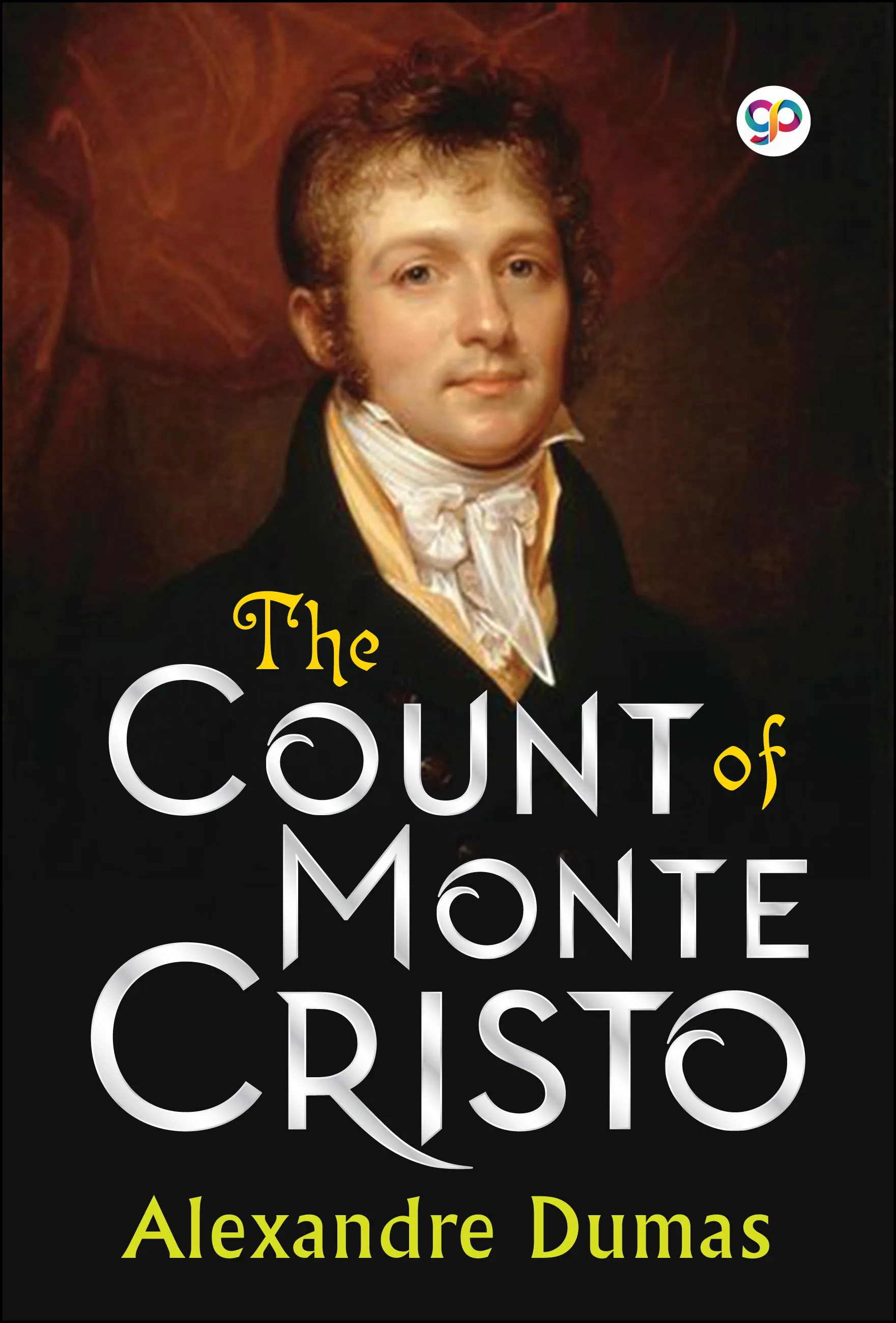
Download Cover Image
Do you want to download the full cover image for The Count of Monte Cristo?