
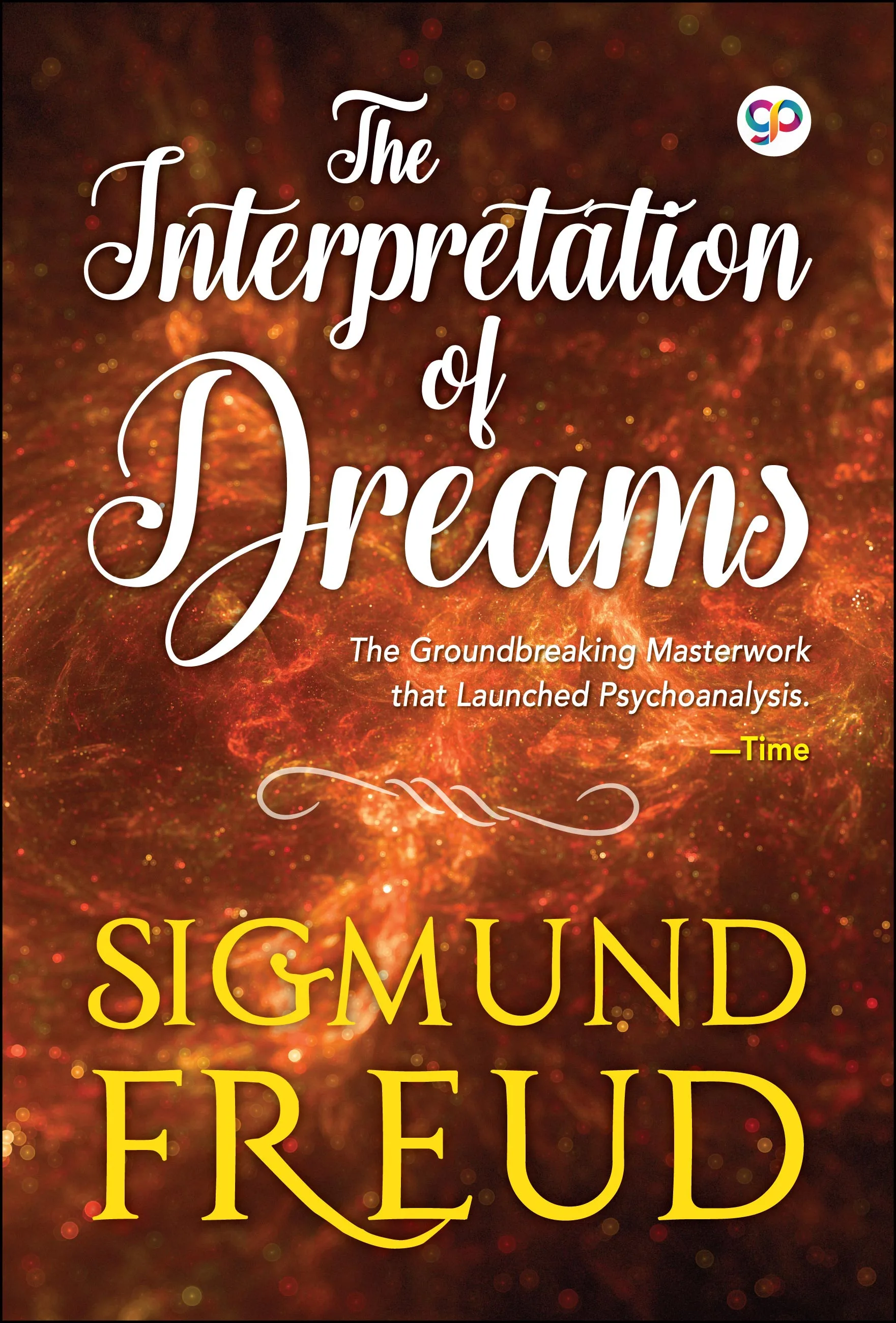
The Interpretation of Dreams
eBook
• 410 Pages
• INR 51.00
• English
• 9789388760157
No ratings yet
| Publisher | General Press |
|---|---|
| ISBN13 | 9789388760157 |
| ASIN/SKU | B07NH5V8YC |
| Book Format | eBook |
| Language | English |
| Pages | 410 |
| List Price | INR 51.00 |
| Subject Code | SEL016000, PSY046000, SCI090000 |
| Publishing Date | 04/01/2019 |
| Book Code | BD00068556 |
Buy this Book
Amazon Stores
Ebook Stores
Other Stores
Discover The Interpretation of Dreams by Sigmund Freud. This book is published by General Press in eBook format, ISBN 9789388760157, ASIN B07NH5V8YC, under Non Fiction, Psychology, Philosophy.
Book Description
First published in 1899, ‘The Interpretation of Dreams’ written by Sigmund Freud, presents the theory of the unconscious with respect to dream interpretation and discusses what would later become the theory of the Oedipus complex. Sigmund Freud is an Austrian neurologist and the founding father of psychoanalysis, a method for treating mental illness and also a theory that explains human behavior.
Freud believed that events in our childhood hold a great impact on our adult lives, shaping our personality. In creating psychoanalysis, Freud designed therapeutic techniques such as the use of free association and discovered transference, establishing its central role in the analytic process.
Freud saw that man is at war with himself and often unable to tolerate too much reality. He propounded the theory that dreams are the contraband representations of the beast within man, smuggled into awareness during sleep. In Freudian interpretation, the analysis of dreams is the key to unlocking the secrets of the unconscious mind.
Freud believed that events in our childhood hold a great impact on our adult lives, shaping our personality. In creating psychoanalysis, Freud designed therapeutic techniques such as the use of free association and discovered transference, establishing its central role in the analytic process.
Freud saw that man is at war with himself and often unable to tolerate too much reality. He propounded the theory that dreams are the contraband representations of the beast within man, smuggled into awareness during sleep. In Freudian interpretation, the analysis of dreams is the key to unlocking the secrets of the unconscious mind.
Author Biography
Born Sigismund Schlomo Freud in 1856 in Freiberg, Moravia, he moved with his family to Vienna, Austria, at a young age. A brilliant student, Freud entered the University of Vienna at seventeen to study medicine. Initially focusing on neurology and zoology, he conducted significant research on the nervous systems of marine life. After earning his medical degree, he began working at the Vienna General Hospital, where his fascination with the complex workings of the human brain gradually shifted his focus from the physical structures of nerves to the realm of psychological disorders.
Freud's pivotal transition occurred in the 1880s following his collaboration with physician Josef Breuer and his studies under French neurologist Jean-Martin Charcot. Intrigued by the treatment of hysteria through hypnosis, Freud began developing a revolutionary clinical method centered on dialogue. He posited that unexpressed, deeply repressed traumatic memories in the unconscious mind were the root cause of psychological distress. By encouraging patients to speak freely about their dreams, memories, and childhood experiences—a technique known as free association—Freud established the foundational framework of psychoanalysis.
In 1899, Freud published his seminal work, The Interpretation of Dreams, introducing the concept of the unconscious mind and arguing that dreams are disguised fulfillments of repressed wishes. This was followed by a series of highly influential and controversial publications outlining his theories on psychosexual development, the Oedipus complex, and the tripartite structure of the psyche: the id, ego, and superego. Although his ideas frequently scandalized the conservative Victorian medical establishment, they eventually attracted a dedicated circle of followers, transforming psychoanalysis into an international movement.
Despite battling painful jaw cancer for the last sixteen years of his life, Freud remained a remarkably prolific writer and clinician. In 1938, the Nazi annexation of Austria forced the eighty-two-year-old Freud, who was of Jewish descent, to flee Vienna for London to escape persecution. He died there the following year. While many of his specific clinical theories have been heavily criticized or discarded by modern psychiatry, Freud's profound cultural impact is undeniable. He forever altered the way humanity understands the subconscious, shaping not just psychology, but literature, art, and modern thought.
Freud's pivotal transition occurred in the 1880s following his collaboration with physician Josef Breuer and his studies under French neurologist Jean-Martin Charcot. Intrigued by the treatment of hysteria through hypnosis, Freud began developing a revolutionary clinical method centered on dialogue. He posited that unexpressed, deeply repressed traumatic memories in the unconscious mind were the root cause of psychological distress. By encouraging patients to speak freely about their dreams, memories, and childhood experiences—a technique known as free association—Freud established the foundational framework of psychoanalysis.
In 1899, Freud published his seminal work, The Interpretation of Dreams, introducing the concept of the unconscious mind and arguing that dreams are disguised fulfillments of repressed wishes. This was followed by a series of highly influential and controversial publications outlining his theories on psychosexual development, the Oedipus complex, and the tripartite structure of the psyche: the id, ego, and superego. Although his ideas frequently scandalized the conservative Victorian medical establishment, they eventually attracted a dedicated circle of followers, transforming psychoanalysis into an international movement.
Despite battling painful jaw cancer for the last sixteen years of his life, Freud remained a remarkably prolific writer and clinician. In 1938, the Nazi annexation of Austria forced the eighty-two-year-old Freud, who was of Jewish descent, to flee Vienna for London to escape persecution. He died there the following year. While many of his specific clinical theories have been heavily criticized or discarded by modern psychiatry, Freud's profound cultural impact is undeniable. He forever altered the way humanity understands the subconscious, shaping not just psychology, but literature, art, and modern thought.
Editorial Reviews
Editorial Reviews will be added soon…
Book Summary
Sigmund Freud’s The Interpretation of Dreams, first published in 1899, is one of the most influential and controversial works in the history of psychology. In this book, Freud argues that dreams are not meaningless collections of strange images or random thoughts. Instead, he presents them as expressions of unconscious mental activity, often revealing wishes, fears, memories, conflicts, and desires that the conscious mind does not openly recognize. Through a long examination of his own dreams, the dreams of his patients, and examples from literature and everyday life, Freud develops a method for interpreting dreams and uses it to introduce many of the ideas that later became central to psychoanalysis.
Freud begins with the basic question of why dreams occur and what they mean. Before Freud, dreams had often been treated as supernatural messages, prophetic signs, or meaningless disturbances of sleep. Freud takes a different approach. He argues that dreams have psychological causes and can be studied systematically. The dream may appear confusing on the surface, but beneath that surface lies a meaningful chain of thoughts. Understanding a dream therefore requires moving from what Freud calls the “manifest content”—the dream as it is remembered—to the hidden or “latent” thoughts that produced it.
According to Freud, many dreams are connected with wishes. A person may have desires that are unacceptable, embarrassing, frightening, or simply incompatible with everyday life. Because such desires are kept outside conscious awareness, they may find indirect expression during sleep. Freud famously describes dreams as wish fulfillments, although he recognizes that the wishes expressed in dreams are often disguised and complicated. A dream does not necessarily show a desire openly. Instead, the mind transforms the underlying wish into a symbolic or distorted story.
Freud explains this distortion through what he calls “dream work.” The unconscious thoughts underlying a dream are transformed into the images and events that the dreamer actually experiences. One important process is condensation, in which several different ideas or people may become combined into a single dream image. Another is displacement, in which emotional importance is shifted from an important idea to something less threatening. A third process involves the creation of visual representations from abstract thoughts. These mechanisms help explain why dreams can seem strange, fragmented, or difficult to understand.
Freud places particular importance on the technique of free association. Instead of asking a dreamer to interpret each symbol according to a fixed dictionary of meanings, he encourages the person to say whatever thoughts come into the mind when considering different parts of the dream. These associations may appear unrelated at first, but Freud believes that they can lead toward the hidden thoughts behind the dream. The interpretation therefore depends on the dreamer’s personal experiences rather than on universal symbolic meanings alone.
A large portion of the book consists of Freud’s detailed analysis of dreams. He frequently examines his own dreams and openly discusses personal experiences, relationships, memories, and anxieties. This makes the work unusually intimate. Freud uses these examples to demonstrate his method, showing how apparently ordinary dream images can be connected to complicated emotional and psychological material. His analyses often lead him toward childhood memories and unresolved conflicts, supporting his broader argument that unconscious experiences influence adult mental life.
Childhood plays a particularly important role in Freud’s theory. He argues that many adult psychological conflicts have roots in early experiences. Children experience strong desires, fears, jealousies, and attachments that may not disappear simply because they grow older. Some of these feelings become unacceptable to the conscious mind and are pushed out of awareness. They may later reappear indirectly in dreams, slips of the tongue, fantasies, symptoms, or other forms of behavior.
One of Freud’s most famous and controversial ideas in the book concerns childhood sexuality and the emotional relationship between children and their parents. Freud argues that children can experience intense feelings of attachment, rivalry, jealousy, and desire within the family. These ideas later became associated with what is commonly called the Oedipus complex. Although the theory has been extensively debated and criticized, it became an important part of Freud’s account of how unconscious desire and family relationships shape personality.
Freud also discusses dreams that appear to contradict the idea of wish fulfillment. Some dreams are frightening, painful, or associated with anxiety. His response is that the dream’s underlying wish may be disguised so heavily that it becomes unpleasant in its final form. Anxiety can also arise when the unconscious material is too close to conscious awareness. In this way, the dream is still connected to the dreamer’s underlying psychological conflicts even when its surface content is disturbing.
Another important theme is the relationship between dreaming and everyday mental life. Freud does not treat the dream as something completely separate from waking experience. Instead, he argues that dreams draw upon recent events, memories, conversations, physical sensations, and older experiences. Small details from the previous day can become connected with deeper unconscious material. The dream therefore combines current experiences with older emotional concerns.
Freud also distinguishes between primary and secondary processes. The primary process is associated with unconscious thinking, where ideas can be connected through association rather than ordinary logic. Contradictions may coexist, time may be distorted, and one image may represent several different things. The secondary process belongs more closely to conscious thought, where reasoning, order, and reality testing are important. During waking life, the secondary process helps organize experience, while dreams allow the less orderly primary process to become more visible.
The book’s broader significance comes from Freud’s claim that consciousness is only part of the human mind. Beneath conscious thought lies a large unconscious world containing memories, wishes, fears, and conflicts. People may believe they fully understand why they behave as they do, but Freud argues that hidden motives often influence their choices. Dreams provide one of the clearest paths into this hidden psychological world.
At the same time, The Interpretation of Dreams is not simply a book about sleep. It is Freud’s attempt to establish a new way of understanding the human mind. Dreams become evidence for a larger theory of psychological life. If seemingly meaningless dreams contain hidden meaning, then other aspects of human behavior may also have unconscious causes. This idea becomes one of the foundations of psychoanalysis.
The work is complex, highly detailed, and often speculative by modern standards. Many of Freud’s specific theories have been challenged, revised, or rejected by later psychological research, and dream science today does not generally accept all of his interpretations. Nevertheless, the book remains historically important because it changed the way many people thought about dreams, unconscious motivation, memory, and human personality.
Ultimately, The Interpretation of Dreams presents the dream as a doorway into the hidden regions of the mind. Freud asks readers to look beyond the strange images of a dream and consider the personal experiences and emotional conflicts that may lie beneath them. His central insight is that the human mind is deeper and less transparent to itself than people usually assume. Dreams, in his view, are not simply mysterious nighttime stories; they are meaningful psychological productions that reveal the tension between what we consciously accept and what we unconsciously desire. Whether or not one accepts Freud’s theories in full, his work permanently influenced psychology, literature, art, and modern ideas about the unconscious, making The Interpretation of Dreams a landmark in the history of thought.
Freud begins with the basic question of why dreams occur and what they mean. Before Freud, dreams had often been treated as supernatural messages, prophetic signs, or meaningless disturbances of sleep. Freud takes a different approach. He argues that dreams have psychological causes and can be studied systematically. The dream may appear confusing on the surface, but beneath that surface lies a meaningful chain of thoughts. Understanding a dream therefore requires moving from what Freud calls the “manifest content”—the dream as it is remembered—to the hidden or “latent” thoughts that produced it.
According to Freud, many dreams are connected with wishes. A person may have desires that are unacceptable, embarrassing, frightening, or simply incompatible with everyday life. Because such desires are kept outside conscious awareness, they may find indirect expression during sleep. Freud famously describes dreams as wish fulfillments, although he recognizes that the wishes expressed in dreams are often disguised and complicated. A dream does not necessarily show a desire openly. Instead, the mind transforms the underlying wish into a symbolic or distorted story.
Freud explains this distortion through what he calls “dream work.” The unconscious thoughts underlying a dream are transformed into the images and events that the dreamer actually experiences. One important process is condensation, in which several different ideas or people may become combined into a single dream image. Another is displacement, in which emotional importance is shifted from an important idea to something less threatening. A third process involves the creation of visual representations from abstract thoughts. These mechanisms help explain why dreams can seem strange, fragmented, or difficult to understand.
Freud places particular importance on the technique of free association. Instead of asking a dreamer to interpret each symbol according to a fixed dictionary of meanings, he encourages the person to say whatever thoughts come into the mind when considering different parts of the dream. These associations may appear unrelated at first, but Freud believes that they can lead toward the hidden thoughts behind the dream. The interpretation therefore depends on the dreamer’s personal experiences rather than on universal symbolic meanings alone.
A large portion of the book consists of Freud’s detailed analysis of dreams. He frequently examines his own dreams and openly discusses personal experiences, relationships, memories, and anxieties. This makes the work unusually intimate. Freud uses these examples to demonstrate his method, showing how apparently ordinary dream images can be connected to complicated emotional and psychological material. His analyses often lead him toward childhood memories and unresolved conflicts, supporting his broader argument that unconscious experiences influence adult mental life.
Childhood plays a particularly important role in Freud’s theory. He argues that many adult psychological conflicts have roots in early experiences. Children experience strong desires, fears, jealousies, and attachments that may not disappear simply because they grow older. Some of these feelings become unacceptable to the conscious mind and are pushed out of awareness. They may later reappear indirectly in dreams, slips of the tongue, fantasies, symptoms, or other forms of behavior.
One of Freud’s most famous and controversial ideas in the book concerns childhood sexuality and the emotional relationship between children and their parents. Freud argues that children can experience intense feelings of attachment, rivalry, jealousy, and desire within the family. These ideas later became associated with what is commonly called the Oedipus complex. Although the theory has been extensively debated and criticized, it became an important part of Freud’s account of how unconscious desire and family relationships shape personality.
Freud also discusses dreams that appear to contradict the idea of wish fulfillment. Some dreams are frightening, painful, or associated with anxiety. His response is that the dream’s underlying wish may be disguised so heavily that it becomes unpleasant in its final form. Anxiety can also arise when the unconscious material is too close to conscious awareness. In this way, the dream is still connected to the dreamer’s underlying psychological conflicts even when its surface content is disturbing.
Another important theme is the relationship between dreaming and everyday mental life. Freud does not treat the dream as something completely separate from waking experience. Instead, he argues that dreams draw upon recent events, memories, conversations, physical sensations, and older experiences. Small details from the previous day can become connected with deeper unconscious material. The dream therefore combines current experiences with older emotional concerns.
Freud also distinguishes between primary and secondary processes. The primary process is associated with unconscious thinking, where ideas can be connected through association rather than ordinary logic. Contradictions may coexist, time may be distorted, and one image may represent several different things. The secondary process belongs more closely to conscious thought, where reasoning, order, and reality testing are important. During waking life, the secondary process helps organize experience, while dreams allow the less orderly primary process to become more visible.
The book’s broader significance comes from Freud’s claim that consciousness is only part of the human mind. Beneath conscious thought lies a large unconscious world containing memories, wishes, fears, and conflicts. People may believe they fully understand why they behave as they do, but Freud argues that hidden motives often influence their choices. Dreams provide one of the clearest paths into this hidden psychological world.
At the same time, The Interpretation of Dreams is not simply a book about sleep. It is Freud’s attempt to establish a new way of understanding the human mind. Dreams become evidence for a larger theory of psychological life. If seemingly meaningless dreams contain hidden meaning, then other aspects of human behavior may also have unconscious causes. This idea becomes one of the foundations of psychoanalysis.
The work is complex, highly detailed, and often speculative by modern standards. Many of Freud’s specific theories have been challenged, revised, or rejected by later psychological research, and dream science today does not generally accept all of his interpretations. Nevertheless, the book remains historically important because it changed the way many people thought about dreams, unconscious motivation, memory, and human personality.
Ultimately, The Interpretation of Dreams presents the dream as a doorway into the hidden regions of the mind. Freud asks readers to look beyond the strange images of a dream and consider the personal experiences and emotional conflicts that may lie beneath them. His central insight is that the human mind is deeper and less transparent to itself than people usually assume. Dreams, in his view, are not simply mysterious nighttime stories; they are meaningful psychological productions that reveal the tension between what we consciously accept and what we unconsciously desire. Whether or not one accepts Freud’s theories in full, his work permanently influenced psychology, literature, art, and modern ideas about the unconscious, making The Interpretation of Dreams a landmark in the history of thought.
Sample Chapters
Sample Chapters will be added soon…
Reader Reviews
No reviews yet.
The Interpretation of Dreams
Download Cover Image
Do you want to download the full cover image for The Interpretation of Dreams?