
The Brothers Karamazov
eBook
• INR 70.00
• English
• 9789388760195
4.0
| 1 rating
|
| Publisher | General Press |
|---|---|
| ISBN13 | 9789388760195 |
| ASIN/SKU | B07NHG53LL |
| Book Format | eBook |
| Language | English |
| List Price | INR 70.00 |
| Subject Code | FIC025000, FIC019000, FIC004000 |
| Publishing Date | 04/01/2019 |
| Book Code | BD00068557 |
Buy this Book
Amazon Stores
Ebook Stores
Other Stores
Discover The Brothers Karamazov by Fyodor Dostoyevsky. This book is published by General Press in eBook format, ISBN 9789388760195, ASIN B07NHG53LL, under Literature and Fiction, Psychological Fiction, Literary Fiction.
Book Description
'The Brothers Karamazov' by Fyodor Dostoyevsky is a profound literary masterpiece that explores the deepest questions of human existence, faith, morality, and free will. Set in nineteenth-century Russia, the novel revolves around the troubled Karamazov family, whose lives are shaped by love, resentment, ambition, and spiritual longing. At the center of the story are three very different brothers—Dmitri, Ivan, and Alyosha—each representing a distinct way of understanding life. Their relationships with their selfish and corrupt father, Fyodor Pavlovich Karamazov, create tensions that eventually lead to a shocking crime, forcing each character to confront the consequences of their beliefs and actions.
As the mystery unfolds, Dostoyevsky delves into the complexities of guilt, justice, forgiveness, and redemption. Through powerful conversations and deeply emotional moments, he examines the struggle between reason and faith, selfishness and compassion, despair and hope. Every character, from the passionate Dmitri to the thoughtful Ivan and the gentle, deeply spiritual Alyosha, contributes to the novel’s rich exploration of the human soul.
More than a family drama or a crime story, 'The Brothers Karamazov' is a timeless reflection on what it means to be truly human. Its unforgettable characters and philosophical depth encourage readers to think about responsibility, the existence of God, and the search for meaning in a world filled with suffering and uncertainty. The novel remains one of the greatest achievements in world literature, offering wisdom that continues to resonate across generations.
As the mystery unfolds, Dostoyevsky delves into the complexities of guilt, justice, forgiveness, and redemption. Through powerful conversations and deeply emotional moments, he examines the struggle between reason and faith, selfishness and compassion, despair and hope. Every character, from the passionate Dmitri to the thoughtful Ivan and the gentle, deeply spiritual Alyosha, contributes to the novel’s rich exploration of the human soul.
More than a family drama or a crime story, 'The Brothers Karamazov' is a timeless reflection on what it means to be truly human. Its unforgettable characters and philosophical depth encourage readers to think about responsibility, the existence of God, and the search for meaning in a world filled with suffering and uncertainty. The novel remains one of the greatest achievements in world literature, offering wisdom that continues to resonate across generations.
Author Biography
Fyodor Mikhailovich Dostoyevsky (/ˌdɒstəˈjɛfski, ˌdʌs-/; Russian: Фёдор Миха́йлович Достое́вский; IPA: [ˈfʲɵdər mʲɪˈxajləvʲɪtɕ dəstɐˈjɛfskʲɪj]; 11 November 1821 – 9 February 1881), sometimes transliterated Dostoevsky, was a Russian novelist, short story writer, essayist, journalist and philosopher. Dostoyevsky's literary works explore human psychology in the troubled political, social, and spiritual atmosphere of 19th-century Russia. Many of his works are marked by a preoccupation with Christianity, explored through the prism of the individual confronted with life's hardships and beauty.
He began writing in his 20s, and his first novel, Poor Folk, was published in 1846 when he was 25. His major works include Crime and Punishment (1866), The Idiot (1869), Demons (1872) and The Brothers Karamazov (1880). His output consists of 11 novels, three novellas, 17 short novels and numerous other works. Many literary critics rate him as one of the greatest psychologists in world literature. His 1864 novella Notes from Underground is considered to be one of the first works of existentialist literature.
Born in Moscow in 1821, Dostoyevsky was introduced to literature at an early age through fairy tales and legends, and through books by Russian and foreign authors. His mother died in 1837, when he was 15, and around the same time he left school to enter the Nikolayev Military Engineering Institute. After graduating, he worked as an engineer and briefly enjoyed a lavish lifestyle, translating books to earn extra money. In the mid-1840s he wrote his first novel, Poor Folk, which gained him entry into St. Petersburg's literary circles.
In the following years, Dostoyevsky worked as a journalist, publishing and editing several magazines of his own and later A Writer's Diary, a collection of his writings. He began to travel around western Europe and developed a gambling addiction, which led to financial hardship. For a time, he had to beg for money, but he eventually became one of the most widely read and highly regarded Russian writers. His books have been translated into more than 170 languages. Dostoyevsky influenced a multitude of writers and philosophers, from Anton Chekhov and Ernest Hemingway to Friedrich Nietzsche and Jean-Paul Sartre.
He began writing in his 20s, and his first novel, Poor Folk, was published in 1846 when he was 25. His major works include Crime and Punishment (1866), The Idiot (1869), Demons (1872) and The Brothers Karamazov (1880). His output consists of 11 novels, three novellas, 17 short novels and numerous other works. Many literary critics rate him as one of the greatest psychologists in world literature. His 1864 novella Notes from Underground is considered to be one of the first works of existentialist literature.
Born in Moscow in 1821, Dostoyevsky was introduced to literature at an early age through fairy tales and legends, and through books by Russian and foreign authors. His mother died in 1837, when he was 15, and around the same time he left school to enter the Nikolayev Military Engineering Institute. After graduating, he worked as an engineer and briefly enjoyed a lavish lifestyle, translating books to earn extra money. In the mid-1840s he wrote his first novel, Poor Folk, which gained him entry into St. Petersburg's literary circles.
In the following years, Dostoyevsky worked as a journalist, publishing and editing several magazines of his own and later A Writer's Diary, a collection of his writings. He began to travel around western Europe and developed a gambling addiction, which led to financial hardship. For a time, he had to beg for money, but he eventually became one of the most widely read and highly regarded Russian writers. His books have been translated into more than 170 languages. Dostoyevsky influenced a multitude of writers and philosophers, from Anton Chekhov and Ernest Hemingway to Friedrich Nietzsche and Jean-Paul Sartre.
Editorial Reviews
Editorial Reviews will be added soon…
Book Summary
"The Brothers Karamazov" by Fyodor Dostoyevsky is a monumental novel that explores family conflict, morality, faith, free will, and the search for meaning through the lives of the Karamazov family. At the centre of the story is Fyodor Pavlovich Karamazov, a wealthy but selfish and immoral landowner whose reckless lifestyle has left a trail of resentment among those closest to him. His three legitimate sons—Dmitri, Ivan, and Alyosha—have grown into very different men, each representing a distinct way of understanding life. Dmitri is passionate and impulsive, Ivan is an intellectual sceptic who questions religion and justice, and Alyosha is a compassionate novice monk whose deep Christian faith shapes his outlook. A fourth son, the quiet and mysterious Smerdyakov, serves as a household servant while carrying his own hidden bitterness and ambitions. Their strained relationships create the emotional foundation of a story that gradually builds towards tragedy.
The novel begins by introducing the troubled history of the Karamazov family and the conflicting personalities of the brothers. Fyodor Pavlovich has neglected his children throughout their lives, leaving them to be raised by others while he indulges in greed, pleasure, and manipulation. Dmitri returns to confront his father over an inheritance dispute that has remained unresolved for years. Their disagreements become even more intense because both men are deeply attracted to the same woman, Grushenka, whose beauty and unpredictable nature fuel jealousy and rivalry. At the same time, Dmitri is engaged to the proud and intelligent Katerina Ivanovna, creating an emotional conflict that further complicates his already unstable life. These overlapping tensions make violence seem increasingly unavoidable.
While Dmitri struggles with his emotions, Ivan wrestles with questions that cannot be answered through reason alone. Highly educated and deeply thoughtful, he finds it difficult to accept the existence of a loving God in a world filled with suffering, especially the suffering of innocent children. His conversations with Alyosha become some of the novel's most memorable moments as the brothers debate faith, morality, freedom, and human responsibility. Ivan believes that reason alone cannot explain the contradictions of existence, while Alyosha responds not with abstract arguments but with kindness, humility, and genuine love for others. Through these discussions, the novel explores the conflict between doubt and belief without presenting simple answers, allowing each perspective to be expressed with remarkable depth.
Alyosha's own journey is shaped by his close relationship with the respected Elder Zosima, a spiritual leader whose teachings emphasise forgiveness, compassion, and personal responsibility. Zosima encourages people to recognise their shared humanity and to take responsibility not only for their own actions but also for the well-being of others. His influence strengthens Alyosha's faith and inspires him to remain hopeful even when confronted by cruelty, disappointment, and loss. After Zosima's death, events do not unfold as many believers had expected, causing some to question his holiness. Alyosha himself experiences doubt, yet he ultimately emerges with an even deeper understanding that true faith depends on love and humility rather than miraculous signs.
The growing hostility between Dmitri and his father reaches its breaking point when Fyodor Pavlovich is found murdered. Suspicion immediately falls upon Dmitri because he had openly threatened his father, desperately needed money, and was seen behaving violently shortly before the crime. Circumstantial evidence appears overwhelming, and many people assume his guilt before the investigation is complete. Although Dmitri insists that he is innocent of murder, his own reckless behaviour and emotional outbursts make his defence difficult to believe. The trial becomes one of the novel's central events, revealing how public opinion, personal prejudice, and persuasive storytelling can shape the pursuit of justice as much as factual evidence.
As the investigation continues, hidden truths gradually emerge regarding Smerdyakov, whose quiet presence has often been overlooked. Influenced by Ivan's philosophical ideas about morality and responsibility, Smerdyakov reveals a far more complicated role in the tragedy than anyone had imagined. His actions force Ivan to confront the possibility that ideas can influence behaviour in ways that extend beyond direct intention. Tormented by guilt and inner conflict, Ivan begins to question both his beliefs and his own responsibility for the terrible events that have unfolded. His emotional collapse illustrates the devastating consequences of separating intellectual reasoning from moral accountability, while also highlighting the psychological complexity that defines Dostoyevsky's writing.
Throughout the novel, numerous supporting characters enrich the story by presenting different responses to suffering, love, pride, and forgiveness. Katerina struggles between honour and resentment, while Grushenka undergoes a gradual transformation from apparent selfishness towards compassion and self-awareness. Alyosha forms meaningful friendships with a group of schoolboys, particularly the young Ilyusha, whose illness and family hardships reveal both the cruelty and generosity that exist within ordinary life. These smaller stories mirror the larger themes of the novel, demonstrating that acts of kindness, however small, possess the power to heal emotional wounds and inspire hope even in difficult circumstances.
As the narrative approaches its conclusion, the fate of each brother reflects his individual outlook on life. Dmitri dreams of redemption despite his imprisonment, believing that suffering may become the path towards moral renewal. Ivan remains haunted by the consequences of his ideas and his inability to escape guilt through reason alone. Alyosha continues to live according to the principles of love, forgiveness, and faith, encouraging others to remember that compassion is stronger than hatred and that goodness can endure despite tragedy. Rather than resolving every mystery or conflict, the novel leaves readers with profound questions about justice, responsibility, and the meaning of human existence.
"The Brothers Karamazov" is ultimately far more than the story of a murder or a divided family. It is a deeply philosophical exploration of the choices that define human life and the moral struggles that exist within every individual. Through unforgettable characters and emotionally powerful storytelling, Fyodor Dostoyevsky examines the tension between belief and doubt, reason and emotion, freedom and responsibility, justice and mercy. The novel suggests that while suffering is an unavoidable part of life, hope can still be found through love, humility, forgiveness, and genuine concern for others. More than a century after its publication, it continues to be regarded as one of the greatest achievements in world literature, offering timeless insights into the complexity of the human heart and the enduring search for truth.
The novel begins by introducing the troubled history of the Karamazov family and the conflicting personalities of the brothers. Fyodor Pavlovich has neglected his children throughout their lives, leaving them to be raised by others while he indulges in greed, pleasure, and manipulation. Dmitri returns to confront his father over an inheritance dispute that has remained unresolved for years. Their disagreements become even more intense because both men are deeply attracted to the same woman, Grushenka, whose beauty and unpredictable nature fuel jealousy and rivalry. At the same time, Dmitri is engaged to the proud and intelligent Katerina Ivanovna, creating an emotional conflict that further complicates his already unstable life. These overlapping tensions make violence seem increasingly unavoidable.
While Dmitri struggles with his emotions, Ivan wrestles with questions that cannot be answered through reason alone. Highly educated and deeply thoughtful, he finds it difficult to accept the existence of a loving God in a world filled with suffering, especially the suffering of innocent children. His conversations with Alyosha become some of the novel's most memorable moments as the brothers debate faith, morality, freedom, and human responsibility. Ivan believes that reason alone cannot explain the contradictions of existence, while Alyosha responds not with abstract arguments but with kindness, humility, and genuine love for others. Through these discussions, the novel explores the conflict between doubt and belief without presenting simple answers, allowing each perspective to be expressed with remarkable depth.
Alyosha's own journey is shaped by his close relationship with the respected Elder Zosima, a spiritual leader whose teachings emphasise forgiveness, compassion, and personal responsibility. Zosima encourages people to recognise their shared humanity and to take responsibility not only for their own actions but also for the well-being of others. His influence strengthens Alyosha's faith and inspires him to remain hopeful even when confronted by cruelty, disappointment, and loss. After Zosima's death, events do not unfold as many believers had expected, causing some to question his holiness. Alyosha himself experiences doubt, yet he ultimately emerges with an even deeper understanding that true faith depends on love and humility rather than miraculous signs.
The growing hostility between Dmitri and his father reaches its breaking point when Fyodor Pavlovich is found murdered. Suspicion immediately falls upon Dmitri because he had openly threatened his father, desperately needed money, and was seen behaving violently shortly before the crime. Circumstantial evidence appears overwhelming, and many people assume his guilt before the investigation is complete. Although Dmitri insists that he is innocent of murder, his own reckless behaviour and emotional outbursts make his defence difficult to believe. The trial becomes one of the novel's central events, revealing how public opinion, personal prejudice, and persuasive storytelling can shape the pursuit of justice as much as factual evidence.
As the investigation continues, hidden truths gradually emerge regarding Smerdyakov, whose quiet presence has often been overlooked. Influenced by Ivan's philosophical ideas about morality and responsibility, Smerdyakov reveals a far more complicated role in the tragedy than anyone had imagined. His actions force Ivan to confront the possibility that ideas can influence behaviour in ways that extend beyond direct intention. Tormented by guilt and inner conflict, Ivan begins to question both his beliefs and his own responsibility for the terrible events that have unfolded. His emotional collapse illustrates the devastating consequences of separating intellectual reasoning from moral accountability, while also highlighting the psychological complexity that defines Dostoyevsky's writing.
Throughout the novel, numerous supporting characters enrich the story by presenting different responses to suffering, love, pride, and forgiveness. Katerina struggles between honour and resentment, while Grushenka undergoes a gradual transformation from apparent selfishness towards compassion and self-awareness. Alyosha forms meaningful friendships with a group of schoolboys, particularly the young Ilyusha, whose illness and family hardships reveal both the cruelty and generosity that exist within ordinary life. These smaller stories mirror the larger themes of the novel, demonstrating that acts of kindness, however small, possess the power to heal emotional wounds and inspire hope even in difficult circumstances.
As the narrative approaches its conclusion, the fate of each brother reflects his individual outlook on life. Dmitri dreams of redemption despite his imprisonment, believing that suffering may become the path towards moral renewal. Ivan remains haunted by the consequences of his ideas and his inability to escape guilt through reason alone. Alyosha continues to live according to the principles of love, forgiveness, and faith, encouraging others to remember that compassion is stronger than hatred and that goodness can endure despite tragedy. Rather than resolving every mystery or conflict, the novel leaves readers with profound questions about justice, responsibility, and the meaning of human existence.
"The Brothers Karamazov" is ultimately far more than the story of a murder or a divided family. It is a deeply philosophical exploration of the choices that define human life and the moral struggles that exist within every individual. Through unforgettable characters and emotionally powerful storytelling, Fyodor Dostoyevsky examines the tension between belief and doubt, reason and emotion, freedom and responsibility, justice and mercy. The novel suggests that while suffering is an unavoidable part of life, hope can still be found through love, humility, forgiveness, and genuine concern for others. More than a century after its publication, it continues to be regarded as one of the greatest achievements in world literature, offering timeless insights into the complexity of the human heart and the enduring search for truth.
Sample Chapters
Part 1
Book 1: The History of a Family
Chapter 1: Fyodor Pavlovitch Karamazov
Alexey Fyodorovitch Karamazov was the third son of Fyodor Pavlovitch Karamazov, a land owner well known in our district in his own day, and still remembered among us owing to his gloomy and tragic death, which happened thirteen years ago, and which I shall describe in its proper place. For the present I will only say that this “landowner”—for so we used to call him, although he hardly spent a day of his life on his own estate—was a strange type, yet one pretty frequently to be met with, a type abject and vicious and at the same time senseless. But he was one of those senseless persons who are very well capable of looking after their worldly affairs, and, apparently, after nothing else. Fyodor Pavlovitch, for instance, began with next to nothing; his estate was of the smallest; he ran to dine at other men’s tables, and fastened on them as a toady, yet at his death it appeared that he had a hundred thousand roubles in hard cash. At the same time, he was all his life one of the most senseless, fantastical fellows in the whole district. I repeat, it was not stupidity—the majority of these fantastical fellows are shrewd and intelligent enough—but just senselessness, and a peculiar national form of it.
He was married twice, and had three sons, the eldest, Dmitri, by his first wife, and two, Ivan and Alexey, by his second. Fyodor Pavlovitch’s first wife, Adelaïda Ivanovna, belonged to a fairly rich and distinguished noble family, also landowners in our district, the Miüsovs. How it came to pass that an heiress, who was also a beauty, and moreover one of those vigorous, intelligent girls, so common in this generation, but sometimes also to be found in the last, could have married such a worthless, puny weakling, as we all called him, I won’t attempt to explain. I knew a young lady of the last “romantic” generation who after some years of an enigmatic passion for a gentleman, whom she might quite easily have married at any moment, invented insuperable obstacles to their union, and ended by throwing herself one stormy night into a rather deep and rapid river from a high bank, almost a precipice, and so perished, entirely to satisfy her own caprice, and to be like Shakespeare’s Ophelia. Indeed, if this precipice, a chosen and favourite spot of hers, had been less picturesque, if there had been a prosaic flat bank in its place, most likely the suicide would never have taken place. This is a fact, and probably there have been not a few similar instances in the last two or three generations. Adelaïda Ivanovna Miüsov’s action was similarly, no doubt, an echo of other people’s ideas, and was due to the irritation caused by lack of mental freedom. She wanted, perhaps, to show her feminine independence, to override class distinctions and the despotism of her family. And a pliable imagination persuaded her, we must suppose, for a brief moment, that Fyodor Pavlovitch, in spite of his parasitic position, was one of the bold and ironical spirits of that progressive epoch, though he was, in fact, an ill-natured buffoon and nothing more. What gave the marriage piquancy was that it was preceded by an elopement, and this greatly captivated Adelaïda Ivanovna’s fancy. Fyodor Pavlovitch’s position at the time made him specially eager for any such enterprise, for he was passionately anxious to make a career in one way or another. To attach himself to a good family and obtain a dowry was an alluring prospect. As for mutual love it did not exist apparently, either in the bride or in him, in spite of Adelaïda Ivanovna’s beauty. This was, perhaps, a unique case of the kind in the life of Fyodor Pavlovitch, who was always of a voluptuous temper, and ready to run after any petticoat on the slightest encouragement. She seems to have been the only woman who made no particular appeal to his senses.
Immediately after the elopement Adelaïda Ivanovna discerned in a flash that she had no feeling for her husband but contempt. The marriage accordingly showed itself in its true colors with extraordinary rapidity. Although the family accepted the event pretty quickly and apportioned the runaway bride her dowry, the husband and wife began to lead a most disorderly life, and there were everlasting scenes between them. It was said that the young wife showed incomparably more generosity and dignity than Fyodor Pavlovitch, who, as is now known, got hold of all her money up to twenty-five thousand roubles as soon as she received it, so that those thousands were lost to her forever. The little village and the rather fine town house which formed part of her dowry he did his utmost for a long time to transfer to his name, by means of some deed of conveyance. He would probably have succeeded, merely from her moral fatigue and desire to get rid of him, and from the contempt and loathing he aroused by his persistent and shameless importunity. But, fortunately, Adelaïda Ivanovna’s family intervened and circumvented his greediness. It is known for a fact that frequent fights took place between the husband and wife, but rumor had it that Fyodor Pavlovitch did not beat his wife but was beaten by her, for she was a hot-tempered, bold, dark-browed, impatient woman, possessed of remarkable physical strength. Finally, she left the house and ran away from Fyodor Pavlovitch with a destitute divinity student, leaving Mitya, a child of three years old, in her husband’s hands. Immediately Fyodor Pavlovitch introduced a regular harem into the house, and abandoned himself to orgies of drunkenness. In the intervals he used to drive all over the province, complaining tearfully to each and all of Adelaïda Ivanovna’s having left him, going into details too disgraceful for a husband to mention in regard to his own married life. What seemed to gratify him and flatter his self-love most was to play the ridiculous part of the injured husband, and to parade his woes with embellishments.
“One would think that you’d got a promotion, Fyodor Pavlovitch, you seem so pleased in spite of your sorrow,” scoffers said to him. Many even added that he was glad of a new comic part in which to play the buffoon, and that it was simply to make it funnier that he pretended to be unaware of his ludicrous position. But, who knows, it may have been simplicity. At last he succeeded in getting on the track of his runaway wife. The poor woman turned out to be in Petersburg, where she had gone with her divinity student, and where she had thrown herself into a life of complete emancipation. Fyodor Pavlovitch at once began bustling about, making preparations to go to Petersburg, with what object he could not himself have said. He would perhaps have really gone; but having determined to do so he felt at once entitled to fortify himself for the journey by another bout of reckless drinking. And just at that time his wife’s family received the news of her death in Petersburg. She had died quite suddenly in a garret, according to one story, of typhus, or as another version had it, of starvation. Fyodor Pavlovitch was drunk when he heard of his wife’s death, and the story is that he ran out into the street and began shouting with joy, raising his hands to Heaven: “Lord, now lettest Thou Thy servant depart in peace,” but others say he wept without restraint like a little child, so much so that people were sorry for him, in spite of the repulsion he inspired. It is quite possible that both versions were true, that he rejoiced at his release, and at the same time wept for her who released him. As a general rule, people, even the wicked, are much more naïve and simple-hearted than we suppose. And we ourselves are, too.
Chapter 2: He Gets Rid of His Eldest Son
You can easily imagine what a father such a man could be and how he would bring up his children. His behaviour as a father was exactly what might be expected. He completely abandoned the child of his marriage with Adelaïda Ivanovna, not from malice, nor because of his matrimonial grievances, but simply because he forgot him. While he was wearying everyone with his tears and complaints, and turning his house into a sink of debauchery, a faithful servant of the family, Grigory, took the three-year-old Mitya into his care. If he hadn’t looked after him there would have been no one even to change the baby’s little shirt.
It happened moreover that the child’s relations on his mother’s side forgot him too at first. His grandfather was no longer living, his widow, Mitya’s grandmother, had moved to Moscow, and was seriously ill, while his daughters were married, so that Mitya remained for almost a whole year in old Grigory’s charge and lived with him in the servant’s cottage. But if his father had remembered him (he could not, indeed, have been altogether unaware of his existence) he would have sent him back to the cottage, as the child would only have been in the way of his debaucheries. But a cousin of Mitya’s mother, Pyotr Alexandrovitch Miüsov, happened to return from Paris. He lived for many years afterwards abroad, but was at that time quite a young man, and distinguished among the Miüsovs as a man of enlightened ideas and of European culture, who had been in the capitals and abroad. Towards the end of his life he became a Liberal of the type common in the forties and fifties. In the course of his career he had come into contact with many of the most Liberal men of his epoch, both in Russia and abroad. He had known Proudhon and Bakunin personally, and in his declining years was very fond of describing the three days of the Paris Revolution of February 1848, hinting that he himself had almost taken part in the fighting on the barricades. This was one of the most grateful recollections of his youth. He had an independent property of about a thousand souls, to reckon in the old style. His splendid estate lay on the outskirts of our little town and bordered on the lands of our famous monastery, with which Pyotr Alexandrovitch began an endless lawsuit, almost as soon as he came into the estate, concerning the rights of fishing in the river or wood-cutting in the forest, I don’t know exactly which. He regarded it as his duty as a citizen and a man of culture to open an attack upon the “clericals.” Hearing all about Adelaïda Ivanovna, whom he, of course, remembered, and in whom he had at one time been interested, and learning of the existence of Mitya, he intervened, in spite of all his youthful indignation and contempt for Fyodor Pavlovitch. He made the latter’s acquaintance for the first time, and told him directly that he wished to undertake the child’s education. He used long afterwards to tell as a characteristic touch, that when he began to speak of Mitya, Fyodor Pavlovitch looked for sometime as though he did not understand what child he was talking about, and even as though he was surprised to hear that he had a little son in the house. The story may have been exaggerated, yet it must have been something like the truth.
Fyodor Pavlovitch was all his life fond of acting, of suddenly playing an unexpected part, sometimes without any motive for doing so, and even to his own direct disadvantage, as, for instance, in the present case. This habit, however, is characteristic of a very great number of people, some of them very clever ones, not like Fyodor Pavlovitch. Pyotr Alexandrovitch carried the business through vigorously, and was appointed, with Fyodor Pavlovitch, joint guardian of the child, who had a small property, a house and land, left him by his mother. Mitya did, in fact, pass into this cousin’s keeping, but as the latter had no family of his own, and after securing the revenues of his estates was in haste to return at once to Paris, he left the boy in charge of one of his cousins, a lady living in Moscow. It came to pass that, settling permanently in Paris he, too, forgot the child, especially when the Revolution of February broke out, making an impression on his mind that he remembered all the rest of his life. The Moscow lady died, and Mitya passed into the care of one of her married daughters. I believe he changed his home a fourth time later on. I won’t enlarge upon that now, as I shall have much to tell later of Fyodor Pavlovitch’s firstborn, and must confine myself now to the most essential facts about him, without which I could not begin my story.
In the first place, this Mitya, or rather Dmitri Fyodorovitch, was the only one of Fyodor Pavlovitch’s three sons who grew up in the belief that he had property, and that he would be independent on coming of age. He spent an irregular boyhood and youth. He did not finish his studies at the gymnasium, he got into a military school, then went to the Caucasus, was promoted, fought a duel, and was degraded to the ranks, earned promotion again, led a wild life, and spent a good deal of money. He did not begin to receive any income from Fyodor Pavlovitch until he came of age, and until then got into debt. He saw and knew his father, Fyodor Pavlovitch, for the first time on coming of age, when he visited our neighbourhood on purpose to settle with him about his property. He seems not to have liked his father. He did not stay long with him, and made haste to get away, having only succeeded in obtaining a sum of money, and entering into an agreement for future payments from the estate, of the revenues and value of which he was unable (a fact worthy of note), upon this occasion, to get a statement from his father. Fyodor Pavlovitch remarked for the first time then (this, too, should be noted) that Mitya had a vague and exaggerated idea of his property. Fyodor Pavlovitch was very well satisfied with this, as it fell in with his own designs. He gathered only that the young man was frivolous, unruly, of violent passions, impatient, and dissipated, and that if he could only obtain ready money he would be satisfied, although only, of course, for a short time. So Fyodor Pavlovitch began to take advantage of this fact, sending him from time to time small doles, installments. In the end, when four years later, Mitya, losing patience, came a second time to our little town to settle up once for all with his father, it turned out to his amazement that he had nothing, that it was difficult to get an account even, that he had received the whole value of his property in sums of money from Fyodor Pavlovitch, and was perhaps even in debt to him, that by various agreements into which he had, of his own desire, entered at various previous dates, he had no right to expect anything more, and so on, and so on. The young man was overwhelmed, suspected deceit and cheating, and was almost beside himself. And, indeed, this circumstance led to the catastrophe, the account of which forms the subject of my first introductory story, or rather the external side of it. But before I pass to that story I must say a little of Fyodor Pavlovitch’s other two sons, and of their origin.
Chapter 3: The Second Marriage and the Second Family
Very shortly after getting his four-year-old Mitya off his hands Fyodor Pavlovitch married a second time. His second marriage lasted eight years. He took this second wife, Sofya Ivanovna, also a very young girl, from another province, where he had gone upon some small piece of business in company with a Jew. Though Fyodor Pavlovitch was a drunkard and a vicious debauchee he never neglected investing his capital, and managed his business affairs very successfully, though, no doubt, not over-scrupulously. Sofya Ivanovna was the daughter of an obscure deacon, and was left from childhood an orphan without relations. She grew up in the house of a general’s widow, a wealthy old lady of good position, who was at once her benefactress and tormentor. I do not know the details, but I have only heard that the orphan girl, a meek and gentle creature, was once cut down from a halter in which she was hanging from a nail in the loft, so terrible were her sufferings from the caprice and everlasting nagging of this old woman, who was apparently not bad-hearted but had become an insufferable tyrant through idleness.
Fyodor Pavlovitch made her an offer; inquiries were made about him and he was refused. But again, as in his first marriage, he proposed an elopement to the orphan girl. There is very little doubt that she would not on any account have married him if she had known a little more about him in time. But she lived in another province; besides, what could a little girl of sixteen know about it, except that she would be better at the bottom of the river than remaining with her benefactress. So the poor child exchanged a benefactress for a benefactor. Fyodor Pavlovitch did not get a penny this time, for the general’s widow was furious. She gave them nothing and cursed them both. But he had not reckoned on a dowry; what allured him was the remarkable beauty of the innocent girl, above all her innocent appearance, which had a peculiar attraction for a vicious profligate, who had hitherto admired only the coarser types of feminine beauty.
“Those innocent eyes slit my soul up like a razor,” he used to say afterwards, with his loathsome snigger. In a man so depraved this might, of course, mean no more than sensual attraction. As he had received no dowry with his wife, and had, so to speak, taken her “from the halter,” he did not stand on ceremony with her. Making her feel that she had “wronged” him, he took advantage of her phenomenal meekness and submissiveness to trample on the elementary decencies of marriage. He gathered loose women into his house, and carried on orgies of debauchery in his wife’s presence. To show what a pass things had come to, I may mention that Grigory, the gloomy, stupid, obstinate, argumentative servant, who had always hated his first mistress, Adelaïda Ivanovna, took the side of his new mistress. He championed her cause, abusing Fyodor Pavlovitch in a manner little befitting a servant, and on one occasion broke up the revels and drove all the disorderly women out of the house. In the end this unhappy young woman, kept in terror from her childhood, fell into that kind of nervous disease which is most frequently found in peasant women who are said to be “possessed by devils.” At times after terrible fits of hysterics she even lost her reason. Yet she bore Fyodor Pavlovitch two sons, Ivan and Alexey, the eldest in the first year of marriage and the second three years later. When she died, little Alexey was in his fourth year, and, strange as it seems, I know that he remembered his mother all his life, like a dream, of course. At her death almost exactly the same thing happened to the two little boys as to their elder brother, Mitya. They were completely forgotten and abandoned by their father. They were looked after by the same Grigory and lived in his cottage, where they were found by the tyrannical old lady who had brought up their mother. She was still alive, and had not, all those eight years, forgotten the insult done her. All that time she was obtaining exact information as to her Sofya’s manner of life, and hearing of her illness and hideous surroundings she declared aloud two or three times to her retainers:
“It serves her right. God has punished her for her ingratitude.”
Book 1: The History of a Family
Chapter 1: Fyodor Pavlovitch Karamazov
Alexey Fyodorovitch Karamazov was the third son of Fyodor Pavlovitch Karamazov, a land owner well known in our district in his own day, and still remembered among us owing to his gloomy and tragic death, which happened thirteen years ago, and which I shall describe in its proper place. For the present I will only say that this “landowner”—for so we used to call him, although he hardly spent a day of his life on his own estate—was a strange type, yet one pretty frequently to be met with, a type abject and vicious and at the same time senseless. But he was one of those senseless persons who are very well capable of looking after their worldly affairs, and, apparently, after nothing else. Fyodor Pavlovitch, for instance, began with next to nothing; his estate was of the smallest; he ran to dine at other men’s tables, and fastened on them as a toady, yet at his death it appeared that he had a hundred thousand roubles in hard cash. At the same time, he was all his life one of the most senseless, fantastical fellows in the whole district. I repeat, it was not stupidity—the majority of these fantastical fellows are shrewd and intelligent enough—but just senselessness, and a peculiar national form of it.
He was married twice, and had three sons, the eldest, Dmitri, by his first wife, and two, Ivan and Alexey, by his second. Fyodor Pavlovitch’s first wife, Adelaïda Ivanovna, belonged to a fairly rich and distinguished noble family, also landowners in our district, the Miüsovs. How it came to pass that an heiress, who was also a beauty, and moreover one of those vigorous, intelligent girls, so common in this generation, but sometimes also to be found in the last, could have married such a worthless, puny weakling, as we all called him, I won’t attempt to explain. I knew a young lady of the last “romantic” generation who after some years of an enigmatic passion for a gentleman, whom she might quite easily have married at any moment, invented insuperable obstacles to their union, and ended by throwing herself one stormy night into a rather deep and rapid river from a high bank, almost a precipice, and so perished, entirely to satisfy her own caprice, and to be like Shakespeare’s Ophelia. Indeed, if this precipice, a chosen and favourite spot of hers, had been less picturesque, if there had been a prosaic flat bank in its place, most likely the suicide would never have taken place. This is a fact, and probably there have been not a few similar instances in the last two or three generations. Adelaïda Ivanovna Miüsov’s action was similarly, no doubt, an echo of other people’s ideas, and was due to the irritation caused by lack of mental freedom. She wanted, perhaps, to show her feminine independence, to override class distinctions and the despotism of her family. And a pliable imagination persuaded her, we must suppose, for a brief moment, that Fyodor Pavlovitch, in spite of his parasitic position, was one of the bold and ironical spirits of that progressive epoch, though he was, in fact, an ill-natured buffoon and nothing more. What gave the marriage piquancy was that it was preceded by an elopement, and this greatly captivated Adelaïda Ivanovna’s fancy. Fyodor Pavlovitch’s position at the time made him specially eager for any such enterprise, for he was passionately anxious to make a career in one way or another. To attach himself to a good family and obtain a dowry was an alluring prospect. As for mutual love it did not exist apparently, either in the bride or in him, in spite of Adelaïda Ivanovna’s beauty. This was, perhaps, a unique case of the kind in the life of Fyodor Pavlovitch, who was always of a voluptuous temper, and ready to run after any petticoat on the slightest encouragement. She seems to have been the only woman who made no particular appeal to his senses.
Immediately after the elopement Adelaïda Ivanovna discerned in a flash that she had no feeling for her husband but contempt. The marriage accordingly showed itself in its true colors with extraordinary rapidity. Although the family accepted the event pretty quickly and apportioned the runaway bride her dowry, the husband and wife began to lead a most disorderly life, and there were everlasting scenes between them. It was said that the young wife showed incomparably more generosity and dignity than Fyodor Pavlovitch, who, as is now known, got hold of all her money up to twenty-five thousand roubles as soon as she received it, so that those thousands were lost to her forever. The little village and the rather fine town house which formed part of her dowry he did his utmost for a long time to transfer to his name, by means of some deed of conveyance. He would probably have succeeded, merely from her moral fatigue and desire to get rid of him, and from the contempt and loathing he aroused by his persistent and shameless importunity. But, fortunately, Adelaïda Ivanovna’s family intervened and circumvented his greediness. It is known for a fact that frequent fights took place between the husband and wife, but rumor had it that Fyodor Pavlovitch did not beat his wife but was beaten by her, for she was a hot-tempered, bold, dark-browed, impatient woman, possessed of remarkable physical strength. Finally, she left the house and ran away from Fyodor Pavlovitch with a destitute divinity student, leaving Mitya, a child of three years old, in her husband’s hands. Immediately Fyodor Pavlovitch introduced a regular harem into the house, and abandoned himself to orgies of drunkenness. In the intervals he used to drive all over the province, complaining tearfully to each and all of Adelaïda Ivanovna’s having left him, going into details too disgraceful for a husband to mention in regard to his own married life. What seemed to gratify him and flatter his self-love most was to play the ridiculous part of the injured husband, and to parade his woes with embellishments.
“One would think that you’d got a promotion, Fyodor Pavlovitch, you seem so pleased in spite of your sorrow,” scoffers said to him. Many even added that he was glad of a new comic part in which to play the buffoon, and that it was simply to make it funnier that he pretended to be unaware of his ludicrous position. But, who knows, it may have been simplicity. At last he succeeded in getting on the track of his runaway wife. The poor woman turned out to be in Petersburg, where she had gone with her divinity student, and where she had thrown herself into a life of complete emancipation. Fyodor Pavlovitch at once began bustling about, making preparations to go to Petersburg, with what object he could not himself have said. He would perhaps have really gone; but having determined to do so he felt at once entitled to fortify himself for the journey by another bout of reckless drinking. And just at that time his wife’s family received the news of her death in Petersburg. She had died quite suddenly in a garret, according to one story, of typhus, or as another version had it, of starvation. Fyodor Pavlovitch was drunk when he heard of his wife’s death, and the story is that he ran out into the street and began shouting with joy, raising his hands to Heaven: “Lord, now lettest Thou Thy servant depart in peace,” but others say he wept without restraint like a little child, so much so that people were sorry for him, in spite of the repulsion he inspired. It is quite possible that both versions were true, that he rejoiced at his release, and at the same time wept for her who released him. As a general rule, people, even the wicked, are much more naïve and simple-hearted than we suppose. And we ourselves are, too.
Chapter 2: He Gets Rid of His Eldest Son
You can easily imagine what a father such a man could be and how he would bring up his children. His behaviour as a father was exactly what might be expected. He completely abandoned the child of his marriage with Adelaïda Ivanovna, not from malice, nor because of his matrimonial grievances, but simply because he forgot him. While he was wearying everyone with his tears and complaints, and turning his house into a sink of debauchery, a faithful servant of the family, Grigory, took the three-year-old Mitya into his care. If he hadn’t looked after him there would have been no one even to change the baby’s little shirt.
It happened moreover that the child’s relations on his mother’s side forgot him too at first. His grandfather was no longer living, his widow, Mitya’s grandmother, had moved to Moscow, and was seriously ill, while his daughters were married, so that Mitya remained for almost a whole year in old Grigory’s charge and lived with him in the servant’s cottage. But if his father had remembered him (he could not, indeed, have been altogether unaware of his existence) he would have sent him back to the cottage, as the child would only have been in the way of his debaucheries. But a cousin of Mitya’s mother, Pyotr Alexandrovitch Miüsov, happened to return from Paris. He lived for many years afterwards abroad, but was at that time quite a young man, and distinguished among the Miüsovs as a man of enlightened ideas and of European culture, who had been in the capitals and abroad. Towards the end of his life he became a Liberal of the type common in the forties and fifties. In the course of his career he had come into contact with many of the most Liberal men of his epoch, both in Russia and abroad. He had known Proudhon and Bakunin personally, and in his declining years was very fond of describing the three days of the Paris Revolution of February 1848, hinting that he himself had almost taken part in the fighting on the barricades. This was one of the most grateful recollections of his youth. He had an independent property of about a thousand souls, to reckon in the old style. His splendid estate lay on the outskirts of our little town and bordered on the lands of our famous monastery, with which Pyotr Alexandrovitch began an endless lawsuit, almost as soon as he came into the estate, concerning the rights of fishing in the river or wood-cutting in the forest, I don’t know exactly which. He regarded it as his duty as a citizen and a man of culture to open an attack upon the “clericals.” Hearing all about Adelaïda Ivanovna, whom he, of course, remembered, and in whom he had at one time been interested, and learning of the existence of Mitya, he intervened, in spite of all his youthful indignation and contempt for Fyodor Pavlovitch. He made the latter’s acquaintance for the first time, and told him directly that he wished to undertake the child’s education. He used long afterwards to tell as a characteristic touch, that when he began to speak of Mitya, Fyodor Pavlovitch looked for sometime as though he did not understand what child he was talking about, and even as though he was surprised to hear that he had a little son in the house. The story may have been exaggerated, yet it must have been something like the truth.
Fyodor Pavlovitch was all his life fond of acting, of suddenly playing an unexpected part, sometimes without any motive for doing so, and even to his own direct disadvantage, as, for instance, in the present case. This habit, however, is characteristic of a very great number of people, some of them very clever ones, not like Fyodor Pavlovitch. Pyotr Alexandrovitch carried the business through vigorously, and was appointed, with Fyodor Pavlovitch, joint guardian of the child, who had a small property, a house and land, left him by his mother. Mitya did, in fact, pass into this cousin’s keeping, but as the latter had no family of his own, and after securing the revenues of his estates was in haste to return at once to Paris, he left the boy in charge of one of his cousins, a lady living in Moscow. It came to pass that, settling permanently in Paris he, too, forgot the child, especially when the Revolution of February broke out, making an impression on his mind that he remembered all the rest of his life. The Moscow lady died, and Mitya passed into the care of one of her married daughters. I believe he changed his home a fourth time later on. I won’t enlarge upon that now, as I shall have much to tell later of Fyodor Pavlovitch’s firstborn, and must confine myself now to the most essential facts about him, without which I could not begin my story.
In the first place, this Mitya, or rather Dmitri Fyodorovitch, was the only one of Fyodor Pavlovitch’s three sons who grew up in the belief that he had property, and that he would be independent on coming of age. He spent an irregular boyhood and youth. He did not finish his studies at the gymnasium, he got into a military school, then went to the Caucasus, was promoted, fought a duel, and was degraded to the ranks, earned promotion again, led a wild life, and spent a good deal of money. He did not begin to receive any income from Fyodor Pavlovitch until he came of age, and until then got into debt. He saw and knew his father, Fyodor Pavlovitch, for the first time on coming of age, when he visited our neighbourhood on purpose to settle with him about his property. He seems not to have liked his father. He did not stay long with him, and made haste to get away, having only succeeded in obtaining a sum of money, and entering into an agreement for future payments from the estate, of the revenues and value of which he was unable (a fact worthy of note), upon this occasion, to get a statement from his father. Fyodor Pavlovitch remarked for the first time then (this, too, should be noted) that Mitya had a vague and exaggerated idea of his property. Fyodor Pavlovitch was very well satisfied with this, as it fell in with his own designs. He gathered only that the young man was frivolous, unruly, of violent passions, impatient, and dissipated, and that if he could only obtain ready money he would be satisfied, although only, of course, for a short time. So Fyodor Pavlovitch began to take advantage of this fact, sending him from time to time small doles, installments. In the end, when four years later, Mitya, losing patience, came a second time to our little town to settle up once for all with his father, it turned out to his amazement that he had nothing, that it was difficult to get an account even, that he had received the whole value of his property in sums of money from Fyodor Pavlovitch, and was perhaps even in debt to him, that by various agreements into which he had, of his own desire, entered at various previous dates, he had no right to expect anything more, and so on, and so on. The young man was overwhelmed, suspected deceit and cheating, and was almost beside himself. And, indeed, this circumstance led to the catastrophe, the account of which forms the subject of my first introductory story, or rather the external side of it. But before I pass to that story I must say a little of Fyodor Pavlovitch’s other two sons, and of their origin.
Chapter 3: The Second Marriage and the Second Family
Very shortly after getting his four-year-old Mitya off his hands Fyodor Pavlovitch married a second time. His second marriage lasted eight years. He took this second wife, Sofya Ivanovna, also a very young girl, from another province, where he had gone upon some small piece of business in company with a Jew. Though Fyodor Pavlovitch was a drunkard and a vicious debauchee he never neglected investing his capital, and managed his business affairs very successfully, though, no doubt, not over-scrupulously. Sofya Ivanovna was the daughter of an obscure deacon, and was left from childhood an orphan without relations. She grew up in the house of a general’s widow, a wealthy old lady of good position, who was at once her benefactress and tormentor. I do not know the details, but I have only heard that the orphan girl, a meek and gentle creature, was once cut down from a halter in which she was hanging from a nail in the loft, so terrible were her sufferings from the caprice and everlasting nagging of this old woman, who was apparently not bad-hearted but had become an insufferable tyrant through idleness.
Fyodor Pavlovitch made her an offer; inquiries were made about him and he was refused. But again, as in his first marriage, he proposed an elopement to the orphan girl. There is very little doubt that she would not on any account have married him if she had known a little more about him in time. But she lived in another province; besides, what could a little girl of sixteen know about it, except that she would be better at the bottom of the river than remaining with her benefactress. So the poor child exchanged a benefactress for a benefactor. Fyodor Pavlovitch did not get a penny this time, for the general’s widow was furious. She gave them nothing and cursed them both. But he had not reckoned on a dowry; what allured him was the remarkable beauty of the innocent girl, above all her innocent appearance, which had a peculiar attraction for a vicious profligate, who had hitherto admired only the coarser types of feminine beauty.
“Those innocent eyes slit my soul up like a razor,” he used to say afterwards, with his loathsome snigger. In a man so depraved this might, of course, mean no more than sensual attraction. As he had received no dowry with his wife, and had, so to speak, taken her “from the halter,” he did not stand on ceremony with her. Making her feel that she had “wronged” him, he took advantage of her phenomenal meekness and submissiveness to trample on the elementary decencies of marriage. He gathered loose women into his house, and carried on orgies of debauchery in his wife’s presence. To show what a pass things had come to, I may mention that Grigory, the gloomy, stupid, obstinate, argumentative servant, who had always hated his first mistress, Adelaïda Ivanovna, took the side of his new mistress. He championed her cause, abusing Fyodor Pavlovitch in a manner little befitting a servant, and on one occasion broke up the revels and drove all the disorderly women out of the house. In the end this unhappy young woman, kept in terror from her childhood, fell into that kind of nervous disease which is most frequently found in peasant women who are said to be “possessed by devils.” At times after terrible fits of hysterics she even lost her reason. Yet she bore Fyodor Pavlovitch two sons, Ivan and Alexey, the eldest in the first year of marriage and the second three years later. When she died, little Alexey was in his fourth year, and, strange as it seems, I know that he remembered his mother all his life, like a dream, of course. At her death almost exactly the same thing happened to the two little boys as to their elder brother, Mitya. They were completely forgotten and abandoned by their father. They were looked after by the same Grigory and lived in his cottage, where they were found by the tyrannical old lady who had brought up their mother. She was still alive, and had not, all those eight years, forgotten the insult done her. All that time she was obtaining exact information as to her Sofya’s manner of life, and hearing of her illness and hideous surroundings she declared aloud two or three times to her retainers:
“It serves her right. God has punished her for her ingratitude.”
Reader Reviews
Jennifer
07-08-2026
The Brothers Karamazov by Fyodor Dostoyevsky is one of the greatest achievements in world literature, combining psychological depth, philosophical inquiry, and a gripping family drama. Through the lives of the Karamazov brothers, Dostoyevsky explores profound questions about faith, morality, free will, justice, and the meaning of human suffering. Each character represents a distinct worldview, creating thought-provoking conflicts that remain relevant today. Despite its length and complexity, the novel rewards patient readers with unforgettable characters, emotional power, and timeless wisdom. Rich in intellectual and spiritual insight, The Brothers Karamazov is an enduring masterpiece that challenges, inspires, and stays with readers long after the final page.
The Brothers Karamazov
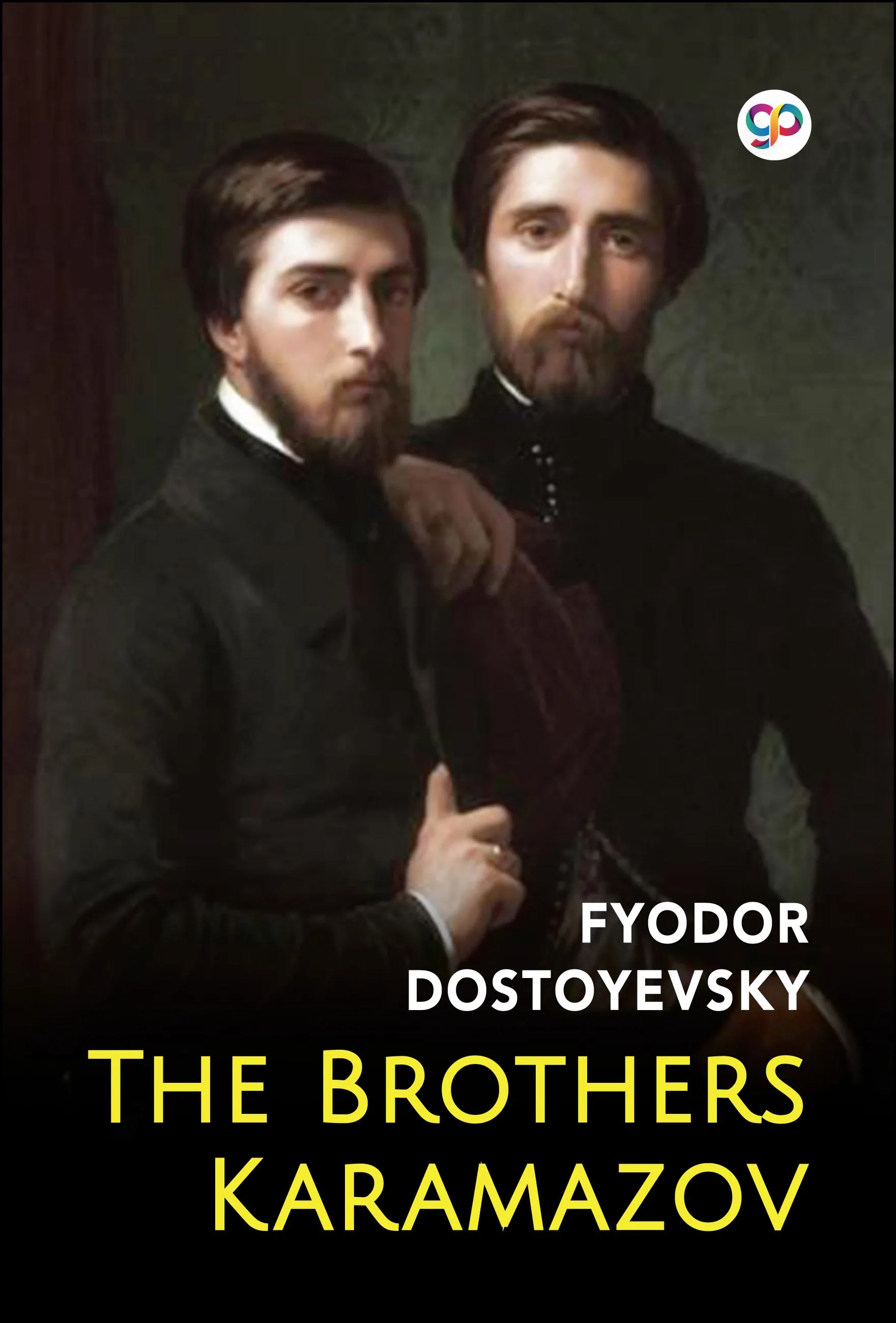
Download Cover Image
Do you want to download the full cover image for The Brothers Karamazov?