
The Yoga Sutras of Patanjali
eBook
• 120 Pages
• INR 86.00
• English
• 9789388760355
No ratings yet
| Publisher | General Press |
|---|---|
| ISBN13 | 9789388760355 |
| ASIN/SKU | B07NPYJD6Y |
| Book Format | eBook |
| Language | English |
| Pages | 120 |
| List Price | INR 86.00 |
| Subject Code | HEA025000, PHI033000, HEA010000 |
| Publishing Date | 12/02/2019 |
| Book Code | BD00068561 |
Buy this Book
Amazon Stores
Ebook Stores
Other Stores
Discover The Yoga Sutras of Patanjali by Patanjali. This book is published by General Press in eBook format, ISBN 9789388760355, ASIN B07NPYJD6Y, under Health, Fitness and Dieting, Health, Yoga and Meditaion.
Book Description
The Yoga Sutras of Patanjali' provides a complete manual for the study and practice of Raja Yoga, the path of concentration and meditation. The sutras begin with the most basic concentration, and then progresses to discipline, manifestation, and finally, emancipation of the transcendental ego. It is now considered one of the most important textual sources for the practice of yoga. This classic work of Indian philosophy spells out succinctly how the mind works, and how it is possible to use the mind to attain liberation.
Author Biography
Patañjali (Devanāgarī पतञ्जलि) (fl. 150 BCE or 2nd c. BCE) is the compiler of the Yoga Sutras, an important collection of aphorisms on Yoga practice, and also the author of the Mahābhāṣya, a major commentary on Pāṇini's Ashtadhyayi. However, it is unlikely that these two works are that of the same author.
In recent decades the Yoga Sutra has become quite popular worldwide for the precepts regarding practice of Raja Yoga and its philosophical basis. "Yoga" in traditional Hinduism involves inner contemplation, a rigorous system of meditation practice, ethics, metaphysics, and devotion to Brahman. At the same time, his Mahābhāṣya, which first foregrounded the notion of meaning as referring to categorization, remains an important treatise in Sanskrit linguistic philosophy.
In recent decades the Yoga Sutra has become quite popular worldwide for the precepts regarding practice of Raja Yoga and its philosophical basis. "Yoga" in traditional Hinduism involves inner contemplation, a rigorous system of meditation practice, ethics, metaphysics, and devotion to Brahman. At the same time, his Mahābhāṣya, which first foregrounded the notion of meaning as referring to categorization, remains an important treatise in Sanskrit linguistic philosophy.
Editorial Reviews
Editorial Reviews will be added soon…
Book Summary
The Yoga Sutras of Patanjali is one of the foundational texts of classical yoga and one of the most influential works in the history of Indian philosophy and spirituality. Attributed to the sage Patanjali, the text consists of a collection of concise aphorisms, or sutras, that explain the nature of the mind, the causes of human suffering, the discipline of meditation, and the path toward liberation. Although modern readers often associate yoga primarily with physical postures and exercise, Patanjali’s yoga is much broader. Physical discipline is only one small part of a comprehensive spiritual and psychological system. The central concern of the Yoga Sutras is the transformation of consciousness: how can a restless, distracted mind become calm enough to recognize its deepest nature? This Yoga Sutras of Patanjali summary explores its philosophy, the Eight Limbs of Yoga, meditation, karma, suffering, liberation, and the practical lessons the text offers for modern life.
The work opens with one of its most famous and important statements: “Yoga is the stilling of the fluctuations of the mind.” This idea provides the foundation for everything that follows. Patanjali sees the ordinary human mind as constantly moving. Thoughts, memories, desires, fears, judgments, fantasies, and sensory impressions continually rise and disappear. Because people tend to identify with these mental movements, they often lose contact with a deeper sense of self. Yoga, therefore, is not simply stretching or physical fitness. It is a disciplined process of becoming aware of the mind without being controlled by every thought that passes through it.
Patanjali explains that the mind produces different kinds of mental activity. Some thoughts correspond to accurate perception or knowledge, while others arise from misunderstanding, imagination, memory, or sleep. The problem is not that thinking itself is evil. The problem is identification. When we automatically believe every thought, emotion, desire, or fear to be “me,” we become trapped in the changing contents of consciousness. Yoga aims to create enough inner stillness that awareness can recognize itself rather than constantly chasing whatever appears in the mind.
The first major section, traditionally called Samadhi Pada, focuses on the nature of yoga and the states of concentrated awareness that become possible through practice. Patanjali introduces two essential principles: abhyasa, or sustained practice, and vairagya, or non-attachment. Practice means repeatedly training the mind to return to steadiness. Non-attachment means learning not to cling to every desire, pleasure, opinion, or experience. These two principles work together. Practice gives the mind stability, while non-attachment prevents that stability from being undermined by constant craving.
Patanjali also describes different forms of concentration and meditation. As the practitioner becomes more focused, the mind can move from ordinary distraction toward deeper absorption. Eventually, the distinction between the person meditating, the process of meditation, and the object of meditation becomes increasingly subtle. The purpose is not simply to achieve relaxation. Meditation becomes a means of seeing reality more clearly by reducing the interference created by habitual mental patterns.
An important idea introduced early in the text is Ishvara, often translated as a special or supreme consciousness. Patanjali presents devotion or contemplation of Ishvara as one possible aid to spiritual practice. This is significant because the Yoga Sutras combines psychological discipline with a spiritual dimension. Yoga is not presented as merely a self-improvement technique. The practitioner can also cultivate humility and devotion by surrendering the ego’s insistence on controlling everything. Patanjali associates the sacred syllable Om with Ishvara and recommends its repetition and contemplation as a way of deepening concentration.
The second section, Sadhana Pada, becomes more practical and introduces the causes of suffering and the famous Eight Limbs of Yoga. Before discussing these limbs, Patanjali explains kriya yoga, a practical discipline involving austerity or disciplined effort, self-study, and devotion or surrender to Ishvara. These practices are intended to weaken the mental patterns that produce suffering and prepare the practitioner for deeper meditation.
Patanjali identifies five fundamental kleshas, or afflictions, that keep human beings trapped in suffering. The first is avidya, usually translated as ignorance or misunderstanding. It means failing to see reality clearly. From this fundamental confusion arises asmita, the mistaken identification of the self with the ego and the functions of the mind. Then come raga, attachment or attraction; dvesha, aversion or rejection; and abhinivesha, the deep instinctive fear of losing life or clinging to continued existence. These five afflictions form an important psychological map. Much of human distress, according to Patanjali, comes from wanting reality to be different from what it is and confusing temporary experiences with our deepest identity.
Patanjali’s analysis of suffering is remarkably practical. We often suffer because we become attached to pleasant experiences and resist unpleasant ones. We build identities around possessions, achievements, relationships, social status, memories, and beliefs. But all these things change. The more tightly we cling to them, the more vulnerable we become to disappointment and fear. Yoga does not require indifference toward life. Instead, it teaches a different relationship with experience: participate fully, but do not allow changing circumstances to determine your deepest sense of self.
The centerpiece of Patanjali’s practical system is the Eight Limbs of Yoga, known as Ashtanga Yoga. The first limb is yama, a set of ethical restraints. These include nonviolence (ahimsa), truthfulness (satya), non-stealing (asteya), moderation or responsible use of sexual energy (brahmacharya), and non-possessiveness (aparigraha). These principles establish the ethical foundation of yoga. Patanjali’s system makes clear that meditation without ethical discipline is incomplete. Inner peace cannot be separated entirely from the way one treats other people.
The second limb is niyama, consisting of personal observances: cleanliness (saucha), contentment (santosha), disciplined effort (tapas), self-study (svadhyaya), and surrender to Ishvara (ishvara-pranidhana). Together, the yamas and niyamas create a framework for transforming everyday behavior and attitude. They show that yoga is not something performed only on a meditation cushion. It is a way of living.
The third limb is asana, the physical posture. This is the aspect of Patanjali’s yoga that modern popular culture knows best, but the Yoga Sutras says surprisingly little about specific postures. The purpose of asana is primarily to establish a posture that is stable and comfortable enough to support meditation. The physical body matters, but it is not the ultimate goal. In Patanjali’s system, the body is prepared so that attention can move inward.
The fourth limb is pranayama, the regulation of the breath. Breath and mind are closely connected, and conscious breathing can help calm and stabilize mental activity. Pranayama therefore acts as a bridge between the physical and mental dimensions of practice. The fifth limb, pratyahara, involves withdrawing the senses from their constant engagement with external objects. Instead of allowing every sound, image, sensation, and desire to pull attention outward, the practitioner develops the ability to direct attention inward.
The final three limbs form an increasingly subtle progression of meditation. Dharana, or concentration, means fixing attention on a chosen object. Dhyana, or meditation, is the sustained flow of attention toward that object. Samadhi is a deeper state of absorption in which ordinary self-consciousness becomes greatly reduced. Patanjali combines these three practices under the term samyama. Through samyama, the mind becomes sufficiently concentrated that profound forms of insight can arise.
The third section, Vibhuti Pada, discusses the extraordinary capacities that may emerge from advanced concentration. Patanjali describes various siddhis, or special powers, that are said to result from samyama. These include unusual forms of perception and knowledge. However, one of the text’s most important warnings is that such powers can become distractions. A practitioner may become fascinated by extraordinary abilities and mistake them for the ultimate goal. Patanjali’s deeper message is that spiritual practice should not become another source of ego and attachment. Even remarkable experiences must ultimately be transcended.
The final section, Kaivalya Pada, turns toward the ultimate goal of yoga: liberation, or kaivalya. In classical yoga philosophy, the deepest problem is the confusion between purusha, pure consciousness, and prakriti, the changing material and mental world. The mind, body, emotions, and experiences belong to the changing field of nature. Pure awareness is different. Liberation occurs when consciousness no longer mistakes the changing contents of experience for its true identity.
This philosophical distinction is central to understanding the Yoga Sutras. Patanjali is not simply promising a calmer mind. He is proposing a radical transformation in how consciousness understands itself. When the practitioner develops discrimination and sees the difference between awareness and everything that appears within awareness, attachment begins to dissolve. The mind no longer needs to define itself through constantly changing experiences. This culminates in kaivalya, a state of freedom in which consciousness stands independent of the processes of nature.
One of the most powerful themes running throughout the Yoga Sutras is discipline without harshness. Patanjali recognizes that the mind develops habits through repetition. If we repeatedly feed distraction, anger, craving, or fear, those patterns become stronger. But if we repeatedly practice concentration, ethical conduct, self-awareness, and non-attachment, new patterns can develop. This makes yoga a practical psychology of habit formation long before modern psychology developed similar language.
The text also offers a profound approach to suffering and emotional freedom. Patanjali does not promise that a disciplined person will never encounter pain. Instead, he focuses on changing the relationship between consciousness and experience. Pain becomes more destructive when we resist it, identify with it, or build an identity around it. Through awareness and non-attachment, the practitioner gradually learns to observe experiences without becoming completely possessed by them.
For modern readers, the Yoga Sutras can therefore be understood as a guide to mental clarity, self-discipline, ethical living, meditation, and inner freedom. Its teachings can be applied even by people who do not approach yoga from a religious perspective. The practice of observing thoughts without automatically believing them, returning attention to the present moment, cultivating contentment, reducing attachment, and behaving with greater compassion has obvious relevance to contemporary life.
Ultimately, The Yoga Sutras of Patanjali is not primarily a book about physical yoga; it is a book about mastering attention and understanding consciousness. Its central question is profoundly human: why do we suffer when the mind becomes entangled with everything that changes? Patanjali’s answer is that we mistake temporary mental and material experiences for our deepest identity. Through ethical living, disciplined practice, breath awareness, withdrawal of the senses, concentration, meditation, and profound insight, this confusion can gradually be removed.
The enduring message of Patanjali’s teachings is that inner freedom does not come from controlling the outside world. It comes from changing our relationship with the mind. We cannot prevent every thought, emotion, disappointment, or change, but we can learn to observe them without being completely ruled by them. That is the promise at the heart of the Yoga Sutras: beneath the restless movement of the mind lies a deeper possibility of clarity, steadiness, awareness, and freedom. For anyone seeking a clear introduction to Patanjali’s Yoga Sutras, classical yoga philosophy, the Eight Limbs of Yoga, meditation, samadhi, the kleshas, non-attachment, and spiritual liberation, this ancient text remains one of the most concise and profound guides ever written.
The work opens with one of its most famous and important statements: “Yoga is the stilling of the fluctuations of the mind.” This idea provides the foundation for everything that follows. Patanjali sees the ordinary human mind as constantly moving. Thoughts, memories, desires, fears, judgments, fantasies, and sensory impressions continually rise and disappear. Because people tend to identify with these mental movements, they often lose contact with a deeper sense of self. Yoga, therefore, is not simply stretching or physical fitness. It is a disciplined process of becoming aware of the mind without being controlled by every thought that passes through it.
Patanjali explains that the mind produces different kinds of mental activity. Some thoughts correspond to accurate perception or knowledge, while others arise from misunderstanding, imagination, memory, or sleep. The problem is not that thinking itself is evil. The problem is identification. When we automatically believe every thought, emotion, desire, or fear to be “me,” we become trapped in the changing contents of consciousness. Yoga aims to create enough inner stillness that awareness can recognize itself rather than constantly chasing whatever appears in the mind.
The first major section, traditionally called Samadhi Pada, focuses on the nature of yoga and the states of concentrated awareness that become possible through practice. Patanjali introduces two essential principles: abhyasa, or sustained practice, and vairagya, or non-attachment. Practice means repeatedly training the mind to return to steadiness. Non-attachment means learning not to cling to every desire, pleasure, opinion, or experience. These two principles work together. Practice gives the mind stability, while non-attachment prevents that stability from being undermined by constant craving.
Patanjali also describes different forms of concentration and meditation. As the practitioner becomes more focused, the mind can move from ordinary distraction toward deeper absorption. Eventually, the distinction between the person meditating, the process of meditation, and the object of meditation becomes increasingly subtle. The purpose is not simply to achieve relaxation. Meditation becomes a means of seeing reality more clearly by reducing the interference created by habitual mental patterns.
An important idea introduced early in the text is Ishvara, often translated as a special or supreme consciousness. Patanjali presents devotion or contemplation of Ishvara as one possible aid to spiritual practice. This is significant because the Yoga Sutras combines psychological discipline with a spiritual dimension. Yoga is not presented as merely a self-improvement technique. The practitioner can also cultivate humility and devotion by surrendering the ego’s insistence on controlling everything. Patanjali associates the sacred syllable Om with Ishvara and recommends its repetition and contemplation as a way of deepening concentration.
The second section, Sadhana Pada, becomes more practical and introduces the causes of suffering and the famous Eight Limbs of Yoga. Before discussing these limbs, Patanjali explains kriya yoga, a practical discipline involving austerity or disciplined effort, self-study, and devotion or surrender to Ishvara. These practices are intended to weaken the mental patterns that produce suffering and prepare the practitioner for deeper meditation.
Patanjali identifies five fundamental kleshas, or afflictions, that keep human beings trapped in suffering. The first is avidya, usually translated as ignorance or misunderstanding. It means failing to see reality clearly. From this fundamental confusion arises asmita, the mistaken identification of the self with the ego and the functions of the mind. Then come raga, attachment or attraction; dvesha, aversion or rejection; and abhinivesha, the deep instinctive fear of losing life or clinging to continued existence. These five afflictions form an important psychological map. Much of human distress, according to Patanjali, comes from wanting reality to be different from what it is and confusing temporary experiences with our deepest identity.
Patanjali’s analysis of suffering is remarkably practical. We often suffer because we become attached to pleasant experiences and resist unpleasant ones. We build identities around possessions, achievements, relationships, social status, memories, and beliefs. But all these things change. The more tightly we cling to them, the more vulnerable we become to disappointment and fear. Yoga does not require indifference toward life. Instead, it teaches a different relationship with experience: participate fully, but do not allow changing circumstances to determine your deepest sense of self.
The centerpiece of Patanjali’s practical system is the Eight Limbs of Yoga, known as Ashtanga Yoga. The first limb is yama, a set of ethical restraints. These include nonviolence (ahimsa), truthfulness (satya), non-stealing (asteya), moderation or responsible use of sexual energy (brahmacharya), and non-possessiveness (aparigraha). These principles establish the ethical foundation of yoga. Patanjali’s system makes clear that meditation without ethical discipline is incomplete. Inner peace cannot be separated entirely from the way one treats other people.
The second limb is niyama, consisting of personal observances: cleanliness (saucha), contentment (santosha), disciplined effort (tapas), self-study (svadhyaya), and surrender to Ishvara (ishvara-pranidhana). Together, the yamas and niyamas create a framework for transforming everyday behavior and attitude. They show that yoga is not something performed only on a meditation cushion. It is a way of living.
The third limb is asana, the physical posture. This is the aspect of Patanjali’s yoga that modern popular culture knows best, but the Yoga Sutras says surprisingly little about specific postures. The purpose of asana is primarily to establish a posture that is stable and comfortable enough to support meditation. The physical body matters, but it is not the ultimate goal. In Patanjali’s system, the body is prepared so that attention can move inward.
The fourth limb is pranayama, the regulation of the breath. Breath and mind are closely connected, and conscious breathing can help calm and stabilize mental activity. Pranayama therefore acts as a bridge between the physical and mental dimensions of practice. The fifth limb, pratyahara, involves withdrawing the senses from their constant engagement with external objects. Instead of allowing every sound, image, sensation, and desire to pull attention outward, the practitioner develops the ability to direct attention inward.
The final three limbs form an increasingly subtle progression of meditation. Dharana, or concentration, means fixing attention on a chosen object. Dhyana, or meditation, is the sustained flow of attention toward that object. Samadhi is a deeper state of absorption in which ordinary self-consciousness becomes greatly reduced. Patanjali combines these three practices under the term samyama. Through samyama, the mind becomes sufficiently concentrated that profound forms of insight can arise.
The third section, Vibhuti Pada, discusses the extraordinary capacities that may emerge from advanced concentration. Patanjali describes various siddhis, or special powers, that are said to result from samyama. These include unusual forms of perception and knowledge. However, one of the text’s most important warnings is that such powers can become distractions. A practitioner may become fascinated by extraordinary abilities and mistake them for the ultimate goal. Patanjali’s deeper message is that spiritual practice should not become another source of ego and attachment. Even remarkable experiences must ultimately be transcended.
The final section, Kaivalya Pada, turns toward the ultimate goal of yoga: liberation, or kaivalya. In classical yoga philosophy, the deepest problem is the confusion between purusha, pure consciousness, and prakriti, the changing material and mental world. The mind, body, emotions, and experiences belong to the changing field of nature. Pure awareness is different. Liberation occurs when consciousness no longer mistakes the changing contents of experience for its true identity.
This philosophical distinction is central to understanding the Yoga Sutras. Patanjali is not simply promising a calmer mind. He is proposing a radical transformation in how consciousness understands itself. When the practitioner develops discrimination and sees the difference between awareness and everything that appears within awareness, attachment begins to dissolve. The mind no longer needs to define itself through constantly changing experiences. This culminates in kaivalya, a state of freedom in which consciousness stands independent of the processes of nature.
One of the most powerful themes running throughout the Yoga Sutras is discipline without harshness. Patanjali recognizes that the mind develops habits through repetition. If we repeatedly feed distraction, anger, craving, or fear, those patterns become stronger. But if we repeatedly practice concentration, ethical conduct, self-awareness, and non-attachment, new patterns can develop. This makes yoga a practical psychology of habit formation long before modern psychology developed similar language.
The text also offers a profound approach to suffering and emotional freedom. Patanjali does not promise that a disciplined person will never encounter pain. Instead, he focuses on changing the relationship between consciousness and experience. Pain becomes more destructive when we resist it, identify with it, or build an identity around it. Through awareness and non-attachment, the practitioner gradually learns to observe experiences without becoming completely possessed by them.
For modern readers, the Yoga Sutras can therefore be understood as a guide to mental clarity, self-discipline, ethical living, meditation, and inner freedom. Its teachings can be applied even by people who do not approach yoga from a religious perspective. The practice of observing thoughts without automatically believing them, returning attention to the present moment, cultivating contentment, reducing attachment, and behaving with greater compassion has obvious relevance to contemporary life.
Ultimately, The Yoga Sutras of Patanjali is not primarily a book about physical yoga; it is a book about mastering attention and understanding consciousness. Its central question is profoundly human: why do we suffer when the mind becomes entangled with everything that changes? Patanjali’s answer is that we mistake temporary mental and material experiences for our deepest identity. Through ethical living, disciplined practice, breath awareness, withdrawal of the senses, concentration, meditation, and profound insight, this confusion can gradually be removed.
The enduring message of Patanjali’s teachings is that inner freedom does not come from controlling the outside world. It comes from changing our relationship with the mind. We cannot prevent every thought, emotion, disappointment, or change, but we can learn to observe them without being completely ruled by them. That is the promise at the heart of the Yoga Sutras: beneath the restless movement of the mind lies a deeper possibility of clarity, steadiness, awareness, and freedom. For anyone seeking a clear introduction to Patanjali’s Yoga Sutras, classical yoga philosophy, the Eight Limbs of Yoga, meditation, samadhi, the kleshas, non-attachment, and spiritual liberation, this ancient text remains one of the most concise and profound guides ever written.
Sample Chapters
Introduction to Book I
The Yoga Sutras of Patanjali are in themselves exceedingly brief, less than ten pages of large type in the original. Yet they contain the essence of practical wisdom, set forth in admirable order and detail. The theme, if the present interpreter be right, is the great regeneration, the birth of the spiritual from the psychical man: the same theme which Paul so wisely and eloquently set forth in writing to his disciples in Corinth, the theme of all mystics in all lands.
We think of ourselves as living a purely physical life, in these material bodies of ours. In reality, we have gone far indeed from pure physical life; for ages, our life has been psychical, we have been centred and immersed in the psychic nature. Some of the schools of India say that the psychic nature is, as it were, a looking-glass, wherein are mirrored the things seen by the physical eyes, and heard by the physical ears. But this is a magic mirror; the images remain, and take a certain life of their own. Thus within the psychic realm of our life there grows up an imaged world wherein we dwell; a world of the images of things seen and heard, and therefore a world of memories; a world also of hopes and desires, of fears and regrets. Mental life grows up among these images, built on a measuring and comparing, on the massing of images together into general ideas; on the abstraction of new notions and images from these; till a new world is built up within, full of desires and hates, ambition, envy, longing, speculation, curiosity, self-will, self-interest.
The teaching of the East is, that all these are true powers overlaid by false desires; that though in manifestation psychical, they are in essence spiritual; that the psychical man is the veil and prophecy of the spiritual man.
The purpose of life, therefore, is the realizing of that prophecy; the unveiling of the immortal man; the birth of the spiritual from the psychical, whereby we enter our divine inheritance and come to inhabit Eternity. This is, indeed, salvation, the purpose of all true religion, in all times.
Patanjali has in mind the spiritual man, to be born from the psychical. His purpose is, to set in order the practical means for the unveiling and regeneration, and to indicate the fruit, the glory and the power, of that new birth.
Through the Sutras of the first book, Patanjali is concerned with the first great problem, the emergence of the spiritual man from the veils and meshes of the psychic nature, the moods and vestures of the mental and emotional man. Later will come the consideration of the nature and powers of the spiritual man, once he stands clear of the psychic veils and trammels, and a view of the realms in which these new spiritual powers are to be revealed.
At this point may come a word of explanation. I have been asked why I use the word Sutras, for these rules of Patanjali’s system, when the word Aphorism has been connected with them in our minds for a generation. The reason is this: the name Aphorism suggests, to me at least, a pithy sentence of very general application; a piece of proverbial wisdom that may be quoted in a good many sets of circumstance, and which will almost bear on its face the evidence of its truth. But with a Sutra the case is different. It comes from the same root as the word “sew,” and means, indeed, a thread, suggesting, therefore, a close knit, consecutive chain of argument. Not only has each Sutra a definite place in the system, but further, taken out of this place, it will be almost meaningless, and will by no means be self-evident. So I have thought best to adhere to the original word. The Sutras of Patanjali are as closely knit together, as dependent on each other, as the propositions of Euclid, and can no more be taken out of their proper setting.
In the second part of the first book, the problem of the emergence of the spiritual man is further dealt with. We are led to the consideration of the barriers to his emergence, of the overcoming of the barriers, and of certain steps and stages in the ascent from the ordinary consciousness of practical life, to the finer, deeper, radiant consciousness of the spiritual man.
Book I
1. OM: Here follows Instruction in Union.
Union, here as always in the Scriptures of India, means union of the individual soul with the Over-soul; of the personal consciousness with the Divine Consciousness, whereby the mortal becomes immortal, and enters the Eternal. Therefore, salvation is, first, freedom from sin and the sorrow which comes from sin, and then a divine and eternal well-being, wherein the soul partakes of the being, the wisdom and glory of God.
2. Union, spiritual consciousness, is gained through control of the versatile psychic nature.
The goal is the full consciousness of the spiritual man, illumined by the Divine Light. Nothing except the obdurate resistance of the psychic nature keeps us back from the goal. The psychical powers are spiritual powers run wild, perverted, drawn from their proper channel. Therefore our first task is, to regain control of this perverted nature, to chasten, purify and restore the misplaced powers.
3. Then the Seer comes to consciousness in his proper nature.
Egotism is but the perversion of spiritual being. Ambition is the inversion of spiritual power. Passion is the distortion of love. The mortal is the limitation of the immortal. When these false images give place to true, then the spiritual man stands forth luminous, as the sun, when the clouds disperse.
4. Heretofore the Seer has been enmeshed in the activities of the psychic nature.
The power and life which are the heritage of the spiritual man have been caught and enmeshed in psychical activities. Instead of pure being in the Divine, there has been fretful, combative, egotism, its hand against every man. Instead of the light of pure vision, there have been restless senses nave been re and imaginings. Instead of spiritual joy, the undivided joy of pure being, there has been self-indulgence of body and mind. These are all real forces, but distorted from their true nature and goal. They must be extricated, like gems from the matrix, like the pith from the reed, steadily, without destructive violence. Spiritual powers are to be drawn forth from the psychic meshes.
5. The psychic activities are five; they are either subject or not subject to the five hindrances (Book II, 3).
The psychic nature is built up through the image-making power, the power which lies behind and dwells in mind-pictures. These pictures do not remain quiescent in the mind; they are kinetic, restless, stimulating to new acts. Thus the mind-image of an indulgence suggests and invites to a new indulgence; the picture of past joy is framed in regrets or hopes. And there is the ceaseless play of the desire to know, to penetrate to the essence of things, to classify. This, too, busies itself ceaselessly with the mind-images. So that we may classify the activities of the psychic nature thus:
6. These activities are: Sound intellection, unsound intellection, predication, sleep, memory.
We have here a list of mental and emotional powers; of powers that picture and observe, and of powers that picture and feel. But the power to know and feel is spiritual and immortal. What is needed is, not to destroy it, but to raise it from the psychical to the spiritual realm.
7. The elements of sound intellection are: direct observation, inductive reason, and trustworthy testimony.
Each of these is a spiritual power, thinly veiled. Direct observation is the outermost form of the Soul’s pure vision. Inductive reason rests on the great principles of continuity and correspondence; and these, on the supreme truth that all life is of the One. Trustworthy testimony, the sharing of one soul in the wisdom of another, rests on the ultimate oneness of all souls.
8. Unsound intellection is false understanding, not resting on a perception of the true nature of things.
When the object is not truly perceived, when the observation is inaccurate and faulty, thought or reasoning based on that mistaken perception is of necessity false and unsound.
9. Predication is carried on through words or thoughts not resting on an object perceived.
The purpose of this Sutra is, to distinguish between the mental process of predication, and observation, induction or testimony. Predication is the attribution of a quality or action to a subject, by adding to it a predicate. In the sentence, “the man is wise,” “the man” is the subject; “is wise” is the predicate. This may be simply an interplay of thoughts, without the presence of the object thought of; or the things thought of may be imaginary or unreal; while observation, induction and testimony always go back to an object.
10. Sleep is the psychic condition which rests on mind states, all material things being absent.
In waking life, we have two currents of perception; an outer current of physical things seen and heard and perceived; an inner current of mind-images and thoughts. The outer current ceases in sleep; the inner current continues, and watching the mind-images float before the field of consciousness, we “dream.” Even when there are no dreams, there is still a certain consciousness in sleep, so that, on waking, one says, “I have slept well,” or “I have slept badly.”
11. Memory is holding to mind-images of things perceived, without modifying them.
Here, as before, the mental power is explained in terms of mind-images, which are the material of which the psychic world is built, Therefore the sages teach that the world of our perception, which is indeed a world of mind-images, is but the wraith or shadow of the real and everlasting world. In this sense, memory is but the psychical inversion of the spiritual, ever-present vision. That which is ever before the spiritual eye of the Seer needs not to be remembered.
12. The control of these psychic activities comes through the right use of the will, and through ceasing from self-indulgence.
If these psychical powers and energies, even such evil things as passion and hate and fear, are but spiritual powers fallen and perverted, how are we to bring about their release and restoration? Two means are presented to us: the awakening of the spiritual will, and the purification of mind and thought.
13. The right use of the will is the steady, effort to stand in spiritual being.
We have thought of ourselves, perhaps, as creatures moving upon this earth, rather helpless, at the mercy of storm and hunger and our enemies. We are to think of ourselves as immortals, dwelling in the Light, encompassed and sustained by spiritual powers. The steady effort to hold this thought will awaken dormant and unrealized powers, which will unveil to us the nearness of the Eternal.
14. This becomes a firm resting-place, when followed long, persistently, with earnestness.
We must seek spiritual life in conformity with the laws of spiritual life, with earnestness, humility, gentle charity, which is an acknowledgment of the One Soul within us all. Only through obedience to that shared Life, through perpetual remembrance of our oneness with all Divine Being, our nothingness apart from Divine Being, can we enter our inheritance.
15. Ceasing from self-indulgence is conscious mastery over the thirst for sensuous pleasure here or hereafter.
Rightly understood, the desire for sensation is the desire of being, the distortion of the soul’s eternal life. The lust of sensual stimulus and excitation rests on the longing to feel one’s life keenly, to gain the sense of being really alive. This sense of true life comes only with the coming of the soul, and the soul comes only in silence, after self-indulgence has been courageously and loyally stilled, through reverence before the coming soul.
16. The consummation of this is freedom from thirst for any mode of psychical activity, through the establishment of the spiritual man.
In order to gain a true understanding of this teaching, study must be supplemented by devoted practice, faith by works. The reading of the words will not avail. There must be a real effort to stand as the Soul, a real ceasing from self-indulgence. With this awakening of the spiritual will, and purification, will come at once the growth of the spiritual man and our awakening consciousness as the spiritual man; and this, attained in even a small degree, will help us notably in our contest. To him that hath, shall be given.
17. Meditation with an object follows these stages: first, exterior examining, then interior judicial action, then joy, then realization of individual being.
In the practice of meditation, a beginning may be made by fixing the attention upon some external object, such as a sacred image or picture, or a part of a book of devotion. In the second stage, one passes from the outer object to an inner pondering upon its lessons. The third stage is the inspiration, the heightening of the spiritual will, which results from this pondering. The fourth stage is the realization of one’s spiritual being, as enkindled by this meditation.
18. After the exercise of the will has stilled the psychic activities, meditation rests only on the fruit of former meditations.
In virtue of continued practice and effort, the need of an external object on which to rest the meditation is outgrown. An interior state of spiritual consciousness is reached, which is called “the cloud of things knowable” (Book IV, 29).
19. Subjective consciousness arising from a natural cause is possessed by those who have laid aside their bodies and been absorbed into subjective nature.
Those who have died, entered the paradise between births, are in a condition resembling meditation without an external object. But in the fullness of time, the seeds of desire in them will spring up, and they will be born again into this world.
20. For the others, there is spiritual consciousness, led up to by faith, valour right mindfulness, one-pointedness, perception.
It is well to keep in mind these steps on the path to illumination: faith, valour, right mindfulness, one-pointedness, perception. Not one can be dispensed with; all must be won. First faith; and then from faith, valour; from valour, right mindfulness; from right mindfulness, a one-pointed aspiration toward the soul; from this, perception; and finally, full vision as the soul.
21. Spiritual consciousness is nearest to those of keen, intense will.
The image used is the swift impetus of the torrent; the kingdom must be taken by force. Firm will comes only through effort; effort is inspired by faith. The great secret is this: it is not enough to have intuitions; we must act on them; we must live them.
22. The will may be weak, or of middle strength, or intense.
Therefore there is a spiritual consciousness higher than this. For those of weak will, there is this counsel: to be faithful in obedience, to live the life, and thus to strengthen the will to more perfect obedience. The will is not ours, but God’s, and we come into it only through obedience. As we enter into the spirit of God, we are permitted to share the power of God.
Higher than the three stages of the way is the goal, the end of the way.
23. Or spiritual consciousness may be gained by ardent service of the Master.
If we think of our lives as tasks laid on us by the Master of Life, if we look on all duties as parts of that Master’s work, entrusted to us, and forming our life-work; then, if we obey, promptly, loyally, sincerely, we shall enter by degrees into the Master’s life and share the Master’s power. Thus we shall be initiated into the spiritual will.
24. The Master is the spiritual man, who is free from hindrances, bondage to works, and the fruition and seed of works.
The Soul of the Master, the Lord, is of the same nature as the soul in us; but we still bear the burden of many evils, we are in bondage through our former works, we are under the dominance of sorrow. The Soul of the Master is free from sin and servitude and sorrow.
25. In the Master is the perfect seed of Omniscience.
The Soul of the Master is in essence one with the Over-soul, and therefore partaker of the Over-soul’s all-wisdom and all-power. All spiritual attainment rests on this, and is possible because the soul and the Over-soul are one.
26. He is the Teacher of all who have gone before, since he is not limited by Time.
From the beginning, the Over-soul has been the Teacher of all souls, which, by their entrance into the Over-soul, by realizing their oneness with the Over-soul, have inherited the kingdom of the Light. For the Over-soul is before Time, and Time, father of all else, is one of His children.
27. His word is OM.
OM: the symbol of the Three in One, the three worlds in the Soul; the three times, past, present, future, in Eternity; the three Divine Powers, Creation, Preservation, Transformation, in the one Being; the three essences, immortality, omniscience, joy, in the one Spirit. This is the Word, the Symbol, of the Master and Lord, the perfected Spiritual Man.
28. Let there be soundless repetition of OM and meditation thereon.
This has many meanings, in ascending degrees. There is, first, the potency of the word itself, as of all words. Then there is the manifold significance of the symbol, as suggested above. Lastly, there is the spiritual realization of the high essences thus symbolized. Thus we rise step by step to the Eternal.
29. Thence come the awakening of interior consciousness, and the removal of barriers.
Here again faith must be supplemented by works, the life must be led as well as studied, before the full meaning can be understood. The awakening of spiritual consciousness can only be understood in measure as it is entered. It can only be entered where the conditions are present: purity of heart, and strong aspiration, and the resolute conquest of each sin.
This, however, may easily be understood: that the recognition of the three worlds as resting in the Soul leads us to realize ourselves and all life as of the Soul; that, as we dwell, not in past, present or future, but in the Eternal, we become more at one with the Eternal; that, as we view all organization, preservation, mutation as the work of the Divine One, we shall come more into harmony with the One, and thus remove the barrier’ in our path toward the Light.
In the second part of the first book, the problem of the emergence of the spiritual man is further dealt with. We are led to the consideration of the barriers to his emergence, of the overcoming of the barriers, and of certain steps and stages in the ascent from the ordinary consciousness of practical life, to the finer, deeper, radiant consciousness of the spiritual man.
30. The barriers to interior consciousness, which drive the psychic nature this way and that, are these: sickness, inertia, doubt, light mindedness, laziness, intemperance, false notions, inability to reach a stage of meditation, or to hold it when reached.
We must remember that we are considering the spiritual man as enwrapped and enmeshed by the psychic nature, the emotional and mental powers; and as unable to come to clear consciousness, unable to stand and see clearly, because of the psychic veils of the personality. Nine of these are enumerated, and they go pretty thoroughly into the brute toughness of the psychic nature.
Sickness is included rather for its effect on the emotions and mind, since bodily infirmity, such as blindness or deafness, is no insuperable barrier to spiritual life, and may sometimes be a help, as cutting off distractions. It will be well for us to ponder over each of these nine activities, thinking of each as a psychic state, a barrier to the interior consciousness of the spiritual man.
The Yoga Sutras of Patanjali are in themselves exceedingly brief, less than ten pages of large type in the original. Yet they contain the essence of practical wisdom, set forth in admirable order and detail. The theme, if the present interpreter be right, is the great regeneration, the birth of the spiritual from the psychical man: the same theme which Paul so wisely and eloquently set forth in writing to his disciples in Corinth, the theme of all mystics in all lands.
We think of ourselves as living a purely physical life, in these material bodies of ours. In reality, we have gone far indeed from pure physical life; for ages, our life has been psychical, we have been centred and immersed in the psychic nature. Some of the schools of India say that the psychic nature is, as it were, a looking-glass, wherein are mirrored the things seen by the physical eyes, and heard by the physical ears. But this is a magic mirror; the images remain, and take a certain life of their own. Thus within the psychic realm of our life there grows up an imaged world wherein we dwell; a world of the images of things seen and heard, and therefore a world of memories; a world also of hopes and desires, of fears and regrets. Mental life grows up among these images, built on a measuring and comparing, on the massing of images together into general ideas; on the abstraction of new notions and images from these; till a new world is built up within, full of desires and hates, ambition, envy, longing, speculation, curiosity, self-will, self-interest.
The teaching of the East is, that all these are true powers overlaid by false desires; that though in manifestation psychical, they are in essence spiritual; that the psychical man is the veil and prophecy of the spiritual man.
The purpose of life, therefore, is the realizing of that prophecy; the unveiling of the immortal man; the birth of the spiritual from the psychical, whereby we enter our divine inheritance and come to inhabit Eternity. This is, indeed, salvation, the purpose of all true religion, in all times.
Patanjali has in mind the spiritual man, to be born from the psychical. His purpose is, to set in order the practical means for the unveiling and regeneration, and to indicate the fruit, the glory and the power, of that new birth.
Through the Sutras of the first book, Patanjali is concerned with the first great problem, the emergence of the spiritual man from the veils and meshes of the psychic nature, the moods and vestures of the mental and emotional man. Later will come the consideration of the nature and powers of the spiritual man, once he stands clear of the psychic veils and trammels, and a view of the realms in which these new spiritual powers are to be revealed.
At this point may come a word of explanation. I have been asked why I use the word Sutras, for these rules of Patanjali’s system, when the word Aphorism has been connected with them in our minds for a generation. The reason is this: the name Aphorism suggests, to me at least, a pithy sentence of very general application; a piece of proverbial wisdom that may be quoted in a good many sets of circumstance, and which will almost bear on its face the evidence of its truth. But with a Sutra the case is different. It comes from the same root as the word “sew,” and means, indeed, a thread, suggesting, therefore, a close knit, consecutive chain of argument. Not only has each Sutra a definite place in the system, but further, taken out of this place, it will be almost meaningless, and will by no means be self-evident. So I have thought best to adhere to the original word. The Sutras of Patanjali are as closely knit together, as dependent on each other, as the propositions of Euclid, and can no more be taken out of their proper setting.
In the second part of the first book, the problem of the emergence of the spiritual man is further dealt with. We are led to the consideration of the barriers to his emergence, of the overcoming of the barriers, and of certain steps and stages in the ascent from the ordinary consciousness of practical life, to the finer, deeper, radiant consciousness of the spiritual man.
Book I
1. OM: Here follows Instruction in Union.
Union, here as always in the Scriptures of India, means union of the individual soul with the Over-soul; of the personal consciousness with the Divine Consciousness, whereby the mortal becomes immortal, and enters the Eternal. Therefore, salvation is, first, freedom from sin and the sorrow which comes from sin, and then a divine and eternal well-being, wherein the soul partakes of the being, the wisdom and glory of God.
2. Union, spiritual consciousness, is gained through control of the versatile psychic nature.
The goal is the full consciousness of the spiritual man, illumined by the Divine Light. Nothing except the obdurate resistance of the psychic nature keeps us back from the goal. The psychical powers are spiritual powers run wild, perverted, drawn from their proper channel. Therefore our first task is, to regain control of this perverted nature, to chasten, purify and restore the misplaced powers.
3. Then the Seer comes to consciousness in his proper nature.
Egotism is but the perversion of spiritual being. Ambition is the inversion of spiritual power. Passion is the distortion of love. The mortal is the limitation of the immortal. When these false images give place to true, then the spiritual man stands forth luminous, as the sun, when the clouds disperse.
4. Heretofore the Seer has been enmeshed in the activities of the psychic nature.
The power and life which are the heritage of the spiritual man have been caught and enmeshed in psychical activities. Instead of pure being in the Divine, there has been fretful, combative, egotism, its hand against every man. Instead of the light of pure vision, there have been restless senses nave been re and imaginings. Instead of spiritual joy, the undivided joy of pure being, there has been self-indulgence of body and mind. These are all real forces, but distorted from their true nature and goal. They must be extricated, like gems from the matrix, like the pith from the reed, steadily, without destructive violence. Spiritual powers are to be drawn forth from the psychic meshes.
5. The psychic activities are five; they are either subject or not subject to the five hindrances (Book II, 3).
The psychic nature is built up through the image-making power, the power which lies behind and dwells in mind-pictures. These pictures do not remain quiescent in the mind; they are kinetic, restless, stimulating to new acts. Thus the mind-image of an indulgence suggests and invites to a new indulgence; the picture of past joy is framed in regrets or hopes. And there is the ceaseless play of the desire to know, to penetrate to the essence of things, to classify. This, too, busies itself ceaselessly with the mind-images. So that we may classify the activities of the psychic nature thus:
6. These activities are: Sound intellection, unsound intellection, predication, sleep, memory.
We have here a list of mental and emotional powers; of powers that picture and observe, and of powers that picture and feel. But the power to know and feel is spiritual and immortal. What is needed is, not to destroy it, but to raise it from the psychical to the spiritual realm.
7. The elements of sound intellection are: direct observation, inductive reason, and trustworthy testimony.
Each of these is a spiritual power, thinly veiled. Direct observation is the outermost form of the Soul’s pure vision. Inductive reason rests on the great principles of continuity and correspondence; and these, on the supreme truth that all life is of the One. Trustworthy testimony, the sharing of one soul in the wisdom of another, rests on the ultimate oneness of all souls.
8. Unsound intellection is false understanding, not resting on a perception of the true nature of things.
When the object is not truly perceived, when the observation is inaccurate and faulty, thought or reasoning based on that mistaken perception is of necessity false and unsound.
9. Predication is carried on through words or thoughts not resting on an object perceived.
The purpose of this Sutra is, to distinguish between the mental process of predication, and observation, induction or testimony. Predication is the attribution of a quality or action to a subject, by adding to it a predicate. In the sentence, “the man is wise,” “the man” is the subject; “is wise” is the predicate. This may be simply an interplay of thoughts, without the presence of the object thought of; or the things thought of may be imaginary or unreal; while observation, induction and testimony always go back to an object.
10. Sleep is the psychic condition which rests on mind states, all material things being absent.
In waking life, we have two currents of perception; an outer current of physical things seen and heard and perceived; an inner current of mind-images and thoughts. The outer current ceases in sleep; the inner current continues, and watching the mind-images float before the field of consciousness, we “dream.” Even when there are no dreams, there is still a certain consciousness in sleep, so that, on waking, one says, “I have slept well,” or “I have slept badly.”
11. Memory is holding to mind-images of things perceived, without modifying them.
Here, as before, the mental power is explained in terms of mind-images, which are the material of which the psychic world is built, Therefore the sages teach that the world of our perception, which is indeed a world of mind-images, is but the wraith or shadow of the real and everlasting world. In this sense, memory is but the psychical inversion of the spiritual, ever-present vision. That which is ever before the spiritual eye of the Seer needs not to be remembered.
12. The control of these psychic activities comes through the right use of the will, and through ceasing from self-indulgence.
If these psychical powers and energies, even such evil things as passion and hate and fear, are but spiritual powers fallen and perverted, how are we to bring about their release and restoration? Two means are presented to us: the awakening of the spiritual will, and the purification of mind and thought.
13. The right use of the will is the steady, effort to stand in spiritual being.
We have thought of ourselves, perhaps, as creatures moving upon this earth, rather helpless, at the mercy of storm and hunger and our enemies. We are to think of ourselves as immortals, dwelling in the Light, encompassed and sustained by spiritual powers. The steady effort to hold this thought will awaken dormant and unrealized powers, which will unveil to us the nearness of the Eternal.
14. This becomes a firm resting-place, when followed long, persistently, with earnestness.
We must seek spiritual life in conformity with the laws of spiritual life, with earnestness, humility, gentle charity, which is an acknowledgment of the One Soul within us all. Only through obedience to that shared Life, through perpetual remembrance of our oneness with all Divine Being, our nothingness apart from Divine Being, can we enter our inheritance.
15. Ceasing from self-indulgence is conscious mastery over the thirst for sensuous pleasure here or hereafter.
Rightly understood, the desire for sensation is the desire of being, the distortion of the soul’s eternal life. The lust of sensual stimulus and excitation rests on the longing to feel one’s life keenly, to gain the sense of being really alive. This sense of true life comes only with the coming of the soul, and the soul comes only in silence, after self-indulgence has been courageously and loyally stilled, through reverence before the coming soul.
16. The consummation of this is freedom from thirst for any mode of psychical activity, through the establishment of the spiritual man.
In order to gain a true understanding of this teaching, study must be supplemented by devoted practice, faith by works. The reading of the words will not avail. There must be a real effort to stand as the Soul, a real ceasing from self-indulgence. With this awakening of the spiritual will, and purification, will come at once the growth of the spiritual man and our awakening consciousness as the spiritual man; and this, attained in even a small degree, will help us notably in our contest. To him that hath, shall be given.
17. Meditation with an object follows these stages: first, exterior examining, then interior judicial action, then joy, then realization of individual being.
In the practice of meditation, a beginning may be made by fixing the attention upon some external object, such as a sacred image or picture, or a part of a book of devotion. In the second stage, one passes from the outer object to an inner pondering upon its lessons. The third stage is the inspiration, the heightening of the spiritual will, which results from this pondering. The fourth stage is the realization of one’s spiritual being, as enkindled by this meditation.
18. After the exercise of the will has stilled the psychic activities, meditation rests only on the fruit of former meditations.
In virtue of continued practice and effort, the need of an external object on which to rest the meditation is outgrown. An interior state of spiritual consciousness is reached, which is called “the cloud of things knowable” (Book IV, 29).
19. Subjective consciousness arising from a natural cause is possessed by those who have laid aside their bodies and been absorbed into subjective nature.
Those who have died, entered the paradise between births, are in a condition resembling meditation without an external object. But in the fullness of time, the seeds of desire in them will spring up, and they will be born again into this world.
20. For the others, there is spiritual consciousness, led up to by faith, valour right mindfulness, one-pointedness, perception.
It is well to keep in mind these steps on the path to illumination: faith, valour, right mindfulness, one-pointedness, perception. Not one can be dispensed with; all must be won. First faith; and then from faith, valour; from valour, right mindfulness; from right mindfulness, a one-pointed aspiration toward the soul; from this, perception; and finally, full vision as the soul.
21. Spiritual consciousness is nearest to those of keen, intense will.
The image used is the swift impetus of the torrent; the kingdom must be taken by force. Firm will comes only through effort; effort is inspired by faith. The great secret is this: it is not enough to have intuitions; we must act on them; we must live them.
22. The will may be weak, or of middle strength, or intense.
Therefore there is a spiritual consciousness higher than this. For those of weak will, there is this counsel: to be faithful in obedience, to live the life, and thus to strengthen the will to more perfect obedience. The will is not ours, but God’s, and we come into it only through obedience. As we enter into the spirit of God, we are permitted to share the power of God.
Higher than the three stages of the way is the goal, the end of the way.
23. Or spiritual consciousness may be gained by ardent service of the Master.
If we think of our lives as tasks laid on us by the Master of Life, if we look on all duties as parts of that Master’s work, entrusted to us, and forming our life-work; then, if we obey, promptly, loyally, sincerely, we shall enter by degrees into the Master’s life and share the Master’s power. Thus we shall be initiated into the spiritual will.
24. The Master is the spiritual man, who is free from hindrances, bondage to works, and the fruition and seed of works.
The Soul of the Master, the Lord, is of the same nature as the soul in us; but we still bear the burden of many evils, we are in bondage through our former works, we are under the dominance of sorrow. The Soul of the Master is free from sin and servitude and sorrow.
25. In the Master is the perfect seed of Omniscience.
The Soul of the Master is in essence one with the Over-soul, and therefore partaker of the Over-soul’s all-wisdom and all-power. All spiritual attainment rests on this, and is possible because the soul and the Over-soul are one.
26. He is the Teacher of all who have gone before, since he is not limited by Time.
From the beginning, the Over-soul has been the Teacher of all souls, which, by their entrance into the Over-soul, by realizing their oneness with the Over-soul, have inherited the kingdom of the Light. For the Over-soul is before Time, and Time, father of all else, is one of His children.
27. His word is OM.
OM: the symbol of the Three in One, the three worlds in the Soul; the three times, past, present, future, in Eternity; the three Divine Powers, Creation, Preservation, Transformation, in the one Being; the three essences, immortality, omniscience, joy, in the one Spirit. This is the Word, the Symbol, of the Master and Lord, the perfected Spiritual Man.
28. Let there be soundless repetition of OM and meditation thereon.
This has many meanings, in ascending degrees. There is, first, the potency of the word itself, as of all words. Then there is the manifold significance of the symbol, as suggested above. Lastly, there is the spiritual realization of the high essences thus symbolized. Thus we rise step by step to the Eternal.
29. Thence come the awakening of interior consciousness, and the removal of barriers.
Here again faith must be supplemented by works, the life must be led as well as studied, before the full meaning can be understood. The awakening of spiritual consciousness can only be understood in measure as it is entered. It can only be entered where the conditions are present: purity of heart, and strong aspiration, and the resolute conquest of each sin.
This, however, may easily be understood: that the recognition of the three worlds as resting in the Soul leads us to realize ourselves and all life as of the Soul; that, as we dwell, not in past, present or future, but in the Eternal, we become more at one with the Eternal; that, as we view all organization, preservation, mutation as the work of the Divine One, we shall come more into harmony with the One, and thus remove the barrier’ in our path toward the Light.
In the second part of the first book, the problem of the emergence of the spiritual man is further dealt with. We are led to the consideration of the barriers to his emergence, of the overcoming of the barriers, and of certain steps and stages in the ascent from the ordinary consciousness of practical life, to the finer, deeper, radiant consciousness of the spiritual man.
30. The barriers to interior consciousness, which drive the psychic nature this way and that, are these: sickness, inertia, doubt, light mindedness, laziness, intemperance, false notions, inability to reach a stage of meditation, or to hold it when reached.
We must remember that we are considering the spiritual man as enwrapped and enmeshed by the psychic nature, the emotional and mental powers; and as unable to come to clear consciousness, unable to stand and see clearly, because of the psychic veils of the personality. Nine of these are enumerated, and they go pretty thoroughly into the brute toughness of the psychic nature.
Sickness is included rather for its effect on the emotions and mind, since bodily infirmity, such as blindness or deafness, is no insuperable barrier to spiritual life, and may sometimes be a help, as cutting off distractions. It will be well for us to ponder over each of these nine activities, thinking of each as a psychic state, a barrier to the interior consciousness of the spiritual man.
Reader Reviews
No reviews yet.
The Yoga Sutras of Patanjali
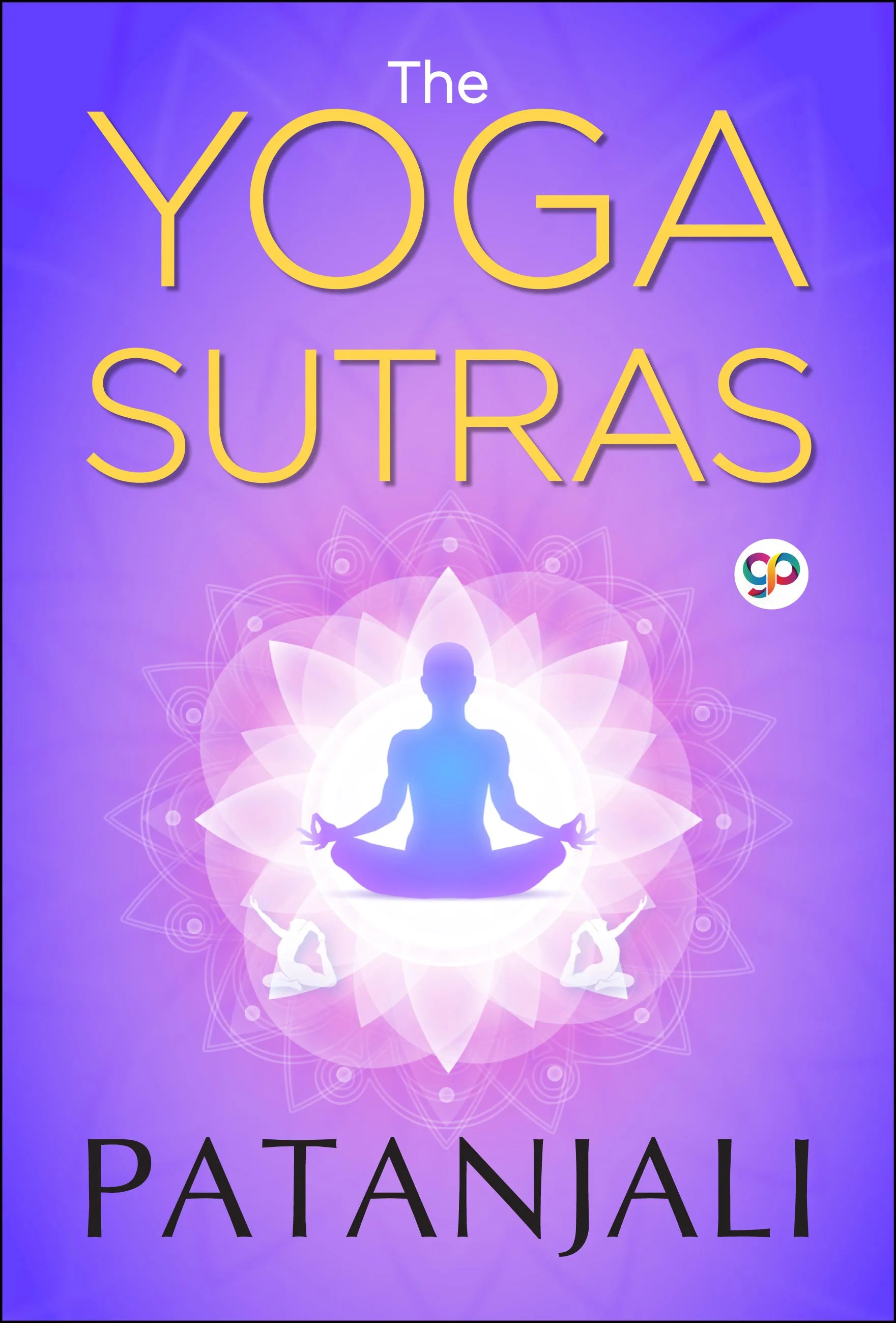
Download Cover Image
Do you want to download the full cover image for The Yoga Sutras of Patanjali?