
Value, Price, and Profit
eBook
• INR 70.00
• English
• 9789388760362
No ratings yet
| Publisher | General Press |
|---|---|
| ISBN13 | 9789388760362 |
| ASIN/SKU | B07NPZDQWR |
| Book Format | eBook |
| Language | English |
| List Price | INR 70.00 |
| Subject Code | BUS069000, BUS000000, POL011000, POL000000 |
| Publishing Date | 11/02/2019 |
| Book Code | BD00068562 |
Buy this Book
Amazon Stores
Ebook Stores
Other Stores
Discover Value, Price, and Profit by Karl Marx. This book is published by General Press in eBook format, ISBN 9789388760362, ASIN B07NPZDQWR, under Politics and Social Sciences, Politics.
Book Description
First published in 1865, ‘Value, Price, and Profit’ was originally given as a speech by Karl Marx, a German philosopher, critic of political economy, economist, historian, sociologist, political theorist, journalist and socialist revolutionary. He is one of the most influential social theorists and political philosophers of the 19th century. Marx sought to reveal the economic patterns underpinning the capitalist mode of production, in contrast to classical political economists such as Adam Smith, Jean-Baptiste Say, David Ricardo and John Stuart Mill.
This speech expands on his ideas regarding the relationship between wages and profit. Marx argues that workers are responsible for forming the value that leads to profit and they are entitled to share in it through increased wages. Marx’s theories remain widely studied for their relevance and insight into the problems and inequalities that continue to exist in modern economic systems.
This speech expands on his ideas regarding the relationship between wages and profit. Marx argues that workers are responsible for forming the value that leads to profit and they are entitled to share in it through increased wages. Marx’s theories remain widely studied for their relevance and insight into the problems and inequalities that continue to exist in modern economic systems.
Author Biography
Karl Heinrich Marx (5 May 1818 - 14 March 1883) was a German philosopher, economist, historian, sociologist, political theorist, journalist and socialist revolutionary. Marx completed his doctoral thesis, titled The Difference Between the Democritean and Epicurean Philosophy of Nature, in 1841 and submitted it to the University of Jena. He was awarded a Ph.D. in April 1841. In 1844, Marx befriended Friedrich Engels, the German socialist and became a revolutionary communist. Marx's The Poverty of Philosophy was published in 1847. Marx and Engels published ""The Communist Manifesto"", a political pamphlet summarizing their theories about the nature of society and politics, in 1848. One of the most important political documents of the world, this monumental text is highly influential and continues to remain widely read. The first volume, Capital, Volume I, of his magnum opus Capital (Das Kapital) was published in 1867. Marx continued to work on the remaining two volumes which were published after his death by Engels. Capital, Volume II was published in 1885 and Capital, Volume III in 1894. Considered to be his masterwork, Capital has been translated into all the major languages.
Editorial Reviews
Editorial Reviews will be added soon…
Book Summary
Karl Marx’s Value, Price and Profit is a concise but important work in which Marx explains how wages, prices, profits, and the exploitation of workers are connected under capitalism. Originally presented as a speech to the International Working Men’s Association in 1865, the work was written partly in response to the arguments of John Weston, who claimed that efforts by workers to increase wages were largely useless because higher wages would simply lead to higher prices. Marx challenges this idea directly. His purpose is to show that wages do not simply determine prices, that profit has a specific relationship to the labor performed by workers, and that workers’ struggles for better wages are both economically meaningful and socially necessary.
Marx begins by addressing Weston’s central claim: if workers demand higher wages, employers will respond by raising the prices of goods, so workers will gain nothing in real terms. Marx considers this argument mistaken because it assumes that the total amount of value and the distribution of that value remain unchanged when wages change. He argues instead that an increase in wages primarily affects the division of the existing value produced by labor between workers and capitalists. If workers receive a larger share, the capitalist receives a smaller share in the form of profit. The immediate effect is therefore not necessarily a general rise in prices.
This distinction between wages, prices, and value is at the heart of the book. Marx argues that the price of a commodity and its underlying value are not identical. Prices can rise or fall because of supply, demand, competition, temporary shortages, and other market conditions. These fluctuations do not mean that the fundamental relationships governing production have disappeared. To understand capitalism, Marx believes, one must look beneath the movement of market prices and examine how commodities are produced and how labor is rewarded.
He then turns to the question of value. In Marx’s analysis, commodities have value in relation to the amount of socially necessary labor required to produce them. Labor is therefore central to understanding economic value. This does not mean that every individual worker’s time automatically creates the same amount of value; rather, Marx is concerned with the average amount of labor socially required under prevailing conditions of production. Technological development, productivity, and organization can therefore alter the amount of labor needed to produce a commodity and consequently affect its value.
The discussion becomes particularly important when Marx examines labor-power itself. Workers under capitalism do not generally sell a finished product directly to the capitalist. They sell their capacity to work for a particular period. Marx distinguishes between the value of this labor-power and the value that labor can create during the working day. The worker may receive wages sufficient to maintain and reproduce his or her labor-power, but during the working day the worker can produce more value than the value represented by those wages. This difference is the foundation of Marx’s theory of surplus value.
For example, Marx imagines a worker whose wages represent the value required to maintain the worker’s ability to work for a day. If the worker produces that equivalent value during part of the working day but continues working for additional hours, the additional value created belongs to the capitalist. The worker is paid for labor-power, while the capitalist benefits from the greater amount of value that this labor-power can produce. Marx sees this as the basic economic relationship underlying capitalist profit.
This leads to his explanation of profit. Profit is not simply a mysterious reward for the capitalist’s ownership or management. Marx argues that it arises from the surplus generated in the production process. The capitalist purchases means of production and labor-power, organizes production, and sells the resulting commodities. The difference between the value advanced and the value realized through production provides the basis for profit. At the center of this process is the worker’s capacity to produce more value than is required to maintain that capacity.
Marx then considers the working day. If capitalists seek greater profits, they have an incentive to extend the working day or increase the intensity and productivity of labor. Workers, naturally, have an opposing interest because longer or more intense work can damage their health, reduce their leisure, and shorten their lives. This creates a fundamental conflict between capital and labor. The capitalist seeks to obtain as much productive labor as possible, while the worker seeks reasonable limits to the demands placed upon human life.
This conflict explains Marx’s strong support for workers’ struggles over wages and working conditions. He rejects the idea that workers should simply accept whatever wages the market offers. Workers have the right to resist reductions in wages and to fight for improvements. Marx recognizes that wage increases may be limited by economic circumstances, but he insists that workers should not abandon collective action simply because their victories are never permanent.
An important point in the book is that wages can rise or fall without completely eliminating the underlying capitalist relationship. Workers may win better wages, but the system in which they sell their labor-power to capital remains. Marx therefore distinguishes between the immediate economic struggle and the broader political struggle for social transformation. Trade unions and wage struggles are necessary because they defend workers against the constant pressure of capital, but they are not, in themselves, sufficient to abolish exploitation.
Marx also explains why workers should not accept the argument that profits are fixed or naturally determined at some particular level. Profit depends upon several factors, including productivity, working hours, wages, competition, and the organization of production. If wages increase, the capitalist’s share of the newly created value can decline. This does not mean that every increase in wages will have the same effect in every industry, but it does undermine the simplistic claim that higher wages automatically cause an equal increase in prices.
He further argues that the distribution of wealth is connected to the balance of power between capital and labor. Economic relationships are not purely mechanical. They are shaped by social institutions, competition, collective organization, and political struggle. Workers therefore need to act collectively rather than as isolated individuals. An individual worker negotiating alone is usually in a weak position compared with an employer who controls access to employment. Collective organization can give workers greater bargaining power.
At the same time, Marx does not romanticize wage struggles. He understands that capitalism can absorb many improvements while continuing to operate according to its basic principles. A wage increase may improve workers’ living standards without ending exploitation. For Marx, however, this does not make the struggle meaningless. On the contrary, workers must defend their immediate interests while becoming conscious of the larger structure in which those interests exist.
The final message of Value, Price and Profit is therefore both economic and political. Marx wants readers to understand that workers are not simply victims of mysterious market forces. The economic system contains identifiable relationships between labor, wages, production, surplus value, and profit. Once these relationships are understood, workers can better understand why their interests often conflict with those of capital owners.
Ultimately, the work presents capitalism as a system in which workers create value but do not receive the full value generated during the working process. Wages represent the price of labor-power, while the labor performed by workers can create a greater amount of value. The difference becomes the source of surplus value and, ultimately, a foundation of capitalist profit. Marx’s conclusion is not that workers should abandon economic struggles because capitalism is unjust, but that they should engage in them intelligently while recognizing their broader significance. Value, Price and Profit therefore combines economic explanation with a call for collective awareness and action. Its enduring importance lies in its attempt to look beyond everyday prices and wages and uncover the deeper social relationship between those who own capital and those who must sell their labor in order to live.
Marx begins by addressing Weston’s central claim: if workers demand higher wages, employers will respond by raising the prices of goods, so workers will gain nothing in real terms. Marx considers this argument mistaken because it assumes that the total amount of value and the distribution of that value remain unchanged when wages change. He argues instead that an increase in wages primarily affects the division of the existing value produced by labor between workers and capitalists. If workers receive a larger share, the capitalist receives a smaller share in the form of profit. The immediate effect is therefore not necessarily a general rise in prices.
This distinction between wages, prices, and value is at the heart of the book. Marx argues that the price of a commodity and its underlying value are not identical. Prices can rise or fall because of supply, demand, competition, temporary shortages, and other market conditions. These fluctuations do not mean that the fundamental relationships governing production have disappeared. To understand capitalism, Marx believes, one must look beneath the movement of market prices and examine how commodities are produced and how labor is rewarded.
He then turns to the question of value. In Marx’s analysis, commodities have value in relation to the amount of socially necessary labor required to produce them. Labor is therefore central to understanding economic value. This does not mean that every individual worker’s time automatically creates the same amount of value; rather, Marx is concerned with the average amount of labor socially required under prevailing conditions of production. Technological development, productivity, and organization can therefore alter the amount of labor needed to produce a commodity and consequently affect its value.
The discussion becomes particularly important when Marx examines labor-power itself. Workers under capitalism do not generally sell a finished product directly to the capitalist. They sell their capacity to work for a particular period. Marx distinguishes between the value of this labor-power and the value that labor can create during the working day. The worker may receive wages sufficient to maintain and reproduce his or her labor-power, but during the working day the worker can produce more value than the value represented by those wages. This difference is the foundation of Marx’s theory of surplus value.
For example, Marx imagines a worker whose wages represent the value required to maintain the worker’s ability to work for a day. If the worker produces that equivalent value during part of the working day but continues working for additional hours, the additional value created belongs to the capitalist. The worker is paid for labor-power, while the capitalist benefits from the greater amount of value that this labor-power can produce. Marx sees this as the basic economic relationship underlying capitalist profit.
This leads to his explanation of profit. Profit is not simply a mysterious reward for the capitalist’s ownership or management. Marx argues that it arises from the surplus generated in the production process. The capitalist purchases means of production and labor-power, organizes production, and sells the resulting commodities. The difference between the value advanced and the value realized through production provides the basis for profit. At the center of this process is the worker’s capacity to produce more value than is required to maintain that capacity.
Marx then considers the working day. If capitalists seek greater profits, they have an incentive to extend the working day or increase the intensity and productivity of labor. Workers, naturally, have an opposing interest because longer or more intense work can damage their health, reduce their leisure, and shorten their lives. This creates a fundamental conflict between capital and labor. The capitalist seeks to obtain as much productive labor as possible, while the worker seeks reasonable limits to the demands placed upon human life.
This conflict explains Marx’s strong support for workers’ struggles over wages and working conditions. He rejects the idea that workers should simply accept whatever wages the market offers. Workers have the right to resist reductions in wages and to fight for improvements. Marx recognizes that wage increases may be limited by economic circumstances, but he insists that workers should not abandon collective action simply because their victories are never permanent.
An important point in the book is that wages can rise or fall without completely eliminating the underlying capitalist relationship. Workers may win better wages, but the system in which they sell their labor-power to capital remains. Marx therefore distinguishes between the immediate economic struggle and the broader political struggle for social transformation. Trade unions and wage struggles are necessary because they defend workers against the constant pressure of capital, but they are not, in themselves, sufficient to abolish exploitation.
Marx also explains why workers should not accept the argument that profits are fixed or naturally determined at some particular level. Profit depends upon several factors, including productivity, working hours, wages, competition, and the organization of production. If wages increase, the capitalist’s share of the newly created value can decline. This does not mean that every increase in wages will have the same effect in every industry, but it does undermine the simplistic claim that higher wages automatically cause an equal increase in prices.
He further argues that the distribution of wealth is connected to the balance of power between capital and labor. Economic relationships are not purely mechanical. They are shaped by social institutions, competition, collective organization, and political struggle. Workers therefore need to act collectively rather than as isolated individuals. An individual worker negotiating alone is usually in a weak position compared with an employer who controls access to employment. Collective organization can give workers greater bargaining power.
At the same time, Marx does not romanticize wage struggles. He understands that capitalism can absorb many improvements while continuing to operate according to its basic principles. A wage increase may improve workers’ living standards without ending exploitation. For Marx, however, this does not make the struggle meaningless. On the contrary, workers must defend their immediate interests while becoming conscious of the larger structure in which those interests exist.
The final message of Value, Price and Profit is therefore both economic and political. Marx wants readers to understand that workers are not simply victims of mysterious market forces. The economic system contains identifiable relationships between labor, wages, production, surplus value, and profit. Once these relationships are understood, workers can better understand why their interests often conflict with those of capital owners.
Ultimately, the work presents capitalism as a system in which workers create value but do not receive the full value generated during the working process. Wages represent the price of labor-power, while the labor performed by workers can create a greater amount of value. The difference becomes the source of surplus value and, ultimately, a foundation of capitalist profit. Marx’s conclusion is not that workers should abandon economic struggles because capitalism is unjust, but that they should engage in them intelligently while recognizing their broader significance. Value, Price and Profit therefore combines economic explanation with a call for collective awareness and action. Its enduring importance lies in its attempt to look beyond everyday prices and wages and uncover the deeper social relationship between those who own capital and those who must sell their labor in order to live.
Sample Chapters
Sample Chapters will be added soon…
Reader Reviews
No reviews yet.
Value, Price, and Profit
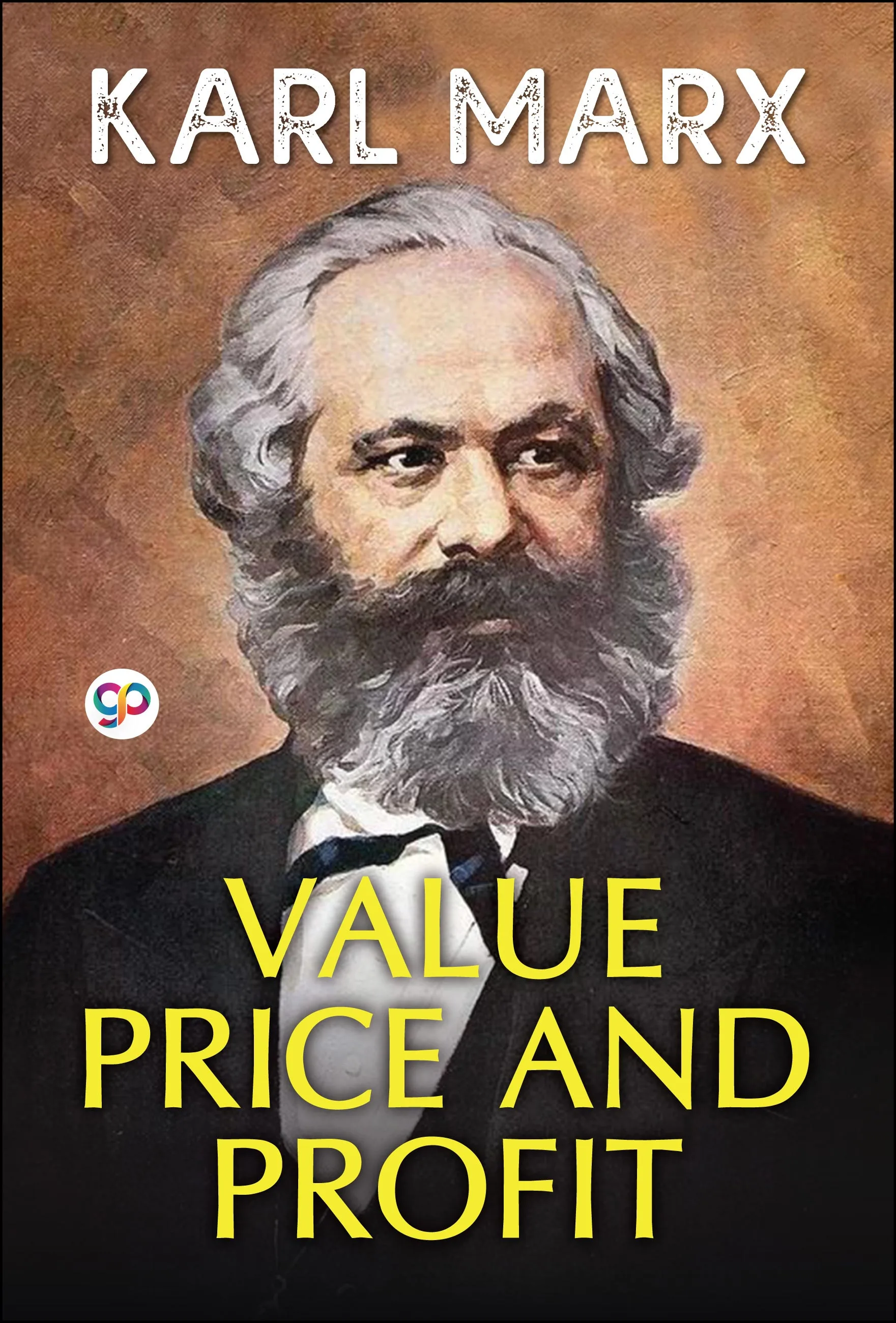
Download Cover Image
Do you want to download the full cover image for Value, Price, and Profit?