
A General View of Positivism
eBook
• INR 70.00
• English
• 9789388760379
No ratings yet
| Publisher | General Press |
|---|---|
| ISBN13 | 9789388760379 |
| ASIN/SKU | B07P1VG3ZP |
| Book Format | eBook |
| Language | English |
| List Price | INR 70.00 |
| Subject Code | PHI031000, SOC026000 |
| Publishing Date | 15/02/2019 |
| Book Code | BD00068568 |
Buy this Book
Amazon Stores
Ebook Stores
Other Stores
Discover A General View of Positivism by Auguste Comte. This book is published by General Press in eBook format, ISBN 9789388760379, ASIN B07P1VG3ZP, under Non Fiction, Nonfiction, Philosophy.
Book Description
This work has been selected by scholars as being culturally important, and is part of the knowledge base of civilization as we know it. Comte believes that society evolves through a series of stages that are ruled by social laws and culminate in a superior form of social life. Positivism itself is a combination of philosophy and way of life. Comte goes into surprising detail, going so far as to describe minute like how children should be educated, the structure of a unified global committee of nations, new flags, calendars, the role of the arts, and so on. He ends the book with what he calls the 'Religion of Humanity,' a secular religion meant to replace the traditional religions that people of the time were becoming disillusioned with.
Comte was born around the end of the French Revolution, and lived in Paris during that time when republican ideas, respect for science, and a revolutionary and forward-thinking spirit made fertile ground for change.
Comte was born around the end of the French Revolution, and lived in Paris during that time when republican ideas, respect for science, and a revolutionary and forward-thinking spirit made fertile ground for change.
Author Biography
Auguste Comte (1798–1857) was a French philosopher, mathematician, and social thinker who is widely regarded as the founder of sociology and the philosophy of positivism. He believed that society, like the natural world, could be understood through careful observation, scientific inquiry, and logical reasoning. At a time when Europe was undergoing profound political and social change, Comte sought to establish a systematic approach to studying human society. His ideas laid the foundation for sociology as an independent academic discipline and continue to influence social science, philosophy, and public policy.
Comte was born on January 19, 1798, in Montpellier, France, into a conservative Catholic family. From an early age, he displayed exceptional intellectual ability and enrolled at the prestigious École Polytechnique in Paris, where he developed a strong interest in mathematics, science, and philosophy. Although the school was temporarily closed during political unrest, Comte continued his education independently, immersing himself in the works of leading philosophers and scientists. His early collaboration with the social reformer Henri de Saint-Simon also shaped many of his ideas, though the two later parted ways due to intellectual differences.
Comte's greatest contribution was the development of positivism, a philosophy asserting that genuine knowledge should be based on observable facts, scientific evidence, and rational analysis rather than speculation or superstition. He introduced the famous "Law of Three Stages," proposing that human thought evolves through the theological, metaphysical, and finally the scientific or positive stage. He believed that society had reached a point where scientific methods could be applied to understand and improve social institutions.
His monumental work, The Course of Positive Philosophy, established the principles of positivism and introduced the term "sociology" to describe the scientific study of society. Later, in The System of Positive Polity, Comte expanded his ideas, arguing that moral values and social harmony should accompany scientific progress. Although some of his later proposals were considered idealistic, his vision of applying scientific methods to social problems profoundly influenced future scholars.
Auguste Comte spent much of his life facing financial hardship and personal struggles, yet he remained devoted to his intellectual mission. He passed away in Paris in 1857, leaving behind a legacy that transformed the study of society. Today, he is remembered as a pioneering thinker whose emphasis on reason, observation, and scientific inquiry helped shape modern sociology and inspired generations of researchers seeking to better understand the complexities of human civilization.
Comte was born on January 19, 1798, in Montpellier, France, into a conservative Catholic family. From an early age, he displayed exceptional intellectual ability and enrolled at the prestigious École Polytechnique in Paris, where he developed a strong interest in mathematics, science, and philosophy. Although the school was temporarily closed during political unrest, Comte continued his education independently, immersing himself in the works of leading philosophers and scientists. His early collaboration with the social reformer Henri de Saint-Simon also shaped many of his ideas, though the two later parted ways due to intellectual differences.
Comte's greatest contribution was the development of positivism, a philosophy asserting that genuine knowledge should be based on observable facts, scientific evidence, and rational analysis rather than speculation or superstition. He introduced the famous "Law of Three Stages," proposing that human thought evolves through the theological, metaphysical, and finally the scientific or positive stage. He believed that society had reached a point where scientific methods could be applied to understand and improve social institutions.
His monumental work, The Course of Positive Philosophy, established the principles of positivism and introduced the term "sociology" to describe the scientific study of society. Later, in The System of Positive Polity, Comte expanded his ideas, arguing that moral values and social harmony should accompany scientific progress. Although some of his later proposals were considered idealistic, his vision of applying scientific methods to social problems profoundly influenced future scholars.
Auguste Comte spent much of his life facing financial hardship and personal struggles, yet he remained devoted to his intellectual mission. He passed away in Paris in 1857, leaving behind a legacy that transformed the study of society. Today, he is remembered as a pioneering thinker whose emphasis on reason, observation, and scientific inquiry helped shape modern sociology and inspired generations of researchers seeking to better understand the complexities of human civilization.
Editorial Reviews
Editorial Reviews will be added soon…
Book Summary
Book Summary will be added soon…
Sample Chapters
Sample Chapters will be added soon…
Reader Reviews
No reviews yet.
A General View of Positivism
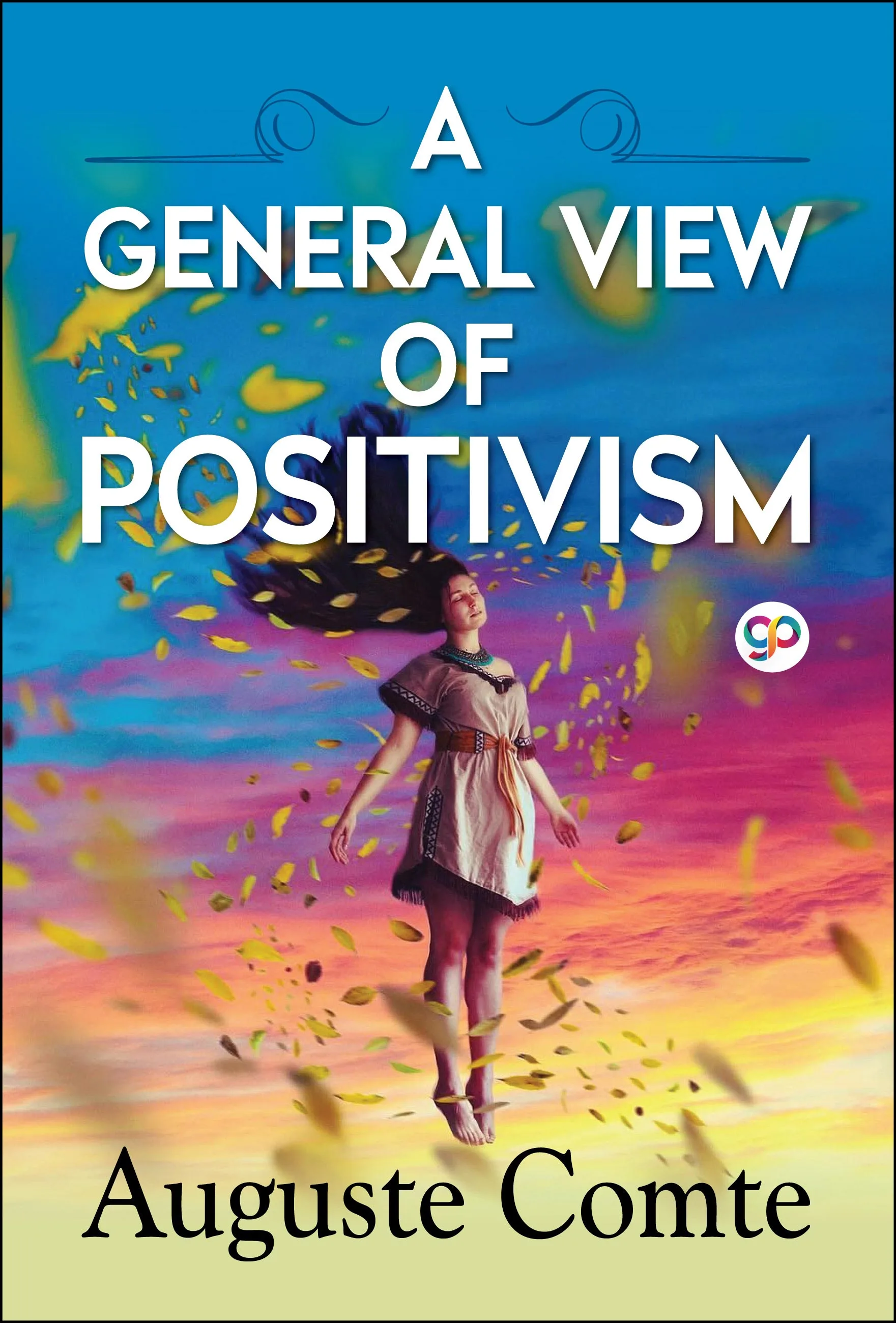
Download Cover Image
Do you want to download the full cover image for A General View of Positivism?