
Sons and Lovers
eBook
• INR 51.00
• English
• 9789388760485
No ratings yet
| Publisher | General Press |
|---|---|
| ISBN13 | 9789388760485 |
| ASIN/SKU | B07PFLNZCR |
| Book Format | eBook |
| Language | English |
| List Price | INR 51.00 |
| Subject Code | FIC004000, FIC027050 |
| Publishing Date | 05/03/2019 |
| Book Code | BD00068573 |
Buy this Book
Amazon Stores
Ebook Stores
Other Stores
Discover Sons and Lovers by D.H. Lawrence. This book is published by General Press in eBook format, ISBN 9789388760485, ASIN B07PFLNZCR, under Literature and Fiction, Coming of Age Fiction, British and Irish Classics.
Book Description
First published in 1913, 'Sons and Lovers' is a highly autobiographical and compelling portrayal of childhood, adolescence and the clash of generations. The marriage of Gertrude and Walter Morel has become a battleground. Repelled by her uneducated and sometimes violent husband, delicate Gertrude devotes her life to her children, especially to her sons, William and Paul—determined they will not follow their father into working down the coal mines. But conflict is evitable when Paul seeks to escape his mother's suffocating grasp through relationships with women his own age. While 'Sons and Lovers' scandalized its original English readers for its oedipal implications and social criticism, it remains a powerful story of terrifying inner and outer conflict and intense sensuality.
Author Biography
David Herbert Lawrence, better known as D.H. Lawrence (1885–1930), was an English novelist, poet, playwright, essayist, literary critic, and painter whose works explored the complexities of human relationships, love, nature, and modern civilization. Widely regarded as one of the most important writers of the twentieth century, Lawrence challenged social conventions through his fearless examination of emotional and physical intimacy. Although many of his works were controversial during his lifetime, they are now celebrated for their psychological depth, poetic language, and profound insights into the human condition.
Lawrence was born on September 11, 1885, in Eastwood, Nottinghamshire, England. His father was a coal miner, while his mother came from a more educated, middle-class background. The contrast between his parents' personalities and social backgrounds deeply influenced his understanding of family life and class conflict, themes that later appeared throughout his writing. A gifted student, Lawrence earned a scholarship to Nottingham High School and later studied at University College, Nottingham. He began his career as a schoolteacher before deciding to devote himself entirely to literature.
His first major novel, Sons and Lovers (1913), drew heavily on his own upbringing and established him as a remarkable literary talent. He went on to write acclaimed novels such as The Rainbow, Women in Love, Kangaroo, and Lady Chatterley's Lover. His poetry collections, travel books, short stories, and essays further demonstrated his extraordinary versatility as a writer. Lawrence believed that industrialization and excessive materialism had weakened humanity's connection with nature and authentic emotion. Through his works, he encouraged readers to seek deeper personal relationships and a fuller understanding of life.
Lawrence spent much of his later years traveling through Europe, Australia, Mexico, and the United States, searching for climates that would improve his health while continuing to write prolifically. Despite suffering from tuberculosis for many years, he remained creatively active until his death in France on March 2, 1930, at the age of forty-four.
Today, D.H. Lawrence is recognized as one of the defining voices of modern English literature. His bold exploration of love, identity, freedom, and the conflict between civilization and instinct continues to inspire readers and scholars alike. His enduring body of work stands as a testament to his artistic courage, literary innovation, and unwavering commitment to portraying the richness and complexity of human life.
Lawrence was born on September 11, 1885, in Eastwood, Nottinghamshire, England. His father was a coal miner, while his mother came from a more educated, middle-class background. The contrast between his parents' personalities and social backgrounds deeply influenced his understanding of family life and class conflict, themes that later appeared throughout his writing. A gifted student, Lawrence earned a scholarship to Nottingham High School and later studied at University College, Nottingham. He began his career as a schoolteacher before deciding to devote himself entirely to literature.
His first major novel, Sons and Lovers (1913), drew heavily on his own upbringing and established him as a remarkable literary talent. He went on to write acclaimed novels such as The Rainbow, Women in Love, Kangaroo, and Lady Chatterley's Lover. His poetry collections, travel books, short stories, and essays further demonstrated his extraordinary versatility as a writer. Lawrence believed that industrialization and excessive materialism had weakened humanity's connection with nature and authentic emotion. Through his works, he encouraged readers to seek deeper personal relationships and a fuller understanding of life.
Lawrence spent much of his later years traveling through Europe, Australia, Mexico, and the United States, searching for climates that would improve his health while continuing to write prolifically. Despite suffering from tuberculosis for many years, he remained creatively active until his death in France on March 2, 1930, at the age of forty-four.
Today, D.H. Lawrence is recognized as one of the defining voices of modern English literature. His bold exploration of love, identity, freedom, and the conflict between civilization and instinct continues to inspire readers and scholars alike. His enduring body of work stands as a testament to his artistic courage, literary innovation, and unwavering commitment to portraying the richness and complexity of human life.
Editorial Reviews
Editorial Reviews will be added soon…
Book Summary
Son and Lovers—more commonly titled Sons and Lovers—by D. H. Lawrence is one of the most psychologically powerful novels of the early twentieth century. Published in 1913, the novel is a deeply personal coming-of-age story about Paul Morel, a sensitive young man growing up in a working-class mining family in Nottinghamshire, England. At first glance, Sons and Lovers appears to be a story about family life, romantic relationships, and the difficulties of growing up. Beneath that surface, however, it is an intense exploration of motherhood, emotional dependence, sexuality, class, identity, artistic ambition, and the struggle to become an independent adult. The novel follows Paul from childhood into young adulthood as he develops complicated relationships with his mother, Gertrude Morel, and with the women he loves, particularly Miriam Leivers and Clara Dawes. Its central question is how a son can love his mother deeply while still becoming his own person.
The Morel family lives in the fictional mining community of Bestwood, where Walter Morel works as a coal miner. Walter is a physically strong, energetic man who enjoys drinking, dancing, and the rough social life of the mining community. Gertrude Morel, by contrast, is intelligent, refined, religious, and dissatisfied with the limitations of her marriage. Their personalities are deeply incompatible. Gertrude had expected a different kind of husband and life, but marriage to Walter brings her disappointment, financial insecurity, and emotional isolation. Walter’s drinking and unpredictable behavior further widen the distance between them. Although they have children together, their marriage gradually becomes unhappy, and Gertrude begins to direct much of her emotional energy toward her sons.
The early part of the novel establishes the emotional environment that shapes Paul’s later life. Gertrude loves her children intensely, but her relationship with them is not entirely healthy because she unconsciously invests her hopes and frustrations in them. Her sons become a source of meaning that her marriage cannot provide. William, her eldest son, is especially important to her because she sees him as intelligent and capable of escaping the limitations of their working-class surroundings. She wants him to achieve a better life than his father and imagines that his success will somehow redeem her own disappointments. This emotional investment becomes significant because when William grows older and leaves home, Gertrude experiences his absence as a profound loss.
William eventually moves to London and finds work, but his growing independence creates tension between his new life and his mother’s expectations. He becomes engaged to a young woman whom Gertrude does not like, partly because she believes the woman is unsuitable for her son. William’s relationship and eventual death become a major emotional turning point for the family. His death devastates Gertrude, and Paul becomes the son who receives the full force of her emotional attachment. In this way, Paul’s central psychological conflict begins before he fully understands it. He is not simply a beloved child; he gradually becomes the person through whom his mother experiences hope, intimacy, and emotional survival.
Paul is a sensitive and introspective child who is different from his father. He is artistic, observant, and deeply affected by beauty and emotion. His relationship with his mother becomes exceptionally close. Gertrude encourages his intellectual and artistic development, and Paul comes to see her as the person who understands him better than anyone else. Their closeness is affectionate and genuine, but it also makes separation difficult. Paul wants to become an independent adult, yet he feels emotionally responsible for his mother and instinctively returns to her whenever his relationships with other women become complicated.
This psychological dependence is the central issue of Sons and Lovers. Paul loves his mother, but his love for her becomes so powerful that it interferes with his ability to form a fully independent romantic relationship. His emotional life is shaped by the standards and expectations he has unconsciously absorbed from Gertrude. He wants intimacy, but intimacy with another woman can feel like a betrayal of his bond with his mother. Lawrence explores this conflict with unusual psychological intensity, showing how childhood relationships can continue to influence adult desires even when a person believes they have become independent.
Paul’s first major romantic relationship is with Miriam Leivers, a young woman who lives with her family at Willey Farm. Paul becomes fascinated by Miriam’s spiritual sensitivity and her deep appreciation of nature. Their relationship grows through conversations, walks, shared reading, and moments of emotional intimacy. Miriam is intensely religious and tends to experience love as something sacred and spiritual. Paul is attracted to her inwardness, but he also becomes frustrated by what he perceives as her inability to accept physical intimacy easily. Their relationship becomes a constant movement toward one another followed by withdrawal.
Miriam represents an important dimension of Paul’s personality. She understands the spiritual and emotional side of his nature and encourages his artistic and intellectual interests. Paul feels that she can see something deep within him, but he also feels constrained by the intensity of her devotion. His mother’s influence complicates the relationship further. Gertrude does not fully trust Miriam and believes that Miriam’s influence will pull Paul away from her. Paul, caught between his mother and his lover, cannot give himself completely to Miriam.
The relationship between Paul and Miriam is therefore not simply a conventional romance. It is a struggle between spiritual intimacy, physical desire, maternal influence, and the need for independence. Paul repeatedly tells himself that he loves Miriam, yet he cannot fully commit to her. At times he becomes passionate and wants a deeper physical relationship; at other times he retreats emotionally and returns to his mother. Miriam suffers because she wants the whole of Paul, while Paul is unable to separate his romantic identity from his emotional bond with Gertrude.
Eventually Paul’s relationship with Miriam becomes increasingly painful. He realizes that although they share a deep connection, he cannot give her the kind of complete relationship she desires. Their eventual separation is painful for both. Paul’s inability to establish a stable romantic identity is not simply Miriam’s fault or his mother’s conscious doing. It is the result of a psychological conflict Paul himself has not yet learned to understand.
Paul later becomes involved with Clara Dawes, a woman who offers a very different kind of relationship. Clara is older, more experienced, sensual, and independent. Unlike Miriam, she is not primarily associated with spiritual devotion. Her relationship with Paul has a stronger physical dimension, and through Clara, Paul experiences a different form of sexuality and intimacy. She challenges him to recognize parts of himself that his relationship with Miriam could not fully express.
Clara’s marriage to Baxter Dawes adds another layer of complexity. Her relationship with her husband is unhappy, and she has separated from him. Paul becomes involved with her while she remains emotionally connected to Baxter in complicated ways. Their relationship gives Paul greater sexual experience, but it does not resolve his deeper emotional conflict. He can experience physical passion with Clara, but he still cannot fully separate himself from his mother. The novel therefore distinguishes between sexual fulfillment and emotional independence. One does not automatically produce the other.
Paul’s relationships with Miriam and Clara can be understood as two different attempts to discover what love means. Miriam represents spiritual and emotional union, while Clara represents physical freedom and sensual experience. Neither relationship completely satisfies Paul because the deeper problem exists within him. He has not yet developed a stable sense of self independent of his mother. As long as his emotional identity remains tied to Gertrude, he cannot completely surrender himself to another person.
The class background of the novel is equally important. Lawrence grew up in a mining community, and his descriptions of working-class life are closely connected to his own experience. Walter Morel’s work underground is physically exhausting and dangerous, and Lawrence captures both the dignity and hardship of industrial labor. The novel contrasts the world of the mine with Paul’s artistic and intellectual aspirations. Paul wants to move beyond the life represented by the coal pits, yet he remains emotionally connected to his family and community.
The conflict between working-class and middle-class values is particularly visible in Gertrude. She feels intellectually and spiritually different from Walter and resents the limitations of her social environment. Her ambitions for her sons partly arise from her desire to see them escape the circumstances that have disappointed her. Paul inherits this aspiration. His artistic interests and employment in the world of design provide him with opportunities beyond the mine, but his emotional connection to his family means that he never experiences social advancement as a simple escape.
Art also plays an important role in Paul’s development. He is naturally drawn toward painting and beauty, and his artistic sensitivity becomes a way of understanding the world. Lawrence portrays creativity as something connected to emotional intensity. Paul observes people and landscapes closely, and his ability to feel deeply becomes both his strength and his burden. His artistic nature allows him to perceive subtle emotional realities, but it also makes him vulnerable to confusion, attachment, and suffering.
As the novel progresses, Gertrude’s influence becomes increasingly destructive for Paul. Her physical and emotional decline creates a situation in which Paul feels responsible for her. His mother has become the center of his emotional world, but she is also increasingly unhappy and dependent on him. Paul recognizes that something must change, yet he cannot simply abandon her. His love is genuine, and this is what makes the situation tragic. He is not trapped because he does not care; he is trapped because he cares so deeply.
The climax of the novel comes with Gertrude’s death. Her illness and suffering have become unbearable, and Paul ultimately participates in ending her life through an overdose of morphine. The event is devastating and morally complex. After her death, Paul experiences a mixture of grief, emptiness, relief, guilt, and liberation. The woman who has shaped his entire emotional existence is suddenly gone. For the first time, Paul has no choice but to confront himself without the psychological presence that has defined him.
The ending of Sons and Lovers is deliberately unresolved. Paul is left alone after his mother’s death, and there is no conventional romantic conclusion waiting to complete his story. Miriam and Clara do not provide an answer to his deepest conflict. Instead, Paul must decide whether to move toward life or surrender to despair. The novel ends with him choosing, however tentatively, to continue living. His decision suggests that his true development can begin only after he breaks free from the emotional structure that has governed him.
This ending is essential to understanding the novel. Paul’s journey is not simply from childhood to adulthood. It is from dependence to selfhood. His mother’s love has nurtured him, inspired him, and helped shape his intelligence, but it has also prevented him from developing emotional independence. Her death therefore represents both an unbearable loss and the possibility of rebirth. Paul must learn to live without defining himself through his mother or through his relationships with women.
The title Sons and Lovers reflects the central tension of the novel. The sons are not simply children growing into men; they are sons whose emotional relationships with their mother shape their capacity for romantic love. Lawrence examines how family attachment can become so powerful that it influences adult sexuality and identity. The novel is especially interested in the boundary between healthy affection and emotional possession. Gertrude does not deliberately seek to destroy her sons’ happiness, but her need for them becomes so intense that they struggle to belong fully to themselves.
Ultimately, Sons and Lovers is a powerful study of family, love, class, sexuality, and psychological development. It is often described as an autobiographical novel because of its strong connections with Lawrence’s own upbringing, his relationship with his mother, and his working-class background. Yet its importance extends beyond autobiography. Paul Morel’s struggle speaks to a universal human problem: how to honor the people who shaped us without allowing them to determine who we must become.
For readers searching for a Sons and Lovers summary, analysis, themes, characters, or explanation, the novel is best understood as a story of emotional entanglement and the painful birth of independence. Paul’s relationships with Gertrude, Miriam, and Clara reveal different forms of love, but none can save him from the need to discover his own identity. D. H. Lawrence’s novel remains powerful because it refuses to offer simple answers. It shows that love can nourish and imprison, that family loyalty can coexist with resentment, and that growing up sometimes requires painful separation from the very people we love most. In the end, Paul’s movement toward life is fragile but significant. After losing the person who has defined him, he must finally learn to define himself.
The Morel family lives in the fictional mining community of Bestwood, where Walter Morel works as a coal miner. Walter is a physically strong, energetic man who enjoys drinking, dancing, and the rough social life of the mining community. Gertrude Morel, by contrast, is intelligent, refined, religious, and dissatisfied with the limitations of her marriage. Their personalities are deeply incompatible. Gertrude had expected a different kind of husband and life, but marriage to Walter brings her disappointment, financial insecurity, and emotional isolation. Walter’s drinking and unpredictable behavior further widen the distance between them. Although they have children together, their marriage gradually becomes unhappy, and Gertrude begins to direct much of her emotional energy toward her sons.
The early part of the novel establishes the emotional environment that shapes Paul’s later life. Gertrude loves her children intensely, but her relationship with them is not entirely healthy because she unconsciously invests her hopes and frustrations in them. Her sons become a source of meaning that her marriage cannot provide. William, her eldest son, is especially important to her because she sees him as intelligent and capable of escaping the limitations of their working-class surroundings. She wants him to achieve a better life than his father and imagines that his success will somehow redeem her own disappointments. This emotional investment becomes significant because when William grows older and leaves home, Gertrude experiences his absence as a profound loss.
William eventually moves to London and finds work, but his growing independence creates tension between his new life and his mother’s expectations. He becomes engaged to a young woman whom Gertrude does not like, partly because she believes the woman is unsuitable for her son. William’s relationship and eventual death become a major emotional turning point for the family. His death devastates Gertrude, and Paul becomes the son who receives the full force of her emotional attachment. In this way, Paul’s central psychological conflict begins before he fully understands it. He is not simply a beloved child; he gradually becomes the person through whom his mother experiences hope, intimacy, and emotional survival.
Paul is a sensitive and introspective child who is different from his father. He is artistic, observant, and deeply affected by beauty and emotion. His relationship with his mother becomes exceptionally close. Gertrude encourages his intellectual and artistic development, and Paul comes to see her as the person who understands him better than anyone else. Their closeness is affectionate and genuine, but it also makes separation difficult. Paul wants to become an independent adult, yet he feels emotionally responsible for his mother and instinctively returns to her whenever his relationships with other women become complicated.
This psychological dependence is the central issue of Sons and Lovers. Paul loves his mother, but his love for her becomes so powerful that it interferes with his ability to form a fully independent romantic relationship. His emotional life is shaped by the standards and expectations he has unconsciously absorbed from Gertrude. He wants intimacy, but intimacy with another woman can feel like a betrayal of his bond with his mother. Lawrence explores this conflict with unusual psychological intensity, showing how childhood relationships can continue to influence adult desires even when a person believes they have become independent.
Paul’s first major romantic relationship is with Miriam Leivers, a young woman who lives with her family at Willey Farm. Paul becomes fascinated by Miriam’s spiritual sensitivity and her deep appreciation of nature. Their relationship grows through conversations, walks, shared reading, and moments of emotional intimacy. Miriam is intensely religious and tends to experience love as something sacred and spiritual. Paul is attracted to her inwardness, but he also becomes frustrated by what he perceives as her inability to accept physical intimacy easily. Their relationship becomes a constant movement toward one another followed by withdrawal.
Miriam represents an important dimension of Paul’s personality. She understands the spiritual and emotional side of his nature and encourages his artistic and intellectual interests. Paul feels that she can see something deep within him, but he also feels constrained by the intensity of her devotion. His mother’s influence complicates the relationship further. Gertrude does not fully trust Miriam and believes that Miriam’s influence will pull Paul away from her. Paul, caught between his mother and his lover, cannot give himself completely to Miriam.
The relationship between Paul and Miriam is therefore not simply a conventional romance. It is a struggle between spiritual intimacy, physical desire, maternal influence, and the need for independence. Paul repeatedly tells himself that he loves Miriam, yet he cannot fully commit to her. At times he becomes passionate and wants a deeper physical relationship; at other times he retreats emotionally and returns to his mother. Miriam suffers because she wants the whole of Paul, while Paul is unable to separate his romantic identity from his emotional bond with Gertrude.
Eventually Paul’s relationship with Miriam becomes increasingly painful. He realizes that although they share a deep connection, he cannot give her the kind of complete relationship she desires. Their eventual separation is painful for both. Paul’s inability to establish a stable romantic identity is not simply Miriam’s fault or his mother’s conscious doing. It is the result of a psychological conflict Paul himself has not yet learned to understand.
Paul later becomes involved with Clara Dawes, a woman who offers a very different kind of relationship. Clara is older, more experienced, sensual, and independent. Unlike Miriam, she is not primarily associated with spiritual devotion. Her relationship with Paul has a stronger physical dimension, and through Clara, Paul experiences a different form of sexuality and intimacy. She challenges him to recognize parts of himself that his relationship with Miriam could not fully express.
Clara’s marriage to Baxter Dawes adds another layer of complexity. Her relationship with her husband is unhappy, and she has separated from him. Paul becomes involved with her while she remains emotionally connected to Baxter in complicated ways. Their relationship gives Paul greater sexual experience, but it does not resolve his deeper emotional conflict. He can experience physical passion with Clara, but he still cannot fully separate himself from his mother. The novel therefore distinguishes between sexual fulfillment and emotional independence. One does not automatically produce the other.
Paul’s relationships with Miriam and Clara can be understood as two different attempts to discover what love means. Miriam represents spiritual and emotional union, while Clara represents physical freedom and sensual experience. Neither relationship completely satisfies Paul because the deeper problem exists within him. He has not yet developed a stable sense of self independent of his mother. As long as his emotional identity remains tied to Gertrude, he cannot completely surrender himself to another person.
The class background of the novel is equally important. Lawrence grew up in a mining community, and his descriptions of working-class life are closely connected to his own experience. Walter Morel’s work underground is physically exhausting and dangerous, and Lawrence captures both the dignity and hardship of industrial labor. The novel contrasts the world of the mine with Paul’s artistic and intellectual aspirations. Paul wants to move beyond the life represented by the coal pits, yet he remains emotionally connected to his family and community.
The conflict between working-class and middle-class values is particularly visible in Gertrude. She feels intellectually and spiritually different from Walter and resents the limitations of her social environment. Her ambitions for her sons partly arise from her desire to see them escape the circumstances that have disappointed her. Paul inherits this aspiration. His artistic interests and employment in the world of design provide him with opportunities beyond the mine, but his emotional connection to his family means that he never experiences social advancement as a simple escape.
Art also plays an important role in Paul’s development. He is naturally drawn toward painting and beauty, and his artistic sensitivity becomes a way of understanding the world. Lawrence portrays creativity as something connected to emotional intensity. Paul observes people and landscapes closely, and his ability to feel deeply becomes both his strength and his burden. His artistic nature allows him to perceive subtle emotional realities, but it also makes him vulnerable to confusion, attachment, and suffering.
As the novel progresses, Gertrude’s influence becomes increasingly destructive for Paul. Her physical and emotional decline creates a situation in which Paul feels responsible for her. His mother has become the center of his emotional world, but she is also increasingly unhappy and dependent on him. Paul recognizes that something must change, yet he cannot simply abandon her. His love is genuine, and this is what makes the situation tragic. He is not trapped because he does not care; he is trapped because he cares so deeply.
The climax of the novel comes with Gertrude’s death. Her illness and suffering have become unbearable, and Paul ultimately participates in ending her life through an overdose of morphine. The event is devastating and morally complex. After her death, Paul experiences a mixture of grief, emptiness, relief, guilt, and liberation. The woman who has shaped his entire emotional existence is suddenly gone. For the first time, Paul has no choice but to confront himself without the psychological presence that has defined him.
The ending of Sons and Lovers is deliberately unresolved. Paul is left alone after his mother’s death, and there is no conventional romantic conclusion waiting to complete his story. Miriam and Clara do not provide an answer to his deepest conflict. Instead, Paul must decide whether to move toward life or surrender to despair. The novel ends with him choosing, however tentatively, to continue living. His decision suggests that his true development can begin only after he breaks free from the emotional structure that has governed him.
This ending is essential to understanding the novel. Paul’s journey is not simply from childhood to adulthood. It is from dependence to selfhood. His mother’s love has nurtured him, inspired him, and helped shape his intelligence, but it has also prevented him from developing emotional independence. Her death therefore represents both an unbearable loss and the possibility of rebirth. Paul must learn to live without defining himself through his mother or through his relationships with women.
The title Sons and Lovers reflects the central tension of the novel. The sons are not simply children growing into men; they are sons whose emotional relationships with their mother shape their capacity for romantic love. Lawrence examines how family attachment can become so powerful that it influences adult sexuality and identity. The novel is especially interested in the boundary between healthy affection and emotional possession. Gertrude does not deliberately seek to destroy her sons’ happiness, but her need for them becomes so intense that they struggle to belong fully to themselves.
Ultimately, Sons and Lovers is a powerful study of family, love, class, sexuality, and psychological development. It is often described as an autobiographical novel because of its strong connections with Lawrence’s own upbringing, his relationship with his mother, and his working-class background. Yet its importance extends beyond autobiography. Paul Morel’s struggle speaks to a universal human problem: how to honor the people who shaped us without allowing them to determine who we must become.
For readers searching for a Sons and Lovers summary, analysis, themes, characters, or explanation, the novel is best understood as a story of emotional entanglement and the painful birth of independence. Paul’s relationships with Gertrude, Miriam, and Clara reveal different forms of love, but none can save him from the need to discover his own identity. D. H. Lawrence’s novel remains powerful because it refuses to offer simple answers. It shows that love can nourish and imprison, that family loyalty can coexist with resentment, and that growing up sometimes requires painful separation from the very people we love most. In the end, Paul’s movement toward life is fragile but significant. After losing the person who has defined him, he must finally learn to define himself.
Sample Chapters
Sample Chapters will be added soon…
Reader Reviews
No reviews yet.
Sons and Lovers
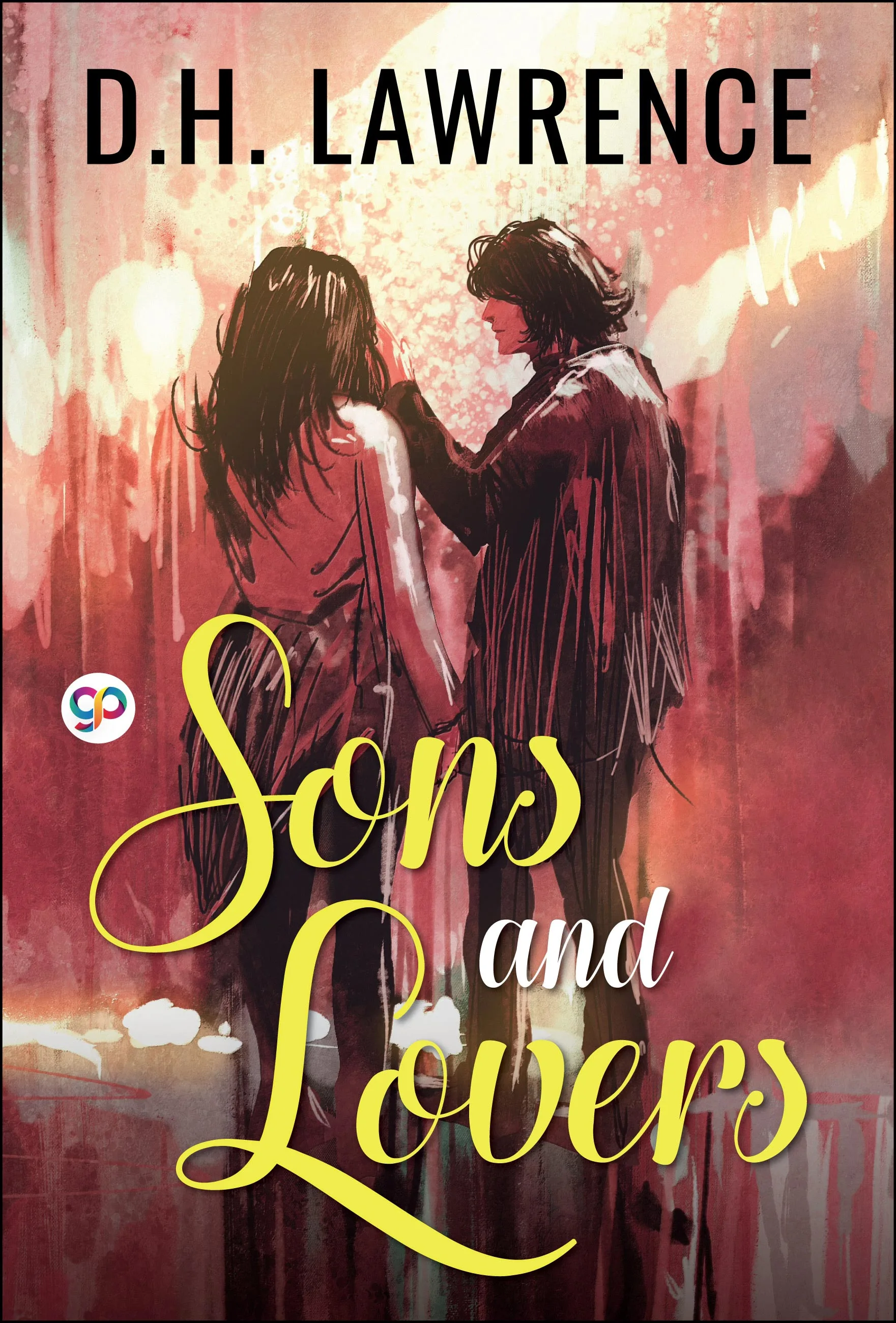
Download Cover Image
Do you want to download the full cover image for Sons and Lovers?