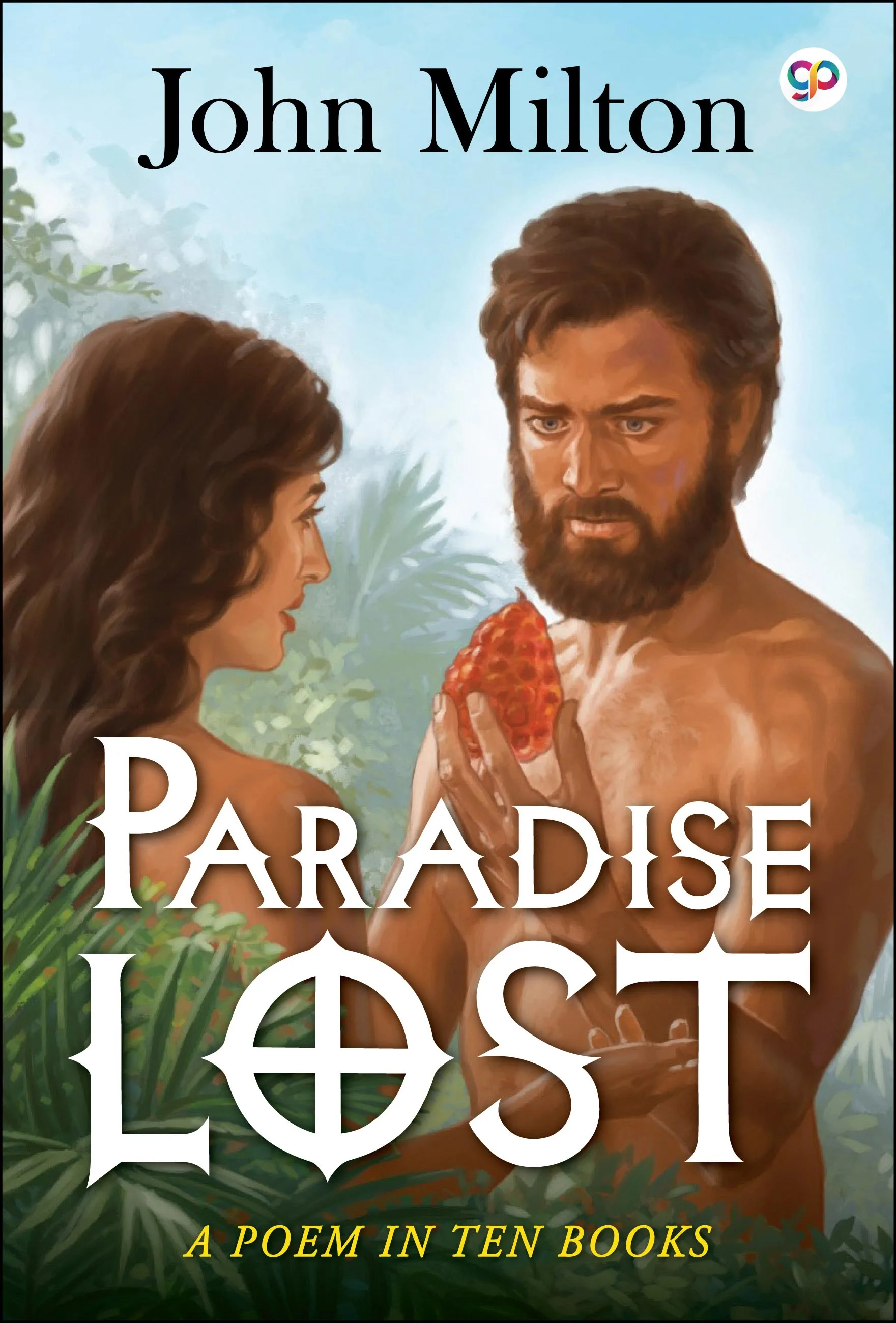
Paradise Lost
eBook
• INR 70.00
• English
• 9789388760683
No ratings yet
| Publisher | General Press |
|---|---|
| ISBN13 | 9789388760683 |
| ASIN/SKU | B07QC97YKB |
| Book Format | eBook |
| Language | English |
| List Price | INR 70.00 |
| Subject Code | POE005020, LAN005070 |
| Publishing Date | 27/03/2019 |
| Book Code | BD00068592 |
Buy this Book
Amazon Stores
Ebook Stores
Other Stores
Discover Paradise Lost by John Milton. This book is published by General Press in eBook format, ISBN 9789388760683, ASIN B07QC97YKB, under Literature and Fiction, Poetry, British and Irish Classics.
Book Description
The epic poem Paradise Lost tells the Biblical Story of Adam and Eve, their temptation by Satan, and their expulsion from the Garden of Eden. Through thousands of lines of poetry and over twelve books, it explores God's relationship to mankind and human morality. Written when Milton was in his fifties - blind, bitterly disappointed by the Restoration and in danger of execution - Paradise Lost's apparent ambivalence towards authority has led to intense debate about whether it manages to 'justify the ways of God to men', or exposes the cruelty of Christianity.
Author Biography
John Milton (1608–1674) was one of the greatest poets in the English language, a distinguished scholar, and a passionate advocate for liberty, education, and freedom of expression. Best known for his epic masterpiece Paradise Lost, Milton transformed English poetry through his extraordinary command of language, profound theological insight, and exploration of humanity's deepest moral and spiritual questions. His writings have influenced generations of poets, philosophers, and political thinkers, securing his place among the most important literary figures in history.
Born on December 9, 1608, in London, England, Milton grew up in a prosperous family that valued education and the arts. His father, a successful scrivener and accomplished musician, encouraged his son's intellectual development from an early age. Milton attended St. Paul's School before studying at Christ's College, Cambridge, where he excelled in classical languages, literature, history, and philosophy. Even in his youth, he displayed exceptional literary talent and a determination to dedicate his life to learning and writing.
Following his university education, Milton devoted several years to private study, mastering Latin, Greek, Hebrew, Italian, and other languages while reading widely in theology, history, science, and classical literature. During the turbulent years of the English Civil War, he became an influential political writer, publishing essays that defended civil liberty, religious tolerance, and freedom of the press. His celebrated work Areopagitica (1644) remains one of the most powerful arguments ever written against censorship and continues to be cited in discussions of free expression.
Despite losing his eyesight completely by the early 1650s, Milton continued his literary work through dictation with extraordinary determination. His greatest achievement, Paradise Lost (1667), recounts the biblical story of the fall of Satan and humanity with remarkable poetic grandeur and philosophical depth. He later published Paradise Regained and Samson Agonistes, further demonstrating his mastery of epic and dramatic poetry.
Milton's works explore themes of free will, obedience, redemption, justice, and the enduring struggle between good and evil. His powerful imagination and intellectual rigor profoundly shaped English literature and inspired writers such as William Blake, Percy Bysshe Shelley, William Wordsworth, and T. S. Eliot.
John Milton passed away on November 8, 1674, in London. Today, he is remembered as one of the greatest poets of all time, whose enduring works continue to inspire readers with their moral vision, artistic brilliance, and timeless exploration of the human condition.
Born on December 9, 1608, in London, England, Milton grew up in a prosperous family that valued education and the arts. His father, a successful scrivener and accomplished musician, encouraged his son's intellectual development from an early age. Milton attended St. Paul's School before studying at Christ's College, Cambridge, where he excelled in classical languages, literature, history, and philosophy. Even in his youth, he displayed exceptional literary talent and a determination to dedicate his life to learning and writing.
Following his university education, Milton devoted several years to private study, mastering Latin, Greek, Hebrew, Italian, and other languages while reading widely in theology, history, science, and classical literature. During the turbulent years of the English Civil War, he became an influential political writer, publishing essays that defended civil liberty, religious tolerance, and freedom of the press. His celebrated work Areopagitica (1644) remains one of the most powerful arguments ever written against censorship and continues to be cited in discussions of free expression.
Despite losing his eyesight completely by the early 1650s, Milton continued his literary work through dictation with extraordinary determination. His greatest achievement, Paradise Lost (1667), recounts the biblical story of the fall of Satan and humanity with remarkable poetic grandeur and philosophical depth. He later published Paradise Regained and Samson Agonistes, further demonstrating his mastery of epic and dramatic poetry.
Milton's works explore themes of free will, obedience, redemption, justice, and the enduring struggle between good and evil. His powerful imagination and intellectual rigor profoundly shaped English literature and inspired writers such as William Blake, Percy Bysshe Shelley, William Wordsworth, and T. S. Eliot.
John Milton passed away on November 8, 1674, in London. Today, he is remembered as one of the greatest poets of all time, whose enduring works continue to inspire readers with their moral vision, artistic brilliance, and timeless exploration of the human condition.
Editorial Reviews
Editorial Reviews will be added soon…
Book Summary
Paradise Lost by John Milton is one of the greatest epic poems in English literature and one of the most ambitious works ever written about humanity, temptation, rebellion, free will, and the loss of innocence. First published in 1667 and expanded into its familiar twelve-book form in 1674, Paradise Lost retells the biblical story of the Fall of Man, beginning with Satan's rebellion against God and ending with Adam and Eve leaving the Garden of Eden. Although its subject comes from the Book of Genesis, Milton transforms the familiar story into a vast philosophical and theological epic that asks difficult questions about good and evil, freedom and obedience, justice and mercy, pride and humility. For readers searching for a Paradise Lost summary, Paradise Lost analysis, John Milton's Paradise Lost plot, themes of Paradise Lost, Satan's character in Paradise Lost, or an explanation of Adam and Eve's fall, the poem is best understood as both a dramatic retelling of the biblical Fall and a profound meditation on the human condition.
Milton begins by announcing his subject: humanity's first disobedience and the loss of Eden. He invokes the heavenly Muse and asks for divine inspiration so that he can explain the causes of the Fall and ultimately “justify the ways of God to men.” This famous purpose immediately establishes the enormous scope of the poem. Milton is not simply telling a story about Adam and Eve. He wants to explore why evil exists, why human beings were given freedom, why temptation was possible, and how divine justice can coexist with human suffering. The opening therefore prepares the reader for an epic that moves between Heaven, Hell, Earth, and the future history of humanity.
The poem does not begin in the Garden of Eden. Instead, Milton begins Paradise Lost after Satan and his rebellious angels have already been defeated in their war against God. They have been thrown from Heaven and are lying in the burning depths of Hell. Satan gradually rises and looks at the ruined landscape around him. Rather than accepting defeat, he immediately begins thinking about revenge. He refuses to repent and declares that it is better to rule in Hell than serve in Heaven. This famous attitude establishes Satan as the driving force of the early part of the poem.
Satan is one of the most complex figures in Paradise Lost. He possesses enormous pride, courage, determination, and persuasive ability, but these qualities are corrupted by his refusal to accept any authority greater than himself. He interprets obedience as slavery and rebellion as freedom. His great weakness is pride: he would rather suffer endlessly than admit that he has been defeated. Milton makes Satan rhetorically powerful, and this has sometimes led readers to view him as a heroic rebel. Yet the poem gradually reveals the destructive consequences of his ambition. Satan's apparent freedom is actually another form of imprisonment because he becomes increasingly controlled by hatred, envy, and revenge.
Satan gathers the fallen angels and holds a great council in Pandemonium, the capital of Hell. Among the fallen angels are figures such as Moloch, Belial, Mammon, and Beelzebub. They debate what they should do after their defeat. Some favor open warfare against God, while others suggest different strategies. Eventually, they decide that direct military resistance is unlikely to succeed. Beelzebub proposes attacking God's newly created human beings instead. Satan volunteers to undertake the mission. If he cannot defeat God directly, he will attempt to corrupt the creatures God loves.
Satan's journey out of Hell becomes one of the poem's great epic adventures. He travels through the regions surrounding Hell and encounters the personifications of Sin and Death. Sin is revealed to be Satan's daughter, born from his own mind, while Death is connected to Satan's incestuous relationship with Sin. Milton uses these disturbing figures to show how rebellion produces further corruption. Sin and Death are not simply monsters; they symbolize the consequences of turning away from divine order. Satan eventually passes through Chaos and reaches the newly created world.
Meanwhile, Milton introduces the Garden of Eden, a place of extraordinary beauty, harmony, and innocence. Adam and Eve live there in complete happiness. They have been created by God and are free to enjoy the natural world, but they have been given one command: they must not eat from the Tree of Knowledge of Good and Evil. Their prohibition is central to Milton's understanding of free will. Adam and Eve are not robots forced to obey God. They are capable of choosing obedience or disobedience. Their freedom makes their moral decisions meaningful.
Adam and Eve are loving companions, but Milton presents them differently. Adam is rational, affectionate, and deeply devoted to Eve. Eve is beautiful, intelligent, and independent-minded, though she is also more vulnerable to vanity and persuasion. Their relationship is important because Milton does not portray the Fall as simply the result of one person's weakness. Adam and Eve both possess freedom, and their choices eventually contribute to the catastrophe. Their love is genuine, but their relationship becomes disordered when they place personal desire above obedience to God.
Satan enters Eden and observes the human couple. He is particularly disturbed by their happiness because he envies what they possess. He discovers that the one thing that can destroy them is the forbidden tree. His attention eventually turns toward Eve. Disguising himself as a serpent, he approaches her while she is alone. Satan's greatest weapon is not physical strength but language. He flatters Eve, appeals to her curiosity, and makes disobedience sound like an opportunity for greater knowledge and freedom.
Eve is intrigued by the serpent's ability to speak. Satan tells her that eating the forbidden fruit will not kill her. Instead, he claims, it will make her more like God, giving her greater knowledge. His argument is deceptive because he mixes truth with falsehood. The fruit does provide knowledge, but the knowledge comes at a terrible price. Satan's temptation succeeds because Eve begins to imagine that obedience is a limitation rather than a form of trust.
Eventually, Eve eats the forbidden fruit. She experiences a strange mixture of pleasure, excitement, and confusion. She then thinks about Adam. One of the most psychologically interesting moments in the poem occurs when Eve considers whether she should keep the fruit for herself. She worries that Adam might become greater than she is if he remains obedient while she becomes godlike. Yet she ultimately decides to share the fruit with him.
Adam knows immediately that Eve has disobeyed. His decision is different from hers. He does not eat because he believes the serpent's argument. He eats because he cannot imagine living without Eve. His choice is therefore an act of misplaced love. Adam understands the seriousness of what he is doing, but he chooses Eve over obedience to God. Milton presents this as another form of disordered desire: Adam allows his affection for another human being to overcome his duty to the Creator.
The moment Adam and Eve eat the fruit marks the Fall of Man. Their innocence disappears. Their minds become filled with shame, fear, suspicion, and sexual self-consciousness. They suddenly recognize their nakedness and attempt to cover themselves. Their relationship, which had previously been marked by harmony, becomes complicated by blame. Adam blames Eve, and Eve blames the serpent. Their unity begins to collapse almost immediately.
God's judgment follows. Adam and Eve are not simply punished for breaking an arbitrary rule; their disobedience has changed their relationship with God, nature, themselves, and each other. The natural world becomes hostile. Pain, suffering, labor, disease, conflict, and death enter human existence. Eve is associated with the future pains of childbirth, while Adam must work painfully for food from the earth. Their descendants will inherit a world marked by struggle and mortality.
One of the most important themes in Paradise Lost is therefore free will. Milton insists that God created Adam and Eve with the ability to choose. If they had been incapable of disobedience, their obedience would have had little moral value. The tragedy is that they possess genuine freedom but use it wrongly. Milton's God does not force the Fall to happen, although He knows it will happen. This creates one of the poem's central philosophical problems: if God knows everything in advance, how can human beings still be free? Milton's poem repeatedly suggests that divine foreknowledge does not cause human choices. Adam and Eve freely choose their actions even though God knows what those choices will be.
Another major theme is pride. Satan's rebellion begins with pride, and Adam and Eve's temptation is also connected to the desire for something greater than what they have been given. Satan wants to become equal to or greater than God. Eve wants greater knowledge and status. Adam places his personal attachment above divine command. In each case, the problem is not simply desire itself but desire that refuses to accept proper limits.
The poem also explores good versus evil, but Milton avoids making evil appear weak or foolish. Satan is intelligent, persuasive, and energetic. This makes him a dangerous enemy. Yet his apparent greatness gradually becomes tragic and grotesque. He moves from being a powerful angelic figure to becoming a serpent, and his rebellion ultimately reduces rather than enlarges him. Milton's message is that evil may appear attractive because it possesses energy and confidence, but its ultimate direction is toward destruction and self-degradation.
After the Fall, Adam and Eve experience genuine remorse. They pray and ask for forgiveness, and God's response becomes an important part of the poem's theology. Milton does not end the story with humanity permanently abandoned. Instead, he introduces the possibility of redemption. The Son of God offers himself as a future sacrifice for humanity. This introduces the Christian idea that the Fall, although catastrophic, will eventually be answered by salvation.
The later books expand the story far beyond Adam and Eve. The angel Michael is sent to show Adam what will happen to humanity after the Fall. Adam sees visions of violence, disease, war, tyranny, and death. He learns that his descendants will suffer because of the original disobedience. These visions transform the Fall from a private event into a catastrophe affecting the entire human race.
Yet Michael's revelations are not entirely hopeless. Adam also sees that humanity will eventually receive the promise of redemption. He learns about the coming of Christ and the possibility that the consequences of sin will ultimately be overcome. This gives the poem its larger Christian structure: creation is followed by rebellion, rebellion by suffering, and suffering by the hope of restoration.
At the end of Paradise Lost, Adam and Eve must leave Eden. Their expulsion is deeply sad, but Milton does not present it as complete despair. They have lost Paradise, yet they have gained moral knowledge and a deeper awareness of themselves. Adam finally understands that life outside Eden can still have meaning. He and Eve leave together, holding hands, and begin their uncertain future. The ending therefore combines loss with hope.
For readers searching for a Paradise Lost book summary, the poem's plot can be understood as the story of Satan's rebellion, his revenge against God through the temptation of Adam and Eve, the Fall of humanity, and the promise of eventual redemption. But the poem's significance goes far beyond its narrative. Milton uses the biblical story to examine questions that remain relevant: Why do people choose what they know is wrong? What is the relationship between freedom and responsibility? Can love become destructive when it is placed above moral judgment? Why are people attracted to power and forbidden knowledge? And can suffering eventually lead to wisdom?
The title Paradise Lost captures the poem's deepest emotional idea. Paradise is not merely a beautiful garden; it represents innocence, harmony, closeness to God, and freedom from suffering. Losing it means entering the difficult world of human history. Yet Milton also suggests that humanity's story does not end with loss. The final movement toward redemption gives the poem a hopeful dimension. Adam and Eve cannot return to the Eden they knew, but they can move forward with greater knowledge, repentance, and faith.
Ultimately, Paradise Lost by John Milton is both an epic poem and a profound exploration of human nature. Satan's rebellion reveals the dangers of pride and self-deception. Eve's temptation demonstrates how easily curiosity and ambition can be manipulated. Adam's decision shows how love can become destructive when it abandons moral judgment. Their Fall explains the origin of suffering within Milton's Christian worldview, while the promise of redemption prevents the poem from becoming a story of absolute despair. Milton's language, epic imagination, complex characters, and philosophical ambition have made Paradise Lost one of the defining works of English literature. Its enduring power comes from the fact that, beneath its angels, devils, heavenly battles, and biblical visions, it tells a deeply human story: people are free to choose, they can be deceived by their own desires, their choices have consequences, and even after profound loss, there remains the possibility of understanding, repentance, and hope.
Milton begins by announcing his subject: humanity's first disobedience and the loss of Eden. He invokes the heavenly Muse and asks for divine inspiration so that he can explain the causes of the Fall and ultimately “justify the ways of God to men.” This famous purpose immediately establishes the enormous scope of the poem. Milton is not simply telling a story about Adam and Eve. He wants to explore why evil exists, why human beings were given freedom, why temptation was possible, and how divine justice can coexist with human suffering. The opening therefore prepares the reader for an epic that moves between Heaven, Hell, Earth, and the future history of humanity.
The poem does not begin in the Garden of Eden. Instead, Milton begins Paradise Lost after Satan and his rebellious angels have already been defeated in their war against God. They have been thrown from Heaven and are lying in the burning depths of Hell. Satan gradually rises and looks at the ruined landscape around him. Rather than accepting defeat, he immediately begins thinking about revenge. He refuses to repent and declares that it is better to rule in Hell than serve in Heaven. This famous attitude establishes Satan as the driving force of the early part of the poem.
Satan is one of the most complex figures in Paradise Lost. He possesses enormous pride, courage, determination, and persuasive ability, but these qualities are corrupted by his refusal to accept any authority greater than himself. He interprets obedience as slavery and rebellion as freedom. His great weakness is pride: he would rather suffer endlessly than admit that he has been defeated. Milton makes Satan rhetorically powerful, and this has sometimes led readers to view him as a heroic rebel. Yet the poem gradually reveals the destructive consequences of his ambition. Satan's apparent freedom is actually another form of imprisonment because he becomes increasingly controlled by hatred, envy, and revenge.
Satan gathers the fallen angels and holds a great council in Pandemonium, the capital of Hell. Among the fallen angels are figures such as Moloch, Belial, Mammon, and Beelzebub. They debate what they should do after their defeat. Some favor open warfare against God, while others suggest different strategies. Eventually, they decide that direct military resistance is unlikely to succeed. Beelzebub proposes attacking God's newly created human beings instead. Satan volunteers to undertake the mission. If he cannot defeat God directly, he will attempt to corrupt the creatures God loves.
Satan's journey out of Hell becomes one of the poem's great epic adventures. He travels through the regions surrounding Hell and encounters the personifications of Sin and Death. Sin is revealed to be Satan's daughter, born from his own mind, while Death is connected to Satan's incestuous relationship with Sin. Milton uses these disturbing figures to show how rebellion produces further corruption. Sin and Death are not simply monsters; they symbolize the consequences of turning away from divine order. Satan eventually passes through Chaos and reaches the newly created world.
Meanwhile, Milton introduces the Garden of Eden, a place of extraordinary beauty, harmony, and innocence. Adam and Eve live there in complete happiness. They have been created by God and are free to enjoy the natural world, but they have been given one command: they must not eat from the Tree of Knowledge of Good and Evil. Their prohibition is central to Milton's understanding of free will. Adam and Eve are not robots forced to obey God. They are capable of choosing obedience or disobedience. Their freedom makes their moral decisions meaningful.
Adam and Eve are loving companions, but Milton presents them differently. Adam is rational, affectionate, and deeply devoted to Eve. Eve is beautiful, intelligent, and independent-minded, though she is also more vulnerable to vanity and persuasion. Their relationship is important because Milton does not portray the Fall as simply the result of one person's weakness. Adam and Eve both possess freedom, and their choices eventually contribute to the catastrophe. Their love is genuine, but their relationship becomes disordered when they place personal desire above obedience to God.
Satan enters Eden and observes the human couple. He is particularly disturbed by their happiness because he envies what they possess. He discovers that the one thing that can destroy them is the forbidden tree. His attention eventually turns toward Eve. Disguising himself as a serpent, he approaches her while she is alone. Satan's greatest weapon is not physical strength but language. He flatters Eve, appeals to her curiosity, and makes disobedience sound like an opportunity for greater knowledge and freedom.
Eve is intrigued by the serpent's ability to speak. Satan tells her that eating the forbidden fruit will not kill her. Instead, he claims, it will make her more like God, giving her greater knowledge. His argument is deceptive because he mixes truth with falsehood. The fruit does provide knowledge, but the knowledge comes at a terrible price. Satan's temptation succeeds because Eve begins to imagine that obedience is a limitation rather than a form of trust.
Eventually, Eve eats the forbidden fruit. She experiences a strange mixture of pleasure, excitement, and confusion. She then thinks about Adam. One of the most psychologically interesting moments in the poem occurs when Eve considers whether she should keep the fruit for herself. She worries that Adam might become greater than she is if he remains obedient while she becomes godlike. Yet she ultimately decides to share the fruit with him.
Adam knows immediately that Eve has disobeyed. His decision is different from hers. He does not eat because he believes the serpent's argument. He eats because he cannot imagine living without Eve. His choice is therefore an act of misplaced love. Adam understands the seriousness of what he is doing, but he chooses Eve over obedience to God. Milton presents this as another form of disordered desire: Adam allows his affection for another human being to overcome his duty to the Creator.
The moment Adam and Eve eat the fruit marks the Fall of Man. Their innocence disappears. Their minds become filled with shame, fear, suspicion, and sexual self-consciousness. They suddenly recognize their nakedness and attempt to cover themselves. Their relationship, which had previously been marked by harmony, becomes complicated by blame. Adam blames Eve, and Eve blames the serpent. Their unity begins to collapse almost immediately.
God's judgment follows. Adam and Eve are not simply punished for breaking an arbitrary rule; their disobedience has changed their relationship with God, nature, themselves, and each other. The natural world becomes hostile. Pain, suffering, labor, disease, conflict, and death enter human existence. Eve is associated with the future pains of childbirth, while Adam must work painfully for food from the earth. Their descendants will inherit a world marked by struggle and mortality.
One of the most important themes in Paradise Lost is therefore free will. Milton insists that God created Adam and Eve with the ability to choose. If they had been incapable of disobedience, their obedience would have had little moral value. The tragedy is that they possess genuine freedom but use it wrongly. Milton's God does not force the Fall to happen, although He knows it will happen. This creates one of the poem's central philosophical problems: if God knows everything in advance, how can human beings still be free? Milton's poem repeatedly suggests that divine foreknowledge does not cause human choices. Adam and Eve freely choose their actions even though God knows what those choices will be.
Another major theme is pride. Satan's rebellion begins with pride, and Adam and Eve's temptation is also connected to the desire for something greater than what they have been given. Satan wants to become equal to or greater than God. Eve wants greater knowledge and status. Adam places his personal attachment above divine command. In each case, the problem is not simply desire itself but desire that refuses to accept proper limits.
The poem also explores good versus evil, but Milton avoids making evil appear weak or foolish. Satan is intelligent, persuasive, and energetic. This makes him a dangerous enemy. Yet his apparent greatness gradually becomes tragic and grotesque. He moves from being a powerful angelic figure to becoming a serpent, and his rebellion ultimately reduces rather than enlarges him. Milton's message is that evil may appear attractive because it possesses energy and confidence, but its ultimate direction is toward destruction and self-degradation.
After the Fall, Adam and Eve experience genuine remorse. They pray and ask for forgiveness, and God's response becomes an important part of the poem's theology. Milton does not end the story with humanity permanently abandoned. Instead, he introduces the possibility of redemption. The Son of God offers himself as a future sacrifice for humanity. This introduces the Christian idea that the Fall, although catastrophic, will eventually be answered by salvation.
The later books expand the story far beyond Adam and Eve. The angel Michael is sent to show Adam what will happen to humanity after the Fall. Adam sees visions of violence, disease, war, tyranny, and death. He learns that his descendants will suffer because of the original disobedience. These visions transform the Fall from a private event into a catastrophe affecting the entire human race.
Yet Michael's revelations are not entirely hopeless. Adam also sees that humanity will eventually receive the promise of redemption. He learns about the coming of Christ and the possibility that the consequences of sin will ultimately be overcome. This gives the poem its larger Christian structure: creation is followed by rebellion, rebellion by suffering, and suffering by the hope of restoration.
At the end of Paradise Lost, Adam and Eve must leave Eden. Their expulsion is deeply sad, but Milton does not present it as complete despair. They have lost Paradise, yet they have gained moral knowledge and a deeper awareness of themselves. Adam finally understands that life outside Eden can still have meaning. He and Eve leave together, holding hands, and begin their uncertain future. The ending therefore combines loss with hope.
For readers searching for a Paradise Lost book summary, the poem's plot can be understood as the story of Satan's rebellion, his revenge against God through the temptation of Adam and Eve, the Fall of humanity, and the promise of eventual redemption. But the poem's significance goes far beyond its narrative. Milton uses the biblical story to examine questions that remain relevant: Why do people choose what they know is wrong? What is the relationship between freedom and responsibility? Can love become destructive when it is placed above moral judgment? Why are people attracted to power and forbidden knowledge? And can suffering eventually lead to wisdom?
The title Paradise Lost captures the poem's deepest emotional idea. Paradise is not merely a beautiful garden; it represents innocence, harmony, closeness to God, and freedom from suffering. Losing it means entering the difficult world of human history. Yet Milton also suggests that humanity's story does not end with loss. The final movement toward redemption gives the poem a hopeful dimension. Adam and Eve cannot return to the Eden they knew, but they can move forward with greater knowledge, repentance, and faith.
Ultimately, Paradise Lost by John Milton is both an epic poem and a profound exploration of human nature. Satan's rebellion reveals the dangers of pride and self-deception. Eve's temptation demonstrates how easily curiosity and ambition can be manipulated. Adam's decision shows how love can become destructive when it abandons moral judgment. Their Fall explains the origin of suffering within Milton's Christian worldview, while the promise of redemption prevents the poem from becoming a story of absolute despair. Milton's language, epic imagination, complex characters, and philosophical ambition have made Paradise Lost one of the defining works of English literature. Its enduring power comes from the fact that, beneath its angels, devils, heavenly battles, and biblical visions, it tells a deeply human story: people are free to choose, they can be deceived by their own desires, their choices have consequences, and even after profound loss, there remains the possibility of understanding, repentance, and hope.
Sample Chapters
Sample Chapters will be added soon…
Reader Reviews
No reviews yet.
Paradise Lost