
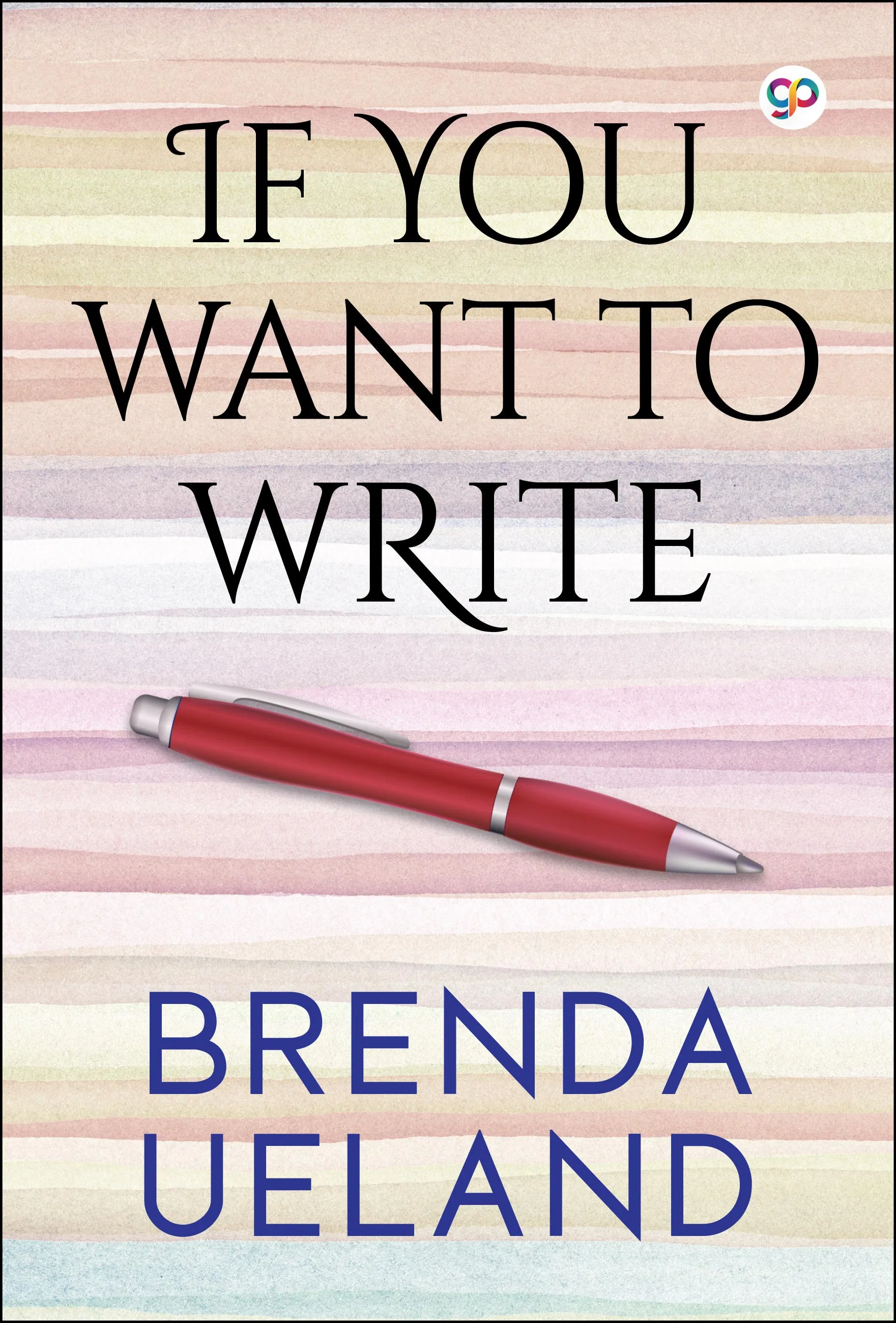
If You Want to Write
eBook
• 124 Pages
• INR 51.00
• English
• 9789389157017
No ratings yet
| Publisher | General Press |
|---|---|
| ISBN13 | 9789389157017 |
| ASIN/SKU | B07RM6489S |
| Book Format | eBook |
| Language | English |
| Pages | 124 |
| List Price | INR 51.00 |
| Subject Code | REF022000, EDU000000, EDU029040, LIT007000 |
| Publishing Date | 08/05/2019 |
| Book Code | BD00068595 |
Buy this Book
Amazon Stores
Ebook Stores
Other Stores
Discover If You Want to Write by Brenda Ueland. This book is published by General Press in eBook format, ISBN 9789389157017, ASIN B07RM6489S, under Reference, Creative Writing, Writing, Research and Publishing Guides.
Book Description
Brenda Ueland was a journalist, editor, freelance writer, and teacher of writing. In If You Want to Write: A Book about Art, Independence and Spirit she shares her philosophies on writing and life in general. Ueland firmly believed that anyone can write, that everyone is talented, original, and has something important to say. In this book she explains how find that spark that will make you a great writer. Carl Sandburg called this book the best book ever written about how to write. Join the millions of others who've found inspiration and unlocked their own talent.
Author Biography
BRENDA UELAND (1891–1985) spent many years living in New York, where she was part of the Greenwich Village bohemian crowd. She received an international swimming record for over-eighty-year-olds and was knighted by the King of Norway.
Editorial Reviews
Editorial Reviews will be added soon…
Book Summary
If You Want to Write by Brenda Ueland is a warm, encouraging, and deeply human book about creativity, writing, imagination, and the courage to express yourself honestly. First published in 1938, it has remained popular because Ueland does not approach writing as a mechanical skill that can be mastered through rigid formulas. Instead, she sees writing as a natural human ability that grows when people stop being afraid of judgment and learn to trust their own thoughts. For anyone looking for an If You Want to Write book summary, the heart of Ueland’s message is simple: everyone has something worth saying, and good writing begins when you give yourself enough freedom, patience, and confidence to say it.
Ueland was a writer and teacher, and much of the book grew from her experience teaching creative writing. Her approach is unusually personal. Rather than presenting a strict system for producing perfect sentences, she tries to remove the psychological obstacles that prevent people from writing at all. Fear, self-consciousness, impatience, comparison, criticism, and the desire to impress others can make writing feel difficult. Ueland believes that when these barriers are reduced, creativity becomes much more natural.
One of her most important ideas is that every person is talented. This does not mean everyone will become a professional novelist or produce brilliant work immediately. Ueland is making a broader point about human creativity. Every individual has a unique inner life filled with memories, observations, feelings, experiences, opinions, questions, and imaginative possibilities. Nobody else has exactly the same combination of these things.
That uniqueness is what gives a person's writing value.
Ueland therefore challenges the idea that writers must first become highly educated, technically sophisticated, or exceptionally intelligent. Writing is not primarily about displaying knowledge. It is about communicating something alive and personal. A writer who speaks honestly about an ordinary experience may produce something more meaningful than a writer who uses impressive language to hide a lack of genuine feeling.
Writing Begins With Freedom
The central argument of If You Want to Write is that creativity requires freedom. People cannot produce their best work when they are constantly monitoring themselves.
A beginner often thinks about writing in the wrong order. Instead of asking, “What do I really want to say?” the writer starts asking, “Will people like this?” “Does this sound intelligent?” “Is this good enough?” “What will my teacher think?” “Will readers criticize me?”
These questions can interrupt the creative process before it has even begun.
Ueland believes the first stage of writing should be much freer. Let the ideas come. Write badly if necessary. Write something embarrassing. Write something strange. Follow an unexpected thought. Do not constantly interrupt yourself to correct or judge what you are producing.
This distinction between creating and judging is one of the most useful lessons in the book. Editing has its place, but it should not dominate the initial act of creation. If the inner critic becomes too powerful too early, the writer may never discover the interesting ideas hidden beneath the obvious ones.
In other words, Ueland encourages writers to separate the roles of creator and critic.
First, generate.
Then, evaluate.
The Importance of Your Own Voice
Another major theme in If You Want to Write is the importance of finding your own voice. Ueland dislikes writing that sounds artificial, overly polished, or designed primarily to impress.
She wants writers to sound like real people.
This does not mean careless writing. Rather, it means that technical correctness should serve communication rather than replace it. The strongest writing often feels alive because the reader can sense a real person behind the words.
Ueland encourages writers to pay attention to what genuinely interests them. If something makes you curious, angry, amused, excited, puzzled, or deeply moved, it may contain the beginnings of good writing.
This leads to a powerful principle: interest is a guide to creativity.
When writers follow genuine interest instead of trying to predict what they should write about, their work becomes more energetic. They notice details they would otherwise overlook. They ask better questions. They make unexpected connections.
A subject does not have to be conventionally important to be worth writing about. What matters is the depth of attention the writer brings to it.
“Tell the Truth”
Ueland repeatedly returns to honesty. For her, good writing requires a willingness to tell the truth as you experience it.
This does not mean that every piece of writing must be autobiographical or that writers must reveal private information. The deeper meaning is emotional and intellectual honesty.
Do you actually believe what you are saying?
Are you writing about something that genuinely matters to you?
Are you pretending to feel something because it sounds appropriate?
Are you choosing sophisticated words because you are afraid to speak plainly?
These questions are important because writing becomes lifeless when the writer is performing rather than communicating.
Ueland believes that readers can sense authenticity. A genuine observation has energy. A forced statement does not.
The writer's job, therefore, is not simply to construct sentences but to discover what is true enough to be expressed.
Why Fear Damages Creativity
Fear is one of the biggest enemies in Ueland’s philosophy.
Many people want to write but are afraid of being judged. They fear that their ideas are foolish, their experiences are unimportant, or their writing is not sophisticated enough. As a result, they censor themselves.
Ueland sees this as a tragedy because the very material that might make someone's writing distinctive is often the material they are most tempted to suppress.
Fear also encourages imitation. When people do not trust their own voices, they unconsciously imitate writers they admire. They borrow styles, phrases, structures, and attitudes. The result may be competent, but it rarely feels personal.
Ueland's solution is not to become fearless overnight. It is to keep creating despite fear.
Confidence, in this sense, is not something you must possess before writing. It can develop through writing.
The more freely you practice expressing yourself, the less frightening the process becomes.
The Value of Daydreaming and Imagination
Ueland gives imagination a central place in creative life. She does not treat daydreaming as wasted time. Instead, she sees the wandering mind as a source of ideas.
Modern life often encourages constant productivity. Every minute must appear useful. But creativity does not always operate according to a schedule. Sometimes an idea emerges while walking, resting, remembering something, looking out a window, or doing a repetitive task.
For Ueland, these moments matter.
The imagination makes connections beneath the surface. A memory may suddenly illuminate a current problem. An ordinary observation may become the beginning of a story. Something overheard in conversation may trigger an entirely different thought.
The lesson is not to force creativity every second. It is to leave enough mental space for creativity to happen.
Writing Is a Way of Paying Attention
One of the most beautiful implications of Ueland's philosophy is that writing teaches us to notice life more carefully.
A writer becomes curious about small things: the expression on someone's face, the sound of a particular voice, the way a room feels in the evening, an unusual phrase overheard in conversation, a memory that keeps returning for no obvious reason.
These details matter because writing is ultimately made from observation.
The more attentively a person lives, the more material there is to write about.
This is why Ueland does not separate writing from life. The writer needs experiences, relationships, curiosity, solitude, conversation, mistakes, dreams, and reflection. Writing becomes a way of understanding those experiences.
The Role of Solitude
Ueland also recognizes the importance of solitude. Creative work requires periods when the writer can hear their own thoughts without constant interference.
Solitude does not necessarily mean isolation from people. It means having enough psychological space to think independently.
A writer who is constantly reacting to other people's opinions may struggle to discover what they personally believe.
Solitude creates room for the quieter parts of the mind to speak.
This is especially important in the early stages of writing. Before an idea becomes a finished article, story, essay, or book, it may exist as something vague and fragile. Too much criticism can destroy it before it has time to develop.
Ueland therefore encourages patience with unfinished thoughts.
Do Not Write for Praise
Another important lesson is Ueland's warning against writing primarily for approval.
Praise feels good, but depending on it can make creativity fragile. If you write only when you expect admiration, criticism can quickly stop you.
The stronger motivation is the desire to discover and express something.
This does not mean that writers should ignore readers. Communication matters, and professional writing often has practical goals. But the writer's deepest source of energy should come from genuine engagement with the subject.
When a writer cares about what they are saying, the reader is more likely to care too.
The Teacher's Role
Because Ueland was a teacher, the book contains many observations about how creativity should be encouraged.
She believes a good teacher should not dominate a student's imagination. Instead, the teacher should help the student discover what is already there.
This is an important departure from conventional instruction. Rather than trying to manufacture writers according to one standard, Ueland wants teachers to protect individuality.
Criticism can be useful when it helps a writer see something more clearly. But criticism becomes destructive when it humiliates, intimidates, or encourages imitation.
The best teaching, in Ueland's view, gives people enough confidence to experiment.
Writing and the Inner Life
At its deepest level, If You Want to Write is not really a book about grammar, publishing, or literary technique. It is a book about the inner life.
Ueland believes people become better writers when they become more attentive to their own thoughts and feelings. Writing is therefore a form of self-discovery.
You may begin writing about one subject and discover that you are actually interested in something else. You may describe an event and realize that your strongest feelings concern something that happened years earlier. You may think you know what you believe and then discover, through writing, that your opinion is more complicated.
This is one reason writing can be transformative. It forces vague thoughts to become visible.
What If You Want to Write Ultimately Teaches
The lasting message of If You Want to Write is reassuring: you do not have to wait for permission to become creative.
You do not need to sound like another writer.
You do not need to know exactly where an idea will lead.
You do not need to produce something brilliant every time you sit down.
And you do not need to eliminate every fear before you begin.
You need to begin.
Ueland asks readers to trust their curiosity, imagination, memories, and individual way of seeing the world. She encourages them to write freely before judging themselves, to tell the truth as they understand it, and to protect the creative process from excessive criticism.
For writers struggling with perfectionism, creative blocks, self-doubt, or the fear of not being talented enough, If You Want to Write remains particularly valuable. It offers a gentler alternative to the idea that writing is primarily about discipline, formulas, or technical perfection. Technique matters, but Ueland believes technique should help the writer express something alive rather than bury it beneath polish.
Ultimately, the book's deepest encouragement is wonderfully simple: your own mind is worth listening to.
Your memories may contain stories. Your observations may contain insight. Your imagination may contain possibilities you have not yet recognized. Your experiences may seem ordinary to you, but they are uniquely yours.
If You Want to Write is therefore more than a writing guide. It is a defense of curiosity, individuality, imagination, and creative freedom. Brenda Ueland reminds us that writing is not reserved for a special class of gifted people. It is one of the ways ordinary human beings can pay closer attention to life, understand themselves, and share something genuine with others.
And perhaps that is why the book continues to resonate with aspiring writers: before teaching us how to write, Ueland teaches us to believe that what we have to say may be worth writing at all.
Ueland was a writer and teacher, and much of the book grew from her experience teaching creative writing. Her approach is unusually personal. Rather than presenting a strict system for producing perfect sentences, she tries to remove the psychological obstacles that prevent people from writing at all. Fear, self-consciousness, impatience, comparison, criticism, and the desire to impress others can make writing feel difficult. Ueland believes that when these barriers are reduced, creativity becomes much more natural.
One of her most important ideas is that every person is talented. This does not mean everyone will become a professional novelist or produce brilliant work immediately. Ueland is making a broader point about human creativity. Every individual has a unique inner life filled with memories, observations, feelings, experiences, opinions, questions, and imaginative possibilities. Nobody else has exactly the same combination of these things.
That uniqueness is what gives a person's writing value.
Ueland therefore challenges the idea that writers must first become highly educated, technically sophisticated, or exceptionally intelligent. Writing is not primarily about displaying knowledge. It is about communicating something alive and personal. A writer who speaks honestly about an ordinary experience may produce something more meaningful than a writer who uses impressive language to hide a lack of genuine feeling.
Writing Begins With Freedom
The central argument of If You Want to Write is that creativity requires freedom. People cannot produce their best work when they are constantly monitoring themselves.
A beginner often thinks about writing in the wrong order. Instead of asking, “What do I really want to say?” the writer starts asking, “Will people like this?” “Does this sound intelligent?” “Is this good enough?” “What will my teacher think?” “Will readers criticize me?”
These questions can interrupt the creative process before it has even begun.
Ueland believes the first stage of writing should be much freer. Let the ideas come. Write badly if necessary. Write something embarrassing. Write something strange. Follow an unexpected thought. Do not constantly interrupt yourself to correct or judge what you are producing.
This distinction between creating and judging is one of the most useful lessons in the book. Editing has its place, but it should not dominate the initial act of creation. If the inner critic becomes too powerful too early, the writer may never discover the interesting ideas hidden beneath the obvious ones.
In other words, Ueland encourages writers to separate the roles of creator and critic.
First, generate.
Then, evaluate.
The Importance of Your Own Voice
Another major theme in If You Want to Write is the importance of finding your own voice. Ueland dislikes writing that sounds artificial, overly polished, or designed primarily to impress.
She wants writers to sound like real people.
This does not mean careless writing. Rather, it means that technical correctness should serve communication rather than replace it. The strongest writing often feels alive because the reader can sense a real person behind the words.
Ueland encourages writers to pay attention to what genuinely interests them. If something makes you curious, angry, amused, excited, puzzled, or deeply moved, it may contain the beginnings of good writing.
This leads to a powerful principle: interest is a guide to creativity.
When writers follow genuine interest instead of trying to predict what they should write about, their work becomes more energetic. They notice details they would otherwise overlook. They ask better questions. They make unexpected connections.
A subject does not have to be conventionally important to be worth writing about. What matters is the depth of attention the writer brings to it.
“Tell the Truth”
Ueland repeatedly returns to honesty. For her, good writing requires a willingness to tell the truth as you experience it.
This does not mean that every piece of writing must be autobiographical or that writers must reveal private information. The deeper meaning is emotional and intellectual honesty.
Do you actually believe what you are saying?
Are you writing about something that genuinely matters to you?
Are you pretending to feel something because it sounds appropriate?
Are you choosing sophisticated words because you are afraid to speak plainly?
These questions are important because writing becomes lifeless when the writer is performing rather than communicating.
Ueland believes that readers can sense authenticity. A genuine observation has energy. A forced statement does not.
The writer's job, therefore, is not simply to construct sentences but to discover what is true enough to be expressed.
Why Fear Damages Creativity
Fear is one of the biggest enemies in Ueland’s philosophy.
Many people want to write but are afraid of being judged. They fear that their ideas are foolish, their experiences are unimportant, or their writing is not sophisticated enough. As a result, they censor themselves.
Ueland sees this as a tragedy because the very material that might make someone's writing distinctive is often the material they are most tempted to suppress.
Fear also encourages imitation. When people do not trust their own voices, they unconsciously imitate writers they admire. They borrow styles, phrases, structures, and attitudes. The result may be competent, but it rarely feels personal.
Ueland's solution is not to become fearless overnight. It is to keep creating despite fear.
Confidence, in this sense, is not something you must possess before writing. It can develop through writing.
The more freely you practice expressing yourself, the less frightening the process becomes.
The Value of Daydreaming and Imagination
Ueland gives imagination a central place in creative life. She does not treat daydreaming as wasted time. Instead, she sees the wandering mind as a source of ideas.
Modern life often encourages constant productivity. Every minute must appear useful. But creativity does not always operate according to a schedule. Sometimes an idea emerges while walking, resting, remembering something, looking out a window, or doing a repetitive task.
For Ueland, these moments matter.
The imagination makes connections beneath the surface. A memory may suddenly illuminate a current problem. An ordinary observation may become the beginning of a story. Something overheard in conversation may trigger an entirely different thought.
The lesson is not to force creativity every second. It is to leave enough mental space for creativity to happen.
Writing Is a Way of Paying Attention
One of the most beautiful implications of Ueland's philosophy is that writing teaches us to notice life more carefully.
A writer becomes curious about small things: the expression on someone's face, the sound of a particular voice, the way a room feels in the evening, an unusual phrase overheard in conversation, a memory that keeps returning for no obvious reason.
These details matter because writing is ultimately made from observation.
The more attentively a person lives, the more material there is to write about.
This is why Ueland does not separate writing from life. The writer needs experiences, relationships, curiosity, solitude, conversation, mistakes, dreams, and reflection. Writing becomes a way of understanding those experiences.
The Role of Solitude
Ueland also recognizes the importance of solitude. Creative work requires periods when the writer can hear their own thoughts without constant interference.
Solitude does not necessarily mean isolation from people. It means having enough psychological space to think independently.
A writer who is constantly reacting to other people's opinions may struggle to discover what they personally believe.
Solitude creates room for the quieter parts of the mind to speak.
This is especially important in the early stages of writing. Before an idea becomes a finished article, story, essay, or book, it may exist as something vague and fragile. Too much criticism can destroy it before it has time to develop.
Ueland therefore encourages patience with unfinished thoughts.
Do Not Write for Praise
Another important lesson is Ueland's warning against writing primarily for approval.
Praise feels good, but depending on it can make creativity fragile. If you write only when you expect admiration, criticism can quickly stop you.
The stronger motivation is the desire to discover and express something.
This does not mean that writers should ignore readers. Communication matters, and professional writing often has practical goals. But the writer's deepest source of energy should come from genuine engagement with the subject.
When a writer cares about what they are saying, the reader is more likely to care too.
The Teacher's Role
Because Ueland was a teacher, the book contains many observations about how creativity should be encouraged.
She believes a good teacher should not dominate a student's imagination. Instead, the teacher should help the student discover what is already there.
This is an important departure from conventional instruction. Rather than trying to manufacture writers according to one standard, Ueland wants teachers to protect individuality.
Criticism can be useful when it helps a writer see something more clearly. But criticism becomes destructive when it humiliates, intimidates, or encourages imitation.
The best teaching, in Ueland's view, gives people enough confidence to experiment.
Writing and the Inner Life
At its deepest level, If You Want to Write is not really a book about grammar, publishing, or literary technique. It is a book about the inner life.
Ueland believes people become better writers when they become more attentive to their own thoughts and feelings. Writing is therefore a form of self-discovery.
You may begin writing about one subject and discover that you are actually interested in something else. You may describe an event and realize that your strongest feelings concern something that happened years earlier. You may think you know what you believe and then discover, through writing, that your opinion is more complicated.
This is one reason writing can be transformative. It forces vague thoughts to become visible.
What If You Want to Write Ultimately Teaches
The lasting message of If You Want to Write is reassuring: you do not have to wait for permission to become creative.
You do not need to sound like another writer.
You do not need to know exactly where an idea will lead.
You do not need to produce something brilliant every time you sit down.
And you do not need to eliminate every fear before you begin.
You need to begin.
Ueland asks readers to trust their curiosity, imagination, memories, and individual way of seeing the world. She encourages them to write freely before judging themselves, to tell the truth as they understand it, and to protect the creative process from excessive criticism.
For writers struggling with perfectionism, creative blocks, self-doubt, or the fear of not being talented enough, If You Want to Write remains particularly valuable. It offers a gentler alternative to the idea that writing is primarily about discipline, formulas, or technical perfection. Technique matters, but Ueland believes technique should help the writer express something alive rather than bury it beneath polish.
Ultimately, the book's deepest encouragement is wonderfully simple: your own mind is worth listening to.
Your memories may contain stories. Your observations may contain insight. Your imagination may contain possibilities you have not yet recognized. Your experiences may seem ordinary to you, but they are uniquely yours.
If You Want to Write is therefore more than a writing guide. It is a defense of curiosity, individuality, imagination, and creative freedom. Brenda Ueland reminds us that writing is not reserved for a special class of gifted people. It is one of the ways ordinary human beings can pay closer attention to life, understand themselves, and share something genuine with others.
And perhaps that is why the book continues to resonate with aspiring writers: before teaching us how to write, Ueland teaches us to believe that what we have to say may be worth writing at all.
Sample Chapters
Sample Chapters will be added soon…
Reader Reviews
No reviews yet.
If You Want to Write
Download Cover Image
Do you want to download the full cover image for If You Want to Write?