
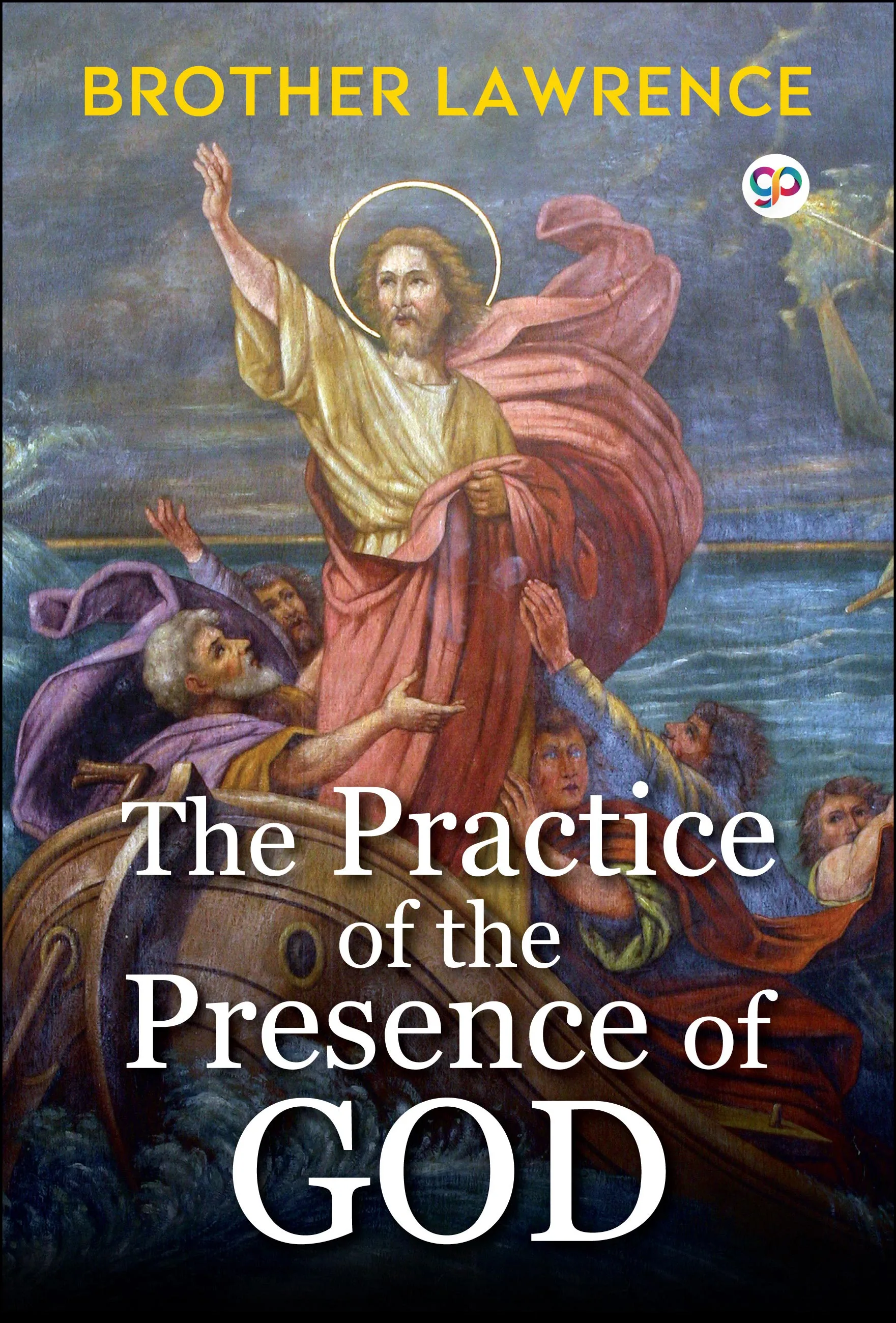
The Practice of the Presence of God
eBook
• 51 Pages
• INR 70.00
• English
• 9789389157055
No ratings yet
| Publisher | General Press |
|---|---|
| ISBN13 | 9789389157055 |
| ASIN/SKU | B07RN9M1HC |
| Book Format | eBook |
| Language | English |
| Pages | 51 |
| List Price | INR 70.00 |
| Subject Code | REL012120, REL012020, REL012080 |
| Publishing Date | 08/05/2019 |
| Book Code | BD00068596 |
Buy this Book
Amazon Stores
Ebook Stores
Other Stores
Discover The Practice of the Presence of God by Brother Lawrence. This book is published by General Press in eBook format, ISBN 9789389157055, ASIN B07RN9M1HC, under Christian Books and Bibles, Christian Spiritual Growth, Christian Devotionals.
Book Description
First published in 1692, Compiled from 17th-century letters and conversations, 'The Practice of the Presence of God' by Brother Lawrence is a profoundly comforting classic of Christian spirituality. Born Nicolas Herman, Brother Lawrence was an uneducated former soldier who spent decades working as a humble cook and sandal maker in a Parisian monastery. Yet, it was amidst the noise and heat of the kitchen that he discovered a deep, unshakeable peace.
The premise of the book is refreshingly simple: we do not need complex theological training or a retreat into silent meditation to experience the divine. Instead, Brother Lawrence teaches that we can cultivate a constant, conversational relationship with God through the most mundane daily tasks. Whether he was preparing a meal or scrubbing pots, he learned to do everything out of a pure, simple love for his Creator.
With a gentle and humane voice, the book encourages readers to shift their focus from rigid religious practices to a continuous, quiet awareness of God's presence. He assures us that God is just as present in the clatter of a busy kitchen as He is in the revered silence of a cathedral.
Ultimately, 'The Practice of the Presence of God' is a timeless invitation to transform ordinary life into an ongoing act of worship. It gently reminds us that true spiritual joy is found not in grand, sweeping gestures, but in dedicating our smallest, most ordinary moments to love.
The premise of the book is refreshingly simple: we do not need complex theological training or a retreat into silent meditation to experience the divine. Instead, Brother Lawrence teaches that we can cultivate a constant, conversational relationship with God through the most mundane daily tasks. Whether he was preparing a meal or scrubbing pots, he learned to do everything out of a pure, simple love for his Creator.
With a gentle and humane voice, the book encourages readers to shift their focus from rigid religious practices to a continuous, quiet awareness of God's presence. He assures us that God is just as present in the clatter of a busy kitchen as He is in the revered silence of a cathedral.
Ultimately, 'The Practice of the Presence of God' is a timeless invitation to transform ordinary life into an ongoing act of worship. It gently reminds us that true spiritual joy is found not in grand, sweeping gestures, but in dedicating our smallest, most ordinary moments to love.
Author Biography
Brother Lawrence: Brother Lawrence was a seventeenth-century French monk who in his monastery kitchen discovered an overwhelming delight in God's presence.
Editorial Reviews
Editorial Reviews will be added soon…
Book Summary
"The Practice of the Presence of God" by Brother Lawrence is a timeless Christian devotional classic that presents a simple yet profound approach to living a life of constant awareness of God. Rather than offering a detailed theological system, the book is a collection of conversations, letters, and personal reflections that reveal the spiritual journey of Brother Lawrence, a seventeenth-century Carmelite lay brother. Living a humble life within a monastery, he believed that every moment, whether spent in prayer or ordinary work, could become an opportunity to experience God's presence. His teachings encourage readers to develop a deep, personal relationship with God that extends beyond formal worship and becomes part of everyday life.
Brother Lawrence begins by describing how his understanding of faith gradually developed through simple observation and sincere reflection. As a young man, he experienced a spiritual awakening that changed the direction of his life and inspired him to seek God above all else. He admits that this transformation was not immediate or effortless. Like many people, he faced periods of uncertainty, spiritual dryness, and personal weakness. Instead of becoming discouraged, however, he continued to return to God with humility and trust. Over time, he discovered that spiritual growth depends less on extraordinary experiences and more on faithful perseverance in ordinary moments.
One of the central ideas throughout the book is that prayer should not be limited to specific hours or religious ceremonies. Brother Lawrence teaches that people can remain in conversation with God throughout the day, regardless of their surroundings or responsibilities. Whether preparing meals, cleaning, repairing tools, or completing any other task, he believed that every action could become an act of worship when performed with love and sincere devotion. This perspective removes the distinction between sacred and ordinary activities, suggesting that even the simplest duties have spiritual value when they are carried out with the right attitude and intention.
The book also explores the importance of developing inner peace by placing complete trust in God's guidance. Brother Lawrence repeatedly encourages readers not to become overwhelmed by their mistakes or spiritual shortcomings. Instead of dwelling on guilt or fear, he advises acknowledging failures honestly, seeking God's forgiveness, and continuing forward with confidence. He explains that genuine spiritual progress is built upon patience and consistency rather than perfection. Every setback becomes an opportunity to deepen one's dependence on God's mercy, and every success should be received with gratitude rather than pride.
Another significant theme is humility. Brother Lawrence never presents himself as a spiritual expert or someone who has achieved perfection. On the contrary, he openly speaks about his weaknesses and limitations, emphasising that true closeness to God comes through recognising one's dependence on divine grace. He warns against seeking recognition for religious achievements or becoming distracted by outward displays of devotion. Instead, he encourages a quiet, sincere faith expressed through simple obedience, honesty, and love. This humble approach makes his teachings accessible to ordinary people rather than only to monks or scholars.
Throughout his letters and conversations, Brother Lawrence demonstrates that spiritual joy is not dependent upon favourable circumstances. His daily responsibilities in the monastery were often physically demanding and repetitive, yet he approached them with gratitude because he viewed every task as an opportunity to serve God. He believed that peace does not come from escaping work or difficulties but from carrying them out while remaining conscious of God's constant companionship. This understanding transforms ordinary labour into meaningful service and helps believers maintain hope even during seasons of hardship, disappointment, or physical suffering.
The book further explains that developing the practice of God's presence requires discipline and persistence. Brother Lawrence acknowledges that the mind naturally wanders and that maintaining continual awareness of God is challenging, especially at the beginning. However, he encourages readers not to become discouraged by distractions. Instead, they should gently bring their attention back to God whenever they notice their thoughts drifting elsewhere. With repeated practice, this habit gradually becomes more natural, allowing prayer to flow continuously throughout daily life. His guidance reflects the belief that spiritual maturity develops through repeated acts of faithful attention rather than sudden moments of enlightenment.
Another important aspect of Brother Lawrence's teaching is the simplicity of his faith. He avoids complicated philosophical debates and instead focuses on the practical reality of loving God wholeheartedly. He believes that sincere love is more valuable than elaborate religious practices performed without genuine devotion. Readers are encouraged to approach God with openness, honesty, and childlike trust, confident that God desires a close relationship with every individual. This emphasis on love makes the book relevant to people from many different backgrounds, offering practical wisdom that can be applied regardless of one's occupation, education, or stage of spiritual growth.
Ultimately, "The Practice of the Presence of God" is a gentle invitation to discover that a meaningful spiritual life can be lived in the middle of ordinary routines. Brother Lawrence's reflections show that true devotion is not confined to churches, monasteries, or special occasions but can flourish in kitchens, workshops, homes, and workplaces alike. His message is built on the conviction that God's presence is always available to those who seek Him with sincerity, patience, and love. By encouraging constant prayer, humble service, unwavering trust, and joyful obedience, the book offers a practical path toward lasting peace and deeper faith. Centuries after it was first compiled, its simple yet powerful teachings continue to inspire readers who long to integrate their spiritual beliefs into every aspect of daily living, reminding them that extraordinary faith is often formed through ordinary acts performed with wholehearted devotion.
Brother Lawrence begins by describing how his understanding of faith gradually developed through simple observation and sincere reflection. As a young man, he experienced a spiritual awakening that changed the direction of his life and inspired him to seek God above all else. He admits that this transformation was not immediate or effortless. Like many people, he faced periods of uncertainty, spiritual dryness, and personal weakness. Instead of becoming discouraged, however, he continued to return to God with humility and trust. Over time, he discovered that spiritual growth depends less on extraordinary experiences and more on faithful perseverance in ordinary moments.
One of the central ideas throughout the book is that prayer should not be limited to specific hours or religious ceremonies. Brother Lawrence teaches that people can remain in conversation with God throughout the day, regardless of their surroundings or responsibilities. Whether preparing meals, cleaning, repairing tools, or completing any other task, he believed that every action could become an act of worship when performed with love and sincere devotion. This perspective removes the distinction between sacred and ordinary activities, suggesting that even the simplest duties have spiritual value when they are carried out with the right attitude and intention.
The book also explores the importance of developing inner peace by placing complete trust in God's guidance. Brother Lawrence repeatedly encourages readers not to become overwhelmed by their mistakes or spiritual shortcomings. Instead of dwelling on guilt or fear, he advises acknowledging failures honestly, seeking God's forgiveness, and continuing forward with confidence. He explains that genuine spiritual progress is built upon patience and consistency rather than perfection. Every setback becomes an opportunity to deepen one's dependence on God's mercy, and every success should be received with gratitude rather than pride.
Another significant theme is humility. Brother Lawrence never presents himself as a spiritual expert or someone who has achieved perfection. On the contrary, he openly speaks about his weaknesses and limitations, emphasising that true closeness to God comes through recognising one's dependence on divine grace. He warns against seeking recognition for religious achievements or becoming distracted by outward displays of devotion. Instead, he encourages a quiet, sincere faith expressed through simple obedience, honesty, and love. This humble approach makes his teachings accessible to ordinary people rather than only to monks or scholars.
Throughout his letters and conversations, Brother Lawrence demonstrates that spiritual joy is not dependent upon favourable circumstances. His daily responsibilities in the monastery were often physically demanding and repetitive, yet he approached them with gratitude because he viewed every task as an opportunity to serve God. He believed that peace does not come from escaping work or difficulties but from carrying them out while remaining conscious of God's constant companionship. This understanding transforms ordinary labour into meaningful service and helps believers maintain hope even during seasons of hardship, disappointment, or physical suffering.
The book further explains that developing the practice of God's presence requires discipline and persistence. Brother Lawrence acknowledges that the mind naturally wanders and that maintaining continual awareness of God is challenging, especially at the beginning. However, he encourages readers not to become discouraged by distractions. Instead, they should gently bring their attention back to God whenever they notice their thoughts drifting elsewhere. With repeated practice, this habit gradually becomes more natural, allowing prayer to flow continuously throughout daily life. His guidance reflects the belief that spiritual maturity develops through repeated acts of faithful attention rather than sudden moments of enlightenment.
Another important aspect of Brother Lawrence's teaching is the simplicity of his faith. He avoids complicated philosophical debates and instead focuses on the practical reality of loving God wholeheartedly. He believes that sincere love is more valuable than elaborate religious practices performed without genuine devotion. Readers are encouraged to approach God with openness, honesty, and childlike trust, confident that God desires a close relationship with every individual. This emphasis on love makes the book relevant to people from many different backgrounds, offering practical wisdom that can be applied regardless of one's occupation, education, or stage of spiritual growth.
Ultimately, "The Practice of the Presence of God" is a gentle invitation to discover that a meaningful spiritual life can be lived in the middle of ordinary routines. Brother Lawrence's reflections show that true devotion is not confined to churches, monasteries, or special occasions but can flourish in kitchens, workshops, homes, and workplaces alike. His message is built on the conviction that God's presence is always available to those who seek Him with sincerity, patience, and love. By encouraging constant prayer, humble service, unwavering trust, and joyful obedience, the book offers a practical path toward lasting peace and deeper faith. Centuries after it was first compiled, its simple yet powerful teachings continue to inspire readers who long to integrate their spiritual beliefs into every aspect of daily living, reminding them that extraordinary faith is often formed through ordinary acts performed with wholehearted devotion.
Sample Chapters
Conversations
First Conversation
Conversion and previous employment. * Satisfaction in God’s presence. * Faith our duty. * Resignation the fruit of watchfulness.
The first time I saw Brother Lawrence was upon the 3rd of August, 1666. He told me that GOD had done him a singular favour, in his conversion at the age of eighteen.
That in the winter, seeing a tree stripped of its leaves, and considering that within a little time, the leaves would be renewed, and after that the flowers and fruit appear, he received a high view of the Providence and Power of GOD, which has never since been effaced from his soul. That this view had perfectly set him loose from the world, and kindled in him such a love for GOD, that he could not tell whether it had increased in above forty years that he had lived since.
That he had been footman to M. Fieubert, the treasurer, and that he was a great awkward fellow who broke everything.
That he had desired to be received into a monastery, thinking that he would there be made to smart for his awkwardness and the faults he should commit, and so he should sacrifice to GOD his life, with its pleasures: but that GOD had disappointed him, he having met with nothing but satisfaction in that state.
That we should establish ourselves in a sense of GOD’s Presence, by continually conversing with Him. That it was a shameful thing to quit His conversation, to think of trifles and fooleries.
That we should feed and nourish our souls with high notions of GOD; which would yield us great joy in being devoted to Him.
That we ought to quicken, i.e., to enliven, our faith. That it was lamentable we had so little; and that instead of taking faith for the rule of their conduct, men amused themselves with trivial devotions, which changed daily. That the way of Faith was the spirit of the Church, and that it was sufficient to bring us to a high degree of perfection.
That we ought to give ourselves up to GOD, with regard both to things temporal and spiritual, and seek our satisfaction only in the fulfilling of His will, whether He lead us by suffering or by consolation, for all would be equal to a soul truly resigned. That there needed fidelity in those drynesses, or insensibilities and irksomenesses in prayer, by which GOD tries our love to Him; that then was the time for us to make good and effectual acts of resignation, whereof one alone would oftentimes very much promote our spiritual advancement.
That as for the miseries and sins he heard of daily in the world, he was so far from wondering at them, that, on the contrary, he was surprised there were not more, considering the malice sinners were capable of: that for his part, he prayed for them; but knowing that GOD could remedy the mischief’s they did, when He pleased, he gave himself no further trouble.
That to arrive at such resignation as GOD requires, we should watch attentively over all the passions which mingle as well in spiritual things as those of a grosser nature: that GOD would give light concerning those passions to those who truly desire to serve Him. That if this was my design, viz., sincerely to serve GOD, I might come to him (Bro. Lawrence) as often as I pleased, without any fear of being troublesome; but if not, that I ought no more to visit him.
Second Conversation
Love the motive of all. * Once in fear, now in joy. * Diligence and love. Simplicity the key to Divine assistance. * Business abroad as at home. * times of prayer and self-mortification not essential for the practice. * All scruples brought to God.
That he had always been governed by love, without selfish views; and that having resolved to make the love of GOD the end of all his actions, he had found reasons to be well satisfied with his method. That he was pleased when he could take up a straw from the ground for the love of GOD, seeking Him only, and nothing else, not even His gifts.
That he had been long troubled in mind from a certain belief that he should be damned; that all the men in the world could not have persuaded him to the contrary; but that he had thus reasoned with himself about it: I did not engage in a religious life but for the love of GOD, and I have endeavoured to act only for Him; whatever becomes of me, whether I be lost or saved, I will always continue to act purely for the love of GOD. I shall have this good at least, that till death I shall have done all that is in me to love Him. That this trouble of mind had lasted four years; during which time he had suffered much.
That since that time he had passed his life in perfect liberty and continual joy. That he placed his sins betwixt him and GOD, as it were, to tell Him that he did not deserve His favours, but that GOD still continued to bestow them in abundance.
That in order to form a habit of conversing with GOD continually, and referring all we do to Him; we must at first apply to Him with some diligence: but that after a little care we should find His love inwardly excite us to it without any difficulty.
That he expected after the pleasant days GOD had given him, he should have his turn of pain and suffering; but that he was not uneasy about it, knowing very well, that as he could do nothing of himself, GOD would not fail to give him the strength to bear them.
That when an occasion of practising some virtue offered, he addressed himself to GOD, saying, LORD, I cannot do this unless Thou enablest me; and that then he received strength more than sufficient.
That when he had failed in his duty, he only confessed his fault, saying to GOD, I shall never do otherwise, if You leave me to myself; ‘tis You must hinder my falling, and mend what is amiss. That after this, he gave himself no further uneasiness about it.
That we ought to act with GOD in the greatest simplicity, speaking to Him frankly and plainly, and imploring His assistance in our affairs, just as they happen. That GOD never failed to grant it, as he had often experienced.
That he had been lately sent into Burgundy, to buy the provision of wine for the society, which was a very unwelcome task for him, because he had no turn for business and because he was lame, and could not go about the boat but by rolling himself over the casks. That however he gave himself no uneasiness about it, nor about the purchase of the wine. That he said to GOD, It was His business he was about, and that he afterwards found it very well performed. That he had been sent into Auvergne the year before upon the same account; that he could not tell how the matter passed, but that it proved very well.
So, likewise, in his business in the kitchen (to which he had naturally a great aversion), having accustomed himself to do everything there for the love of GOD, and with prayer, upon all occasions, for His grace to do his work well, he had found everything easy, during the fifteen years that he had been employed there.
That he was very well pleased with the post he was now in; but that he was as ready to quit that as the former, since he was always pleasing himself in every condition, by doing little things for the love of GOD.
That with him the set times of prayer were not different from other times: that he retired to pray, according to the directions of his Superior, but that he did not want such retirement. nor ask for it, because his greatest business did not divert him from GOD.
That as he knew his obligation to love GOD in all things, and as he endeavoured so to do, he had no need of a director to advise him, but that he needed much a confessor to absolve him. That he was very sensible of his faults, but not discouraged by them; that he confessed them to GOD, and did not plead against Him to excuse them. When he had so done, he peaceably resumed his usual practice of love and adoration.
That in his trouble of mind, he had consulted nobody, but knowing only by the light of faith that GOD was present, he contented himself with directing all his actions to Him, i.e., doing them with a desire to please Him, let what would come of it.
That useless thoughts spoil all: that the mischief began there; but that we ought to reject them, as soon as we perceived their impertinence to the matter in hand, or our salvation; and return to our communion with GOD.
That at the beginning he had often passed his time appointed for prayer, in rejecting wandering thoughts, and falling back into them. That he could never regulate his devotion by certain methods as some do. That nevertheless, at first he had meditated for some time, but afterwards that went off, in a manner that he could give no account of.
That all bodily mortifications and other exercises are useless, but as they serve to arrive at the union with GOD by love; that he had well considered this, and found it the shortest way to go straight to Him by a continual exercise of love, and doing all things for His sake.
That we ought to make a great difference between the acts of the understanding and those of the will; that the first were comparatively of little value, and the others all.
That our only business was to love and delight ourselves in GOD.
That all possible kinds of mortification, if they were void of the love of GOD, could not efface a single sin. That we ought, without anxiety, to expect the pardon of our sins from the Blood of JESUS CHRIST, only endeavouring to love Him with all our hearts. That GOD seemed to have granted the greatest favours to the greatest sinners, as more signal monuments of His mercy.
That the greatest pains or pleasures, of this world, were not to be compared with what he had experienced of both kinds in a spiritual state: so that he was careful for nothing and feared nothing, desiring but one only thing of GOD, viz., that he might not offend Him.
That he had no scruples; for, said he, when I fail in my duty, I readily acknowledge it, saying, I am used to do so: I shall never do otherwise, if I am left to myself. If I fail not, then I give GOD thanks, acknowledging that it comes from Him.
Third Conversation
Faith working by love. * Outward business no detriment. * Perfect resignation the sure way.
He told me, that the foundation of the spiritual life in him had been a high notion and esteem of GOD in faith; which when he had once well conceived, he had no other care at first, but faithfully to reject every other thought, that he might perform all his actions for the love of GOD. That when sometimes he had not thought of GOD for a good while, he did not disquiet himself for it; but after having acknowledged his wretchedness to GOD, he returned to Him with so much the greater trust in Him, by how much he found himself more wretched to have forgot Him.
That the trust we put in GOD honours Him much, and draws down great graces.
That it was impossible, not only that GOD should deceive, but also that He should long let a soul suffer which is perfectly resigned to Him, and resolved to endure everything for His sake.
That he had so often experienced the ready succours of Divine Grace upon all occasions, that from the same experience, when he had business to do, he did not think of it beforehand; but when it was time to do it, he found in GOD, as in a clear mirror, all that was fit for him to do. That of late he had acted thus, without anticipating care; but before the experience above mentioned, he had used it in his affairs.
When outward business diverted him a little from the thought of GOD, a fresh remembrance coming from GOD invested his soul, and so inflamed and transported him that it was difficult for him to contain himself.
That he was more united to GOD in his outward employments, than when he left them for devotion in retirement.
That he expected hereafter some great pain of body or mind; that the worst that could happen to him was, to lose that sense of GOD, which he had enjoyed so long; but that the goodness of GOD assured him He would not forsake him utterly, and that He would give him strength to bear whatever evil He permitted to happen to him; and therefore that he feared nothing, and had no occasion to consult with anybody about his state. That when he had attempted to do it, he had always come away more perplexed; and that as he was conscious of his readiness to lay down his life for the love of GOD, he had no apprehension of danger. That perfect resignation to GOD was a sure way to heaven, a way in which we had always sufficient light for our conduct.
That in the beginning of the spiritual life, we ought to be faithful in doing our duty and denying ourselves; but after that unspeakable pleasures followed: that in difficulties we need only have recourse to JESUS CHRIST, and beg His grace, with which everything became easy.
That many do not advance in the Christian progress, because they stick in penances, and particular exercises, while they neglect the love of GOD, which is the end. That this appeared plainly by their works, and was the reason why we see so little solid virtue.
That there needed neither art nor science for going to GOD, but only a heart resolutely determined to apply itself to nothing but Him, or for His sake, and to love Him only.
Fourth Conversation
The manner of going to God. * Hearty renunciation. * Prayer and praise prevent discouragement. * Sanctification in common business. * Prayer and the presence of God. * The whole substance of religion. * Self-estimation * Further personal experience.
He discoursed with me very frequently, and with great openness of heart, concerning his manner of going to GOD, whereof some part is related already.
He told me, that all consists in one hearty renunciation of everything which we are sensible does not lead to GOD; that we might accustom ourselves to a continual conversation with Him, with freedom and in simplicity. That we need only to recognize GOD intimately present with us, to address ourselves to Him every moment, that we may be His assistance for knowing His will in things doubtful, and for rightly performing those which we plainly see He requires of us, offering them to Him before we do them, and giving Him thanks when we have done.
That in this conversation with GOD, we are also employed in praising, adoring, and loving him incessantly, for His infinite goodness and perfection.
That, without being discouraged on account of our sins, we should pray for His grace with a perfect confidence, as relying upon the infinite merits of our LORD. That GOD never failed offering us His grace at each action; that he distinctly perceived it, and never failed of it, unless when his thoughts had wandered from a sense of GOD’s Presence, or he had forgot to ask His assistance.
That GOD always gave us light in our doubts, when we had no other design but to please Him.
That our sanctification did not depend upon changing our works, but in doing that for GOD’s sake, which we commonly do for our own. That it was lamentable to see how many people mistook the means for the end, addicting themselves to certain works, which they performed very imperfectly, by reason of their human or selfish regards.
That the most excellent method he had found of going to GOD, was that of doing our common business without any view of pleasing men, [Gal. I. 10; Eph. vi. 5, 6.] and (as far as we are capable) purely for the love of GOD.
That it was a great delusion to think that the times of prayer ought to differ from other times. That we are as strictly obliged to adhere to GOD by action in the time of action, as by prayer in its season.
That his prayer was nothing else but a sense of the presence of GOD, his soul being at that time insensible to everything but Divine love: and that when the appointed times of prayer were past, he found no difference, because he still continued with GOD, praising and blessing Him with all his might, so that he passed his life in continual joy; yet hoped that GOD would give him somewhat to suffer, when he should grow stronger.
That we ought, once for all, heartily to put our whole trust in GOD, and make a total surrender of ourselves to Him, secure that He would not deceive us.
That we ought not to be weary of doing little things for the love of GOD, who regards not the greatness of the work, but the love with which it is performed. That we should not wonder if, in the beginning, we often failed in our endeavours, but that at last we should gain a habit, which will naturally produce its acts in us, without our care, and to our exceeding great delight.
That the whole substance of religion was faith, hope, and charity; by the practice of which we become united to the will of GOD: that all beside is indifferent and to be used as a means, that we may arrive at our end, and be swallowed up therein, by faith and charity.
That all things are possible to him who believes, that they are less difficult to him who hopes, they are more easy to him who loves, and still more easy to him who perseveres in the practice of these three virtues.
That the end we ought to propose to ourselves is to become, in this life, the most perfect worshippers of GOD we can possibly be, as we hope to be through all eternity.
That when we enter upon the spiritual we should consider, and examine to the bottom, what we are. And then we should find ourselves worthy of all contempt, and such as do not deserve the name of Christians, subject to all kinds of misery, and numberless accidents, which trouble us, and cause perpetual vicissitudes in our health, in our humours, in our internal and external dispositions: in fine, persons whom GOD would humble by many pains and labours, as well within as without. After this, we should not wonder that troubles, temptations, oppositions and contradictions, happen to us from men. We ought, on the contrary, to submit ourselves to them, and bear them as long as GOD pleases, as things highly advantageous to us.
That the greater perfection a soul aspires after, the more dependent it is upon Divine grace.
Being questioned by one of his own society (to whom he was obliged to open himself) by what means he had attained such an habitual sense of GOD? he told him that, since his first coming to the monastery, he had considered GOD as the end of all his thoughts and desires, as the mark to which they should tend, and in which they should terminate.
That in the beginning of his novitiate he spent the hours appointed for private prayer in thinking of GOD, so as to convince his mind of, and to impress deeply upon his heart, the Divine existence, rather by devout sentiments, and submission to the lights of faith, than by studied reasoning’s and elaborate meditations. That by this short and sure method, he exercised himself in the knowledge and love of GOD, resolving to use his utmost endeavour to live in a continual sense of His Presence, and, if possible, never to forget Him more.
That when he had thus in prayer filled his mind with great sentiments of that infinite Being, he went to his work appointed in the kitchen (for he was cook to the society); there having first considered severally the things his office required, and when and how each thing was to be done, he spent all the intervals of his time, as well before as after his work, in prayer.
That, when he began his business, he said to GOD, with a filial trust in Him, “O my GOD, since Thou art with me, and I must now, in obedience to Thy commands, apply my mind to these outward things, I beseech Thee to grant me the grace to continue in Thy Presence; and to this end do Thou prosper me with Thy assistance, receive all my works, and possess all my affections.”
First Conversation
Conversion and previous employment. * Satisfaction in God’s presence. * Faith our duty. * Resignation the fruit of watchfulness.
The first time I saw Brother Lawrence was upon the 3rd of August, 1666. He told me that GOD had done him a singular favour, in his conversion at the age of eighteen.
That in the winter, seeing a tree stripped of its leaves, and considering that within a little time, the leaves would be renewed, and after that the flowers and fruit appear, he received a high view of the Providence and Power of GOD, which has never since been effaced from his soul. That this view had perfectly set him loose from the world, and kindled in him such a love for GOD, that he could not tell whether it had increased in above forty years that he had lived since.
That he had been footman to M. Fieubert, the treasurer, and that he was a great awkward fellow who broke everything.
That he had desired to be received into a monastery, thinking that he would there be made to smart for his awkwardness and the faults he should commit, and so he should sacrifice to GOD his life, with its pleasures: but that GOD had disappointed him, he having met with nothing but satisfaction in that state.
That we should establish ourselves in a sense of GOD’s Presence, by continually conversing with Him. That it was a shameful thing to quit His conversation, to think of trifles and fooleries.
That we should feed and nourish our souls with high notions of GOD; which would yield us great joy in being devoted to Him.
That we ought to quicken, i.e., to enliven, our faith. That it was lamentable we had so little; and that instead of taking faith for the rule of their conduct, men amused themselves with trivial devotions, which changed daily. That the way of Faith was the spirit of the Church, and that it was sufficient to bring us to a high degree of perfection.
That we ought to give ourselves up to GOD, with regard both to things temporal and spiritual, and seek our satisfaction only in the fulfilling of His will, whether He lead us by suffering or by consolation, for all would be equal to a soul truly resigned. That there needed fidelity in those drynesses, or insensibilities and irksomenesses in prayer, by which GOD tries our love to Him; that then was the time for us to make good and effectual acts of resignation, whereof one alone would oftentimes very much promote our spiritual advancement.
That as for the miseries and sins he heard of daily in the world, he was so far from wondering at them, that, on the contrary, he was surprised there were not more, considering the malice sinners were capable of: that for his part, he prayed for them; but knowing that GOD could remedy the mischief’s they did, when He pleased, he gave himself no further trouble.
That to arrive at such resignation as GOD requires, we should watch attentively over all the passions which mingle as well in spiritual things as those of a grosser nature: that GOD would give light concerning those passions to those who truly desire to serve Him. That if this was my design, viz., sincerely to serve GOD, I might come to him (Bro. Lawrence) as often as I pleased, without any fear of being troublesome; but if not, that I ought no more to visit him.
Second Conversation
Love the motive of all. * Once in fear, now in joy. * Diligence and love. Simplicity the key to Divine assistance. * Business abroad as at home. * times of prayer and self-mortification not essential for the practice. * All scruples brought to God.
That he had always been governed by love, without selfish views; and that having resolved to make the love of GOD the end of all his actions, he had found reasons to be well satisfied with his method. That he was pleased when he could take up a straw from the ground for the love of GOD, seeking Him only, and nothing else, not even His gifts.
That he had been long troubled in mind from a certain belief that he should be damned; that all the men in the world could not have persuaded him to the contrary; but that he had thus reasoned with himself about it: I did not engage in a religious life but for the love of GOD, and I have endeavoured to act only for Him; whatever becomes of me, whether I be lost or saved, I will always continue to act purely for the love of GOD. I shall have this good at least, that till death I shall have done all that is in me to love Him. That this trouble of mind had lasted four years; during which time he had suffered much.
That since that time he had passed his life in perfect liberty and continual joy. That he placed his sins betwixt him and GOD, as it were, to tell Him that he did not deserve His favours, but that GOD still continued to bestow them in abundance.
That in order to form a habit of conversing with GOD continually, and referring all we do to Him; we must at first apply to Him with some diligence: but that after a little care we should find His love inwardly excite us to it without any difficulty.
That he expected after the pleasant days GOD had given him, he should have his turn of pain and suffering; but that he was not uneasy about it, knowing very well, that as he could do nothing of himself, GOD would not fail to give him the strength to bear them.
That when an occasion of practising some virtue offered, he addressed himself to GOD, saying, LORD, I cannot do this unless Thou enablest me; and that then he received strength more than sufficient.
That when he had failed in his duty, he only confessed his fault, saying to GOD, I shall never do otherwise, if You leave me to myself; ‘tis You must hinder my falling, and mend what is amiss. That after this, he gave himself no further uneasiness about it.
That we ought to act with GOD in the greatest simplicity, speaking to Him frankly and plainly, and imploring His assistance in our affairs, just as they happen. That GOD never failed to grant it, as he had often experienced.
That he had been lately sent into Burgundy, to buy the provision of wine for the society, which was a very unwelcome task for him, because he had no turn for business and because he was lame, and could not go about the boat but by rolling himself over the casks. That however he gave himself no uneasiness about it, nor about the purchase of the wine. That he said to GOD, It was His business he was about, and that he afterwards found it very well performed. That he had been sent into Auvergne the year before upon the same account; that he could not tell how the matter passed, but that it proved very well.
So, likewise, in his business in the kitchen (to which he had naturally a great aversion), having accustomed himself to do everything there for the love of GOD, and with prayer, upon all occasions, for His grace to do his work well, he had found everything easy, during the fifteen years that he had been employed there.
That he was very well pleased with the post he was now in; but that he was as ready to quit that as the former, since he was always pleasing himself in every condition, by doing little things for the love of GOD.
That with him the set times of prayer were not different from other times: that he retired to pray, according to the directions of his Superior, but that he did not want such retirement. nor ask for it, because his greatest business did not divert him from GOD.
That as he knew his obligation to love GOD in all things, and as he endeavoured so to do, he had no need of a director to advise him, but that he needed much a confessor to absolve him. That he was very sensible of his faults, but not discouraged by them; that he confessed them to GOD, and did not plead against Him to excuse them. When he had so done, he peaceably resumed his usual practice of love and adoration.
That in his trouble of mind, he had consulted nobody, but knowing only by the light of faith that GOD was present, he contented himself with directing all his actions to Him, i.e., doing them with a desire to please Him, let what would come of it.
That useless thoughts spoil all: that the mischief began there; but that we ought to reject them, as soon as we perceived their impertinence to the matter in hand, or our salvation; and return to our communion with GOD.
That at the beginning he had often passed his time appointed for prayer, in rejecting wandering thoughts, and falling back into them. That he could never regulate his devotion by certain methods as some do. That nevertheless, at first he had meditated for some time, but afterwards that went off, in a manner that he could give no account of.
That all bodily mortifications and other exercises are useless, but as they serve to arrive at the union with GOD by love; that he had well considered this, and found it the shortest way to go straight to Him by a continual exercise of love, and doing all things for His sake.
That we ought to make a great difference between the acts of the understanding and those of the will; that the first were comparatively of little value, and the others all.
That our only business was to love and delight ourselves in GOD.
That all possible kinds of mortification, if they were void of the love of GOD, could not efface a single sin. That we ought, without anxiety, to expect the pardon of our sins from the Blood of JESUS CHRIST, only endeavouring to love Him with all our hearts. That GOD seemed to have granted the greatest favours to the greatest sinners, as more signal monuments of His mercy.
That the greatest pains or pleasures, of this world, were not to be compared with what he had experienced of both kinds in a spiritual state: so that he was careful for nothing and feared nothing, desiring but one only thing of GOD, viz., that he might not offend Him.
That he had no scruples; for, said he, when I fail in my duty, I readily acknowledge it, saying, I am used to do so: I shall never do otherwise, if I am left to myself. If I fail not, then I give GOD thanks, acknowledging that it comes from Him.
Third Conversation
Faith working by love. * Outward business no detriment. * Perfect resignation the sure way.
He told me, that the foundation of the spiritual life in him had been a high notion and esteem of GOD in faith; which when he had once well conceived, he had no other care at first, but faithfully to reject every other thought, that he might perform all his actions for the love of GOD. That when sometimes he had not thought of GOD for a good while, he did not disquiet himself for it; but after having acknowledged his wretchedness to GOD, he returned to Him with so much the greater trust in Him, by how much he found himself more wretched to have forgot Him.
That the trust we put in GOD honours Him much, and draws down great graces.
That it was impossible, not only that GOD should deceive, but also that He should long let a soul suffer which is perfectly resigned to Him, and resolved to endure everything for His sake.
That he had so often experienced the ready succours of Divine Grace upon all occasions, that from the same experience, when he had business to do, he did not think of it beforehand; but when it was time to do it, he found in GOD, as in a clear mirror, all that was fit for him to do. That of late he had acted thus, without anticipating care; but before the experience above mentioned, he had used it in his affairs.
When outward business diverted him a little from the thought of GOD, a fresh remembrance coming from GOD invested his soul, and so inflamed and transported him that it was difficult for him to contain himself.
That he was more united to GOD in his outward employments, than when he left them for devotion in retirement.
That he expected hereafter some great pain of body or mind; that the worst that could happen to him was, to lose that sense of GOD, which he had enjoyed so long; but that the goodness of GOD assured him He would not forsake him utterly, and that He would give him strength to bear whatever evil He permitted to happen to him; and therefore that he feared nothing, and had no occasion to consult with anybody about his state. That when he had attempted to do it, he had always come away more perplexed; and that as he was conscious of his readiness to lay down his life for the love of GOD, he had no apprehension of danger. That perfect resignation to GOD was a sure way to heaven, a way in which we had always sufficient light for our conduct.
That in the beginning of the spiritual life, we ought to be faithful in doing our duty and denying ourselves; but after that unspeakable pleasures followed: that in difficulties we need only have recourse to JESUS CHRIST, and beg His grace, with which everything became easy.
That many do not advance in the Christian progress, because they stick in penances, and particular exercises, while they neglect the love of GOD, which is the end. That this appeared plainly by their works, and was the reason why we see so little solid virtue.
That there needed neither art nor science for going to GOD, but only a heart resolutely determined to apply itself to nothing but Him, or for His sake, and to love Him only.
Fourth Conversation
The manner of going to God. * Hearty renunciation. * Prayer and praise prevent discouragement. * Sanctification in common business. * Prayer and the presence of God. * The whole substance of religion. * Self-estimation * Further personal experience.
He discoursed with me very frequently, and with great openness of heart, concerning his manner of going to GOD, whereof some part is related already.
He told me, that all consists in one hearty renunciation of everything which we are sensible does not lead to GOD; that we might accustom ourselves to a continual conversation with Him, with freedom and in simplicity. That we need only to recognize GOD intimately present with us, to address ourselves to Him every moment, that we may be His assistance for knowing His will in things doubtful, and for rightly performing those which we plainly see He requires of us, offering them to Him before we do them, and giving Him thanks when we have done.
That in this conversation with GOD, we are also employed in praising, adoring, and loving him incessantly, for His infinite goodness and perfection.
That, without being discouraged on account of our sins, we should pray for His grace with a perfect confidence, as relying upon the infinite merits of our LORD. That GOD never failed offering us His grace at each action; that he distinctly perceived it, and never failed of it, unless when his thoughts had wandered from a sense of GOD’s Presence, or he had forgot to ask His assistance.
That GOD always gave us light in our doubts, when we had no other design but to please Him.
That our sanctification did not depend upon changing our works, but in doing that for GOD’s sake, which we commonly do for our own. That it was lamentable to see how many people mistook the means for the end, addicting themselves to certain works, which they performed very imperfectly, by reason of their human or selfish regards.
That the most excellent method he had found of going to GOD, was that of doing our common business without any view of pleasing men, [Gal. I. 10; Eph. vi. 5, 6.] and (as far as we are capable) purely for the love of GOD.
That it was a great delusion to think that the times of prayer ought to differ from other times. That we are as strictly obliged to adhere to GOD by action in the time of action, as by prayer in its season.
That his prayer was nothing else but a sense of the presence of GOD, his soul being at that time insensible to everything but Divine love: and that when the appointed times of prayer were past, he found no difference, because he still continued with GOD, praising and blessing Him with all his might, so that he passed his life in continual joy; yet hoped that GOD would give him somewhat to suffer, when he should grow stronger.
That we ought, once for all, heartily to put our whole trust in GOD, and make a total surrender of ourselves to Him, secure that He would not deceive us.
That we ought not to be weary of doing little things for the love of GOD, who regards not the greatness of the work, but the love with which it is performed. That we should not wonder if, in the beginning, we often failed in our endeavours, but that at last we should gain a habit, which will naturally produce its acts in us, without our care, and to our exceeding great delight.
That the whole substance of religion was faith, hope, and charity; by the practice of which we become united to the will of GOD: that all beside is indifferent and to be used as a means, that we may arrive at our end, and be swallowed up therein, by faith and charity.
That all things are possible to him who believes, that they are less difficult to him who hopes, they are more easy to him who loves, and still more easy to him who perseveres in the practice of these three virtues.
That the end we ought to propose to ourselves is to become, in this life, the most perfect worshippers of GOD we can possibly be, as we hope to be through all eternity.
That when we enter upon the spiritual we should consider, and examine to the bottom, what we are. And then we should find ourselves worthy of all contempt, and such as do not deserve the name of Christians, subject to all kinds of misery, and numberless accidents, which trouble us, and cause perpetual vicissitudes in our health, in our humours, in our internal and external dispositions: in fine, persons whom GOD would humble by many pains and labours, as well within as without. After this, we should not wonder that troubles, temptations, oppositions and contradictions, happen to us from men. We ought, on the contrary, to submit ourselves to them, and bear them as long as GOD pleases, as things highly advantageous to us.
That the greater perfection a soul aspires after, the more dependent it is upon Divine grace.
Being questioned by one of his own society (to whom he was obliged to open himself) by what means he had attained such an habitual sense of GOD? he told him that, since his first coming to the monastery, he had considered GOD as the end of all his thoughts and desires, as the mark to which they should tend, and in which they should terminate.
That in the beginning of his novitiate he spent the hours appointed for private prayer in thinking of GOD, so as to convince his mind of, and to impress deeply upon his heart, the Divine existence, rather by devout sentiments, and submission to the lights of faith, than by studied reasoning’s and elaborate meditations. That by this short and sure method, he exercised himself in the knowledge and love of GOD, resolving to use his utmost endeavour to live in a continual sense of His Presence, and, if possible, never to forget Him more.
That when he had thus in prayer filled his mind with great sentiments of that infinite Being, he went to his work appointed in the kitchen (for he was cook to the society); there having first considered severally the things his office required, and when and how each thing was to be done, he spent all the intervals of his time, as well before as after his work, in prayer.
That, when he began his business, he said to GOD, with a filial trust in Him, “O my GOD, since Thou art with me, and I must now, in obedience to Thy commands, apply my mind to these outward things, I beseech Thee to grant me the grace to continue in Thy Presence; and to this end do Thou prosper me with Thy assistance, receive all my works, and possess all my affections.”
Reader Reviews
No reviews yet.
The Practice of the Presence of God
Download Cover Image
Do you want to download the full cover image for The Practice of the Presence of God?