
The Power of the Blood of Jesus
eBook
• INR 70.00
• English
• 9789389157758
No ratings yet
| Publisher | General Press |
|---|---|
| ISBN13 | 9789389157758 |
| ASIN/SKU | B07VGB8SCK |
| Book Format | eBook |
| Language | English |
| List Price | INR 70.00 |
| Subject Code | REL012020, REL012040 |
| Publishing Date | 16/07/2019 |
| Book Code | BD00068609 |
Buy this Book
Amazon Stores
Ebook Stores
Other Stores
Discover The Power of the Blood of Jesus by Andrew Murray. This book is published by General Press in eBook format, ISBN 9789389157758, ASIN B07VGB8SCK, under Christian Books and Bibles, Christian Living, Christianity.
Book Description
The Power of the Blood of Jesus by Andrew Murray is a profound Christian devotional classic that explores the spiritual significance of Christ’s sacrifice and its enduring power in the life of every believer. First published in the late nineteenth century, the book is rooted in biblical teaching and invites readers to develop a deeper understanding of redemption, forgiveness, and their relationship with God through the blood of Jesus Christ.
Drawing extensively from Scripture, Murray explains that the blood of Christ is not merely a symbol of suffering but the foundation of salvation, reconciliation, and spiritual renewal. He shows how Christ’s sacrifice cleanses believers from sin, grants them confidence to approach God, and opens the way to a life of holiness and faithful obedience. Each chapter builds upon biblical passages to reveal how the work of Christ continues to transform the hearts and lives of those who trust in Him.
The book also emphasizes the believer’s daily walk with God, encouraging readers to embrace faith, humility, and complete dependence on divine grace. Murray presents the power of Christ’s blood as a source of victory over sin, inner peace amid trials, and strength for spiritual growth. His reflections inspire Christians to move beyond a superficial understanding of faith and experience a closer, more intimate fellowship with God.
Written in a warm, thoughtful, and deeply reverent style, The Power of the Blood of Jesus remains a timeless resource for personal devotion. Its message continues to encourage readers to appreciate the depth of Christ’s love, the completeness of His redemption, and the hope and assurance found through His sacrifice.
Drawing extensively from Scripture, Murray explains that the blood of Christ is not merely a symbol of suffering but the foundation of salvation, reconciliation, and spiritual renewal. He shows how Christ’s sacrifice cleanses believers from sin, grants them confidence to approach God, and opens the way to a life of holiness and faithful obedience. Each chapter builds upon biblical passages to reveal how the work of Christ continues to transform the hearts and lives of those who trust in Him.
The book also emphasizes the believer’s daily walk with God, encouraging readers to embrace faith, humility, and complete dependence on divine grace. Murray presents the power of Christ’s blood as a source of victory over sin, inner peace amid trials, and strength for spiritual growth. His reflections inspire Christians to move beyond a superficial understanding of faith and experience a closer, more intimate fellowship with God.
Written in a warm, thoughtful, and deeply reverent style, The Power of the Blood of Jesus remains a timeless resource for personal devotion. Its message continues to encourage readers to appreciate the depth of Christ’s love, the completeness of His redemption, and the hope and assurance found through His sacrifice.
Author Biography
Andrew Murray (1828-1917) was an amazingly prolific Christian writer. He lived and ministered as both a pastor and author in the towns and villages of South Africa. Some of Murray's earliest works were written to provide nurture and guidance to Christians, whether young or old in the faith; they were actually an extension of his pastoral work. Once books such as Abide in Christ, Divine Healing, and With Christ in the School of Prayer were written, Murray became widely known, and new books from his pen were awaited with great eagerness throughout the world.
He wrote to give daily practical help to many of the people in his congregation who lived out in the farming communities and could come into town for church services only on rare occasions. As he wrote these books of instruction, Murray adopted the practice of placing many of his more devotional books into thirty-one separate readings to correspond with the days of the month.
At the age of seventy-eight, Murray resigned from the pastorate and devoted most of his time to his manuscripts. He continued to write profusely, moving from one book to the next with an intensity of purpose and a zeal that few men of God have ever equaled. He often said of himself, rather humorously, that he was like a hen about to hatch an egg; he was restless and unhappy until he got the burden of the message off his mind.
During these later years, after hearing of pocket-sized paperbacks, Andrew Murray immediately began to write books to be published in that fashion. He thought it was a splendid way to have the teachings of the Christian life at your fingertips, where they could be carried around and read at any time of the day.
One source has said of Andrew Murray that his prolific style possesses the strength and eloquence that are born of deep earnestness and a sense of the solemnity of the issues of the Christian life. Nearly every page reveals an intensity of purpose and appeal that stirs men to the depths of their souls. Murray moves the emotions, searches the conscience, and reveals the sins and shortcomings of many of us with a love and hope born out of an intimate knowledge of the mercy and faithfulness of God.
For Andrew Murray, prayer was considered our personal home base from which we live our Christian lives and extend ourselves to others. During his later years, the vital necessity of unceasing prayer in the spiritual life came to the forefront of his teachings. It was then that he revealed the secret treasures of his heart concerning a life of persistent and believing prayer.
Countless people the world over have hailed Andrew Murray as their spiritual father and given credit for much of their Christian growth to the influence of his priceless devotional books.
He wrote to give daily practical help to many of the people in his congregation who lived out in the farming communities and could come into town for church services only on rare occasions. As he wrote these books of instruction, Murray adopted the practice of placing many of his more devotional books into thirty-one separate readings to correspond with the days of the month.
At the age of seventy-eight, Murray resigned from the pastorate and devoted most of his time to his manuscripts. He continued to write profusely, moving from one book to the next with an intensity of purpose and a zeal that few men of God have ever equaled. He often said of himself, rather humorously, that he was like a hen about to hatch an egg; he was restless and unhappy until he got the burden of the message off his mind.
During these later years, after hearing of pocket-sized paperbacks, Andrew Murray immediately began to write books to be published in that fashion. He thought it was a splendid way to have the teachings of the Christian life at your fingertips, where they could be carried around and read at any time of the day.
One source has said of Andrew Murray that his prolific style possesses the strength and eloquence that are born of deep earnestness and a sense of the solemnity of the issues of the Christian life. Nearly every page reveals an intensity of purpose and appeal that stirs men to the depths of their souls. Murray moves the emotions, searches the conscience, and reveals the sins and shortcomings of many of us with a love and hope born out of an intimate knowledge of the mercy and faithfulness of God.
For Andrew Murray, prayer was considered our personal home base from which we live our Christian lives and extend ourselves to others. During his later years, the vital necessity of unceasing prayer in the spiritual life came to the forefront of his teachings. It was then that he revealed the secret treasures of his heart concerning a life of persistent and believing prayer.
Countless people the world over have hailed Andrew Murray as their spiritual father and given credit for much of their Christian growth to the influence of his priceless devotional books.
Editorial Reviews
Editorial Reviews will be added soon…
Book Summary
Andrew Murray’s The Power of the Blood of Jesus is a classic Christian devotional work centered on one fundamental conviction: the sacrificial death of Jesus Christ is not merely the historical foundation of Christianity but the continuing source of forgiveness, reconciliation, cleansing, holiness, spiritual life, victory, fellowship with God, and hope for eternity. Murray develops this argument through a sustained reading of biblical teaching, especially the language of sacrifice and blood in the Old Testament and its fulfillment in the death of Christ in the New Testament. The book is organized into ten chapters covering the biblical meaning of blood, redemption, reconciliation, cleansing, sanctification, service, access to God, spiritual life, victory, and heavenly joy. Rather than treating the subject as an abstract theological doctrine, Murray repeatedly asks what the blood of Jesus means for the believer’s daily spiritual life. His purpose is devotional as much as theological: he wants readers not merely to understand Christ’s sacrifice intellectually but to trust it, draw near to God through it, and allow its meaning to transform the way they live.
The book begins by establishing that the idea of blood is deeply woven into the biblical story. Murray traces the theme from the earliest sacrifices in Genesis through the covenant, Passover, tabernacle, priesthood, and sacrificial system of the Old Testament, eventually connecting these practices with Christ’s sacrifice in the New Testament. His argument is that Scripture repeatedly presents blood as associated with life, sacrifice, atonement, and access to God. The Old Testament sacrifices therefore function as preparation for the greater sacrifice of Christ. Murray emphasizes that the biblical story should be read as a unified revelation rather than as a collection of disconnected religious episodes. In his view, the repeated appearance of blood points toward a central truth: humanity’s separation from God because of sin requires divine redemption, and that redemption reaches its fulfillment in Jesus.
Murray then turns to the central question of why the blood of Jesus possesses such power. His answer rests on the biblical association between blood and life. The value of Christ’s blood, in Murray’s theology, comes from the incomparable value of Christ Himself. Jesus is not merely another sacrificial victim; He is the sinless Son of God who willingly gives His life for humanity. Therefore, Christ’s sacrifice has a significance far beyond that of the animals sacrificed under the Old Covenant. Murray sees the cross as the place where divine justice, divine love, human sin, and God’s plan of redemption meet. Christ willingly offers Himself, and through that offering the barrier created by sin can be overcome. For Murray, the power of the blood is consequently not magical or mechanical. It is inseparable from the person, obedience, sacrifice, and life of Jesus Christ.
The second chapter, “Redemption by Blood,” develops this idea further. Murray explains redemption as liberation purchased at a cost. Humanity is not simply ignorant or spiritually weak; people are caught in the consequences and power of sin. The death of Christ provides the price through which believers are redeemed. But Murray does not limit redemption to the moment when a person first becomes a Christian. He describes it as the foundation of an entire spiritual life. The blood of Christ brings forgiveness, reconciliation, cleansing, sanctification, access to God, victory over spiritual evil, and new life. In other words, the cross is not merely the doorway into Christianity. It is the continuing foundation upon which Christian existence is built.
The third chapter focuses on “Reconciliation Through the Blood.” Murray begins with the seriousness of sin. Sin is not merely a collection of mistakes or moral imperfections; it disrupts humanity’s relationship with a holy God. Because God is holy, reconciliation cannot simply mean pretending that sin does not matter. Something must deal with guilt and restore the broken relationship. Murray presents Christ’s sacrifice as God’s provision for that reconciliation. Through Jesus, the sinner is brought back into fellowship with God. This emphasis gives the book a deeply relational quality. Salvation is not ultimately about receiving benefits from God while remaining distant from Him. The purpose of redemption is restored fellowship. The blood of Christ makes it possible for the believer to approach God not as an enemy under judgment but as someone reconciled to Him.
Murray next distinguishes reconciliation from cleansing. In “Cleansing Through the Blood,” he explores the biblical idea that sin produces not only guilt but also defilement. The Old Testament rituals of purification provide Murray with illustrations of this distinction. A person could require cleansing because of contact with something considered ceremonially unclean, while the New Testament presents Christ as providing a deeper and more complete cleansing. For Murray, forgiveness answers the problem of guilt, while cleansing speaks to the pollution and inward effect of sin. The believer therefore needs more than assurance that past wrongdoing has been pardoned. There is also a need for continuing purification of the heart and conscience. This becomes one of the book’s most practical themes: Christian faith is not simply about being declared forgiven but about being continually brought into a closer relationship with God.
The following chapter, “Sanctification Through the Blood,” takes this idea further by focusing on holiness. Murray distinguishes cleansing from sanctification while showing how closely they belong together. Cleansing removes the stain of sin; sanctification involves being set apart for God and increasingly conformed to His will. Holiness, in Murray’s understanding, is not simply moral self-improvement. It begins with God Himself. The Christian becomes holy by belonging to God and surrendering to His purposes. Murray therefore presents sanctification as both divine work and human response. God provides the grace, while believers are called to surrender themselves to Him. Christ’s suffering and sacrifice make this consecrated life possible.
This emphasis on holiness naturally leads to the sixth chapter, “Cleansed by the Blood to Serve the Living God.” Murray argues that redemption has a purpose beyond personal comfort. A believer is cleansed in order to serve God. The privilege of approaching God’s presence creates a responsibility to live in that presence. Murray connects worship, prayer, obedience, and service, suggesting that ordinary life can become an offering when it is consciously lived before God. Christian service is therefore not merely activity performed for a religious organization. It is the response of a person who has been reconciled to God and now desires to belong completely to Him. The blood of Christ removes the barrier between God and the believer so that the believer can live, worship, and serve in fellowship with Him.
The seventh chapter, “Dwelling in ‘The Holiest’ Through the Blood,” develops the theme of access to God. Murray draws especially on the imagery of the Holy of Holies in Hebrews. Under the Old Covenant, access to the innermost sanctuary was restricted, symbolizing the separation between sinful humanity and the holiness of God. Through Christ, Murray argues, this separation has been overcome. The believer is invited to enter the presence of God through a “new and living way.” This is one of the most important ideas in the book because it shifts the reader’s understanding of salvation from merely escaping punishment to enjoying communion with God. The ultimate goal of redemption is not simply to make people safe from judgment but to bring them near to God.
In “Life in the Blood,” Murray turns from access to spiritual nourishment and union with Christ. He reflects on Jesus’ teaching about eating His flesh and drinking His blood and interprets this language as an expression of profound participation in Christ’s life. The Christian life cannot be sustained by an initial decision or a purely intellectual acceptance of doctrine. Believers need continual spiritual dependence upon Christ. Murray connects this idea with faith, the work of the Holy Spirit, and Christian communion. The Lord’s Supper becomes an important visible expression of the believer’s relationship with Christ, though Murray’s larger point is that genuine spiritual life requires an inward appropriation of Christ rather than merely an outward religious observance.
The ninth chapter, “Victory Through the Blood,” introduces the theme of spiritual warfare. Murray views the cross as the decisive victory of Christ over sin, death, and Satan. He emphasizes that Christ’s victory has already been accomplished and that believers are called to live from that victory rather than attempting to create it themselves. The Christian therefore faces temptation and spiritual opposition with confidence grounded in Christ’s finished work. Murray’s language can be intense because he sees the Christian life as an actual struggle between the kingdom of God and the forces opposed to it. Yet the central message is encouraging: the believer’s confidence does not depend on personal strength but on what Christ has already accomplished.
The final chapter, “Heavenly Joy Through the Blood,” directs the reader toward eternity. Murray reflects on the biblical picture of redeemed people standing before God and being cleansed through the blood of the Lamb. Heaven, in his understanding, is not an unrelated reward added at the end of Christian life. It is the completion of the relationship with God that begins through redemption. The blood of Christ gives believers both the right to belong in God’s presence and the spiritual preparation to enjoy that presence. Thus, Murray’s argument comes full circle: the blood that addresses humanity’s guilt at the beginning of the Christian journey also provides the basis for eternal fellowship with God at its end.
One of the strongest features of The Power of the Blood of Jesus is its progression from doctrine to experience. Murray does not stop after explaining what Christ accomplished. He repeatedly asks how believers can experience the effects of that work. Faith is therefore essential. The believer must trust Christ’s sacrifice, rely upon its sufficiency, surrender to God, and seek the Holy Spirit’s work. Knowledge and faith belong together in Murray’s approach: the more deeply a person understands the significance of Christ’s sacrifice, the more confidently that person can rely upon it. The book consequently functions as both a Christian theology of the atonement and a devotional guide to living in the reality of redemption.
Murray’s writing is earnest, repetitive, meditative, and deeply devotional. He frequently returns to the same central truth from different angles because he wants the reader not simply to understand an argument but to absorb it spiritually. The book’s ten-chapter structure creates a clear progression from Scripture’s teaching about blood to redemption, reconciliation, cleansing, sanctification, service, fellowship, spiritual life, victory, and heavenly joy. This structure also explains why the book remains useful to readers looking for a Christian devotional on the blood of Jesus, a biblical explanation of Christ’s atoning sacrifice, or a study of redemption and sanctification.
Ultimately, The Power of the Blood of Jesus is Andrew Murray’s sustained meditation on the meaning of the cross and its continuing significance for Christian life. His central message is that the sacrifice of Jesus should never be reduced to a doctrine accepted at conversion and then left behind. For Murray, the blood of Christ is the foundation of forgiveness, the means of reconciliation, the source of cleansing, the ground of sanctification, the doorway into God’s presence, the nourishment of spiritual life, the basis of victory over evil, and the assurance of eternal fellowship with God. The book’s enduring appeal lies in its insistence that Christianity is not merely about knowing that Christ died, but about living every day in the reality of what His death accomplished. For readers seeking an accessible summary of The Power of the Blood of Jesus, Andrew Murray’s teaching ultimately points toward one transforming idea: the cross is not simply the place where salvation began; it is the foundation from which the believer’s entire relationship with God is meant to grow.
The book begins by establishing that the idea of blood is deeply woven into the biblical story. Murray traces the theme from the earliest sacrifices in Genesis through the covenant, Passover, tabernacle, priesthood, and sacrificial system of the Old Testament, eventually connecting these practices with Christ’s sacrifice in the New Testament. His argument is that Scripture repeatedly presents blood as associated with life, sacrifice, atonement, and access to God. The Old Testament sacrifices therefore function as preparation for the greater sacrifice of Christ. Murray emphasizes that the biblical story should be read as a unified revelation rather than as a collection of disconnected religious episodes. In his view, the repeated appearance of blood points toward a central truth: humanity’s separation from God because of sin requires divine redemption, and that redemption reaches its fulfillment in Jesus.
Murray then turns to the central question of why the blood of Jesus possesses such power. His answer rests on the biblical association between blood and life. The value of Christ’s blood, in Murray’s theology, comes from the incomparable value of Christ Himself. Jesus is not merely another sacrificial victim; He is the sinless Son of God who willingly gives His life for humanity. Therefore, Christ’s sacrifice has a significance far beyond that of the animals sacrificed under the Old Covenant. Murray sees the cross as the place where divine justice, divine love, human sin, and God’s plan of redemption meet. Christ willingly offers Himself, and through that offering the barrier created by sin can be overcome. For Murray, the power of the blood is consequently not magical or mechanical. It is inseparable from the person, obedience, sacrifice, and life of Jesus Christ.
The second chapter, “Redemption by Blood,” develops this idea further. Murray explains redemption as liberation purchased at a cost. Humanity is not simply ignorant or spiritually weak; people are caught in the consequences and power of sin. The death of Christ provides the price through which believers are redeemed. But Murray does not limit redemption to the moment when a person first becomes a Christian. He describes it as the foundation of an entire spiritual life. The blood of Christ brings forgiveness, reconciliation, cleansing, sanctification, access to God, victory over spiritual evil, and new life. In other words, the cross is not merely the doorway into Christianity. It is the continuing foundation upon which Christian existence is built.
The third chapter focuses on “Reconciliation Through the Blood.” Murray begins with the seriousness of sin. Sin is not merely a collection of mistakes or moral imperfections; it disrupts humanity’s relationship with a holy God. Because God is holy, reconciliation cannot simply mean pretending that sin does not matter. Something must deal with guilt and restore the broken relationship. Murray presents Christ’s sacrifice as God’s provision for that reconciliation. Through Jesus, the sinner is brought back into fellowship with God. This emphasis gives the book a deeply relational quality. Salvation is not ultimately about receiving benefits from God while remaining distant from Him. The purpose of redemption is restored fellowship. The blood of Christ makes it possible for the believer to approach God not as an enemy under judgment but as someone reconciled to Him.
Murray next distinguishes reconciliation from cleansing. In “Cleansing Through the Blood,” he explores the biblical idea that sin produces not only guilt but also defilement. The Old Testament rituals of purification provide Murray with illustrations of this distinction. A person could require cleansing because of contact with something considered ceremonially unclean, while the New Testament presents Christ as providing a deeper and more complete cleansing. For Murray, forgiveness answers the problem of guilt, while cleansing speaks to the pollution and inward effect of sin. The believer therefore needs more than assurance that past wrongdoing has been pardoned. There is also a need for continuing purification of the heart and conscience. This becomes one of the book’s most practical themes: Christian faith is not simply about being declared forgiven but about being continually brought into a closer relationship with God.
The following chapter, “Sanctification Through the Blood,” takes this idea further by focusing on holiness. Murray distinguishes cleansing from sanctification while showing how closely they belong together. Cleansing removes the stain of sin; sanctification involves being set apart for God and increasingly conformed to His will. Holiness, in Murray’s understanding, is not simply moral self-improvement. It begins with God Himself. The Christian becomes holy by belonging to God and surrendering to His purposes. Murray therefore presents sanctification as both divine work and human response. God provides the grace, while believers are called to surrender themselves to Him. Christ’s suffering and sacrifice make this consecrated life possible.
This emphasis on holiness naturally leads to the sixth chapter, “Cleansed by the Blood to Serve the Living God.” Murray argues that redemption has a purpose beyond personal comfort. A believer is cleansed in order to serve God. The privilege of approaching God’s presence creates a responsibility to live in that presence. Murray connects worship, prayer, obedience, and service, suggesting that ordinary life can become an offering when it is consciously lived before God. Christian service is therefore not merely activity performed for a religious organization. It is the response of a person who has been reconciled to God and now desires to belong completely to Him. The blood of Christ removes the barrier between God and the believer so that the believer can live, worship, and serve in fellowship with Him.
The seventh chapter, “Dwelling in ‘The Holiest’ Through the Blood,” develops the theme of access to God. Murray draws especially on the imagery of the Holy of Holies in Hebrews. Under the Old Covenant, access to the innermost sanctuary was restricted, symbolizing the separation between sinful humanity and the holiness of God. Through Christ, Murray argues, this separation has been overcome. The believer is invited to enter the presence of God through a “new and living way.” This is one of the most important ideas in the book because it shifts the reader’s understanding of salvation from merely escaping punishment to enjoying communion with God. The ultimate goal of redemption is not simply to make people safe from judgment but to bring them near to God.
In “Life in the Blood,” Murray turns from access to spiritual nourishment and union with Christ. He reflects on Jesus’ teaching about eating His flesh and drinking His blood and interprets this language as an expression of profound participation in Christ’s life. The Christian life cannot be sustained by an initial decision or a purely intellectual acceptance of doctrine. Believers need continual spiritual dependence upon Christ. Murray connects this idea with faith, the work of the Holy Spirit, and Christian communion. The Lord’s Supper becomes an important visible expression of the believer’s relationship with Christ, though Murray’s larger point is that genuine spiritual life requires an inward appropriation of Christ rather than merely an outward religious observance.
The ninth chapter, “Victory Through the Blood,” introduces the theme of spiritual warfare. Murray views the cross as the decisive victory of Christ over sin, death, and Satan. He emphasizes that Christ’s victory has already been accomplished and that believers are called to live from that victory rather than attempting to create it themselves. The Christian therefore faces temptation and spiritual opposition with confidence grounded in Christ’s finished work. Murray’s language can be intense because he sees the Christian life as an actual struggle between the kingdom of God and the forces opposed to it. Yet the central message is encouraging: the believer’s confidence does not depend on personal strength but on what Christ has already accomplished.
The final chapter, “Heavenly Joy Through the Blood,” directs the reader toward eternity. Murray reflects on the biblical picture of redeemed people standing before God and being cleansed through the blood of the Lamb. Heaven, in his understanding, is not an unrelated reward added at the end of Christian life. It is the completion of the relationship with God that begins through redemption. The blood of Christ gives believers both the right to belong in God’s presence and the spiritual preparation to enjoy that presence. Thus, Murray’s argument comes full circle: the blood that addresses humanity’s guilt at the beginning of the Christian journey also provides the basis for eternal fellowship with God at its end.
One of the strongest features of The Power of the Blood of Jesus is its progression from doctrine to experience. Murray does not stop after explaining what Christ accomplished. He repeatedly asks how believers can experience the effects of that work. Faith is therefore essential. The believer must trust Christ’s sacrifice, rely upon its sufficiency, surrender to God, and seek the Holy Spirit’s work. Knowledge and faith belong together in Murray’s approach: the more deeply a person understands the significance of Christ’s sacrifice, the more confidently that person can rely upon it. The book consequently functions as both a Christian theology of the atonement and a devotional guide to living in the reality of redemption.
Murray’s writing is earnest, repetitive, meditative, and deeply devotional. He frequently returns to the same central truth from different angles because he wants the reader not simply to understand an argument but to absorb it spiritually. The book’s ten-chapter structure creates a clear progression from Scripture’s teaching about blood to redemption, reconciliation, cleansing, sanctification, service, fellowship, spiritual life, victory, and heavenly joy. This structure also explains why the book remains useful to readers looking for a Christian devotional on the blood of Jesus, a biblical explanation of Christ’s atoning sacrifice, or a study of redemption and sanctification.
Ultimately, The Power of the Blood of Jesus is Andrew Murray’s sustained meditation on the meaning of the cross and its continuing significance for Christian life. His central message is that the sacrifice of Jesus should never be reduced to a doctrine accepted at conversion and then left behind. For Murray, the blood of Christ is the foundation of forgiveness, the means of reconciliation, the source of cleansing, the ground of sanctification, the doorway into God’s presence, the nourishment of spiritual life, the basis of victory over evil, and the assurance of eternal fellowship with God. The book’s enduring appeal lies in its insistence that Christianity is not merely about knowing that Christ died, but about living every day in the reality of what His death accomplished. For readers seeking an accessible summary of The Power of the Blood of Jesus, Andrew Murray’s teaching ultimately points toward one transforming idea: the cross is not simply the place where salvation began; it is the foundation from which the believer’s entire relationship with God is meant to grow.
Sample Chapters
Sample Chapters will be added soon…
Reader Reviews
No reviews yet.
The Power of the Blood of Jesus
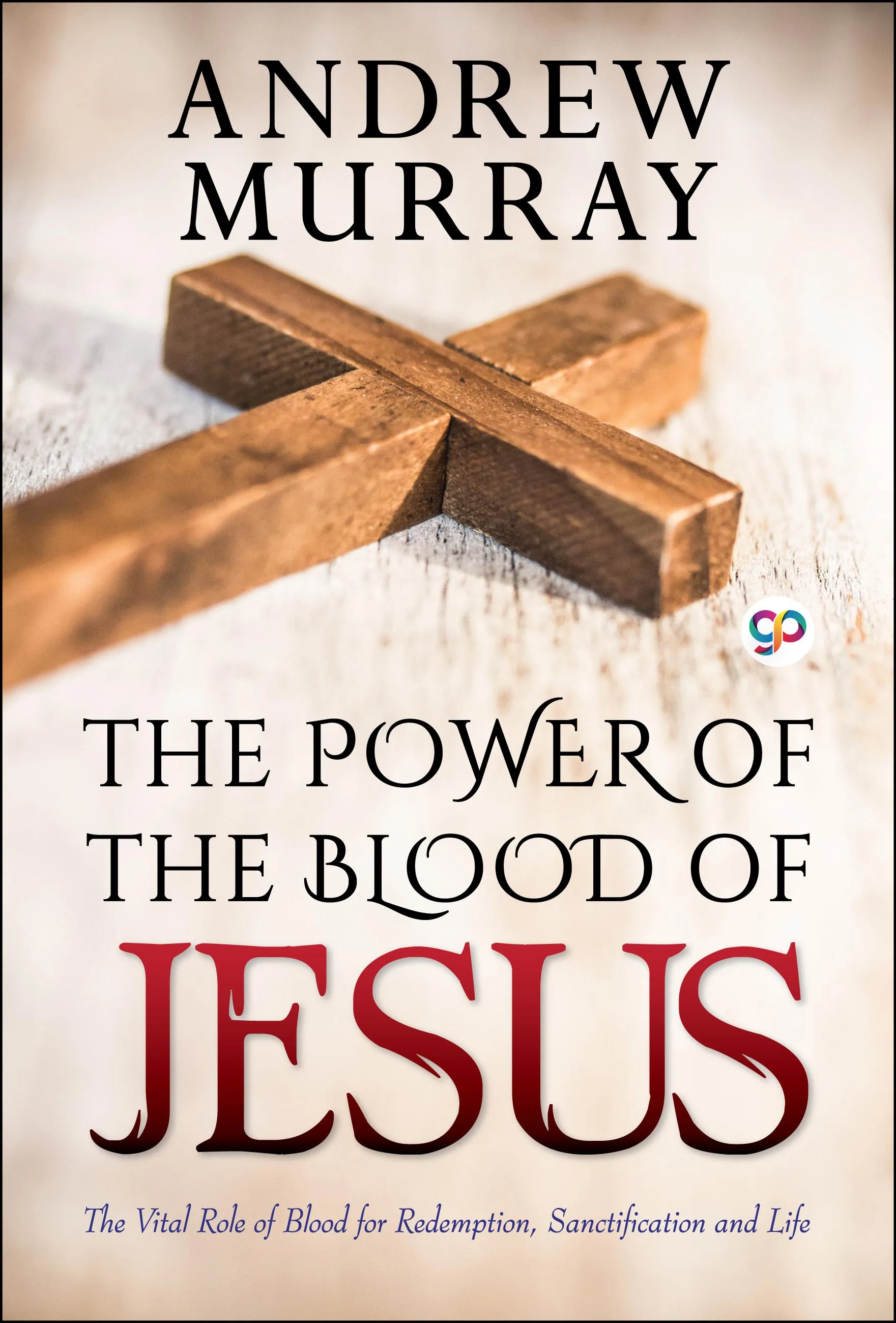
Download Cover Image
Do you want to download the full cover image for The Power of the Blood of Jesus?