
Why I Killed Gandhi
eBook
• INR 51.00
• English
• 9789389440072
No ratings yet
| Publisher | General Press |
|---|---|
| ISBN13 | 9789389440072 |
| ASIN/SKU | B07W8T59PD |
| Book Format | eBook |
| Language | English |
| List Price | INR 51.00 |
| Subject Code | BIO024000, TRU010000 |
| Publishing Date | 05/08/2019 |
| Book Code | BD00068613 |
Buy this Book
Amazon Stores
Ebook Stores
Other Stores
Discover Why I Killed Gandhi by Nathuram Godse. This book is published by General Press in eBook format, ISBN 9789389440072, ASIN B07W8T59PD, under Biographies and Memoirs, India and South Asia, Political History.
Book Description
Godse approached Gandhi on January 30, 1948 during the evening prayer at 5:15 pm. When Godse bowed, one of the girls flanking and supporting Gandhi, said to Godse, "Brother, Bapu is already late" and tried to put him off, but he pushed her aside and shot Gandhi in the chest three times at point-blank range with a semi-automatic pistol. Gandhi was taken to Birla-House, where he later died. This is the autobiography of Gandhi's killer. Book contains the original statement given by Nathuram Godse.
Author Biography
Nathuram Vinayak Godse (1910–1949) was an Indian political activist who is chiefly remembered for assassinating Mahatma Gandhi on January 30, 1948. His actions had a profound impact on India's history, and he remains one of the most controversial figures in the country's past. While some groups have attempted to reinterpret his legacy, the overwhelming historical significance of his life is tied to the assassination of Gandhi, an event that shocked the newly independent nation and the world.
Godse was born on May 19, 1910, in Baramati, in present-day Maharashtra, India, into a Marathi Brahmin family. During his youth, he became interested in political and social issues at a time when India was struggling for independence from British rule. He was involved with Hindu nationalist circles and was associated at different points with organizations such as the Rashtriya Swayamsevak Sangh (RSS), though the nature and duration of his involvement have been the subject of historical discussion. He later worked as a journalist and editor, expressing his political views through newspapers and public writing.
Godse strongly disagreed with Mahatma Gandhi's approach to politics, particularly Gandhi's advocacy of nonviolence, religious harmony, and his efforts to improve relations between Hindus and Muslims during and after the Partition of India in 1947. Believing that Gandhi's policies were harmful to India's interests, Godse decided to assassinate him. On January 30, 1948, he shot Gandhi at Birla House in New Delhi as Gandhi was on his way to a prayer meeting. Gandhi died shortly afterward, and the assassination led to widespread grief, national mourning, and condemnation across India and abroad.
Godse was arrested immediately after the shooting and was tried in a special court along with several co-accused. During the trial, he explained the political motivations behind his actions, but the court found him guilty of murder. He was sentenced to death and executed by hanging on November 15, 1949, at Ambala Jail alongside Narayan Apte.
Today, Nathuram Godse is studied primarily as a historical figure whose actions changed the course of independent India. Historians examine his life within the broader context of political extremism, communal tensions, and the turbulent years surrounding Partition. His assassination of Mahatma Gandhi remains one of the defining and most tragic events in modern Indian history.
Godse was born on May 19, 1910, in Baramati, in present-day Maharashtra, India, into a Marathi Brahmin family. During his youth, he became interested in political and social issues at a time when India was struggling for independence from British rule. He was involved with Hindu nationalist circles and was associated at different points with organizations such as the Rashtriya Swayamsevak Sangh (RSS), though the nature and duration of his involvement have been the subject of historical discussion. He later worked as a journalist and editor, expressing his political views through newspapers and public writing.
Godse strongly disagreed with Mahatma Gandhi's approach to politics, particularly Gandhi's advocacy of nonviolence, religious harmony, and his efforts to improve relations between Hindus and Muslims during and after the Partition of India in 1947. Believing that Gandhi's policies were harmful to India's interests, Godse decided to assassinate him. On January 30, 1948, he shot Gandhi at Birla House in New Delhi as Gandhi was on his way to a prayer meeting. Gandhi died shortly afterward, and the assassination led to widespread grief, national mourning, and condemnation across India and abroad.
Godse was arrested immediately after the shooting and was tried in a special court along with several co-accused. During the trial, he explained the political motivations behind his actions, but the court found him guilty of murder. He was sentenced to death and executed by hanging on November 15, 1949, at Ambala Jail alongside Narayan Apte.
Today, Nathuram Godse is studied primarily as a historical figure whose actions changed the course of independent India. Historians examine his life within the broader context of political extremism, communal tensions, and the turbulent years surrounding Partition. His assassination of Mahatma Gandhi remains one of the defining and most tragic events in modern Indian history.
Editorial Reviews
Editorial Reviews will be added soon…
Book Summary
Why I Killed Gandhi by Nathuram Godse is a controversial political and historical text centered on the assassination of Mahatma Gandhi on 30 January 1948. The book is based largely on Godse’s statement and defense presented during his trial, in which he attempted to explain the political, ideological, and personal reasoning behind his decision to assassinate Gandhi. Rather than functioning as a conventional biography or historical analysis, the work is essentially Godse’s justification of his actions. It provides insight into how the assassin understood Gandhi, Indian nationalism, Partition, Hindu-Muslim relations, and the creation of Pakistan. Because the text presents Godse’s own perspective, it should be read critically and alongside independent historical accounts rather than treated as an objective explanation of the events. Its enduring importance lies less in whether Godse’s arguments are accepted and more in what the text reveals about the intense political divisions surrounding India’s independence and Partition.
Godse begins by presenting his intellectual and political background in order to explain how he arrived at his decision. He portrays himself as someone deeply concerned with India’s political future and strongly committed to what he considered Hindu interests. In his account, his opposition to Gandhi did not arise from a sudden personal hatred or an isolated disagreement. Instead, he describes a long process during which he became increasingly convinced that Gandhi’s political influence was damaging India. Godse particularly objected to Gandhi’s approach toward Hindu-Muslim relations and believed that Gandhi repeatedly placed the interests of Muslims above those of Hindus. This interpretation became central to Godse’s justification for the assassination.
A major subject of Why I Killed Gandhi is Godse’s understanding of Gandhi’s political philosophy. Gandhi advocated nonviolence, religious tolerance, communal harmony, and reconciliation between Hindus and Muslims. Godse regarded these principles very differently. He believed that Gandhi’s insistence on protecting Muslim interests encouraged what he saw as Muslim political demands at the expense of Hindu security. Godse argued that Gandhi’s moral authority was so great that political leaders often felt compelled to accept his wishes even when, in Godse’s view, those wishes conflicted with India’s national interests. Consequently, Godse presents Gandhi not simply as a political leader but as a person whose moral influence had become, in his eyes, excessively powerful.
The question of Partition occupies a central place in Godse’s reasoning. The Partition of British India in 1947 created India and Pakistan and was accompanied by extraordinary communal violence, mass displacement, killings, and suffering. Millions of people crossed the new borders, while Hindus, Muslims, and Sikhs experienced horrific violence. Godse interpreted Partition as a catastrophic failure of Indian nationalism. He believed that the Congress leadership had conceded too much to Muslim League demands and that Gandhi had contributed to this outcome through his persistent efforts to accommodate Muslims.
Godse was particularly bitter about the creation of Pakistan. In his narrative, Partition represented not merely a territorial division but a defeat for the idea of a united Indian nation. He regarded the political concessions that accompanied Partition as evidence that Hindu interests had been sacrificed. His interpretation was deeply shaped by the violence and political atmosphere of the period. However, it is important to distinguish his interpretation from historical consensus. Partition resulted from a complicated interaction of British policy, the Muslim League's demand for Pakistan, Congress decisions, communal tensions, political negotiations, and the circumstances surrounding the transfer of power. Gandhi himself opposed Partition and made repeated efforts to preserve communal peace, although he ultimately accepted the political reality after Partition became unavoidable.
Another issue that particularly angered Godse was the question of financial payments between India and Pakistan after independence. Following Partition, India was obligated to transfer a portion of financial assets to Pakistan. Godse strongly opposed the payment and regarded Gandhi’s support for fulfilling the obligation as another example of what he considered Gandhi’s excessive sympathy toward Pakistan. In January 1948, Gandhi undertook a fast in Delhi partly to pressure people and political authorities to restore communal peace and to secure commitments concerning the treatment of Muslims. The Indian government subsequently agreed to release the funds owed to Pakistan. Godse interpreted this development as proof that Gandhi was using his moral authority to force India into policies that he believed harmed Hindu interests.
This becomes one of the most important elements of Godse’s explanation for the assassination. He argues that Gandhi’s fasts and moral pressure had acquired extraordinary political force. In Godse’s view, Gandhi was no longer merely expressing personal religious convictions; he was effectively determining government policy through moral coercion. Godse therefore claimed that eliminating Gandhi was, in his mind, an act intended to prevent what he regarded as further political damage. This argument is fundamental to the book, but it must be understood as Godse’s self-justification rather than as an established historical conclusion.
Godse also discusses his understanding of Hindu nationalism. He believed that India should be organized around a strong national identity rooted in its Hindu civilizational heritage. He objected to what he considered the Congress leadership’s excessive emphasis on secular accommodation. Godse's political thinking had been influenced by Hindu nationalist organizations, and his worldview was shaped by the conviction that Hindus constituted the core national community of India. He considered Gandhi's inclusive conception of Indian nationalism too willing to compromise Hindu interests.
At the heart of this disagreement was a fundamental question: What does it mean to be an Indian? Gandhi envisioned an India in which Hindus, Muslims, Sikhs, Christians, and people of other faiths could belong equally to one nation. Godse believed that this approach failed to recognize what he regarded as the historical and cultural primacy of Hindu civilization. The conflict between these visions was not simply a disagreement about government policy. It represented two fundamentally different ideas of nationalism. Gandhi's nationalism emphasized pluralism and coexistence, whereas Godse's political reasoning emphasized Hindu cultural identity and national unity through a stronger Hindu-centered conception of India.
Godse repeatedly insists that he did not kill Gandhi out of personal hatred. He portrays the assassination as a political act motivated by what he believed was the greater good of India. He presents himself as someone who was willing to accept responsibility and punishment because he believed that his action was necessary. This framing is important because it attempts to transform the assassination from an act of individual violence into what Godse considered a form of political sacrifice.
Yet this claim raises one of the book’s most important moral questions. Can political conviction justify assassination? Godse's answer is essentially affirmative under circumstances he regarded as exceptional. He believed that when a political leader becomes an obstacle to the nation's survival, removing that leader can become a duty. Gandhi's philosophy led to the opposite conclusion: political and moral disagreement does not justify killing, and nonviolence must remain a principle even in situations of intense conflict. The contrast between these positions gives the text much of its historical significance.
Godse also attempts to challenge the image of Gandhi as an unquestionable national hero. He acknowledges Gandhi's influence and personal qualities but argues that Gandhi's political decisions should be judged independently of his reputation. In Godse's account, Gandhi's saintly image prevented people from criticizing him honestly. Godse therefore presents his own act as a terrible but necessary attempt to break what he perceived as an unhealthy concentration of moral authority around one individual.
This argument is one of the most controversial aspects of the book because it reveals the psychological mechanism by which political violence can be rationalized. Godse transforms an individual he strongly opposes into a symbol of a political problem. Once Gandhi becomes, in his mind, the embodiment of policies he believes are destroying India, killing Gandhi can be presented as a means of solving the larger problem. This kind of reasoning is important for historians and readers to examine because it demonstrates how ideological certainty can reduce a complex human being to a political obstacle.
The aftermath of the assassination provides another important dimension to understanding the text. Gandhi was shot by Godse while attending an evening prayer meeting in New Delhi. Gandhi's death shocked India and the wider world. He had become one of the most recognizable advocates of nonviolence in modern history, and his assassination by a Hindu nationalist opponent intensified an already volatile political atmosphere. Godse was arrested, tried, convicted, and sentenced to death. He was executed in November 1949. His brother-in-law and co-conspirator Narayan Apte was also executed, while several others were convicted in connection with the conspiracy.
The book's narrative therefore has an unusual relationship with history. Godse knew that he would be judged by history and attempted to leave behind his explanation of why he acted. His statement is consequently both a political argument and a defense of his legacy. He wants readers to see the assassination through his eyes and to understand the sequence of political grievances that led him toward violence. But understanding the reasoning behind a violent act is not the same as accepting its justification. This distinction is essential when reading Why I Killed Gandhi.
One of the strongest themes in the book is the conflict between political idealism and political violence. Godse believed that political realities sometimes required actions that ordinary morality would condemn. Gandhi believed almost the opposite: that the means used to achieve political objectives were inseparable from the moral value of those objectives. For Gandhi, violence could not reliably produce a just society because violence corrupted both the individual and the political movement. Godse's assassination therefore represents a direct rejection of one of Gandhi's deepest principles.
Another major theme is the trauma of Partition. It is impossible to understand Godse's political anger without recognizing the extraordinary violence of 1947–48. Communities that had lived together for generations were divided by new borders, and enormous numbers of people experienced displacement, murder, sexual violence, and loss of property. Godse interpreted these events through a strongly ideological framework, seeing them primarily as evidence that Hindu political interests had been betrayed. A broader historical reading, however, reveals a much more complicated story involving multiple political organizations, communal mobilization, colonial policies, administrative failures, and violence committed by members of different communities.
The book also raises questions about Gandhi's political legacy. Gandhi was not simply a political strategist; he deliberately used moral action, fasting, prayer, civil disobedience, and personal sacrifice as political instruments. His supporters regarded this as an extraordinary form of ethical leadership. His critics could see it as an unconventional means of exerting political pressure. Godse represents the extreme version of the latter interpretation. Reading his criticism alongside Gandhi's own writings helps illuminate why Gandhi could inspire both extraordinary devotion and intense opposition.
Ultimately, Why I Killed Gandhi is less a neutral history of Gandhi's assassination than a window into the mind of Nathuram Godse and the political worldview that he used to justify his actions. Its central argument is that Godse believed Gandhi's policies toward Muslims, Pakistan, Partition, and communal reconciliation had weakened India and compromised Hindu interests. He therefore concluded that Gandhi had to be removed. The book presents this conclusion as a patriotic duty, but its historical and moral significance lies precisely in examining how such a conclusion became possible.
The most useful way to approach Why I Killed Gandhi is therefore not simply to ask whether Godse's explanation is persuasive. A more valuable question is: What does Godse's explanation reveal about the political tensions, communal fears, competing nationalisms, and moral conflicts that shaped India at the moment of independence? Seen this way, the book becomes an important primary-source document, but not a definitive history of Gandhi or Partition.
The tragedy at the center of the book is that two radically different visions of India collided. Gandhi imagined an India where political freedom would be meaningful only if different religious communities could live together with dignity and mutual trust. Godse believed that this approach demanded unacceptable concessions from Hindus and weakened the nation he wanted to protect. Their disagreement became so extreme that Godse ultimately decided that political argument was no longer enough and chose assassination. Gandhi's death did not resolve the questions that divided them. Instead, it left those questions for later generations: how should a diverse nation balance majority identity with minority rights, how should historical grievances be addressed without producing new violence, and when does political conviction become dangerous ideological certainty?
For readers searching for an in-depth summary of Why I Killed Gandhi, the book's central message can therefore be understood as Godse's attempt to explain and justify his assassination of Gandhi through his opposition to Gandhi's policies, his interpretation of Partition, his anger over India's treatment of Pakistan, and his commitment to Hindu nationalism. Its lasting significance comes from the opportunity it provides to examine a pivotal moment in Indian history through the words of one of its most controversial figures. At the same time, the text should be approached critically: it is a self-defense by a convicted assassin, not an impartial account. Reading it alongside Gandhi's writings and independent histories of Partition and the assassination offers a far more complete understanding of the events and their consequences.
Godse begins by presenting his intellectual and political background in order to explain how he arrived at his decision. He portrays himself as someone deeply concerned with India’s political future and strongly committed to what he considered Hindu interests. In his account, his opposition to Gandhi did not arise from a sudden personal hatred or an isolated disagreement. Instead, he describes a long process during which he became increasingly convinced that Gandhi’s political influence was damaging India. Godse particularly objected to Gandhi’s approach toward Hindu-Muslim relations and believed that Gandhi repeatedly placed the interests of Muslims above those of Hindus. This interpretation became central to Godse’s justification for the assassination.
A major subject of Why I Killed Gandhi is Godse’s understanding of Gandhi’s political philosophy. Gandhi advocated nonviolence, religious tolerance, communal harmony, and reconciliation between Hindus and Muslims. Godse regarded these principles very differently. He believed that Gandhi’s insistence on protecting Muslim interests encouraged what he saw as Muslim political demands at the expense of Hindu security. Godse argued that Gandhi’s moral authority was so great that political leaders often felt compelled to accept his wishes even when, in Godse’s view, those wishes conflicted with India’s national interests. Consequently, Godse presents Gandhi not simply as a political leader but as a person whose moral influence had become, in his eyes, excessively powerful.
The question of Partition occupies a central place in Godse’s reasoning. The Partition of British India in 1947 created India and Pakistan and was accompanied by extraordinary communal violence, mass displacement, killings, and suffering. Millions of people crossed the new borders, while Hindus, Muslims, and Sikhs experienced horrific violence. Godse interpreted Partition as a catastrophic failure of Indian nationalism. He believed that the Congress leadership had conceded too much to Muslim League demands and that Gandhi had contributed to this outcome through his persistent efforts to accommodate Muslims.
Godse was particularly bitter about the creation of Pakistan. In his narrative, Partition represented not merely a territorial division but a defeat for the idea of a united Indian nation. He regarded the political concessions that accompanied Partition as evidence that Hindu interests had been sacrificed. His interpretation was deeply shaped by the violence and political atmosphere of the period. However, it is important to distinguish his interpretation from historical consensus. Partition resulted from a complicated interaction of British policy, the Muslim League's demand for Pakistan, Congress decisions, communal tensions, political negotiations, and the circumstances surrounding the transfer of power. Gandhi himself opposed Partition and made repeated efforts to preserve communal peace, although he ultimately accepted the political reality after Partition became unavoidable.
Another issue that particularly angered Godse was the question of financial payments between India and Pakistan after independence. Following Partition, India was obligated to transfer a portion of financial assets to Pakistan. Godse strongly opposed the payment and regarded Gandhi’s support for fulfilling the obligation as another example of what he considered Gandhi’s excessive sympathy toward Pakistan. In January 1948, Gandhi undertook a fast in Delhi partly to pressure people and political authorities to restore communal peace and to secure commitments concerning the treatment of Muslims. The Indian government subsequently agreed to release the funds owed to Pakistan. Godse interpreted this development as proof that Gandhi was using his moral authority to force India into policies that he believed harmed Hindu interests.
This becomes one of the most important elements of Godse’s explanation for the assassination. He argues that Gandhi’s fasts and moral pressure had acquired extraordinary political force. In Godse’s view, Gandhi was no longer merely expressing personal religious convictions; he was effectively determining government policy through moral coercion. Godse therefore claimed that eliminating Gandhi was, in his mind, an act intended to prevent what he regarded as further political damage. This argument is fundamental to the book, but it must be understood as Godse’s self-justification rather than as an established historical conclusion.
Godse also discusses his understanding of Hindu nationalism. He believed that India should be organized around a strong national identity rooted in its Hindu civilizational heritage. He objected to what he considered the Congress leadership’s excessive emphasis on secular accommodation. Godse's political thinking had been influenced by Hindu nationalist organizations, and his worldview was shaped by the conviction that Hindus constituted the core national community of India. He considered Gandhi's inclusive conception of Indian nationalism too willing to compromise Hindu interests.
At the heart of this disagreement was a fundamental question: What does it mean to be an Indian? Gandhi envisioned an India in which Hindus, Muslims, Sikhs, Christians, and people of other faiths could belong equally to one nation. Godse believed that this approach failed to recognize what he regarded as the historical and cultural primacy of Hindu civilization. The conflict between these visions was not simply a disagreement about government policy. It represented two fundamentally different ideas of nationalism. Gandhi's nationalism emphasized pluralism and coexistence, whereas Godse's political reasoning emphasized Hindu cultural identity and national unity through a stronger Hindu-centered conception of India.
Godse repeatedly insists that he did not kill Gandhi out of personal hatred. He portrays the assassination as a political act motivated by what he believed was the greater good of India. He presents himself as someone who was willing to accept responsibility and punishment because he believed that his action was necessary. This framing is important because it attempts to transform the assassination from an act of individual violence into what Godse considered a form of political sacrifice.
Yet this claim raises one of the book’s most important moral questions. Can political conviction justify assassination? Godse's answer is essentially affirmative under circumstances he regarded as exceptional. He believed that when a political leader becomes an obstacle to the nation's survival, removing that leader can become a duty. Gandhi's philosophy led to the opposite conclusion: political and moral disagreement does not justify killing, and nonviolence must remain a principle even in situations of intense conflict. The contrast between these positions gives the text much of its historical significance.
Godse also attempts to challenge the image of Gandhi as an unquestionable national hero. He acknowledges Gandhi's influence and personal qualities but argues that Gandhi's political decisions should be judged independently of his reputation. In Godse's account, Gandhi's saintly image prevented people from criticizing him honestly. Godse therefore presents his own act as a terrible but necessary attempt to break what he perceived as an unhealthy concentration of moral authority around one individual.
This argument is one of the most controversial aspects of the book because it reveals the psychological mechanism by which political violence can be rationalized. Godse transforms an individual he strongly opposes into a symbol of a political problem. Once Gandhi becomes, in his mind, the embodiment of policies he believes are destroying India, killing Gandhi can be presented as a means of solving the larger problem. This kind of reasoning is important for historians and readers to examine because it demonstrates how ideological certainty can reduce a complex human being to a political obstacle.
The aftermath of the assassination provides another important dimension to understanding the text. Gandhi was shot by Godse while attending an evening prayer meeting in New Delhi. Gandhi's death shocked India and the wider world. He had become one of the most recognizable advocates of nonviolence in modern history, and his assassination by a Hindu nationalist opponent intensified an already volatile political atmosphere. Godse was arrested, tried, convicted, and sentenced to death. He was executed in November 1949. His brother-in-law and co-conspirator Narayan Apte was also executed, while several others were convicted in connection with the conspiracy.
The book's narrative therefore has an unusual relationship with history. Godse knew that he would be judged by history and attempted to leave behind his explanation of why he acted. His statement is consequently both a political argument and a defense of his legacy. He wants readers to see the assassination through his eyes and to understand the sequence of political grievances that led him toward violence. But understanding the reasoning behind a violent act is not the same as accepting its justification. This distinction is essential when reading Why I Killed Gandhi.
One of the strongest themes in the book is the conflict between political idealism and political violence. Godse believed that political realities sometimes required actions that ordinary morality would condemn. Gandhi believed almost the opposite: that the means used to achieve political objectives were inseparable from the moral value of those objectives. For Gandhi, violence could not reliably produce a just society because violence corrupted both the individual and the political movement. Godse's assassination therefore represents a direct rejection of one of Gandhi's deepest principles.
Another major theme is the trauma of Partition. It is impossible to understand Godse's political anger without recognizing the extraordinary violence of 1947–48. Communities that had lived together for generations were divided by new borders, and enormous numbers of people experienced displacement, murder, sexual violence, and loss of property. Godse interpreted these events through a strongly ideological framework, seeing them primarily as evidence that Hindu political interests had been betrayed. A broader historical reading, however, reveals a much more complicated story involving multiple political organizations, communal mobilization, colonial policies, administrative failures, and violence committed by members of different communities.
The book also raises questions about Gandhi's political legacy. Gandhi was not simply a political strategist; he deliberately used moral action, fasting, prayer, civil disobedience, and personal sacrifice as political instruments. His supporters regarded this as an extraordinary form of ethical leadership. His critics could see it as an unconventional means of exerting political pressure. Godse represents the extreme version of the latter interpretation. Reading his criticism alongside Gandhi's own writings helps illuminate why Gandhi could inspire both extraordinary devotion and intense opposition.
Ultimately, Why I Killed Gandhi is less a neutral history of Gandhi's assassination than a window into the mind of Nathuram Godse and the political worldview that he used to justify his actions. Its central argument is that Godse believed Gandhi's policies toward Muslims, Pakistan, Partition, and communal reconciliation had weakened India and compromised Hindu interests. He therefore concluded that Gandhi had to be removed. The book presents this conclusion as a patriotic duty, but its historical and moral significance lies precisely in examining how such a conclusion became possible.
The most useful way to approach Why I Killed Gandhi is therefore not simply to ask whether Godse's explanation is persuasive. A more valuable question is: What does Godse's explanation reveal about the political tensions, communal fears, competing nationalisms, and moral conflicts that shaped India at the moment of independence? Seen this way, the book becomes an important primary-source document, but not a definitive history of Gandhi or Partition.
The tragedy at the center of the book is that two radically different visions of India collided. Gandhi imagined an India where political freedom would be meaningful only if different religious communities could live together with dignity and mutual trust. Godse believed that this approach demanded unacceptable concessions from Hindus and weakened the nation he wanted to protect. Their disagreement became so extreme that Godse ultimately decided that political argument was no longer enough and chose assassination. Gandhi's death did not resolve the questions that divided them. Instead, it left those questions for later generations: how should a diverse nation balance majority identity with minority rights, how should historical grievances be addressed without producing new violence, and when does political conviction become dangerous ideological certainty?
For readers searching for an in-depth summary of Why I Killed Gandhi, the book's central message can therefore be understood as Godse's attempt to explain and justify his assassination of Gandhi through his opposition to Gandhi's policies, his interpretation of Partition, his anger over India's treatment of Pakistan, and his commitment to Hindu nationalism. Its lasting significance comes from the opportunity it provides to examine a pivotal moment in Indian history through the words of one of its most controversial figures. At the same time, the text should be approached critically: it is a self-defense by a convicted assassin, not an impartial account. Reading it alongside Gandhi's writings and independent histories of Partition and the assassination offers a far more complete understanding of the events and their consequences.
Sample Chapters
Sample Chapters will be added soon…
Reader Reviews
No reviews yet.
Why I Killed Gandhi
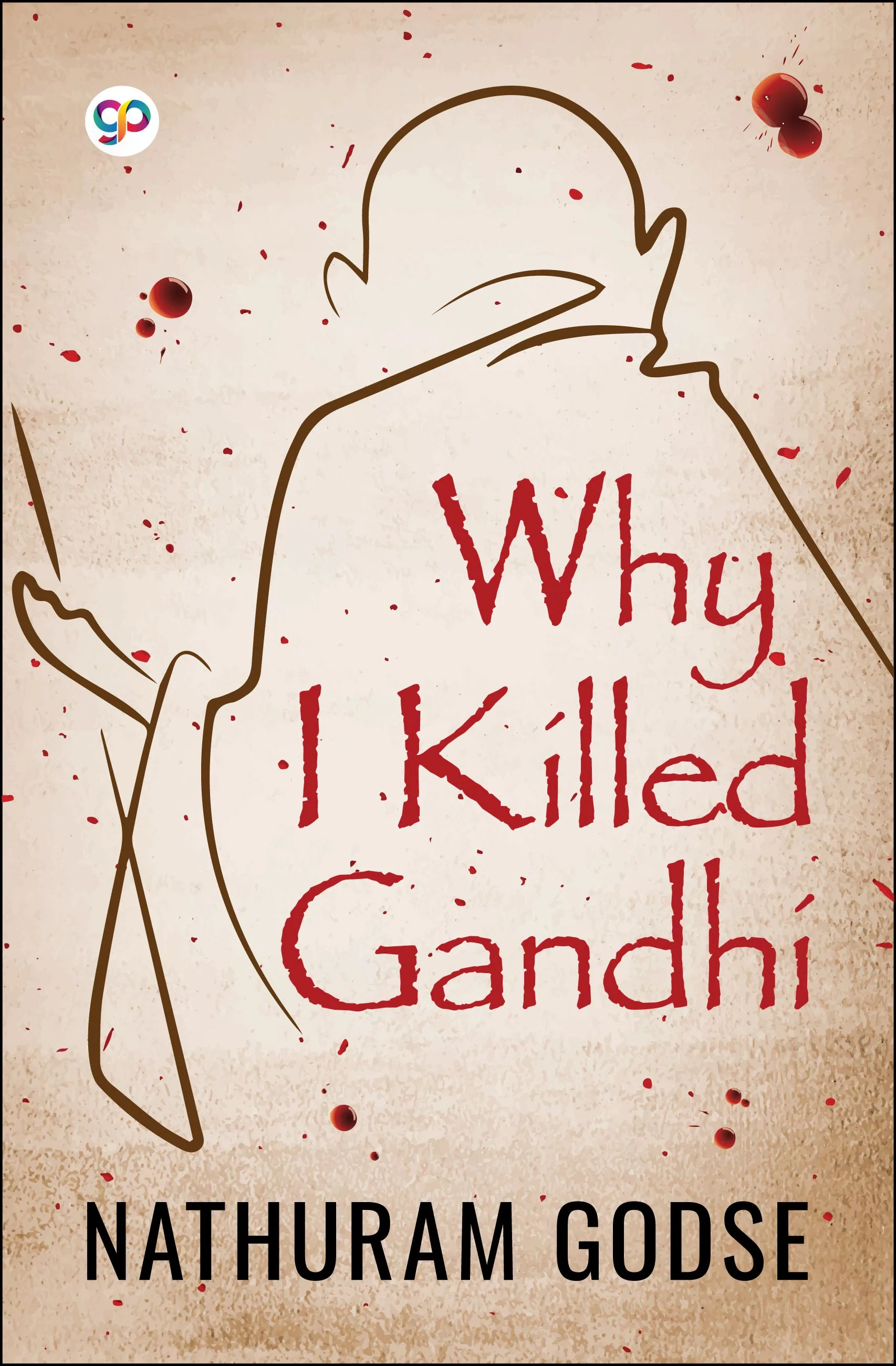
Download Cover Image
Do you want to download the full cover image for Why I Killed Gandhi?