
One, None and a Hundred Thousand
eBook
• INR 51.00
• English
• 9789389440119
No ratings yet
| Publisher | General Press |
|---|---|
| ISBN13 | 9789389440119 |
| ASIN/SKU | B07XKLRB84 |
| Book Format | eBook |
| Language | English |
| List Price | INR 51.00 |
| Subject Code | FIC019000, FIC004000, FIC048000 |
| Publishing Date | 05/09/2019 |
| Book Code | BD00068620 |
Buy this Book
Amazon Stores
Ebook Stores
Other Stores
Discover One, None and a Hundred Thousand by Luigi Pirandello. This book is published by General Press in eBook format, ISBN 9789389440119, ASIN B07XKLRB84, under Literature and Fiction, Italian Classics, Philosophical Fiction.
Book Description
Nobel prize-winning Luigi Pirandello’s classic novel on the nature of identity brims with sly humor, compelling drama, and skillfully depicted, oddly modern characters—all capped with timeless insight into the fragile human psyche.
Luigi Pirandello's extraordinary final novel begins when Vitangelo Moscarda's wife remarks that Vitangelo's nose tilts to the right. This commonplace interaction spurs the novel's unemployed, wealthy narrator to examine himself, the way he perceives others, and the ways that others perceive him. At first he only notices small differences in how he sees himself and how others do; but his self-examination quickly becomes relentless, dizzying, leading to often darkly comic results as Vitangelo decides that he must demolish that version of himself that others see.
Luigi Pirandello's extraordinary final novel begins when Vitangelo Moscarda's wife remarks that Vitangelo's nose tilts to the right. This commonplace interaction spurs the novel's unemployed, wealthy narrator to examine himself, the way he perceives others, and the ways that others perceive him. At first he only notices small differences in how he sees himself and how others do; but his self-examination quickly becomes relentless, dizzying, leading to often darkly comic results as Vitangelo decides that he must demolish that version of himself that others see.
Author Biography
Luigi Pirandello (1867-1936) was an Italian novelist, short- story writer, and playwright. His best-known works include the novel 'The Late Mattia Pascal', in which the narrator one day discovers that he has been declared dead, as well as the groundbreaking plays Six Characters in Search of an Author and Henry IV, which prefigured the Theater of the Absurd. In 1926, Pirandello published 'One, No One, and One Hundred Thousand', which he had been writing for the previous seventeen years. He was awarded the Nobel Prize for Literature in 1934.
William Weaver (1923-2013) was a renowned translator who brought some of the most interesting Italian works into English. He translated Italo Calvino, Pier Paolo Pasolini, Italo Svevo, Umberto Eco, Alberto Moravia, and Elsa Morante, to name just a few, as well as Pirandello's The Late Mattia Pascal. An expert on opera, Weaver lived for many years in a farmhouse in Tuscany and later became a professor of literature at Bard College.
William Weaver (1923-2013) was a renowned translator who brought some of the most interesting Italian works into English. He translated Italo Calvino, Pier Paolo Pasolini, Italo Svevo, Umberto Eco, Alberto Moravia, and Elsa Morante, to name just a few, as well as Pirandello's The Late Mattia Pascal. An expert on opera, Weaver lived for many years in a farmhouse in Tuscany and later became a professor of literature at Bard College.
Editorial Reviews
Editorial Reviews will be added soon…
Book Summary
One, None and a Hundred Thousand by Luigi Pirandello is a deeply philosophical and psychologically rich novel about identity, self-perception, and the impossibility of knowing who we truly are. First published in 1926, the novel follows Vitangelo Moscarda, an ordinary man whose comfortable life is suddenly shaken by a seemingly insignificant remark made by his wife. From that moment, he begins questioning everything he has believed about himself. What begins as a personal curiosity develops into an intense psychological journey in which he discovers that there may be no single, stable version of himself at all.
Vitangelo, known as Gengè by his wife and acquaintances, considers himself reasonably familiar with his own personality. He is wealthy because of the inheritance left by his father, who was a successful banker. Vitangelo does not have a clear profession or ambitious purpose, and he lives comfortably without thinking deeply about his identity. His life changes when his wife casually points out that his nose leans slightly to one side. Vitangelo is shocked. He has never noticed this feature before, and suddenly he realizes something disturbing: other people see him differently from the way he sees himself.
This small discovery becomes the beginning of an obsession. Vitangelo starts wondering what else people notice about him that he does not notice himself. If his wife has one image of him and he has another, which one is the real Vitangelo? He realizes that every person who knows him may carry a different image of him in their mind. To one person he may be generous, to another arrogant; one person may think him intelligent, while another may consider him foolish. He begins to understand that his identity is not singular but divided into countless versions.
This realization gives the novel its unusual title. The “one” refers to the identity Vitangelo imagines he possesses. The “hundred thousand” represents the countless versions of himself created in the minds of other people. The “none” is perhaps the most unsettling possibility: if there are countless different versions of him, perhaps there is no fixed Vitangelo underneath them all.
As his obsession grows, Vitangelo begins examining his relationships and his reputation. He becomes increasingly suspicious of the social roles people assign to him. His inherited wealth has also given him a public identity connected to his father’s business, and he realizes that others judge him through this history. He wants to escape these imposed identities, but every attempt to do so creates new interpretations of him.
Rather than simply accepting his social position, Vitangelo begins deliberately behaving in ways that confuse and disturb those around him. He tries to prove that he is not the person they believe him to be. His actions, however, are interpreted according to existing assumptions, producing consequences he cannot control. This becomes one of Pirandello’s central ideas: once other people create an image of us, we cannot easily determine how that image will be understood or changed.
Vitangelo’s attempt to break free from these identities becomes increasingly radical. He decides to dispose of his property and reject the comfortable existence that has defined him. One important episode involves Marco di Dio, a poor man living in a house owned by Vitangelo. Vitangelo decides to give him the house rather than continue treating property ownership as a source of social authority. He also begins giving away his wealth. To Vitangelo, these actions are attempts to destroy the image of himself as a wealthy, self-interested man.
But his behavior is not understood in the way he expects. People suspect that he has lost his mind or that he has some hidden motive. His wife and others become increasingly concerned about him. The more Vitangelo tries to escape the identities imposed upon him, the more strange and incomprehensible he appears.
Eventually, his actions contribute to the collapse of his marriage and social position. He becomes isolated from the world he once inhabited. Yet this isolation also creates an opportunity. Without the ordinary structures of wealth, reputation, marriage, and social expectation, Vitangelo begins moving toward a radically different understanding of life.
The novel’s final movement is especially important. Vitangelo gradually stops trying to discover some permanent, authentic self hidden behind all the false identities. He realizes that perhaps the desire to find a fixed identity is itself the problem. Instead of asking, “Who am I?” he begins accepting the constant movement of existence. He wants to experience life directly rather than imprison himself within a definition.
This leads to one of Pirandello’s most striking philosophical ideas: human beings suffer because they attempt to turn themselves and others into fixed forms. Life, however, is constantly changing. A person may be different from one moment to another, and every relationship produces another version of that person. Society needs stable identities because they make life manageable, but those identities can also become cages.
Vitangelo’s final state is therefore both liberation and separation. He no longer wants to possess an identity that others can define. He embraces the present moment, nature, and the simple fact of being alive. He rejects the need to remain the same person from one day to the next. In losing the “one” fixed identity he once wanted, he discovers a freedom from the “hundred thousand” identities others had created for him.
One, None and a Hundred Thousand is ultimately a profound exploration of the gap between how we see ourselves and how others see us. Pirandello shows how fragile personal identity can be and how easily ordinary social assumptions become prisons. Vitangelo’s journey begins with a remark about his nose but develops into a crisis of existence. His experience suggests that there may be no single, permanent self waiting to be discovered. Instead, we are continually changing, continually interpreted by others, and continually creating new versions of ourselves.
The novel is both unsettling and strangely liberating. It asks us to let go of the desperate need to define ourselves completely. For Pirandello, freedom may come not from discovering exactly who we are, but from accepting that we are always becoming someone new.
Vitangelo, known as Gengè by his wife and acquaintances, considers himself reasonably familiar with his own personality. He is wealthy because of the inheritance left by his father, who was a successful banker. Vitangelo does not have a clear profession or ambitious purpose, and he lives comfortably without thinking deeply about his identity. His life changes when his wife casually points out that his nose leans slightly to one side. Vitangelo is shocked. He has never noticed this feature before, and suddenly he realizes something disturbing: other people see him differently from the way he sees himself.
This small discovery becomes the beginning of an obsession. Vitangelo starts wondering what else people notice about him that he does not notice himself. If his wife has one image of him and he has another, which one is the real Vitangelo? He realizes that every person who knows him may carry a different image of him in their mind. To one person he may be generous, to another arrogant; one person may think him intelligent, while another may consider him foolish. He begins to understand that his identity is not singular but divided into countless versions.
This realization gives the novel its unusual title. The “one” refers to the identity Vitangelo imagines he possesses. The “hundred thousand” represents the countless versions of himself created in the minds of other people. The “none” is perhaps the most unsettling possibility: if there are countless different versions of him, perhaps there is no fixed Vitangelo underneath them all.
As his obsession grows, Vitangelo begins examining his relationships and his reputation. He becomes increasingly suspicious of the social roles people assign to him. His inherited wealth has also given him a public identity connected to his father’s business, and he realizes that others judge him through this history. He wants to escape these imposed identities, but every attempt to do so creates new interpretations of him.
Rather than simply accepting his social position, Vitangelo begins deliberately behaving in ways that confuse and disturb those around him. He tries to prove that he is not the person they believe him to be. His actions, however, are interpreted according to existing assumptions, producing consequences he cannot control. This becomes one of Pirandello’s central ideas: once other people create an image of us, we cannot easily determine how that image will be understood or changed.
Vitangelo’s attempt to break free from these identities becomes increasingly radical. He decides to dispose of his property and reject the comfortable existence that has defined him. One important episode involves Marco di Dio, a poor man living in a house owned by Vitangelo. Vitangelo decides to give him the house rather than continue treating property ownership as a source of social authority. He also begins giving away his wealth. To Vitangelo, these actions are attempts to destroy the image of himself as a wealthy, self-interested man.
But his behavior is not understood in the way he expects. People suspect that he has lost his mind or that he has some hidden motive. His wife and others become increasingly concerned about him. The more Vitangelo tries to escape the identities imposed upon him, the more strange and incomprehensible he appears.
Eventually, his actions contribute to the collapse of his marriage and social position. He becomes isolated from the world he once inhabited. Yet this isolation also creates an opportunity. Without the ordinary structures of wealth, reputation, marriage, and social expectation, Vitangelo begins moving toward a radically different understanding of life.
The novel’s final movement is especially important. Vitangelo gradually stops trying to discover some permanent, authentic self hidden behind all the false identities. He realizes that perhaps the desire to find a fixed identity is itself the problem. Instead of asking, “Who am I?” he begins accepting the constant movement of existence. He wants to experience life directly rather than imprison himself within a definition.
This leads to one of Pirandello’s most striking philosophical ideas: human beings suffer because they attempt to turn themselves and others into fixed forms. Life, however, is constantly changing. A person may be different from one moment to another, and every relationship produces another version of that person. Society needs stable identities because they make life manageable, but those identities can also become cages.
Vitangelo’s final state is therefore both liberation and separation. He no longer wants to possess an identity that others can define. He embraces the present moment, nature, and the simple fact of being alive. He rejects the need to remain the same person from one day to the next. In losing the “one” fixed identity he once wanted, he discovers a freedom from the “hundred thousand” identities others had created for him.
One, None and a Hundred Thousand is ultimately a profound exploration of the gap between how we see ourselves and how others see us. Pirandello shows how fragile personal identity can be and how easily ordinary social assumptions become prisons. Vitangelo’s journey begins with a remark about his nose but develops into a crisis of existence. His experience suggests that there may be no single, permanent self waiting to be discovered. Instead, we are continually changing, continually interpreted by others, and continually creating new versions of ourselves.
The novel is both unsettling and strangely liberating. It asks us to let go of the desperate need to define ourselves completely. For Pirandello, freedom may come not from discovering exactly who we are, but from accepting that we are always becoming someone new.
Sample Chapters
Sample Chapters will be added soon…
Reader Reviews
No reviews yet.
One, None and a Hundred Thousand
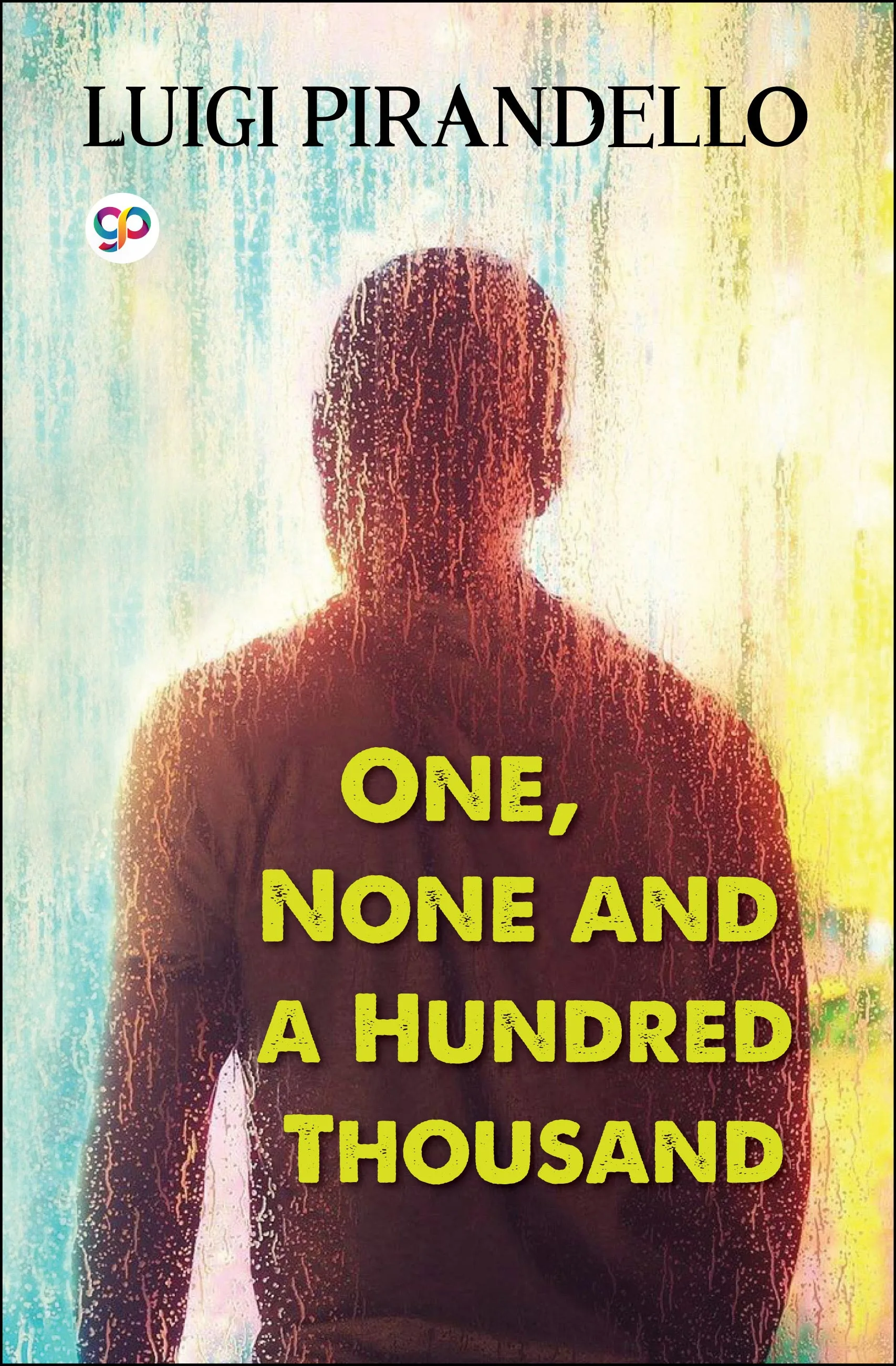
Download Cover Image
Do you want to download the full cover image for One, None and a Hundred Thousand?