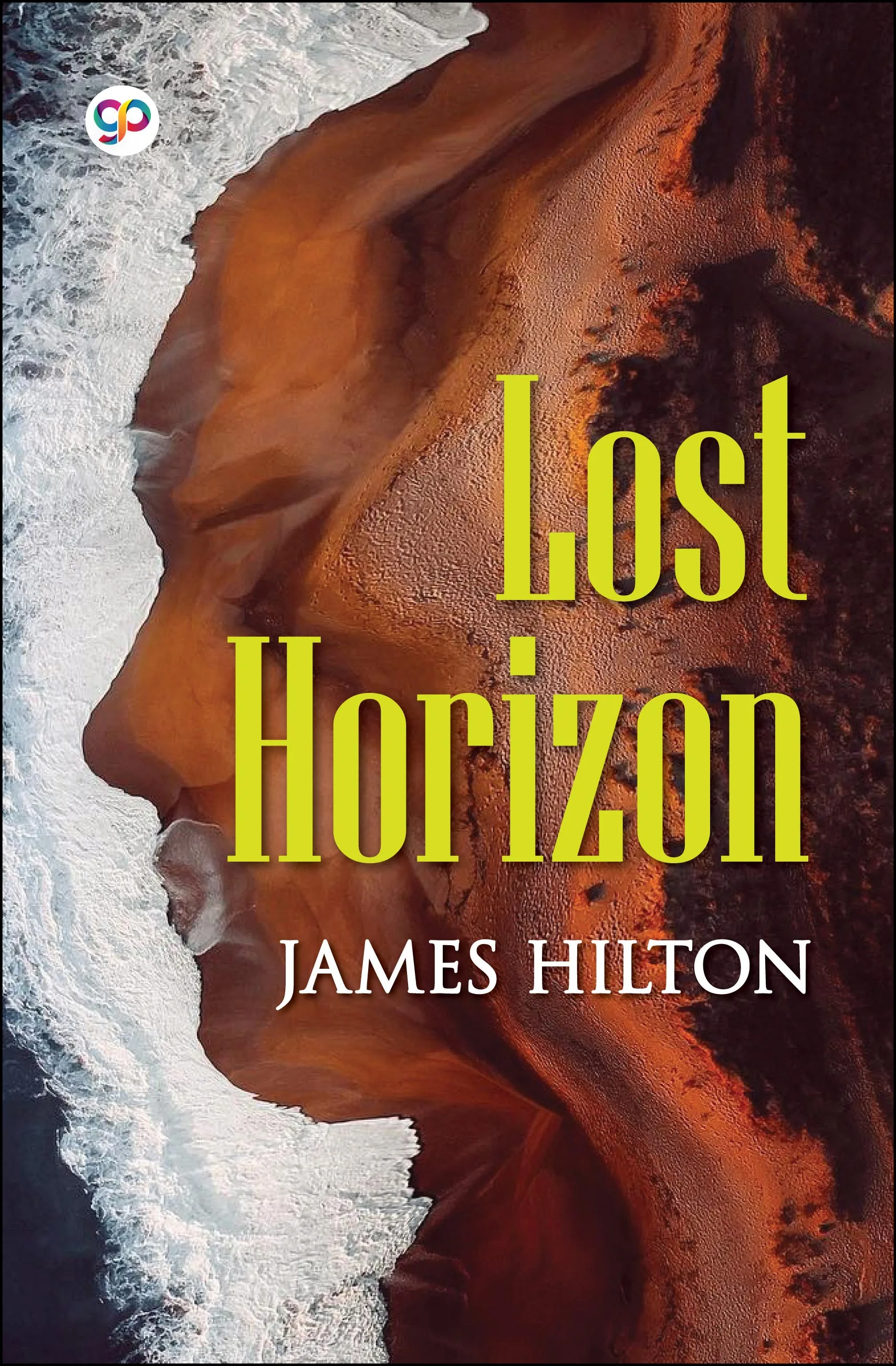
Lost Horizon
eBook
• 142 Pages
• INR 51.00
• English
• 9789389440102
No ratings yet
| Publisher | General Press |
|---|---|
| ISBN13 | 9789389440102 |
| ASIN/SKU | B07XMH51KZ |
| Book Format | eBook |
| Language | English |
| Pages | 142 |
| List Price | INR 51.00 |
| Subject Code | FIC002000, FIC009000, FIC037000 |
| Publishing Date | 05/09/2019 |
| Book Code | BD00068624 |
Buy this Book
Amazon Stores
Ebook Stores
Other Stores
Discover Lost Horizon by James Hilton. This book is published by General Press in eBook format, ISBN 9789389440102, ASIN B07XMH51KZ, under Literature and Fiction, Action and Adventure, Historical Fiction.
Book Description
What if paradise were real—but reaching it meant leaving the world you knew forever? James Hilton’s 'Lost Horizon' is a classic utopian adventure novel that blends mystery, travel, romance, and philosophical reflection into a captivating story about the search for an ideal life.
The story begins when Hugh Conway, a British diplomat, is mysteriously abducted along with three other passengers while traveling through the remote mountains of Tibet. Their journey takes an unexpected turn when they arrive at Shangri-La, an isolated valley hidden among the Himalayas. Far removed from war, political conflict, and the restless pace of modern civilization, Shangri-La appears almost impossibly peaceful. Its inhabitants enjoy comfort, beauty, learning, and remarkable longevity under the guidance of a wise and enigmatic community.
As Conway gradually discovers the secrets of this secluded society, he becomes increasingly fascinated by its philosophy and way of life. Yet the paradise that seems so perfect also raises difficult questions. How much freedom is worth sacrificing for security? Can a person truly escape the troubles of the outside world, or do human desires and responsibilities always follow? Through Conway’s experiences, Hilton explores the tension between modern progress and inner peace, ambition and contentment, youth and wisdom.
More than an exotic adventure, 'Lost Horizon' is a thoughtful meditation on what people ultimately seek when the pressures of ordinary life become overwhelming. Its mysterious atmosphere, Himalayan setting, and enduring vision of Shangri-La have made the novel an influential work of twentieth-century literature. For readers drawn to stories of hidden worlds, timeless mysteries, and the possibility of a better way to live, 'Lost Horizon' offers an unforgettable journey into a place that may be too perfect to remain untouched.
The story begins when Hugh Conway, a British diplomat, is mysteriously abducted along with three other passengers while traveling through the remote mountains of Tibet. Their journey takes an unexpected turn when they arrive at Shangri-La, an isolated valley hidden among the Himalayas. Far removed from war, political conflict, and the restless pace of modern civilization, Shangri-La appears almost impossibly peaceful. Its inhabitants enjoy comfort, beauty, learning, and remarkable longevity under the guidance of a wise and enigmatic community.
As Conway gradually discovers the secrets of this secluded society, he becomes increasingly fascinated by its philosophy and way of life. Yet the paradise that seems so perfect also raises difficult questions. How much freedom is worth sacrificing for security? Can a person truly escape the troubles of the outside world, or do human desires and responsibilities always follow? Through Conway’s experiences, Hilton explores the tension between modern progress and inner peace, ambition and contentment, youth and wisdom.
More than an exotic adventure, 'Lost Horizon' is a thoughtful meditation on what people ultimately seek when the pressures of ordinary life become overwhelming. Its mysterious atmosphere, Himalayan setting, and enduring vision of Shangri-La have made the novel an influential work of twentieth-century literature. For readers drawn to stories of hidden worlds, timeless mysteries, and the possibility of a better way to live, 'Lost Horizon' offers an unforgettable journey into a place that may be too perfect to remain untouched.
Author Biography
James Hilton was a British novelist whose imaginative stories blended romance, adventure, and quiet reflections on human nature. Best known for 'Lost Horizon' and 'Goodbye, Mr. Chips', James Hilton became one of the most admired writers of the early twentieth century, creating characters and settings that continue to resonate with readers and audiences around the world.
Born on September 9, 1900, in Leigh, Lancashire, England, Hilton grew up in a family connected to education; his father was a schoolmaster. He studied at Cambridge University, where he developed an early interest in literature and began writing fiction. His first novel, 'Catherine Herself', appeared in 1920, marking the beginning of a literary career that would eventually bring him international recognition.
Hilton achieved his greatest breakthrough with 'Lost Horizon' (1933), a captivating novel about the mysterious Himalayan valley of Shangri-La. The book became an international success and introduced the idea of Shangri-La into popular culture as a symbol of peace, beauty, and an ideal world beyond the troubles of ordinary life. His other major success, *Goodbye, Mr. Chips* (1934), offered a gentler and more emotional portrait of a devoted schoolteacher whose life is shaped by generations of students. The novel's warmth and humanity helped establish Hilton's reputation as a writer deeply interested in kindness, memory, loyalty, and the passage of time.
His accessible prose, sentimental storytelling, and thoughtful characters made his work especially popular with a broad readership. Several of his novels were also adapted successfully for film, further extending his influence beyond literature. Hilton later spent much of his career in the United States and worked in Hollywood as a screenwriter.
James Hilton died on December 20, 1954, in Long Beach, California. His vision of friendship, compassion, and enduring human values continues to give his novels a lasting place in literary and popular culture.
Born on September 9, 1900, in Leigh, Lancashire, England, Hilton grew up in a family connected to education; his father was a schoolmaster. He studied at Cambridge University, where he developed an early interest in literature and began writing fiction. His first novel, 'Catherine Herself', appeared in 1920, marking the beginning of a literary career that would eventually bring him international recognition.
Hilton achieved his greatest breakthrough with 'Lost Horizon' (1933), a captivating novel about the mysterious Himalayan valley of Shangri-La. The book became an international success and introduced the idea of Shangri-La into popular culture as a symbol of peace, beauty, and an ideal world beyond the troubles of ordinary life. His other major success, *Goodbye, Mr. Chips* (1934), offered a gentler and more emotional portrait of a devoted schoolteacher whose life is shaped by generations of students. The novel's warmth and humanity helped establish Hilton's reputation as a writer deeply interested in kindness, memory, loyalty, and the passage of time.
His accessible prose, sentimental storytelling, and thoughtful characters made his work especially popular with a broad readership. Several of his novels were also adapted successfully for film, further extending his influence beyond literature. Hilton later spent much of his career in the United States and worked in Hollywood as a screenwriter.
James Hilton died on December 20, 1954, in Long Beach, California. His vision of friendship, compassion, and enduring human values continues to give his novels a lasting place in literary and popular culture.
Editorial Reviews
Editorial Reviews will be added soon…
Book Summary
Lost Horizon by James Hilton is a classic adventure novel about a mysterious hidden valley, an isolated community, and the human longing for peace, wisdom, beauty, and a life beyond the pressures of ordinary civilization. First published in 1933, the novel became one of the best-known works of James Hilton and helped introduce the legendary idea of Shangri-La into popular culture. Blending adventure, mystery, philosophical reflection, and utopian fiction, Lost Horizon asks an enduring question: What would happen if human beings discovered a place where time seemed to slow down, violence was discouraged, knowledge was preserved, and life could continue in extraordinary peace?
At the heart of the story is Hugh Conway, a thoughtful and experienced British diplomat who is unexpectedly transported to a remote region of Tibet. There, he discovers Shangri-La, a secluded valley hidden among the mountains. What initially appears to be an isolated monastery gradually reveals itself as a carefully designed society with a remarkable philosophy of life. Conway must eventually decide whether to return to the world he knows or remain in a place that offers an entirely different way of living.
The Beginning: A Mysterious Disappearance
The novel begins indirectly, with a framing narrative involving an unusual disappearance. The circumstances surrounding Hugh Conway and several other passengers raise questions about where they have gone and what happened to them.
Conway is a British diplomat who has served in difficult parts of the world. He is intelligent, calm, observant, and emotionally controlled. Unlike a conventional adventure hero, he is not driven by excitement or glory. He has already experienced enough of the political world to understand its conflicts and limitations.
Conway is traveling with three companions: Mallinson, a younger British diplomat; Miss Roberta Brinklow, a missionary; and Henry Barnard, an American businessman.
Their journey takes an unexpected turn when their aircraft is hijacked and diverted into the mountainous regions of Tibet. The passengers are effectively taken into an unknown territory where ordinary maps and familiar political boundaries become useless.
Their mysterious captors eventually leave them near a remote mountain region. The travelers are rescued by a small group and taken toward a hidden settlement.
This is the beginning of their journey into Shangri-La.
Arrival at Shangri-La
The travelers eventually reach a secluded valley surrounded by enormous mountains. The place seems almost impossible to access. Its isolation gives it an atmosphere of mystery from the moment Conway sees it.
The settlement is known as Shangri-La.
At first, Conway and his companions do not understand what kind of place they have entered. It resembles a monastery, but it is also more than a monastery. It has gardens, libraries, living quarters, music, art, cultivated land, and an organized social structure.
The community appears peaceful and remarkably sophisticated despite its remote location.
Conway is fascinated.
Mallinson, however, is suspicious and impatient. He wants to leave as quickly as possible. To him, Shangri-La is a prison rather than a sanctuary.
This difference between Conway and Mallinson becomes one of the central tensions of the novel. The two men have entered the same place, but they see it in completely different ways.
The High Lama and the Secret of Shangri-La
Conway soon learns about the community's spiritual and philosophical leader, known as the High Lama.
The High Lama explains that Shangri-La was deliberately created as a place where civilization's best qualities could be preserved while its destructive tendencies were controlled.
The community has accumulated books, works of art, scientific knowledge, music, historical records, and other cultural treasures. Its inhabitants are encouraged to develop their abilities without being consumed by greed, ambition, or violence.
The High Lama believes that the outside world is moving toward catastrophic conflict. He fears that humanity's technological and political development is advancing faster than its moral maturity.
Shangri-La therefore serves as a kind of refuge.
Its inhabitants preserve knowledge so that civilization's achievements will not disappear if the outside world destroys itself.
This idea gives the novel much of its philosophical power. Hilton is not simply imagining a beautiful hidden valley. He is imagining a society designed to protect human civilization from humanity's own destructive impulses.
Conway's Growing Fascination
As Conway spends more time in Shangri-La, he becomes increasingly fascinated by its way of life.
The valley offers something he has rarely experienced: peace.
There is no frantic competition. There is little political conflict. People are not obsessed with acquiring wealth or social status. The inhabitants have time to read, think, create music, cultivate gardens, and pursue knowledge.
For Conway, who has spent much of his life in diplomacy and political affairs, this atmosphere is deeply attractive.
He begins to wonder whether Shangri-La represents a better form of civilization.
The novel therefore shifts from a physical adventure to a philosophical exploration. The question is no longer simply how the travelers can escape from the mountains. The more important question becomes whether they actually want to escape.
The Extraordinary Secret of Aging
One of the most remarkable aspects of Shangri-La is its relationship with time.
The inhabitants appear to age extraordinarily slowly.
The High Lama eventually reveals that the community possesses a special understanding of longevity. People who enter Shangri-La at a relatively young age can live for extraordinarily long periods while aging at a greatly reduced rate.
This discovery changes Conway's understanding of the valley.
Shangri-La is not merely peaceful. It appears to have solved one of humanity's oldest problems: the limitations of time.
Yet Hilton does not present immortality as an uncomplicated blessing.
The residents of Shangri-La must accept the responsibilities and consequences of living outside ordinary human time. Longevity changes relationships, desires, priorities, and one's understanding of the outside world.
The mystery of age becomes one of the novel's most important symbols. The valley represents humanity's desire to escape death and decay, but it also raises the question of whether endless life would necessarily make life more meaningful.
Conway and Lo-Tsen
During his stay in Shangri-La, Conway becomes acquainted with Lo-Tsen, a young woman associated with the community.
There is an immediate attraction between them, but their relationship develops within the unusual atmosphere of Shangri-La.
Lo-Tsen represents another side of the hidden valley. She is not simply a romantic figure; she becomes part of Conway's emotional connection to the place.
Through her, Conway begins to imagine a future different from the one he expected.
The possibility of love makes the decision about leaving Shangri-La even more complicated.
He is no longer simply choosing between an unknown valley and the outside world. He is choosing between two ways of living.
Barnard and Miss Brinklow
The other travelers respond to Shangri-La differently.
Henry Barnard is primarily concerned with practical matters. He is interested in the possibilities of wealth and business, and the mysterious valley does not entirely erase his worldly instincts.
Miss Brinklow, meanwhile, remains focused on her missionary beliefs and views the community through a more conventional religious perspective.
These different reactions reinforce Hilton's larger theme: the meaning of paradise depends partly on what a person values.
A place that seems perfect to one individual may appear restrictive or meaningless to another.
Shangri-La does not force everyone to love it.
Mallinson's Desire to Escape
The strongest opposition to Shangri-La comes from Mallinson.
He distrusts the community and believes that Conway has been manipulated into accepting captivity.
Mallinson wants to return to the outside world. He is particularly concerned about the possibility that they may never leave.
His urgency creates a moral and emotional conflict for Conway.
Conway understands Mallinson's desire. He does not want to dismiss his younger companion's fears. At the same time, Conway increasingly senses that Shangri-La possesses something rare and valuable.
The conflict forces Conway to confront his own divided loyalties.
Should he follow Mallinson back into the uncertain world outside?
Or should he remain in the peaceful valley he has begun to love?
The Philosophy of Shangri-La
The High Lama's philosophy is one of the novel's most important elements.
Shangri-La is based on moderation.
The community does not reject civilization entirely. Instead, it seeks to preserve its highest achievements while avoiding its destructive extremes.
Knowledge is valuable, but knowledge without wisdom can become dangerous.
Technology is useful, but technological power without moral responsibility can lead to catastrophe.
Ambition can produce achievement, but uncontrolled ambition can create war and suffering.
The High Lama therefore advocates balance.
This philosophy gives Lost Horizon a timeless quality. Although the novel was written in the early twentieth century, its concerns about war, technological power, political instability, and humanity's inability to control its own ambitions remain recognizable.
The Threat to the Outside World
The High Lama believes that the outside world is approaching a period of tremendous instability.
He predicts that humanity's political conflicts will eventually produce devastating consequences.
The isolated nature of Shangri-La allows its inhabitants to observe world events from a distance. They are not entirely cut off from civilization; they deliberately monitor it.
Their purpose is to preserve the knowledge and culture of humanity in case the outside world suffers catastrophic collapse.
This makes Shangri-La more than a personal paradise. It becomes a kind of cultural ark.
The valley exists not merely to escape civilization but to preserve the best of civilization for the future.
Conway's Final Choice
Eventually, Conway must make his decision.
His feelings toward Mallinson, his growing attachment to Lo-Tsen, and his fascination with Shangri-La pull him in different directions.
The choice becomes deeply personal.
Conway understands the costs of returning to the outside world. He knows that he would be leaving behind a place where he has discovered an unusual form of peace.
At the same time, he cannot completely forget the people who depend on him.
The novel's ending is deliberately mysterious and leaves room for interpretation.
Conway ultimately becomes separated from the ordinary world, and the circumstances surrounding his disappearance remain uncertain. The framing narrative reinforces the mystery, making it difficult to know exactly what happened and whether the extraordinary story can be accepted literally.
This ambiguity is part of the novel's appeal.
Major Themes in Lost Horizon
One of the central themes of Lost Horizon is the contrast between civilization and simplicity. The outside world possesses technological progress, political institutions, commerce, and rapid communication, but it also contains war, greed, competition, and instability. Shangri-La possesses fewer conventional forms of modernity but offers greater peace.
The novel also explores the meaning of paradise. Shangri-La appears perfect, but it is not necessarily perfect for everyone. Mallinson sees confinement where Conway sees peace. This suggests that paradise depends upon human desires and values.
Another major theme is the fear of civilization destroying itself. Hilton's fictional society preserves knowledge because its founders believe humanity may eventually misuse its own power. The novel therefore questions whether technological progress automatically represents moral progress.
Time and mortality are also central. The unusual longevity of Shangri-La's inhabitants challenges ordinary ideas about aging and death. Yet the novel suggests that escaping time may create problems of its own.
Finally, Lost Horizon explores the search for meaning. Conway has already experienced the ordinary ambitions of professional life. Shangri-La gives him the opportunity to reconsider what makes life worthwhile.
Why Lost Horizon Remains Important
Lost Horizon by James Hilton remains widely remembered because the word “Shangri-La” has become synonymous with an ideal paradise hidden away from the pressures of modern life.
Readers searching for a summary of Lost Horizon, the meaning of Shangri-La, James Hilton's classic novel, utopian fiction, philosophical adventure novels, Tibetan mystery stories, hidden paradise books, or novels about escaping modern civilization will find that the book offers much more than an exotic adventure.
Its deepest question is remarkably simple: What kind of life is actually worth living?
Hilton does not provide an easy answer. Wealth does not guarantee happiness. Technology does not guarantee wisdom. Freedom does not necessarily create peace. Long life does not automatically create meaning.
Instead, the novel suggests that a fulfilling civilization must find a balance between knowledge and wisdom, freedom and responsibility, ambition and restraint, and progress and moral maturity.
Conclusion
Lost Horizon by James Hilton is ultimately a novel about the human dream of finding a better world.
Through Hugh Conway's journey into Shangri-La, Hilton creates a mysterious setting where time slows, knowledge is preserved, violence is restrained, and people are encouraged to live with greater balance. Yet the novel never allows the reader to forget that paradise comes with difficult choices.
Conway's attraction to Shangri-La reflects a universal longing: the desire to escape anxiety, conflict, competition, and the relentless speed of ordinary life. At the same time, Mallinson's resistance reminds us that peace can feel like imprisonment when it comes at the cost of freedom and familiarity.
The enduring power of Lost Horizon lies in this tension. Shangri-La is not simply a geographical destination. It is an idea—a symbol of the peaceful, balanced, meaningful life that human beings continually imagine but rarely achieve.
James Hilton's novel invites readers to ask whether progress is always progress, whether longer life is necessarily better, and whether civilization can preserve its achievements without being destroyed by its own ambitions. More than ninety years after its publication, those questions remain remarkably relevant.
In the end, Lost Horizon is both an adventure into an unknown mountain valley and an inward journey into the human imagination. It asks us to consider what we are really searching for when we dream of a perfect place—and whether the peace we seek can ever be found without first changing the way we live.
At the heart of the story is Hugh Conway, a thoughtful and experienced British diplomat who is unexpectedly transported to a remote region of Tibet. There, he discovers Shangri-La, a secluded valley hidden among the mountains. What initially appears to be an isolated monastery gradually reveals itself as a carefully designed society with a remarkable philosophy of life. Conway must eventually decide whether to return to the world he knows or remain in a place that offers an entirely different way of living.
The Beginning: A Mysterious Disappearance
The novel begins indirectly, with a framing narrative involving an unusual disappearance. The circumstances surrounding Hugh Conway and several other passengers raise questions about where they have gone and what happened to them.
Conway is a British diplomat who has served in difficult parts of the world. He is intelligent, calm, observant, and emotionally controlled. Unlike a conventional adventure hero, he is not driven by excitement or glory. He has already experienced enough of the political world to understand its conflicts and limitations.
Conway is traveling with three companions: Mallinson, a younger British diplomat; Miss Roberta Brinklow, a missionary; and Henry Barnard, an American businessman.
Their journey takes an unexpected turn when their aircraft is hijacked and diverted into the mountainous regions of Tibet. The passengers are effectively taken into an unknown territory where ordinary maps and familiar political boundaries become useless.
Their mysterious captors eventually leave them near a remote mountain region. The travelers are rescued by a small group and taken toward a hidden settlement.
This is the beginning of their journey into Shangri-La.
Arrival at Shangri-La
The travelers eventually reach a secluded valley surrounded by enormous mountains. The place seems almost impossible to access. Its isolation gives it an atmosphere of mystery from the moment Conway sees it.
The settlement is known as Shangri-La.
At first, Conway and his companions do not understand what kind of place they have entered. It resembles a monastery, but it is also more than a monastery. It has gardens, libraries, living quarters, music, art, cultivated land, and an organized social structure.
The community appears peaceful and remarkably sophisticated despite its remote location.
Conway is fascinated.
Mallinson, however, is suspicious and impatient. He wants to leave as quickly as possible. To him, Shangri-La is a prison rather than a sanctuary.
This difference between Conway and Mallinson becomes one of the central tensions of the novel. The two men have entered the same place, but they see it in completely different ways.
The High Lama and the Secret of Shangri-La
Conway soon learns about the community's spiritual and philosophical leader, known as the High Lama.
The High Lama explains that Shangri-La was deliberately created as a place where civilization's best qualities could be preserved while its destructive tendencies were controlled.
The community has accumulated books, works of art, scientific knowledge, music, historical records, and other cultural treasures. Its inhabitants are encouraged to develop their abilities without being consumed by greed, ambition, or violence.
The High Lama believes that the outside world is moving toward catastrophic conflict. He fears that humanity's technological and political development is advancing faster than its moral maturity.
Shangri-La therefore serves as a kind of refuge.
Its inhabitants preserve knowledge so that civilization's achievements will not disappear if the outside world destroys itself.
This idea gives the novel much of its philosophical power. Hilton is not simply imagining a beautiful hidden valley. He is imagining a society designed to protect human civilization from humanity's own destructive impulses.
Conway's Growing Fascination
As Conway spends more time in Shangri-La, he becomes increasingly fascinated by its way of life.
The valley offers something he has rarely experienced: peace.
There is no frantic competition. There is little political conflict. People are not obsessed with acquiring wealth or social status. The inhabitants have time to read, think, create music, cultivate gardens, and pursue knowledge.
For Conway, who has spent much of his life in diplomacy and political affairs, this atmosphere is deeply attractive.
He begins to wonder whether Shangri-La represents a better form of civilization.
The novel therefore shifts from a physical adventure to a philosophical exploration. The question is no longer simply how the travelers can escape from the mountains. The more important question becomes whether they actually want to escape.
The Extraordinary Secret of Aging
One of the most remarkable aspects of Shangri-La is its relationship with time.
The inhabitants appear to age extraordinarily slowly.
The High Lama eventually reveals that the community possesses a special understanding of longevity. People who enter Shangri-La at a relatively young age can live for extraordinarily long periods while aging at a greatly reduced rate.
This discovery changes Conway's understanding of the valley.
Shangri-La is not merely peaceful. It appears to have solved one of humanity's oldest problems: the limitations of time.
Yet Hilton does not present immortality as an uncomplicated blessing.
The residents of Shangri-La must accept the responsibilities and consequences of living outside ordinary human time. Longevity changes relationships, desires, priorities, and one's understanding of the outside world.
The mystery of age becomes one of the novel's most important symbols. The valley represents humanity's desire to escape death and decay, but it also raises the question of whether endless life would necessarily make life more meaningful.
Conway and Lo-Tsen
During his stay in Shangri-La, Conway becomes acquainted with Lo-Tsen, a young woman associated with the community.
There is an immediate attraction between them, but their relationship develops within the unusual atmosphere of Shangri-La.
Lo-Tsen represents another side of the hidden valley. She is not simply a romantic figure; she becomes part of Conway's emotional connection to the place.
Through her, Conway begins to imagine a future different from the one he expected.
The possibility of love makes the decision about leaving Shangri-La even more complicated.
He is no longer simply choosing between an unknown valley and the outside world. He is choosing between two ways of living.
Barnard and Miss Brinklow
The other travelers respond to Shangri-La differently.
Henry Barnard is primarily concerned with practical matters. He is interested in the possibilities of wealth and business, and the mysterious valley does not entirely erase his worldly instincts.
Miss Brinklow, meanwhile, remains focused on her missionary beliefs and views the community through a more conventional religious perspective.
These different reactions reinforce Hilton's larger theme: the meaning of paradise depends partly on what a person values.
A place that seems perfect to one individual may appear restrictive or meaningless to another.
Shangri-La does not force everyone to love it.
Mallinson's Desire to Escape
The strongest opposition to Shangri-La comes from Mallinson.
He distrusts the community and believes that Conway has been manipulated into accepting captivity.
Mallinson wants to return to the outside world. He is particularly concerned about the possibility that they may never leave.
His urgency creates a moral and emotional conflict for Conway.
Conway understands Mallinson's desire. He does not want to dismiss his younger companion's fears. At the same time, Conway increasingly senses that Shangri-La possesses something rare and valuable.
The conflict forces Conway to confront his own divided loyalties.
Should he follow Mallinson back into the uncertain world outside?
Or should he remain in the peaceful valley he has begun to love?
The Philosophy of Shangri-La
The High Lama's philosophy is one of the novel's most important elements.
Shangri-La is based on moderation.
The community does not reject civilization entirely. Instead, it seeks to preserve its highest achievements while avoiding its destructive extremes.
Knowledge is valuable, but knowledge without wisdom can become dangerous.
Technology is useful, but technological power without moral responsibility can lead to catastrophe.
Ambition can produce achievement, but uncontrolled ambition can create war and suffering.
The High Lama therefore advocates balance.
This philosophy gives Lost Horizon a timeless quality. Although the novel was written in the early twentieth century, its concerns about war, technological power, political instability, and humanity's inability to control its own ambitions remain recognizable.
The Threat to the Outside World
The High Lama believes that the outside world is approaching a period of tremendous instability.
He predicts that humanity's political conflicts will eventually produce devastating consequences.
The isolated nature of Shangri-La allows its inhabitants to observe world events from a distance. They are not entirely cut off from civilization; they deliberately monitor it.
Their purpose is to preserve the knowledge and culture of humanity in case the outside world suffers catastrophic collapse.
This makes Shangri-La more than a personal paradise. It becomes a kind of cultural ark.
The valley exists not merely to escape civilization but to preserve the best of civilization for the future.
Conway's Final Choice
Eventually, Conway must make his decision.
His feelings toward Mallinson, his growing attachment to Lo-Tsen, and his fascination with Shangri-La pull him in different directions.
The choice becomes deeply personal.
Conway understands the costs of returning to the outside world. He knows that he would be leaving behind a place where he has discovered an unusual form of peace.
At the same time, he cannot completely forget the people who depend on him.
The novel's ending is deliberately mysterious and leaves room for interpretation.
Conway ultimately becomes separated from the ordinary world, and the circumstances surrounding his disappearance remain uncertain. The framing narrative reinforces the mystery, making it difficult to know exactly what happened and whether the extraordinary story can be accepted literally.
This ambiguity is part of the novel's appeal.
Major Themes in Lost Horizon
One of the central themes of Lost Horizon is the contrast between civilization and simplicity. The outside world possesses technological progress, political institutions, commerce, and rapid communication, but it also contains war, greed, competition, and instability. Shangri-La possesses fewer conventional forms of modernity but offers greater peace.
The novel also explores the meaning of paradise. Shangri-La appears perfect, but it is not necessarily perfect for everyone. Mallinson sees confinement where Conway sees peace. This suggests that paradise depends upon human desires and values.
Another major theme is the fear of civilization destroying itself. Hilton's fictional society preserves knowledge because its founders believe humanity may eventually misuse its own power. The novel therefore questions whether technological progress automatically represents moral progress.
Time and mortality are also central. The unusual longevity of Shangri-La's inhabitants challenges ordinary ideas about aging and death. Yet the novel suggests that escaping time may create problems of its own.
Finally, Lost Horizon explores the search for meaning. Conway has already experienced the ordinary ambitions of professional life. Shangri-La gives him the opportunity to reconsider what makes life worthwhile.
Why Lost Horizon Remains Important
Lost Horizon by James Hilton remains widely remembered because the word “Shangri-La” has become synonymous with an ideal paradise hidden away from the pressures of modern life.
Readers searching for a summary of Lost Horizon, the meaning of Shangri-La, James Hilton's classic novel, utopian fiction, philosophical adventure novels, Tibetan mystery stories, hidden paradise books, or novels about escaping modern civilization will find that the book offers much more than an exotic adventure.
Its deepest question is remarkably simple: What kind of life is actually worth living?
Hilton does not provide an easy answer. Wealth does not guarantee happiness. Technology does not guarantee wisdom. Freedom does not necessarily create peace. Long life does not automatically create meaning.
Instead, the novel suggests that a fulfilling civilization must find a balance between knowledge and wisdom, freedom and responsibility, ambition and restraint, and progress and moral maturity.
Conclusion
Lost Horizon by James Hilton is ultimately a novel about the human dream of finding a better world.
Through Hugh Conway's journey into Shangri-La, Hilton creates a mysterious setting where time slows, knowledge is preserved, violence is restrained, and people are encouraged to live with greater balance. Yet the novel never allows the reader to forget that paradise comes with difficult choices.
Conway's attraction to Shangri-La reflects a universal longing: the desire to escape anxiety, conflict, competition, and the relentless speed of ordinary life. At the same time, Mallinson's resistance reminds us that peace can feel like imprisonment when it comes at the cost of freedom and familiarity.
The enduring power of Lost Horizon lies in this tension. Shangri-La is not simply a geographical destination. It is an idea—a symbol of the peaceful, balanced, meaningful life that human beings continually imagine but rarely achieve.
James Hilton's novel invites readers to ask whether progress is always progress, whether longer life is necessarily better, and whether civilization can preserve its achievements without being destroyed by its own ambitions. More than ninety years after its publication, those questions remain remarkably relevant.
In the end, Lost Horizon is both an adventure into an unknown mountain valley and an inward journey into the human imagination. It asks us to consider what we are really searching for when we dream of a perfect place—and whether the peace we seek can ever be found without first changing the way we live.
Sample Chapters
Chapter 1
During that third week of May the situation in Baskul had become much worse and, on the 20th, air force machines arrived by arrangement from Peshawar to evacuate the white residents. These numbered about eighty, and most were safely transported across the mountains in troop carriers. A few miscellaneous aircraft were also employed, among them being a cabin machine lent by the maharajah of Chandrapur. In this, about 10 a.m., four passengers embarked: Miss Roberta Brinklow, of the Eastern Mission; Henry D. Barnard, an American; Hugh Conway, H.M. Consul; and Captain Charles Mallinson, H.M. Vice Consul.
These names are as they appeared later in Indian and British newspapers.
Conway was thirty-seven. He had been at Baskul for two years, in a job which now, in the light of events, could be regarded as a persistent backing of the wrong horse. A stage of his life was finished; in a few weeks’ time, or perhaps after a few months’ leave in England, he would be sent somewhere else. Tokyo or Teheran, Manila or Muscat; people in his profession never knew what was coming. He had been ten years in the Consular Service, long enough to assess his own chances as shrewdly as he was apt to do those of others. He knew that the plums were not for him; but it was genuinely consoling, and not merely sour grapes, to reflect that he had no taste for plums. He preferred the less formal and more picturesque jobs that were on offer, and as these were often not good ones, it had doubtless seemed to others that he was playing his cards rather badly. Actually, he felt he had played them rather well; he had had a varied and moderately enjoyable decade.
He was tall, deeply bronzed, with brown short-cropped hair and slate-blue eyes. He was inclined to look severe and brooding until he laughed, and then (but it happened not so very often) he looked boyish. There was a slight nervous twitch near the left eye which was usually noticeable when he worked too hard or drank too much, and as he had been packing and destroying documents throughout the whole of the day and night preceding the evacuation, the twitch was very conspicuous when he climbed into the aeroplane. He was tired out, and overwhelmingly glad that he had contrived to be sent in the maharajah’s luxurious airliner instead of in one of the crowded troop carriers. He spread himself indulgently in the basket seat as the plane soared aloft. He was the sort of man who, being used to major hardships, expected minor comforts by way of compensation. Cheerfully he might endure the rigors of the road to Samarkand, but from London to Paris he would spend his last tenner on the Golden Arrow.
It was after the flight had lasted more than an hour that Mallinson said he thought the pilot wasn’t keeping a straight course. Mallinson sat immediately in front. He was a youngster in his middle twenties, pink-cheeked, intelligent without being intellectual, beset with public school limitations, but also with their excellences. Failure to pass an examination was the chief cause of his being sent to Baskul, where Conway had had six months of his company and had grown to like him.
But Conway did not want to make the effort that an aeroplane conversation demands. He opened his eyes drowsily and replied that whatever the course taken, the pilot presumably knew best.
Half an hour later, when weariness and the drone of the engine had lulled him nearly to sleep, Mallinson disturbed him again. “I say, Conway, I thought Fenner was piloting us?”
“Well, isn’t he?”
“The chap turned his head just now and I’ll swear it wasn’t he.”
“It’s hard to tell, through that glass panel.”
“I’d know Fenner’s face anywhere.”
“Well, then, it must be someone else. I don’t see that it matters.”
“But Fenner told me definitely that he was taking this machine.”
“They must have changed their minds and given him one of the others.”
“Well, who is this man, then?”
“My dear boy, how should I know? You don’t suppose I’ve memorized the face of every flight lieutenant in the air force, do you?”
“I know a good many of them, anyway, but I don’t recognize this fellow.”
“Then he must belong to the minority whom you don’t know.” Conway smiled and added: “When we arrive in Peshawar very soon you can make his acquaintance and ask him all about himself.”
“At this rate we shan’t get to Peshawar at all. The man’s right off his course. And I’m not surprised, either – flying so damned high he can’t see where he is.”
Conway was not bothering. He was used to air travel, and took things for granted. Besides, there was nothing particular he was eager to do when he got to Peshawar, and no one particular he was eager to see; so it was a matter of complete indifference to him whether the journey took four hours or six. He was unmarried; there would be no tender greetings on arrival. He had friends, and a few of them would probably take him to the club and stand him drinks; it was a pleasant prospect, but not one to sigh for in anticipation.
Nor did he sigh retrospectively, when he viewed the equally pleasant, but not wholly satisfying vista of the past decade. Changeable, fair intervals, becoming rather unsettled; it had been his own meteorological summary during that time, as well as the world’s. He thought of Baskul, Pekin, Macao, and other places – he had moved about pretty often. Remotest of all was Oxford, where he had had a couple of years of donhood after the war, lecturing on Oriental history, breathing dust in sunny libraries, cruising down the High on a push bicycle. The vision attracted, but did not stir him; there was a sense in which he felt that he was still a part of all that he might have been.
A familiar gastric lurch informed him that the plane was beginning to descend. He felt tempted to rag Mallinson about his fidgets, and would perhaps have done so had not the youth risen abruptly, bumping his head against the roof and waking Barnard, the American, who had been dozing in his seat at the other side of the narrow gangway. “My God!” Mallinson cried, peering through the window. “Look down there!”
Conway looked. The view was certainly not what he had expected, if, indeed, he had expected anything. Instead of the trim, geometrically laid-out cantonments and the larger oblongs of the hangars, nothing was visible but an opaque mist veiling an immense, sun-brown desolation. The plane, though descending rapidly, was still at a height unusual for ordinary flying. Long, corrugated mountain ridges could be picked out, perhaps a mile or so closer than the cloudier smudge of the valleys. It was typical frontier scenery, though Conway had never viewed it before from such an altitude. It was also, which struck him as odd, nowhere that he could imagine near Peshawar. “I don’t recognize this part of the world,” he commented. Then, more privately, for he did not wish to alarm the others, he added into Mallinson’s ear: “Looks as if you’re right. The man’s lost his way.”
The plane was swooping down at a tremendous speed, and as it did so, the air grew hotter; the scorched earth below was like an oven with the door suddenly opened. One mountaintop after another lifted itself above the horizon in craggy silhouette; now the flight was along a curving valley, the base of which was strewn with rocks and the debris of dried-up watercourses. It looked like a floor littered with nutshells. The plane bumped and tossed in air pockets as uncomfortably as a rowboat in a swell. All four passengers had to hold onto their seats.
“Looks like he wants to land!” shouted the American hoarsely.
“He can’t!” Mallinson retorted. “He’d be simply mad if he tried to! He’ll crash and then—”
But the pilot did land. A small cleared space opened by the side of a gully, and with considerable skill the machine was jolted and heaved to a standstill. What happened after that, however, was more puzzling and less reassuring. A swarm of bearded and turbaned tribesmen came forward from all directions, surrounding the machine and effectively preventing anyone from getting out of it except the pilot. The latter clambered to earth and held excited colloquy with them, during which proceeding it became clear that, so far from being Fenner, he was not an Englishman at all, and possibly not even a European. Meanwhile cans of gasoline were fetched from a dump close by, and emptied into the exceptionally capacious tanks. Grins and disregarding silence met the shouts of the four imprisoned passengers, while the slightest attempt to alight provoked a menacing movement from a score of rifles. Conway, who knew a little Pushtu, harangued the tribesmen as well as he could in that language, but without effect; while the pilot’s sole retort to any remarks addressed to him in any language was a significant flourish of his revolver. Midday sunlight, blazing on the roof of the cabin, grilled the air inside till the occupants were almost fainting with the heat and with the exertion of their protests. They were quite powerless; it had been a condition of the evacuation that they should carry no arms.
When the tanks were at last screwed up, a gasoline can filled with tepid water was handed through one of the cabin windows. No questions were answered, though it did not appear that the men were personally hostile. After a further parley the pilot climbed back into the cockpit, a Pathan clumsily swung the propeller, and the flight was resumed. The takeoff, in that confined space and with the extra gasoline load, was even more skillful than the landing. The plane rose high into the hazy vapors; then turned east, as if setting a course. It was mid-afternoon.
A most extraordinary and bewildering business! As the cooler air refreshed them, the passengers could hardly believe that it had really happened; it was an outrage to which none could recall any parallel, or suggest any precedent, in all the turbulent records of the frontier. It would have been incredible, indeed, had they not been victims of it themselves. It was quite natural that high indignation should follow incredulity, and anxious speculation only when indignation had worn itself out. Mallinson then developed the theory which, in the absence of any other, they found easiest to accept. They were being kidnaped for ransom. The trick was by no means new in itself, though this particular technique must be regarded as original. It was a little more comforting to feel that they were not making entirely virgin history; after all, there had been kidnappings before, and a good many of them had ended up all right. The tribesmen kept you in some lair in the mountains till the government paid up and you were released. You were treated quite decently, and as the money that had to be paid wasn’t your own, the whole business was only unpleasant while it lasted. Afterwards, of course, the Air people sent a bombing squadron, and you were left with one good story to tell for the rest of your life. Mallinson enunciated the proposition a shade nervously; but Barnard, the American, chose to be heavily facetious. “Well, gentlemen, I daresay this is a cute idea on somebody’s part, but I can’t exactly see that your air force has covered itself with glory. You Britishers make jokes about the holdups in Chicago and all that, but I don’t recollect any instance of a gunman running off with one of Uncle Sam’s aeroplanes. And I should like to know, by the way, what this fellow did with the real pilot. Sandbagged him, I bet.” He yawned. He was a large, fleshy man, with a hard-bitten face in which good-humored wrinkles were not quite offset by pessimistic pouches. Nobody in Baskul had known much about him except that he had arrived from Persia, where it was presumed he had something to do with oil.
Conway meanwhile was busying himself with a very practical task. He had collected every scrap of paper that they all had, and was composing messages in various native languages to be dropped to earth at intervals. It was a slender chance, in such sparsely populated country, but worth taking.
The fourth occupant, Miss Brinklow, sat tight-lipped and straight-backed, with few comments and no complaints. She was a small, rather leathery woman, with an air of having been compelled to attend a party at which there were goings-on that she could not wholly approve.
Conway had talked less than the two other men, for translating SOS messages into dialects was a mental exercise requiring concentration. He had, however, answered questions when asked, and had agreed, tentatively, with Mallinson’s kidnapping theory. He had also agreed, to some extent, with Barnard’s strictures on the air force. “Though one can see, of course, how it may have happened. With the place in commotion as it was, one man in flying kit would look very much like another. No one would think of doubting the bona fides of any man in the proper clothes who looked as if he knew his job. And this fellow MUST have known it – the signals, and so forth. Pretty obvious, too, that he knows how to fly... still, I agree with you that it’s the sort of thing that someone ought to get into hot water about. And somebody will, you may be sure, though I suspect he won’t deserve it.”
“Well, sir,” responded Barnard, “I certainly do admire the way you manage to see both sides of the question. It’s the right spirit to have, no doubt, even when you’re being taken for a ride.”
Americans, Conway reflected, had the knack of being able to say patronizing things without being offensive. He smiled tolerantly, but did not continue the conversation. His tiredness was of a kind that no amount of possible peril could stave off. Towards late afternoon, when Barnard and Mallinson, who had been arguing, appealed to him on some point, it appeared that he had fallen asleep.
“Dead beat,” Mallinson commented. “And I don’t wonder at it, after these last few weeks.”
“You’re his friend?” queried Barnard.
“I’ve worked with him at the Consulate. I happen to know that he hasn’t been in bed for the last four nights. As a matter of fact, we’re damned lucky in having him with us in a tight corner like this. Apart from knowing the languages, he’s got a sort of way with him in dealing with people. If anyone can get us out of the mess, he’ll do it. He’s pretty cool about most things.”
“Well, let him have his sleep, then,” agreed Barnard.
Miss Brinklow made one of her rare remarks. “I think he LOOKS like a very brave man,” she said.
Conway was far less certain that he WAS a very brave man. He had closed his eyes in sheer physical fatigue, but without actually sleeping. He could hear and feel every movement of the plane, and he heard also, with mixed feelings, Mallinson’s eulogy of himself. It was then that he had his doubts, recognizing a tight sensation in his stomach which was his own bodily reaction to a disquieting mental survey. He was not, as he knew well from experience, one of those persons who love danger for its own sake. There was an aspect of it which he sometimes enjoyed, an excitement, a purgative effect upon sluggish emotions, but he was far from fond of risking his life. Twelve years earlier he had grown to hate the perils of trench warfare in France, and had several times avoided death by declining to attempt valorous impossibilities. Even his D.S.O. had been won, not so much by physical courage, as by a certain hardly developed technique of endurance. And since the war, whenever there had been danger ahead, he had faced it with increasing lack of relish unless it promised extravagant dividends in thrills.
He still kept his eyes closed. He was touched, and a little dismayed, by what he had heard Mallinson say. It was his fate in life to have his equanimity always mistaken for pluck, whereas it was actually something much more dispassionate and much less virile. They were all in a damnably awkward situation, it seemed to him, and so far from being full of bravery about it, he felt chiefly an enormous distaste for whatever trouble might be in store. There was Miss Brinklow, for instance. He foresaw that in certain circumstances he would have to act on the supposition that because she was a woman she mattered far more than the rest of them put together, and he shrank from a situation in which such disproportionate behavior might be unavoidable.
Nevertheless, when he showed signs of wakefulness, it was to Miss Brinklow that he spoke first. He realized that she was neither young nor pretty – negative virtues, but immensely helpful ones in such difficulties as those in which they might soon find themselves. He was also rather sorry for her, because he suspected that neither Mallinson nor the American liked missionaries, especially female ones. He himself was unprejudiced, but he was afraid she would find his open mind a less familiar and therefore an even more disconcerting phenomenon. “We seem to be in a queer fix,” he said, leaning forward to her ear, “but I’m glad you’re taking it calmly. I don’t really think anything dreadful is going to happen to us.”
“I’m certain it won’t if you can prevent it,” she answered; which did not console him.
“You must let me know if there is anything we can do to make you more comfortable.”
Barnard caught the word. “Comfortable?” he echoed raucously. “Why, of course we’re comfortable. We’re just enjoying the trip. Pity we haven’t a pack of cards – we could play a rubber of bridge.”
Conway welcomed the spirit of the remark, though he disliked bridge. “I don’t suppose Miss Brinklow plays,” he said, smiling.
But the missionary turned round briskly to retort: “Indeed I do, and I could never see any harm in cards at all. There’s nothing against them in the Bible.”
They all laughed, and seemed obliged to her for providing an excuse. At any rate, Conway thought, she wasn’t hysterical.
All afternoon the plane had soared through the thin mists of the upper atmosphere, far too high to give clear sight of what lay beneath. Sometimes, at longish intervals, the veil was torn for a moment, to display the jagged outline of a peak, or the glint of some unknown stream. The direction could be determined roughly from the sun; it was still east, with occasional twists to the north; but where it had led depended on the speed of travel, which Conway could not judge with any accuracy. It seemed likely, though, that the flight must already have exhausted a good deal of the gasoline; though that again depended on uncertain factors. Conway had no technical knowledge of aircraft, but he was sure that the pilot, whoever he might be, was altogether an expert. That halt in the rock-strewn valley had demonstrated it, and also other incidents since. And Conway could not repress a feeling that was always his in the presence of any superb and indisputable competence. He was so used to being appealed to for help that mere awareness of someone who would neither ask nor need it was slightly tranquilizing, even amidst the greater perplexities of the future. But he did not expect his companions to share such a tenuous emotion. He recognized that they were likely to have far more personal reasons for anxiety than he had himself. Mallinson, for instance, was engaged to a girl in England; Barnard might be married; Miss Brinklow had her work, vocation, or however she might regard it. Mallinson, incidentally, was by far the least composed; as the hours passed he showed himself increasingly excitable – apt, also, to resent to Conway’s face the very coolness which he had praised behind his back. Once, above the roar of the engine, a sharp storm of argument arose. “Look here,” Mallinson shouted angrily, “are we bound to sit here twiddling our thumbs while this maniac does everything he damn well wants? What’s to prevent us from smashing that panel and having it out with him?”
During that third week of May the situation in Baskul had become much worse and, on the 20th, air force machines arrived by arrangement from Peshawar to evacuate the white residents. These numbered about eighty, and most were safely transported across the mountains in troop carriers. A few miscellaneous aircraft were also employed, among them being a cabin machine lent by the maharajah of Chandrapur. In this, about 10 a.m., four passengers embarked: Miss Roberta Brinklow, of the Eastern Mission; Henry D. Barnard, an American; Hugh Conway, H.M. Consul; and Captain Charles Mallinson, H.M. Vice Consul.
These names are as they appeared later in Indian and British newspapers.
Conway was thirty-seven. He had been at Baskul for two years, in a job which now, in the light of events, could be regarded as a persistent backing of the wrong horse. A stage of his life was finished; in a few weeks’ time, or perhaps after a few months’ leave in England, he would be sent somewhere else. Tokyo or Teheran, Manila or Muscat; people in his profession never knew what was coming. He had been ten years in the Consular Service, long enough to assess his own chances as shrewdly as he was apt to do those of others. He knew that the plums were not for him; but it was genuinely consoling, and not merely sour grapes, to reflect that he had no taste for plums. He preferred the less formal and more picturesque jobs that were on offer, and as these were often not good ones, it had doubtless seemed to others that he was playing his cards rather badly. Actually, he felt he had played them rather well; he had had a varied and moderately enjoyable decade.
He was tall, deeply bronzed, with brown short-cropped hair and slate-blue eyes. He was inclined to look severe and brooding until he laughed, and then (but it happened not so very often) he looked boyish. There was a slight nervous twitch near the left eye which was usually noticeable when he worked too hard or drank too much, and as he had been packing and destroying documents throughout the whole of the day and night preceding the evacuation, the twitch was very conspicuous when he climbed into the aeroplane. He was tired out, and overwhelmingly glad that he had contrived to be sent in the maharajah’s luxurious airliner instead of in one of the crowded troop carriers. He spread himself indulgently in the basket seat as the plane soared aloft. He was the sort of man who, being used to major hardships, expected minor comforts by way of compensation. Cheerfully he might endure the rigors of the road to Samarkand, but from London to Paris he would spend his last tenner on the Golden Arrow.
It was after the flight had lasted more than an hour that Mallinson said he thought the pilot wasn’t keeping a straight course. Mallinson sat immediately in front. He was a youngster in his middle twenties, pink-cheeked, intelligent without being intellectual, beset with public school limitations, but also with their excellences. Failure to pass an examination was the chief cause of his being sent to Baskul, where Conway had had six months of his company and had grown to like him.
But Conway did not want to make the effort that an aeroplane conversation demands. He opened his eyes drowsily and replied that whatever the course taken, the pilot presumably knew best.
Half an hour later, when weariness and the drone of the engine had lulled him nearly to sleep, Mallinson disturbed him again. “I say, Conway, I thought Fenner was piloting us?”
“Well, isn’t he?”
“The chap turned his head just now and I’ll swear it wasn’t he.”
“It’s hard to tell, through that glass panel.”
“I’d know Fenner’s face anywhere.”
“Well, then, it must be someone else. I don’t see that it matters.”
“But Fenner told me definitely that he was taking this machine.”
“They must have changed their minds and given him one of the others.”
“Well, who is this man, then?”
“My dear boy, how should I know? You don’t suppose I’ve memorized the face of every flight lieutenant in the air force, do you?”
“I know a good many of them, anyway, but I don’t recognize this fellow.”
“Then he must belong to the minority whom you don’t know.” Conway smiled and added: “When we arrive in Peshawar very soon you can make his acquaintance and ask him all about himself.”
“At this rate we shan’t get to Peshawar at all. The man’s right off his course. And I’m not surprised, either – flying so damned high he can’t see where he is.”
Conway was not bothering. He was used to air travel, and took things for granted. Besides, there was nothing particular he was eager to do when he got to Peshawar, and no one particular he was eager to see; so it was a matter of complete indifference to him whether the journey took four hours or six. He was unmarried; there would be no tender greetings on arrival. He had friends, and a few of them would probably take him to the club and stand him drinks; it was a pleasant prospect, but not one to sigh for in anticipation.
Nor did he sigh retrospectively, when he viewed the equally pleasant, but not wholly satisfying vista of the past decade. Changeable, fair intervals, becoming rather unsettled; it had been his own meteorological summary during that time, as well as the world’s. He thought of Baskul, Pekin, Macao, and other places – he had moved about pretty often. Remotest of all was Oxford, where he had had a couple of years of donhood after the war, lecturing on Oriental history, breathing dust in sunny libraries, cruising down the High on a push bicycle. The vision attracted, but did not stir him; there was a sense in which he felt that he was still a part of all that he might have been.
A familiar gastric lurch informed him that the plane was beginning to descend. He felt tempted to rag Mallinson about his fidgets, and would perhaps have done so had not the youth risen abruptly, bumping his head against the roof and waking Barnard, the American, who had been dozing in his seat at the other side of the narrow gangway. “My God!” Mallinson cried, peering through the window. “Look down there!”
Conway looked. The view was certainly not what he had expected, if, indeed, he had expected anything. Instead of the trim, geometrically laid-out cantonments and the larger oblongs of the hangars, nothing was visible but an opaque mist veiling an immense, sun-brown desolation. The plane, though descending rapidly, was still at a height unusual for ordinary flying. Long, corrugated mountain ridges could be picked out, perhaps a mile or so closer than the cloudier smudge of the valleys. It was typical frontier scenery, though Conway had never viewed it before from such an altitude. It was also, which struck him as odd, nowhere that he could imagine near Peshawar. “I don’t recognize this part of the world,” he commented. Then, more privately, for he did not wish to alarm the others, he added into Mallinson’s ear: “Looks as if you’re right. The man’s lost his way.”
The plane was swooping down at a tremendous speed, and as it did so, the air grew hotter; the scorched earth below was like an oven with the door suddenly opened. One mountaintop after another lifted itself above the horizon in craggy silhouette; now the flight was along a curving valley, the base of which was strewn with rocks and the debris of dried-up watercourses. It looked like a floor littered with nutshells. The plane bumped and tossed in air pockets as uncomfortably as a rowboat in a swell. All four passengers had to hold onto their seats.
“Looks like he wants to land!” shouted the American hoarsely.
“He can’t!” Mallinson retorted. “He’d be simply mad if he tried to! He’ll crash and then—”
But the pilot did land. A small cleared space opened by the side of a gully, and with considerable skill the machine was jolted and heaved to a standstill. What happened after that, however, was more puzzling and less reassuring. A swarm of bearded and turbaned tribesmen came forward from all directions, surrounding the machine and effectively preventing anyone from getting out of it except the pilot. The latter clambered to earth and held excited colloquy with them, during which proceeding it became clear that, so far from being Fenner, he was not an Englishman at all, and possibly not even a European. Meanwhile cans of gasoline were fetched from a dump close by, and emptied into the exceptionally capacious tanks. Grins and disregarding silence met the shouts of the four imprisoned passengers, while the slightest attempt to alight provoked a menacing movement from a score of rifles. Conway, who knew a little Pushtu, harangued the tribesmen as well as he could in that language, but without effect; while the pilot’s sole retort to any remarks addressed to him in any language was a significant flourish of his revolver. Midday sunlight, blazing on the roof of the cabin, grilled the air inside till the occupants were almost fainting with the heat and with the exertion of their protests. They were quite powerless; it had been a condition of the evacuation that they should carry no arms.
When the tanks were at last screwed up, a gasoline can filled with tepid water was handed through one of the cabin windows. No questions were answered, though it did not appear that the men were personally hostile. After a further parley the pilot climbed back into the cockpit, a Pathan clumsily swung the propeller, and the flight was resumed. The takeoff, in that confined space and with the extra gasoline load, was even more skillful than the landing. The plane rose high into the hazy vapors; then turned east, as if setting a course. It was mid-afternoon.
A most extraordinary and bewildering business! As the cooler air refreshed them, the passengers could hardly believe that it had really happened; it was an outrage to which none could recall any parallel, or suggest any precedent, in all the turbulent records of the frontier. It would have been incredible, indeed, had they not been victims of it themselves. It was quite natural that high indignation should follow incredulity, and anxious speculation only when indignation had worn itself out. Mallinson then developed the theory which, in the absence of any other, they found easiest to accept. They were being kidnaped for ransom. The trick was by no means new in itself, though this particular technique must be regarded as original. It was a little more comforting to feel that they were not making entirely virgin history; after all, there had been kidnappings before, and a good many of them had ended up all right. The tribesmen kept you in some lair in the mountains till the government paid up and you were released. You were treated quite decently, and as the money that had to be paid wasn’t your own, the whole business was only unpleasant while it lasted. Afterwards, of course, the Air people sent a bombing squadron, and you were left with one good story to tell for the rest of your life. Mallinson enunciated the proposition a shade nervously; but Barnard, the American, chose to be heavily facetious. “Well, gentlemen, I daresay this is a cute idea on somebody’s part, but I can’t exactly see that your air force has covered itself with glory. You Britishers make jokes about the holdups in Chicago and all that, but I don’t recollect any instance of a gunman running off with one of Uncle Sam’s aeroplanes. And I should like to know, by the way, what this fellow did with the real pilot. Sandbagged him, I bet.” He yawned. He was a large, fleshy man, with a hard-bitten face in which good-humored wrinkles were not quite offset by pessimistic pouches. Nobody in Baskul had known much about him except that he had arrived from Persia, where it was presumed he had something to do with oil.
Conway meanwhile was busying himself with a very practical task. He had collected every scrap of paper that they all had, and was composing messages in various native languages to be dropped to earth at intervals. It was a slender chance, in such sparsely populated country, but worth taking.
The fourth occupant, Miss Brinklow, sat tight-lipped and straight-backed, with few comments and no complaints. She was a small, rather leathery woman, with an air of having been compelled to attend a party at which there were goings-on that she could not wholly approve.
Conway had talked less than the two other men, for translating SOS messages into dialects was a mental exercise requiring concentration. He had, however, answered questions when asked, and had agreed, tentatively, with Mallinson’s kidnapping theory. He had also agreed, to some extent, with Barnard’s strictures on the air force. “Though one can see, of course, how it may have happened. With the place in commotion as it was, one man in flying kit would look very much like another. No one would think of doubting the bona fides of any man in the proper clothes who looked as if he knew his job. And this fellow MUST have known it – the signals, and so forth. Pretty obvious, too, that he knows how to fly... still, I agree with you that it’s the sort of thing that someone ought to get into hot water about. And somebody will, you may be sure, though I suspect he won’t deserve it.”
“Well, sir,” responded Barnard, “I certainly do admire the way you manage to see both sides of the question. It’s the right spirit to have, no doubt, even when you’re being taken for a ride.”
Americans, Conway reflected, had the knack of being able to say patronizing things without being offensive. He smiled tolerantly, but did not continue the conversation. His tiredness was of a kind that no amount of possible peril could stave off. Towards late afternoon, when Barnard and Mallinson, who had been arguing, appealed to him on some point, it appeared that he had fallen asleep.
“Dead beat,” Mallinson commented. “And I don’t wonder at it, after these last few weeks.”
“You’re his friend?” queried Barnard.
“I’ve worked with him at the Consulate. I happen to know that he hasn’t been in bed for the last four nights. As a matter of fact, we’re damned lucky in having him with us in a tight corner like this. Apart from knowing the languages, he’s got a sort of way with him in dealing with people. If anyone can get us out of the mess, he’ll do it. He’s pretty cool about most things.”
“Well, let him have his sleep, then,” agreed Barnard.
Miss Brinklow made one of her rare remarks. “I think he LOOKS like a very brave man,” she said.
Conway was far less certain that he WAS a very brave man. He had closed his eyes in sheer physical fatigue, but without actually sleeping. He could hear and feel every movement of the plane, and he heard also, with mixed feelings, Mallinson’s eulogy of himself. It was then that he had his doubts, recognizing a tight sensation in his stomach which was his own bodily reaction to a disquieting mental survey. He was not, as he knew well from experience, one of those persons who love danger for its own sake. There was an aspect of it which he sometimes enjoyed, an excitement, a purgative effect upon sluggish emotions, but he was far from fond of risking his life. Twelve years earlier he had grown to hate the perils of trench warfare in France, and had several times avoided death by declining to attempt valorous impossibilities. Even his D.S.O. had been won, not so much by physical courage, as by a certain hardly developed technique of endurance. And since the war, whenever there had been danger ahead, he had faced it with increasing lack of relish unless it promised extravagant dividends in thrills.
He still kept his eyes closed. He was touched, and a little dismayed, by what he had heard Mallinson say. It was his fate in life to have his equanimity always mistaken for pluck, whereas it was actually something much more dispassionate and much less virile. They were all in a damnably awkward situation, it seemed to him, and so far from being full of bravery about it, he felt chiefly an enormous distaste for whatever trouble might be in store. There was Miss Brinklow, for instance. He foresaw that in certain circumstances he would have to act on the supposition that because she was a woman she mattered far more than the rest of them put together, and he shrank from a situation in which such disproportionate behavior might be unavoidable.
Nevertheless, when he showed signs of wakefulness, it was to Miss Brinklow that he spoke first. He realized that she was neither young nor pretty – negative virtues, but immensely helpful ones in such difficulties as those in which they might soon find themselves. He was also rather sorry for her, because he suspected that neither Mallinson nor the American liked missionaries, especially female ones. He himself was unprejudiced, but he was afraid she would find his open mind a less familiar and therefore an even more disconcerting phenomenon. “We seem to be in a queer fix,” he said, leaning forward to her ear, “but I’m glad you’re taking it calmly. I don’t really think anything dreadful is going to happen to us.”
“I’m certain it won’t if you can prevent it,” she answered; which did not console him.
“You must let me know if there is anything we can do to make you more comfortable.”
Barnard caught the word. “Comfortable?” he echoed raucously. “Why, of course we’re comfortable. We’re just enjoying the trip. Pity we haven’t a pack of cards – we could play a rubber of bridge.”
Conway welcomed the spirit of the remark, though he disliked bridge. “I don’t suppose Miss Brinklow plays,” he said, smiling.
But the missionary turned round briskly to retort: “Indeed I do, and I could never see any harm in cards at all. There’s nothing against them in the Bible.”
They all laughed, and seemed obliged to her for providing an excuse. At any rate, Conway thought, she wasn’t hysterical.
All afternoon the plane had soared through the thin mists of the upper atmosphere, far too high to give clear sight of what lay beneath. Sometimes, at longish intervals, the veil was torn for a moment, to display the jagged outline of a peak, or the glint of some unknown stream. The direction could be determined roughly from the sun; it was still east, with occasional twists to the north; but where it had led depended on the speed of travel, which Conway could not judge with any accuracy. It seemed likely, though, that the flight must already have exhausted a good deal of the gasoline; though that again depended on uncertain factors. Conway had no technical knowledge of aircraft, but he was sure that the pilot, whoever he might be, was altogether an expert. That halt in the rock-strewn valley had demonstrated it, and also other incidents since. And Conway could not repress a feeling that was always his in the presence of any superb and indisputable competence. He was so used to being appealed to for help that mere awareness of someone who would neither ask nor need it was slightly tranquilizing, even amidst the greater perplexities of the future. But he did not expect his companions to share such a tenuous emotion. He recognized that they were likely to have far more personal reasons for anxiety than he had himself. Mallinson, for instance, was engaged to a girl in England; Barnard might be married; Miss Brinklow had her work, vocation, or however she might regard it. Mallinson, incidentally, was by far the least composed; as the hours passed he showed himself increasingly excitable – apt, also, to resent to Conway’s face the very coolness which he had praised behind his back. Once, above the roar of the engine, a sharp storm of argument arose. “Look here,” Mallinson shouted angrily, “are we bound to sit here twiddling our thumbs while this maniac does everything he damn well wants? What’s to prevent us from smashing that panel and having it out with him?”
Reader Reviews
No reviews yet.
Lost Horizon