
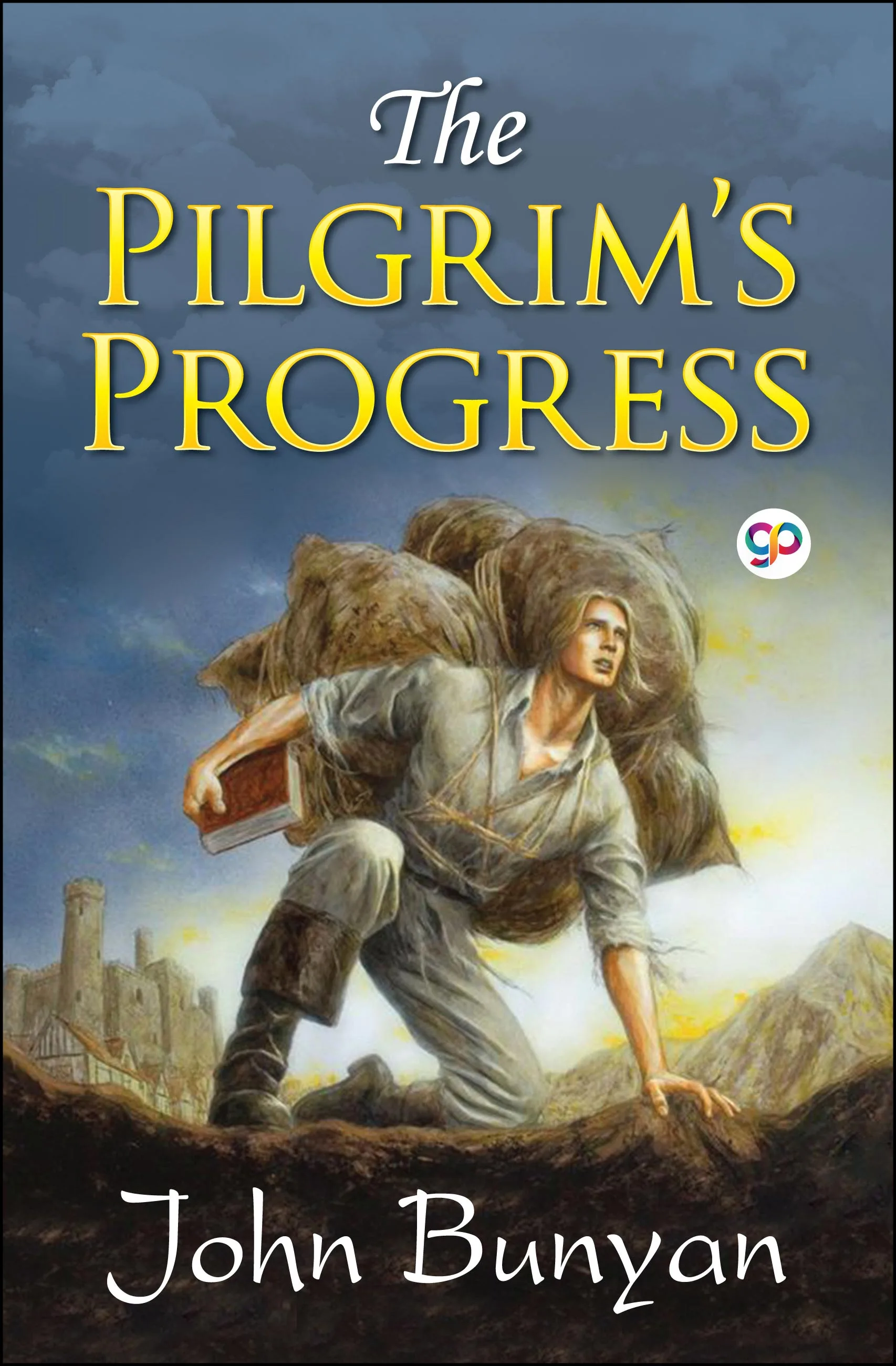
The Pilgrim's Progress
eBook
• INR 51.00
• English
• 9789389440300
No ratings yet
| Publisher | General Press |
|---|---|
| ISBN13 | 9789389440300 |
| ASIN/SKU | B07XQD524B |
| Book Format | eBook |
| Language | English |
| List Price | INR 51.00 |
| Subject Code | FIC042080, FIC002000, FIC042010 |
| Publishing Date | 05/09/2019 |
| Book Code | BD00068628 |
Buy this Book
Amazon Stores
Ebook Stores
Other Stores
Discover The Pilgrim's Progress by John Bunyan. This book is published by General Press in eBook format, ISBN 9789389440300, ASIN B07XQD524B, under Christian Books and Bibles, Christian Classics and Allegories, Classics.
Book Description
First published in 1678, ‘The Pilgrim’s Progress’ is a Christian allegory and an influential literary model by John Bunyan, an English writer, and Puritan preacher. It has remained perhaps the best-loved and most-read of devotional fiction.
It is a captivating allegory of man’s religious journey in search of salvation and follows the pilgrim as he travels an obstacle-filled road to the Celestial City. Along the way, he is confronted by monsters and spiritual terrors, among them Worldly Wiseman, Giant Despair, and the demons of the Valley of the Shadow of Death.
In plain yet effective and moving language, this adventure reveals John Bunyan's intense grasp of the Scriptures. Penned while in prison for refusing to compromise the gospel—it is a guide for the journey from death to life. The times have changed, but the landmarks and adversaries are very much the same.
It is a captivating allegory of man’s religious journey in search of salvation and follows the pilgrim as he travels an obstacle-filled road to the Celestial City. Along the way, he is confronted by monsters and spiritual terrors, among them Worldly Wiseman, Giant Despair, and the demons of the Valley of the Shadow of Death.
In plain yet effective and moving language, this adventure reveals John Bunyan's intense grasp of the Scriptures. Penned while in prison for refusing to compromise the gospel—it is a guide for the journey from death to life. The times have changed, but the landmarks and adversaries are very much the same.
Author Biography
JOHN BUNYAN (1628-1688) was a Puritan preacher and writer in England. Bunyan had very little schooling. He followed his father in the tinker's trade, and served in the parliamentary army from 1644 to 1647. In 1655, Bunyan became a deacon and began preaching. He experienced marked success from the start and was the pastor of the Bedford church.
Bunyan is the author of The Pilgrim's Progress which he wrote in 1676 while imprisoned for preaching without a license. His numerous other titles include Grace Abounding to the Chief of Sinners and Holy War.
Bunyan is the author of The Pilgrim's Progress which he wrote in 1676 while imprisoned for preaching without a license. His numerous other titles include Grace Abounding to the Chief of Sinners and Holy War.
Editorial Reviews
Editorial Reviews will be added soon…
Book Summary
John Bunyan’s The Pilgrim’s Progress is one of the most famous Christian allegories in English literature and one of the most enduring stories about faith, temptation, doubt, perseverance, and redemption. First published in two parts, in 1678 and 1684, the book presents human life as a pilgrimage from spiritual danger toward eternal salvation. Rather than explaining Christian theology through abstract argument, Bunyan turns religious ideas into people, places, battles, roads, prisons, temptations, and conversations. The result is a story that can be read as a Christian allegory, a spiritual journey, a moral adventure, a classic work of literature, and a psychological portrait of a person struggling to find meaning and hope. At its center is Christian, an ordinary man who becomes painfully aware of his spiritual condition and leaves the City of Destruction in search of the Celestial City. His journey is filled with hardship, but it is also filled with friendship, guidance, courage, forgiveness, and moments of extraordinary beauty.
The story begins with Bunyan’s narrator falling asleep and dreaming that he sees a man named Christian living in the City of Destruction. Christian is deeply troubled because he has discovered that his city is destined for destruction and that he himself carries a terrible burden on his back. The burden represents sin and guilt, while the City of Destruction represents a life separated from God. Christian’s distress is so intense that he cannot continue living as he once did. He reads a book, understands his condition, and begins crying out for salvation. His family and neighbors do not understand him. They think his fear is excessive and that he should simply return to his former life. Yet Christian cannot forget what he has learned. His awakening has changed him, and he realizes that he must find the path leading toward the Celestial City.
Christian’s first important guide is Evangelist, who directs him toward the Wicket Gate and warns him not to be distracted by other paths. The journey immediately proves difficult. Christian falls into the Slough of Despond, a muddy swamp representing discouragement, fear, guilt, and spiritual hopelessness. He struggles to escape until a figure named Help rescues him. This episode establishes one of the central ideas of The Pilgrim’s Progress: the journey toward spiritual truth is not easy, and even sincere travelers can become overwhelmed by their own doubts. Bunyan does not portray Christian as a perfect hero. He is frightened, confused, forgetful, and sometimes foolish. His strength comes from continuing the journey despite these weaknesses.
Christian eventually reaches the Wicket Gate and is directed to the Interpreter’s House, where he witnesses a series of symbolic scenes designed to teach him about Christian life. Bunyan uses these episodes to transform abstract religious principles into memorable images. Christian sees examples of perseverance, temptation, hypocrisy, spiritual blindness, and the difference between genuine faith and outward religious behavior. The Interpreter helps Christian understand that the pilgrimage requires more than enthusiasm at the beginning; it demands vigilance and moral endurance. Christian then comes to the Cross, where his great burden finally falls from his shoulders. This is one of the most important moments in the entire novel. The burden of sin that has defined his life disappears, symbolizing forgiveness and salvation. Christian is no longer merely running away from destruction; he now has a destination and a renewed sense of hope.
After the Cross, Christian continues toward the Celestial City, but salvation does not mean the end of struggle. He encounters three shining figures who give him a certificate that will eventually be needed when he reaches the Celestial Gate. He briefly loses the certificate and must retrace his steps to recover it, showing how easily a pilgrim can become careless. He then reaches the Palace Beautiful, where he finds hospitality, companionship, instruction, and spiritual preparation. The Palace Beautiful represents the support and fellowship available to believers. Christian is strengthened there and receives armor before entering the dangerous stages of his journey.
One of the most dramatic episodes follows when Christian enters the Valley of Humiliation and meets Apollyon, a monstrous enemy who represents the forces of spiritual evil. Apollyon tries to persuade Christian to abandon his pilgrimage. He reminds Christian of his past failures and promises him safety if he will return. Christian refuses. The conversation becomes a fierce battle, and Christian eventually wounds Apollyon with his sword. The victory is important because Christian does not win through physical strength alone. His courage comes from his conviction that he has been forgiven and that his destination is worth suffering for. After defeating Apollyon, Christian enters the Valley of the Shadow of Death, one of the darkest sections of the journey. The valley is filled with danger and fear, yet Christian continues forward. Bunyan uses the darkness of the valley to represent periods when faith feels difficult and God’s presence seems distant.
After leaving the valley, Christian meets Faithful, another pilgrim from the City of Destruction. Faithful becomes an important companion and helps demonstrate that the pilgrimage does not have to be entirely solitary. The two discuss their experiences, including Christian’s encounters with temptation and Faithful’s own struggles. They also meet Talkative, a man who enjoys speaking about religion but whose life does not match his words. Christian exposes the difference between talking about goodness and actually practicing it. Through Talkative, Bunyan criticizes empty religious language and argues that genuine faith must produce corresponding actions. This episode remains relevant because it asks a timeless question: is belief meaningful if it never changes the way a person lives?
Christian and Faithful next arrive at Vanity Fair, perhaps the most famous episode in The Pilgrim’s Progress. Vanity Fair represents the attractions, distractions, ambitions, pleasures, and material desires of the world. The fair operates throughout the year and sells virtually everything people might desire, including wealth, power, status, possessions, and pleasure. Christian and Faithful refuse to participate in its activities, and their refusal makes them appear strange and threatening to the people around them. The townspeople mock and eventually imprison them. Faithful is put on trial and executed for his faith. Christian survives and later continues the pilgrimage with Hopeful, who is inspired by Faithful’s example.
Vanity Fair is central to the book because it shows that temptation does not always appear as something obviously evil. Sometimes the greatest danger is the ordinary desire for wealth, recognition, comfort, or social approval. The fair is attractive precisely because it offers so many things people naturally want. Christian’s refusal to accept its values demonstrates that the pilgrim must decide what matters more: temporary worldly success or eternal purpose. Faithful’s martyrdom also shows the cost of conviction. His death is tragic, but Bunyan presents it as a victory because Faithful reaches the Celestial City. The episode therefore combines social criticism, religious allegory, and dramatic storytelling.
After Vanity Fair, Christian meets Hopeful, and the two continue together. They encounter several people who represent different forms of hypocrisy and spiritual compromise. By-ends, for example, treats religion as something that can be useful when it brings financial or social advantage. Christian rejects this attitude because it turns faith into a tool for personal gain. Later, Demas tries to lure the travelers toward a silver mine. Christian recognizes the danger and refuses to stop. The episode illustrates Bunyan’s repeated warning that greed can appear in attractive forms and that the easiest-looking opportunity may lead to ruin.
Christian and Hopeful later make one of their most serious mistakes when they leave the proper road and enter By-Path Meadow. What initially appears to be a convenient shortcut leads them into terrible danger. They are captured by Giant Despair and imprisoned in Doubting Castle. Giant Despair represents spiritual despair, while his wife, Diffidence, encourages him to treat the prisoners harshly. Christian and Hopeful are beaten and pressured toward hopelessness. At their lowest point, they even consider suicide, but they reject the idea. Eventually Christian remembers that he possesses a key called Promise, which opens the doors of their prison. They escape and warn other pilgrims about the dangers of the castle.
The episode of Doubting Castle is particularly powerful because Bunyan understands that despair can become a prison of the mind. Christian is not defeated because he lacks faith completely; he is defeated because, for a time, he forgets what he already possesses. The key of Promise symbolizes the spiritual resources that remain available even when a person feels abandoned or powerless. Bunyan therefore presents hope not as a vague feeling but as something grounded in remembered truth. The lesson is that despair may distort perception, but remembering one’s promises, beliefs, and sources of strength can reopen a path forward.
As Christian and Hopeful approach the Celestial City, they reach the Delectable Mountains, where wise shepherds provide guidance and warnings. The travelers are shown the dangers surrounding the road and are reminded that even near the end of a journey, carelessness remains dangerous. They later encounter the Enchanted Ground, a place where pilgrims are tempted to fall asleep. The danger here is not dramatic violence but spiritual laziness. Bunyan suggests that people can lose their purpose not only through open rebellion but also through comfort, distraction, and lack of attention. Christian and Hopeful keep one another awake by discussing their faith and experiences. Their friendship becomes one of the most important sources of strength in the latter part of the journey.
Eventually the two pilgrims reach the Land of Beulah, a peaceful region bordering the Celestial City. The atmosphere changes dramatically. The dangers of the earlier journey give way to anticipation and spiritual peace. Yet one final obstacle remains: the River of Death. Christian and Hopeful must cross the river because there is no bridge to the Celestial City. Christian initially struggles with fear, while Hopeful encourages him and reminds him of the promises that have sustained them throughout their journey. They finally cross and are welcomed by angels into the Celestial City. Christian’s journey ends not simply with arrival but with the fulfillment of everything he has hoped for since leaving the City of Destruction.
Part Two of The Pilgrim’s Progress broadens the meaning of the pilgrimage by telling the story of Christiana, Christian’s wife, and their children. Unlike the first part, which focuses heavily on Christian’s individual struggle, the second part emphasizes family, community, companionship, and mutual support. Christiana initially remained behind when Christian began his journey, but she eventually recognizes the importance of following the same path. She travels with her children and Mercy, and they receive guidance from Great-heart, one of Bunyan’s most memorable characters. Great-heart acts as protector and guide, helping the pilgrims overcome dangers that would otherwise overwhelm them.
Christiana’s journey revisits many places from Christian’s pilgrimage, but the experiences are not simply repeated. The second part presents a more communal vision of spiritual life. Christiana’s group helps one another, welcomes weaker pilgrims, defeats dangerous enemies, and grows along the way. Great-heart fights giants, rescues endangered travelers, and helps destroy Doubting Castle. The children also mature during the journey, and the pilgrimage becomes connected with marriage, family, friendship, and the continuation of faith into another generation. This makes Part Two an important complement to Christian’s story: salvation is not presented only as an individual struggle but also as something that shapes families and communities.
The deepest theme of The Pilgrim’s Progress is therefore the journey itself. Bunyan presents life as a road filled with choices. Some paths are direct, while others appear easier but lead toward danger. Some companions are trustworthy, while others are deceptive. Some obstacles are physical, while others exist inside the mind. The Slough of Despond represents despair; Apollyon represents spiritual opposition; Vanity Fair represents worldly temptation; Doubting Castle represents the imprisonment created by hopelessness; the Enchanted Ground represents spiritual complacency; and the Celestial City represents the final fulfillment of the pilgrim’s hope. Because these ideas are expressed through vivid characters and locations, the allegory remains easy to remember even for readers unfamiliar with seventeenth-century religious literature.
Bunyan’s writing style is another major reason the book has endured. His language is direct, vivid, conversational, and often surprisingly humorous. Characters have names such as Mr. Worldly Wiseman, Talkative, Hopeful, Faithful, Giant Despair, and By-ends, immediately revealing the qualities they represent. Yet the characters are more than simple symbols because their conversations and struggles give the story emotional force. Christian becomes memorable precisely because he is imperfect. He falls, doubts, fears, becomes confused, and sometimes makes bad choices, but he repeatedly rises and continues.
Ultimately, The Pilgrim’s Progress is a story about what it means to keep moving toward a meaningful destination when the road is difficult. Its Christian message is unmistakable, but its emotional power extends beyond its seventeenth-century setting. The book speaks to anyone who has experienced guilt, uncertainty, temptation, failure, loneliness, friendship, perseverance, or the hope of becoming a better person. Christian’s burden, his battles with Apollyon, his suffering at Vanity Fair, his imprisonment in Doubting Castle, and his final crossing of the River of Death create a powerful narrative of transformation. The second part, through Christiana and her companions, adds another dimension by showing how faith can be strengthened through family and community. For readers searching for a classic Christian allegory, a detailed summary of The Pilgrim’s Progress, or an accessible introduction to John Bunyan’s most important work, the book remains a profound and remarkably readable account of the human journey from fear and bondage toward hope, freedom, and spiritual fulfillment.
The story begins with Bunyan’s narrator falling asleep and dreaming that he sees a man named Christian living in the City of Destruction. Christian is deeply troubled because he has discovered that his city is destined for destruction and that he himself carries a terrible burden on his back. The burden represents sin and guilt, while the City of Destruction represents a life separated from God. Christian’s distress is so intense that he cannot continue living as he once did. He reads a book, understands his condition, and begins crying out for salvation. His family and neighbors do not understand him. They think his fear is excessive and that he should simply return to his former life. Yet Christian cannot forget what he has learned. His awakening has changed him, and he realizes that he must find the path leading toward the Celestial City.
Christian’s first important guide is Evangelist, who directs him toward the Wicket Gate and warns him not to be distracted by other paths. The journey immediately proves difficult. Christian falls into the Slough of Despond, a muddy swamp representing discouragement, fear, guilt, and spiritual hopelessness. He struggles to escape until a figure named Help rescues him. This episode establishes one of the central ideas of The Pilgrim’s Progress: the journey toward spiritual truth is not easy, and even sincere travelers can become overwhelmed by their own doubts. Bunyan does not portray Christian as a perfect hero. He is frightened, confused, forgetful, and sometimes foolish. His strength comes from continuing the journey despite these weaknesses.
Christian eventually reaches the Wicket Gate and is directed to the Interpreter’s House, where he witnesses a series of symbolic scenes designed to teach him about Christian life. Bunyan uses these episodes to transform abstract religious principles into memorable images. Christian sees examples of perseverance, temptation, hypocrisy, spiritual blindness, and the difference between genuine faith and outward religious behavior. The Interpreter helps Christian understand that the pilgrimage requires more than enthusiasm at the beginning; it demands vigilance and moral endurance. Christian then comes to the Cross, where his great burden finally falls from his shoulders. This is one of the most important moments in the entire novel. The burden of sin that has defined his life disappears, symbolizing forgiveness and salvation. Christian is no longer merely running away from destruction; he now has a destination and a renewed sense of hope.
After the Cross, Christian continues toward the Celestial City, but salvation does not mean the end of struggle. He encounters three shining figures who give him a certificate that will eventually be needed when he reaches the Celestial Gate. He briefly loses the certificate and must retrace his steps to recover it, showing how easily a pilgrim can become careless. He then reaches the Palace Beautiful, where he finds hospitality, companionship, instruction, and spiritual preparation. The Palace Beautiful represents the support and fellowship available to believers. Christian is strengthened there and receives armor before entering the dangerous stages of his journey.
One of the most dramatic episodes follows when Christian enters the Valley of Humiliation and meets Apollyon, a monstrous enemy who represents the forces of spiritual evil. Apollyon tries to persuade Christian to abandon his pilgrimage. He reminds Christian of his past failures and promises him safety if he will return. Christian refuses. The conversation becomes a fierce battle, and Christian eventually wounds Apollyon with his sword. The victory is important because Christian does not win through physical strength alone. His courage comes from his conviction that he has been forgiven and that his destination is worth suffering for. After defeating Apollyon, Christian enters the Valley of the Shadow of Death, one of the darkest sections of the journey. The valley is filled with danger and fear, yet Christian continues forward. Bunyan uses the darkness of the valley to represent periods when faith feels difficult and God’s presence seems distant.
After leaving the valley, Christian meets Faithful, another pilgrim from the City of Destruction. Faithful becomes an important companion and helps demonstrate that the pilgrimage does not have to be entirely solitary. The two discuss their experiences, including Christian’s encounters with temptation and Faithful’s own struggles. They also meet Talkative, a man who enjoys speaking about religion but whose life does not match his words. Christian exposes the difference between talking about goodness and actually practicing it. Through Talkative, Bunyan criticizes empty religious language and argues that genuine faith must produce corresponding actions. This episode remains relevant because it asks a timeless question: is belief meaningful if it never changes the way a person lives?
Christian and Faithful next arrive at Vanity Fair, perhaps the most famous episode in The Pilgrim’s Progress. Vanity Fair represents the attractions, distractions, ambitions, pleasures, and material desires of the world. The fair operates throughout the year and sells virtually everything people might desire, including wealth, power, status, possessions, and pleasure. Christian and Faithful refuse to participate in its activities, and their refusal makes them appear strange and threatening to the people around them. The townspeople mock and eventually imprison them. Faithful is put on trial and executed for his faith. Christian survives and later continues the pilgrimage with Hopeful, who is inspired by Faithful’s example.
Vanity Fair is central to the book because it shows that temptation does not always appear as something obviously evil. Sometimes the greatest danger is the ordinary desire for wealth, recognition, comfort, or social approval. The fair is attractive precisely because it offers so many things people naturally want. Christian’s refusal to accept its values demonstrates that the pilgrim must decide what matters more: temporary worldly success or eternal purpose. Faithful’s martyrdom also shows the cost of conviction. His death is tragic, but Bunyan presents it as a victory because Faithful reaches the Celestial City. The episode therefore combines social criticism, religious allegory, and dramatic storytelling.
After Vanity Fair, Christian meets Hopeful, and the two continue together. They encounter several people who represent different forms of hypocrisy and spiritual compromise. By-ends, for example, treats religion as something that can be useful when it brings financial or social advantage. Christian rejects this attitude because it turns faith into a tool for personal gain. Later, Demas tries to lure the travelers toward a silver mine. Christian recognizes the danger and refuses to stop. The episode illustrates Bunyan’s repeated warning that greed can appear in attractive forms and that the easiest-looking opportunity may lead to ruin.
Christian and Hopeful later make one of their most serious mistakes when they leave the proper road and enter By-Path Meadow. What initially appears to be a convenient shortcut leads them into terrible danger. They are captured by Giant Despair and imprisoned in Doubting Castle. Giant Despair represents spiritual despair, while his wife, Diffidence, encourages him to treat the prisoners harshly. Christian and Hopeful are beaten and pressured toward hopelessness. At their lowest point, they even consider suicide, but they reject the idea. Eventually Christian remembers that he possesses a key called Promise, which opens the doors of their prison. They escape and warn other pilgrims about the dangers of the castle.
The episode of Doubting Castle is particularly powerful because Bunyan understands that despair can become a prison of the mind. Christian is not defeated because he lacks faith completely; he is defeated because, for a time, he forgets what he already possesses. The key of Promise symbolizes the spiritual resources that remain available even when a person feels abandoned or powerless. Bunyan therefore presents hope not as a vague feeling but as something grounded in remembered truth. The lesson is that despair may distort perception, but remembering one’s promises, beliefs, and sources of strength can reopen a path forward.
As Christian and Hopeful approach the Celestial City, they reach the Delectable Mountains, where wise shepherds provide guidance and warnings. The travelers are shown the dangers surrounding the road and are reminded that even near the end of a journey, carelessness remains dangerous. They later encounter the Enchanted Ground, a place where pilgrims are tempted to fall asleep. The danger here is not dramatic violence but spiritual laziness. Bunyan suggests that people can lose their purpose not only through open rebellion but also through comfort, distraction, and lack of attention. Christian and Hopeful keep one another awake by discussing their faith and experiences. Their friendship becomes one of the most important sources of strength in the latter part of the journey.
Eventually the two pilgrims reach the Land of Beulah, a peaceful region bordering the Celestial City. The atmosphere changes dramatically. The dangers of the earlier journey give way to anticipation and spiritual peace. Yet one final obstacle remains: the River of Death. Christian and Hopeful must cross the river because there is no bridge to the Celestial City. Christian initially struggles with fear, while Hopeful encourages him and reminds him of the promises that have sustained them throughout their journey. They finally cross and are welcomed by angels into the Celestial City. Christian’s journey ends not simply with arrival but with the fulfillment of everything he has hoped for since leaving the City of Destruction.
Part Two of The Pilgrim’s Progress broadens the meaning of the pilgrimage by telling the story of Christiana, Christian’s wife, and their children. Unlike the first part, which focuses heavily on Christian’s individual struggle, the second part emphasizes family, community, companionship, and mutual support. Christiana initially remained behind when Christian began his journey, but she eventually recognizes the importance of following the same path. She travels with her children and Mercy, and they receive guidance from Great-heart, one of Bunyan’s most memorable characters. Great-heart acts as protector and guide, helping the pilgrims overcome dangers that would otherwise overwhelm them.
Christiana’s journey revisits many places from Christian’s pilgrimage, but the experiences are not simply repeated. The second part presents a more communal vision of spiritual life. Christiana’s group helps one another, welcomes weaker pilgrims, defeats dangerous enemies, and grows along the way. Great-heart fights giants, rescues endangered travelers, and helps destroy Doubting Castle. The children also mature during the journey, and the pilgrimage becomes connected with marriage, family, friendship, and the continuation of faith into another generation. This makes Part Two an important complement to Christian’s story: salvation is not presented only as an individual struggle but also as something that shapes families and communities.
The deepest theme of The Pilgrim’s Progress is therefore the journey itself. Bunyan presents life as a road filled with choices. Some paths are direct, while others appear easier but lead toward danger. Some companions are trustworthy, while others are deceptive. Some obstacles are physical, while others exist inside the mind. The Slough of Despond represents despair; Apollyon represents spiritual opposition; Vanity Fair represents worldly temptation; Doubting Castle represents the imprisonment created by hopelessness; the Enchanted Ground represents spiritual complacency; and the Celestial City represents the final fulfillment of the pilgrim’s hope. Because these ideas are expressed through vivid characters and locations, the allegory remains easy to remember even for readers unfamiliar with seventeenth-century religious literature.
Bunyan’s writing style is another major reason the book has endured. His language is direct, vivid, conversational, and often surprisingly humorous. Characters have names such as Mr. Worldly Wiseman, Talkative, Hopeful, Faithful, Giant Despair, and By-ends, immediately revealing the qualities they represent. Yet the characters are more than simple symbols because their conversations and struggles give the story emotional force. Christian becomes memorable precisely because he is imperfect. He falls, doubts, fears, becomes confused, and sometimes makes bad choices, but he repeatedly rises and continues.
Ultimately, The Pilgrim’s Progress is a story about what it means to keep moving toward a meaningful destination when the road is difficult. Its Christian message is unmistakable, but its emotional power extends beyond its seventeenth-century setting. The book speaks to anyone who has experienced guilt, uncertainty, temptation, failure, loneliness, friendship, perseverance, or the hope of becoming a better person. Christian’s burden, his battles with Apollyon, his suffering at Vanity Fair, his imprisonment in Doubting Castle, and his final crossing of the River of Death create a powerful narrative of transformation. The second part, through Christiana and her companions, adds another dimension by showing how faith can be strengthened through family and community. For readers searching for a classic Christian allegory, a detailed summary of The Pilgrim’s Progress, or an accessible introduction to John Bunyan’s most important work, the book remains a profound and remarkably readable account of the human journey from fear and bondage toward hope, freedom, and spiritual fulfillment.
Sample Chapters
Sample Chapters will be added soon…
Reader Reviews
No reviews yet.
The Pilgrim's Progress
Download Cover Image
Do you want to download the full cover image for The Pilgrim's Progress?