
The General Theory of Employment, Interest, and Money
eBook
• INR 70.00
• English
• 9789389440621
No ratings yet
| Publisher | General Press |
|---|---|
| ISBN13 | 9789389440621 |
| ASIN/SKU | B07YQ98ZXZ |
| Book Format | eBook |
| Language | English |
| List Price | INR 70.00 |
| Subject Code | BUS069000, REF000000 |
| Publishing Date | 01/10/2019 |
| Book Code | BD00068637 |
Buy this Book
Amazon Stores
Ebook Stores
Other Stores
Discover The General Theory of Employment, Interest, and Money by John Maynard Keynes. This book is published by General Press in eBook format, ISBN 9789389440621, ASIN B07YQ98ZXZ, under Reference, Nonfiction, Economics.
Book Description
The General Theory of Employment, Interest, and Money, written by legendary author John Maynard Keynes is widely considered to be one of the top 100 greatest books of all time. This masterpiece was published right after the Great Depression. It sought to bring about a revolution, commonly referred to as the ‘Keynesian Revolution’, in the way economists thought—especially challenging the proposition that a market economy tends naturally to restore itself to full employment on its own. Regarded widely as the cornerstone of Keynesian thought, this book challenged the established classical economics and introduced new concepts.
‘The General Theory of Employment, Interest, and Money’ transformed economics and changed the face of modern macroeconomics. Keynes’ argument is based on the idea that the level of employment is not determined by the price of labour, but by the spending of money. It gave way to an entirely new approach where employment, inflation and the market economy are concerned.
‘The General Theory of Employment, Interest, and Money’ transformed economics and changed the face of modern macroeconomics. Keynes’ argument is based on the idea that the level of employment is not determined by the price of labour, but by the spending of money. It gave way to an entirely new approach where employment, inflation and the market economy are concerned.
Author Biography
John Maynard Keynes (1883–1946) was one of the most influential economists of the twentieth century, whose ideas transformed the way governments understand and manage modern economies. A brilliant scholar, public intellectual, and policy adviser, Keynes challenged traditional economic thinking by arguing that governments have a vital role to play in stabilizing economies during times of recession and financial crisis. His theories continue to shape economic policy, public finance, and global institutions to this day.
Born on June 5, 1883, in Cambridge, England, Keynes grew up in an intellectually distinguished family. His father, John Neville Keynes, was an economist and philosopher, while his mother, Florence Ada Keynes, was a respected social reformer and later the first female mayor of Cambridge. Surrounded by academic and civic life, Keynes developed an early passion for mathematics, history, and public affairs. He studied at Eton College before earning a scholarship to King's College, Cambridge, where his exceptional talent for mathematics and economics quickly became evident.
After completing his studies, Keynes joined the British Civil Service and later became a lecturer and fellow at Cambridge. His first major public role came during the First World War, when he worked at the British Treasury. In 1919, following the Paris Peace Conference, he resigned in protest over the harsh economic terms imposed on Germany. He expressed his concerns in The Economic Consequences of the Peace, a book that brought him international recognition and proved remarkably prophetic in its warnings about Europe's future instability.
Keynes's most influential work, The General Theory of Employment, Interest and Money (1936), revolutionized economics. He argued that during periods of economic downturn, governments should increase public spending and adopt policies to stimulate demand, create jobs, and restore economic growth. These ideas, later known as Keynesian economics, fundamentally changed public policy and influenced governments worldwide, particularly during the Great Depression and the decades that followed.
Beyond his academic achievements, Keynes was deeply involved in public service. He played a leading role in shaping the post-Second World War international financial system and was instrumental in the creation of institutions such as the International Monetary Fund (IMF) and the World Bank. He was also a patron of the arts, supporting literature, theatre, and music throughout his life.
John Maynard Keynes passed away on April 21, 1946. Today, he is remembered as one of history's greatest economists, whose visionary ideas continue to influence economic thought, public policy, and efforts to promote financial stability and shared prosperity around the world.
Born on June 5, 1883, in Cambridge, England, Keynes grew up in an intellectually distinguished family. His father, John Neville Keynes, was an economist and philosopher, while his mother, Florence Ada Keynes, was a respected social reformer and later the first female mayor of Cambridge. Surrounded by academic and civic life, Keynes developed an early passion for mathematics, history, and public affairs. He studied at Eton College before earning a scholarship to King's College, Cambridge, where his exceptional talent for mathematics and economics quickly became evident.
After completing his studies, Keynes joined the British Civil Service and later became a lecturer and fellow at Cambridge. His first major public role came during the First World War, when he worked at the British Treasury. In 1919, following the Paris Peace Conference, he resigned in protest over the harsh economic terms imposed on Germany. He expressed his concerns in The Economic Consequences of the Peace, a book that brought him international recognition and proved remarkably prophetic in its warnings about Europe's future instability.
Keynes's most influential work, The General Theory of Employment, Interest and Money (1936), revolutionized economics. He argued that during periods of economic downturn, governments should increase public spending and adopt policies to stimulate demand, create jobs, and restore economic growth. These ideas, later known as Keynesian economics, fundamentally changed public policy and influenced governments worldwide, particularly during the Great Depression and the decades that followed.
Beyond his academic achievements, Keynes was deeply involved in public service. He played a leading role in shaping the post-Second World War international financial system and was instrumental in the creation of institutions such as the International Monetary Fund (IMF) and the World Bank. He was also a patron of the arts, supporting literature, theatre, and music throughout his life.
John Maynard Keynes passed away on April 21, 1946. Today, he is remembered as one of history's greatest economists, whose visionary ideas continue to influence economic thought, public policy, and efforts to promote financial stability and shared prosperity around the world.
Editorial Reviews
Editorial Reviews will be added soon…
Book Summary
Book Summary will be added soon…
Sample Chapters
Sample Chapters will be added soon…
Reader Reviews
No reviews yet.
The General Theory of Employment, Interest, and Money
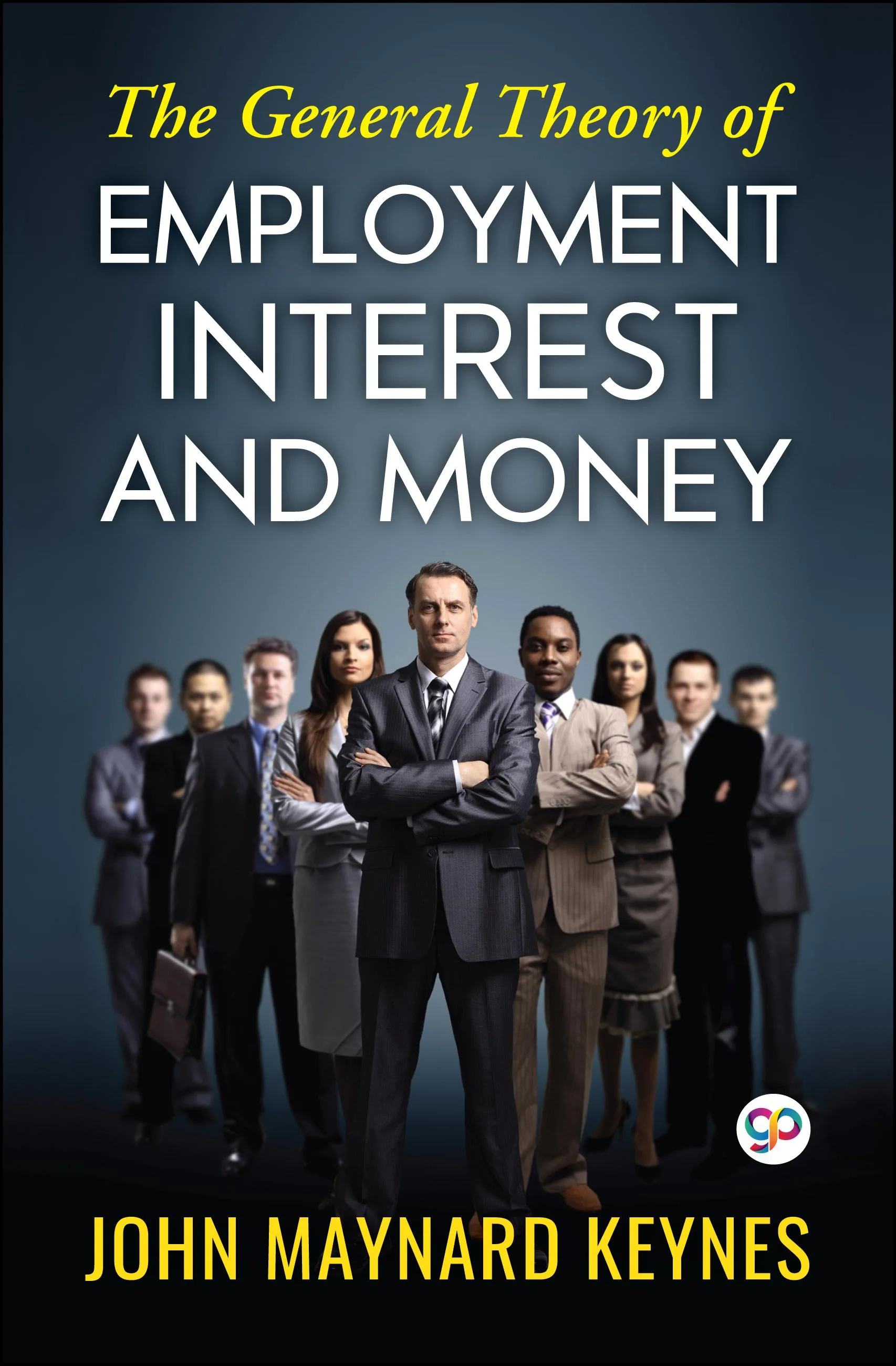
Download Cover Image
Do you want to download the full cover image for The General Theory of Employment, Interest, and Money?