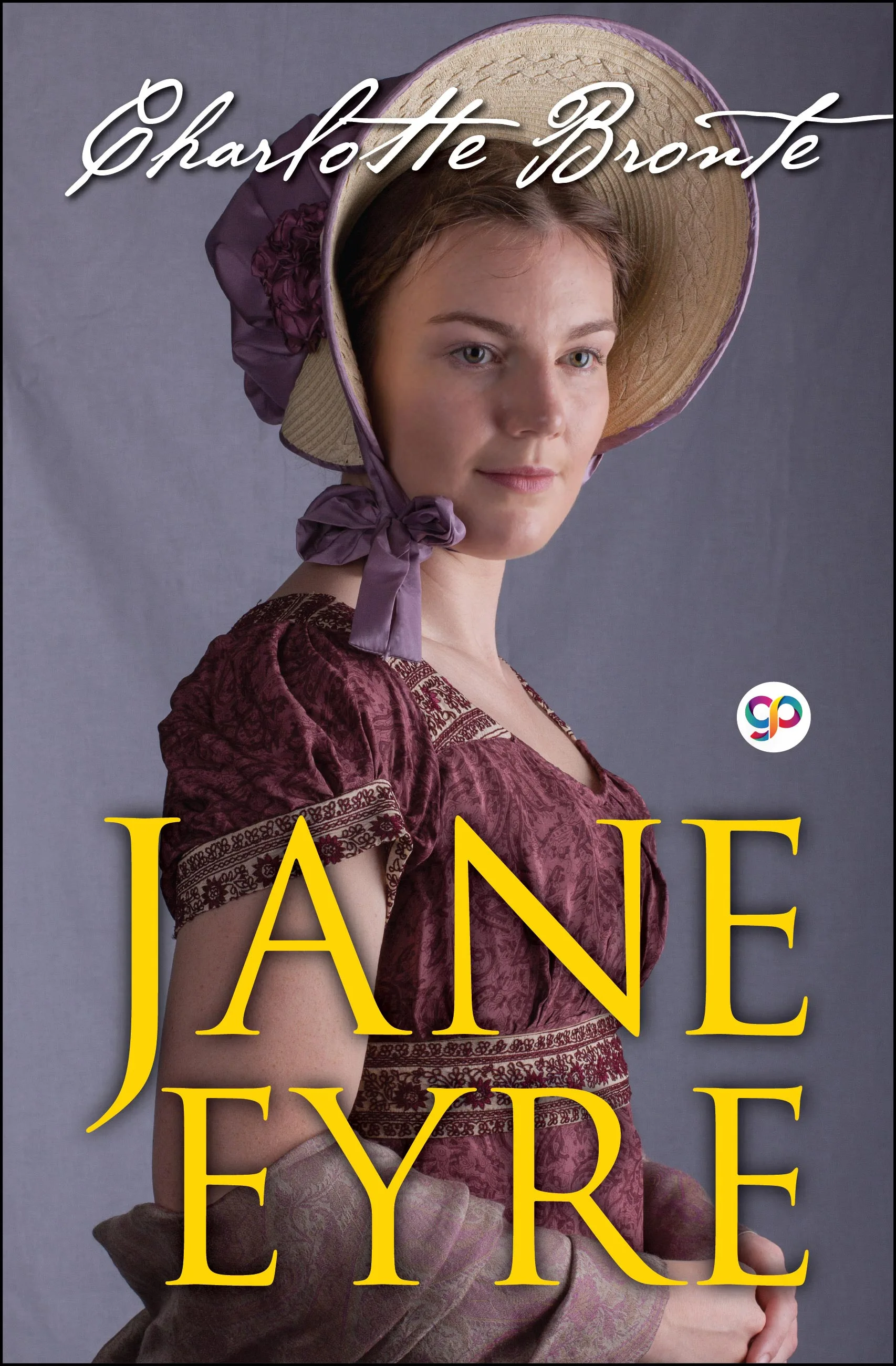
Jane Eyre
eBook
• INR 70.00
• English
• 9789389716092
No ratings yet
| Publisher | General Press |
|---|---|
| ISBN13 | 9789389716092 |
| ASIN/SKU | B084BVJ662 |
| Book Format | eBook |
| Language | English |
| List Price | INR 70.00 |
| Subject Code | FIC004000, FIC019000 |
| Publishing Date | 29/01/2020 |
| Book Code | BD00068659 |
Buy this Book
Amazon Stores
Ebook Stores
Other Stores
Discover Jane Eyre by Charlotte Bronte. This book is published by General Press in eBook format, ISBN 9789389716092, ASIN B084BVJ662, under Literature and Fiction, Historical Romance, Literary Fiction.
Book Description
It was first published novel of Charlotte Brontë's. Jane Eyre was immediately recognised as a work of genius when it appeared in 1847. Orphaned into the household of her Aunt Reed at Gateshead, subject to the cruel regime at Lowood charity school, Jane Eyre nonetheless emerges unbroken in spirit and integrity. How she takes up the post of governess at Thornfield Hall, meets and loves Mr Rochester and discovers the impediment to their lawful marriage are elements in a story that transcends melodrama to portray a woman's passionate search for a wider and richer life.
Widely regarded as a revolutionary novel, Brontë’s masterpiece introduced the world to a radical new type of heroine, one whose defiant virtue and moral courage departed sharply from the more acquiescent and malleable female characters of the day. Passionate, dramatic, and surprisingly modern, Jane Eyre endures as one of the world’s most beloved novels.
Widely regarded as a revolutionary novel, Brontë’s masterpiece introduced the world to a radical new type of heroine, one whose defiant virtue and moral courage departed sharply from the more acquiescent and malleable female characters of the day. Passionate, dramatic, and surprisingly modern, Jane Eyre endures as one of the world’s most beloved novels.
Author Biography
Charlotte Brontë was born at Thornton, Yorkshire in 1816, the third child of Patrick and Maria Brontë. Her father was perpetual curate of Haworth, Yorkshire from 1820 until his death in 1861. Her mother died in 1821, leaving five daughters and a son. Charlotte was employed as a teacher from 1835 to 1838, was subsequently a governess, and in 1842 went with her sister Emily to study languages in Brussels, where during 1843 she again worked as a teacher. Charlotte’s first novel, The Professor, was rejected by several publishers and was not published until 1857. Jane Eyre was published in 1847 and achieved immediate success. In 1848 Branwell Brontë died, as did Emily before the end of the same year, and Anne in the following summer, so that Charlotte alone survived of the six children. Charlotte married in 1854 the Revd A. B Nicholls, her father’s curate, but died in March 1855.
Editorial Reviews
Editorial Reviews will be added soon…
Book Summary
Jane Eyre by Charlotte Brontë is a classic Victorian novel that combines romance, Gothic mystery, social criticism, and the story of a young woman’s journey toward independence. First published in 1847 under the pseudonym Currer Bell, the novel follows Jane from a lonely and unhappy childhood to adulthood, love, heartbreak, self-discovery, and finally emotional and financial independence. It is often described as a Gothic romance and Bildungsroman, because its suspenseful atmosphere and love story are closely connected to Jane’s moral and psychological growth.
What makes Jane Eyre so enduring is not simply its famous romance between Jane and Edward Rochester. At its heart, the novel asks a more important question: Can a woman find love without surrendering her freedom, dignity, conscience, and sense of self? Jane’s answer develops slowly through years of suffering and difficult choices. Her journey is ultimately not about becoming wealthy or marrying a powerful man. It is about becoming strong enough to choose love on her own terms.
Jane’s Difficult Childhood at Gateshead
The story begins with Jane Eyre as an orphan living at Gateshead Hall with her aunt, Mrs. Reed, and her three cousins. Jane has no parents, money, or social position to protect her. Although she lives in a comfortable household, she is treated as an unwanted outsider.
Mrs. Reed favors her own children, particularly John Reed, who is cruel and arrogant. Jane is repeatedly reminded that she is dependent upon the Reed family. John even attacks her physically, and when Jane finally fights back, she is punished rather than defended. Mrs. Reed orders her servants to lock Jane in the frightening red-room, where Jane's uncle died.
The red-room becomes one of the novel’s most important symbols. It represents fear, isolation, injustice, and Jane’s powerless position within the Reed household. Her experience there is so terrifying that she believes she may be seeing her dead uncle’s ghost.
Jane's imprisonment also marks an important stage in her development. She is not a naturally passive child. She feels anger when she is treated unfairly, and she wants to defend her dignity. Her rebellion may get her into trouble, but it also establishes one of the central qualities of her character: Jane refuses to believe that suffering automatically makes injustice acceptable.
Eventually, Mrs. Reed decides that Jane should be sent away to Lowood School.
Lowood School: Hardship, Friendship, and Moral Growth
Lowood is supposed to be a charitable school for orphaned and disadvantaged girls, but the institution is run under severe and hypocritical conditions. Its administrator, Mr. Brocklehurst, constantly preaches humility and self-denial while allowing the girls to endure hunger, cold, poor clothing, and humiliation.
At Lowood, Jane meets Helen Burns, a quiet and deeply religious girl who becomes her closest friend. Helen teaches Jane an important lesson about patience and forgiveness. Yet Jane never completely adopts Helen’s passive acceptance of suffering. Their differences are significant: Helen believes that endurance is a path to spiritual peace, while Jane believes that injustice should sometimes be resisted.
Jane also finds a compassionate adult in Miss Temple, whose kindness gives her a sense of security and respect that she has rarely experienced.
A terrible illness later spreads through the school, exposing the institution’s neglect. Helen becomes seriously ill and dies in Jane’s arms. Her death is one of the most emotionally painful moments in the novel. Jane loses a friend, but Helen’s influence remains part of her moral development.
After conditions at Lowood improve, Jane spends several years there as both student and teacher. Eventually, however, Miss Temple marries and leaves. Jane realizes that she wants something beyond the familiar world of Lowood. At eighteen, she advertises for work and accepts a position as a governess at Thornfield Hall.
Thornfield Hall and Mr. Rochester
Thornfield introduces Jane to a completely different world. She becomes governess to Adèle Varens, a young French girl who is the ward of Edward Fairfax Rochester, the mysterious owner of Thornfield.
At first, Rochester seems strange, unpredictable, and intimidating. He is older than Jane and socially far above her. Yet he quickly discovers that Jane is different from the people around him. She does not flatter him, fear him excessively, or pretend to agree with everything he says.
Their relationship develops through conversation rather than conventional courtship. Rochester is attracted to Jane's intelligence, honesty, and independence. Jane, in turn, becomes fascinated by Rochester's complicated personality.
But Thornfield is filled with disturbing mysteries. Jane hears strange laughter in the house and witnesses unexplained incidents. Rochester's bedroom catches fire, and Jane saves him. Later, a man named Richard Mason is mysteriously attacked inside the house. Rochester tries to dismiss these events, blaming the servant Grace Poole.
The Gothic atmosphere surrounding Thornfield reflects Jane’s growing emotional uncertainty. She is falling in love, but she does not fully understand the man she loves.
Jane and Rochester: Love Across Social Boundaries
Rochester appears to be preparing to marry Blanche Ingram, a beautiful and socially respectable woman. Jane believes that Rochester will choose Blanche because Blanche belongs to his class and possesses the beauty and wealth expected of an aristocratic bride.
Eventually, however, Rochester confesses that he loves Jane and proposes marriage.
Jane accepts because she genuinely loves him, but her feelings are never simply romantic. She wants to be Rochester’s equal rather than his possession. Throughout the novel, Brontë emphasizes the importance of Jane’s inner life and her refusal to accept the idea that poverty or plain appearance makes her less human. The novel’s treatment of class and gender was striking because Jane insists upon equality even though she is a poor governess.
The wedding, however, never takes place.
Bertha Mason and the Great Secret
At the wedding ceremony, a lawyer interrupts and reveals that Rochester is already married. His wife, Bertha Mason, is alive and has been kept secretly at Thornfield.
Rochester admits the truth and takes Jane to the upper part of the house, where Bertha is being cared for by Grace Poole. The revelation completely destroys Jane’s understanding of her relationship with Rochester.
Rochester explains his unhappy history and asks Jane to remain with him despite the fact that he cannot legally marry her. Jane still loves him, but she refuses to become his mistress. This decision is one of the most important moments in the novel because Jane chooses moral independence over immediate happiness.
She understands that staying with Rochester would mean violating her own principles. Rather than allowing love to erase her identity, she leaves Thornfield.
The decision is devastating. Jane leaves with almost nothing and eventually becomes lost, hungry, and homeless. She experiences several days of extreme hardship before being taken in by the Rivers family.
Moor House and a New Kind of Family
Jane is welcomed into Moor House by siblings Diana, Mary, and St. John Rivers. Their kindness gives her something she has wanted since childhood: a genuine sense of family.
St. John Rivers is a clergyman who is disciplined, ambitious, and deeply committed to missionary work. Jane finds employment as a teacher in a small rural school, and for the first time she experiences a modest but independent life.
Then Jane discovers that her uncle has died and left her a fortune of £20,000. More importantly, she discovers that the Rivers siblings are actually her cousins.
Instead of keeping the entire inheritance, Jane divides the money equally among the four of them. This decision reveals how much she has changed. Wealth does not make Jane selfish or arrogant. What she really values is belonging.
For the first time, she has both financial independence and a family of her own.
St. John Rivers and the Choice Between Duty and Love
St. John proposes marriage to Jane, but his proposal is very different from Rochester’s.
St. John does not offer passionate romantic love. He wants Jane to accompany him to India as a missionary's wife. He respects her strength and abilities, but he essentially wants to turn those qualities toward his own religious mission.
Jane is willing to help him, but she does not love him. She offers to accompany him as a sister rather than as a wife. St. John refuses to accept this arrangement.
Jane is therefore faced with another form of self-sacrifice. Rochester represents passionate love that once threatened her moral independence. St. John represents duty that threatens to destroy her emotional selfhood.
This contrast is central to the novel. Jane must find a third path: a life in which love and independence can exist together.
Just as Jane seems close to accepting St. John’s proposal, she hears what seems to be Rochester’s distant voice calling her name. She decides that she must return to him.
The Destruction of Thornfield
When Jane returns to Thornfield, she discovers that the mansion has been destroyed by fire.
Bertha Mason set the fire and died after jumping from the roof. Rochester tried to rescue the people inside the house but was severely injured. He has lost a hand and is blind.
Jane eventually finds him living at Ferndean, a secluded country house.
The power relationship between Jane and Rochester has changed completely. Earlier, Rochester was wealthy, powerful, and socially superior, while Jane was his dependent governess. Now Rochester is physically vulnerable and dependent upon others.
Jane, however, does not return because she feels sorry for him. She returns because she loves him and is now free to choose that love without surrendering herself.
Rochester is also changed. The experience has humbled him. The obstacles that once separated him and Jane—wealth, class, power, and secrecy—have been transformed.
The Ending of Jane Eyre
Jane and Rochester finally marry, but their relationship is now much more equal. Jane has her own fortune, her own identity, and the freedom to leave if she wishes. Rochester no longer holds the same social and economic power over her.
Their marriage therefore represents something much deeper than a conventional romantic ending. Jane has achieved what she wanted throughout the novel: love without losing herself.
She later describes their life together as deeply fulfilling. Rochester eventually regains sight in one eye, allowing him to see their first child.
The ending is satisfying because Jane does not receive happiness as a reward for obedience. She reaches it through independence, moral courage, suffering, and self-knowledge.
Major Themes in Jane Eyre
One of the strongest themes in Jane Eyre is love versus independence. Jane wants affection desperately because she has experienced rejection since childhood. Yet she gradually learns that love becomes destructive when it demands the surrender of personal dignity.
Social class is another major concern. Jane occupies an uncomfortable position as a governess: she is educated enough to mix with the upper classes but remains economically dependent upon them. Brontë uses Jane to question a society that measures human worth according to wealth, family, beauty, and social rank.
The novel also explores gender inequality. Jane repeatedly challenges the assumption that women should simply be obedient, decorative, and dependent. Her famous insistence on having a soul and heart equal to Rochester’s captures the novel’s demand for female dignity.
Religion is treated in a similarly complex way. Brocklehurst represents cruel religious hypocrisy; Helen Burns represents forgiving spirituality; and St. John represents extreme religious duty. Jane eventually develops a more balanced moral outlook in which faith does not require the destruction of individuality.
Finally, Jane Eyre is filled with Gothic imagery and symbolism. Thornfield Hall, the red-room, mysterious laughter, fire, dreams, storms, and Bertha Mason create an atmosphere of psychological tension. These Gothic elements are not merely there to frighten the reader. They often externalize Jane’s fears, desires, anger, and uncertainty.
Final Summary and Meaning
Jane Eyre is ultimately the story of a woman learning to determine her own worth. Jane begins life as an unwanted orphan and passes through cruelty, loneliness, poverty, love, betrayal, temptation, and loss. At each stage, she learns something about herself.
Her journey from Gateshead to Lowood, Thornfield, Moor House, and finally Ferndean is also a journey from dependence to independence. She wants a home, but she does not want a home at the cost of freedom. She wants love, but not if love requires dishonesty. She wants security, but not if security destroys her conscience.
That is why Charlotte Brontë’s novel remains so powerful. Jane Eyre is a love story, but it is not only a love story. It is a story about self-respect, female independence, social class, morality, family, faith, and the courage to remain true to oneself.
Jane’s greatest victory is not that she eventually marries Rochester. It is that, by the time she returns to him, she can do so as a woman who knows her own value. She has money, family, experience, and—most importantly—the freedom to choose.
That makes Jane Eyre much more than a Victorian romance. It is a deeply personal coming-of-age story about the search for dignity and belonging, and its central message remains remarkably modern: true love should not require a person to become less of themselves.
What makes Jane Eyre so enduring is not simply its famous romance between Jane and Edward Rochester. At its heart, the novel asks a more important question: Can a woman find love without surrendering her freedom, dignity, conscience, and sense of self? Jane’s answer develops slowly through years of suffering and difficult choices. Her journey is ultimately not about becoming wealthy or marrying a powerful man. It is about becoming strong enough to choose love on her own terms.
Jane’s Difficult Childhood at Gateshead
The story begins with Jane Eyre as an orphan living at Gateshead Hall with her aunt, Mrs. Reed, and her three cousins. Jane has no parents, money, or social position to protect her. Although she lives in a comfortable household, she is treated as an unwanted outsider.
Mrs. Reed favors her own children, particularly John Reed, who is cruel and arrogant. Jane is repeatedly reminded that she is dependent upon the Reed family. John even attacks her physically, and when Jane finally fights back, she is punished rather than defended. Mrs. Reed orders her servants to lock Jane in the frightening red-room, where Jane's uncle died.
The red-room becomes one of the novel’s most important symbols. It represents fear, isolation, injustice, and Jane’s powerless position within the Reed household. Her experience there is so terrifying that she believes she may be seeing her dead uncle’s ghost.
Jane's imprisonment also marks an important stage in her development. She is not a naturally passive child. She feels anger when she is treated unfairly, and she wants to defend her dignity. Her rebellion may get her into trouble, but it also establishes one of the central qualities of her character: Jane refuses to believe that suffering automatically makes injustice acceptable.
Eventually, Mrs. Reed decides that Jane should be sent away to Lowood School.
Lowood School: Hardship, Friendship, and Moral Growth
Lowood is supposed to be a charitable school for orphaned and disadvantaged girls, but the institution is run under severe and hypocritical conditions. Its administrator, Mr. Brocklehurst, constantly preaches humility and self-denial while allowing the girls to endure hunger, cold, poor clothing, and humiliation.
At Lowood, Jane meets Helen Burns, a quiet and deeply religious girl who becomes her closest friend. Helen teaches Jane an important lesson about patience and forgiveness. Yet Jane never completely adopts Helen’s passive acceptance of suffering. Their differences are significant: Helen believes that endurance is a path to spiritual peace, while Jane believes that injustice should sometimes be resisted.
Jane also finds a compassionate adult in Miss Temple, whose kindness gives her a sense of security and respect that she has rarely experienced.
A terrible illness later spreads through the school, exposing the institution’s neglect. Helen becomes seriously ill and dies in Jane’s arms. Her death is one of the most emotionally painful moments in the novel. Jane loses a friend, but Helen’s influence remains part of her moral development.
After conditions at Lowood improve, Jane spends several years there as both student and teacher. Eventually, however, Miss Temple marries and leaves. Jane realizes that she wants something beyond the familiar world of Lowood. At eighteen, she advertises for work and accepts a position as a governess at Thornfield Hall.
Thornfield Hall and Mr. Rochester
Thornfield introduces Jane to a completely different world. She becomes governess to Adèle Varens, a young French girl who is the ward of Edward Fairfax Rochester, the mysterious owner of Thornfield.
At first, Rochester seems strange, unpredictable, and intimidating. He is older than Jane and socially far above her. Yet he quickly discovers that Jane is different from the people around him. She does not flatter him, fear him excessively, or pretend to agree with everything he says.
Their relationship develops through conversation rather than conventional courtship. Rochester is attracted to Jane's intelligence, honesty, and independence. Jane, in turn, becomes fascinated by Rochester's complicated personality.
But Thornfield is filled with disturbing mysteries. Jane hears strange laughter in the house and witnesses unexplained incidents. Rochester's bedroom catches fire, and Jane saves him. Later, a man named Richard Mason is mysteriously attacked inside the house. Rochester tries to dismiss these events, blaming the servant Grace Poole.
The Gothic atmosphere surrounding Thornfield reflects Jane’s growing emotional uncertainty. She is falling in love, but she does not fully understand the man she loves.
Jane and Rochester: Love Across Social Boundaries
Rochester appears to be preparing to marry Blanche Ingram, a beautiful and socially respectable woman. Jane believes that Rochester will choose Blanche because Blanche belongs to his class and possesses the beauty and wealth expected of an aristocratic bride.
Eventually, however, Rochester confesses that he loves Jane and proposes marriage.
Jane accepts because she genuinely loves him, but her feelings are never simply romantic. She wants to be Rochester’s equal rather than his possession. Throughout the novel, Brontë emphasizes the importance of Jane’s inner life and her refusal to accept the idea that poverty or plain appearance makes her less human. The novel’s treatment of class and gender was striking because Jane insists upon equality even though she is a poor governess.
The wedding, however, never takes place.
Bertha Mason and the Great Secret
At the wedding ceremony, a lawyer interrupts and reveals that Rochester is already married. His wife, Bertha Mason, is alive and has been kept secretly at Thornfield.
Rochester admits the truth and takes Jane to the upper part of the house, where Bertha is being cared for by Grace Poole. The revelation completely destroys Jane’s understanding of her relationship with Rochester.
Rochester explains his unhappy history and asks Jane to remain with him despite the fact that he cannot legally marry her. Jane still loves him, but she refuses to become his mistress. This decision is one of the most important moments in the novel because Jane chooses moral independence over immediate happiness.
She understands that staying with Rochester would mean violating her own principles. Rather than allowing love to erase her identity, she leaves Thornfield.
The decision is devastating. Jane leaves with almost nothing and eventually becomes lost, hungry, and homeless. She experiences several days of extreme hardship before being taken in by the Rivers family.
Moor House and a New Kind of Family
Jane is welcomed into Moor House by siblings Diana, Mary, and St. John Rivers. Their kindness gives her something she has wanted since childhood: a genuine sense of family.
St. John Rivers is a clergyman who is disciplined, ambitious, and deeply committed to missionary work. Jane finds employment as a teacher in a small rural school, and for the first time she experiences a modest but independent life.
Then Jane discovers that her uncle has died and left her a fortune of £20,000. More importantly, she discovers that the Rivers siblings are actually her cousins.
Instead of keeping the entire inheritance, Jane divides the money equally among the four of them. This decision reveals how much she has changed. Wealth does not make Jane selfish or arrogant. What she really values is belonging.
For the first time, she has both financial independence and a family of her own.
St. John Rivers and the Choice Between Duty and Love
St. John proposes marriage to Jane, but his proposal is very different from Rochester’s.
St. John does not offer passionate romantic love. He wants Jane to accompany him to India as a missionary's wife. He respects her strength and abilities, but he essentially wants to turn those qualities toward his own religious mission.
Jane is willing to help him, but she does not love him. She offers to accompany him as a sister rather than as a wife. St. John refuses to accept this arrangement.
Jane is therefore faced with another form of self-sacrifice. Rochester represents passionate love that once threatened her moral independence. St. John represents duty that threatens to destroy her emotional selfhood.
This contrast is central to the novel. Jane must find a third path: a life in which love and independence can exist together.
Just as Jane seems close to accepting St. John’s proposal, she hears what seems to be Rochester’s distant voice calling her name. She decides that she must return to him.
The Destruction of Thornfield
When Jane returns to Thornfield, she discovers that the mansion has been destroyed by fire.
Bertha Mason set the fire and died after jumping from the roof. Rochester tried to rescue the people inside the house but was severely injured. He has lost a hand and is blind.
Jane eventually finds him living at Ferndean, a secluded country house.
The power relationship between Jane and Rochester has changed completely. Earlier, Rochester was wealthy, powerful, and socially superior, while Jane was his dependent governess. Now Rochester is physically vulnerable and dependent upon others.
Jane, however, does not return because she feels sorry for him. She returns because she loves him and is now free to choose that love without surrendering herself.
Rochester is also changed. The experience has humbled him. The obstacles that once separated him and Jane—wealth, class, power, and secrecy—have been transformed.
The Ending of Jane Eyre
Jane and Rochester finally marry, but their relationship is now much more equal. Jane has her own fortune, her own identity, and the freedom to leave if she wishes. Rochester no longer holds the same social and economic power over her.
Their marriage therefore represents something much deeper than a conventional romantic ending. Jane has achieved what she wanted throughout the novel: love without losing herself.
She later describes their life together as deeply fulfilling. Rochester eventually regains sight in one eye, allowing him to see their first child.
The ending is satisfying because Jane does not receive happiness as a reward for obedience. She reaches it through independence, moral courage, suffering, and self-knowledge.
Major Themes in Jane Eyre
One of the strongest themes in Jane Eyre is love versus independence. Jane wants affection desperately because she has experienced rejection since childhood. Yet she gradually learns that love becomes destructive when it demands the surrender of personal dignity.
Social class is another major concern. Jane occupies an uncomfortable position as a governess: she is educated enough to mix with the upper classes but remains economically dependent upon them. Brontë uses Jane to question a society that measures human worth according to wealth, family, beauty, and social rank.
The novel also explores gender inequality. Jane repeatedly challenges the assumption that women should simply be obedient, decorative, and dependent. Her famous insistence on having a soul and heart equal to Rochester’s captures the novel’s demand for female dignity.
Religion is treated in a similarly complex way. Brocklehurst represents cruel religious hypocrisy; Helen Burns represents forgiving spirituality; and St. John represents extreme religious duty. Jane eventually develops a more balanced moral outlook in which faith does not require the destruction of individuality.
Finally, Jane Eyre is filled with Gothic imagery and symbolism. Thornfield Hall, the red-room, mysterious laughter, fire, dreams, storms, and Bertha Mason create an atmosphere of psychological tension. These Gothic elements are not merely there to frighten the reader. They often externalize Jane’s fears, desires, anger, and uncertainty.
Final Summary and Meaning
Jane Eyre is ultimately the story of a woman learning to determine her own worth. Jane begins life as an unwanted orphan and passes through cruelty, loneliness, poverty, love, betrayal, temptation, and loss. At each stage, she learns something about herself.
Her journey from Gateshead to Lowood, Thornfield, Moor House, and finally Ferndean is also a journey from dependence to independence. She wants a home, but she does not want a home at the cost of freedom. She wants love, but not if love requires dishonesty. She wants security, but not if security destroys her conscience.
That is why Charlotte Brontë’s novel remains so powerful. Jane Eyre is a love story, but it is not only a love story. It is a story about self-respect, female independence, social class, morality, family, faith, and the courage to remain true to oneself.
Jane’s greatest victory is not that she eventually marries Rochester. It is that, by the time she returns to him, she can do so as a woman who knows her own value. She has money, family, experience, and—most importantly—the freedom to choose.
That makes Jane Eyre much more than a Victorian romance. It is a deeply personal coming-of-age story about the search for dignity and belonging, and its central message remains remarkably modern: true love should not require a person to become less of themselves.
Sample Chapters
Sample Chapters will be added soon…
Reader Reviews
No reviews yet.
Jane Eyre