
Poetics: Most influential book on poetry ever written
eBook
• INR 51.00
• English
• 9789389716139
No ratings yet
| Publisher | General Press |
|---|---|
| ISBN13 | 9789389716139 |
| ASIN/SKU | B084CYCSGC |
| Book Format | eBook |
| Language | English |
| List Price | INR 51.00 |
| Subject Code | PHI001000, LIT004240 |
| Publishing Date | 29/01/2020 |
| Book Code | BD00068662 |
Buy this Book
Amazon Stores
Ebook Stores
Other Stores
Discover Poetics: Most influential book on poetry ever written by Aristotle. This book is published by General Press in eBook format, ISBN 9789389716139, ASIN B084CYCSGC, under Non Fiction, Poetry, Philosophy.
Book Description
‘The Poetics‘ is much better known than the Rhetoric, though only the first book of the former, a treatment of epic and tragic poetry, survives. The book aims, among other things, to answer Plato’s criticisms of representative art. A penetrating, near-contemporary account of Greek tragedy, it demonstrates how the elements of plot, character and spectacle combine to produce ‘pity and fear’, and why we derive pleasure from this apparently painful process. It introduces the crucial concepts of mimesis (imitation), hamartia (error) and katharsis, which have informed serious thinking about drama ever since. It explains how the most effective plays rely on complication and resolution, recognitions and reversals.
Author Biography
Aristotle (384–322 BCE) was one of the greatest philosophers and scholars in human history, whose ideas shaped the foundations of Western philosophy, science, politics, ethics, and education. A student of Plato and the teacher of Alexander the Great, Aristotle possessed an extraordinary curiosity about the natural world and human society. His writings covered an astonishing range of subjects, including logic, biology, metaphysics, rhetoric, poetry, politics, and psychology. More than two thousand years after his death, his ideas continue to influence philosophy, scientific inquiry, and intellectual thought across the world.
Aristotle was born in 384 BCE in Stagira, a Greek city in northern Macedonia. His father, Nicomachus, served as a court physician to the Macedonian king, exposing Aristotle from an early age to the careful observation of nature and the practice of scientific inquiry. At the age of seventeen, he traveled to Athens to study at Plato's Academy, where he remained for nearly twenty years. Although he deeply respected Plato, Aristotle gradually developed his own philosophical approach, emphasizing observation, experience, and logical reasoning over abstract speculation.
After Plato's death, Aristotle left Athens and later accepted an invitation to tutor the young Alexander, who would become Alexander the Great. Following this period, he returned to Athens and established his own school, the Lyceum. There, he and his students conducted systematic research into subjects ranging from animal life and astronomy to ethics and government. Unlike many thinkers of his time, Aristotle believed that knowledge should be built through careful observation, critical analysis, and the study of real-world evidence.
Aristotle's most influential works include Nicomachean Ethics, Politics, Metaphysics, Poetics, and Organon. In ethics, he introduced the concept of the "Golden Mean," teaching that virtue lies in moderation between extremes. His studies of logic established principles that remained central to philosophical reasoning for centuries, while his writings on literature and political theory continue to be widely studied today.
Following the death of Alexander the Great, political tensions forced Aristotle to leave Athens. He spent his final year in Chalcis, where he died in 322 BCE at the age of sixty-two.
Aristotle's intellectual legacy is unparalleled. His commitment to reason, observation, and the pursuit of knowledge laid the groundwork for countless fields of study. Through his enduring works, he continues to inspire philosophers, scientists, educators, and students, standing as one of history's most influential and respected thinkers.
Aristotle was born in 384 BCE in Stagira, a Greek city in northern Macedonia. His father, Nicomachus, served as a court physician to the Macedonian king, exposing Aristotle from an early age to the careful observation of nature and the practice of scientific inquiry. At the age of seventeen, he traveled to Athens to study at Plato's Academy, where he remained for nearly twenty years. Although he deeply respected Plato, Aristotle gradually developed his own philosophical approach, emphasizing observation, experience, and logical reasoning over abstract speculation.
After Plato's death, Aristotle left Athens and later accepted an invitation to tutor the young Alexander, who would become Alexander the Great. Following this period, he returned to Athens and established his own school, the Lyceum. There, he and his students conducted systematic research into subjects ranging from animal life and astronomy to ethics and government. Unlike many thinkers of his time, Aristotle believed that knowledge should be built through careful observation, critical analysis, and the study of real-world evidence.
Aristotle's most influential works include Nicomachean Ethics, Politics, Metaphysics, Poetics, and Organon. In ethics, he introduced the concept of the "Golden Mean," teaching that virtue lies in moderation between extremes. His studies of logic established principles that remained central to philosophical reasoning for centuries, while his writings on literature and political theory continue to be widely studied today.
Following the death of Alexander the Great, political tensions forced Aristotle to leave Athens. He spent his final year in Chalcis, where he died in 322 BCE at the age of sixty-two.
Aristotle's intellectual legacy is unparalleled. His commitment to reason, observation, and the pursuit of knowledge laid the groundwork for countless fields of study. Through his enduring works, he continues to inspire philosophers, scientists, educators, and students, standing as one of history's most influential and respected thinkers.
Editorial Reviews
Editorial Reviews will be added soon…
Book Summary
Book Summary will be added soon…
Sample Chapters
Sample Chapters will be added soon…
Reader Reviews
No reviews yet.
Poetics: Most influential book on poetry ever written
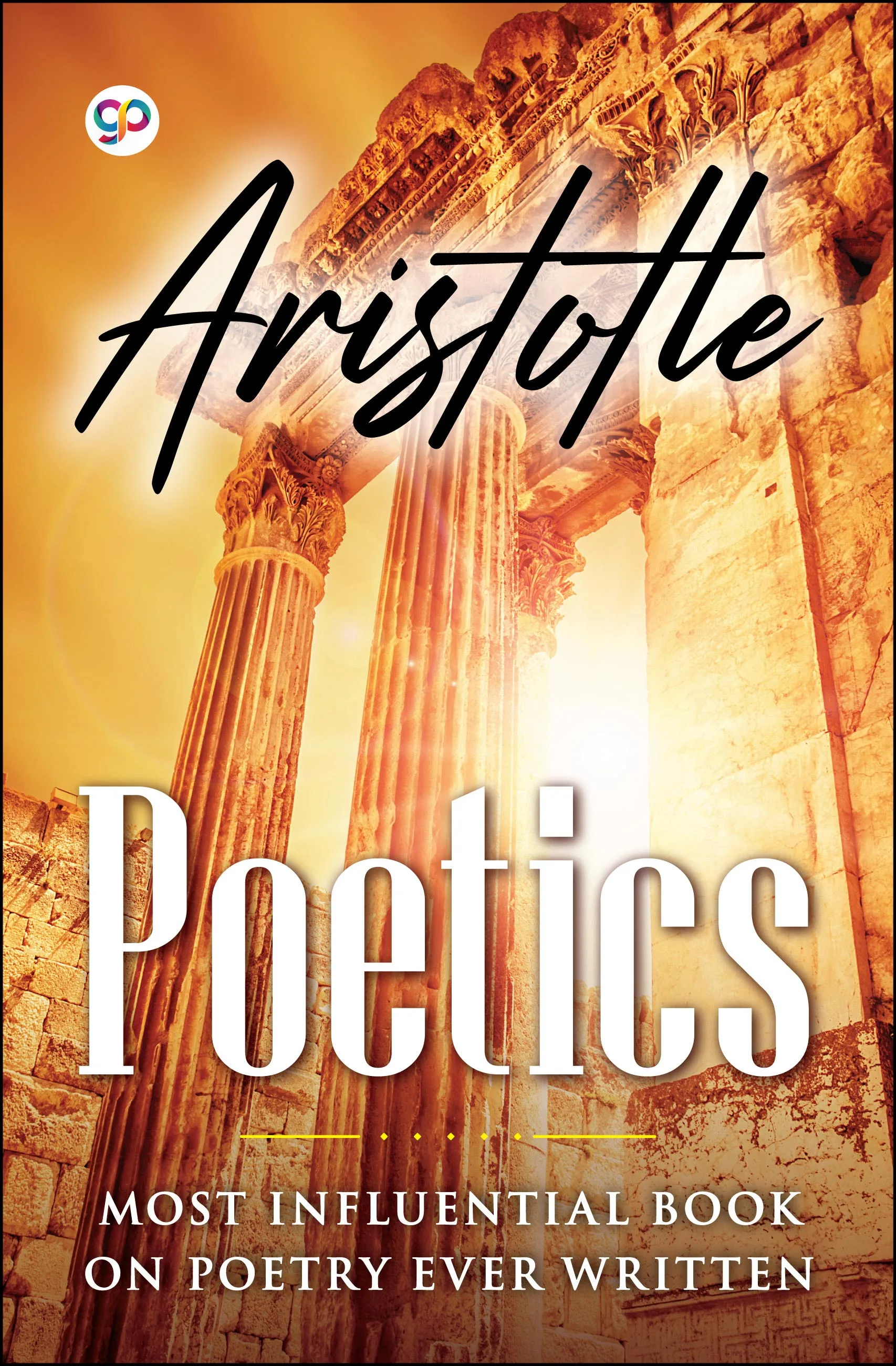
Download Cover Image
Do you want to download the full cover image for Poetics: Most influential book on poetry ever written?