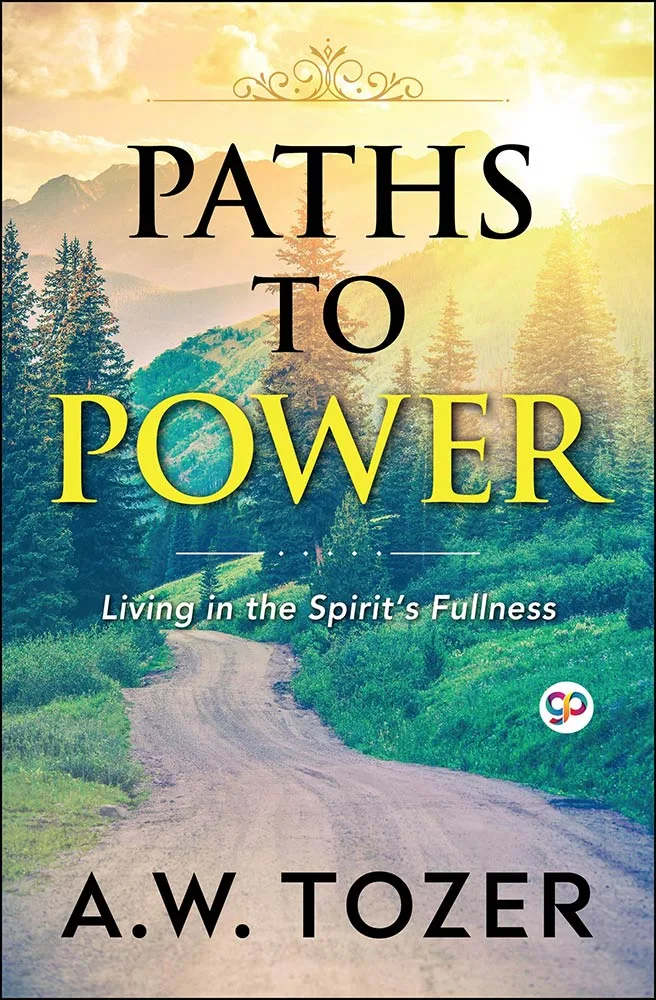
Paths to Power
eBook
• INR 210.00
• English
• 9789389716122
No ratings yet
| Publisher | General Press |
|---|---|
| ISBN13 | 9789389716122 |
| ASIN/SKU | B084CYWYT1 |
| Book Format | eBook |
| Language | English |
| List Price | INR 210.00 |
| Subject Code | REL012040, REL023000 |
| Publishing Date | 29/01/2020 |
| Book Code | BD00068663 |
Buy this Book
Amazon Stores
Ebook Stores
Other Stores
Discover Paths to Power by A.W. Tozer. This book is published by General Press in eBook format, ISBN 9789389716122, ASIN B084CYWYT1, under Christian Books and Bibles, Christian Devotionals, Christian Living.
Book Description
This volume urges Christians to compare their motives and methods with the plumb line of biblical truth. Each major idea may be a ‘Path’ leading to a life of abundant grace promised in the Sacred Word. 'Paths to Power' points Christians and churches to the age-old way of obedience, the only road to revival. Delivering a charge to weak churches, A.W. Tozer calls us to rise up, gather the wood, and ascend the mountain. Tozer affirms, believers may obtain the enabling that comes through the power of the holy spirit. Knowledge of the truth is not enough; the truth must be followed if we would realize in actual experience the blessedness which is here described.
Author Biography
Aiden Wilson Tozer (1897–1963) was an influential American Christian pastor, author, and spiritual mentor whose profound theological insights continue to resonate worldwide. Born into poverty in rural western Pennsylvania, Tozer was entirely self-educated, never attending high school or a theological seminary. In 1915, after hearing a street preacher in Akron, Ohio, he committed his life to Christianity, igniting a relentless, lifelong pursuit of God.
Despite his lack of formal training, Tozer began a 44-year ministry in 1919 as a pastor with the Christian and Missionary Alliance (C&MA). He spent three decades leading the Southside Alliance Church in Chicago, where his uncompromising, prophetic preaching drew thousands. In 1950, he expanded his influence by becoming the editor of The Alliance Weekly.
Tozer is best remembered for his enduring literary classics, most notably The Pursuit of God and The Knowledge of the Holy. These works emphasize the absolute majesty of God and the necessity of a deeply contemplative spiritual life. Often referred to as a "20th-century prophet," Tozer lived a remarkably simple lifestyle, giving away much of his book royalties and prioritizing prayer over material wealth. His legacy endures through his writings, which continue to challenge readers to seek a genuine, intimate relationship with the Divine.
Despite his lack of formal training, Tozer began a 44-year ministry in 1919 as a pastor with the Christian and Missionary Alliance (C&MA). He spent three decades leading the Southside Alliance Church in Chicago, where his uncompromising, prophetic preaching drew thousands. In 1950, he expanded his influence by becoming the editor of The Alliance Weekly.
Tozer is best remembered for his enduring literary classics, most notably The Pursuit of God and The Knowledge of the Holy. These works emphasize the absolute majesty of God and the necessity of a deeply contemplative spiritual life. Often referred to as a "20th-century prophet," Tozer lived a remarkably simple lifestyle, giving away much of his book royalties and prioritizing prayer over material wealth. His legacy endures through his writings, which continue to challenge readers to seek a genuine, intimate relationship with the Divine.
Editorial Reviews
Editorial Reviews will be added soon…
Book Summary
Paths to Power by A.W. Tozer, also published with the subtitle Living in the Spirit’s Fullness, is a concise but deeply challenging Christian book about spiritual power, obedience, the Holy Spirit, revival, and the authentic life of faith. Originally published in 1940 and later issued by Moody Publishers, the book is organized around seven chapters: “Power in Action,” “God’s Part and Man’s,” “The Fruits of Obedience,” “Miracles Follow the Plow,” “Doctrinal Hindrances,” “Through the Out-poured Spirit,” and “Unity and Revival.” Although the book is short, Tozer's argument is demanding: the Christian life is not meant to be merely a matter of correct beliefs, religious habits, church attendance, or theological vocabulary. Genuine spiritual power comes from a life surrendered to God, shaped by obedience, filled by the Holy Spirit, and expressed through action. For readers searching for a Paths to Power summary, A.W. Tozer book summary, Paths to Power analysis, Tozer on spiritual power, Tozer on obedience, Christian revival, or the meaning of living in the Spirit’s fullness, the book can be understood as a passionate call to recover the reality behind Christian faith.
Tozer begins with a basic but important distinction: a path is not the destination. The ideas discussed in the book are ways toward a deeper spiritual life, but simply knowing those ideas is not enough. Tozer insists that truth must be practiced before it can transform a person's life. This becomes the foundation for everything that follows. Christianity, in his view, cannot be reduced to intellectual agreement with doctrines. A person may understand biblical teaching perfectly and still remain spiritually powerless if that knowledge never becomes obedience. The book therefore challenges readers to move from theory to experience, from profession to practice, and from religious language to a life genuinely directed by God.
In “Power in Action,” Tozer begins by looking at the mission of the early Christian Church. He describes the coming of Jesus Christ into the world as the greatest event in history and the emergence of the Church as the next great event because the Church was called to carry Christ's life and message into the world. The task was humanly extraordinary. The first Christians had to proclaim that a man who had been executed like a criminal had risen from the dead and was the Son of God and Savior. Yet the early Church succeeded because its message was accompanied by spiritual power. Tozer's point is that Christian ministry was never intended to depend solely on human ability, organization, intelligence, or persuasive speech. The Church needed the power of God to accomplish a mission that human strength alone could never accomplish.
This idea leads to one of the book's central questions: Why does the modern Church so often appear spiritually weak? Tozer believes the answer is not simply a lack of knowledge. Churches may possess buildings, programs, educated ministers, institutions, books, and carefully organized activities while still lacking the spiritual vitality found in the early Church. For Tozer, power is not produced by external machinery. It comes from a living relationship with God. He therefore challenges Christians to examine whether their religious activity is actually flowing from spiritual life or whether it has become an efficient substitute for it.
The second chapter, “God’s Part and Man’s,” develops the relationship between divine grace and human responsibility. Tozer does not present spiritual growth as something Christians can manufacture through sheer determination. God is the source of spiritual power, and the Holy Spirit is essential to Christian life and ministry. Yet this does not mean that human beings have nothing to do. They must respond to God's grace through faith, surrender, obedience, prayer, and action. Tozer is especially concerned about the tendency to use theological ideas about grace as excuses for spiritual passivity. Grace does not eliminate responsibility; rather, it makes genuine obedience possible.
This balance between God's work and human response is one of the most practical ideas in Paths to Power. Tozer rejects both extremes. On one side is self-reliance—the belief that Christians can become spiritually powerful through discipline, talent, education, or personality alone. On the other side is passivity—the belief that because God must act, human beings can simply wait without responding. Tozer's answer is cooperation with divine grace. God provides the power, but believers must make themselves available to God and act upon what they know to be true.
The third chapter, “The Fruits of Obedience,” places obedience at the center of the book's message. Tozer argues that genuine faith inevitably produces obedience. Faith that never changes conduct is, in his understanding, spiritually empty. Obedience is not a way of earning God's favor; it is evidence that faith is alive. This distinction is crucial. Tozer does not suggest that Christians become acceptable to God by performing enough good deeds. Rather, he argues that authentic trust in God naturally expresses itself through a willingness to follow God's commands even when obedience is uncomfortable or costly.
For Tozer, this is where many Christians become uncomfortable. It is easy to speak about faith, grace, revival, spiritual power, or the Holy Spirit. It is much harder to obey when obedience requires sacrifice. Tozer therefore presents obedience as a test of spiritual authenticity. If a believer continually refuses what he or she knows God requires, then the problem is deeper than a lack of religious information. The problem is unwillingness. The spiritual life cannot become powerful while the will remains permanently resistant to God.
This leads naturally to the memorable chapter “Miracles Follow the Plow.” The image of the plow suggests work, preparation, perseverance, and movement. Tozer challenges the expectation that Christians should simply wait for miraculous intervention while neglecting the responsibilities already placed before them. Spiritual power does not encourage laziness. Instead, divine power works through people who are willing to obey and act. The metaphor suggests that a farmer cannot expect a harvest without first preparing the ground and planting the seed. Likewise, Christians cannot demand spiritual results while refusing to do the work of faithfulness. The chapter is therefore a warning against passive Christianity and an encouragement to combine prayer with action.
The principle applies to both individual believers and the Church. Christians may pray for revival, but they must also repent, obey, serve, forgive, preach, sacrifice, and live differently. Churches may pray for spiritual renewal, but they must also confront the attitudes and practices that prevent genuine renewal. Tozer's argument is refreshingly practical: miracles do not replace obedience. Divine power does not excuse human responsibility. Instead, it gives people the strength to carry out what God has called them to do.
The fifth chapter, “Doctrinal Hindrances,” turns Tozer's attention toward theology. This does not mean that he considers doctrine unimportant. On the contrary, Tozer is deeply concerned with biblical truth. His criticism is directed at doctrine when it becomes separated from spiritual life. Correct theology can become a hindrance when people use it to avoid obedience, dismiss the work of the Holy Spirit, or create arguments that have little connection with actual Christian living. Tozer is particularly concerned with contradictions between what Christians say they believe and how they actually live.
The chapter therefore asks readers to consider whether theological certainty has become a substitute for spiritual experience. A person can know the vocabulary of Christianity and still lack the reality of Christian discipleship. Tozer wants doctrine to lead somewhere. Biblical truth should produce worship, holiness, obedience, love, courage, service, and dependence upon God. Theology is valuable when it brings people closer to God; it becomes spiritually dangerous when it allows people to feel secure while remaining unchanged.
The sixth chapter, “Through the Out-poured Spirit,” brings the discussion directly to the Holy Spirit. Tozer believes that the Church cannot fulfill its mission through human strength. The Holy Spirit is not an optional addition to Christianity but central to the believer's life and the Church's power. The book's subtitle, Living in the Spirit’s Fullness, captures this emphasis. Tozer wants Christians to move beyond merely acknowledging the Holy Spirit as a theological doctrine and instead experience the Spirit's transforming presence in everyday life.
The Spirit's fullness, however, is not presented simply as an emotional religious experience. Tozer connects spiritual fullness with holiness, obedience, courage, service, and usefulness. The Spirit empowers believers to do what they could not accomplish through natural strength. This is why spiritual power must never be confused with personality, charisma, popularity, or dramatic religious experiences. For Tozer, the true evidence of spiritual power is a transformed life that increasingly reflects the character and purposes of Christ.
The final chapter, “Unity and Revival,” connects personal spiritual renewal with the life of the Church. Tozer sees genuine revival as something much deeper than increased attendance, excitement, or temporary enthusiasm. Revival requires spiritual awakening, and spiritual awakening requires obedience and surrender. A divided, self-centered, or spiritually complacent Church cannot expect lasting revival merely by organizing special meetings or adopting new methods. Revival begins when Christians return to God with seriousness and humility.
Unity is therefore important because spiritual renewal cannot flourish when Christians are consumed by rivalry, pride, jealousy, or unnecessary division. Tozer's concern is not that everyone must agree on every minor issue. Rather, he emphasizes a deeper unity rooted in devotion to Christ. When Christians become genuinely centered on God, they can begin to overcome the selfishness that divides them. Revival is therefore both personal and communal: individuals must experience spiritual renewal, but that renewal should ultimately affect the whole body of believers.
One of the strongest themes running through Paths to Power by A.W. Tozer is the difference between religious appearance and spiritual reality. Tozer repeatedly warns that Christianity can become external. People can attend church, know hymns, repeat doctrines, participate in ministries, and speak Christian language without possessing the spiritual vitality they claim. He wants readers to look beneath appearances. The essential question is not whether someone looks religious but whether that person's life demonstrates dependence upon God.
Tozer's writing is deliberately urgent. He does not write as a detached academic observer. He writes like a pastor attempting to wake sleeping Christians. His criticism can sometimes sound severe because he believes spiritual complacency is dangerous. Yet beneath the severity is a positive conviction: Christians do not have to remain spiritually powerless. The way toward greater spiritual power is available, but it requires surrender, obedience, prayer, faith, and dependence upon the Holy Spirit.
The book also challenges a common misunderstanding of spiritual power. Tozer does not equate power with worldly success. A powerful Christian is not necessarily the person with the largest audience, greatest influence, strongest personality, or most impressive ministry. Spiritual power means being enabled by God to live faithfully and accomplish God's purposes. It may involve preaching, evangelism, prayer, service, sacrifice, endurance, or quiet faithfulness that receives little public recognition. In this sense, Tozer's definition of power is profoundly different from the world's definition of power.
For readers looking for the main message of Paths to Power, Tozer's argument can be summarized simply: the Church does not need more religious activity nearly as much as it needs renewed spiritual life. That life comes from God, but believers must respond to God through obedience. Faith must become action. Prayer must be accompanied by willingness. Doctrine must produce transformation. The Holy Spirit must not remain merely an article of belief but must become a living reality in Christian experience. Revival must begin with people who are willing to surrender themselves fully to God.
Ultimately, Paths to Power by A.W. Tozer is a short book with a demanding message. Tozer argues that spiritual power is not a mysterious privilege reserved for a few exceptional Christians. It is connected to the ordinary but costly disciplines of faith: obedience, surrender, prayer, humility, action, and dependence upon the Holy Spirit. The book challenges Christians who are satisfied with religious routine to ask whether they are truly living in the fullness of the spiritual life God offers. Its enduring appeal lies in the simplicity and seriousness of that challenge. Tozer does not promise an easy path to spiritual power. Instead, he points readers toward a path that requires them to obey what they already know, trust God more completely, abandon spiritual excuses, and allow the Holy Spirit to work through their lives. In that sense, Paths to Power is ultimately not a book about obtaining power for personal achievement; it is a call to become more completely available to God. The real path to power, Tozer argues, is the path of obedience, and the purpose of that power is not self-glorification but faithful Christian service, spiritual renewal, and the advancement of God's work in the world.
Tozer begins with a basic but important distinction: a path is not the destination. The ideas discussed in the book are ways toward a deeper spiritual life, but simply knowing those ideas is not enough. Tozer insists that truth must be practiced before it can transform a person's life. This becomes the foundation for everything that follows. Christianity, in his view, cannot be reduced to intellectual agreement with doctrines. A person may understand biblical teaching perfectly and still remain spiritually powerless if that knowledge never becomes obedience. The book therefore challenges readers to move from theory to experience, from profession to practice, and from religious language to a life genuinely directed by God.
In “Power in Action,” Tozer begins by looking at the mission of the early Christian Church. He describes the coming of Jesus Christ into the world as the greatest event in history and the emergence of the Church as the next great event because the Church was called to carry Christ's life and message into the world. The task was humanly extraordinary. The first Christians had to proclaim that a man who had been executed like a criminal had risen from the dead and was the Son of God and Savior. Yet the early Church succeeded because its message was accompanied by spiritual power. Tozer's point is that Christian ministry was never intended to depend solely on human ability, organization, intelligence, or persuasive speech. The Church needed the power of God to accomplish a mission that human strength alone could never accomplish.
This idea leads to one of the book's central questions: Why does the modern Church so often appear spiritually weak? Tozer believes the answer is not simply a lack of knowledge. Churches may possess buildings, programs, educated ministers, institutions, books, and carefully organized activities while still lacking the spiritual vitality found in the early Church. For Tozer, power is not produced by external machinery. It comes from a living relationship with God. He therefore challenges Christians to examine whether their religious activity is actually flowing from spiritual life or whether it has become an efficient substitute for it.
The second chapter, “God’s Part and Man’s,” develops the relationship between divine grace and human responsibility. Tozer does not present spiritual growth as something Christians can manufacture through sheer determination. God is the source of spiritual power, and the Holy Spirit is essential to Christian life and ministry. Yet this does not mean that human beings have nothing to do. They must respond to God's grace through faith, surrender, obedience, prayer, and action. Tozer is especially concerned about the tendency to use theological ideas about grace as excuses for spiritual passivity. Grace does not eliminate responsibility; rather, it makes genuine obedience possible.
This balance between God's work and human response is one of the most practical ideas in Paths to Power. Tozer rejects both extremes. On one side is self-reliance—the belief that Christians can become spiritually powerful through discipline, talent, education, or personality alone. On the other side is passivity—the belief that because God must act, human beings can simply wait without responding. Tozer's answer is cooperation with divine grace. God provides the power, but believers must make themselves available to God and act upon what they know to be true.
The third chapter, “The Fruits of Obedience,” places obedience at the center of the book's message. Tozer argues that genuine faith inevitably produces obedience. Faith that never changes conduct is, in his understanding, spiritually empty. Obedience is not a way of earning God's favor; it is evidence that faith is alive. This distinction is crucial. Tozer does not suggest that Christians become acceptable to God by performing enough good deeds. Rather, he argues that authentic trust in God naturally expresses itself through a willingness to follow God's commands even when obedience is uncomfortable or costly.
For Tozer, this is where many Christians become uncomfortable. It is easy to speak about faith, grace, revival, spiritual power, or the Holy Spirit. It is much harder to obey when obedience requires sacrifice. Tozer therefore presents obedience as a test of spiritual authenticity. If a believer continually refuses what he or she knows God requires, then the problem is deeper than a lack of religious information. The problem is unwillingness. The spiritual life cannot become powerful while the will remains permanently resistant to God.
This leads naturally to the memorable chapter “Miracles Follow the Plow.” The image of the plow suggests work, preparation, perseverance, and movement. Tozer challenges the expectation that Christians should simply wait for miraculous intervention while neglecting the responsibilities already placed before them. Spiritual power does not encourage laziness. Instead, divine power works through people who are willing to obey and act. The metaphor suggests that a farmer cannot expect a harvest without first preparing the ground and planting the seed. Likewise, Christians cannot demand spiritual results while refusing to do the work of faithfulness. The chapter is therefore a warning against passive Christianity and an encouragement to combine prayer with action.
The principle applies to both individual believers and the Church. Christians may pray for revival, but they must also repent, obey, serve, forgive, preach, sacrifice, and live differently. Churches may pray for spiritual renewal, but they must also confront the attitudes and practices that prevent genuine renewal. Tozer's argument is refreshingly practical: miracles do not replace obedience. Divine power does not excuse human responsibility. Instead, it gives people the strength to carry out what God has called them to do.
The fifth chapter, “Doctrinal Hindrances,” turns Tozer's attention toward theology. This does not mean that he considers doctrine unimportant. On the contrary, Tozer is deeply concerned with biblical truth. His criticism is directed at doctrine when it becomes separated from spiritual life. Correct theology can become a hindrance when people use it to avoid obedience, dismiss the work of the Holy Spirit, or create arguments that have little connection with actual Christian living. Tozer is particularly concerned with contradictions between what Christians say they believe and how they actually live.
The chapter therefore asks readers to consider whether theological certainty has become a substitute for spiritual experience. A person can know the vocabulary of Christianity and still lack the reality of Christian discipleship. Tozer wants doctrine to lead somewhere. Biblical truth should produce worship, holiness, obedience, love, courage, service, and dependence upon God. Theology is valuable when it brings people closer to God; it becomes spiritually dangerous when it allows people to feel secure while remaining unchanged.
The sixth chapter, “Through the Out-poured Spirit,” brings the discussion directly to the Holy Spirit. Tozer believes that the Church cannot fulfill its mission through human strength. The Holy Spirit is not an optional addition to Christianity but central to the believer's life and the Church's power. The book's subtitle, Living in the Spirit’s Fullness, captures this emphasis. Tozer wants Christians to move beyond merely acknowledging the Holy Spirit as a theological doctrine and instead experience the Spirit's transforming presence in everyday life.
The Spirit's fullness, however, is not presented simply as an emotional religious experience. Tozer connects spiritual fullness with holiness, obedience, courage, service, and usefulness. The Spirit empowers believers to do what they could not accomplish through natural strength. This is why spiritual power must never be confused with personality, charisma, popularity, or dramatic religious experiences. For Tozer, the true evidence of spiritual power is a transformed life that increasingly reflects the character and purposes of Christ.
The final chapter, “Unity and Revival,” connects personal spiritual renewal with the life of the Church. Tozer sees genuine revival as something much deeper than increased attendance, excitement, or temporary enthusiasm. Revival requires spiritual awakening, and spiritual awakening requires obedience and surrender. A divided, self-centered, or spiritually complacent Church cannot expect lasting revival merely by organizing special meetings or adopting new methods. Revival begins when Christians return to God with seriousness and humility.
Unity is therefore important because spiritual renewal cannot flourish when Christians are consumed by rivalry, pride, jealousy, or unnecessary division. Tozer's concern is not that everyone must agree on every minor issue. Rather, he emphasizes a deeper unity rooted in devotion to Christ. When Christians become genuinely centered on God, they can begin to overcome the selfishness that divides them. Revival is therefore both personal and communal: individuals must experience spiritual renewal, but that renewal should ultimately affect the whole body of believers.
One of the strongest themes running through Paths to Power by A.W. Tozer is the difference between religious appearance and spiritual reality. Tozer repeatedly warns that Christianity can become external. People can attend church, know hymns, repeat doctrines, participate in ministries, and speak Christian language without possessing the spiritual vitality they claim. He wants readers to look beneath appearances. The essential question is not whether someone looks religious but whether that person's life demonstrates dependence upon God.
Tozer's writing is deliberately urgent. He does not write as a detached academic observer. He writes like a pastor attempting to wake sleeping Christians. His criticism can sometimes sound severe because he believes spiritual complacency is dangerous. Yet beneath the severity is a positive conviction: Christians do not have to remain spiritually powerless. The way toward greater spiritual power is available, but it requires surrender, obedience, prayer, faith, and dependence upon the Holy Spirit.
The book also challenges a common misunderstanding of spiritual power. Tozer does not equate power with worldly success. A powerful Christian is not necessarily the person with the largest audience, greatest influence, strongest personality, or most impressive ministry. Spiritual power means being enabled by God to live faithfully and accomplish God's purposes. It may involve preaching, evangelism, prayer, service, sacrifice, endurance, or quiet faithfulness that receives little public recognition. In this sense, Tozer's definition of power is profoundly different from the world's definition of power.
For readers looking for the main message of Paths to Power, Tozer's argument can be summarized simply: the Church does not need more religious activity nearly as much as it needs renewed spiritual life. That life comes from God, but believers must respond to God through obedience. Faith must become action. Prayer must be accompanied by willingness. Doctrine must produce transformation. The Holy Spirit must not remain merely an article of belief but must become a living reality in Christian experience. Revival must begin with people who are willing to surrender themselves fully to God.
Ultimately, Paths to Power by A.W. Tozer is a short book with a demanding message. Tozer argues that spiritual power is not a mysterious privilege reserved for a few exceptional Christians. It is connected to the ordinary but costly disciplines of faith: obedience, surrender, prayer, humility, action, and dependence upon the Holy Spirit. The book challenges Christians who are satisfied with religious routine to ask whether they are truly living in the fullness of the spiritual life God offers. Its enduring appeal lies in the simplicity and seriousness of that challenge. Tozer does not promise an easy path to spiritual power. Instead, he points readers toward a path that requires them to obey what they already know, trust God more completely, abandon spiritual excuses, and allow the Holy Spirit to work through their lives. In that sense, Paths to Power is ultimately not a book about obtaining power for personal achievement; it is a call to become more completely available to God. The real path to power, Tozer argues, is the path of obedience, and the purpose of that power is not self-glorification but faithful Christian service, spiritual renewal, and the advancement of God's work in the world.
Sample Chapters
Sample Chapters will be added soon…
Reader Reviews
No reviews yet.
Paths to Power