
The Ego and the Id
eBook
• INR 70.00
• English
• 9789389716146
No ratings yet
| Publisher | General Press |
|---|---|
| ISBN13 | 9789389716146 |
| ASIN/SKU | B084CZ9PHC |
| Book Format | eBook |
| Language | English |
| List Price | INR 70.00 |
| Subject Code | PSY045010, PSY030000 |
| Publishing Date | 29/01/2020 |
| Book Code | BD00068664 |
Buy this Book
Amazon Stores
Ebook Stores
Other Stores
Discover The Ego and the Id by Sigmund Freud. This book is published by General Press in eBook format, ISBN 9789389716146, ASIN B084CZ9PHC, under Non Fiction, Philosophy, Psychology.
Book Description
In this book, ‘The Ego and the Id’, Sigmund Freud delves deeper into the concepts of the human mind and the results of the conflicts and workings between them. All human behaviors and traits, according to this 1923 study, derive from the complicated interactions of three elements of the psyche: the id, the ego, and the superego. Freud claimed these components of the human psyche controlled all processes of personality, behaviors, and traits in a person. The Id was a person’s most basic and impulsive instincts—the ones that feed into our deepest desires and physical needs. The Super-Ego was the opposite of the id. This component controlled our highest morals and standards, operating through our conscience and making us desire to be our most ideal-selves. The piece in the middle is the Ego. The ego mediates between the id and realities of the world around us, while being supervised (and guilted) by the super-ego.
Author Biography
Born Sigismund Schlomo Freud in 1856 in Freiberg, Moravia, he moved with his family to Vienna, Austria, at a young age. A brilliant student, Freud entered the University of Vienna at seventeen to study medicine. Initially focusing on neurology and zoology, he conducted significant research on the nervous systems of marine life. After earning his medical degree, he began working at the Vienna General Hospital, where his fascination with the complex workings of the human brain gradually shifted his focus from the physical structures of nerves to the realm of psychological disorders.
Freud's pivotal transition occurred in the 1880s following his collaboration with physician Josef Breuer and his studies under French neurologist Jean-Martin Charcot. Intrigued by the treatment of hysteria through hypnosis, Freud began developing a revolutionary clinical method centered on dialogue. He posited that unexpressed, deeply repressed traumatic memories in the unconscious mind were the root cause of psychological distress. By encouraging patients to speak freely about their dreams, memories, and childhood experiences—a technique known as free association—Freud established the foundational framework of psychoanalysis.
In 1899, Freud published his seminal work, The Interpretation of Dreams, introducing the concept of the unconscious mind and arguing that dreams are disguised fulfillments of repressed wishes. This was followed by a series of highly influential and controversial publications outlining his theories on psychosexual development, the Oedipus complex, and the tripartite structure of the psyche: the id, ego, and superego. Although his ideas frequently scandalized the conservative Victorian medical establishment, they eventually attracted a dedicated circle of followers, transforming psychoanalysis into an international movement.
Despite battling painful jaw cancer for the last sixteen years of his life, Freud remained a remarkably prolific writer and clinician. In 1938, the Nazi annexation of Austria forced the eighty-two-year-old Freud, who was of Jewish descent, to flee Vienna for London to escape persecution. He died there the following year. While many of his specific clinical theories have been heavily criticized or discarded by modern psychiatry, Freud's profound cultural impact is undeniable. He forever altered the way humanity understands the subconscious, shaping not just psychology, but literature, art, and modern thought.
Freud's pivotal transition occurred in the 1880s following his collaboration with physician Josef Breuer and his studies under French neurologist Jean-Martin Charcot. Intrigued by the treatment of hysteria through hypnosis, Freud began developing a revolutionary clinical method centered on dialogue. He posited that unexpressed, deeply repressed traumatic memories in the unconscious mind were the root cause of psychological distress. By encouraging patients to speak freely about their dreams, memories, and childhood experiences—a technique known as free association—Freud established the foundational framework of psychoanalysis.
In 1899, Freud published his seminal work, The Interpretation of Dreams, introducing the concept of the unconscious mind and arguing that dreams are disguised fulfillments of repressed wishes. This was followed by a series of highly influential and controversial publications outlining his theories on psychosexual development, the Oedipus complex, and the tripartite structure of the psyche: the id, ego, and superego. Although his ideas frequently scandalized the conservative Victorian medical establishment, they eventually attracted a dedicated circle of followers, transforming psychoanalysis into an international movement.
Despite battling painful jaw cancer for the last sixteen years of his life, Freud remained a remarkably prolific writer and clinician. In 1938, the Nazi annexation of Austria forced the eighty-two-year-old Freud, who was of Jewish descent, to flee Vienna for London to escape persecution. He died there the following year. While many of his specific clinical theories have been heavily criticized or discarded by modern psychiatry, Freud's profound cultural impact is undeniable. He forever altered the way humanity understands the subconscious, shaping not just psychology, but literature, art, and modern thought.
Editorial Reviews
Editorial Reviews will be added soon…
Book Summary
Sigmund Freud’s The Ego and the Id, first published in 1923, is one of the foundational works of psychoanalytic theory and one of the clearest statements of Freud’s mature understanding of the human mind. In this short but intellectually demanding book, Freud moves beyond his earlier division of mental life into the conscious, preconscious, and unconscious and develops the structural model for which he became famous: the id, ego, and superego. The book explores how these three psychological forces interact, conflict, and shape human behavior. It also connects this model with Freud’s theories of repression, guilt, the Oedipus complex, narcissism, the life instinct, and the death instinct. The result is an unsettling picture of human psychology in which the conscious self is not fully in control of its own thoughts and actions.
At the heart of The Ego and the Id is Freud’s challenge to the ordinary idea that a person is a unified, rational self who consciously decides what to think and do. Freud argues that consciousness is only one part of mental life. Much of what influences behavior remains outside awareness. More importantly, even the ego—the part of the personality we normally experience as “I”—contains unconscious processes. This is a major development in Freud’s thinking. Earlier, it was tempting to equate the ego with consciousness and the unconscious with repressed material. In The Ego and the Id, Freud argues that this division is inadequate because the forces responsible for repression can themselves operate unconsciously.
The book therefore begins by revisiting the distinction between conscious and unconscious mental activity. Freud accepts that consciousness is important, but he insists that it cannot explain the whole mind. Some mental processes are not currently conscious but can easily become conscious; these belong to what is commonly called the preconscious. Other thoughts, memories, wishes, and impulses are actively kept outside awareness through repression. Yet the ego itself participates in this process of repression, meaning that a person can resist becoming aware of something without consciously deciding to resist it. This insight allows Freud to construct a more complicated picture of the psyche.
Freud’s new model begins with the id, which he describes as the deepest and most inaccessible part of the personality. The id contains instinctual energies and unconscious impulses. It is not organized according to ordinary logic, morality, or social rules. Instead, it seeks the satisfaction of basic drives. In the simplified language often used to explain Freud, the id says, “I want this now.” It operates according to what Freud calls the pleasure principle, seeking gratification and attempting to avoid unpleasure. Modern introductory psychology texts still use this framework to explain Freud’s distinction between the id, ego, and superego.
The id is therefore not evil. It is simply primitive, instinctual, and largely unconscious. It contains powerful energies that are necessary for life but can become disruptive when they cannot be expressed appropriately. Hunger, sexuality, aggression, and other powerful desires can be understood within this instinctual dimension. The important point is that the id does not naturally organize itself around social responsibility. It wants satisfaction, while the external world imposes limits. The conflict between desire and reality is therefore unavoidable.
The ego develops in response to this conflict. Unlike the id, the ego is concerned with external reality. It attempts to find practical ways of satisfying instinctual demands without producing unacceptable consequences. If the id wants immediate gratification, the ego asks whether gratification is possible, safe, socially acceptable, or appropriate. The ego therefore operates according to what Freud calls the reality principle. It delays, redirects, negotiates, and manages desire. However, Freud emphasizes that the ego is not an all-powerful commander. It is itself partly unconscious and is constantly pressured from several directions.
This makes the ego one of the most tragic figures in Freud’s model. It must respond simultaneously to instinctual demands from the id, moral demands from the superego, and practical demands from external reality. Freud describes the ego as having to serve multiple “masters.” It is therefore permanently exposed to anxiety because it may fail to satisfy any of them completely. The ego is not simply the rational ruler of the mind; it is more like a negotiator attempting to maintain stability in the middle of competing forces.
The third component, the superego, is perhaps Freud’s most important addition in this book. The superego represents internalized moral standards, ideals, prohibitions, and judgments. It develops partly through the child’s relationship with parents and through the process of identification. The child gradually internalizes parental expectations, rules, ideals, and prohibitions, so that external authority eventually becomes an internal authority. The child no longer needs a parent physically present to experience approval, disapproval, obligation, or guilt. The parent has, psychologically speaking, been installed inside the personality.
Freud connects the formation of the superego to the Oedipus complex, one of the most controversial elements of his theory. In his account, the young child develops emotionally charged attachments and rivalries within the family. The resolution of these conflicts involves identification with the parents and the internalization of their authority. The superego consequently becomes the heir to these early childhood experiences. Freud argues that this process explains why the moral voice within us can sometimes be so severe. It is not simply a calm, rational ethical guide; it can become demanding, punitive, and even cruel.
This leads directly to Freud’s discussion of guilt. One of the book’s striking arguments is that people can feel guilty without knowing exactly why. The source of guilt may be unconscious. A person may consciously believe that they have done nothing wrong while still experiencing self-reproach, anxiety, depression, or an unexplained sense of failure. Freud sees such experiences as evidence that the superego can judge the ego outside conscious awareness. The moral authority within the mind can therefore operate silently and powerfully.
The relationship between the ego and superego becomes especially important in Freud’s explanation of melancholia and other psychological difficulties. When the superego becomes excessively harsh, the ego may experience intense self-criticism and guilt. In some conditions, the person turns aggression inward rather than directing it toward the external world. Freud’s analysis suggests that psychological suffering can sometimes arise not because a person lacks morality but because the internal moral authority has become excessively punitive.
Another major idea in The Ego and the Id is Freud’s theory of the life and death instincts. This develops ideas he had introduced in Beyond the Pleasure Principle. Freud proposes that human behavior is influenced by two broad tendencies. The life instinct, associated with Eros, promotes union, preservation, sexuality, creativity, and the continuation of life. The death instinct, by contrast, represents a tendency toward destruction and a return to an inorganic state. Aggression can be understood as one manifestation of this destructive tendency.
The introduction of the death instinct makes Freud’s psychological system darker and more complex. Human beings are not motivated only by the desire for pleasure and survival. There may also be a destructive tendency within psychological life. This can be directed outward as aggression or inward as self-destructive behavior. Freud does not describe the death instinct as a simple conscious wish to die. Rather, it is a theoretical force that helps him explain repetition, aggression, destruction, and other phenomena that seem difficult to understand through the pleasure principle alone.
Freud then considers how the life and death instincts interact. They are not always completely separate. Their energies can become mixed, redirected, or transformed. Love can contain aggression; aggression can be linked with attachment; self-preservation can involve hostility toward perceived threats. The human personality therefore cannot be divided neatly into good impulses and bad impulses. Psychological life is a constant mixture of competing energies.
The concept of desexualization, or the transformation of sexual energy into other forms of activity, also plays an important role. Freud connects this process with identification and the development of the ego and superego. Instinctual energy can be redirected into intellectual, social, moral, or cultural activity. This helps explain how raw drives can become incorporated into the complex structures of human personality and civilization.
Freud’s discussion of narcissism also contributes to the book’s larger argument. The ego is not completely independent of instinctual energy. The ego itself can become an object of emotional investment. People can direct libido toward themselves, their ideals, or their own self-image. This helps Freud explain phenomena such as self-esteem, self-love, idealization, and certain forms of psychological conflict. The ego is therefore both the manager of instinctual energy and, at times, one of its objects.
One of the book’s most important conclusions is that the ego is ultimately less powerful than ordinary consciousness assumes. A person may imagine that “I” am the one making decisions, but Freud suggests that the ego is constantly negotiating forces that originate elsewhere. Instinctual demands rise from the id, moral judgments descend from the superego, and reality imposes its own requirements. The ego must somehow create a workable compromise. Its apparent independence is therefore limited.
This is why The Ego and the Id can feel both psychologically illuminating and unsettling. Freud dismantles the comforting idea that people fully understand their own motives. We may tell ourselves one story about why we behave as we do while unconscious wishes, fears, conflicts, and moral pressures are influencing us beneath the surface. The task of psychoanalysis, in Freud’s framework, is partly to make these hidden processes more accessible to awareness so that the individual can develop greater psychological freedom.
The book also helps explain Freud’s approach to psychological illness. Different disorders can be understood as different kinds of conflict. Conflict between the ego and id may produce one set of symptoms; conflict between ego and superego may produce another; and conflict between the ego and external reality can produce still other forms of disturbance. Later summaries of Freud’s theory have emphasized this dynamic model as a way of understanding neurosis, melancholia, and psychosis.
Importantly, The Ego and the Id should be read as a historical and theoretical work rather than as a modern clinical manual. Many Freudian concepts, including the Oedipus complex, the death instinct, and some of his claims about sexuality and personality development, remain controversial or have been substantially revised or rejected by later psychological research. Contemporary psychology does not generally treat Freud’s structural model as an empirically established description of the brain. Nevertheless, the book remains extraordinarily influential because it changed the language people use to think about unconscious motivation, internal conflict, defense, guilt, personality, and the complexity of the self.
Its lasting significance lies partly in the vocabulary it introduced or consolidated. The terms id, ego, and superego have entered everyday culture, even though they are often used more casually than Freud intended. The structural model also influenced later schools of psychoanalysis and ego psychology, many of which modified Freud’s original ideas while retaining his basic insight that personality involves competing psychological demands.
Ultimately, The Ego and the Id presents the human personality as a dynamic field of conflict rather than a unified and completely rational self. The id represents instinctual desire; the superego represents internalized ideals and prohibitions; and the ego struggles to mediate between instinct, morality, and reality. None of these forces exists in complete isolation, and the boundaries between them are fluid. Even the ego contains unconscious elements, making self-knowledge more difficult than it initially appears.
For readers searching for an in-depth summary of The Ego and the Id by Sigmund Freud, the central message is that human behavior cannot be understood by looking only at conscious thought. Freud argues that beneath the surface of everyday awareness lies a complicated system of desires, defenses, memories, moral judgments, and conflicting instincts. The ego tries to create order, but it must constantly negotiate between the demanding id, the critical superego, and the limitations of reality. The result is a picture of human nature that is conflicted, imperfect, and often only partially conscious of its own motives. Even where Freud’s specific theories have been challenged, his central provocation remains powerful: we are not always the masters of our own minds, and understanding ourselves requires looking beneath the stories we consciously tell about who we are and why we act.
At the heart of The Ego and the Id is Freud’s challenge to the ordinary idea that a person is a unified, rational self who consciously decides what to think and do. Freud argues that consciousness is only one part of mental life. Much of what influences behavior remains outside awareness. More importantly, even the ego—the part of the personality we normally experience as “I”—contains unconscious processes. This is a major development in Freud’s thinking. Earlier, it was tempting to equate the ego with consciousness and the unconscious with repressed material. In The Ego and the Id, Freud argues that this division is inadequate because the forces responsible for repression can themselves operate unconsciously.
The book therefore begins by revisiting the distinction between conscious and unconscious mental activity. Freud accepts that consciousness is important, but he insists that it cannot explain the whole mind. Some mental processes are not currently conscious but can easily become conscious; these belong to what is commonly called the preconscious. Other thoughts, memories, wishes, and impulses are actively kept outside awareness through repression. Yet the ego itself participates in this process of repression, meaning that a person can resist becoming aware of something without consciously deciding to resist it. This insight allows Freud to construct a more complicated picture of the psyche.
Freud’s new model begins with the id, which he describes as the deepest and most inaccessible part of the personality. The id contains instinctual energies and unconscious impulses. It is not organized according to ordinary logic, morality, or social rules. Instead, it seeks the satisfaction of basic drives. In the simplified language often used to explain Freud, the id says, “I want this now.” It operates according to what Freud calls the pleasure principle, seeking gratification and attempting to avoid unpleasure. Modern introductory psychology texts still use this framework to explain Freud’s distinction between the id, ego, and superego.
The id is therefore not evil. It is simply primitive, instinctual, and largely unconscious. It contains powerful energies that are necessary for life but can become disruptive when they cannot be expressed appropriately. Hunger, sexuality, aggression, and other powerful desires can be understood within this instinctual dimension. The important point is that the id does not naturally organize itself around social responsibility. It wants satisfaction, while the external world imposes limits. The conflict between desire and reality is therefore unavoidable.
The ego develops in response to this conflict. Unlike the id, the ego is concerned with external reality. It attempts to find practical ways of satisfying instinctual demands without producing unacceptable consequences. If the id wants immediate gratification, the ego asks whether gratification is possible, safe, socially acceptable, or appropriate. The ego therefore operates according to what Freud calls the reality principle. It delays, redirects, negotiates, and manages desire. However, Freud emphasizes that the ego is not an all-powerful commander. It is itself partly unconscious and is constantly pressured from several directions.
This makes the ego one of the most tragic figures in Freud’s model. It must respond simultaneously to instinctual demands from the id, moral demands from the superego, and practical demands from external reality. Freud describes the ego as having to serve multiple “masters.” It is therefore permanently exposed to anxiety because it may fail to satisfy any of them completely. The ego is not simply the rational ruler of the mind; it is more like a negotiator attempting to maintain stability in the middle of competing forces.
The third component, the superego, is perhaps Freud’s most important addition in this book. The superego represents internalized moral standards, ideals, prohibitions, and judgments. It develops partly through the child’s relationship with parents and through the process of identification. The child gradually internalizes parental expectations, rules, ideals, and prohibitions, so that external authority eventually becomes an internal authority. The child no longer needs a parent physically present to experience approval, disapproval, obligation, or guilt. The parent has, psychologically speaking, been installed inside the personality.
Freud connects the formation of the superego to the Oedipus complex, one of the most controversial elements of his theory. In his account, the young child develops emotionally charged attachments and rivalries within the family. The resolution of these conflicts involves identification with the parents and the internalization of their authority. The superego consequently becomes the heir to these early childhood experiences. Freud argues that this process explains why the moral voice within us can sometimes be so severe. It is not simply a calm, rational ethical guide; it can become demanding, punitive, and even cruel.
This leads directly to Freud’s discussion of guilt. One of the book’s striking arguments is that people can feel guilty without knowing exactly why. The source of guilt may be unconscious. A person may consciously believe that they have done nothing wrong while still experiencing self-reproach, anxiety, depression, or an unexplained sense of failure. Freud sees such experiences as evidence that the superego can judge the ego outside conscious awareness. The moral authority within the mind can therefore operate silently and powerfully.
The relationship between the ego and superego becomes especially important in Freud’s explanation of melancholia and other psychological difficulties. When the superego becomes excessively harsh, the ego may experience intense self-criticism and guilt. In some conditions, the person turns aggression inward rather than directing it toward the external world. Freud’s analysis suggests that psychological suffering can sometimes arise not because a person lacks morality but because the internal moral authority has become excessively punitive.
Another major idea in The Ego and the Id is Freud’s theory of the life and death instincts. This develops ideas he had introduced in Beyond the Pleasure Principle. Freud proposes that human behavior is influenced by two broad tendencies. The life instinct, associated with Eros, promotes union, preservation, sexuality, creativity, and the continuation of life. The death instinct, by contrast, represents a tendency toward destruction and a return to an inorganic state. Aggression can be understood as one manifestation of this destructive tendency.
The introduction of the death instinct makes Freud’s psychological system darker and more complex. Human beings are not motivated only by the desire for pleasure and survival. There may also be a destructive tendency within psychological life. This can be directed outward as aggression or inward as self-destructive behavior. Freud does not describe the death instinct as a simple conscious wish to die. Rather, it is a theoretical force that helps him explain repetition, aggression, destruction, and other phenomena that seem difficult to understand through the pleasure principle alone.
Freud then considers how the life and death instincts interact. They are not always completely separate. Their energies can become mixed, redirected, or transformed. Love can contain aggression; aggression can be linked with attachment; self-preservation can involve hostility toward perceived threats. The human personality therefore cannot be divided neatly into good impulses and bad impulses. Psychological life is a constant mixture of competing energies.
The concept of desexualization, or the transformation of sexual energy into other forms of activity, also plays an important role. Freud connects this process with identification and the development of the ego and superego. Instinctual energy can be redirected into intellectual, social, moral, or cultural activity. This helps explain how raw drives can become incorporated into the complex structures of human personality and civilization.
Freud’s discussion of narcissism also contributes to the book’s larger argument. The ego is not completely independent of instinctual energy. The ego itself can become an object of emotional investment. People can direct libido toward themselves, their ideals, or their own self-image. This helps Freud explain phenomena such as self-esteem, self-love, idealization, and certain forms of psychological conflict. The ego is therefore both the manager of instinctual energy and, at times, one of its objects.
One of the book’s most important conclusions is that the ego is ultimately less powerful than ordinary consciousness assumes. A person may imagine that “I” am the one making decisions, but Freud suggests that the ego is constantly negotiating forces that originate elsewhere. Instinctual demands rise from the id, moral judgments descend from the superego, and reality imposes its own requirements. The ego must somehow create a workable compromise. Its apparent independence is therefore limited.
This is why The Ego and the Id can feel both psychologically illuminating and unsettling. Freud dismantles the comforting idea that people fully understand their own motives. We may tell ourselves one story about why we behave as we do while unconscious wishes, fears, conflicts, and moral pressures are influencing us beneath the surface. The task of psychoanalysis, in Freud’s framework, is partly to make these hidden processes more accessible to awareness so that the individual can develop greater psychological freedom.
The book also helps explain Freud’s approach to psychological illness. Different disorders can be understood as different kinds of conflict. Conflict between the ego and id may produce one set of symptoms; conflict between ego and superego may produce another; and conflict between the ego and external reality can produce still other forms of disturbance. Later summaries of Freud’s theory have emphasized this dynamic model as a way of understanding neurosis, melancholia, and psychosis.
Importantly, The Ego and the Id should be read as a historical and theoretical work rather than as a modern clinical manual. Many Freudian concepts, including the Oedipus complex, the death instinct, and some of his claims about sexuality and personality development, remain controversial or have been substantially revised or rejected by later psychological research. Contemporary psychology does not generally treat Freud’s structural model as an empirically established description of the brain. Nevertheless, the book remains extraordinarily influential because it changed the language people use to think about unconscious motivation, internal conflict, defense, guilt, personality, and the complexity of the self.
Its lasting significance lies partly in the vocabulary it introduced or consolidated. The terms id, ego, and superego have entered everyday culture, even though they are often used more casually than Freud intended. The structural model also influenced later schools of psychoanalysis and ego psychology, many of which modified Freud’s original ideas while retaining his basic insight that personality involves competing psychological demands.
Ultimately, The Ego and the Id presents the human personality as a dynamic field of conflict rather than a unified and completely rational self. The id represents instinctual desire; the superego represents internalized ideals and prohibitions; and the ego struggles to mediate between instinct, morality, and reality. None of these forces exists in complete isolation, and the boundaries between them are fluid. Even the ego contains unconscious elements, making self-knowledge more difficult than it initially appears.
For readers searching for an in-depth summary of The Ego and the Id by Sigmund Freud, the central message is that human behavior cannot be understood by looking only at conscious thought. Freud argues that beneath the surface of everyday awareness lies a complicated system of desires, defenses, memories, moral judgments, and conflicting instincts. The ego tries to create order, but it must constantly negotiate between the demanding id, the critical superego, and the limitations of reality. The result is a picture of human nature that is conflicted, imperfect, and often only partially conscious of its own motives. Even where Freud’s specific theories have been challenged, his central provocation remains powerful: we are not always the masters of our own minds, and understanding ourselves requires looking beneath the stories we consciously tell about who we are and why we act.
Sample Chapters
Sample Chapters will be added soon…
Reader Reviews
No reviews yet.
The Ego and the Id
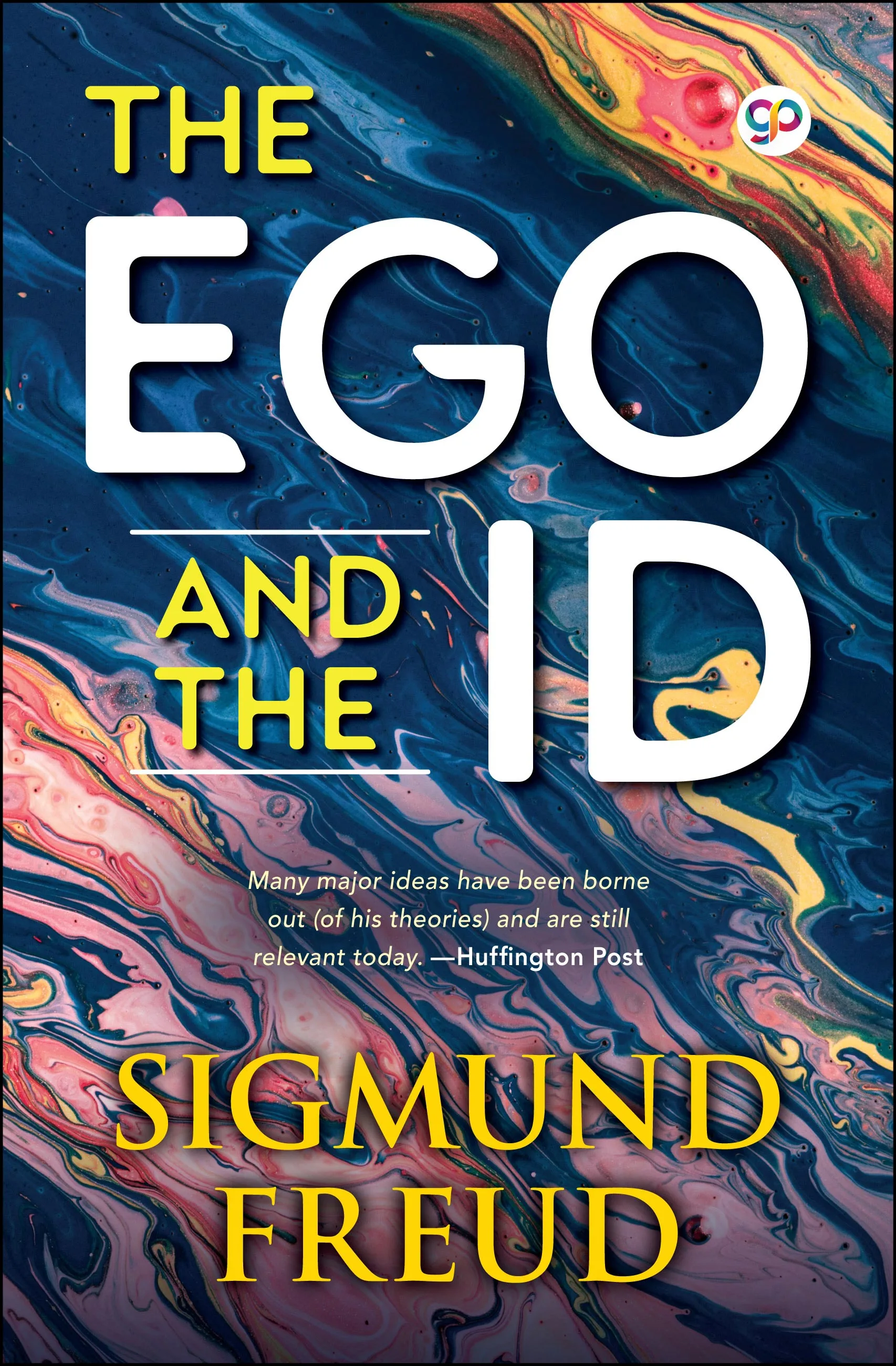
Download Cover Image
Do you want to download the full cover image for The Ego and the Id?