
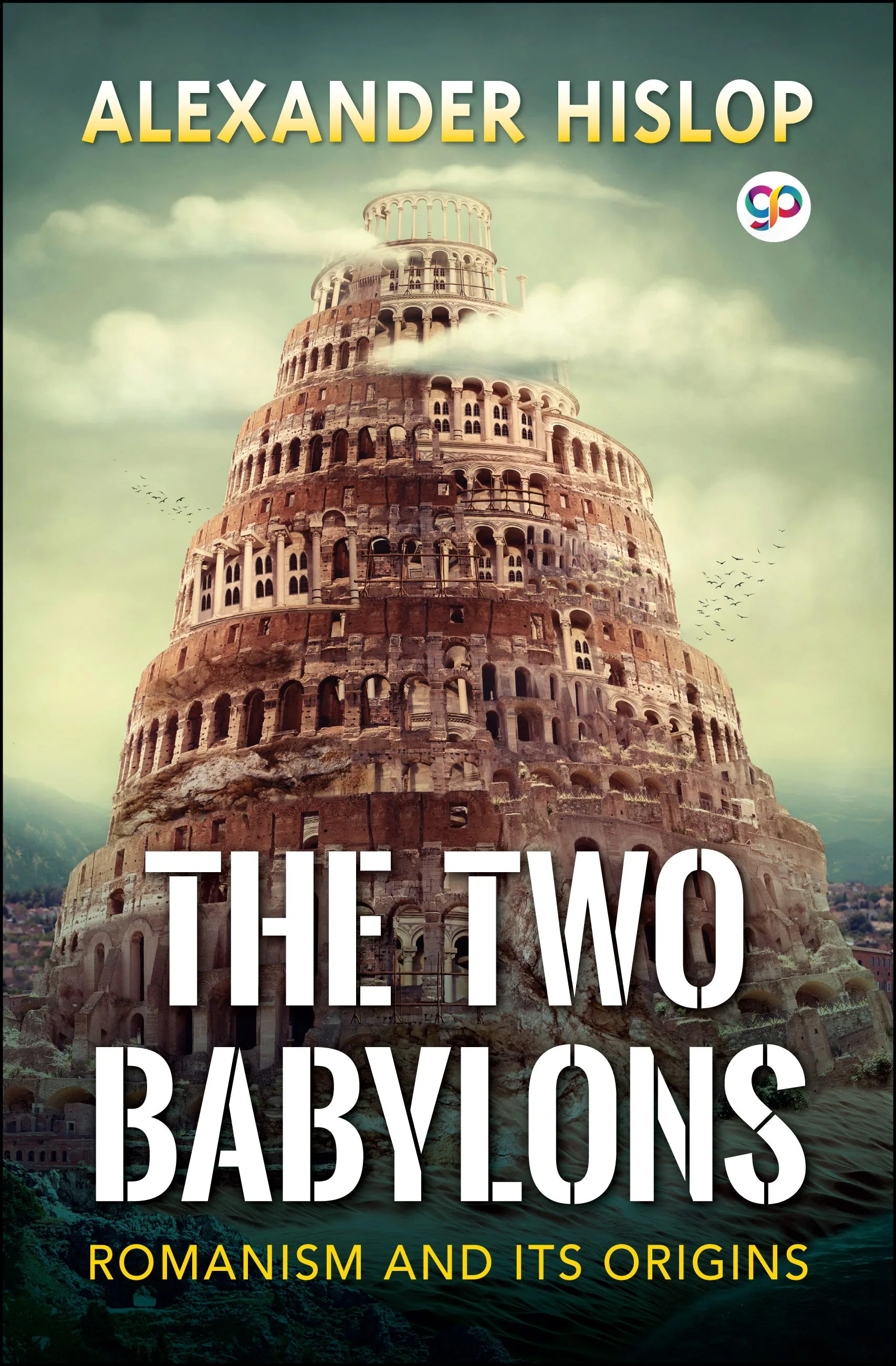
The Two Babylons: Romanism and its origins
eBook
• INR 51.00
• English
• 9789389716160
No ratings yet
| Publisher | General Press |
|---|---|
| ISBN13 | 9789389716160 |
| ASIN/SKU | B084DBGD26 |
| Book Format | eBook |
| Language | English |
| List Price | INR 51.00 |
| Subject Code | REL117000, REL055000 |
| Publishing Date | 29/01/2020 |
| Book Code | BD00068666 |
Buy this Book
Amazon Stores
Ebook Stores
Other Stores
Discover The Two Babylons: Romanism and its origins by Alexander Hislop. This book is published by General Press in eBook format, ISBN 9789389716160, ASIN B084DBGD26, under Christian Books and Bibles, History, Religion.
Book Description
‘The Two Babylons’ was an anti-Catholic religious pamphlet produced initially by the Scottish theologian and Protestant Presbyterian Alexander Hislop in 1853. It is a must read for anyone interested in Church history. There is this great difference between the works of men and the works of God, that the same minute and searching investigation, which displays the defects and imperfections of the one, brings out also the beauties of the other. This Hislop work is based on the concept that numerous traditions of Roman Catholicism came directly from a mysterious religion largely focused on Nimrod and his family.
Author Biography
Alexander Hislop (1807–1865) was a Scottish minister, author, and religious scholar best known for his studies of church history and his critical examination of religious traditions. A devoted member of the Free Church of Scotland, he spent much of his life preaching, teaching, and writing on matters of Christian faith. His works reflected his strong commitment to Protestant principles and his belief that the Bible should remain the supreme authority in matters of doctrine and worship.
Hislop was born in Brechin, Scotland, into a family that valued education and Christian faith. After studying at the University of Edinburgh, he entered the ministry and eventually became the pastor of a congregation in Arbroath. There he earned a reputation as a thoughtful preacher who combined careful biblical study with a deep concern for the spiritual lives of his congregation. Alongside his pastoral duties, he developed a keen interest in the history of Christianity and the origins of religious beliefs and practices.
Hislop is best remembered for his influential book The Two Babylons, first published as a pamphlet and later expanded into a full-length work. In this book, he argued that many customs and ceremonies associated with the Roman Catholic Church had their roots in the religious practices of ancient Babylon rather than in the teachings of the New Testament. The book attracted considerable attention and has remained widely discussed for more than a century. While many Protestant readers found Hislop's arguments persuasive, numerous historians and scholars have questioned his historical methods and conclusions, noting that several of his claims rely on speculative connections rather than firmly established historical evidence. Despite these criticisms, The Two Babylons continues to be read and debated in religious circles.
Beyond his most famous work, Hislop wrote articles and essays on theology, church history, and biblical interpretation. His writings reflected a sincere desire to defend what he believed to be the purity of the Christian faith and to encourage believers to examine religious traditions in the light of Scripture.
Alexander Hislop passed away in 1865, leaving behind a legacy that remains both influential and controversial. Although scholars continue to debate many of his historical interpretations, his work has had a lasting impact on discussions of church history, religious symbolism, and Protestant thought. His writings continue to be studied by readers interested in the history of Christianity and the development of religious traditions.
Hislop was born in Brechin, Scotland, into a family that valued education and Christian faith. After studying at the University of Edinburgh, he entered the ministry and eventually became the pastor of a congregation in Arbroath. There he earned a reputation as a thoughtful preacher who combined careful biblical study with a deep concern for the spiritual lives of his congregation. Alongside his pastoral duties, he developed a keen interest in the history of Christianity and the origins of religious beliefs and practices.
Hislop is best remembered for his influential book The Two Babylons, first published as a pamphlet and later expanded into a full-length work. In this book, he argued that many customs and ceremonies associated with the Roman Catholic Church had their roots in the religious practices of ancient Babylon rather than in the teachings of the New Testament. The book attracted considerable attention and has remained widely discussed for more than a century. While many Protestant readers found Hislop's arguments persuasive, numerous historians and scholars have questioned his historical methods and conclusions, noting that several of his claims rely on speculative connections rather than firmly established historical evidence. Despite these criticisms, The Two Babylons continues to be read and debated in religious circles.
Beyond his most famous work, Hislop wrote articles and essays on theology, church history, and biblical interpretation. His writings reflected a sincere desire to defend what he believed to be the purity of the Christian faith and to encourage believers to examine religious traditions in the light of Scripture.
Alexander Hislop passed away in 1865, leaving behind a legacy that remains both influential and controversial. Although scholars continue to debate many of his historical interpretations, his work has had a lasting impact on discussions of church history, religious symbolism, and Protestant thought. His writings continue to be studied by readers interested in the history of Christianity and the development of religious traditions.
Editorial Reviews
Editorial Reviews will be added soon…
Book Summary
Book Summary will be added soon…
Sample Chapters
Sample Chapters will be added soon…
Reader Reviews
No reviews yet.
The Two Babylons: Romanism and its origins
Download Cover Image
Do you want to download the full cover image for The Two Babylons: Romanism and its origins?