
The Faith of Islam
eBook
• INR 51.00
• English
• 9789389716207
No ratings yet
| Publisher | General Press |
|---|---|
| ISBN13 | 9789389716207 |
| ASIN/SKU | B086VSJ5BB |
| Book Format | eBook |
| Language | English |
| List Price | INR 51.00 |
| Subject Code | REL037000, REL037010 |
| Publishing Date | 07/04/2020 |
| Book Code | BD00068670 |
Buy this Book
Amazon Stores
Ebook Stores
Other Stores
Discover The Faith of Islam by Edward Sell. This book is published by General Press in eBook format, ISBN 9789389716207, ASIN B086VSJ5BB, under Religion and Spirituality, Islamic Books, Islam.
Book Description
This is an account of the life of Muhammad and the wide and rapid spread of the system founded by him. In this book Edward Sell outline the political growth of Muslim nations has also been set forth in various ways. Islám in world have also felt the influence of contact with other races and creeds, though, theologically speaking, the Imán and the Dín, the faith and the practice, are unchanged, and remain as he have described them in this book. He tried to show from authentic sources, and from a practical knowledge of it, what ‘the Faith of Islám’ really is, and how it influences men and nations in the present day.
Author Biography
Edward Sell (1839–1932) was an English Christian missionary, scholar, educator, and author who devoted much of his life to the study of Islam and the cultures of the Indian subcontinent. Through his extensive writings, teaching, and missionary work, he became one of the best-known English-language interpreters of Islamic history and theology during the late nineteenth and early twentieth centuries. Although his works reflected the missionary perspective of his era, they remain important historical sources for understanding early Western scholarship on Islam.
Sell was born in England in 1839 and received his education before joining the Church Missionary Society. In the 1860s, he traveled to India, where he spent the greater part of his career. He served in Madras (now Chennai) and other parts of South India, combining pastoral responsibilities with teaching and academic research. Living among diverse religious communities gave him the opportunity to study Islamic texts, traditions, and history firsthand. He also developed a strong interest in languages and comparative religion, believing that meaningful dialogue required careful study and intellectual engagement.
Alongside his missionary work, Sell became a respected writer and lecturer. His best-known book, The Faith of Islam, offered a systematic introduction to Islamic beliefs, practices, and history for English-speaking readers. He also wrote The Historical Development of the Qur'an, Essays on Islam, and several other works examining Islamic theology, religious customs, and the relationship between Christianity and Islam. His books were widely used by missionaries, students, and scholars of comparative religion. While modern researchers recognize that some of his conclusions were shaped by the theological assumptions and colonial context of his time, they also acknowledge the breadth of his learning and his efforts to engage seriously with Islamic sources.
Throughout his long career, Sell remained committed to education and scholarship. He believed that understanding different faiths required careful reading, respectful discussion, and intellectual honesty, even when theological disagreements remained. His writings contributed to the growing academic interest in Islamic studies during a period when reliable English-language resources were relatively limited.
Edward Sell passed away in 1932 after a lifetime of service, research, and writing. Today, he is remembered as a dedicated missionary-scholar whose works played a significant role in the early English-language study of Islam. Although many of his interpretations have been reassessed in light of modern scholarship, his contributions continue to hold historical importance in the fields of religious studies, missionary history, and intercultural dialogue.
Sell was born in England in 1839 and received his education before joining the Church Missionary Society. In the 1860s, he traveled to India, where he spent the greater part of his career. He served in Madras (now Chennai) and other parts of South India, combining pastoral responsibilities with teaching and academic research. Living among diverse religious communities gave him the opportunity to study Islamic texts, traditions, and history firsthand. He also developed a strong interest in languages and comparative religion, believing that meaningful dialogue required careful study and intellectual engagement.
Alongside his missionary work, Sell became a respected writer and lecturer. His best-known book, The Faith of Islam, offered a systematic introduction to Islamic beliefs, practices, and history for English-speaking readers. He also wrote The Historical Development of the Qur'an, Essays on Islam, and several other works examining Islamic theology, religious customs, and the relationship between Christianity and Islam. His books were widely used by missionaries, students, and scholars of comparative religion. While modern researchers recognize that some of his conclusions were shaped by the theological assumptions and colonial context of his time, they also acknowledge the breadth of his learning and his efforts to engage seriously with Islamic sources.
Throughout his long career, Sell remained committed to education and scholarship. He believed that understanding different faiths required careful reading, respectful discussion, and intellectual honesty, even when theological disagreements remained. His writings contributed to the growing academic interest in Islamic studies during a period when reliable English-language resources were relatively limited.
Edward Sell passed away in 1932 after a lifetime of service, research, and writing. Today, he is remembered as a dedicated missionary-scholar whose works played a significant role in the early English-language study of Islam. Although many of his interpretations have been reassessed in light of modern scholarship, his contributions continue to hold historical importance in the fields of religious studies, missionary history, and intercultural dialogue.
Editorial Reviews
Editorial Reviews will be added soon…
Book Summary
Edward Sell’s The Faith of Islam is an early twentieth-century introduction to Islamic belief, theology, scripture, religious practice, history, and institutions. First published in 1880 and later revised in subsequent editions, the book was written by Sell, an English missionary and scholar who spent much of his career in India. It was intended primarily for readers in the West who wanted to understand Islam and, particularly, for Christian missionaries working among Muslim communities. Because of its historical setting and missionary purpose, the book should be read as a product of its period rather than as a neutral contemporary introduction to Islam. Nevertheless, it remains useful for understanding how a nineteenth-century Christian scholar described Islamic theology, the Qur’an, Muhammad, Islamic law, religious practices, and Muslim intellectual traditions. Its approach combines explanation with Christian apologetic critique, making it especially interesting as both a study of Islam and a historical document about Christian-Muslim encounters.
The central purpose of The Faith of Islam is to explain the principal features of Islam in a systematic way. Sell discusses the Qur’an, the life and teaching of Muhammad, Islamic doctrines concerning God, angels, prophets, revelation, judgment, heaven and hell, prayer, fasting, almsgiving, pilgrimage, marriage, divorce, inheritance, Islamic law, and the development of Muslim theological thought. The book attempts to give readers enough background to understand how Islamic belief and practice fit together. At the same time, Sell repeatedly compares Islamic doctrines with Christianity, often evaluating Islamic beliefs from a Christian theological perspective. This comparative structure is essential to understanding the book because Sell’s goal is not simply description; he wants to persuade Christian readers that Islam differs fundamentally from Christianity on questions of revelation, salvation, the nature of Christ, sin, and religious authority.
The foundation of Sell’s discussion is the Islamic doctrine of the oneness of God, or tawhid. Islam teaches that God is absolutely one, without partner or equal, and that worship belongs to God alone. Sell recognizes this as the central principle of Islamic faith and discusses how strongly it shapes Muslim theology and religious practice. The rejection of polytheism is fundamental to Islam, and the shahada, the Muslim declaration of faith, expresses this commitment to the oneness of God and the prophethood of Muhammad. For Muslim believers, the recognition of one God is not simply an abstract philosophical proposition. It determines how human beings understand their purpose, moral obligations, worship, and relationship with creation.
Sell then turns to Muhammad and the origin of Islam. He describes Muhammad’s life, his early experiences, the beginning of his prophetic mission, the opposition he encountered in Mecca, the migration to Medina, the development of the Muslim community, and the eventual establishment of Islamic political authority in Arabia. The story of Muhammad is crucial because Islam understands him as the final prophet in a long line of messengers that includes figures such as Abraham, Moses, and Jesus. Sell discusses these connections while also emphasizing the theological differences between Islam and Christianity.
One of the most important subjects in the book is the Qur’an. Sell explains the Muslim belief that the Qur’an is the revealed word of God given to Muhammad through the angel Gabriel. The Qur’an occupies a unique position in Islam because it is not merely regarded as an inspired religious text but as divine revelation. Muslims traditionally believe that the Qur’an was revealed in Arabic and preserved through recitation and written transmission. Sell examines its structure, contents, language, and compilation, while also presenting arguments that reflect the textual and theological debates of his era.
His treatment of the Qur’an must be read historically because nineteenth-century Christian scholarship frequently approached Islamic scripture through the lens of Christian apologetics. Sell raises questions about the Qur’an’s relationship to earlier Jewish and Christian traditions and discusses passages that appear to reflect biblical or post-biblical religious ideas. He is interested in the question of revelation and whether Muhammad’s message represents divine revelation in the Islamic sense. Modern Qur’anic studies use substantially broader textual, historical, linguistic, and comparative approaches than Sell’s nineteenth-century framework, so his conclusions should not be treated as representative of contemporary scholarship.
The book also examines Islamic teaching about earlier prophets. Islam recognizes many figures familiar to Jewish and Christian readers, including Adam, Noah, Abraham, Moses, David, Solomon, and Jesus. However, their roles and theological meanings differ in important ways. Jesus, for example, is honored in Islam as a major prophet and the Messiah, but Islamic theology rejects the Christian doctrine that Jesus is God incarnate or the divine Son in the Christian sense. Sell pays considerable attention to these differences because the nature of Christ is one of the central dividing lines between Christianity and Islam.
The Islamic understanding of revelation is another major theme. In Sell’s account, Muslims believe that God has communicated His will through prophets throughout history, culminating in Muhammad. This prophetic continuity helps explain why Islam sees itself not as an entirely new religion but as a restoration and completion of the original monotheistic faith associated with earlier prophets. Sell describes this claim while evaluating it from a Christian standpoint, particularly in relation to the Christian doctrine of the finality and uniqueness of Christ.
Islamic theology concerning angels, Satan, the Day of Judgment, heaven, and hell also receives attention. Sell explains the Muslim belief that human beings live under divine authority and will ultimately be judged according to their faith and actions. The resurrection and final judgment are central to Islamic moral consciousness. Human life is temporary, and earthly choices have consequences beyond death. Paradise is presented as the reward prepared for the righteous, while hell represents divine judgment upon those who reject God or persist in wrongdoing. These doctrines help explain the seriousness with which Islam approaches morality, worship, and obedience.
The concept of sin creates another important difference between Islam and Christianity. Islamic theology does not generally begin from the same doctrine of original sin found in traditional Christianity. Human beings are created with a natural disposition toward God, and individuals are responsible for their own moral choices. Repentance and divine mercy are therefore central concepts. Sell discusses these ideas while comparing them with Christian teachings concerning human fallenness, redemption, and salvation. His comparisons reveal both his interest in Islamic theology and the apologetic purpose of the work.
Religious practice occupies a substantial portion of The Faith of Islam. Sell discusses the practices commonly summarized as the Five Pillars of Islam. The first is the shahada, the profession of faith. The second is salat, the prescribed prayer performed at regular times each day. The third is zakat, the obligation of charitable giving or almsgiving. The fourth is fasting during the month of Ramadan, when Muslims abstain from food and drink from dawn until sunset, along with other forms of self-discipline. The fifth is the pilgrimage to Mecca, or hajj, which Muslims who are physically and financially able are expected to perform at least once in their lifetime.
Sell’s discussion of prayer emphasizes the highly structured nature of Muslim worship. Prayer involves prescribed times, bodily movements, recitations, and ritual purity. The direction of prayer toward the Kaaba in Mecca unites Muslims around a common spiritual orientation. This disciplined pattern demonstrates how Islamic faith is embodied in daily life. Religion is not restricted to private belief; it shapes time, behavior, community, and personal discipline.
Fasting receives similar attention. Ramadan is both a spiritual and communal practice. Abstaining from food and drink during daylight hours is intended to cultivate self-control and devotion while also reinforcing awareness of dependence upon God and the needs of others. The breaking of the fast creates a rhythm of communal life that extends beyond individual spirituality. Sell recognizes these practices as important expressions of Islamic faith, although he frequently evaluates them according to Christian assumptions about worship and salvation.
The pilgrimage to Mecca is another major subject. Sell describes the significance of the holy places and the rituals associated with the pilgrimage. Hajj brings Muslims from different ethnicities, languages, and social backgrounds together in a common act of worship. The pilgrimage also reinforces the historical memory of Abraham, Hagar, Ishmael, and the origins of the Kaaba within Islamic tradition. For believers, the journey represents submission to God, repentance, solidarity, and renewal.
Islamic law is another central component of the book. Sell discusses the Sharia tradition and the sources from which Islamic legal thought developed. These include the Qur’an, the Sunnah or example of Muhammad, traditions concerning his sayings and actions, and methods of legal reasoning developed by Muslim scholars. He explains how Islamic law affects areas such as marriage, divorce, inheritance, contracts, crime, and religious obligations. His discussion reflects the legal categories and scholarly debates familiar in his period.
The book also examines marriage and the position of women within Islamic law and society. This is an area in which Sell’s nineteenth-century Christian perspective is particularly visible. He criticizes certain Islamic social and legal practices and compares them unfavorably with ideals of Christian marriage. Modern readers should therefore distinguish between his descriptions of historical Muslim societies and his evaluations of those societies. Islamic law and Muslim social practice have varied greatly across regions and historical periods, and Sell’s account does not represent the full complexity of Muslim women's lives or Islamic legal interpretation.
Another subject is the development of Muslim theological schools and intellectual traditions. Sell discusses disagreements among Muslim thinkers concerning questions such as predestination, free will, divine attributes, reason, revelation, and the nature of faith. These debates demonstrate that Islam has never been intellectually uniform. Muslim scholars have developed diverse approaches to theology, philosophy, law, mysticism, and scriptural interpretation. The book consequently introduces readers to Islam not merely as a collection of fixed beliefs but as a tradition that has generated extensive intellectual debate.
Sell’s treatment of Islamic sects also reflects this diversity. Sunni and Shi'a Islam developed different traditions concerning authority, leadership, and religious history, while various theological and mystical movements contributed further interpretations. The historical development of these traditions helps explain why Islam cannot be reduced to a single cultural or political model. Although Sell’s treatment is shaped by the scholarship available to him, his effort to classify and explain different Muslim traditions gives the book a broad scope.
The author's missionary purpose becomes increasingly visible when he compares Islam with Christianity. Sell argues that Christianity offers what he considers a fuller understanding of salvation through Christ. His critiques focus particularly on Islamic rejection of the Trinity, Incarnation, and traditional Christian understanding of atonement. He also questions Islamic accounts of revelation and Muhammad’s prophethood. These arguments should be recognized as theological claims rather than neutral historical conclusions. For readers today, this aspect of the book is valuable primarily because it demonstrates how Christian missionaries understood Islam and attempted to engage with Muslim belief.
Despite its limitations, The Faith of Islam has enduring historical value. It provides a window into the intellectual environment of colonial India, where Christian missionaries, Muslim scholars, Hindu thinkers, and British administrators interacted in complex ways. Edward Sell spent many years working in India, and his writings emerged from this environment. The book therefore belongs to the history of comparative religion as well as the history of Christian missionary scholarship.
Ultimately, The Faith of Islam seeks to explain how Muslims understand God, revelation, prophecy, worship, morality, law, salvation, and the afterlife. Its strongest descriptive sections introduce readers to the major elements of Islamic belief and practice, while its critical sections reveal Sell’s Christian theological commitments. The book should therefore be read on two levels: as an early attempt to provide a systematic introduction to Islam and as a historical example of nineteenth-century Christian interpretation of another major world religion.
For readers searching for an in-depth summary of The Faith of Islam by Edward Sell, the book’s central importance lies in its broad examination of Islamic theology and religious life. Sell presents Islam as a faith built around absolute monotheism, the authority of the Qur’an, the prophethood of Muhammad, disciplined worship, moral responsibility, divine judgment, and a comprehensive religious law. At the same time, his Christian perspective leads him to emphasize differences between Islam and Christianity, particularly concerning Jesus, salvation, revelation, and sin. Modern readers should approach those judgments critically and place them within their historical context. Even so, The Faith of Islam remains an illuminating historical text because it captures an important stage in Western engagement with Islam and demonstrates how religious traditions were compared, debated, and interpreted during the nineteenth and early twentieth centuries. Its lasting value lies not only in what it says about Islam, but also in what it reveals about the questions, assumptions, and encounters that shaped the study of religion in its own age.
The central purpose of The Faith of Islam is to explain the principal features of Islam in a systematic way. Sell discusses the Qur’an, the life and teaching of Muhammad, Islamic doctrines concerning God, angels, prophets, revelation, judgment, heaven and hell, prayer, fasting, almsgiving, pilgrimage, marriage, divorce, inheritance, Islamic law, and the development of Muslim theological thought. The book attempts to give readers enough background to understand how Islamic belief and practice fit together. At the same time, Sell repeatedly compares Islamic doctrines with Christianity, often evaluating Islamic beliefs from a Christian theological perspective. This comparative structure is essential to understanding the book because Sell’s goal is not simply description; he wants to persuade Christian readers that Islam differs fundamentally from Christianity on questions of revelation, salvation, the nature of Christ, sin, and religious authority.
The foundation of Sell’s discussion is the Islamic doctrine of the oneness of God, or tawhid. Islam teaches that God is absolutely one, without partner or equal, and that worship belongs to God alone. Sell recognizes this as the central principle of Islamic faith and discusses how strongly it shapes Muslim theology and religious practice. The rejection of polytheism is fundamental to Islam, and the shahada, the Muslim declaration of faith, expresses this commitment to the oneness of God and the prophethood of Muhammad. For Muslim believers, the recognition of one God is not simply an abstract philosophical proposition. It determines how human beings understand their purpose, moral obligations, worship, and relationship with creation.
Sell then turns to Muhammad and the origin of Islam. He describes Muhammad’s life, his early experiences, the beginning of his prophetic mission, the opposition he encountered in Mecca, the migration to Medina, the development of the Muslim community, and the eventual establishment of Islamic political authority in Arabia. The story of Muhammad is crucial because Islam understands him as the final prophet in a long line of messengers that includes figures such as Abraham, Moses, and Jesus. Sell discusses these connections while also emphasizing the theological differences between Islam and Christianity.
One of the most important subjects in the book is the Qur’an. Sell explains the Muslim belief that the Qur’an is the revealed word of God given to Muhammad through the angel Gabriel. The Qur’an occupies a unique position in Islam because it is not merely regarded as an inspired religious text but as divine revelation. Muslims traditionally believe that the Qur’an was revealed in Arabic and preserved through recitation and written transmission. Sell examines its structure, contents, language, and compilation, while also presenting arguments that reflect the textual and theological debates of his era.
His treatment of the Qur’an must be read historically because nineteenth-century Christian scholarship frequently approached Islamic scripture through the lens of Christian apologetics. Sell raises questions about the Qur’an’s relationship to earlier Jewish and Christian traditions and discusses passages that appear to reflect biblical or post-biblical religious ideas. He is interested in the question of revelation and whether Muhammad’s message represents divine revelation in the Islamic sense. Modern Qur’anic studies use substantially broader textual, historical, linguistic, and comparative approaches than Sell’s nineteenth-century framework, so his conclusions should not be treated as representative of contemporary scholarship.
The book also examines Islamic teaching about earlier prophets. Islam recognizes many figures familiar to Jewish and Christian readers, including Adam, Noah, Abraham, Moses, David, Solomon, and Jesus. However, their roles and theological meanings differ in important ways. Jesus, for example, is honored in Islam as a major prophet and the Messiah, but Islamic theology rejects the Christian doctrine that Jesus is God incarnate or the divine Son in the Christian sense. Sell pays considerable attention to these differences because the nature of Christ is one of the central dividing lines between Christianity and Islam.
The Islamic understanding of revelation is another major theme. In Sell’s account, Muslims believe that God has communicated His will through prophets throughout history, culminating in Muhammad. This prophetic continuity helps explain why Islam sees itself not as an entirely new religion but as a restoration and completion of the original monotheistic faith associated with earlier prophets. Sell describes this claim while evaluating it from a Christian standpoint, particularly in relation to the Christian doctrine of the finality and uniqueness of Christ.
Islamic theology concerning angels, Satan, the Day of Judgment, heaven, and hell also receives attention. Sell explains the Muslim belief that human beings live under divine authority and will ultimately be judged according to their faith and actions. The resurrection and final judgment are central to Islamic moral consciousness. Human life is temporary, and earthly choices have consequences beyond death. Paradise is presented as the reward prepared for the righteous, while hell represents divine judgment upon those who reject God or persist in wrongdoing. These doctrines help explain the seriousness with which Islam approaches morality, worship, and obedience.
The concept of sin creates another important difference between Islam and Christianity. Islamic theology does not generally begin from the same doctrine of original sin found in traditional Christianity. Human beings are created with a natural disposition toward God, and individuals are responsible for their own moral choices. Repentance and divine mercy are therefore central concepts. Sell discusses these ideas while comparing them with Christian teachings concerning human fallenness, redemption, and salvation. His comparisons reveal both his interest in Islamic theology and the apologetic purpose of the work.
Religious practice occupies a substantial portion of The Faith of Islam. Sell discusses the practices commonly summarized as the Five Pillars of Islam. The first is the shahada, the profession of faith. The second is salat, the prescribed prayer performed at regular times each day. The third is zakat, the obligation of charitable giving or almsgiving. The fourth is fasting during the month of Ramadan, when Muslims abstain from food and drink from dawn until sunset, along with other forms of self-discipline. The fifth is the pilgrimage to Mecca, or hajj, which Muslims who are physically and financially able are expected to perform at least once in their lifetime.
Sell’s discussion of prayer emphasizes the highly structured nature of Muslim worship. Prayer involves prescribed times, bodily movements, recitations, and ritual purity. The direction of prayer toward the Kaaba in Mecca unites Muslims around a common spiritual orientation. This disciplined pattern demonstrates how Islamic faith is embodied in daily life. Religion is not restricted to private belief; it shapes time, behavior, community, and personal discipline.
Fasting receives similar attention. Ramadan is both a spiritual and communal practice. Abstaining from food and drink during daylight hours is intended to cultivate self-control and devotion while also reinforcing awareness of dependence upon God and the needs of others. The breaking of the fast creates a rhythm of communal life that extends beyond individual spirituality. Sell recognizes these practices as important expressions of Islamic faith, although he frequently evaluates them according to Christian assumptions about worship and salvation.
The pilgrimage to Mecca is another major subject. Sell describes the significance of the holy places and the rituals associated with the pilgrimage. Hajj brings Muslims from different ethnicities, languages, and social backgrounds together in a common act of worship. The pilgrimage also reinforces the historical memory of Abraham, Hagar, Ishmael, and the origins of the Kaaba within Islamic tradition. For believers, the journey represents submission to God, repentance, solidarity, and renewal.
Islamic law is another central component of the book. Sell discusses the Sharia tradition and the sources from which Islamic legal thought developed. These include the Qur’an, the Sunnah or example of Muhammad, traditions concerning his sayings and actions, and methods of legal reasoning developed by Muslim scholars. He explains how Islamic law affects areas such as marriage, divorce, inheritance, contracts, crime, and religious obligations. His discussion reflects the legal categories and scholarly debates familiar in his period.
The book also examines marriage and the position of women within Islamic law and society. This is an area in which Sell’s nineteenth-century Christian perspective is particularly visible. He criticizes certain Islamic social and legal practices and compares them unfavorably with ideals of Christian marriage. Modern readers should therefore distinguish between his descriptions of historical Muslim societies and his evaluations of those societies. Islamic law and Muslim social practice have varied greatly across regions and historical periods, and Sell’s account does not represent the full complexity of Muslim women's lives or Islamic legal interpretation.
Another subject is the development of Muslim theological schools and intellectual traditions. Sell discusses disagreements among Muslim thinkers concerning questions such as predestination, free will, divine attributes, reason, revelation, and the nature of faith. These debates demonstrate that Islam has never been intellectually uniform. Muslim scholars have developed diverse approaches to theology, philosophy, law, mysticism, and scriptural interpretation. The book consequently introduces readers to Islam not merely as a collection of fixed beliefs but as a tradition that has generated extensive intellectual debate.
Sell’s treatment of Islamic sects also reflects this diversity. Sunni and Shi'a Islam developed different traditions concerning authority, leadership, and religious history, while various theological and mystical movements contributed further interpretations. The historical development of these traditions helps explain why Islam cannot be reduced to a single cultural or political model. Although Sell’s treatment is shaped by the scholarship available to him, his effort to classify and explain different Muslim traditions gives the book a broad scope.
The author's missionary purpose becomes increasingly visible when he compares Islam with Christianity. Sell argues that Christianity offers what he considers a fuller understanding of salvation through Christ. His critiques focus particularly on Islamic rejection of the Trinity, Incarnation, and traditional Christian understanding of atonement. He also questions Islamic accounts of revelation and Muhammad’s prophethood. These arguments should be recognized as theological claims rather than neutral historical conclusions. For readers today, this aspect of the book is valuable primarily because it demonstrates how Christian missionaries understood Islam and attempted to engage with Muslim belief.
Despite its limitations, The Faith of Islam has enduring historical value. It provides a window into the intellectual environment of colonial India, where Christian missionaries, Muslim scholars, Hindu thinkers, and British administrators interacted in complex ways. Edward Sell spent many years working in India, and his writings emerged from this environment. The book therefore belongs to the history of comparative religion as well as the history of Christian missionary scholarship.
Ultimately, The Faith of Islam seeks to explain how Muslims understand God, revelation, prophecy, worship, morality, law, salvation, and the afterlife. Its strongest descriptive sections introduce readers to the major elements of Islamic belief and practice, while its critical sections reveal Sell’s Christian theological commitments. The book should therefore be read on two levels: as an early attempt to provide a systematic introduction to Islam and as a historical example of nineteenth-century Christian interpretation of another major world religion.
For readers searching for an in-depth summary of The Faith of Islam by Edward Sell, the book’s central importance lies in its broad examination of Islamic theology and religious life. Sell presents Islam as a faith built around absolute monotheism, the authority of the Qur’an, the prophethood of Muhammad, disciplined worship, moral responsibility, divine judgment, and a comprehensive religious law. At the same time, his Christian perspective leads him to emphasize differences between Islam and Christianity, particularly concerning Jesus, salvation, revelation, and sin. Modern readers should approach those judgments critically and place them within their historical context. Even so, The Faith of Islam remains an illuminating historical text because it captures an important stage in Western engagement with Islam and demonstrates how religious traditions were compared, debated, and interpreted during the nineteenth and early twentieth centuries. Its lasting value lies not only in what it says about Islam, but also in what it reveals about the questions, assumptions, and encounters that shaped the study of religion in its own age.
Sample Chapters
Sample Chapters will be added soon…
Reader Reviews
No reviews yet.
The Faith of Islam
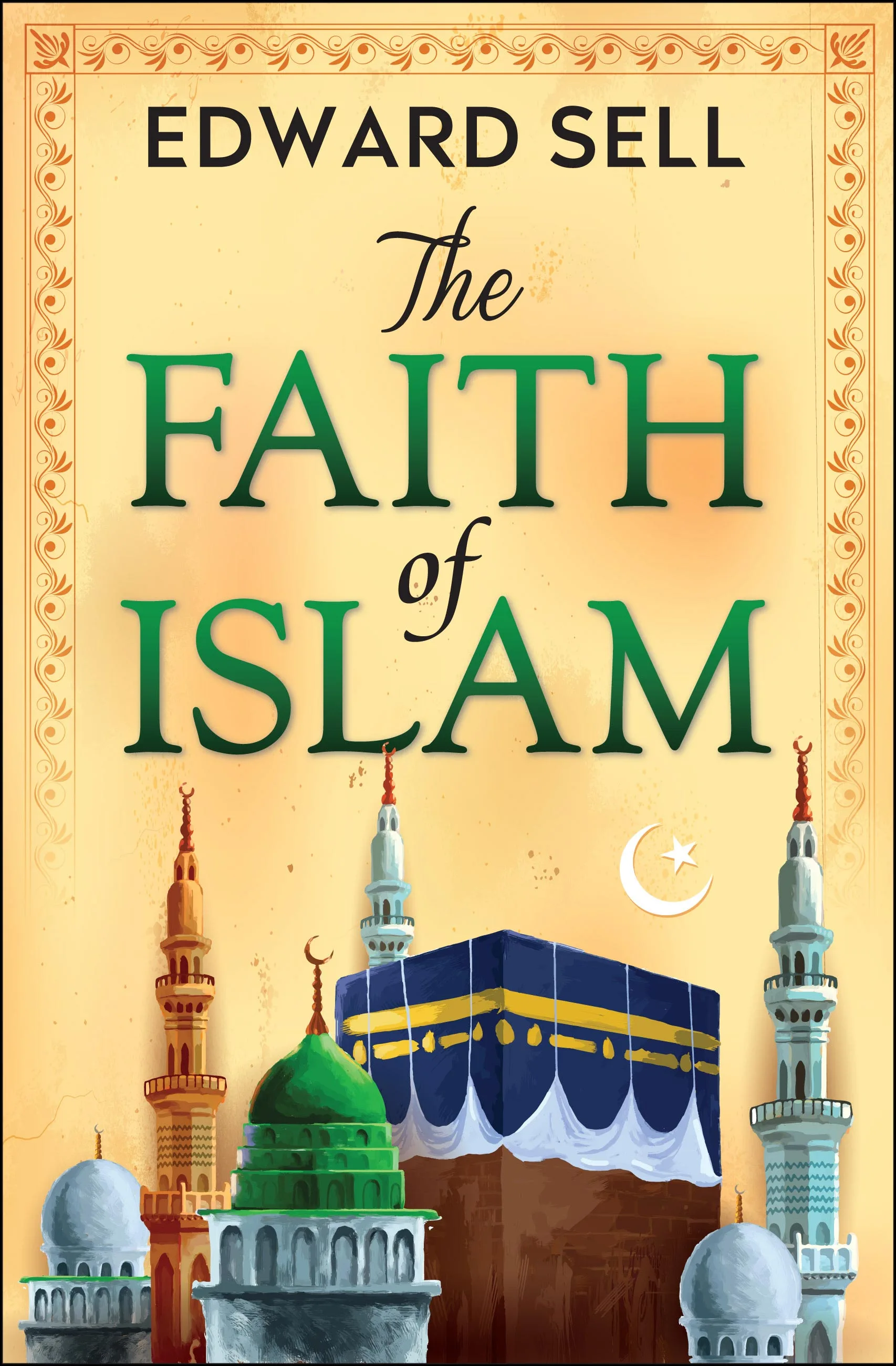
Download Cover Image
Do you want to download the full cover image for The Faith of Islam?