
The Christian Book of Mystical Verse
eBook
• INR 51.00
• English
• 9789390492947
No ratings yet
| Publisher | General Press |
|---|---|
| ISBN13 | 9789390492947 |
| ASIN/SKU | B094VPCNJG |
| Book Format | eBook |
| Language | English |
| List Price | INR 51.00 |
| Subject Code | REL012020, MUS021000 |
| Book Code | BD00068677 |
Buy this Book
Amazon Stores
Ebook Stores
Other Stores
Discover The Christian Book of Mystical Verse by A.W. Tozer. This book is published by General Press in eBook format, ISBN 9789390492947, ASIN B094VPCNJG, under Christian Books and Bibles, Christian Living, Christianity.
Book Description
The motive of this book is to bring together in one convenient volume some of the best devotional verse the English language affords, and thus to make available to present day Christians a rich spiritual heritage which the greater number of them for various reasons do not now enjoy. The book includes works by Isaac Watts, Oliver Wendell Holmes, F.W. Faber, Milman, Shirley, Wesley, Rossetti, Gerhardt, Pollock, Tate, Brady, Tersteegen, Ware, Nicolai, Bonar and others.
Tozer served forty-four years of ministry, associated with the Christian and Missionary Alliance, a Protestant evangelical denomination; thirty-three of those years were served as a pastor in a number of churches. Tozer is the author of dozens of books, two of which, ‘The Pursuit of God’ and ‘The Knowledge of the Holy’, are considered classics. His books inspire the reader, the possibility and necessity for a deeper connection with God.
Both intimate and exhilarating, ‘The Christian Book of Mystical Verse’ is a book for anyone who seeks to worship God, and who finds the rich language of Christians of old a great help in that endeavor.
Tozer served forty-four years of ministry, associated with the Christian and Missionary Alliance, a Protestant evangelical denomination; thirty-three of those years were served as a pastor in a number of churches. Tozer is the author of dozens of books, two of which, ‘The Pursuit of God’ and ‘The Knowledge of the Holy’, are considered classics. His books inspire the reader, the possibility and necessity for a deeper connection with God.
Both intimate and exhilarating, ‘The Christian Book of Mystical Verse’ is a book for anyone who seeks to worship God, and who finds the rich language of Christians of old a great help in that endeavor.
Author Biography
Aiden Wilson Tozer (1897–1963) was an influential American Christian pastor, author, and spiritual mentor whose profound theological insights continue to resonate worldwide. Born into poverty in rural western Pennsylvania, Tozer was entirely self-educated, never attending high school or a theological seminary. In 1915, after hearing a street preacher in Akron, Ohio, he committed his life to Christianity, igniting a relentless, lifelong pursuit of God.
Despite his lack of formal training, Tozer began a 44-year ministry in 1919 as a pastor with the Christian and Missionary Alliance (C&MA). He spent three decades leading the Southside Alliance Church in Chicago, where his uncompromising, prophetic preaching drew thousands. In 1950, he expanded his influence by becoming the editor of The Alliance Weekly.
Tozer is best remembered for his enduring literary classics, most notably The Pursuit of God and The Knowledge of the Holy. These works emphasize the absolute majesty of God and the necessity of a deeply contemplative spiritual life. Often referred to as a "20th-century prophet," Tozer lived a remarkably simple lifestyle, giving away much of his book royalties and prioritizing prayer over material wealth. His legacy endures through his writings, which continue to challenge readers to seek a genuine, intimate relationship with the Divine.
Despite his lack of formal training, Tozer began a 44-year ministry in 1919 as a pastor with the Christian and Missionary Alliance (C&MA). He spent three decades leading the Southside Alliance Church in Chicago, where his uncompromising, prophetic preaching drew thousands. In 1950, he expanded his influence by becoming the editor of The Alliance Weekly.
Tozer is best remembered for his enduring literary classics, most notably The Pursuit of God and The Knowledge of the Holy. These works emphasize the absolute majesty of God and the necessity of a deeply contemplative spiritual life. Often referred to as a "20th-century prophet," Tozer lived a remarkably simple lifestyle, giving away much of his book royalties and prioritizing prayer over material wealth. His legacy endures through his writings, which continue to challenge readers to seek a genuine, intimate relationship with the Divine.
Editorial Reviews
Editorial Reviews will be added soon…
Book Summary
A.W. Tozer’s The Christian Book of Mystical Verse is a carefully chosen collection of Christian poetry and devotional writing intended to lead readers toward a deeper awareness of God. Rather than functioning like a conventional book of poetry, the collection is designed as a spiritual companion. Tozer brings together verses from a wide range of Christian writers and places them within a devotional framework centered on worship, surrender, holiness, prayer, divine presence, spiritual longing, and the believer’s desire for a closer relationship with God. The book reflects Tozer’s lifelong conviction that Christianity should be more than intellectual agreement with doctrines or participation in religious activities. For him, authentic faith involves an inward encounter with God that transforms the entire person.
The word “mystical” in Tozer’s title is important, but it does not necessarily mean mysterious or disconnected from ordinary Christian faith. Tozer uses Christian mysticism in the sense of a deep experiential awareness of God. He wants believers to move beyond merely knowing about God and toward knowing God personally. The poems in this collection become vehicles for that movement. They express emotions and spiritual experiences that ordinary theological language sometimes struggles to capture: longing for God, wonder before creation, repentance, loneliness, joy, surrender, awe, dependence, and the desire to become holy. In this way, The Christian Book of Mystical Verse can be understood as an invitation to slow down, contemplate, pray, and allow Christian truth to reach the heart as well as the mind.
Tozer’s introduction and editorial approach establish the purpose of the collection. He was deeply concerned about what he saw as the tendency of modern Christianity to become superficial. Religious people could become busy with programs, institutions, entertainment, arguments, and outward activity while neglecting the inner life. Poetry offered Tozer a different kind of spiritual language. A poem does not merely explain an idea; it can create an atmosphere in which the reader pauses and experiences the emotional and imaginative meaning of that idea. The selected verses therefore serve as invitations to worship rather than simply literary objects to be admired.
One of the strongest themes running through the collection is the longing for God. Christian mystical poetry often begins with a sense that ordinary life is not enough. The human heart desires something deeper than possessions, achievements, pleasure, reputation, or intellectual knowledge. The poems give voice to that hunger. They portray the soul searching for the presence of God and discovering that nothing created can completely satisfy it. This longing is not presented as a weakness. Instead, it is a sign of spiritual awakening. Tozer wants readers to recognize that the desire for God is one of the deepest and most important desires a person can experience.
This theme connects closely with Tozer’s understanding of worship. Worship, in his view, is not limited to singing in a church service. It is a response of the whole person to the greatness and holiness of God. The poems collected in the book repeatedly turn the reader’s attention away from the self and toward God’s character. They celebrate divine majesty, mercy, wisdom, love, faithfulness, and holiness. The effect is meant to be transformative. When a person sees God more clearly, Tozer believes, that person also begins to see the self more honestly.
Humility is therefore another major theme. Mystical poetry frequently describes the human being as small, dependent, and incapable of finding ultimate meaning without God. Yet this humility is not intended to produce hopelessness. It creates freedom from the burden of self-importance. The believer does not have to pretend to be self-sufficient. Instead, the soul can admit its need for grace. Tozer’s selection of poems repeatedly encourages this movement from self-reliance toward dependence upon God.
The theme of surrender is closely related. Tozer’s Christianity is deeply concerned with the surrender of the will. The believer is called not merely to ask God for help while continuing to control everything personally, but to place the whole self—desires, ambitions, fears, plans, and future—into God’s hands. The poems give emotional expression to this difficult process. Surrender is portrayed not simply as giving up but as entering a deeper form of trust. The soul discovers that freedom can come through yielding rather than controlling.
Holiness is another central concern. For Tozer, closeness to God cannot be separated from transformation of character. Mystical experience is not valuable merely because it produces intense feelings. If an encounter with God does not lead toward love, obedience, purity, humility, and compassion, it has missed its purpose. The poems therefore frequently connect spiritual intimacy with moral transformation. The closer the believer draws to God, the more clearly the believer recognizes the need to become different.
The collection also explores the theme of divine presence. Many of the poems express the astonishing idea that God is near even when the believer does not feel that nearness. This becomes particularly meaningful during periods of spiritual dryness. A person may pray and feel nothing, seek God and experience silence, or pass through grief and uncertainty without receiving immediate answers. Mystical poetry gives language to these experiences. It reassures readers that spiritual life is not always marked by emotional intensity. Sometimes faith means continuing to seek God when the senses provide no obvious confirmation.
This idea of spiritual darkness is especially important in Christian mystical writing. The believer may experience seasons in which God seems distant, prayer feels difficult, and certainty becomes fragile. Rather than treating such experiences automatically as signs of failure, the mystical tradition often understands them as opportunities for deeper faith. Tozer’s collection reflects this perspective. The poems encourage perseverance and trust when spiritual experience becomes difficult. The absence of emotional consolation does not necessarily mean the absence of God.
Prayer is naturally woven throughout the collection. The poems often read like prayers themselves. They confess weakness, express gratitude, ask for guidance, seek forgiveness, or simply turn the mind toward God. Tozer’s use of poetry suggests that prayer can take many forms. Sometimes prayer is direct petition; at other times it is contemplation, praise, silence, longing, or surrender. The important thing is not the formula but the direction of the heart.
Another recurring theme is the beauty of creation. Christian mystical poets frequently look at nature and see reminders of God’s creativity and majesty. Landscapes, seasons, flowers, stars, light, rivers, birds, and the changing world become occasions for contemplation. Nature is not worshiped as a substitute for God. Instead, it becomes a sign that points beyond itself. The created world awakens wonder and encourages the believer to recognize the Creator.
Love is perhaps the deepest theme beneath all the others. The mystical Christian tradition often describes the relationship between God and the believer in the language of love. God is not merely an abstract theological principle or distant ruler. God is the One toward whom the soul is drawn with affection and longing. The believer’s spiritual life becomes a response to divine love. This language gives the collection its warmth and intimacy. Christian faith is presented not only as obedience but as relationship.
At the same time, the poems frequently recognize the tension between divine perfection and human weakness. The believer wants to love God completely but remains distracted, fearful, selfish, or inconsistent. This tension gives the collection its emotional honesty. Mystical poetry does not always portray spiritual life as a smooth upward journey. It recognizes failure, doubt, temptation, grief, and disappointment. Yet these experiences are repeatedly brought back to grace. The message is not that the believer must become perfect before approaching God, but that approaching God is part of the process through which transformation occurs.
Death and eternity also appear naturally within the collection’s spiritual horizon. Christian mystical poetry often views earthly life as temporary and points toward eternal communion with God. This does not necessarily mean rejecting the world. Instead, it places earthly pleasures and sufferings within a larger perspective. The believer is encouraged to remember that identity and hope ultimately rest beyond temporary circumstances. Death can therefore be approached not merely as an ending but as a transition into the fuller presence of God.
Tozer’s editorial choices also reveal his appreciation for the Christian literary tradition. The collection draws upon poets and devotional writers whose work spans generations. Their styles differ, but their shared concern is the life of the soul before God. Some poems are simple and direct; others are richly symbolic or emotionally intense. Together they demonstrate that Christian spirituality has always possessed a poetic dimension. Faith can be expressed through doctrine, sermons, theology, and biblical interpretation, but it can also be expressed through metaphor, rhythm, imagination, and song.
For modern readers, one of the greatest strengths of The Christian Book of Mystical Verse is its invitation to slow down. Contemporary life is often noisy and hurried. Tozer’s collection works against that pace. It encourages readers to read a poem slowly, perhaps only a few lines at a time, and allow the words to become the beginning of meditation. The book is not necessarily meant to be consumed quickly. Its value lies partly in returning to individual poems repeatedly and discovering different meanings during different seasons of life.
The collection can also be understood as a corrective to a purely intellectual approach to Christianity. Tozer never rejects theology or biblical knowledge, but he insists that information about God is not identical to communion with God. A person may know many doctrines and still have a cold spiritual life. Conversely, genuine spiritual experience must remain grounded in truth rather than becoming mere emotion. The poetry helps bring these dimensions together. It allows theological truths to become personal, emotional, and contemplative.
Ultimately, The Christian Book of Mystical Verse is a book about the desire to know God deeply. Its poems explore the journey from distraction toward contemplation, from self-confidence toward surrender, from spiritual dryness toward trust, and from religious activity toward genuine worship. Tozer’s central concern is that Christianity should become an inward reality rather than remain an external identity. The poems are valuable because they help readers articulate experiences that are difficult to express in ordinary language.
For readers searching for an in-depth summary of The Christian Book of Mystical Verse by A.W. Tozer, the book can best be understood as a devotional anthology about the inner life of Christian faith. Its central message is that the soul is made for God and remains restless when it substitutes created things for the Creator. Through poetry, the collection explores longing, worship, prayer, holiness, humility, surrender, suffering, divine presence, love, and hope. Tozer’s purpose is not simply to introduce readers to beautiful Christian poetry but to use poetry as a spiritual doorway. The poems invite the reader to become quieter, more attentive, more honest, and more receptive to God. In that sense, The Christian Book of Mystical Verse is ultimately less about poetry as literature than about poetry as prayer—a collection designed to remind believers that beneath every doctrine and religious activity lies the profound human desire to encounter the living God.
The word “mystical” in Tozer’s title is important, but it does not necessarily mean mysterious or disconnected from ordinary Christian faith. Tozer uses Christian mysticism in the sense of a deep experiential awareness of God. He wants believers to move beyond merely knowing about God and toward knowing God personally. The poems in this collection become vehicles for that movement. They express emotions and spiritual experiences that ordinary theological language sometimes struggles to capture: longing for God, wonder before creation, repentance, loneliness, joy, surrender, awe, dependence, and the desire to become holy. In this way, The Christian Book of Mystical Verse can be understood as an invitation to slow down, contemplate, pray, and allow Christian truth to reach the heart as well as the mind.
Tozer’s introduction and editorial approach establish the purpose of the collection. He was deeply concerned about what he saw as the tendency of modern Christianity to become superficial. Religious people could become busy with programs, institutions, entertainment, arguments, and outward activity while neglecting the inner life. Poetry offered Tozer a different kind of spiritual language. A poem does not merely explain an idea; it can create an atmosphere in which the reader pauses and experiences the emotional and imaginative meaning of that idea. The selected verses therefore serve as invitations to worship rather than simply literary objects to be admired.
One of the strongest themes running through the collection is the longing for God. Christian mystical poetry often begins with a sense that ordinary life is not enough. The human heart desires something deeper than possessions, achievements, pleasure, reputation, or intellectual knowledge. The poems give voice to that hunger. They portray the soul searching for the presence of God and discovering that nothing created can completely satisfy it. This longing is not presented as a weakness. Instead, it is a sign of spiritual awakening. Tozer wants readers to recognize that the desire for God is one of the deepest and most important desires a person can experience.
This theme connects closely with Tozer’s understanding of worship. Worship, in his view, is not limited to singing in a church service. It is a response of the whole person to the greatness and holiness of God. The poems collected in the book repeatedly turn the reader’s attention away from the self and toward God’s character. They celebrate divine majesty, mercy, wisdom, love, faithfulness, and holiness. The effect is meant to be transformative. When a person sees God more clearly, Tozer believes, that person also begins to see the self more honestly.
Humility is therefore another major theme. Mystical poetry frequently describes the human being as small, dependent, and incapable of finding ultimate meaning without God. Yet this humility is not intended to produce hopelessness. It creates freedom from the burden of self-importance. The believer does not have to pretend to be self-sufficient. Instead, the soul can admit its need for grace. Tozer’s selection of poems repeatedly encourages this movement from self-reliance toward dependence upon God.
The theme of surrender is closely related. Tozer’s Christianity is deeply concerned with the surrender of the will. The believer is called not merely to ask God for help while continuing to control everything personally, but to place the whole self—desires, ambitions, fears, plans, and future—into God’s hands. The poems give emotional expression to this difficult process. Surrender is portrayed not simply as giving up but as entering a deeper form of trust. The soul discovers that freedom can come through yielding rather than controlling.
Holiness is another central concern. For Tozer, closeness to God cannot be separated from transformation of character. Mystical experience is not valuable merely because it produces intense feelings. If an encounter with God does not lead toward love, obedience, purity, humility, and compassion, it has missed its purpose. The poems therefore frequently connect spiritual intimacy with moral transformation. The closer the believer draws to God, the more clearly the believer recognizes the need to become different.
The collection also explores the theme of divine presence. Many of the poems express the astonishing idea that God is near even when the believer does not feel that nearness. This becomes particularly meaningful during periods of spiritual dryness. A person may pray and feel nothing, seek God and experience silence, or pass through grief and uncertainty without receiving immediate answers. Mystical poetry gives language to these experiences. It reassures readers that spiritual life is not always marked by emotional intensity. Sometimes faith means continuing to seek God when the senses provide no obvious confirmation.
This idea of spiritual darkness is especially important in Christian mystical writing. The believer may experience seasons in which God seems distant, prayer feels difficult, and certainty becomes fragile. Rather than treating such experiences automatically as signs of failure, the mystical tradition often understands them as opportunities for deeper faith. Tozer’s collection reflects this perspective. The poems encourage perseverance and trust when spiritual experience becomes difficult. The absence of emotional consolation does not necessarily mean the absence of God.
Prayer is naturally woven throughout the collection. The poems often read like prayers themselves. They confess weakness, express gratitude, ask for guidance, seek forgiveness, or simply turn the mind toward God. Tozer’s use of poetry suggests that prayer can take many forms. Sometimes prayer is direct petition; at other times it is contemplation, praise, silence, longing, or surrender. The important thing is not the formula but the direction of the heart.
Another recurring theme is the beauty of creation. Christian mystical poets frequently look at nature and see reminders of God’s creativity and majesty. Landscapes, seasons, flowers, stars, light, rivers, birds, and the changing world become occasions for contemplation. Nature is not worshiped as a substitute for God. Instead, it becomes a sign that points beyond itself. The created world awakens wonder and encourages the believer to recognize the Creator.
Love is perhaps the deepest theme beneath all the others. The mystical Christian tradition often describes the relationship between God and the believer in the language of love. God is not merely an abstract theological principle or distant ruler. God is the One toward whom the soul is drawn with affection and longing. The believer’s spiritual life becomes a response to divine love. This language gives the collection its warmth and intimacy. Christian faith is presented not only as obedience but as relationship.
At the same time, the poems frequently recognize the tension between divine perfection and human weakness. The believer wants to love God completely but remains distracted, fearful, selfish, or inconsistent. This tension gives the collection its emotional honesty. Mystical poetry does not always portray spiritual life as a smooth upward journey. It recognizes failure, doubt, temptation, grief, and disappointment. Yet these experiences are repeatedly brought back to grace. The message is not that the believer must become perfect before approaching God, but that approaching God is part of the process through which transformation occurs.
Death and eternity also appear naturally within the collection’s spiritual horizon. Christian mystical poetry often views earthly life as temporary and points toward eternal communion with God. This does not necessarily mean rejecting the world. Instead, it places earthly pleasures and sufferings within a larger perspective. The believer is encouraged to remember that identity and hope ultimately rest beyond temporary circumstances. Death can therefore be approached not merely as an ending but as a transition into the fuller presence of God.
Tozer’s editorial choices also reveal his appreciation for the Christian literary tradition. The collection draws upon poets and devotional writers whose work spans generations. Their styles differ, but their shared concern is the life of the soul before God. Some poems are simple and direct; others are richly symbolic or emotionally intense. Together they demonstrate that Christian spirituality has always possessed a poetic dimension. Faith can be expressed through doctrine, sermons, theology, and biblical interpretation, but it can also be expressed through metaphor, rhythm, imagination, and song.
For modern readers, one of the greatest strengths of The Christian Book of Mystical Verse is its invitation to slow down. Contemporary life is often noisy and hurried. Tozer’s collection works against that pace. It encourages readers to read a poem slowly, perhaps only a few lines at a time, and allow the words to become the beginning of meditation. The book is not necessarily meant to be consumed quickly. Its value lies partly in returning to individual poems repeatedly and discovering different meanings during different seasons of life.
The collection can also be understood as a corrective to a purely intellectual approach to Christianity. Tozer never rejects theology or biblical knowledge, but he insists that information about God is not identical to communion with God. A person may know many doctrines and still have a cold spiritual life. Conversely, genuine spiritual experience must remain grounded in truth rather than becoming mere emotion. The poetry helps bring these dimensions together. It allows theological truths to become personal, emotional, and contemplative.
Ultimately, The Christian Book of Mystical Verse is a book about the desire to know God deeply. Its poems explore the journey from distraction toward contemplation, from self-confidence toward surrender, from spiritual dryness toward trust, and from religious activity toward genuine worship. Tozer’s central concern is that Christianity should become an inward reality rather than remain an external identity. The poems are valuable because they help readers articulate experiences that are difficult to express in ordinary language.
For readers searching for an in-depth summary of The Christian Book of Mystical Verse by A.W. Tozer, the book can best be understood as a devotional anthology about the inner life of Christian faith. Its central message is that the soul is made for God and remains restless when it substitutes created things for the Creator. Through poetry, the collection explores longing, worship, prayer, holiness, humility, surrender, suffering, divine presence, love, and hope. Tozer’s purpose is not simply to introduce readers to beautiful Christian poetry but to use poetry as a spiritual doorway. The poems invite the reader to become quieter, more attentive, more honest, and more receptive to God. In that sense, The Christian Book of Mystical Verse is ultimately less about poetry as literature than about poetry as prayer—a collection designed to remind believers that beneath every doctrine and religious activity lies the profound human desire to encounter the living God.
Sample Chapters
Sample Chapters will be added soon…
Reader Reviews
No reviews yet.
The Christian Book of Mystical Verse
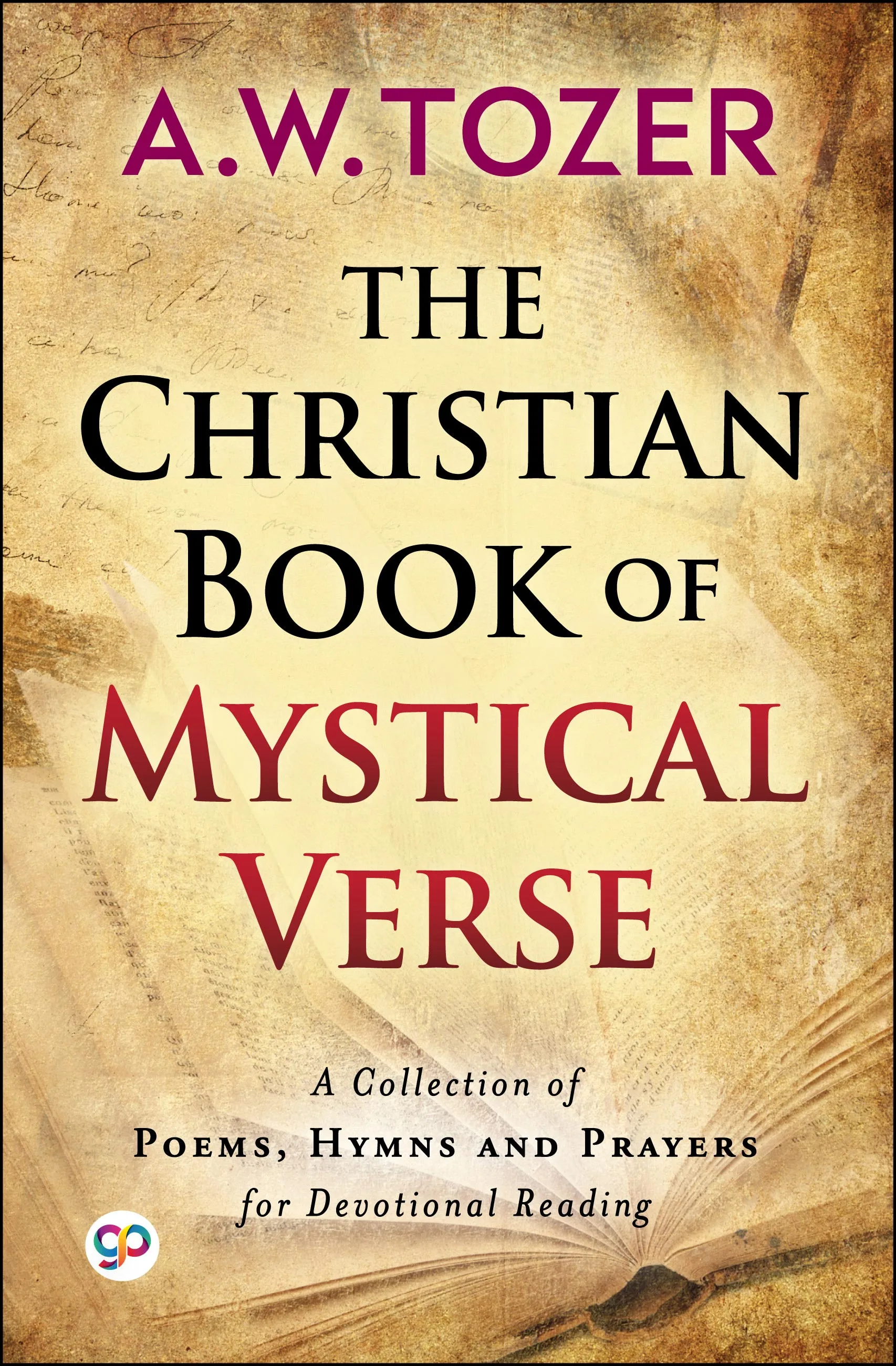
Download Cover Image
Do you want to download the full cover image for The Christian Book of Mystical Verse?