
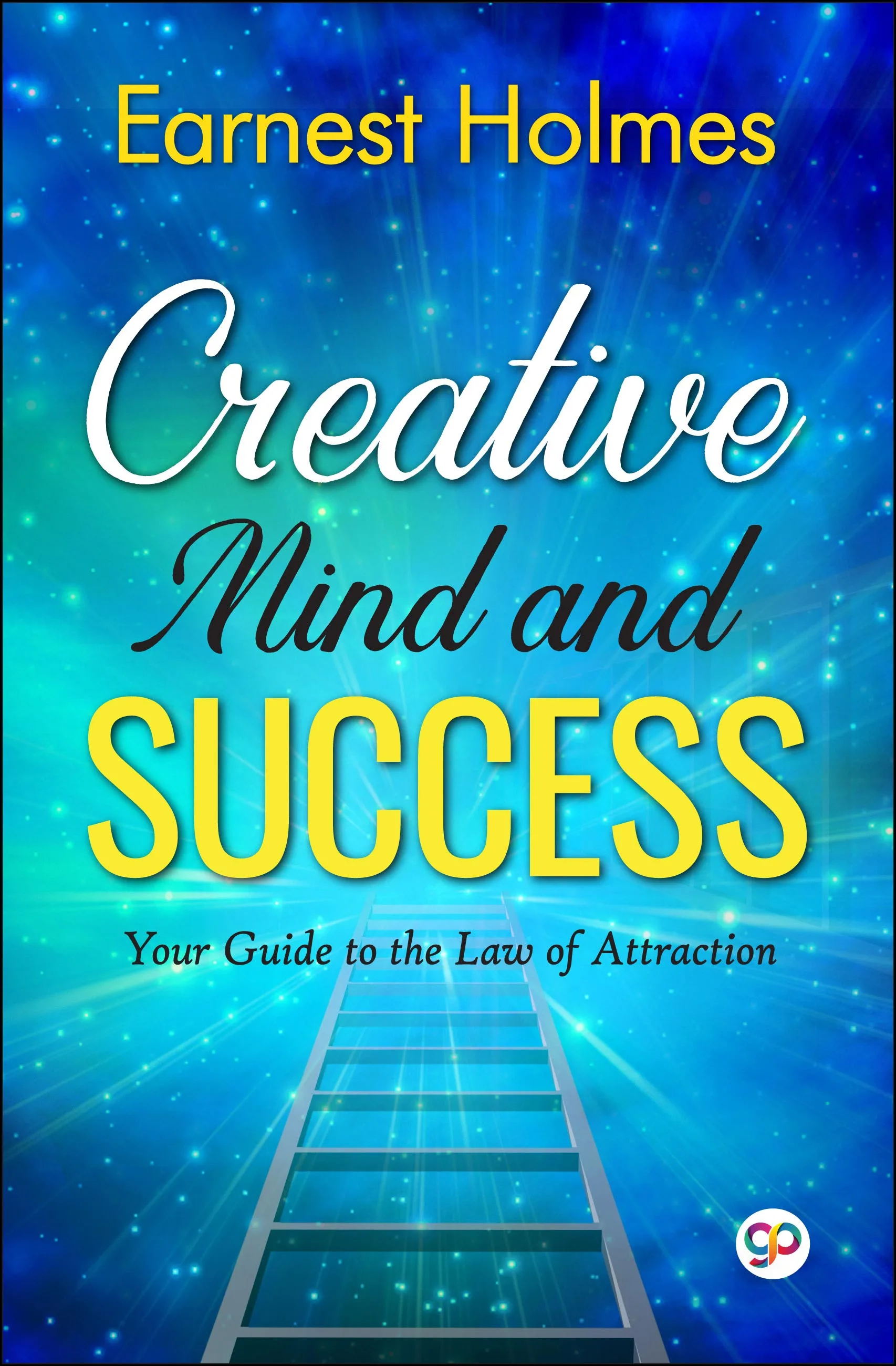
Creative Mind and Success
eBook
• 83 Pages
• INR 70.00
• English
• 9789389716184
No ratings yet
| Publisher | General Press |
|---|---|
| ISBN13 | 9789389716184 |
| ASIN/SKU | B086VTYRPC |
| Book Format | eBook |
| Language | English |
| Pages | 83 |
| List Price | INR 70.00 |
| Subject Code | FIC028000, FIC028040, OCC000000, POE005010 |
| Publishing Date | 07/04/2020 |
| Book Code | BD00068682 |
Buy this Book
Amazon Stores
Ebook Stores
Other Stores
Discover Creative Mind and Success by Ernest Holmes. This book is published by General Press in eBook format, ISBN 9789389716184, ASIN B086VTYRPC, under Self-Help, Success Self-Help.
Book Description
First published in 1919, 'Creative Mind and Success' is a guide to mental wellness and success by Ernest Holmes, an American New Thought writer, teacher, and leader. He was the founder of a spiritual movement known as Religious Science, part of the greater New Thought movement, whose spiritual philosophy is known as 'The Science of Mind.'
The universe holds intelligence, purpose, and order. By comprehending its principles and applying them to ourselves, we can visit who we are and what we truly desire in life. This is a simple guide for the many thousands who came to hear Holmes's words and wished to know more. This book is designed to demonstrate what people must realize for themselves about the nature of the universe and the creative power of their own minds. Its message is as compelling today as it was a century ago.
The universe holds intelligence, purpose, and order. By comprehending its principles and applying them to ourselves, we can visit who we are and what we truly desire in life. This is a simple guide for the many thousands who came to hear Holmes's words and wished to know more. This book is designed to demonstrate what people must realize for themselves about the nature of the universe and the creative power of their own minds. Its message is as compelling today as it was a century ago.
Author Biography
An ex-soldier of the British Army. Joined as a volunteer in the early sixties just as conscription ended and the last postings of the era were coming to an end. This author was involved in the adventures and the incidents outlined in this biography. From the beginning of his service in the British Army it would seem he wasn’t cut out for a military life, but he wasn’t the only one with a ‘record’ who managed to eventually reach a higher rank, there was plenty of competition from others, believe me! In those days…it WAS different, we were young, naïve and very stupid at times….judge for yourself. And enjoy this tale.
Editorial Reviews
Editorial Reviews will be added soon…
Book Summary
Ernest Holmes’s Creative Mind and Success is a short but ambitious book about the relationship between thought, consciousness, action, and the conditions of our lives. First published in the early twentieth century, the book belongs to the New Thought tradition and presents success not simply as the result of hard work or favorable circumstances, but as something deeply connected with the way a person thinks and understands life. Holmes’s central idea is that the mind is creative: our habitual thoughts, beliefs, expectations, and mental attitudes influence the way we experience the world and the possibilities we recognize within it. The book combines spiritual philosophy with practical advice about prosperity, work, relationships, confidence, and personal development.
Holmes begins with a philosophical question: What is life, and what is humanity’s place within it? He argues that life is not merely a collection of physical events. Behind individual existence is a universal intelligence or creative principle. Human beings participate in this larger life because the same creative power that operates throughout the universe also operates through individual consciousness. In Holmes’s view, this does not mean that a person is literally the whole universe, but that each individual is a center through which universal creative intelligence can express itself.
This idea becomes the foundation for the rest of the book. If human beings participate in a universal creative intelligence, then they are not helpless victims of circumstances. They possess the ability to make choices, change their attitudes, develop new mental patterns, and consequently change the direction of their lives. Holmes repeatedly emphasizes that freedom operates through universal law. Just as physical laws cannot simply be ignored, the laws governing thought and consciousness must also be understood and consciously used.
One of the book’s most important themes is the creative power of thought. Holmes argues that conditions do not arise entirely by accident. There is a relationship between what we consistently think and what we eventually experience. He describes thought as a kind of pattern and the mind as the builder. A person who continually thinks in terms of fear, failure, scarcity, or limitation may unconsciously reproduce those ideas in everyday life. Conversely, someone who develops thoughts of confidence, possibility, abundance, and constructive action becomes more capable of recognizing and creating opportunities.
Holmes is particularly interested in what he calls unconscious creation. People are constantly thinking, often without realizing what they are thinking. Because of this, they may be creating mental patterns without deliberately choosing them. A person can consciously desire success while unconsciously expecting failure. They may say that they want prosperity while repeatedly imagining poverty. For Holmes, this inner contradiction is one reason people fail to obtain what they consciously desire. The first step toward change, therefore, is becoming aware of one's habitual mental atmosphere.
From this follows Holmes’s teaching on the control of thought. He does not suggest that a person can prevent every negative thought from appearing. Rather, he encourages deliberate mental discipline. The important question is which thoughts we repeatedly entertain, strengthen, and accept as true. The mind should gradually become more purposeful. Instead of allowing fear or discouragement to dominate consciousness, one should repeatedly return to constructive ideas.
This principle is applied to success and prosperity. Holmes believes that prosperity begins as an idea before it becomes a material condition. Money, in his philosophy, is not inherently evil or spiritually inferior. It is one form of expression and can be used constructively. The real problem is not money itself but the mental attitudes surrounding it—fear, greed, insecurity, resentment, or the belief that abundance is impossible. To become prosperous, Holmes argues, people must develop an inner consciousness of abundance while also taking practical action.
Importantly, Holmes does not present thought as a substitute for action. The book repeatedly returns to the necessity of action. A constructive idea must eventually express itself through behavior. Thinking about success without doing anything is not enough. Mental preparation should produce courage, initiative, persistence, and intelligent effort. The individual must become willing to act upon new possibilities rather than remaining imprisoned by old habits.
Holmes also discusses imagination and visualization. The imagination allows people to mentally experience possibilities before they appear externally. By holding a clear and constructive picture of the desired condition, a person gives the mind a direction toward which to work. Visualization is therefore not presented merely as wishful dreaming. It is a method of concentrating consciousness and developing what Holmes calls a “mental equivalent”—an inner pattern corresponding to the experience one wishes to have.
Another significant theme is attraction. Holmes believes that people tend to attract experiences consistent with their dominant mental attitudes. This principle applies not only to material success but also to relationships. A person who develops friendliness, generosity, confidence, and genuine interest in others is more likely to create healthy social connections. Holmes therefore connects success with character. One cannot expect the outer world to change while remaining unwilling to change one's own mental and emotional habits.
The second part of the book becomes more practical. Holmes introduces “treatments,” which are forms of concentrated affirmative thought or spiritual practice. The purpose is to deliberately replace limiting mental patterns with constructive ones. He encourages readers to become quiet, focus their thoughts, affirm desirable truths, and develop trust in the larger creative intelligence of life. The practices are intended to strengthen concentration and make positive ideas more deeply rooted in consciousness.
Holmes also stresses the importance of following up a thought. A useful idea should not be casually dismissed. When an intuitive or constructive thought arises, it deserves attention and perhaps action. He encourages readers to enlarge their thinking rather than constantly accepting the limitations imposed by past experience. The past may explain present circumstances, but it does not have to dictate the future.
The book’s later chapters deal with intuition, mental likeness, prosperity, and the practice of maintaining a chosen idea in consciousness. Holmes advises readers to gather knowledge, cultivate useful thoughts, and eliminate mental patterns they do not wish to reproduce. His approach is ultimately one of self-mastery through conscious thought.
The enduring appeal of Creative Mind and Success lies in its insistence that inner life matters. Holmes asks readers to stop seeing themselves merely as passive recipients of circumstances and instead become conscious participants in their own development. Some of his claims about thought creating external reality reflect the metaphysical beliefs of the New Thought movement rather than conclusions established by modern science. Yet his practical emphasis on attention, belief, imagination, confidence, purposeful thinking, and action remains accessible.
Ultimately, Holmes’s message is simple: change begins within consciousness. We cannot control everything that happens to us, but we can examine the thoughts through which we interpret life, choose the beliefs we strengthen, and decide what kind of person we will become. For Holmes, success is therefore more than money or achievement. It is the gradual expression of a person who has learned to think deliberately, act courageously, trust life, and recognize possibilities where fear once saw only limitations.
Holmes begins with a philosophical question: What is life, and what is humanity’s place within it? He argues that life is not merely a collection of physical events. Behind individual existence is a universal intelligence or creative principle. Human beings participate in this larger life because the same creative power that operates throughout the universe also operates through individual consciousness. In Holmes’s view, this does not mean that a person is literally the whole universe, but that each individual is a center through which universal creative intelligence can express itself.
This idea becomes the foundation for the rest of the book. If human beings participate in a universal creative intelligence, then they are not helpless victims of circumstances. They possess the ability to make choices, change their attitudes, develop new mental patterns, and consequently change the direction of their lives. Holmes repeatedly emphasizes that freedom operates through universal law. Just as physical laws cannot simply be ignored, the laws governing thought and consciousness must also be understood and consciously used.
One of the book’s most important themes is the creative power of thought. Holmes argues that conditions do not arise entirely by accident. There is a relationship between what we consistently think and what we eventually experience. He describes thought as a kind of pattern and the mind as the builder. A person who continually thinks in terms of fear, failure, scarcity, or limitation may unconsciously reproduce those ideas in everyday life. Conversely, someone who develops thoughts of confidence, possibility, abundance, and constructive action becomes more capable of recognizing and creating opportunities.
Holmes is particularly interested in what he calls unconscious creation. People are constantly thinking, often without realizing what they are thinking. Because of this, they may be creating mental patterns without deliberately choosing them. A person can consciously desire success while unconsciously expecting failure. They may say that they want prosperity while repeatedly imagining poverty. For Holmes, this inner contradiction is one reason people fail to obtain what they consciously desire. The first step toward change, therefore, is becoming aware of one's habitual mental atmosphere.
From this follows Holmes’s teaching on the control of thought. He does not suggest that a person can prevent every negative thought from appearing. Rather, he encourages deliberate mental discipline. The important question is which thoughts we repeatedly entertain, strengthen, and accept as true. The mind should gradually become more purposeful. Instead of allowing fear or discouragement to dominate consciousness, one should repeatedly return to constructive ideas.
This principle is applied to success and prosperity. Holmes believes that prosperity begins as an idea before it becomes a material condition. Money, in his philosophy, is not inherently evil or spiritually inferior. It is one form of expression and can be used constructively. The real problem is not money itself but the mental attitudes surrounding it—fear, greed, insecurity, resentment, or the belief that abundance is impossible. To become prosperous, Holmes argues, people must develop an inner consciousness of abundance while also taking practical action.
Importantly, Holmes does not present thought as a substitute for action. The book repeatedly returns to the necessity of action. A constructive idea must eventually express itself through behavior. Thinking about success without doing anything is not enough. Mental preparation should produce courage, initiative, persistence, and intelligent effort. The individual must become willing to act upon new possibilities rather than remaining imprisoned by old habits.
Holmes also discusses imagination and visualization. The imagination allows people to mentally experience possibilities before they appear externally. By holding a clear and constructive picture of the desired condition, a person gives the mind a direction toward which to work. Visualization is therefore not presented merely as wishful dreaming. It is a method of concentrating consciousness and developing what Holmes calls a “mental equivalent”—an inner pattern corresponding to the experience one wishes to have.
Another significant theme is attraction. Holmes believes that people tend to attract experiences consistent with their dominant mental attitudes. This principle applies not only to material success but also to relationships. A person who develops friendliness, generosity, confidence, and genuine interest in others is more likely to create healthy social connections. Holmes therefore connects success with character. One cannot expect the outer world to change while remaining unwilling to change one's own mental and emotional habits.
The second part of the book becomes more practical. Holmes introduces “treatments,” which are forms of concentrated affirmative thought or spiritual practice. The purpose is to deliberately replace limiting mental patterns with constructive ones. He encourages readers to become quiet, focus their thoughts, affirm desirable truths, and develop trust in the larger creative intelligence of life. The practices are intended to strengthen concentration and make positive ideas more deeply rooted in consciousness.
Holmes also stresses the importance of following up a thought. A useful idea should not be casually dismissed. When an intuitive or constructive thought arises, it deserves attention and perhaps action. He encourages readers to enlarge their thinking rather than constantly accepting the limitations imposed by past experience. The past may explain present circumstances, but it does not have to dictate the future.
The book’s later chapters deal with intuition, mental likeness, prosperity, and the practice of maintaining a chosen idea in consciousness. Holmes advises readers to gather knowledge, cultivate useful thoughts, and eliminate mental patterns they do not wish to reproduce. His approach is ultimately one of self-mastery through conscious thought.
The enduring appeal of Creative Mind and Success lies in its insistence that inner life matters. Holmes asks readers to stop seeing themselves merely as passive recipients of circumstances and instead become conscious participants in their own development. Some of his claims about thought creating external reality reflect the metaphysical beliefs of the New Thought movement rather than conclusions established by modern science. Yet his practical emphasis on attention, belief, imagination, confidence, purposeful thinking, and action remains accessible.
Ultimately, Holmes’s message is simple: change begins within consciousness. We cannot control everything that happens to us, but we can examine the thoughts through which we interpret life, choose the beliefs we strengthen, and decide what kind of person we will become. For Holmes, success is therefore more than money or achievement. It is the gradual expression of a person who has learned to think deliberately, act courageously, trust life, and recognize possibilities where fear once saw only limitations.
Sample Chapters
Sample Chapters will be added soon…
Reader Reviews
No reviews yet.
Creative Mind and Success
Download Cover Image
Do you want to download the full cover image for Creative Mind and Success?