
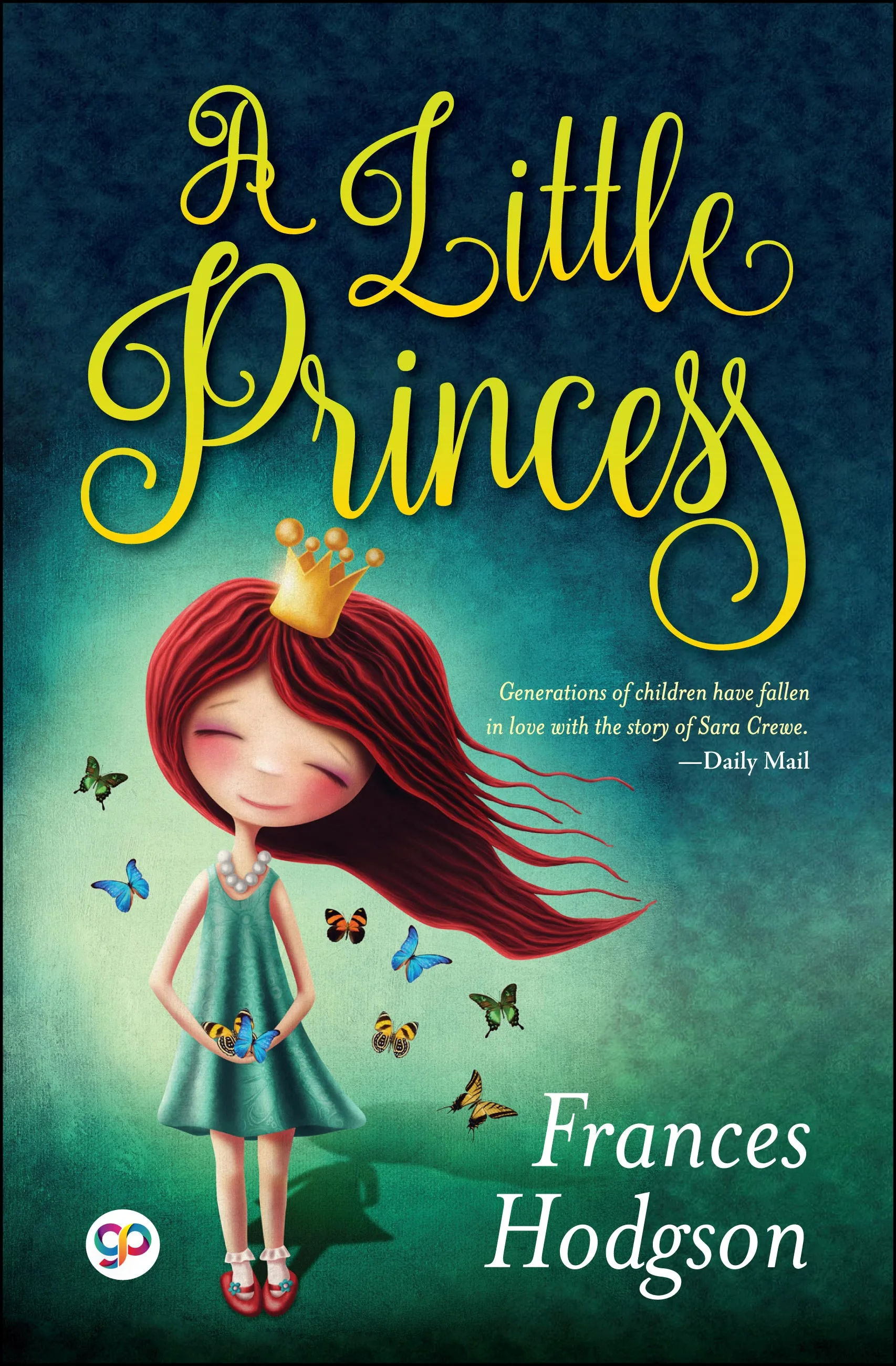
A Little Princess
eBook
• 220 Pages
• INR 51.00
• English
• 9789390492473
No ratings yet
| Publisher | General Press |
|---|---|
| ISBN13 | 9789390492473 |
| ASIN/SKU | B096HBWZ4J |
| Book Format | eBook |
| Language | English |
| Pages | 220 |
| List Price | INR 51.00 |
| Subject Code | JUV007000, FIC014000 |
| Publishing Date | 02/06/2021 |
| Book Code | BD00068695 |
Buy this Book
Amazon Stores
Ebook Stores
Other Stores
Discover A Little Princess by Frances Hodgson Burnett. This book is published by General Press in eBook format, ISBN 9789390492473, ASIN B096HBWZ4J, under Children's Books, Children's Classics, Classics.
Book Description
Written by British-born author Frances Hodgson Burnett and first published in 1905, ‘A Little Princess’ tells the story of young Sara Crewe, affluent daughter of a diamond merchant who was brought from India to London by her doting father to join Miss Minchin’s school. While at first her life of privilege continues as she is treated like a princess, the tragic death of her father and failure of his business change everything.
Faced with the worst tragedy that can befall an 11-year-old, descends into poverty and is forced to work as an ordinary servant, she needs all her audacity and imagination to remain a princess at heart. She rises above hardship with such grace which inspires all readers young and old alike.
This timeless tale of a poor orphan has won children's hearts for a century—and continues to be a favourite. This is one of the best-loved stories in all of the children’s literature.
Faced with the worst tragedy that can befall an 11-year-old, descends into poverty and is forced to work as an ordinary servant, she needs all her audacity and imagination to remain a princess at heart. She rises above hardship with such grace which inspires all readers young and old alike.
This timeless tale of a poor orphan has won children's hearts for a century—and continues to be a favourite. This is one of the best-loved stories in all of the children’s literature.
Author Biography
Frances Eliza Hodgson was the daughter of ironmonger Edwin Hodgson, who died three years after her birth, and his wife Eliza Boond. She was educated at The Select Seminary for Young Ladies and Gentleman until the age of fifteen, at which point the family ironmongery, then being run by her mother, failed, and the family emigrated to Knoxville, Tennessee. Here Hodgson began to write, in order to supplement the family income, assuming full responsibility for the family upon the death of her mother, in 1870. In 1872 she married Dr. Swan Burnett, with whom she had two sons, Lionel and Vivian. The marriage was dissolved in 1898. In 1900 Burnett married actor Stephen Townsend until 1902 when they got divorced. Following her great success as a novelist, playwright, and children's author, Burnett maintained homes in both England and America, traveling back and forth quite frequently. She died in her Long Island, New York home, in 1924.
Primarily remembered today for her trio of classic children's novels - Little Lord Fauntleroy (1886), A Little Princess (1905), and The Secret Garden (1911) - Burnett was also a popular adult novelist, in her own day, publishing romantic stories such as The Making of a Marchioness (1901) for older readers.
Primarily remembered today for her trio of classic children's novels - Little Lord Fauntleroy (1886), A Little Princess (1905), and The Secret Garden (1911) - Burnett was also a popular adult novelist, in her own day, publishing romantic stories such as The Making of a Marchioness (1901) for older readers.
Editorial Reviews
Editorial Reviews will be added soon…
Book Summary
Frances Hodgson Burnett’s A Little Princess is a tender and memorable children’s classic about kindness, imagination, dignity, and the strength of character that can survive even the harshest circumstances. At the heart of the story is Sara Crewe, a bright, imaginative young girl who is sent from India to London to attend Miss Minchin’s Select Seminary for Young Ladies. Although Sara is born into wealth and enjoys a privileged childhood, Burnett’s story gradually shows that true richness has little to do with money. Sara’s real strength lies in her compassion, self-control, imagination, and ability to treat others with kindness even when she herself is suffering.
Sara arrives at the boarding school as an unusual child. She is the beloved daughter of Captain Ralph Crewe, a wealthy and affectionate Englishman who has made his fortune in India. Because he loves Sara deeply, he provides her with beautiful clothes, books, dolls, and everything a child could reasonably desire. Miss Minchin, the severe and calculating headmistress of the school, is particularly interested in Sara because of her father’s wealth. She treats the girl with unusual attention and places her in a special position among the students. Yet Sara does not become spoiled by her privileged life. She is polite, generous, and unusually sensitive to the feelings of other people.
One of Sara’s greatest gifts is her imagination. She often turns ordinary situations into stories and imagines herself as a princess. This is not simply childish vanity. For Sara, pretending to be a princess means behaving with grace, courage, and generosity regardless of how others treat her. She believes that a real princess would remain kind even when she was angry, frightened, or unhappy. This idea becomes the moral center of the novel.
Sara forms friendships with several girls at the school, especially Ermengarde St. John, a shy and academically unsuccessful girl whom others sometimes laugh at. Sara treats Ermengarde with patience rather than judging her. She also becomes friendly with Lottie, a younger child who is emotionally troubled and often cries for her mother. Sara comforts her almost as though she were an older sister. Another important figure in Sara’s life is Becky, the poor servant girl who works at the school. While most of the students barely notice Becky, Sara recognizes her humanity and treats her with genuine respect.
Sara’s comfortable life changes dramatically when she turns eleven. Her father’s investments in the diamond mines fail, and he dies suddenly in India after losing his fortune. Sara is left alone, penniless, and without a family member able to protect her. The news changes Miss Minchin’s attitude immediately. The woman who had treated Sara like a valuable princess now sees her as a financial burden. Instead of allowing Sara to leave the school, Miss Minchin keeps her as a servant, forcing her to live in miserable conditions and perform exhausting work.
Sara’s fall from luxury into poverty is one of the most powerful parts of the story. She is moved into a cold attic, given inadequate food and clothing, and expected to work constantly. She is often hungry, tired, and lonely. Miss Minchin and the other adults at the school treat her harshly, while some of the girls who once admired her turn away from her because she is no longer wealthy.
Yet Sara refuses to surrender her dignity. She continues to imagine herself as a princess, even when she has almost nothing. Her imagination becomes a means of emotional survival. When she is hungry, she imagines herself at a magnificent feast. When she is cold, she imagines warmth and comfort. When she feels alone, she creates stories in her mind. These fantasies do not erase her suffering, but they help her endure it without becoming bitter.
Sara’s kindness also survives. She shares what little she has with Becky, who is even poorer than she is. At one point, Sara finds money in the street and is desperately hungry, yet she uses it to buy food and gives much of it to another starving child. This moment captures the essence of Sara’s character: poverty has taken away her possessions, but it has not taken away her generosity.
Meanwhile, a mysterious gentleman named Mr. Carrisford lives nearby. He is connected to Sara’s father and is searching for Captain Crewe’s daughter. Mr. Carrisford had been involved in the same diamond investment that caused Captain Crewe’s financial ruin, but he has eventually become wealthy again. Haunted by guilt over what happened, he wants to find Sara and make amends. His search eventually brings him close to the truth.
The turning point comes when Mr. Carrisford’s Indian servant, Ram Dass, discovers Sara and learns about her terrible circumstances. Ram Dass secretly befriends her and begins leaving small gifts in her attic room. Sara is astonished by these acts of kindness, especially because they make her miserable surroundings feel almost magical. At the same time, Mr. Carrisford gradually realizes that the poor girl he has been trying to find is living right next door.
Eventually, Sara’s identity is confirmed. Her father’s fortune has not been lost after all; the diamond investment has become enormously successful, leaving Sara unexpectedly wealthy. The revelation transforms her circumstances completely. She is taken away from the cruel treatment at Miss Minchin’s school and welcomed into a secure and loving home.
However, the happy ending is not simply about Sara becoming rich again. The deeper triumph is that Sara has remained herself throughout her suffering. She proves that being a “princess” is not a matter of wealth, clothing, or social position. It is a way of living—with compassion, courage, patience, and dignity.
Burnett’s novel therefore offers a gentle but powerful lesson about the difference between outward status and inner character. Sara loses everything that once made other people admire her, yet she becomes more admirable when she has nothing. Her treatment of Becky, Ermengarde, Lottie, and even those who mistreat her shows that kindness is most meaningful when it costs something.
A Little Princess remains beloved because Sara’s story speaks to a universal human hope: that goodness matters even when it seems unnoticed, and that difficult circumstances do not have to determine who we become. Through Sara, Burnett reminds readers that imagination can provide comfort, friendship can survive hardship, and genuine nobility comes not from being treated like a princess, but from choosing to act like one when life is anything but kind.
Sara arrives at the boarding school as an unusual child. She is the beloved daughter of Captain Ralph Crewe, a wealthy and affectionate Englishman who has made his fortune in India. Because he loves Sara deeply, he provides her with beautiful clothes, books, dolls, and everything a child could reasonably desire. Miss Minchin, the severe and calculating headmistress of the school, is particularly interested in Sara because of her father’s wealth. She treats the girl with unusual attention and places her in a special position among the students. Yet Sara does not become spoiled by her privileged life. She is polite, generous, and unusually sensitive to the feelings of other people.
One of Sara’s greatest gifts is her imagination. She often turns ordinary situations into stories and imagines herself as a princess. This is not simply childish vanity. For Sara, pretending to be a princess means behaving with grace, courage, and generosity regardless of how others treat her. She believes that a real princess would remain kind even when she was angry, frightened, or unhappy. This idea becomes the moral center of the novel.
Sara forms friendships with several girls at the school, especially Ermengarde St. John, a shy and academically unsuccessful girl whom others sometimes laugh at. Sara treats Ermengarde with patience rather than judging her. She also becomes friendly with Lottie, a younger child who is emotionally troubled and often cries for her mother. Sara comforts her almost as though she were an older sister. Another important figure in Sara’s life is Becky, the poor servant girl who works at the school. While most of the students barely notice Becky, Sara recognizes her humanity and treats her with genuine respect.
Sara’s comfortable life changes dramatically when she turns eleven. Her father’s investments in the diamond mines fail, and he dies suddenly in India after losing his fortune. Sara is left alone, penniless, and without a family member able to protect her. The news changes Miss Minchin’s attitude immediately. The woman who had treated Sara like a valuable princess now sees her as a financial burden. Instead of allowing Sara to leave the school, Miss Minchin keeps her as a servant, forcing her to live in miserable conditions and perform exhausting work.
Sara’s fall from luxury into poverty is one of the most powerful parts of the story. She is moved into a cold attic, given inadequate food and clothing, and expected to work constantly. She is often hungry, tired, and lonely. Miss Minchin and the other adults at the school treat her harshly, while some of the girls who once admired her turn away from her because she is no longer wealthy.
Yet Sara refuses to surrender her dignity. She continues to imagine herself as a princess, even when she has almost nothing. Her imagination becomes a means of emotional survival. When she is hungry, she imagines herself at a magnificent feast. When she is cold, she imagines warmth and comfort. When she feels alone, she creates stories in her mind. These fantasies do not erase her suffering, but they help her endure it without becoming bitter.
Sara’s kindness also survives. She shares what little she has with Becky, who is even poorer than she is. At one point, Sara finds money in the street and is desperately hungry, yet she uses it to buy food and gives much of it to another starving child. This moment captures the essence of Sara’s character: poverty has taken away her possessions, but it has not taken away her generosity.
Meanwhile, a mysterious gentleman named Mr. Carrisford lives nearby. He is connected to Sara’s father and is searching for Captain Crewe’s daughter. Mr. Carrisford had been involved in the same diamond investment that caused Captain Crewe’s financial ruin, but he has eventually become wealthy again. Haunted by guilt over what happened, he wants to find Sara and make amends. His search eventually brings him close to the truth.
The turning point comes when Mr. Carrisford’s Indian servant, Ram Dass, discovers Sara and learns about her terrible circumstances. Ram Dass secretly befriends her and begins leaving small gifts in her attic room. Sara is astonished by these acts of kindness, especially because they make her miserable surroundings feel almost magical. At the same time, Mr. Carrisford gradually realizes that the poor girl he has been trying to find is living right next door.
Eventually, Sara’s identity is confirmed. Her father’s fortune has not been lost after all; the diamond investment has become enormously successful, leaving Sara unexpectedly wealthy. The revelation transforms her circumstances completely. She is taken away from the cruel treatment at Miss Minchin’s school and welcomed into a secure and loving home.
However, the happy ending is not simply about Sara becoming rich again. The deeper triumph is that Sara has remained herself throughout her suffering. She proves that being a “princess” is not a matter of wealth, clothing, or social position. It is a way of living—with compassion, courage, patience, and dignity.
Burnett’s novel therefore offers a gentle but powerful lesson about the difference between outward status and inner character. Sara loses everything that once made other people admire her, yet she becomes more admirable when she has nothing. Her treatment of Becky, Ermengarde, Lottie, and even those who mistreat her shows that kindness is most meaningful when it costs something.
A Little Princess remains beloved because Sara’s story speaks to a universal human hope: that goodness matters even when it seems unnoticed, and that difficult circumstances do not have to determine who we become. Through Sara, Burnett reminds readers that imagination can provide comfort, friendship can survive hardship, and genuine nobility comes not from being treated like a princess, but from choosing to act like one when life is anything but kind.
Sample Chapters
Chapter 1 : Sara
Once on a dark winter’s day, when the yellow fog hung so thick and heavy in the streets of London that the lamps were lighted and the shop windows blazed with gas as they do at night, an odd-looking little girl sat in a cab with her father and was driven rather slowly through the big thoroughfares.
She sat with her feet tucked under her, and leaned against her father, who held her in his arm, as she stared out of the window at the passing people with a queer old-fashioned thoughtfulness in her big eyes.
She was such a little girl that one did not expect to see such a look on her small face. It would have been an old look for a child of twelve, and Sara Crewe was only seven. The fact was, however, that she was always dreaming and thinking odd things and could not herself remember any time when she had not been thinking things about grown-up people and the world they belonged to. She felt as if she had lived a long, long time.
At this moment she was remembering the voyage she had just made from Bombay with her father, Captain Crewe. She was thinking of the big ship, of the Lascars passing silently to and fro on it, of the children playing about on the hot deck, and of some young officers’ wives who used to try to make her talk to them and laugh at the things she said.
Principally, she was thinking of what a queer thing it was that at one time one was in India in the blazing sun, and then in the middle of the ocean, and then driving in a strange vehicle through strange streets where the day was as dark as the night. She found this so puzzling that she moved closer to her father.
“Papa,” she said in a low, mysterious little voice which was almost a whisper, “papa.”
“What is it, darling?” Captain Crewe answered, holding her closer and looking down into her face. “What is Sara thinking of?”
“Is this the place?” Sara whispered, cuddling still closer to him. “Is it, pap‑“Yes, little Sara, it is. We have reached it at last.” And though she was only seven years old, she knew that he felt sad when he said it.
It seemed to her many years since he had begun to prepare her mind for “the place,” as she always called it. Her mother had died when she was born, so she had never known or missed her. Her young, handsome, rich, petting father seemed to be the only relation she had in the world. They had always played together and been fond of each other. She only knew he was rich because she had heard people say so when they thought she was not listening, and she had also heard them say that when she grew up she would be rich, too. She did not know all that being rich meant. She had always lived in a beautiful bungalow, and had been used to seeing many servants who made salaams to her and called her “Missee Sahib,” and gave her own way in everything. She had had toys and pets and an ayah who worshipped her, and she had gradually learned that people who were rich had these things. That, however, was all she knew about it.
During her short life only one thing had troubled her, and that thing was “the place” she was to be taken to some day. The climate of India was very bad for children, and as soon as possible they were sent away from it—generally to England and to school. She had seen other children go away, and had heard their fathers and mothers talk about the letters they received from them. She had known that she would be obliged to go also, and though sometimes her father’s stories of the voyage and the new country had attracted her, she had been troubled by the thought that he could not stay with her.
“Couldn’t you go to that place with me, papa?” she had asked when she was five years old. “Couldn’t you go to school, too? I would help you with your lessons.”
“But you will not have to stay for a very long time, little Sara,” he had always said. “You will go to a nice house where there will be a lot of little girls, and you will play together, and I will send you plenty of books, and you will grow so fast that it will seem scarcely a year before you are big enough and clever enough to come back and take care of papa.”
She had liked to think of that. To keep the house for her father; to ride with him, and sit at the head of his table when he had dinner parties; to talk to him and read his books—that would be what she would like most in the world, and if one must go away to “the place” in England to attain it, she must make up her mind to go. She did not care very much for other little girls, but if she had plenty of books she could console herself. She liked books more than anything else, and was, in fact, always inventing stories of beautiful things and telling them to herself. Sometimes she had told them to her father, and he had liked them as much as she did.
“Well, papa,” she said softly, “if we are here I suppose we must be resigned.”
He laughed at her old-fashioned speech and kissed her. He was really not at all resigned himself, though he knew he must keep that a secret. His quaint little Sara had been a great companion to him, and he felt he should be a lonely fellow when, on his return to India, he went into his bungalow knowing he need not expect to see the small figure in its white frock come forward to meet him. So he held her very closely in his arms as the cab rolled into the big, dull square in which stood the house which was their destination.
It was a big, dull, brick house, exactly like all the others in its row, but that on the front door there shone a brass plate on which was engraved in black letters:
MISS MINCHIN,
Select Seminary for Young Ladies
“Here we are, Sara,” said Captain Crewe, making his voice sound as cheerful as possible. Then he lifted her out of the cab and they mounted the steps and rang the bell. Sara often thought afterward that the house was somehow exactly like Miss Minchin. It was respectable and well furnished, but everything in it was ugly; and the very armchairs seemed to have hard bones in them. In the hall everything was hard and polished—even the red cheeks of the moon face on the tall clock in the corner had a severe varnished look. The drawing room into which they were ushered was covered by a carpet with a square pattern upon it, the chairs were square, and a heavy marble timepiece stood upon the heavy marble mantel.
As she sat down in one of the stiff mahogany chairs, Sara cast one of her quick looks about her.
“I don’t like it, papa,” she said. “But then I dare say soldiers—even brave ones—don’t really like going into battle.”
Captain Crewe laughed outright at this. He was young and full of fun, and he never tired of hearing Sara’s queer speeches.
“Oh, little Sara,” he said. “What shall I do when I have no one to say solemn things to me? No one else is as solemn as you are.”
“But why do solemn things make you laugh so?” inquired Sara.
“Because you are such fun when you say them,” he answered, laughing still more. And then suddenly he swept her into his arms and kissed her very hard, stopping laughing all at once and looking almost as if tears had come into his eyes.
It was just then that Miss Minchin entered the room. She was very like her house, Sara felt: tall and dull, and respectable and ugly. She had large, cold, fishy eyes, and a large, cold, fishy smile. It spread itself into a very large smile when she saw Sara and Captain Crewe. She had heard a great many desirable things of the young soldier from the lady who had recommended her school to him. Among other things, she had heard that he was a rich father who was willing to spend a great deal of money on his little daughter.
“It will be a great privilege to have charge of such a beautiful and promising child, Captain Crewe,” she said, taking Sara’s hand and stroking it. “Lady Meredith has told me of her unusual cleverness. A clever child is a great treasure in an establishment like mine.”
Sara stood quietly, with her eyes fixed upon Miss Minchin’s face. She was thinking something odd, as usual.
“Why does she say I am a beautiful child?” she was thinking. “I am not beautiful at all. Colonel Grange’s little girl, Isobel, is beautiful. She has dimples and rose-colored cheeks, and long hair the color of gold. I have short black hair and green eyes; besides which, I am a thin child and not fair in the least. I am one of the ugliest children I ever saw. She is beginning by telling a story.”
She was mistaken, however, in thinking she was an ugly child. She was not in the least like Isobel Grange, who had been the beauty of the regiment, but she had an odd charm of her own. She was a slim, supple creature, rather tall for her age, and had an intense, attractive little face. Her hair was heavy and quite black and only curled at the tips; her eyes were greenish gray, it is true, but they were big, wonderful eyes with long, black lashes, and though she herself did not like the color of them, many other people did. Still she was very firm in her belief that she was an ugly little girl, and she was not at all elated by Miss Minchin’s flattery.
“I should be telling a story if I said she was beautiful,” she thought; “and I should know I was telling a story. I believe I am as ugly as she is—in my way. What did she say that for?”
After she had known Miss Minchin longer she learned why she had said it. She discovered that she said the same thing to each papa and mamma who brought a child to her school.
Sara stood near her father and listened while he and Miss Minchin talked. She had been brought to the seminary because Lady Meredith’s two little girls had been educated there, and Captain Crewe had a great respect for Lady Meredith’s experience. Sara was to be what was known as “a parlor boarder,” and she was to enjoy even greater privileges than parlor boarders usually did. She was to have a pretty bedroom and sitting room of her own; she was to have a pony and a carriage, and a maid to take the place of the ayah who had been her nurse in India.
“I am not in the least anxious about her education,” Captain Crewe said, with his gay laugh, as he held Sara’s hand and patted it. “The difficulty will be to keep her from learning too fast and too much. She is always sitting with her little nose burrowing into books. She doesn’t read them, Miss Minchin; she gobbles them up as if she were a little wolf instead of a little girl. She is always starving for new books to gobble, and she wants grown-up books—great, big, fat ones—French and German as well as English—history and biography and poets, and all sorts of things. Drag her away from her books when she reads too much. Make her ride her pony in the Row or go out and buy a new doll. She ought to play more with dolls.”
“Papa,” said Sara, “you see, if I went out and bought a new doll every few days I should have more than I could be fond of. Dolls ought to be intimate friends. Emily is going to be my intimate friend.”
Captain Crewe looked at Miss Minchin and Miss Minchin looked at Captain Crewe.
“Who is Emily?” she inquired.
“Tell her, Sara,” Captain Crewe said, smiling.
Sara’s green-gray eyes looked very solemn and quite soft as she answered.
“She is a doll I haven’t got yet,” she said. “She is a doll papa is going to buy for me. We are going out together to find her. I have called her Emily. She is going to be my friend when papa is gone. I want her to talk to about him.”
Miss Minchin’s large, fishy smile became very flattering indeed.
“What an original child!” she said. “What a darling little creature!”
“Yes,” said Captain Crewe, drawing Sara close. “She is a darling little creature. Take great care of her for me, Miss Minchin.”
Sara stayed with her father at his hotel for several days; in fact, she remained with him until he sailed away again to India. They went out and visited many big shops together, and bought a great many things. They bought, indeed, a great many more things than Sara needed; but Captain Crewe was a rash, innocent young man and wanted his little girl to have everything she admired and everything he admired himself, so between them they collected a wardrobe much too grand for a child of seven. There were velvet dresses trimmed with costly furs, and lace dresses, and embroidered ones, and hats with great, soft ostrich feathers, and ermine coats and muffs, and boxes of tiny gloves and handkerchiefs and silk stockings in such abundant supplies that the polite young women behind the counters whispered to each other that the odd little girl with the big, solemn eyes must be at least some foreign princess—perhaps the little daughter of an Indian rajah.
And at last they found Emily, but they went to a number of toy shops and looked at a great many dolls before they discovered her.
“I want her to look as if she wasn’t a doll really,” Sara said. “I want her to look as if she listens when I talk to her. The trouble with dolls, papa”—and she put her head on one side and reflected as she said it—“the trouble with dolls is that they never seem to hear.” So they looked at big ones and little ones—at dolls with black eyes and dolls with blue—at dolls with brown curls and dolls with golden braids, dolls dressed and dolls undressed.
“You see,” Sara said when they were examining one who had no clothes. “If, when I find her, she has no frocks, we can take her to a dressmaker and have her things made to fit. They will fit better if they are tried on.”
After a number of disappointments they decided to walk and look in at the shop windows and let the cab follow them. They had passed two or three places without even going in, when, as they were approaching a shop which was really not a very large one, Sara suddenly started and clutched her father’s arm.
“Oh, papa!” she cried. “There is Emily!”
A flush had risen to her face and there was an expression in her green-gray eyes as if she had just recognized someone she was intimate with and fond of.
“She is actually waiting there for us!” she said. “Let us go in to her.”
“Dear me,” said Captain Crewe, “I feel as if we ought to have someone to introduce us.”
“You must introduce me and I will introduce you,” said Sara. “But I knew her the minute I saw her—so perhaps she knew me, too.”
Perhaps she had known her. She had certainly a very intelligent expression in her eyes when Sara took her in her arms. She was a large doll, but not too large to carry about easily; she had naturally curling golden-brown hair, which hung like a mantle about her, and her eyes were a deep, clear, gray-blue, with soft, thick eyelashes which were real eyelashes and not mere painted lines.
“Of course,” said Sara, looking into her face as she held her on her knee, “of course papa, this is Emily.”
So Emily was bought and actually taken to a children’s outfitter’s shop and measured for a wardrobe as grand as Sara’s own. She had lace frocks, too, and velvet and muslin ones, and hats and coats and beautiful lace-trimmed underclothes, and gloves and handkerchiefs and furs.
“I should like her always to look as if she was a child with a good mother,” said Sara. “I’m her mother, though I am going to make a companion of her.”
Captain Crewe would really have enjoyed the shopping tremendously, but that a sad thought kept tugging at his heart. This all meant that he was going to be separated from his beloved, quaint little comrade.
He got out of his bed in the middle of that night and went and stood looking down at Sara, who lay asleep with Emily in her arms. Her black hair was spread out on the pillow and Emily’s golden-brown hair mingled with it, both of them had lace-ruffled nightgowns, and both had long eyelashes which lay and curled up on their cheeks. Emily looked so like a real child that Captain Crewe felt glad she was there. He drew a big sigh and pulled his mustache with a boyish expression.
“Heigh-ho, little Sara!” he said to himself “I don’t believe you know how much your daddy will miss you.”
The next day he took her to Miss Minchin’s and left her there. He was to sail away the next morning. He explained to Miss Minchin that his solicitors, Messrs. Barrow & Skipworth, had charge of his affairs in England and would give her any advice she wanted, and that they would pay the bills she sent in for Sara’s expenses. He would write to Sara twice a week, and she was to be given every pleasure she asked for.
“She is a sensible little thing, and she never wants anything it isn’t safe to give her,” he said.
Then he went with Sara into her little sitting room and they bade each other good-by. Sara sat on his knee and held the lapels of his coat in her small hands, and looked long and hard at his face.
“Are you learning me by heart, little Sara?” he said, stroking her hair.
“No,” she answered. “I know you by heart. You are inside my heart.” And they put their arms round each other and kissed as if they would never let each other go.
When the cab drove away from the door, Sara was sitting on the floor of her sitting room, with her hands under her chin and her eyes following it until it had turned the corner of the square. Emily was sitting by her, and she looked after it, too. When Miss Minchin sent her sister, Miss Amelia, to see what the child was doing, she found she could not open the door.
“I have locked it,” said a queer, polite little voice from inside. “I want to be quite by myself, if you please.”
Miss Amelia was fat and dumpy, and stood very much in awe of her sister. She was really the better-natured person of the two, but she never disobeyed Miss Minchin. She went downstairs again, looking almost alarmed.
“I never saw such a funny, old-fashioned child, sister,” she said. “She has locked herself in, and she is not making the least particle of noise.”
“It is much better than if she kicked and screamed, as some of them do,” Miss Minchin answered. “I expected that a child as much spoiled as she is would set the whole house in an uproar. If ever a child was given her own way in everything, she is.”
“I’ve been opening her trunks and putting her things away,” said Miss Amelia. “I never saw anything like them—sable and ermine on her coats, and real Valenciennes lace on her underclothing. You have seen some of her clothes. What do you think of them?”
“I think they are perfectly ridiculous,” replied Miss Minchin, sharply; “but they will look very well at the head of the line when we take the schoolchildren to church on Sunday. She has been provided for as if she were a little princess.”
And upstairs in the locker room Sara and Emily sat on the floor and stared at the corner round which the cab had disappeared, while Captain Crewe looked backward, waving and kissing his hand as if he could not bear to stop.
Chapter 2 : A French Lesson
When Sara entered the schoolroom the next morning everybody looked at her with wide, interested eyes. By that time every pupil—from Lavinia Herbert, who was nearly thirteen and felt quite grown up, to Lottie Legh, who was only just four and the baby of the school—had heard a great deal about her. They knew very certainly that she was Miss Minchin’s show pupil and was considered a credit to the establishment. One or two of them had even caught a glimpse of her French maid, Mariette, who had arrived the evening before. Lavinia had managed to pass Sara’s room when the door was open, and had seen Mariette opening a box which had arrived late from some shop.
“It was full of petticoats with lace frills on them—frills and frills,” she whispered to her friend Jessie as she bent over her geography. “I saw her shaking them out. I heard Miss Minchin say to Miss Amelia that her clothes were so grand that they were ridiculous for a child. My mamma says that children should be dressed simply. She has got one of those petticoats on now. I saw it when she sat down.”
Once on a dark winter’s day, when the yellow fog hung so thick and heavy in the streets of London that the lamps were lighted and the shop windows blazed with gas as they do at night, an odd-looking little girl sat in a cab with her father and was driven rather slowly through the big thoroughfares.
She sat with her feet tucked under her, and leaned against her father, who held her in his arm, as she stared out of the window at the passing people with a queer old-fashioned thoughtfulness in her big eyes.
She was such a little girl that one did not expect to see such a look on her small face. It would have been an old look for a child of twelve, and Sara Crewe was only seven. The fact was, however, that she was always dreaming and thinking odd things and could not herself remember any time when she had not been thinking things about grown-up people and the world they belonged to. She felt as if she had lived a long, long time.
At this moment she was remembering the voyage she had just made from Bombay with her father, Captain Crewe. She was thinking of the big ship, of the Lascars passing silently to and fro on it, of the children playing about on the hot deck, and of some young officers’ wives who used to try to make her talk to them and laugh at the things she said.
Principally, she was thinking of what a queer thing it was that at one time one was in India in the blazing sun, and then in the middle of the ocean, and then driving in a strange vehicle through strange streets where the day was as dark as the night. She found this so puzzling that she moved closer to her father.
“Papa,” she said in a low, mysterious little voice which was almost a whisper, “papa.”
“What is it, darling?” Captain Crewe answered, holding her closer and looking down into her face. “What is Sara thinking of?”
“Is this the place?” Sara whispered, cuddling still closer to him. “Is it, pap‑“Yes, little Sara, it is. We have reached it at last.” And though she was only seven years old, she knew that he felt sad when he said it.
It seemed to her many years since he had begun to prepare her mind for “the place,” as she always called it. Her mother had died when she was born, so she had never known or missed her. Her young, handsome, rich, petting father seemed to be the only relation she had in the world. They had always played together and been fond of each other. She only knew he was rich because she had heard people say so when they thought she was not listening, and she had also heard them say that when she grew up she would be rich, too. She did not know all that being rich meant. She had always lived in a beautiful bungalow, and had been used to seeing many servants who made salaams to her and called her “Missee Sahib,” and gave her own way in everything. She had had toys and pets and an ayah who worshipped her, and she had gradually learned that people who were rich had these things. That, however, was all she knew about it.
During her short life only one thing had troubled her, and that thing was “the place” she was to be taken to some day. The climate of India was very bad for children, and as soon as possible they were sent away from it—generally to England and to school. She had seen other children go away, and had heard their fathers and mothers talk about the letters they received from them. She had known that she would be obliged to go also, and though sometimes her father’s stories of the voyage and the new country had attracted her, she had been troubled by the thought that he could not stay with her.
“Couldn’t you go to that place with me, papa?” she had asked when she was five years old. “Couldn’t you go to school, too? I would help you with your lessons.”
“But you will not have to stay for a very long time, little Sara,” he had always said. “You will go to a nice house where there will be a lot of little girls, and you will play together, and I will send you plenty of books, and you will grow so fast that it will seem scarcely a year before you are big enough and clever enough to come back and take care of papa.”
She had liked to think of that. To keep the house for her father; to ride with him, and sit at the head of his table when he had dinner parties; to talk to him and read his books—that would be what she would like most in the world, and if one must go away to “the place” in England to attain it, she must make up her mind to go. She did not care very much for other little girls, but if she had plenty of books she could console herself. She liked books more than anything else, and was, in fact, always inventing stories of beautiful things and telling them to herself. Sometimes she had told them to her father, and he had liked them as much as she did.
“Well, papa,” she said softly, “if we are here I suppose we must be resigned.”
He laughed at her old-fashioned speech and kissed her. He was really not at all resigned himself, though he knew he must keep that a secret. His quaint little Sara had been a great companion to him, and he felt he should be a lonely fellow when, on his return to India, he went into his bungalow knowing he need not expect to see the small figure in its white frock come forward to meet him. So he held her very closely in his arms as the cab rolled into the big, dull square in which stood the house which was their destination.
It was a big, dull, brick house, exactly like all the others in its row, but that on the front door there shone a brass plate on which was engraved in black letters:
MISS MINCHIN,
Select Seminary for Young Ladies
“Here we are, Sara,” said Captain Crewe, making his voice sound as cheerful as possible. Then he lifted her out of the cab and they mounted the steps and rang the bell. Sara often thought afterward that the house was somehow exactly like Miss Minchin. It was respectable and well furnished, but everything in it was ugly; and the very armchairs seemed to have hard bones in them. In the hall everything was hard and polished—even the red cheeks of the moon face on the tall clock in the corner had a severe varnished look. The drawing room into which they were ushered was covered by a carpet with a square pattern upon it, the chairs were square, and a heavy marble timepiece stood upon the heavy marble mantel.
As she sat down in one of the stiff mahogany chairs, Sara cast one of her quick looks about her.
“I don’t like it, papa,” she said. “But then I dare say soldiers—even brave ones—don’t really like going into battle.”
Captain Crewe laughed outright at this. He was young and full of fun, and he never tired of hearing Sara’s queer speeches.
“Oh, little Sara,” he said. “What shall I do when I have no one to say solemn things to me? No one else is as solemn as you are.”
“But why do solemn things make you laugh so?” inquired Sara.
“Because you are such fun when you say them,” he answered, laughing still more. And then suddenly he swept her into his arms and kissed her very hard, stopping laughing all at once and looking almost as if tears had come into his eyes.
It was just then that Miss Minchin entered the room. She was very like her house, Sara felt: tall and dull, and respectable and ugly. She had large, cold, fishy eyes, and a large, cold, fishy smile. It spread itself into a very large smile when she saw Sara and Captain Crewe. She had heard a great many desirable things of the young soldier from the lady who had recommended her school to him. Among other things, she had heard that he was a rich father who was willing to spend a great deal of money on his little daughter.
“It will be a great privilege to have charge of such a beautiful and promising child, Captain Crewe,” she said, taking Sara’s hand and stroking it. “Lady Meredith has told me of her unusual cleverness. A clever child is a great treasure in an establishment like mine.”
Sara stood quietly, with her eyes fixed upon Miss Minchin’s face. She was thinking something odd, as usual.
“Why does she say I am a beautiful child?” she was thinking. “I am not beautiful at all. Colonel Grange’s little girl, Isobel, is beautiful. She has dimples and rose-colored cheeks, and long hair the color of gold. I have short black hair and green eyes; besides which, I am a thin child and not fair in the least. I am one of the ugliest children I ever saw. She is beginning by telling a story.”
She was mistaken, however, in thinking she was an ugly child. She was not in the least like Isobel Grange, who had been the beauty of the regiment, but she had an odd charm of her own. She was a slim, supple creature, rather tall for her age, and had an intense, attractive little face. Her hair was heavy and quite black and only curled at the tips; her eyes were greenish gray, it is true, but they were big, wonderful eyes with long, black lashes, and though she herself did not like the color of them, many other people did. Still she was very firm in her belief that she was an ugly little girl, and she was not at all elated by Miss Minchin’s flattery.
“I should be telling a story if I said she was beautiful,” she thought; “and I should know I was telling a story. I believe I am as ugly as she is—in my way. What did she say that for?”
After she had known Miss Minchin longer she learned why she had said it. She discovered that she said the same thing to each papa and mamma who brought a child to her school.
Sara stood near her father and listened while he and Miss Minchin talked. She had been brought to the seminary because Lady Meredith’s two little girls had been educated there, and Captain Crewe had a great respect for Lady Meredith’s experience. Sara was to be what was known as “a parlor boarder,” and she was to enjoy even greater privileges than parlor boarders usually did. She was to have a pretty bedroom and sitting room of her own; she was to have a pony and a carriage, and a maid to take the place of the ayah who had been her nurse in India.
“I am not in the least anxious about her education,” Captain Crewe said, with his gay laugh, as he held Sara’s hand and patted it. “The difficulty will be to keep her from learning too fast and too much. She is always sitting with her little nose burrowing into books. She doesn’t read them, Miss Minchin; she gobbles them up as if she were a little wolf instead of a little girl. She is always starving for new books to gobble, and she wants grown-up books—great, big, fat ones—French and German as well as English—history and biography and poets, and all sorts of things. Drag her away from her books when she reads too much. Make her ride her pony in the Row or go out and buy a new doll. She ought to play more with dolls.”
“Papa,” said Sara, “you see, if I went out and bought a new doll every few days I should have more than I could be fond of. Dolls ought to be intimate friends. Emily is going to be my intimate friend.”
Captain Crewe looked at Miss Minchin and Miss Minchin looked at Captain Crewe.
“Who is Emily?” she inquired.
“Tell her, Sara,” Captain Crewe said, smiling.
Sara’s green-gray eyes looked very solemn and quite soft as she answered.
“She is a doll I haven’t got yet,” she said. “She is a doll papa is going to buy for me. We are going out together to find her. I have called her Emily. She is going to be my friend when papa is gone. I want her to talk to about him.”
Miss Minchin’s large, fishy smile became very flattering indeed.
“What an original child!” she said. “What a darling little creature!”
“Yes,” said Captain Crewe, drawing Sara close. “She is a darling little creature. Take great care of her for me, Miss Minchin.”
Sara stayed with her father at his hotel for several days; in fact, she remained with him until he sailed away again to India. They went out and visited many big shops together, and bought a great many things. They bought, indeed, a great many more things than Sara needed; but Captain Crewe was a rash, innocent young man and wanted his little girl to have everything she admired and everything he admired himself, so between them they collected a wardrobe much too grand for a child of seven. There were velvet dresses trimmed with costly furs, and lace dresses, and embroidered ones, and hats with great, soft ostrich feathers, and ermine coats and muffs, and boxes of tiny gloves and handkerchiefs and silk stockings in such abundant supplies that the polite young women behind the counters whispered to each other that the odd little girl with the big, solemn eyes must be at least some foreign princess—perhaps the little daughter of an Indian rajah.
And at last they found Emily, but they went to a number of toy shops and looked at a great many dolls before they discovered her.
“I want her to look as if she wasn’t a doll really,” Sara said. “I want her to look as if she listens when I talk to her. The trouble with dolls, papa”—and she put her head on one side and reflected as she said it—“the trouble with dolls is that they never seem to hear.” So they looked at big ones and little ones—at dolls with black eyes and dolls with blue—at dolls with brown curls and dolls with golden braids, dolls dressed and dolls undressed.
“You see,” Sara said when they were examining one who had no clothes. “If, when I find her, she has no frocks, we can take her to a dressmaker and have her things made to fit. They will fit better if they are tried on.”
After a number of disappointments they decided to walk and look in at the shop windows and let the cab follow them. They had passed two or three places without even going in, when, as they were approaching a shop which was really not a very large one, Sara suddenly started and clutched her father’s arm.
“Oh, papa!” she cried. “There is Emily!”
A flush had risen to her face and there was an expression in her green-gray eyes as if she had just recognized someone she was intimate with and fond of.
“She is actually waiting there for us!” she said. “Let us go in to her.”
“Dear me,” said Captain Crewe, “I feel as if we ought to have someone to introduce us.”
“You must introduce me and I will introduce you,” said Sara. “But I knew her the minute I saw her—so perhaps she knew me, too.”
Perhaps she had known her. She had certainly a very intelligent expression in her eyes when Sara took her in her arms. She was a large doll, but not too large to carry about easily; she had naturally curling golden-brown hair, which hung like a mantle about her, and her eyes were a deep, clear, gray-blue, with soft, thick eyelashes which were real eyelashes and not mere painted lines.
“Of course,” said Sara, looking into her face as she held her on her knee, “of course papa, this is Emily.”
So Emily was bought and actually taken to a children’s outfitter’s shop and measured for a wardrobe as grand as Sara’s own. She had lace frocks, too, and velvet and muslin ones, and hats and coats and beautiful lace-trimmed underclothes, and gloves and handkerchiefs and furs.
“I should like her always to look as if she was a child with a good mother,” said Sara. “I’m her mother, though I am going to make a companion of her.”
Captain Crewe would really have enjoyed the shopping tremendously, but that a sad thought kept tugging at his heart. This all meant that he was going to be separated from his beloved, quaint little comrade.
He got out of his bed in the middle of that night and went and stood looking down at Sara, who lay asleep with Emily in her arms. Her black hair was spread out on the pillow and Emily’s golden-brown hair mingled with it, both of them had lace-ruffled nightgowns, and both had long eyelashes which lay and curled up on their cheeks. Emily looked so like a real child that Captain Crewe felt glad she was there. He drew a big sigh and pulled his mustache with a boyish expression.
“Heigh-ho, little Sara!” he said to himself “I don’t believe you know how much your daddy will miss you.”
The next day he took her to Miss Minchin’s and left her there. He was to sail away the next morning. He explained to Miss Minchin that his solicitors, Messrs. Barrow & Skipworth, had charge of his affairs in England and would give her any advice she wanted, and that they would pay the bills she sent in for Sara’s expenses. He would write to Sara twice a week, and she was to be given every pleasure she asked for.
“She is a sensible little thing, and she never wants anything it isn’t safe to give her,” he said.
Then he went with Sara into her little sitting room and they bade each other good-by. Sara sat on his knee and held the lapels of his coat in her small hands, and looked long and hard at his face.
“Are you learning me by heart, little Sara?” he said, stroking her hair.
“No,” she answered. “I know you by heart. You are inside my heart.” And they put their arms round each other and kissed as if they would never let each other go.
When the cab drove away from the door, Sara was sitting on the floor of her sitting room, with her hands under her chin and her eyes following it until it had turned the corner of the square. Emily was sitting by her, and she looked after it, too. When Miss Minchin sent her sister, Miss Amelia, to see what the child was doing, she found she could not open the door.
“I have locked it,” said a queer, polite little voice from inside. “I want to be quite by myself, if you please.”
Miss Amelia was fat and dumpy, and stood very much in awe of her sister. She was really the better-natured person of the two, but she never disobeyed Miss Minchin. She went downstairs again, looking almost alarmed.
“I never saw such a funny, old-fashioned child, sister,” she said. “She has locked herself in, and she is not making the least particle of noise.”
“It is much better than if she kicked and screamed, as some of them do,” Miss Minchin answered. “I expected that a child as much spoiled as she is would set the whole house in an uproar. If ever a child was given her own way in everything, she is.”
“I’ve been opening her trunks and putting her things away,” said Miss Amelia. “I never saw anything like them—sable and ermine on her coats, and real Valenciennes lace on her underclothing. You have seen some of her clothes. What do you think of them?”
“I think they are perfectly ridiculous,” replied Miss Minchin, sharply; “but they will look very well at the head of the line when we take the schoolchildren to church on Sunday. She has been provided for as if she were a little princess.”
And upstairs in the locker room Sara and Emily sat on the floor and stared at the corner round which the cab had disappeared, while Captain Crewe looked backward, waving and kissing his hand as if he could not bear to stop.
Chapter 2 : A French Lesson
When Sara entered the schoolroom the next morning everybody looked at her with wide, interested eyes. By that time every pupil—from Lavinia Herbert, who was nearly thirteen and felt quite grown up, to Lottie Legh, who was only just four and the baby of the school—had heard a great deal about her. They knew very certainly that she was Miss Minchin’s show pupil and was considered a credit to the establishment. One or two of them had even caught a glimpse of her French maid, Mariette, who had arrived the evening before. Lavinia had managed to pass Sara’s room when the door was open, and had seen Mariette opening a box which had arrived late from some shop.
“It was full of petticoats with lace frills on them—frills and frills,” she whispered to her friend Jessie as she bent over her geography. “I saw her shaking them out. I heard Miss Minchin say to Miss Amelia that her clothes were so grand that they were ridiculous for a child. My mamma says that children should be dressed simply. She has got one of those petticoats on now. I saw it when she sat down.”
Reader Reviews
No reviews yet.
A Little Princess
Download Cover Image
Do you want to download the full cover image for A Little Princess?